To avoid confusion, before starting the post, I will say these two sentences about the train operating companies that operate from London to the South West, out of Waterloo station.
The current train operating company is South West Trains, which is owned by the Stagecoach Group.
From the 20th of August, 2017, the train operating company will be South Western Trains, which is a joint venture of First Group and MTR Corporation. Some articles refer to the joint venture as First MTR, which I will use as appropriate.
There are reports, that the new franchise, wants to drop the new fleet of Class 707 trains, which are just being delivered.
This article in Rail Technology Magazine is entitled RMT slams ‘crazy’ First MTR decision to drop new £200m SWT trains.
This is said.
The company, which is a partnership between FirstGroup and Hong Kong firm MTR, was awarded the South Western franchise on Monday, but now has allegedly dropped plans for 150 carriages that were ordered in 2014 from Siemens and is instead commissioning new trains on a cheaper annual lease.
First MTR hopes that the new carriages will be rolled out onto the network from 2019.
The operator must deliver 90 new trains and 750 new carriages for the franchise – which it takes over from Stagecoach on 20 August – by the end of 2020.
Note that the article uses First MTR.
Whether it is a crazy decision, I will not speculate about, but when First MTR bid for this franchise, they knew that the Class 707 trains were on order,
So they must have had a plan about how they would be running or not running these trains for some time.
In Increasing Capacity On Waterloo Suburban Services, I looked at what I stated in the title.
This was one of my conclusions.
This calculation shows that you can sometimes replace a large number of 75 mph trains with a significantly smaller number of 100 mph units and still attain the same service frequency.
It sounds like a case of getting something for nothing, but it’s all about the mathematics.
Newton would have come to the same conclusion, if he’d worked out how many horses were needed to get passengers from London to Cambridge.
Services to Windsor and Eton Riverside
To illustrate this saving of trains, I’ll look at the services between Waterloo and Windsor and Eton Riverside stations.
Services currently take 54 minutes. This would be a typical round trip.
- Leave Waterloo at 08:58
- Arrive Windsor at 09:52
- Leave Windsor at 10:23
- Arrive Waterloo at 11:19
- Leave Waterloo at 11:28
As trains leave Waterloo at XX:28 and XX:58, this means that trains must start their diagrams at 08:58, 09:28, 09:58, 10:28 and 10:58 to provide two tph.
So five ten-car trains will be needed to provide the service, or as the 75 mph Class 458/5 trains, typically used on the line are five-cars, ten five-car trains will be needed.
South West Trains have talked about introducing the new Class 707 trains on Windsor services.
Consider
- Class 458/5 trains take two hours thirty minutes for the round trip.
- The trains make twelves stops in each direction.
- Class 707 trains are 100 mph trains, probably with better acceleration and braking.
- Class 707 trains can probably reduce station dwell time by a minute or so.
- Waterloo is getting five new long platforms, that are probably signalled to turn a train fast.
With the reduced station dwell time, the faster train speed and quicker turn rounds at both ends of the route, I don’t think it is unreasonable to expect that a Class 707 train could do the round trip in under two hours.
If trains were to leave Waterloo and Windsor at XX:28 and XX:58, this means that trains must start their diagrams at 08:58, 09:28, 09:58 and 10:28 to provide two tph.
So four ten-car or eight five-car Class 707 trains will be needed to provide the service..
The Waterloo to Windsor service could become.
- 2 tph starting at say XX:28 and XX:58 at both Waterloo and Windsor.
- A faster service.
- There might be space in the schedule to add some extra stops or open a new station.
It would be realised with two trains fewer.
How Many Other Trains Could Be Saved On The Network?
These suburban termini have out and back services from Waterloo.
The times are for a typical one-way journey from Waterloo, which usually has a frequency of two trains per hour (tph).
I feel that a modern 100 mph train like a Class 707 train could go out and back from Waterloo to Chessington South, Epsom and Hampton Court comfortably within an hour. Thus only two trains would be needed for a 2 tph service.
It’s The Slow Trains That Are The Problem
In the simple Windsor example, the replacement of 75 mph trains with modern 100 mph trains gives positive benefits for passengers, train operating companies and Network Rail.
But the train operator has the downside, that the schedules for 100 mph trains can’t be worked by 75 mph trains.
So for optimal operation, the 75 mph trains must only be used on routes, where they are as efficient as a 100 mph train.
Currently South West Trains have the following 75 mph trains.
This is a total of 592 vehicles and which could be sorted into about sixty ten-car trains.
So possibly the best solution is to go for a fleet, where all trains are modern 100 mph five-car trains.
The quoted 750 new vehicles works out as 75 new ten-car trains.
As they will be introducing ninety new trains, it looks like they need another fifteen trains.
Uprating The Class 458/5 Trains
As First MTR will be introducing ninety new trains, it looks like they need another fifteen trains.
These are some facts about the Class 458/5 trains.
- They were manufactured as four-car Class 458/0 and eight-car Class 460 trains.
- Both trains had a 100 mph capability.
- They were rebuilt as five-car trains.
- The rebuilt trains were geared to 75 mph to avoid overheating.
- They are owned by Porterbrook, who have form in innovative train deals involving a certain amount of rebuilding.
So could engineers have found a way to remanufacture these trains as 100 mph units, so they can do a useful job for the new franchise?
The original order for Class 458 trains was for thirty trains, which as they are now five-car units, gives the required 150 coaches.
I suspect that First MTR have found a way to gear these formerly Class 458/0 trains back to 100 mph units and avoid the overheating.
Perhaps though those with cabs donated from Class 460 trains will go into store.
Replacing The Class 455 And Class 456 Trains
This would mean that First MTR just need a replacement for the Class 455 and Class 456 trains, that meets the requirements of their franchise commitments.
- 150 Five-car or seventy-five ten-car trains.
- 100 mph capability.
- Short dwell-times at stations.
- Wi-fi and power points.
- Toilets.
So why drop the Class 707 trains?
The Specification Is Not Good Enough
The trains don’t have the following.
- Wi-fi and power points.
- Toilets.
As these requirements are in the franchise specification, perhaps First MTR feel that it might be less hassle and more profitable to let the trains go after a couple of years.
They would be an adequate stop-gap, but new trains designed specifically for the franchise would be better.
The Class 700 Trains Have A Bad Reputation
You rarely read any good passenger reports of the Class 700 trains running on Thameslink.
But you do get reports about, hard seats, no tables etc.
I was in a Class 700 train yesterday and compared to the Class 158 train, I rode on Sunday to and from Ilkeston, they were inferior in ride and seat quality.
So perhaps First MTR feel that the Class 707 trains are best avoided.
Is There A Better Train?
MTR are going to be the operator of Crossrail, with its Class 345 trains, which are Aventras built by Bombardier in Derby.
I can’t believe that MTR are not privy to all the performance and customer feedback data from Class 345 testing and as there is nothing in the media, we’ll have to wait until the first Aventras enter service on Crossrail in May.
So have MTR decided that the Aventra is a much better train than the Class 707 train?
I’ll look at how a fleet of Aventras might fit First MTR’s needs.
- If you look at Greater Anglia’s order for Aventras it is for 22 ten-car and 89 five-car trains, which is the same as First MTR appear to need.
- Greater Anglia’s Aventras are at least 100 mph trains geared to short dwell-times at stations.
- With new trains, First MTR can specify any interior they want, so toilets, wi-fi, 4G and power points are no problem.
- Aventras are designed around a power system, that easily allows dual-voltage trains, as on the London Overground.
But I believe Aventras have another big advantage.
I have been told by Bombardier, that all Aventras will be wired ready for onboard energy storage and I believe that energy storage will have major uses on the trains, if it is installed.
- Handling regenerative braking energy on the train in an efficient way.
- Ability to move trains short distances without electrification.
- Allowing remote warming up of trains.
- Next station recovery, when the power fails.
- Safer depots without electrification.
- Longer electrically dead sections at level crossings.
- Stations without electrification.
- New short branch lines could be developed without electrification.
- Ability to divert over lines without electrification.
Onboard energy storage may not give spectacular advantages like running from Basingstoke to Exeter without electrification, but it gives all manner of small advantages, that cut the cost of operating the trains.
Consider the line between Windsor and Staines, which is about ten miles long and has three intermediate stations and two level crossings. If the trains to Windsor have the capability to run from Staines to Windsor and back using onboard energy, then the electrification could be removed, thus increasing safety and reducing maintenance costs and track charges to the operator. If a train was made up of two five-car units working as a ten-car train, then all electrical systems are duplicated for reliability.
Third-rail electrification, which is often perceived as dangerous by Health and Safety bodies.
But once all electric trains on a route, use onboard energy storage for efficiency and operational reasons, will we see innovative track and station design, that is more affordable to build and maintain, and a whole lot safer?
It should also be noted that First Group have stakes in both First MTR and GWR.
So they could have a common sub-fleet with the following characteristics.
- Dual-voltage.
- Onboard energy storage for sections without electrification.
These could run routes like.
- Reading to Gatwick Airport.
- Westbury to Swindon.
- Southampton to Salisbury
At about £7.5million a five-car train, this order for 150 five-car trains would be in the order of a billion pounds.
In this section, I’ve used the Aventra as an example, but what’s to stop another manufacturer coming up with a better train than the Class 707 train?
Nothing!
In The Interim
It will be unlikely, that replacement trains for the Class 455 and Class 456 trains will arrive before 2019-2020.
Before the end of 2020, when First MTR are mandated to introduce the new trains, the following will happen.
- They will receive thirty 100 mph Class 707 trains.
- They could reorganise the Class 458 trains into another thirty 100 mph trains.
- The remodelling of Waterloo will be complete and this will decrease train turnround times.
- Some level crossings will have been removed.
- Other bottlenecks could have been eased.
This might enable services to be improved on selective routes, where congestion is worst.
Conclusion
As soon as First MTR can pass the Class 707 trains to another operator they will.
I also think, that as First MTR’s need for new trains is very similar to that of Greater Anglia, that Aventras are in the front of the race to supply the company with new trains.
April 3, 2017
Posted by AnonW |
Transport/Travel | Aventra, Bombardier, Class 700 Train, Class 707 Train, First MTR |
5 Comments
A new franchise is taking over the services out of Waterloo station to the South West.
There is an informative article in Rail Technology Magazine, which is entitled First MTR joint venture awarded South Western franchise.
I wrote about the suburban services in An Analysis Of Waterloo Suburban Services Proposed To Move To Crossrail 2.
The Services Proposed To Move To Crossrail 2
These suburban termini and their routes are proposed to be connected to Crossrail 2.
The times are for a typical one-way journey from Waterloo, which usually has a frequency of two trains per hour (tph).
But consider.
I would think it is highly likely that a Class 707 train could do a round trip to Chessington South, Epsom and Hampton Court stations, within an hour. For the purpose of this calculation, I’ll assume that trains to Shepperton take two hours for the round trip.
So this would mean that to execute the current 2 tph, would need the following number of five-car trains, which would work as a ten-car unit.
- Chessington South – 2×2 = 4 trains
- Epsom – 2×2 = 4 trains
- Hampton Court – 2×2 = 4 trains
- Shepperton – 4×2 = 8 trains
So a total of 20 new five-car Class 707 trains would be needed to run these four services at a frequency of 2 tph, stopping as they do now!
As they can’t do the round trip in an hour with the current stock, they need to use more trains. And drivers and depot space!
Services to Windsor and Eton Riverside
Services between Waterloo and Windsor and Eton Riverside stations currently take 54 minutes.
I don’t think it is unreasonable to expect that a Class 707 train could do the round trip in two hours.
So that means that just eight trains are needed to run the ten-car 2 tph service to Windsor.
Services On The Hounslow And Kingston Loop Lines
These seem to be timed as follows.
- Hounslow Loop – 85 minutes – 20 stops.
- Kingston Loop – 79 minutes – 22 stops
Consider.
- The services are probably timed for 75 mph trains.
- 100 mph Class 707 trains with a faster station-stop performance could save a minute at each stop.
- All the platforms on the loop have only recently been updated for ten-car trains.
I wouldn’t be surprised to see Class 707 trains, run round the Hounslow and Kingston Loop Lines in under an hour.
This would enable clockface services, simplify train scheduling and please passengers, signallers and the train operating company.
Other Services
There are other services that would benefit from Class 707 trains.
These are two examples of services out of Waterloo
- Weybridge via Hounslow and Virginia – 75 minutes – 20 stops.
- Guildford via Epsom – 71 minutes – 17 stops
Would a Class 707 train, bring these journeys under the magic hour including a turnback?
Waterloo Station
When the former International platforms at Waterloo station has been upgraded in the Summer, it will have five new Platforms 20-24.
To gain efficient access to the new Platforms, Network Rail are replacing the Eurostar tracks, with lines that enable trains to take a sneaky quick route in and out of Platforms 20-24.
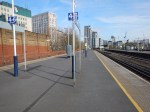
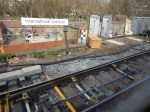
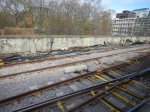
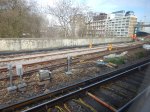
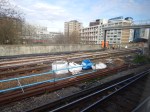
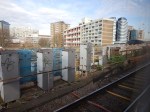
These pictures show the lines going from Platforms 1 and 2 at Vauxhall station to the former Eurostar Platforms.
It looks like when it’s finished Platform 1 at Vauxhall will be the up platform towards Waterloo and Platform 2 will be the down platform.
Currently Platform 2 at Vauchall seems to handle services that come through Putney and Clapham Junction stations, with services going the other way using Platform 3.
According to Services in the Wikipedia entry for Putney station, typical off-peak service at the station is.
This means that there are 12 tph in both directions from Putney to Waterloo via Clapham Junction and Vauxhall.
It does look that after all the work is finished, these services will go into the rebuilt Platforms 20-24.
Will the various services be given their own platforms in Waterloo?
It would be a way of increasing passenger throughput in the station at busy times, as commuters would know that their trains always used the same platform. Simple and efficient!
It could be done with all services and I think this is done to a certain extent now.
Conclusion
South West Trains new fleet of thirty Class 707 trains is sized to run the services to Chessington South, Epsom, Hampton Court, Shepperton and Windsor and still leave a couple of spares for breakdowns and maintenance.
This calculation shows that you can sometimes replace a large number of 75 mph trains with a significantly smaller number of 100 mph units and still attain the same service frequency.
As they have just lost the franchise, I feel a little bit sorry for Stagecoach. But not that sorry!
March 29, 2017
Posted by AnonW |
Transport/Travel | Class 455 Train, Class 707 Train, South West Trains, Trains, Waterloo Station |
2 Comments
In The Aventra Car Length Puzzle, I talked about the flexibility of Bombardier’s new Aventra trains. The first of these; Crossrail’s Class 345 trains, will hit the tracks in May 2017, when according to the September 2016 Edition of Modern Railways, they will enter service between Liverpool Street and Shenfield.
A month or so earlier,if all goes to plan, South West Trains will start running their new Class 707 trains, which are being built by Siemens in Germany.
This train is described in the following article in the same edition of Modern Railways.
The original in-service date of the Class 707 trains was July 2017, so having lost a bit of credibility with the late entry into service of the closely-related Class 700 trains, are Siemens trying to beat Bombardier’s Aventra into service?
Obviously, there a lot of new trains that will be ordered in the next few years and all tricks will be employed.
Reading, the article about the Class 707 trains, three things stand out thoughtful design, flexibility and future proofing.
- Although, the trains will be third-rail only, the first two trains will be fitted with pantographs during testing, to prove that the concept works. This means the trains could be passed to another operator in the future.
- No toilets are fitted, but all the wiring and plumbing is there, so they can be fitted later.
- Siemens have gone for 2+1 seating rather than longitudinal bench seating as on the Class 378 trains, because of the feet-sticking-out problem.
- The trains fature wide open gangways.
- The trains have air-conditioning.
- Unlike the Class 700 trains, the trains have wi-fi.
- The trains are full of electronics and are information-rich for passengers and drivers.
A lot of what I have said here, also applies to Bombardier’s Aventra.
This is said about the operation of Class 707 trains in Wikipedia.
The Class 707 units are intended primarily for services between London Waterloo and Windsor & Eton Riverside, allowing the Class 458 trains used on those services to be cascaded back to operations to Reading, which will then allow the Class 450s to move elsewhere. The intention is to run these services, as well as others via Staines, and some mainline services to Basingstoke, as ten-car trains with pairs of Class 707s.
So the lack of an end gangway will mean that the trains can’t run as a true ten-car train.
Of the other variants of these trains; Class 700 trains are fixed formations of eight and ten cars, that won’t be working as pairs and the Class 717 trains for Great Northern will have end gangways because of the tunnels they run through.
So I wonder why, South West Trains didn’t go for five-cars with end-gangways or ten-car trains.
Interestingly, Abellio’s order of new Aventra trains for East Anglia includes a mix of five and ten car trains. Will the five-car trains be able to work as pairs and will they be gangwayed? Nothing has been announced yet!
I think the theme running through both train designs, is the customer gets the trains that best fit their method of working.
August 30, 2016
Posted by AnonW |
Transport/Travel | Class 345 Train, Class 700 Train, Class 707 Train, Design |
Leave a comment
 The Anonymous Widower