There’s A Hole In The Bus
If you’re musical, you can sing it to the tune of the famous Harry Belafonte song.
If you not, then give us a rest, or take singing lessons.
I took this picture of the seat in front of me on the new BYD battery-electric bus this morning.
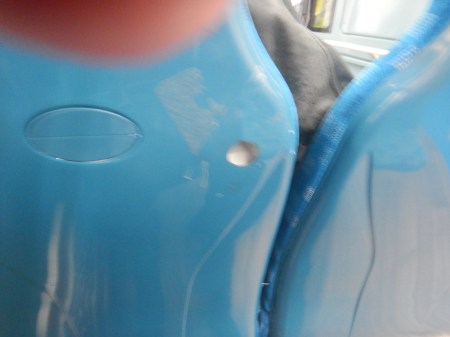
Has the stop button been nicked or has it just fallen out?
Or it could be the centuries old problem of finding good, reliable slaves?
A Nightmare Coming Home
I nearly always come home via Moorgate station, as it has good train and bus connections and I can get both the 141 and 76 buses to near my house.
- The 76 bus is my preference as it is a reliable New Routemaster.
- But the 141 bus takes me all the way home. Unfortunately, it is generally a Chinese BYD battery-electric bus.
Coming home, I arrived at the Northchurch Road in a 76 bus.
- The time was 11:29 and a text said that 141 buses were due in 1, 8, 19 and 20 minutes.
- A second text at 11:39 said that buses were due at 4 and 12 minutes.
Eventually, I got on a 141 bus at 11:44.
This is typical, as the buses don’t seem to synchronise with Transport for London’s bus reporting system.
But today in the cold weather, they have been particularly unreliable.
So I asked Google AI, if hydrogen buses are more reliable in the cold and received this answer.
Yes, studies show hydrogen fuel cell buses generally outperform battery-electric buses (BEBs) in cold weather, experiencing less range reduction because their fuel cells generate waste heat that helps warm the cabin, while BEBs must draw significant energy from the battery for heating, drastically cutting range. While BEB range can drop significantly (over 30%), hydrogen buses see a smaller dip (around 23%), making them more reliable for cold climates.
Sixty years ago, I was using nickel-cadmium batteries to make portable instruments in a chemical factory and I think that they hated the cold, but that lithium-ion solved the problem. Obviously, it doesn’t!
But I do have my suspicions about the design and build quality of these BYD buses!
 The Anonymous Widower