Walking The Contours In Birmingham City Centre
I tend to walk the contours, when I walk. This means you tend to walk on the level and you often only have one stiff uphill section when you feel you can tackle it.
Birmingham is on a hill with the cathedral on the top. Now that I know the city better, if I’m walking across the city, I might walk towards the cathedral, as although some of the route will be uphill, as I’m probably going on my way from any of the three stations at Moor Street, New Street and Snow Hill and it will be downhill all the way from the cathedral. This is a Google Map of Birmingham city centre.
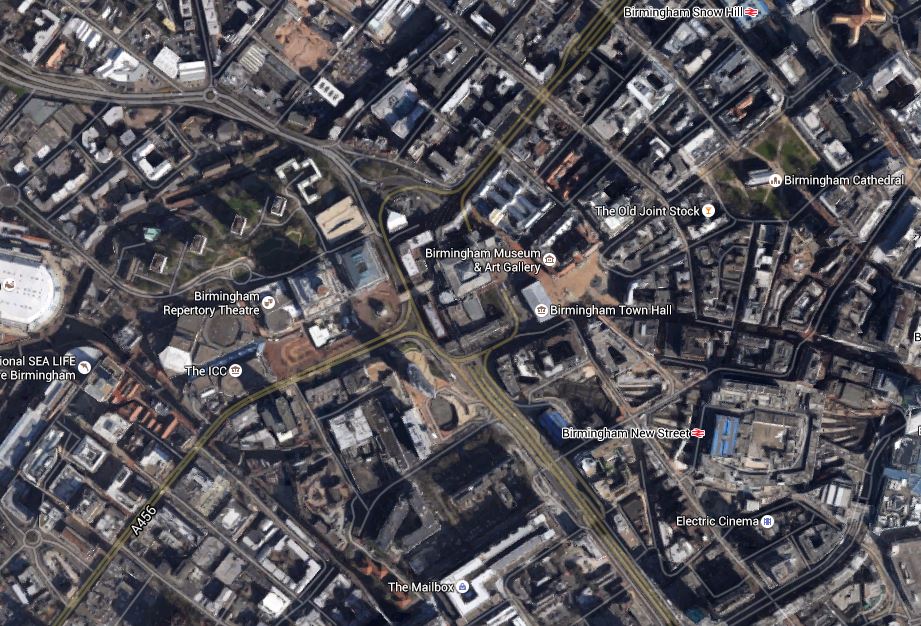
Birmingham City Centre
The canal behind the hotel runs South-Esterly from the Sea Life Centre.
My plan when I left the hotel in the morning was fairly simple. It was to walk down the hill and then walk across to New Street station, which is the other side of the dual-carriageway road, hoping that most of the route was flat. Once at the station, I would buy my West Midlands Day Ranger ticket and my paper and then walk up the hill to Carluccio’s for some breakfast. After breakfast, when the Museum opened, I would would go and see the Staffordshire hoard. I tok these pictures as I walked.

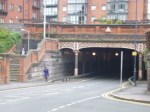
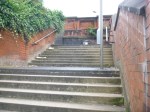

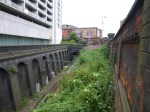


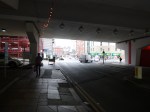
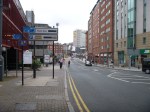
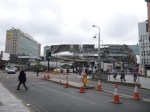





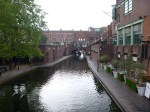


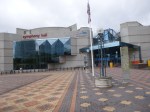

















Very little of the walk was uphill. In fact some parts like through the ICC, were actually inside.
I think one of the troubles Birmingham has is that the road layout was determined in the 1960s, when the powers that be felt that everybody would have a car and would want to drive it into the city centre.
Now that the Midland Metro is coming and this will go from New Street Station, up to the Town Hall and then past Centenary Square and Brindley Place on its way to Five Ways, the priorities are all different. The tram route will give people two ways from New Street to get up the slight hill to the axis of the city running from Brindley Place through Centenary Square, past the Town Hall and the Museum to the Cathedral. Someone has thought out how the tram can benefit Birmingham city centre.
Incidentally, I do hope passengers don’t have to buy tickets on the tram by then, as they do now. I will celebrate with joy, when I enter a tram or bus, somewhere in the UK outside of London, by just tapping in with my contactless bank card.
It’s not paying my fare that I object to, it’s having to give over money and get a flimsy piece of paper in return. Drivers on the whole think cash in unsafe! For them! What’s wrong with tapping my bank card on a reader?
Incidentally, I think that the Cross-City Line crossed under my walk by my hotel. Why does it not have more stops in the city centre? The building that is the Nitenite hotel, should have been built over the railway with a station underneath. It certainly would be nowadays.
Should We Create A Northern Playground In Addition To A Northern Powerhouse?
George Osborne and other politicians, thinkers, academics and businessmen talk about creating a Northern Powerhouse.
I am very much in agreement to these aims, but from my London-based viewpoint, I tend to think that the North has a lot more to offer.
Two of the bigger successes of the North in recent years have been the reinvigoration of Liverpool as one of the best tourist destinations in the world and the Tour de France in Yorkshire in 2014.
So should any Northern Powerhouse plans, take more than a large nod to emphasising the leisure and tourism opportunities in the area?
The government’s plan for transport in the North released yesterday and discussed in this post, is fifty years too late and if it’s implemented, it will be some years, before High Speed Trains touch 140 mph on the way between Liverpool and Hull and Newcastle.
The high speed railway should remain an end objective, but in the mean time, we should do various things to make the wait bearable.
1. Electrification In The North
The Electrification in the North study recommended that virtually all lines north of a line drawn between Chester and Lincoln be electrified. A rolling program should be planned that virtually eliminates diesel-powered passenger and freight trains.
This would speed up services between all the major cities and also connect all of the wonderful rural lines that cross the Pennines and hug the coastline to major centres of population.
So this electrification program is just as much Northern Playground as Northern Powerhouse.
2. Contactless Ticketing
Plans for the North talk about an Oyster Card for the North. As so many Londoners will tell you, Oyster is old superseded technology and so last decade.
We need a universal contactless ticketing system based on bank cards that works all over the UK!
This would mean that you just turned up at any station, bus or tram stop in the UK, touched in and you’re off on your journey.
Those who doubt this is possible, should spend a week using their bank card as a ticket in Greater London. They will find a system totally devoid or hassle and cash, well-liked by both passengers and staff. It also automatically gives you the cheapest price for the collection of journeys you take over a day, week or month.
Leisure passengers by their more spasmodic and impulsive nature will benefit tremendously from simple contactless ticketing.
3. Maps And Information Everybody Can Understand
As London was first in the world with decent maps and also because it is so large, that no resident knows the whole city, London needs comprehensive maps and travel information displayed everywhere in a common easily-understood and learned format.
As the combined population of the North of England is upwards of eleven million as against the eight of Greater London in a wider area, I suspect those in the North find themselves in an unknown area more often than those in Greater London.
So one thing that the North needs for both Playground and Powerhouse is a universal mapping and information system, which is the same all across the various parts of the North.
I feel that the North should use London’s system, which includes.
1, A detailed local walking map on every bus stop, tram stop and station.
2. Comprehensive bus information at every station.
3, A detailed bus spider map on every bus stop, tram stop and station.
4. A five digit number on every bus stop, which if sent as an SMS message to a short SMS number, gives details of the next few buses.
,I doubt that this will ever happen, as no council in the North would ever allow something to be used in exactly the same way as it is in London. Or if it was one of the larger cities, in the same format as another.
If the system relied on passengers having and using smart phones, then it should be prohibited.
But quite frankly, at the moment the information systems in the North are truly dreadful.
4. Two Hours From London
This is a list of the major cities of the North and typical fastest journey times by train to and from London.
Barnsley – 2:34 to 2:45 – Change at Sheffield
Blackburn – 2:56 – Change at Preston
Blackpool – 2:45 – Change at Preston
Bolton – 2:45 – Change at Manchester
Bradford – 2:49 to 2:52 – Change at Leeds
Burnley – 3:41 – Change at Preston
Darlington – 2:20 – Direct
Doncaster – 1:34 to 1:38 – Direct
Halifax – 2:48 – Direct/3:08 – Change at Leeds
Harrogate – 2:43 – Change at York or Leeds
Huddersfield- 2:52 to 2~:54 – Change at Manchester or Leeds
Hull – 2:33 – Direct
Leeds – 2:11 to 2:13 – Direct
Liverpool – 2:12 to 2:14 – Direct
Manchester – 2:07 to 2:09 – Direct
Middlesbrough – 2:57 to 2:59 – Change at Darlington
Newcastle – 2:50 – Direct
Preston – 2:08 – Direct
Rotherham – 2:16 to 2:28 – Change at Doncaster or Sheffield
Sheffield – 2:01 – Direct
Stockport – 1:55 to 1:56 – Direct
Warrington – 1:44 – Direct
Wigan – 1:55 – Direct
York – 1:50 to 2:02 – Direct
This list shows several things.
1. Many of the direct journeys between London and the North could be brought consistently under two hours, once ERTMS allows 140 mph running on the East Coast Main Line and the West Coast Main Line in a few years time.
2. Electrification of the Midland Main Line to Sheffield will bring that city consistently under two hours from London, which will speed up the journey to Barnsley, Rotherham and other places.
3. Some destinations like Blackpool, Bradford, Huddersfield, Hull and Middlesbrough would get a significantly faster service to and from London, if there was no need to change.
If we get the expected speed up on the East and West Coast Main Lines, what sort of times will we get to the major cities in the North.
Adjusting for the probable speed increase from 125 to 140 mph. gives these estimates for the following journeys.
Darlington – 2:05
Doncaster -1:26
Hull – 2:17
Leeds – 1:57
Liverpool – 1:59
Manchester – 1:55
Newcastle – 2:32
Preston – 1:54
York 1:47
I think we can say that in a few years time, many more towns and cities in the North will be within two hours from London, which can only be beneficial to those places for both Powerhouse and Playground purposes.
I regularly go to the North for the day by train to see football. Some places like Middlesbrough and Blackburn are tiring journeys, but get them under two hours and leisure traffic can’t help but increase, especially, if there were more affordable good hotels and better late train services back to London..
5. Better Connectivity
More places could be brought under the important two hour ideal, if perhaps the east-west routes interfaced better with the north-south ones at places like Darlington, Doncaster, Leeds, Preston and York.
In an ideal world, a passenger from say London to Hull, should be able to step off a northbound train at Doncaster and just by walking across the platform to step on to a train for Hull. At the same time passengers from Sheffield and Rotherham going to Newcastle would just step across the platform the other way.
This may seem rather utopian, but precise timing of trains is what ERTMS is supposed to enable.
The easier it is to get between any two points in the North, the more things will be improved.
6. High Speed Lines Across The Country
When the upgrade and electrification of the Midland Main Line is completed in 2020, there will be three major 140 mph railways between London and the North.
To complement these there needs to be High Speed Lines across the country from say Liverpool to Hull and Newcastle.
Any east-west lines will connect with the north-south lines at places like Darlington, Doncaster, Leeds, Manchester, Newcastle, Preston, Sheffield and York.
As I said in the previous section, there needs to be good interfaces between the two sets of lines to speed up journeys to stations that are a change away from the north-south lines.
At some point in the future, there will be a need for purpose-built High Speed Lines across the county.
But by the time this is done, I think tunnelling techniques will have improved to such a degree that instead of building a surface railway with all the planning and other difficulties that entails, a tunnel will be bored under the Pennines to connect Hull and Doncaster with Liverpool. The tunnel would be arranged to pass under major stations like Sheffield and Manchester Piccadilly and could connect to them by lifts and escalators.
Such a tunnel could be bored to a W10 loading gauge, so that it could transfer freight containers under the Pennines to link Liverpool and the West Coast Main Line with the Electric Spine to Southampton and the East Coast Main Line to London Gateway and Felixstowe. I believe a high-capacity freight railway between east and west through the Pennines, will have the same effect as theFelixstowe-Nuneaton freight corridor has had on the A14.
This Google Earth image shows the towns and cities between Liverpool and Hull.
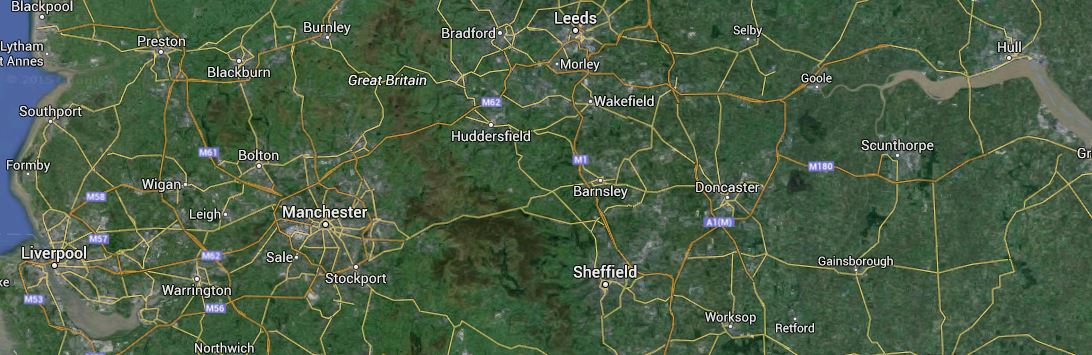
Liverpool To Hull
It may seem a long way to bore a tunnel even if it didn’t go all the distance, but we’re probably talking about 2030 and the machines then, will make today’s machines look like toys. The tunnel would probably start west of Manchester and go to east of Sheffield, which would be under fifty kilometres, connecting to Liverpool and Hull by means of surface lines.
Also if any new route could handle freight and link the Port of Liverpool to the east side of England this could have interesting possibilities.
For instance, would it be quicker for containerised freight from the United States and Canada to reach Germany and Central Europe if it went via Liverpool and a freight train through the Channel Tunnel?
Plans of this nature have existed for years, but none has ever been implemented. Some proposals for the Great Central Railway are given here.
It all goes to show that modern technology will create lots of options for putting a High Speed Line across the country.
Both Powerhouse and Playground will benefit.
Transport for London Is The Fastest Growing Contactless Merchant In The UK
The title of this post is the title of an article in Computer Weekly, which describes the enormous take-up of using contactless cards for payment on London’s transport system. This is the first two paragraphs.
Transport for London (TfL) has become the fastest growing contactless Visa merchant in Europe, and the fastest growing Mastercard and American Express merchant in the UK, a mere six months after it first launched contactless payments in September 2014.
TfL claimed 60 million contactless journeys had now been made on its system since September 2014, 20 million of those since mid-February 2015, and 14% of all journeys made on the system were now contactless.
Perhaps, the most surprising thing, is why so few other transport operators in the UK, Europe and the wider world, have disclosed plans to go to a similar system.
Perhaps, what is most remarkable about London’s contactless payments system, is that there seem to have been no adverse media reports on the system, whereas before it started various political parties were saying it would be a disaster of Titanic proportions.
It probably says more about the average politician’s knowledge of technology, than anything else.
I believe that any city or region that doesn’t sign up for contactless ticketing will see a reduction in visitors and economic activity.
If you take Scotland as an example of a region, where several antique ticketing systems are still in existence, the total population is less than that of Greater London. So if it can be implemented in London, surely an appropriate system can be used in Scotland.
The Advantage Of Contactless Payment On Public Transport In London
On Tuesday, I had a visitor, who came from outside London. He parked his car at the northern end of the Jubilee Line at around nine in the morning and then bought himself a Travelcard for twelve pounds. By changing at West Hampstead, he was able to easily get to me in Dalston. He went back the same route and was in his car going north before the evening peak.
If he’d used an Oyster Card, this would have been capped at £5.20,according to this page on the TfL web site.
You also get the same cap, if you use a contactless bank or credit card.
So are the days of Travelcards numbered?
As I can’t find any problems with contactless ticketing in London on the Internet, I think next time you visit London and have a contactless card that is accepted, then I think it would be an idea to try it.
I certainly wouldn’t bother with a ticket if I needed to buy one and look forward to the day, when I can use my contactless card to take a local train or tram in Manchester, Leeds, Newcastle and Liverpool, by just touching in or out as necessary.
No Contactless Cards On The Emirates Air-Line
This is the welcoming sign you get at the Emirates Air-Line.
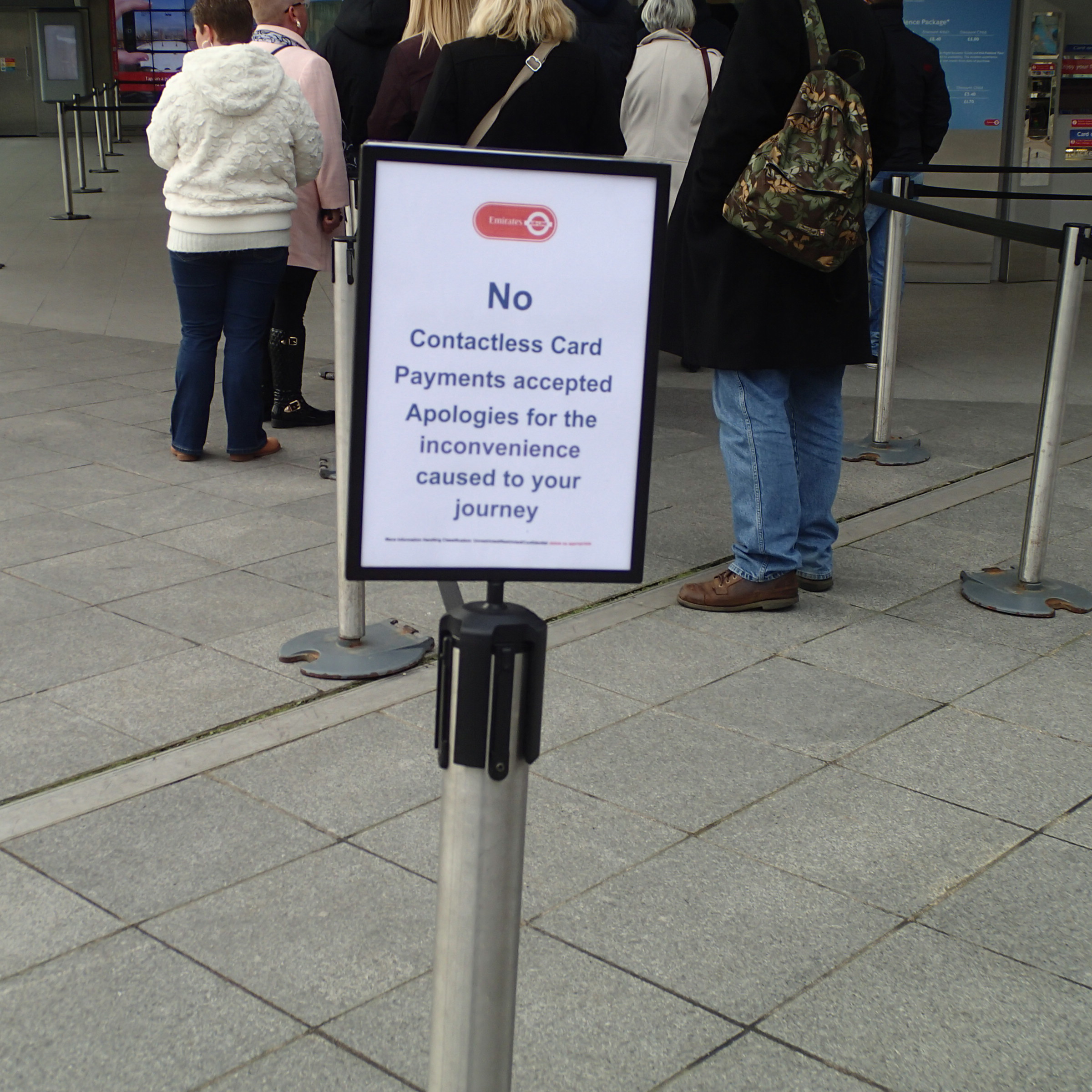
No Contactless Cards On The Emirates Air-Line
As there is talk that contactless cards are gradually taking over from Oyster, not accepting them, is a really good way to discourage ridership.
My Second Paris Transport Day Ticket
This is the second ticket that I used to get a day’s travel in Paris.
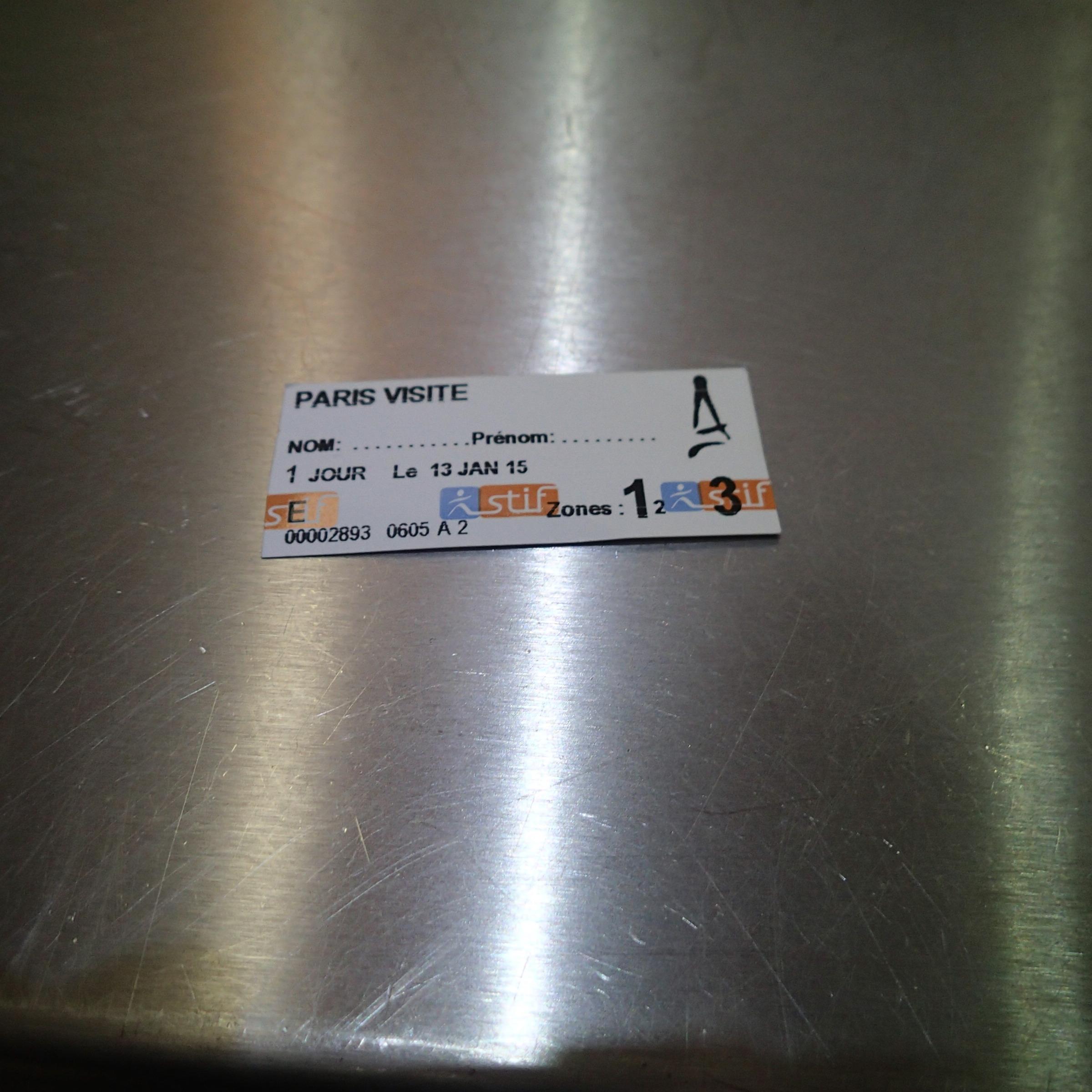
My Second Paris Transport Day Ticket
The first one fell apart when it rained, so I had to exchange it for another.
Paris has a system called Navigo, which is very much the same as London’s Oyster. But Paris doesn’t seem to offer contactless payment with a bank debit or credit card and I can’t find any plans for them to do so.
Surely, every public transport system in the world should be moving towards contactless bank card ticketing.
Paper ticketing for transport is so nineteenth century.
I know I like the UK’s orange credit-sized rail tickets, but then they fit everybody’s wallet and are understandable by everyone and the newest ones are computer readable, by your standard scanner.
I suspect that Londoners planning a weekend away, will look at the ticketing in their possible destinations and might choose one where contactless bank cards can be use as tickets.
If I was a world dictator, one of the things I’d do is make all buses, trams and trains accept contactless bank cards as tickets. It must surely create lots of jobs in tourism, as people would travel more, if they knew that when they ended up in say Tokyo, Helsinki or Belgrade, all they needed was work out the map of the trains and not bother with the ticketing.
Should London’s Freedom Pass Be Extended?
As someone who qualifies for a Freedom Pass, which gives me free travel all over London, I take it very seriously and I also realise how much the 1.5 million holders of the cards cost London and its taxpayers.
Since it was created in 1973, London has grown and with Crossrail further extending the tentacles of London’s trains, it must be part of planners’ thinking to extend the areas where residents qualify and the area where the card could be used.
It has been said that you will be able to use Freedom Passes to get to Heathrow on Crossrail, so what about the other termini at Reading and Shenfield?
There are a lot of questions, if the pass is to be extended.
I think cost will determine what will happen. Especially, as I suspect there are two main groups of Freedom Pass holders.
1. Those like me, who use the pass with gusto and enthusiasm to explore this wonderful city.
2. Those who use it locally on the buses and perhaps occasionally on the Underground.
Transport for London know the pattern and how much it would cost to extend the system.
But if I was the Mayor of London, I’d possibly look for some radical idea.
Let’s take the case of someone living in Birmingham say, who is over 60 and has the UK-wide bus pass and a Senior Railcard. At present they can associate their Senior Railcard with an Oyster card, so they get one-third discounts on all Underground and rail travel in the London area. But as London now embraces using bank cards as tickets on the whole transport system, surely the time will come when those with railcards can associate them with their bank card.
You could argue that allowing this link-up between bank cards and railcards will inevitably happen! Especially, if the banks promote it, as they have with Fare Free Fridays.
Surely, there is scope for link ups with other conurbations, so that visitors can get appropriate discounts on their travels. After all, how much does a visitor from London spend on a day-trip to Manchester or Leeds?
Would they also be more likely to go, if they knew that the ticketing was just using an appropriate bank card, that got them a discount on the local trams and trains?
I am going to Bolton on Saturday to see Ipswich. As I want to see how Posh is doing, I’ll have to buy a couple of extra tickets! Why can’t I just touch in with a contactless bank card?
Contactless Cards For Travel In London Are Working
This article entitled Tube Record Smashed Again has just been published on Modern Railways. This is the last paragraph.
Numbers on both days were boosted by ‘MasterCard Fare Free Friday’, through which holders of contactless MasterCard debit or credit cards could use their card to travel for free within the capital, with over 270,000 journeys made on 28 November under this offer. Passengers have been able to use contactless bank cards to pay for Tube travel since September, with 18 million journeys made using contactless payment cards since that date and usage reported to be growing at a rate of 12% per week.
The most significant bit is that the use of contactless payment cards is growing at an unheard of rate for anything.
So if it is so popular in London, when will I be able to use my contactless credit card for travel on Nottingham, Edinburgh, Birmingham and Manchester trains, the Newcastle Metro and local trains outside London? If these cities in the North want to rival London, they must give the passengers the easy ticketing system, they obviously like to use!
If any did bring in a contactless system for payment, I think it would be a long odds-on bet, that at least one of Mastercard, Visa and Amex would run a promotion to get people on the buses, trams and trains.
Another Fare Free Friday
Last week’s Fare Free Friday was a success, as tube usage was a record.
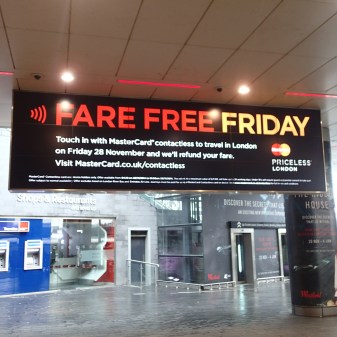
Another Fare Free Friday
So they’re doing it again.
If doesn’t effect me, as I have a Freedom Pass, so every day is free. My Mastercard isn’t contactless either.
It’ll be interesting to see, who benefits most from this marketing exercise!
 The Anonymous Widower