Before Crossrail 2 – Enfield Lock
After visiting the house where my mother was born, I took a bus to Enfield Lock station.

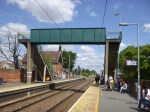
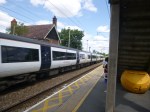
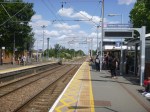

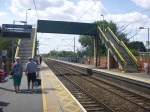
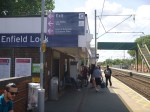
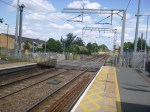
The footbridge must be one of the steepest I’ve seen. At least you can cross the line at the level crossing by the station.
This Google Map shows the station.
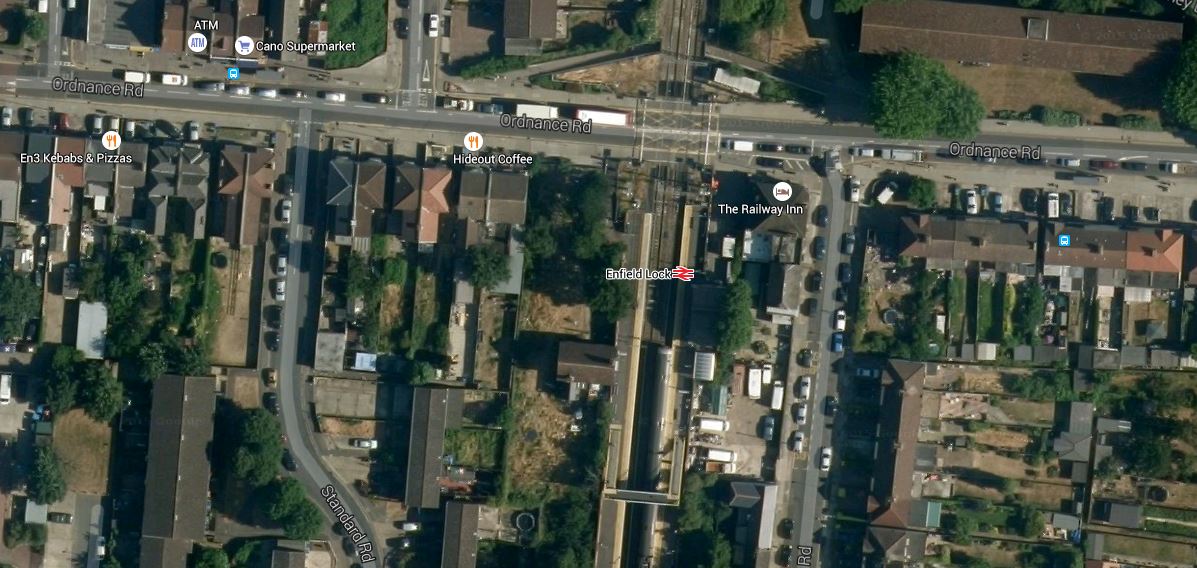
Enfield Lock Station
Note that there appears to be a pedestrian subway on the North side of the level crossing, which also seems to be holding up lots of traffic.
As there is another level crossing at Brimsdown station, when I worked at Enfield Rolling Mills in the 1960s, driving across the railway was a slow and tedious business.
In the 1980s the A1055 Meridian Way was built, which must take some pressure from these two level crossings and a third at Northumberland Park station.
T
Before Crossrail 2 – Ponders End
Just as I have tag Before Crossrail that documents Crossrail before construction started, I have now started one for Crossrail 2.
This is the first post and it shows Ponders End station.


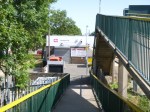
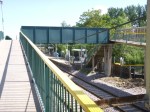
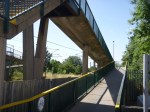


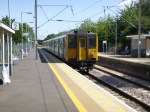
It is not the worst station I have seen, but although entry to the Northbound platform is step free, it is rather a climb to get across the tracks to the other platform and the bridge over the Meridian Way that runs alongside the railway. This Google Map shows the station.
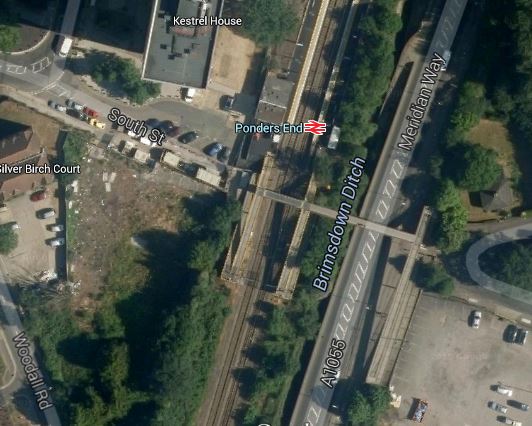
Pomders End Station
It is definitely not a station with an abundance of facilities, although it is claimed to be step-free.
The station certainly needs at least a couple of lifts and perhaps another on the other side of Median Way.
Call For Crossrail 2
In The Times today, there is a letter from a wide cross section of business leaders calling for a start to be made on Crossrail 2. ITV have reported a major speech by Boris Johnson on the subject today.
I am very much in favour of the construction of this North-East to South-West line across London, which was first proposed in the 1970s.
Cynics amongst you, will probably say that I am in favour of Crossrail 2, as I live just a few hundred metres away from the proposed double-ended Dalston station, that will transform the area and make my house rise substantially in value.
In my view there are several reasons why Crossrail 2 should be built.
1. HS2
HS2 is currently planned to terminate at Euston station, although I think that could be changed by a more innovative solution. But whatever happens to the London end of HS2, it needs to be simply connected into the knitting of the Underground, so terminating somewhere in the area between Kings Cross and Euston, is probably a certainty.
Every recent design for Crossrail 2 shows it serving the three important London stations of Kings Cross, St. Pancras and Euston. It also links these stations to Victoria and Clapham Junction.
Have you ever tried to use the Victoria Line between Euston and Victoria with a heavy case or a baby in a buggy? It’s bad enough at normal times and impossible in the rush hour.
So when HS2 starts squeezing more passengers through the congested Euston Underground station, it will be a disaster.
I believe that the only way to connect HS2 into London is to build Crossrail 2 first.
2. Sorting The Northern Line
If there is one line of the Underground that needs some substantial sorting it is the Northern Line. Probably because it the oldest deep line of the Underground, it never seems to be where you want it to go! For instance, I can get to Angel fairly easily, but often want to a station on the other branch of the line through London.
The line is being improved in the following ways.
1, An extension to Battersea is being created, that may eventually go to Clapham Junction.
2. Future developments at Bank station should see an improved station with new or larger platforms and tunnels.
3. Rebuilding plans exist for the bottleneck of Camden Town station, but every plan seems to offend one pressure group or another.
4. Long term objectives include splitting the line into two, with all City branch trains going to Morden and all Charing Cross trains going to Battersea.
Crossrail 2 will have interchanges with the Northern Line at Angel, Kings Cross St. Pancras, Euston, Tottenham Court Road, Tooting Broadway and possibly Clapham Junction. So it looks like that Crossrail 2 will certainly make journeys easier for users of the Northern Line.
But Crossrail 2 will have its biggest effect at Euston station, which is a station that needs serious improvement.
1. The station is a maze of cramped tunnels and is not by any means step-free.
2. Euston Square station needs to be properly connected to the Euston main line and Underground stations.
3. Changing between the two branches of the Northern Line at Euston, is not easy, as you have to walk a fair distance in crowded tunnels.
Adding a Crossrail 2 station at Euston won’t be a trivial matter, but it gives everybody a chance to dig their way out of the problems left to us by history.
In Crossrail 2 Tunnels Under London, I speculated that Crossrail 2 will be dug very deep and that the uphill excavation technique used at Whitechapel will be used to connect to existing stations.
Could techniques such as this be used to excavate a new Euston Crossrail 2 and Underground station beneath Euston Road, that linked upwards into Euston main line station and Euston Square Underground station?
At the very least techniques should be investigated so that Euston is extended without all the hassle of demolition. After all, architects and engineers worked out how to extend Kings Cross and St. Pancras, whilst keeping the stations running during the construction.
3. Easing Congestion On The Victoria Line
This summer, the Northern end of the Victoria Line is being closed for most of August whilst a crossover is changed at Walthamstow Central. According to this press release on the Transport for London web site, this will mean thirty-six trains an hour from Walthamstow Central to Brixton from April 2016.
But this is only correcting one of the faults of a line that was built to an inadequate specification in the 1960s, which resulted in some crap inaccessible stations and a foreshortened line compared to what it should have been.
Crossrail 2 will effectively by-pass the central part of the Victoria Line as the two lines connect at Tottenham Hale, Seven Sisters, Kings Cross, Euston and Victoria.
4. Development Of North East London
I have lived in the North East sector of London for well over thirty of my nearly sixty-eight years.
Some of the problems I observed around White Hart Lane stadium in the 1960s, are still there and only now fifty years later, is that area being redeveloped, with a new football ground, a big supermarket, lots of houses and a virtually new White Hart Lane station. The long awaited development has been totally necessary for at least forty years.
But that area of Haringey is just one small part of North East London, that needs help to create more quality housing, successful business and jobs and leisure opportunities for all.
At least developers are busy all up the Lower Lea Valley and in Waltham Forest.
1. As I said earlier, Tottenham are at last starting to build a new football stadium.
2. Haringey is developing the Tottenham High Road
3. There is a massive development starting at Meridian Water, which I wrote about here.
4. Thames Water are even doing their bit, by developing the reservoirs into the Walthamstow Wetlands, which will become the largest urban wetland nature reserve in London.
Transport for London are doing their best to improve transport links in North East London, with the expansion of the London Overground and the upgrading of the Victoria Line.
Crossrail 2 with its stations in the Lea Valley and at Tottenham Hale, Seven Sisters and Dalston will be the high capacity link to Central London, that could create real wealth in some of these poorer areas of London.
5. Avoiding Waterloo
From North East London to Waterloo is not the easiest of journeys, unless you can get on the Victoria Line easily and just walk across at Oxford Circus. This is a route I sometimes use, but generally in the week I use a bus to Bank and then the Waterloo and City Line. We’ve had all the fuss about the Night Tube, but I think to get seven-day working on the Waterloo and City and the Northern City Lines is more important.
Network Rail have announced they are going to upgrade Waterloo, but will this solve the problem of getting to the station?
However, Crossrail 2 will give many a new route to places like Southampton and Portsmouth, that avoids Waterloo, by changing at Clapham Junction instead. Other routes will also be available via Victoria, Tottenham Court Road and Wimbledon.
From South West London, as many stations will be connected to Crossrail 2, anybody going to Central London will be able to go direct.
I believe that Crossrail 2 will take a lot of pressure, from one of London’s busiest stations.
6. Better Connectivity
Some of the very important places I need to get to are quite difficult from Dalston. I suspect others say that about their parts of London.
For me, the difficult ones are the stations at Charing Cross, Waterloo and Paddington, although Crossrail will ease going to the last, as I’ll just change at Whitechapel. Crossrail 2 will ease getting to Charing Cross and Waterloo, as I’ll just change at Euston or Tottenham Court Road onto the Northern.
In some ways Crossrail 2 is just adding two more arms to a spider centred on Bond Street, Tottenham Court Road and Farringdon stations.
When Crossrail, Crossrail 2 and Thameslink are completed, so many journeys across the capital from the suburbs will just be either direct or a single change in the centre.
Thinking Outside The Box About Building Crossrail 2
I suspect that due to the cost of building a rail line like Crossrail 2, that there are some very radical plans for building the line.
So let’s look at the various parts of the project.
1. The tunnelled section between Tottenham Hale and Alexandra Palace to Wimbledon together with the below-ground stations will be the major cost of Crossrail 2. All of the central stations, with the exception of Chelsea are interchanges.
2. The trains hopefully will be a follow-on order to the Class 345 trains that have been ordered for Crossrail.
3. It would also to be hoped that other designs could be lifted across or modified to keep costs at a minimum.
4. The three surface sections of the line up the Lea Valley Lines, up the East Coast Main Line and spreading out from Wimbledon, have stations in various states of repair and only a few have full step-free access.
Crossrail is being built, by boring the tunnel and then creating the stations and upgrading the surface sections, but I would almost build Crossrail 2 in the reverse order.
Although the surface sections are not in the best of health, whereas Crossrail linked two four-track railways together, a lot of the lines in the outer reaches of Crossrail 2 only have two tracks, which will mean that upgrading them to the required standard will be a lot easier.
So after finalising the design for the whole line, I’d build Crossrail 2 like this.
1. Rebuild all surface racks and stations to the required modern standard with the removal of level crossings and the addition of appropriate step-free features. Obviously, higher levels of passenger comforts would be added like better information and integration with surface transport, wi-fi, perhaps a decent coffee shop, warm waiting room and clean toilets.
But then we should be doing this with all stations in the UK and not just those touched by Crossrail 2. How much would it encourage people to travel by rail, if they knew that all stations, they would encounter on a journey would be of a high standard?
2. All of the surface lines for Crossrail 2 are electrified, even if some use third-rail electrification. One of the costs of overhead electrification is raising bridges and structures to give clearance, so I would use dual-voltage trains in the same way as Thameslink.
3. The new trains, which hopefully would be the same Class 345 trains, as those on Crossrail would then be introduced on the surface lines. Depots would need to be built.
4. The Central London interchange stations of Seven Sisters, Dalston, Angel, Kings Cross/St.Pancras/Euston, Tottenham Court Road, Victoria, Clapham Junction, Tooting Broadway and Wimbledon would all be upgraded, so that they are ready to accept the access tunnels from the new Crosrail 2 platforms.
As I believe that Crossrail 2 will be dug at a depth of around or more than fifty metres and it will be connected to existing stations, as Whitechapel has been by uphill excavation, these modifications will not be as great as those at the Crossrail stations like Liverpool Street, Tottenham Court Road, Bond Street and Paddington.
Looking at the list of stations, I can add these notes.
Dalston Junction, Angel, Kings Cross St. Pancras, Tottenham Court Road, Victoria and Clapham Junction have been recently or are being rebuilt and I would hope they have been future-proofed for connection to Crossrail 2.
Seven Sisters, Dalston Kingsland, Euston and Wimbledon need substantial improvement or rebuilding, so this would include provision for Crossrail 2.
5. Only when all the surface sections and the Central London stations were upgraded and ready, would the two tunnel boring machines be threaded between Tottenham Hale and Wimbledon.
This phase would be completed as follows.
- Connecting or uphill excavating from the tunnels into the existing stations.
- Fitting out the tracks and the new platforms.
- Testing of systems and trial running of the trains.
It does sound simplistic, but then engineers will have learned a lot from building Crossrail.
6. Finally, the Chelsea station would be built. As this is a completely new station leaving it until after the line has been built in much the same way as Pimlico was built for the Victoria Line would probably ease construction of the line.
Will Crossrail 2 Get Development Finance In The Budget?
This report in The Independent is entitled Crossrail 2 proposal receives £100m Budget boost from Chancellor. Here’s the first two paragraphs.
If it’s true, it’s short term bad news for me, as more and more Estate Agents will be pouring leaflets through my door, in the hope, they can make a quick killing.
But seriously though Crossrail 2 is needed to connect Tottenham and Wimbledon. With the new double-ended station at Dalston, I will have better connections to the West End, Euston and Victoria.
A Circular Tour Round Richmond, Twickenham And Vauxhall
In my post entitled Where Next For The Overground?, I received a comment suggesting that some services on the North London Line be extended to Twickenham. The guy who commented said this.
Currently 4 Overground services per hour terminate/start at Richmond. Extending even 2 of these to Twickenham using the existing SWT railway network, also calling at St Margarets, would provide numerous benefits for local commuters and businesses.
The reasons he gave about better connectivity to less obvious places than Vauxhall and Waterloo, didn’t seem much different to the statements you get here in Hackney about getting anywhere not reached by the North and East London Lines or the 38 bus.
So I just had to go and take a look and take a few pictures, as I travelled from Richmond to Twickenham and then on to Vauxhall.











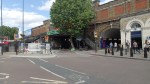
I could also have a pit-stop at the Carluccio’s opposite Richmond station.
Richmond
I know Richmond quite well having used it several times since I moved back to London, as it’s a good place to go for a walk by the river. And of course I do like the train ride across London on the North London Line, which is so much more pleasant than the District Line or the trains out of Waterloo. This Google Map image of the station shows the station’s main problem, which is also apparent in the photos.

Richmond Station
The station is just too busy, in terms of passengers inside the station, people walking up and down the pavement and the innumerable cars, taxis and buses in the road outside. I travelled to Richmond in a very full four-car Class 378 train from Highbury and Islington. As I got out, the crowds of people trying to get into the train, almost pushed me under it. Someone has done a very good job in selling Richmond to visitors. With the Overground now going to 5-car and possibly 6-car trains, the District Line going to the new larger S7 Stock and South West Trains going to a 10-car railway, coupled with increased frequencies, the overcrowding at Richmond station can only get worse.
Reading the history in Wikipedia, you feel a bit sad, that when the station was rebuilt in 1937, that Southern Railway didn’t have 20/20 foresight. But then, if you’d rebuilt this station in say 1980, you wouldn’t have correctly predicted the increase in passenger numbers everywhere on the UK Rail network.
Richmond station would appear to be one of the worst victims of overcrowding, I’ve seen recently, where there is no obvious resolution.
Platforms 1 and 2, which are the through platforms have eight 10-car trains an hour each way and the shear numbers of passengers these trains generate totally overwhelms the station. So for a start these platforms, which have a separate passage from the main entrance, needs to be rebuilt to modern standards with escalators and lifts. Looking at the overhead image of the station, there is actually plenty of space at the London end of the station by the Church Road bridge. Perhaps as people now increasingly use contactless ticketing, a simple bridge and exit could be made here to ease the overcrowding I saw.
The suggestion in the comment to my post, Where Next For The Overground, says that the following should be done.
Remodelling track between Kew & Richmond to allow Overground trains to access the Richmond currently used by South West trains,
That may sound easy, but it would mean a flat junction, where trains coming from Kew had to cross the busy main line to London. Putting in such a junction would probably mean the lines to and through Richmond had to be closed for a few months, so even if it is feasible in an engineering way, the disruption would be unacceptable to regular users of the line.
It adds to the case for doing some or all of these things.
1. Make the station fully step-free, with escalators and lifts.
2. Put a footbridge and an exit on the London end of the station. The exit may be problematical, as the bridge might be architecturally important. I forgot to take a photo. Could this bridge be the tail that is wagging the dog? If it has to be rebuilt, to solve the problems of Richmond station, then so be it.
3. It is a real pity that the rebuilding in 1937, didn’t put an entrance to Platforms 1 and 2 on the other side of Kew Road, as this would have helped. But they didn’t although the two platforms are being extended in that direction, to accept the 10-car trains. This Google Map shows how the trains pass under Kew Road.
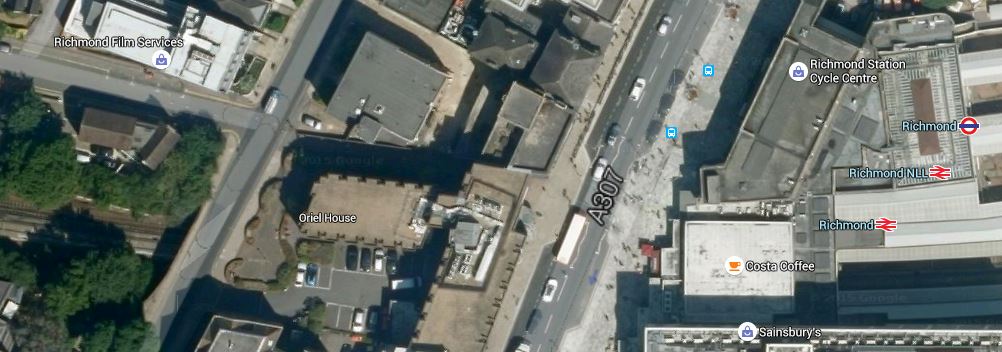
Richmond Station And Kew Road
4. At Liverpool Street a few weeks ago, they replaced a constricted gate line in the Underground station with a much wider one and this opened up the station considerably. It might be possible to do something of a similar nature at Richmond to free up the crush I experienced at the gate, which will only get worse.
If the passenger routes were freed up and especially, if a second footbridge was added, then passengers wanting to go to Twickenham from the North London and District Lines, would walk to the back of the train, go to the footbridge and walk across to Platform 1 to get any of the numerous trains. Remember that both the Class 378 trains and the S7 Stock are walk-through trains and many passengers now regularly position themselves for their destination.
In addition at Richmond something must be done to reduce the flow of people and vehicles in front of the station. For instance, there are more taxis at the station, than I’ve ever seen at a suburban station. But then it is an upmarket area, where only losers walk or use buses.
Waterloo To Reading via Richmond
There is another factor that will put pressure on Richmond in the future and that is the two trains an hour link to Reading. By the end of the decade Reading will have developed into one of the most important stations in the South East to the West of London. Richmond has good connections to a lot of South and South West London, so will passengers to and from the West change at Reading and go via Richmond. They probably wouldn’t now, but as the network develops and Crossrail doesn’t go anywhere near the South West of London, until Crossrail 2 is built, Richmond will get more overloaded, so some easy interchange between the lines at the station is essential.
Twickenham
Twickenham has two major problems.
It is obviously the station of choice for rugby at Twickenham and this Google Map shows that they are fairly, but not that close.
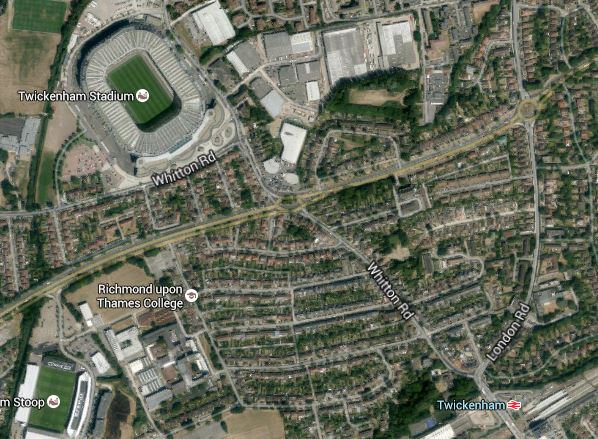
Twickenham Stadium And Station
If you read the history of the station in Wikipedia, you’ll see that the station is a bad sufferer of both wartime problems and advanced Topsy-syndrome, as is my local station at Highbury and Islington.
But even sorting the station for this year’s Rugby World Cup has been a planning obstacle race as this Future section in the Wikipedia entry says.
The RFU has petitioned the government to improve the station to be ready to handle the increased use during the 2015 Rugby World Cup. Network Rail has consented to a plan to improve the station and the rolling stock, but progress has stalled because of disagreement between the London Borough of Richmond upon Thames council and some local residents. A judicial review was carried out in December 2012 of the planning permissions that had been granted. These reviews are now complete and construction will start in 2014.
My pictures show, that Twickenham station appears to be being rebuilt. It doesn’t look to me that everything will be finished for the start of the tournament on September the 18th.
Waterloo To Reading Via Richmond And Twickenham
There is another factor that will put pressure on Richmond in the future and that is the two trains an hour link to Reading. By the end of the decade Reading will have developed into one of the most important stations in the South East to the West of London. Richmond has good connections to a lot of South and South West London, so will passengers to and from the West change at Reading and go via Richmond. They probably wouldn’t now, but as the network develops and Crossrail doesn’t go anywhere near the South West of London, until Crossrail 2 is built, Richmond will get more overloaded, so some easy interchange between the lines at the station is essential.
Heathrow
It is no secret that many parties would like to see rail links from the West and/or Waterloo into Heathrow, whether or not the airport is the chosen airport to be expanded in the South East.
We’ve had Heathrow Airtrack, Airtrack-Lite and now we’ve got the Windsor Link Railway, with perhaps only the last one still in existence.
The Windsor Link Railway is a very innovative project, which initially links the two rail lines to Windsor with a cut-and-cover tunnel and a new station called Windsor Royal.
The two current stations of Windsor & Eton Riverside and Windsor & Eton Central, would be closed and I doubt there would be any problems finding profitable uses for the sites. Since I wrote the original version of this post, I’ve been to Windsor and walked the route of the Windsor Link Railway through the town.
Further phases of the project would create a link into Heathrow, that would be accessible to both trains from the West and Waterloo.
Even if the link isn’t built in the form proposed by the Windsor Link Railway, there is a high chance that a link that connects both West and Waterloo is built.
I like this project, as I think it has some very big advantages.
1. Not many serious engineers would propose to build a tunnel in the middle of an historic town, up close to one of Her Majesty’s most iconic residences, unless they were absolutely sure that it would work. But look at this Google Map of Central Windsor and the two stations.
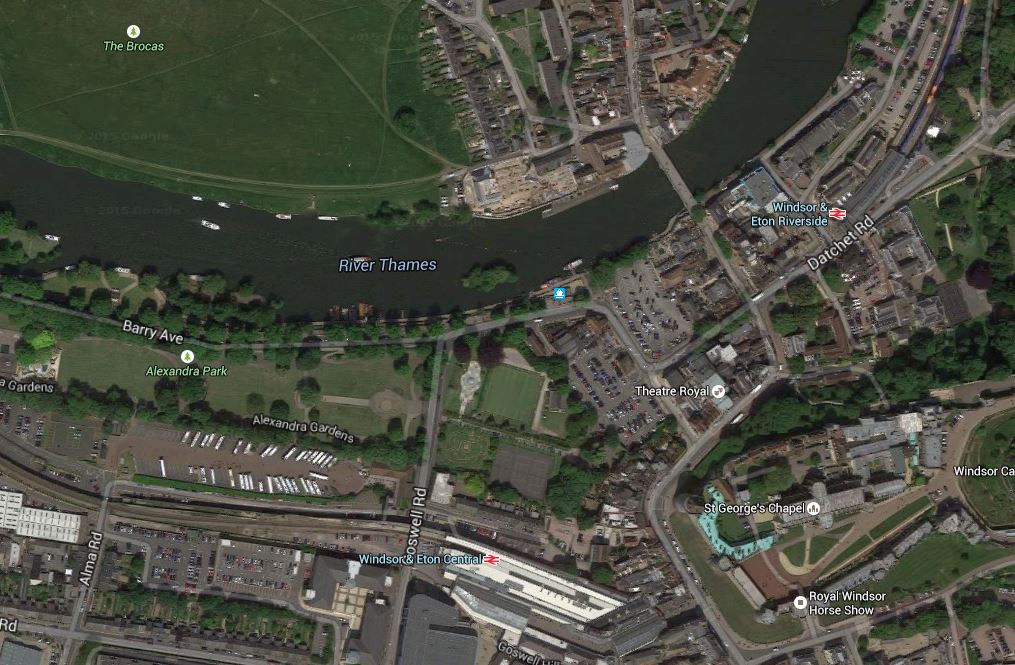
Central Windsor And Stations
For a start, it looks like the position and alignment of the two stations is in favour of their plan, to build a cut-and-cover tunnel between them, with the proposed Windsor Royal station perhaps, where what looks to be a coach park is located.
2. The space is sufficient to have a station big enough for the ten-car trains on the line.
3. The plan doesn’t say whether the tunnel will be single-track or double-track. Obviously, costs and space will decide the design.
4. There doesn’t appear to be many properties in the way of the tunnelling, as most of the route is either vehicle parks, public gardens or roads.
5. When fully realised the project connects both the West and Waterloo into Terminal 5 at Heathrow between Sunnymeads and Wraysbury stations. This Google Map shows the location of the stations in relation to Terminal 5.
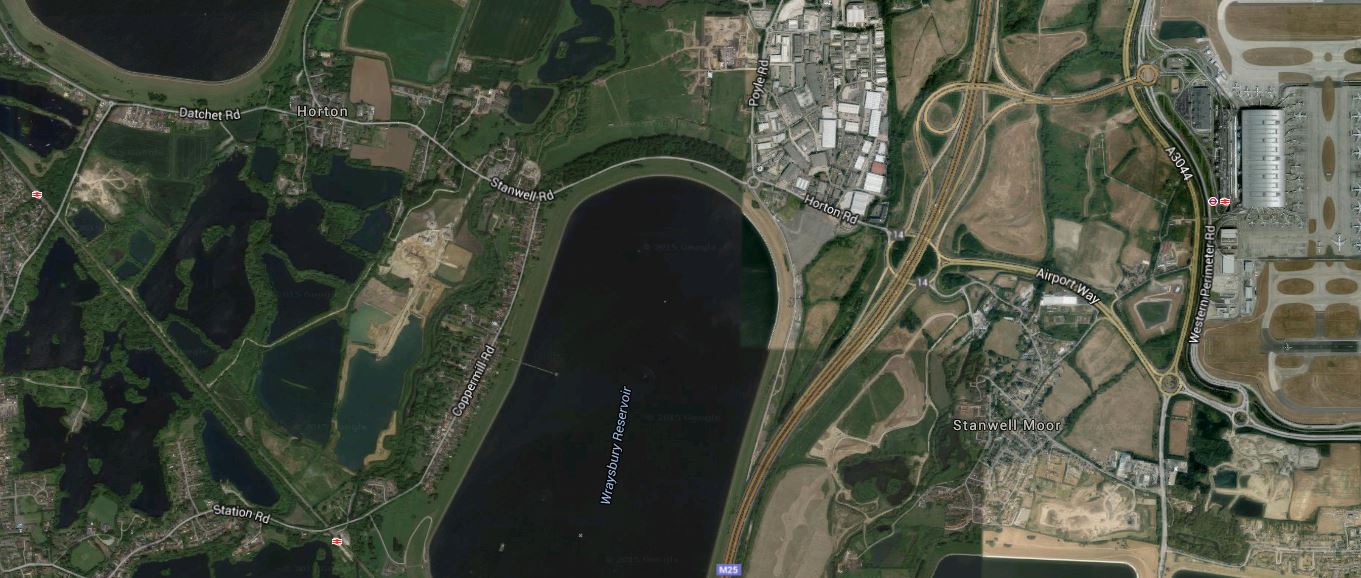
Into Terminal 5
The stations are on the line running to the North-West to the left of the reservoir.
6. Compared to other proposals, this scheme doesn’t need as much tunnelling to link up to the existing stations at Heathrow, being able to use a bridge over the M25.
7. In addition with a reinstated curve at Frimley, trains from Basingstoke and Ascot could have access to the airport. But that is just a couple of many places, who would find they are just a single change away from Heathrow.
Crossrail 2
If Twickenham Stadium and Heathrow are two elephants rampaging through the transport system of South West London, then Crossrail 2 is a third.
According to the current plan, Twickenham Station will be a terminus for Crossrail 2. The route to the proposed tunnel portal at Wimbledon, will be by way of these stations.
- Strawberry Hill
- Teddington
- Hampton Wick
- Kingston
- Norbiton
- New Malden
- Raynes Park
It follows quite a bit of the route of the Kingston Loop Line, which along with other lines in South West London will become part of Crpssrail 2.
If we look at Abbey Wood and Shenfield stations on Crossrail, Twickenham and the other termini of Crossrail 2, will probably need two platforms, which shouldn’t be a problem.
With my Project Management hat on, I think that any serious construction program for Crossrail 2 will see the suburban sections South of Wimbledon and North of Tottenham Hale brought up to Crossrail standard , before the serious work of the central tunnel. In my view not starting some of the update of the surface sections to Abbey Wood, Heathrow, Reading and Shenfield on Crossrail until the tunnelling was well underway, may have created problems. At least I’ve not seen any good reason for not starting at some of the stations, which are in desperate need of improvement, repair or full step-free access.
The question also has to be asked is what effect does the thoughts behind the Windsor Link Railway have on the layout of the Crossrail 2 branches South of Twickenham?
Surely, if Heathrow is a sensible terminal for Crossrail, then there are good reasons to think that it could be a sensible terminal for Crossrail 2. This would link Heathrow directly to St. Pancras International, Kings Cross, Euston, Victoria, Clapham Junction and Tottenham Hale for ongoing travel. Most London terminals and major interchange stations, like Clapham Junction, Old Oak Common and Stratford would be directly linked to Heathrow by either Crossrail or Crossrail 2. The other terminals that miss out are.
Cannon Street – Avoid by using Crossrail 2 to Victoria or Crossrail/Thameslink to London Bridge
Charing Cross – Avoid by using Crossrail 2 to Victoria or Crossrail/Thameslink to London Bridge
Fenchurch Street – Avoid by using Crossrail to Liverpool Street, Stratford or Shenfield and then another route.
London Bridge – Crossrail or Crossrail 2 to Farringdon then Thameslink.
Marylebone – Crossrail to Paddington and Bakerloo.
Waterloo – Avoid by using Clapham Junction or Crossrail to Paddington and Bakerloo.
It does seem to me that our Victorian railway planners didn’t future-proof their London terminals very well.
Vauxhall
I came home via Vauxhall station and the Victoria Line.
The interchange is being upgraded, with lifts in the rail station leading to the subway and improvements in the tube station.
When the upgrade is finished, it will make things a lot easier for those like me, who live near the Northern section of the Victoria Line, to get to places in South West London.
Using Waterloo is difficult, as we live on the wrong branch of the Northern Line, and all other lines that serve the station don’t go near Islington, Hackney, Harringey or Waltham Forest. The only easier way to get to Waterloo is to use the Waterloo and City Line, unless it’s the rush hour or the weekend.
Clapham Junction is a simple journey, but it takes forever on the Overground.
Conclusion
This line can be improved to be a more useful part of London’s rail infrastructure.
But it won’t really be sorted until Crossrail 2 is completed.
The M25 South Of Waltham Cross
If you travel along the M25 between junctions 25 (A10) and 26 (A121), you pass south of an area which I know well from my teens. Obviously the motorway wasn’t there in those days and a lot of the area was closed off as it was the Royal Gunpowder Mills. Some of the area has been developed, but a lot is still pretty much undeveloped or farmland, as this Google Earth image of the area shows.

M25 South Of Waltham Abbey
Note how two of the Lea Valley Lines pass North-South through the area.
The line between Turkey Street and Theobalds Grove, known as the Southbury Loop, crosses the motorway on its way to its terminus at Cheshunt, just to the East of the large factory, which is News International’s Print Works at the top left of the image.
Further to the East is the West Anglia Main Line between Enfield Lock and Waltham Cross, which is just to the west of the collection of large distribution depots.
So you have a large area of relatively undeveloped land with four stations at the corners. Turkey Street and Theobalds Grove are now part of the London Overground and Enfield Lock and Waltham Cross are proposed to be on Crossrail 2.
So although the connections to London aren’t bad they are going to get a lot better.
Surely, with these rail connections this area could be developed sensibly.
I’ve always felt that London needs more Park-and-Ride sites. In fact there isn’t one rail station, where you can come off the M25 drive a kilometre or so, perhaps pick-up or drop-off a passenger, and return easily to the motorway.
As to being able to park all day or just an evening, whilst you do business or visit a friend relative, then you can just about forget it. Especially, as those stations with parking never have enough of it.
A couple of times, since I’ve stopped driving, I’ve needed to be picked up near the M25, either to guide someone to my house or perhaps go to a football match with a fellow sufferer. There are few suitable places, so we generally end up using eithe Cockfosters or Newbury Park Tube Stations.
What is needed is a series of rail/car/bus interfaces all along the motorways and not just on the M25.
I took these pictures from a train going between Turkey Street and Theobalds Grove stations.






The M25 dominates and there is a few large developments, like the News International Print Works and lots of undeveloped green space.
,So could such an interchange be developed somewhere on this section of the M25 near Waltham Cross, perhaps with a Service Area and a Park-and-Ride. It would certainly ease transport difficulties for many.
Crossrail 2 At Wimbledon
After my trip to Wimbledon, I just had to look at how the Crossrail 2 will affect the area.
Depending on what you read, the tunnel portal could be to the London side of Wimbledon station or the country side.
I always thought it was going to be south-west of Wimbledon station, but the latest route map on the Crossrail 2 web site shows it on the London side and I do remember reading somewhere that it had been moved.
I think there may be advantages to this position of the portal.
1. There may be more space in which to work on the London side, as there is a lot of land used by the railway and industrial units.
2. The tunnel is probably a kilometre shorter and this may have the knock-on effect of needing less ventilation and access shafts.
3. Wimbledon station will still be on the surface. It will need extensive remodeling, but there will be no need for platforms in tunnels.
4. Wimbledon station could easily be rebuilt with the two hundred and fify metre long platforms needed for Crossrail 2.
5. Integrating the Crossrail 2 lines into the busy lines of the South Western Main Line, may well be an easier construction job on the London side, that causes a lot less disruption to an already overloaded route into London. South West Trains would do anything to avoid the line being shut for a long time.
6. Constructing the portal on the London side, may well cause less inconvenience to a smaller number of local residents.
For these reasons, I’ll look at the London side portal position and how it might affect those that live and work in the area.
This is a clip of the area of a possible London-side tunnel portal from Crossrail 2’s map from Wimbledon to Chelsea.
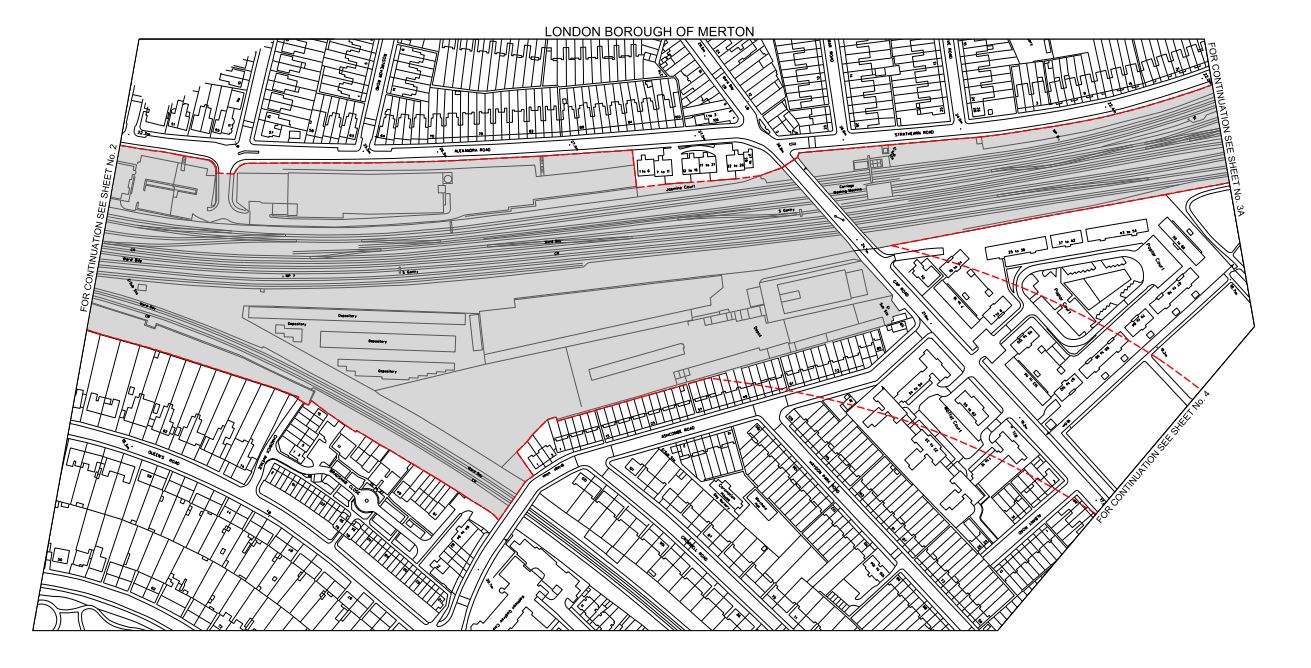
Crossrail 2 Wimbledon Poral Area
The area is mainly a collection of train sidings and depots and lots of industrial units, as this Google Earth image shows.
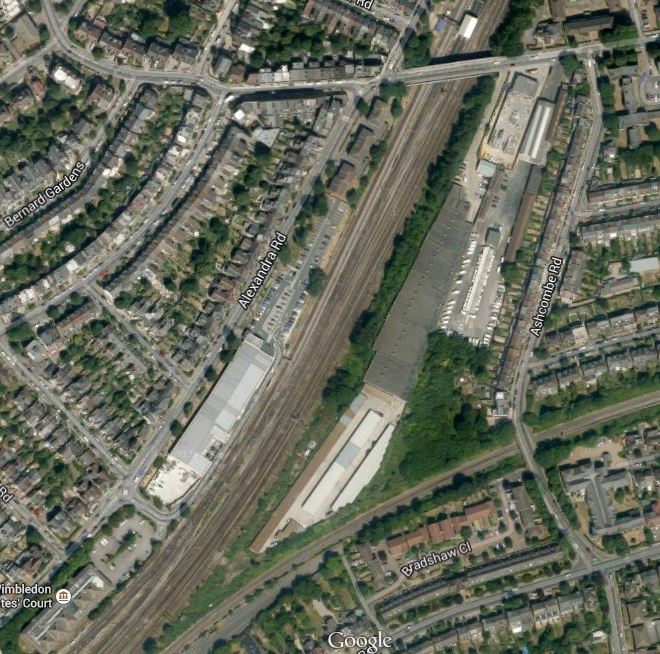
Crossrail 2 Wimbledon Area Now
Unfortunately, the two maps are at a different orientation.
My feelings are that the two tracks will be served by a single island platform at Wimbledon station, which would obviously need a rebuild. This Google Earth image shows the station.

Wimbledon Station
Note the shopping centre to the south-east, with the Tramlink approaching from the south to a terminus squeezed in tight.
Wimbledon station is not a modern station by any means with several problems.
1. Access to the platforms is up and down steep steps.
2. There seems to be no logic to which platform you catch your train, except that the Underground platforms are together on one side of the station.
3. Tramlink needs at least an extra platform. At the moment the Tramlink stop at Wimbledon, must be one of the pokiest and passenger-unfriendly tram stops in the world, as it seems to have been modelled on the Black Hole of Calcutta. The improvements to Tramlink at Wimbledon are shown on this page of the TfL web site, but there is no design for the new Tramlink stop.
4. Changing between Tramlink, South West Trains services and the Underground involves going up one set of stairs and then down another.
5. London is moving away from manned ticket offices and the whole layout of stations is changing dramatically.
I’m no architect, but I know a good modern station layout like say Reading when I see it.
I think at Wimbledon, you could build a deck over all the lines and access the various services using escalators and lifts, as at Reading. All of the customer services and the shops and kiosks would be on the deck and passengers would just walk into the station at the deck level straight off the street. As at Reading and other new stations, passengers would tend to wait above rather than on the platforms.
The platforms would extend both sides of the bridge, so that Tramlink could have its own well-lit two-platform station tucked under the road outside the station or the car park opposite. One small point is that when I traced TfL possible GOBlin extension, it needed to reverse at Wimbledon. One or more bay platforms could be tucked in on the country-side of the station, if they were needed.
The French, Germans and a lot of other nations would handle the problem of Tramlink differently. They would probably run it across the station perpendicular to the train tracks, either on-street on in a tunnel. But we don’t like the first and the second would be expensive. It would only work well, if the Tramlink was going to be extended to somewhere north-west of Wimbledon station.
I would though investigate a solution for Tramlink, similar to the platform layout used by the Overground at Clapham Junction, where the two services meet head on and passengers just walk up the platform to change trains. The problem is that Tramlink would need to cross the train lines as the tram and Underground lines are on different sides of the station. This would need a flyover or extensive on-street running for the trams, but I believe that it would be good to have both together in their own part of the station. At worst getting Tramlink from its awful location, would give passengers a better experience and release half a platform for train services.
Whilst I was writing this, I had an idea worthy of getting myself certified. And that is the tram-tube! It’s so bonkers, it needs a separate article, which I wrote later.
So that is my thoughts on Crossrail 2 at Wimbledon!
I believe that it can be put through a rebuilt station, with very little disruption.
I also don’t think it will disrupt much on the northern side or Wimbledon village side of the lines,
The dreadful station needs a complete rebuild anyway.
If the station design is done well, I think that everything else will fall into place.
Dalston To Wimbledon And Back
Yesterday evening, I went to Wimbledon to have a drink with a friend. It’s not a difficult journey, but I was going out in the rush hour and Victorian railway planners didn’t really expect anybody to travel from the very poor East London to the affluent South-West.
They only built two cross-river rail links east of London Bridge and one of these was a re-use of some leftover infrastructure in the shape of the Thames Tunnel. It’s got better in recent years, with the re-opening of an extended East London Line, through the Thames Tunnel and new lines in the shape of the Jubilee Line and the Docklands Light Railway to Lewisham, but if you live in Dalston and want to go south-west regularly, you’re living in the wrong part of the city.
If I’ve got plenty of time to get to Wimbledon, I have three slow routes I can take.
1. Walk to Canonbury station and take a North London Line train to West Brompton, where I change onto the District Line to Wimbledon.
2. Walk to Dalston Junction station and take an East London Line train to Clapham Junction, where I change to a train for Wimbledon.
3. Take a 76 bus to Waterloo and then get a train to Wimbledon.
The first two routes are best used at a non-busy time, where perhaps you’ve got a paper to read and the third can be very slow, if the traffic is heavy.
Because of Crossrail work and diverted buses, taking a bus to Bank for the Drain to Waterloo is not the serious proposition it should be.
To further complicate matters, the Transport for London Journey Planner, says walk to Dalston Junction and take a train to Canada Water, from where you get the Jubilee Line to Waterloo,
In the end, I took a 141 bus to Bank and struggled to Waterloo through a very crowded Drain.
Coming back, it was after eleven, so I had to wait ten minutes for a train to Waterloo, where I decided to come home via Canada Water and the East London Line. This is a good route coming home, as it means two stops on any bus, drops me just round the corner from my house.
If Crossrail 2 ever gets built, this journey will become much easier, as between Dalston Junction or the Gateway to the North-East and Wimbledon or the Gateway to the South-West, there will be only seven intermediate stations; Angel, Kings Cross/St. Pancras/Euston, Tottenham Court Road, Victoria, Chelsea Kings Road, Clapham Junction and Tooting Broadway.
So using my mother’s Ready Reckoner, Dalston to Wimbledon will take just sixteen minutes.
I’m certainly backing Crossrail 2!
Crossrail’s Secret Ventilation Shaft
When I researched the ventilation shafts for Crossrail, I was surprised how few of them there are.
But there was one I missed that is not mentioned in the usual web sites and it was built in 2004.
This article on the website building.co.uk describes a secret ventilation shaft for Crossrail underneath Moor House.

Crossrail’s Secret Ventilation Shaft
How much disruption was avoided by incorporating the shaft in the building?
One advantage in the early firming up the route of Crossrail 2, is that if a building has to be rebuilt on the route, it can incorporate features so that it is ready for the line.
Crossrail And The Channel Tunnel Rail Link Compared
The differences between the ventilation and access shafts in Crossrail and the Channel Tunnel Rail Link seem to be more than you would think.
Those in the newer tunnel appear to be smaller and possibly lesser in number. Certainly after a redesigned Crossrail abandoned eight further shafts, which must have been a substantial saving.
Perhaps too, as Crossrail has stations in its tunnels under London, the number of shafts can be reduced.
If you look at the pictures of the five Channel Tunnel ventilation shafts, you will see a series of brutal brick towers more equivalent to Napoleonic War defence installations, than anything built in this century. None of those for Crossrail have yet been built, but they seem to be innovative structures that enhance rather than confront their environment. This page on the Fereday-Pollard web site shows a few concepts. I particularly like this visualisation of the concept for the ventilation shaft in Mile End Park.
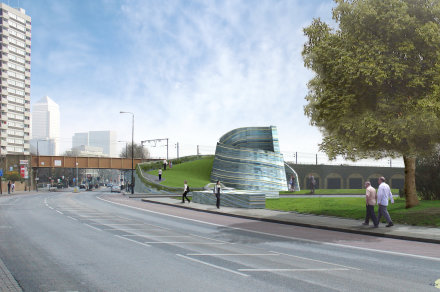
Mile End Park Ventilation Shaft
This is another almost cheeky concept from this page on the Acanthus Architects web site.
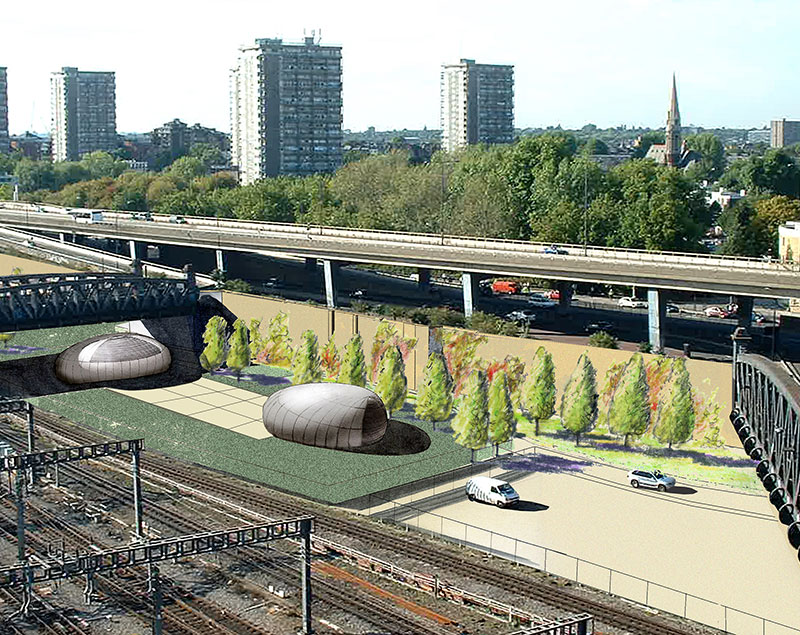
Crossrail Ventilation Shaft By Acanthus
This Google Earth image may show the location of this ventilation shaft.
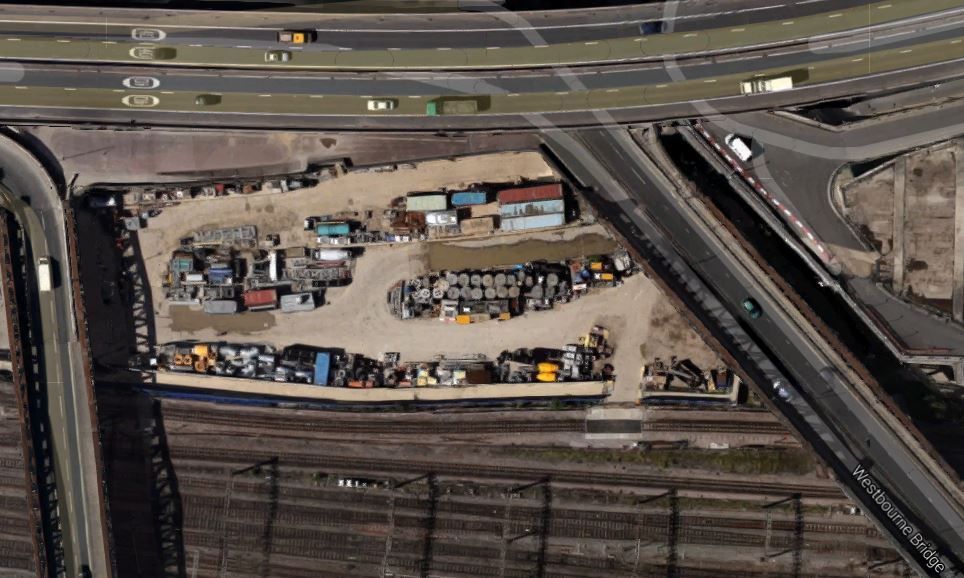
Ranelagh And Westbourne Bridges
The shaft is above the Royal Oak portal by the elevated A40 Westway between Ranelagh and Westbourne Bridges over the Great Western Main Line into Paddington station.
I think it all points to Crossrail 2 being simpler still! But then with my experience of watching projects for many years, as each version of a series of similar projects gets implemented, the engineers and managers ratchet up the design quality, speed of construction and efficiency.
 The Anonymous Widower