Operation Crossbow
I’m just watching this fascinating program on BBC 2, about how we used photographic intelligence during the Second World War.
It is a program, that points to not only what we got right in fighting the Germans and the Japanese but what we got wrong.
We certainly got photographic interpretation correct, as we were able to unlock the secrets of Pennemunde and the V-1. This led to Operation Crossbow itself, which helped to neutralise the weapons. As I said in an earlier post is our photographic interpretation as good today?
Most of the aerial photography was done by Spitfires, stripped of guns and painted blue, so they couldn’t be seen. But what surprised me that some were flown by American pilots and carried USAAF markings. I hadn’t realised that Spitfires actually served in the USAAF.
Search the Internet and you’ll find two pages; Uncle Sam’s Spitfires and Spitfire 944.
The first describes how the USAAF had to use Spitfires in Europe because Lightnings and Airacobras were not suitable to be used as fighter escorts.
This is an except.
Uncle Sam’s Spitfires had written a little-known chapter in US fighter history. Though the USAAF used over 600 Spitfires during the war, the aircraft was never given a US designation, and little publicity was given to the exploits of the 31st and 52nd Fighter Groups – nothing like what they would get in the summer of 1944 during the wild air battles over Ploesti when they flew Mustangs. This is most likely a good example of the US military’s overall dislike of having to admit to using “NIH” (Not Invented Here) equipment.
In the end the Spitfires were replaced with Mustangs, which although they were an American aircraft, they were designed to an RAF specification and had a Rolls-Royce Merlin engine like the Spitfire. But did the Packard-built Merlins have Tilly Shillings Orifice?
The second is a film made about John S. Blyth, who was a USAAF pilot who flew the photo-reconnaissance Spitfires. He appeared in the program.
There was also rare footage of the Mosquito being used as an airliner to bring equipment out of Sweden for the photo interpreters to use. There is very little about this use of de Havilland’s amazing aircraft, where it used nothing more than its speed to ferry important war materials and people to the UK from places like Sweden and Northern Russia. In one case Marshall Zhukov was the passenger and as he had only two words of English, “Betty Grable”, these were to be used if he wanted anything in his cramped seat in the bomb bay.
Up until I saw the program tonight, I thought that the Mosquito had been the only British aircraft to wear USAAF markings, where it was used for weather research, as it could fly higher than any other aircraft.
They also showed pictures of Barnes Wallis’s Tallboy bomb, which was used with great effect against the sites.
I sometimes wonder if had the Americans used Tallboys and the later Grand Slams against Japan, then they might not have needed to resort to nuclear weapons. After all in the B-29 Superfortress they had a bigger delivery aircraft than the Avro Lancaster. They also modified the Tallboy to create the Tarzon, which was used in the Korean War, so they couldn’t have been totally against the technology.
Don’t be Conventional!
On the BBC tonight, they had a program about a pilot who in the Second World War used to insert and extract agents of the SOE into German-occupied territories. One of the aircraft they used was the remarkable Westland Lysander, which although it wasn’t too good at its original job of Army Co-operation, was a superb aircraft to sneak in and out under the noses of the Germans, due to its slow speed and superb STOL performance.
But then the Second World War had its fair share of what could be described as unconventional aircraft.
The Mosquito didn’t look unconventional, but who’d have thought that an unarmed bomber built out of wood, would have been so successful. It was just that because it was light, aerodynamically efficient and could carry the same bomb-load as a B17, it could get to its targets fast and return. In fact Mosquitos often bombed Germany twice in one day.
But the theory of the heavily-armed four-engined bomber prevailed and we lost 250,000 aircrew bombing the Nazis, as did the Americans. Mosquitos incidentally had a much higher return rate and it could also be argued that because they were so much more agile and fast, they could have hit strategic targets, like ball-bearing factories, morning, noon and night. So there was also a moral case for using de Havilland’s wooden wonder.
The Mosquito is probably the only Second World War aircraft, that has a legacy in modern designs. Bombers these days are not armed and British ones haven’t been for some decades. This is because de Havilland’s fast unarmed concept was shown to be so superior, to any armed one. But the biggest legacy is in the wings of Airbuses, which like the Mosquito are glued together, rather than riveted. You can trace the technology back through Tridents and Comets to the Mosquito and before that to the Albatross.
Supermarine is well-known for the Spitfire, but another of its products was the distinctly unconventional Walrus, designed like the Spitfire by R. J. Mitchell. It was an amphibious aircraft that could be lauched and recovered from naval ships like cruisers and battleships, but it found its major use in picking up downed airmen out of the sea. This maritime-rescue role has been taken over by helicopters, but perhaps the role could be handled better, by a modern fixed-wing aircraft of unconventional design. The Americans have experimented with using Lockheed Hercules and pick-up systems, but nothing sensible has emerged.
The Americans too had an unconventional amphibian, the Consolidated Catalina. Like the Mosquito, the Cat seemed to revel in every task thrown at it. But unlike the Mosquito, you can still see a few examples flying.
And then there is the Swordfish or Stringbag. This aircraft was probably obselete when the war started, but went on to sink large amounts of Axis shipping. The Swordfish also destroyed a large part of the Italian fleet at the Battle of Taranto. Was this battle the blueprint for Pearl Harbor? The Japanese certainly gave what the Fleet Air Arm did with a handful of obselete bi-planes more than a cursory glance!
I have always thought unconventionally! It has never done me any harm! Although it’s got me into a few scrapes.
The Rivetted Wing
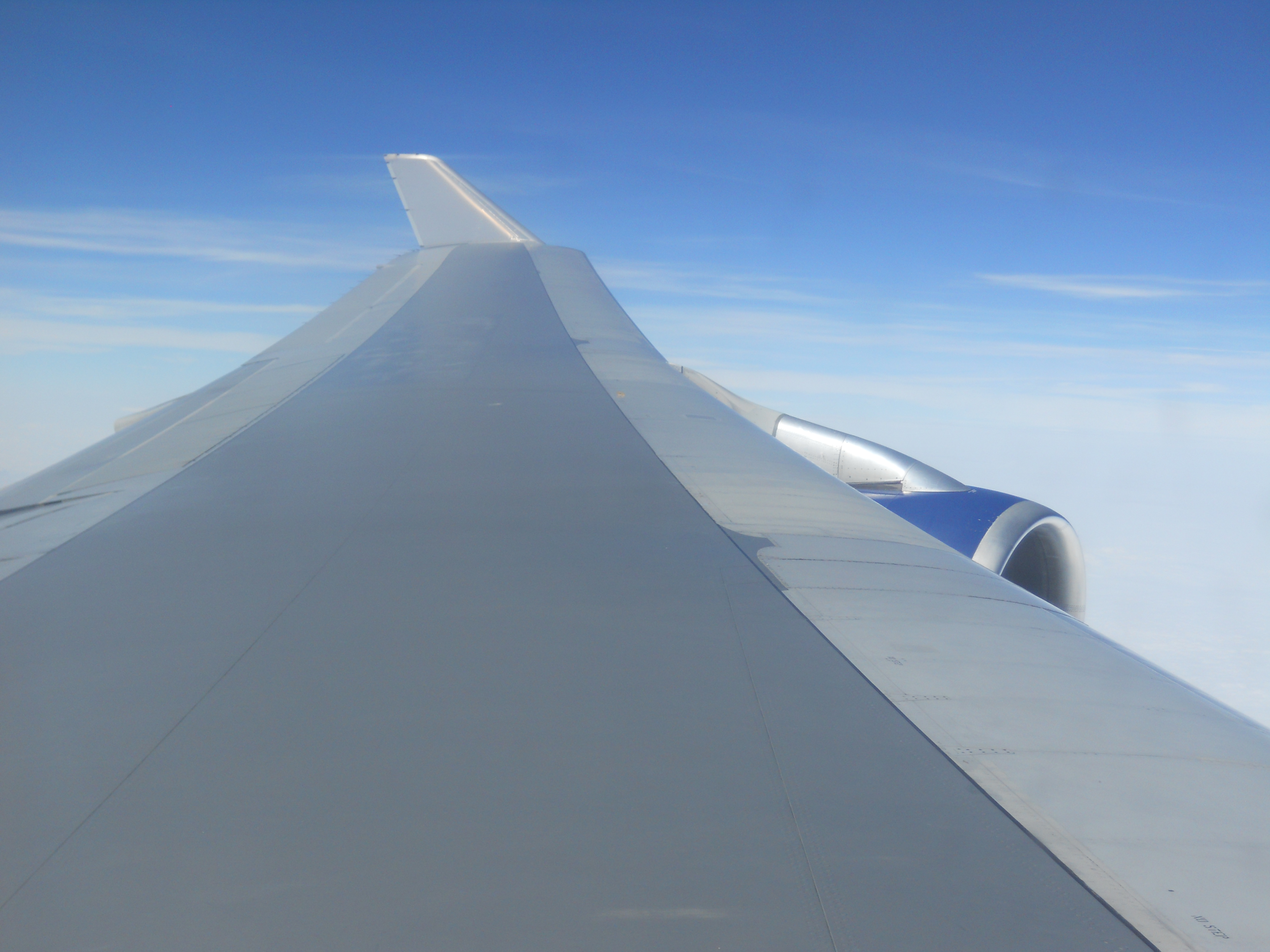
This picture of the wing of the 747 shows the rivets that hold it together.
747 Wing
By the way, the upturned end of the wing is an aerodynamic device to increase efficiency.
If you are on Airbus as opposed to a Boeing, you’ll see differences.
For a start the Airbus uses a different end to a wing in that they have more of a sideways delta at the end.
But the main difference is that Airbus glue their wings, whilst Boeing use rivets.
Glue? You might ask.
But they have doing it for years. In fact the technology was first started by de Havilland and was applied very successfully to the Mosquito of World War II fame. They then applied it to the Comet and Trident airliners before using it on all Airbus wings.
The advantage is that glue carries the loads between the parts of the wing continuously, whereas with rivets the stresses are carried only at points, which have been weakened by the rivet holes. This means that it should be possible to have a lighter wing for the same strength with glue.
Some technologies may seem strange, but don’t ignore them if they work.
The Kunstzaal Kleizkamp Raid
In the post on the Mosquito, I mentioned the raid on the Kunstzaal Kleizkamp Art Gallery in the Hague, which was being used to store the Dutch population records.
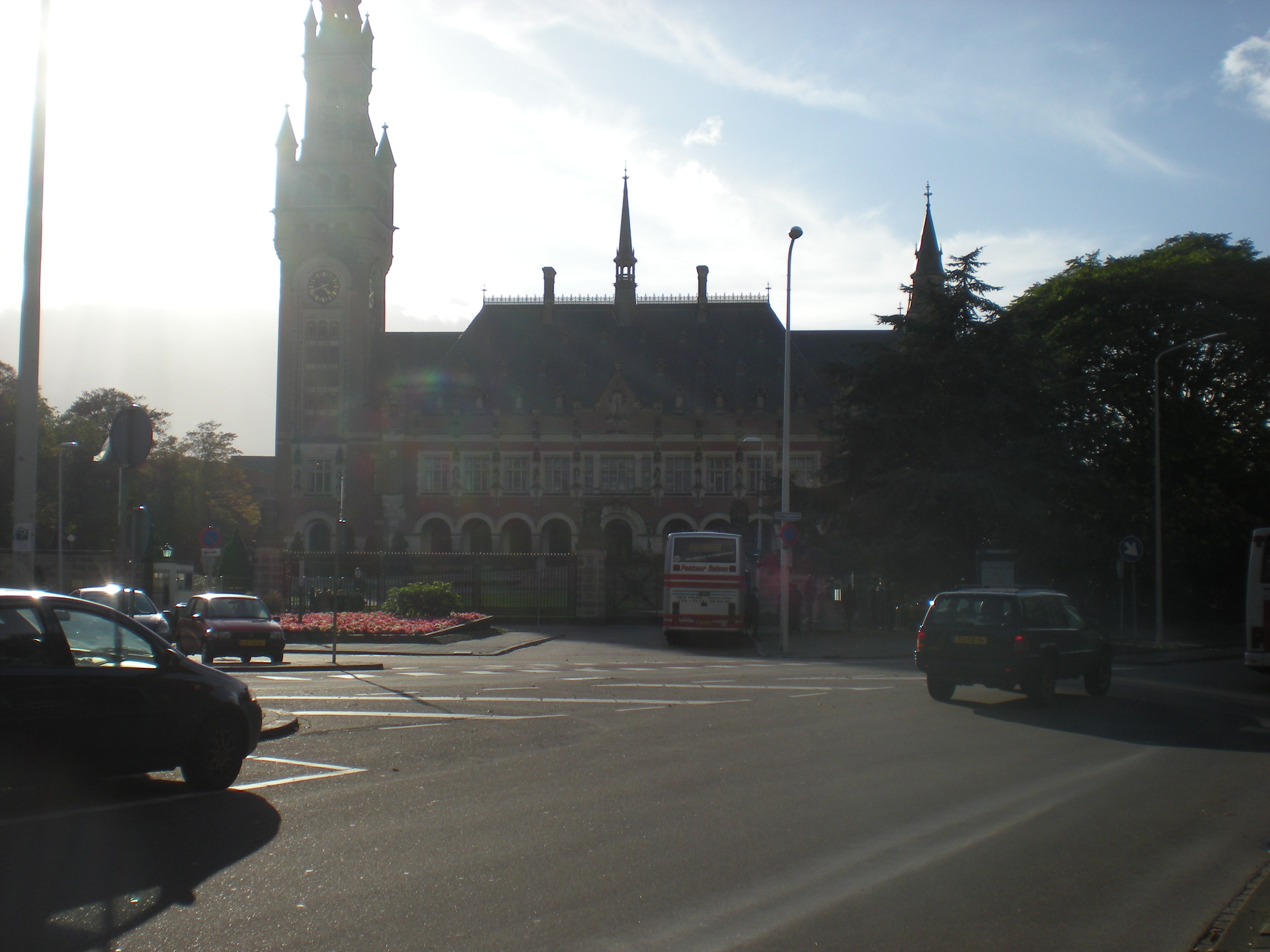
Whilst in Holland, I had some time to myself in The Hague so I tried to find out where it was. Using Google from my laptop, I found this Dutch article in Wikipedia. The reason I’d not been able to find this before was that the article is only in Dutch and Kleizkamp is spelt differently in that language, as Kleykamp. There does not appear to be any trace left of the gallery opposite the Peace Palace, which is one of The Hague’s most famous buildings.
The Peace Palace, The Hague
The article says that the gallery was a white house opposite the palace.
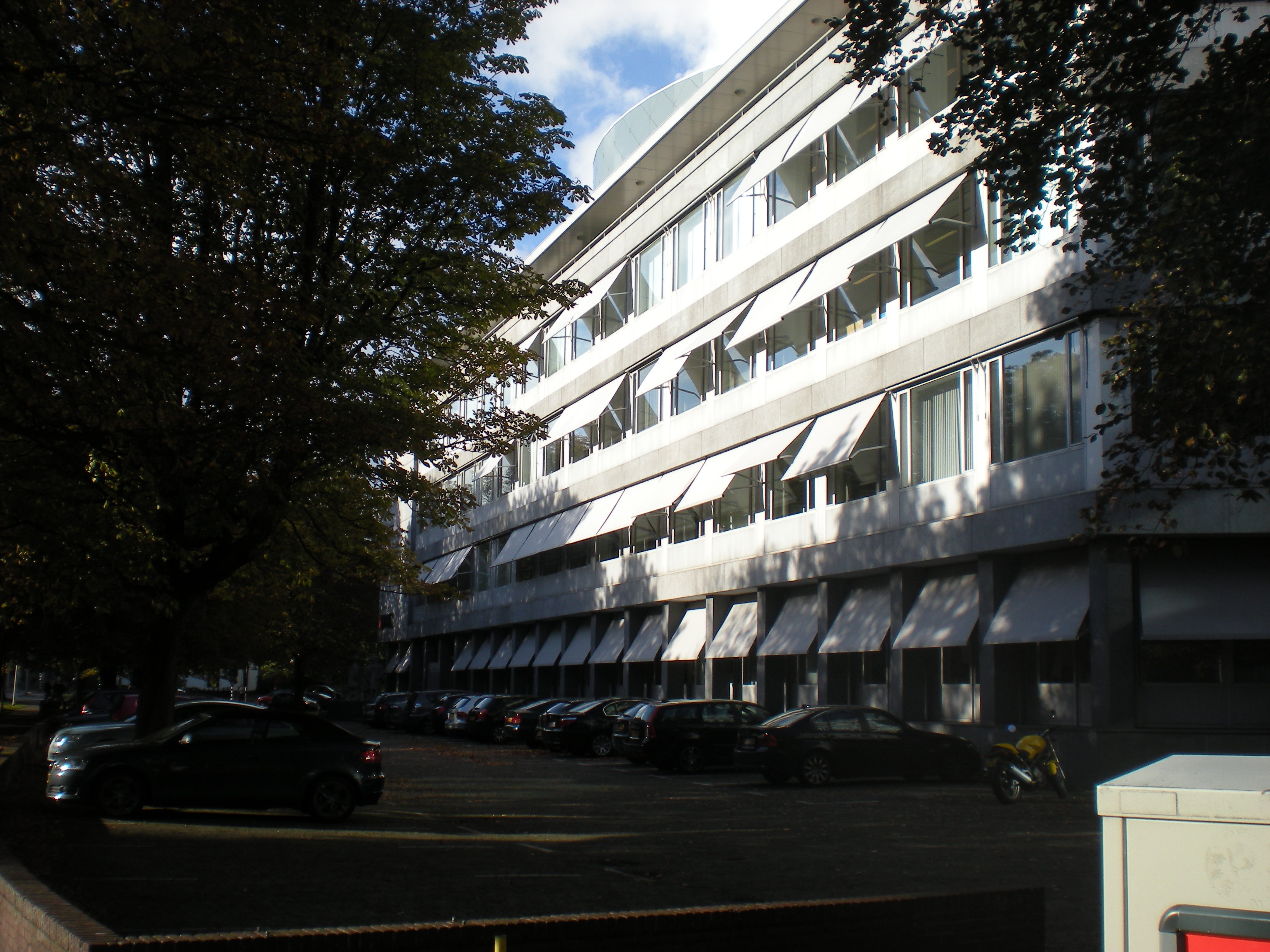
All that is there now is an anonymous office block.
NICB Bank, The Hague
If you translate the Dutch articles, there was a certain amount of controversy about the raid. Some said it should be done earlier and around sixty, mainly women, died when the building was bombed. But it would appear that the RAF didn’t have the capability to do the raid before and that it was preferred to do the raid on a working day, when the filing cabinets were open.
The Mosquito
The Times today has the obituary of John Smith-Carington, who was a Mosquito pilot in the Second World War.
I think that unusually, The Times may have the account in the obituary about the raid on The Hague slightly wrong, as they mention releasing prisoners. Wikipedia, which again is not sometimes the best of sources says.
On 11 April 1944, after a request by Dutch resistance workers, six Mosquito FB VIs of No. 613 (City of Manchester) Squadron made a pinpoint daylight attack at rooftop height on the Kunstzaal Kleizkamp Art Gallery in The Hague, Netherlands, which was being used by the Gestapo to store the Dutch Central Population Registry. The first two aircraft dropped high explosive bombs, to “open up” the building, their bombs going in through the doors and windows. The other crews then dropped incendiary bombs, and the records were destroyed. Only persons in the building were killed – nearby civilians in a bread queue were unharmed.
This type of raid though was typical of the Mosquito.
One of my friends learned to fly on them just after the war and he said that getting them into the air was sometimes rather dangerous, but once they were at a safe height, they were a superb aeroplane. In the latter part of the war, they could strike with the precision of a surgeon’s scalpel.
The Mosquito was summed up by Goring.
The British, who can afford aluminium better than we can, knock together a beautiful wooden aircraft that every piano factory over there is building, and they give it a speed which they have now increased yet again. What do you make of that?
But the real tragedy of the Mosquito is that we never built enough of them. They were fast and could outrun every German fighter for most of the war and because of this, they could actually bomb Germany twice in one day. They also delivered over half the weight of bombs as a Liberator or Flying Fortess for just a crew of two, with a much higher safe return rate. Remember too, that the Allied Air Forces lost hundreds of thousands of aircrew bombing Europe with a rather dubious accuracy and a somewhat vengeful strategy.
Mosquitos could and should have very accurately bombed the places that really hurt the Nazis, day in and day out. But the powers that be, felt that you don’t go to war in an unarmed wooden bomber.
They were wrong!
At least it was realised after the way. Wikipedia again.
Despite an initially high loss rate, the Mosquito ended the war with the lowest losses of any aircraft in RAF Bomber Command service. Post war, the RAF found that when finally applied to bombing, in terms of useful damage done, the Mosquito had proved 4.95 times cheaper than the Lancaster; and they never specified a defensive gun on a bomber thereafter.
I have been to the de Havilland Museum just off the M25, where the prototype sits in splendour where it was built.
Go and see one of the finest aircraft ever built!
 The Anonymous Widower