A Stray Class 68 Locomotive At Stratford Station
I took these pictures of a Class 68 locomotive.
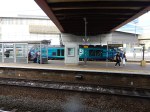
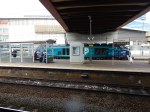
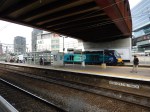
You don’t see them very often at Stratford station.
But when you see them in a station, as I did here, you realise how much less noisy and smelly they are than the ubiquitous Class 66 locomotive.
This blog post from Reading University entitled EU Emission limits bite for new freight locomotives, gives a few details.
- The Class 66 meets the Stage 3A emission regulations, but the author does not know of any plans to meet Stage 3B.
- The Class 68 meets the Stage 3A regulations, and can be easily modified to meet Stage 3B.
- The Class 70 meets the Stage 3A regulations, but not Stage 3B, although that could be a future option.
You certainly don’t see anything other than a Class 68 pulling a passenger train.
How To Move 100,000 Containers A Year Between Germany And China
This article on Global Rail News is entitled DB and Georgian Railways to cooperate on new Silk Road rail corridor.
It described how Deutsche Bahn and Georgian Railways have signed an agreement to develop a new rail freight route between the Far East and Europe.
This map from the article, shows the various rail routes across Eurasia and how the new Silk Road will fit in.

DB transports more container by train between China and Germany
I think the most interesting thing about the new route, is that it doesn’t go through Russia.
Vladimir Putin will not be amused!
If you read the Wikipedia entry for Georgian Railways, it does list a few problems, but it would appear that the route across Georgia is being upgraded to Standard Gauge all the way from the Turkish border to Almaty in Kazakhstan.
With Germany, Turkey and Europe at the Western end and China at the Eastern end both predominately Standard Gauge, I think that this route will be all the same gauge.
When this happens, trains will be able to go straight through, with perhaps just a change of locomotive.
How long will it be before, an enthusiastic entrepreneur starts to run a passenger service between Europe and China. Trans-Siberian Express eat your heart out!
Vladimir Putin will be even less amused!
If DB can build the Standard Gauge railway through to China via Georgia, it will give the following benefits.
- Services will be faster than the Russian routes.
- There will no change of gauge, which means unloading one train and loading another.
- If the line is electrified, this will make the route more efficient.
- Freight will move smoothly across Asia avoiding the pariah that is Russia.
- The route avoids the more volatile parts of the Middle East.
- Countries on the route like Serbia, Turkey, Georgia and Kazahkstan will surely benefit.
- The route will surely be more accessible to Southern European countries, than the current Russian routes.
It is undoubtedly a good plan.
After The Pop-Up Shop, Here’s The Pop-Up Depot
We’re all very familiar these days with pop-up shops.
I found this article on the web entitled DB Cargo UK and CEMEX introduce ‘pop-up’ rail depot.
It may not be for the general public, but this is said.
DB Cargo UK and CEMEX have opened a ‘pop up’ rail depot to serve the growing North West construction market and reduce the number of HGVs transporting materials from the picturesque High Peak countryside.
The ‘pop-up’ depot was installed in weeks on land adjacent to the West Coast Mainline using a ready-made weighbridge and office.
The temporary site, based in Warrington, Cheshire, will handle around 125,000 tonnes of aggregates each year.
I think we’ll see the concept used more often to get those truck-loads of heavy construction materials off the roads and onto the railways.
Will The High Speed Trains Ever Die?
I am writing this post as I’ve just read this article on Rail News, which is entitled Strategic Railfreight Interchange Debate Ignites.
The plan is to build a rail freight interchange called Rail Central at Blisworth between the West Coast Main Line and the Northampton Loop Line and then run high speed freight trains based on modified HSTs to destinations all over the country.
To say there is opposition to the plan would be a gross understatement and explodes would probably be a better word in the headline rather than ignites.
The plan reminds me of one that used to be used by Royal Mail called Spokes from Speke, that was used to get First Class letters delivered on time. Basically, small aircraft flew the letters, which had been sorted by destination, from all over the country to Speke airport in Liverpool, where they were sorted and then flown to the destination. So a letter from say the Orkneys to Plymouth, would be flown from Kirkwall to Speke, unloaded and then put on the plane to Plymouth.
If I remember, it worked very well.
On this page of the British Library web site, there is an Oral History of the origins of Spokes from Speke.
As it would appear the system has Network Rail’s backing could it be that someone is creating a Spokes from Blisworh for important parcels?
What A Lot Of Minis!
I photographed this train with the inevitable noisy Class 66 locomotive on the front at Didcot Parkway station.
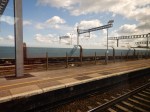
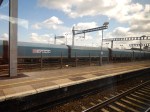

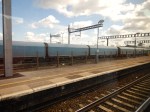
I assume it was taking Minis for export.
West Midlands To Get A New Freight Interchange
This article in Rail News is entitled New railfreight hub proposed for West Midlands. This is the first paragraph.
Plans have been published for a major rail interchange in the West Midlands, which its promoters say will boost the regional economy and could create between 6,500 and 8,500 jobs.
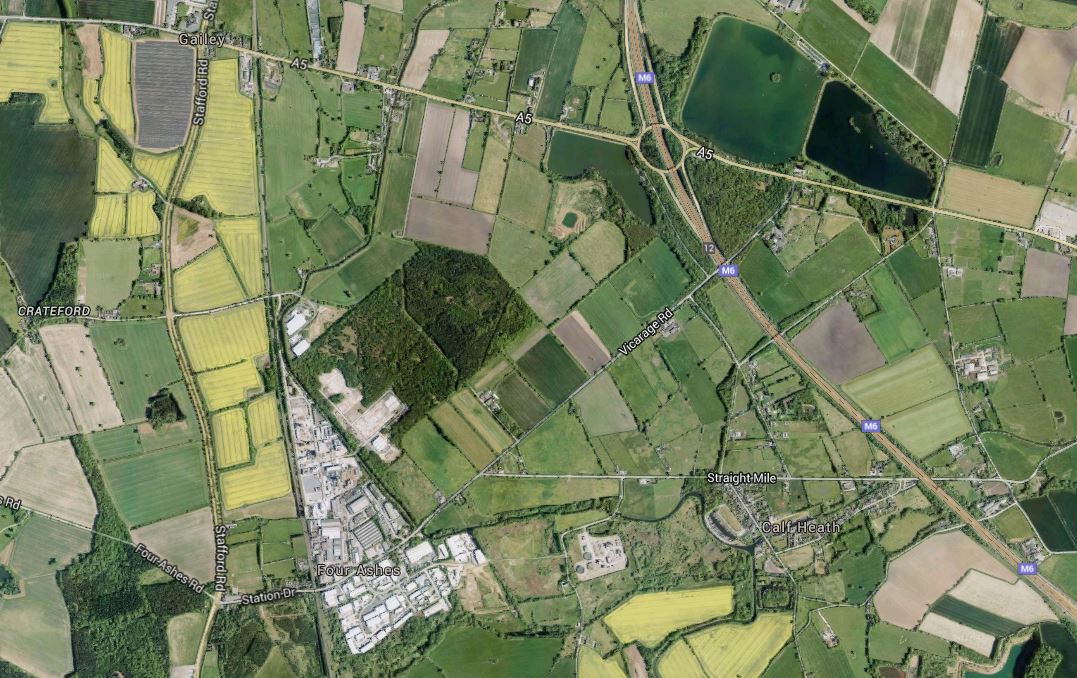
It sounds good to me. Especially, when you look at this map of the location.
Four Ashes Railfreight Hub
The area is known as Four Ashes and it used to have have a station of the same name.
- On the map the railfreight hub will be in the large triangular area of white and grey buildings towards the bottom of the map and slightly left of the middle.
- The site is 250 hectares.
- The M6 runs South East to North in a gentle curve and has a major junction (12!) with the A5.
- the Rugby-Birmingham-Stafford Line runs North-South to the right of the line of yellow fields (rape?) and the left of the site of the railfreight hub.
- It’s also not the only proposed new rail infrastructure in the area, as a station has been proposed at Brinsford Parkway, a few miles to the South.
It could certainly be described as a big well-positioned railfreight hub.
But will the locals object, despite the thousands of jobs?
China, Russia And The EU’s Intermarium Bloc
The title of this post is the title of this article on the euobserver web site.
It is an interesting read, which talks about how trade routes will develop between Europe, Russia and China.
Incidentally, I found it, because it talks about Rail Baltica, which I think is an important project that could bring benefits to the Baltic States.
Freight Through Nuneaton
Nuneaton is where freight trains between Felixstowe and the North West and the West of Scotland, join and leave the West Coast Main Line (WCML).
This Google Map shows the rail lines through Nuneaton station.

Freight Through Nuneaton
Note how the WCML runs diagonally North-West to South-East, though Nuneaton station.
Freight trains from Felixstowe arrive and turn North alongside the WCML before crossing the WCML on a flyover.
Trains can either go straight on to Birmingham and the West Midlands or turn North using the 2012-built single-track Nuneaton North Chord to proceed up the WCML.
This Google Map shows the flyover and the Nuneaton North Chord.

Nuneaton Flyover And North Chord
Trains from the West Midlands to Felixstowe take the flyover in the other direction, but trains from the WCML proceed through Nuneaton station and then turn off to Felixstowe.
This Google Map shows the WCML to the South of Nuneaton station, with the line to Coventry turning off to the West and the line to Felixstowe turning off to the East.

Lines South Of Nuneaton Station
As I came through the area today from North to South, I took these pictures.







I didn’t take any south of the station, as I was sitting on the wrong side to show the line going East.
The Nuneaton North Chord was a one-mile chord and cost £25.6million, which in terms of railway projects isn’t a lot of money.
But it is one of a pattern of short railway lines that have been built or planned in recent years to unlock the potential of the UK’s railways.
- Bicester Chord was opened in 2015 as part of a £130million project to extend Chiltern services to Oxford.
- Hitchin Flyover was opened in 2013 at a cost of £47million.
- Ipswich Chord was opened in 2014 at a cost of £59million.
- North Doncaster Chord was opened in 2014 vat a cost of £45million.
- Tinsley Chord is being built to enable tram-trains to run between Sheffield and Rotherham at a cost of £2million.
- Todmorden Chord was opened in 2015 at a cost of £9million.
But iit is not all plain sailing, as the saga to create the Ordsall Chord in Manchester shows. Plans show it should be finished in December 2016 at a cost of £95million, but a determined local protester has stuck the development in the Courts with the local Councils, Network Rail, the train companies and the Government on the other side.
I do wonder how many of these short railway lines and chords can and should be built.
Caledonian Sleeper’s New Locomotives
The excellent Calendonian Sleeper has recently received some new locomotives according to this article in Rail Magazine.
But the Class 73/9 locomotives are not new, but refurbished electro-diesel locomotives built in the 1960s. It’s just that they are a bit smaller than most diesel locomotives and are ideal for moving the sleeper trains around Scotland.
In the 1960s, 49 were built and on a quick count up, I think that nearly thirty are still being used on the UK rail network.
But like other locomotives of that era and a couple of decades after, where there’s a part to play some of these old stagers can still do a reliable turn.
Some like a few Class 47 locomotives have even been rebuilt into new updated Class 57 locomotives, as this is an affordable way to get effectively new locomotives.
As there still appears to be a shortage of freight locomotives, I think some of our engineers will be creating virtually new locomotives from old ones currently preserved in the strangest of places.
But it certainly seems to be a reliable way to create the needed motive power.
So next time you take a Calendonian Sleeper into or out of the North of Scotland, just look at the locomotive and reflect on the fact that you might not be the oldest thing on the train.
Last Ever Class 66 Locomotives Arrive In UK
The title of this post in the headline in an article on Global Rail News. It describes how the last seven Class 66 freight locomotives have now been delivered to the UK.
In my view it is mixed news.
- We need more freight locomotives to get cargo traffic off the roads and these seven will help.
- Class 66 locomotives don’t meet the current EU emission regulations as is explained here.
- They are extremely noisy, vibrate badly and are a constant source of complaints, where they run through built-up areas.
- Once they are imported, will we ever see the back of them?
In addition, we are electrifying more and more lines and in particular freight routes, so where are orders for new electric locomotives?
 The Anonymous Widower