Will The Gospel Oak To Barking Line Be Extended To Hounslow?
The Modern Railways report on the Mayor’s Transport Infrastructure Plan for 2050 says this.
There may be a case for further orbital rail capacity, says the document – it shows an indicative, uncosted network to link Hounslow, Old Oak Common, Neasden, West Hampstead, Harringay, Walthamstow, Barking, Abbey Wood, Bexleyheath, Norwood Junction, Sutton and New Malden and back to Hounslow, with another route between Abbey Wood and New Malden via Lewisham, Peckham Rye and Wimbledon.
I did a brief piece of research on the route yesterday between West Hampstead and Harringay, and it would appear that there is a link off the Gospel Oak to Barking Line (Goblin), that enables trains to move to and from the Midland Main Line. I got a picture of the link just before my train from Gospel Oak arrived at Upper Holloway station.
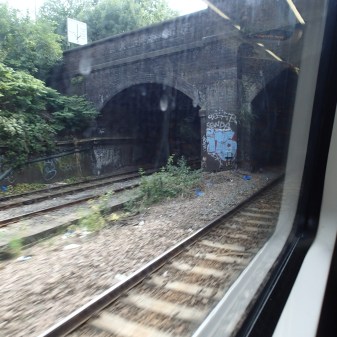
Goblin To MML Link
I suspect freight trains use it to get from the Goblin to the Dudding Hill Line, which branches off the Midland Main Line, just north of Cricklewood station.
So an Overground train could run the same way stopping at West Hampstead and Cricklewood stations, before taking the Dudding Hill Line, through new Neasden and Old Oak Common stations on the way to Hounslow.
The Route
Perhaps it is a good idea to list the stations on the extended line in order from Harringay Green Lanes to Hounslow.
Harringay Green Lanes – My only observation, is that I use this station to pick up the Goblin, as I can get a 141 bus direct to and fom the station from within a hundred metres from my house.
Junction Road – This doesn’t exist at present, but is constantly being talked about to link the Goblin to the Northern Line.
West Hampstead – In a few years this will have grown into a full blown interchange, between Thameslink, Chiltern Railways, Jubilee and North London Lines. Having the new extended Goblin call here would improve the transport opportunities for those who live and work all across North London.
Neasden – This will probably be a new station, somewhere near the current Neasden station on the Jubilee line. I visited the area, when I was researching the Dudding Hill Line. It might be a place where some clever architect and developer could create a very useful interchange combined with some much-needed residential properties.
Harlesden – As the Dudding Hill Line runs virtually over the top of the current Harlesden station on the Bakerloo and Watford Overground Lines, like Neasden this could be a development opportunity.
Old Oak Common – I have seen in some reports Old Oak Common has been described as the Canary Wharf of the West. Also, every time I read about the area, more rail lines and ideas get thrown into the mix.
North Acton – The route has now joined the southern end of the North London Line. An interchange at North Acton has been talked about for years. There’s a discussion here.
Brentford – In recent years, this station was on the London Crosslink between Norwich and Basingstoke.
Points Raised
Listing the stations shows several important points.
1. Interchanges With Other Lines
This part of the line has interchanges to many other lines. You could put these on the list.
2. Development Opportunities
Many of the stations seem to have development opportunities. Perhaps not on the scale of West Hampstead and Old Oak Common, but there would to be scope at many stations.
3. Important Areas Served
The line effectively links Tottenham, which is one of the most deprived areas of London, through most of North London through Old Oak Common to Hounslow in the West. The western end point is close to Twickenham Stadium, which is not the easiest place to get to from North and East London.
I have not seen any figures, but surely this line would open up a lot of employment and leisure opportunities.
4. Freight
An electrified line, as it obviously will be, would also speed freight along the line, perhaps allowing more freight trains to between ports like Felixstowe and London Gateway and the lines to the North and West.
4. No New Rail Lines, Bridges Or Tunnels
In this brief look, it would appear that most of the infrastructure, except for station and the catenary, is already in existence. I can’t see too many protest groups and Nimbys objecting to what is being proposed.
6. Possible Objectors
Perhaps the biggest objectors will be other train companies objecting to London Overground encroaching on their territory.
Summing Up
So to sum up, I think that this part of the proposed line, might be developed in the near future, as it provides an important link without costing the multi-billions of a Crossrail.
Are The Hackney Flyers The World’s First Bus-Trams?
With the publication of Boris Johnson’s vision of transport in London in 2050 , it would seem that we have the vision of transport sorted. The report’s plans for rail are detailed here in Modern Railways. Here’s a flavour.
The draft includes plans to maximise capacity of and extend Tube services, and approve Crossrail 2. ‘Further Crossrail projects may be required’ – an east-west alignment is mentioned, but with no specific proposals at this stage. Working with Network Rail, there is also huge opportunity to double capacity on the capital’s rail network, says the plan, and upgrades to main radial routes are outlined.
But all the reports and commentators seem to miss, the quiet revolution that is taking place in Hackney and several other places in London.
The most common journey I do, is get a bus from just round the corner from my house to the Angel or perhaps further. I have a choice of three buses to the Angel; the 30, 38 or 56.
When I moved here four years ago, the service wasn’t bad, but I often had to wait what seemed to be a few minutes.
A few months ago, the route 38 was converted to brand-new Routemasters and now everybody seems to choose one of these Thomas Heatherwick-designed buses if you have a choice, if say a 56 and a 38 arrive together.
Perhaps it’s because they get to the Angel faster, which they seem to do. Not that I’ve measured it! It may be just a perception. But they are definitely more comfortable and better if you’ve got shopping or parcels with you.
All buses have improved further since buses went cashless, as no longer does the driver wait whilst he sorts out passengers with cash.
The Transport Plan does mention buses, but only briefly.
However, after the experience here in Hackney, is London doing enough to use the humble bus to ease London’s transport problems?
I believe for instance, that if say you were thinking of running a tram between say Kings Cross and Elephant and Castle, you could create a dedicated bus lane and run a squadron of two-man operatord Routemasters on the route!
It would be more affordable than the tram and if say you got the route slightly wrong, all you’d need to do would be to move a few kerbs and white lines and tell the drivers about the new route. There would of course, be no construction chaos, like they had in Edinburgh.
If say you replace the route with an Underground line, the buses just get redeployed and you remove the road markings.
So did Thomas Heatherwick design the Hackney Flyer or the world’s first bus-tram?
Is The Bakerloo Line Extension To Be Built?
The Bakerloo Line Extension was originally planned to be built in the 1940s and it seems to come up every now and again.
In this supporting document to the London Infrastructure Plan for 2050, the following is said.
Potential extensions to the existing network to unlock major potential for housing development range from major rail schemes such as the extension of the Bakerloo line, to extensions to the Overground. In unlocking development they also provide opportunities to secure funding towards the cost of delivery.
In some ways the second quoted sentence is the more important statement, as it might mean that developers, who want to contribute to infrastructure will be listened to. This happened in part with Canary Wharf at the Jubilee Line, so if done properly, it might mean an accelerated rate of construction of new infrastructure.
Obviously before any decision is made detailed costings and consultations must take place. According to this report though, it has a benefit cost ratio of 3:1
One factor that will be important, is how the project to create the Northern Line Extension to Battersea performs.
If it is on budget and on time, will that team be rolled over onto the Bakerloo?
 The Anonymous Widower