Ticketing In London Takes Another Big Step
Over the last month,since London’s buses went cashless, the silence has been deafening about this issue and I haven’t found any news reports about problems or complaints.
So it was no surprise to see that from September 16th the Underground, Overground and DLR will accept contactless bank cards.
There are still a few small steps to take, like bringing all of other rail companies into the system. Once this is done, you could say turn up at Gatwick Airport touch your contactless bank card on the reader and then again, when you get to Victoria, to get into Central London. Obviously, you can do that from September 16th at Heathrow or City Airports, as they are in the Transport for London area.
One of the things also to be introduced is a weekly cap. So will this mean that if you put a weekly ticket on Oyster, you won’t need to any more.
TfL Says Ready On The Northern Line Extension
This article from Global Rail News announces that Transport for London has now chosen their preferred contractor for the Northern Line Extension to Battersea.
Although it is starting later than Crossrail, the article says it could open before that rail line is fully complete.
2019 is looking to be a momentous year for new rail projects.
The Trains For Crossrail And Thameslink
London’s two new cross-town railways; Crossrail and Thameslink will both be fully opened around the end of this decade.
So it would seem logical that the two lines might share the same trains.
But it is not as simple as that!
All sorts of factors like delaying of projects, the slightly different natures of the two lines and the decision of Siemens, who won the contract for the Thameslink trains, to withdraw from Crossrail, because of a lack of capacity, mean that we now have two separate train fleets; Class 700 for Thameslink and Class 345 for Crossrail.
Although separate train fleets, it does look that the design philosophy of the two trains is very similar. Take this paragraph from the specification issued by Crossrail for their Class 345 trains.
Wide through gangways between carriages, and ample space in the passenger saloons and around the doors, will reduce passenger congestion while allowing room for those with heavy luggage or pushchairs.
From what I have read here on First Capital Connect’s web site, the Class 700 might be very similar.
So it would seem that four of London’s important new train fleets will be walk-through. In addition to the Class 345 and Class 700, the Overground’s Class 378 and the Underground’s S Stock are build to similar principles, although the latter two trains, probably expect more standing passengers.
One advantage of these trains is that they can be designed to line up with the platform edge, as the Class 378 generally do, which enables a simple step across the gap into or out of the train. At some stations, like Willesden Junction, on the Overground, the alignment is bad and you certainly notice the difference. So I will hope that the two new train classes line up with the platforms! As on Crossrail and Thameslink most stations will only be served by one type of train, I suspect that it could be possible.
In my view, if we are to have a step-free railway, then all station-train interfaces, should be a simple step across.
Another advantage of this type of train, is that you can walk inside the train to less-crowded areas or perhaps to your preferred door for exit at your destination. I do this regularly, when I take the short hop from Highbury and Islington to Dalston Junction stations on the Overground, as I get in at the front and get out at the back, due to the layout of the two stations.
This walk-through capability will be essential for Crossrail, where the trains and platforms will be 200 metres long. One of Crossrail’s engineers told me, that she felt some people might not like the trains because of their length and the long walks in stations. I don’t think regular users will mind so much, as they’ll develop a strategy that works for their journey. But will a tourist dragging a heavy case going from say Heathrow to Bond Street, be so happy after walking a long distance to get out the station.
The various proposals for new deep-level Underground trains seem to have through gangways like this proposal from Siemens.
So is a de facto standard for train design emerging, where trains have through gangways, flat floors and wide doors with no-gap step-across access?
I think it is and it will be to the benefit of all rail users, including the disabled and those pushing buggies or dragging heavy cases.
Looking at the pictures I took of Siemens Underground proposal, it seems the design fits such a standard!
A secondary advantage of this design is that it should tighten up stopping time at stations, thus making it easier for trains to keep to schedules.
Think Quarts Into Pint Pots
London Underground’s Victoria line, may have been a technological triumph for 1968, when it opened as an automatic train line, where the driver doesn’t really drive the train. Although, he or she is the person in charge. Incidentally, when the line opened in 1968 a lot of the electronic control systems used valves rather than transistors. I can remember reading about the line in a copy of Simulation magazine when I worked at ICI around 1970. It was truly cutting-edge world-beating technology in its time.
But you can’t say much for some of the stations, which were built on the cheap and are very much sub-standard compared to the extensions to the Piccadilly Line built in the 1930s.
But now the trains are running at a maximum rate of 34 trains an hour for much of the day, as is reported in this article on Global Rail News. Here’s the first three paragraphs.
London Underground’s Victoria line is now operating 34 trains an hour – ‘the most frequent train service in the UK’.
Peak-time services have been incrementally increasing since the Victoria line upgrade was completed in 2012 from 28 trains an hour to 30, 33 and finally 34.
Passengers now only have to wait two minutes between trains and there are also more trains running the full length of the line from Brixton up to Walthamstow Central.
So in two years capacity has increased by over twenty per cent, mainly by good design and engineering.
I wonder what the engineers, who built the line in 1968, would think of their baby now!
You have to also wonder if by applying the principles used on the Victoria line. could be applied to other lines in the Underground. Upgrades on lines like the Piccadilly have been delayed, but I do think, we’ll see some more squeezed out of the current system.
There are of course things that are being done and as a regular Underground user you tend to feel that the system may be more crowded, but you seem to get fewer delays. Perhaps reliability of trains, power systems and escalators is getting better.
It will also be interesting to see what happens next Monday, when buses go cashless. It might be anywhere between a disaster and a triumph.
At the disaster end of the scale, it will load more passengers onto the Underground.
But if it is a triumph and speeds up the buses, as I think it could, will passengers who can, swap from the cramped and dark Underground to a lighter and more spaceous bus, if it only takes a couple of minutes longer. Living in Hackney with no Underground, I change my route according to which bus arives first. Since the 38 has been run by New Routemasters, it has been effectively cashless, with passengers using the closest and most convenient door and only the few who need to pay using the busier front door by the driver. Certainly, if I want to get to the Angel quickly, I’ll choose a 38, as against a 56, which goes the same way, but is often overtaken, by a succession of New Routemasters.
If cashless buses work well, this will surely hasten the removal of ticket offices on the Underground, with contactless bank cards, supplementing Oyster and Freedom Passes. What differences, will this make to the ridership on the Underground?
The only thing that is certain, is that more quarts will continue to be poured into pint pots all over London’s transport system.
Transport for London’s Two Iconic Brands
I have a Google Alert for the word Overground to pick up any stories about Transport for London’s newest railway system the Overground. The link is to the official site and on a straight Google search, it is number one in the list.
It’s only rarely that the Google Alert picks up a news item, that is not about the Overground.
So how does the Underground fare in Google searches. As with the Overground, the official site for the Underground is first in the search list. On the first page, there are only a couple of pages that are nothing to do with the London Underground.
Even the word Tube typed by itself into Google, produces virtually a complete page of information about the Underground.
I suspect that London’s two iconic brands; Underground and Overground, together with their nickname Tube have one of the best worldwide recognitions.
Frank Pick, who led London Transport in the early days and oversaw the creation of the original corporate branding, will be laughing through history.
Who would have thought that a man from Spalding, who qualified as a solicitor, would have become one of the people with the greatest influence on the look of today’s London? Only Christopher Wren and Joseph Bazalgette come close.
Some More Self Winding Clocks
I first found two of these at Tooting Bec some years ago.
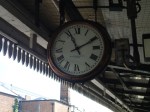
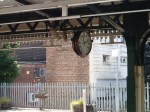
Golders Green station has a pair, which appear to be in good condition.
I wonder how many are still installed and in full working order. According to this section in the Wikipedia article on the Self Winding Clock Company, there were originally 600 and installation started in the 1900s.
Long may they continue to give passengers the time!
A Well-Designed Transport Interchange
Golders Green is not an area I go to often. Years ago, C and myself used to go there to buy shoes for the children, at a shop I think was called Brians. I wonder if it is still there!
But yesterday, I needed to go there to get some extra keys for my new Banham lock. It is not a difficult journey, as I just got a train up the Northern line from the Angel to Golders Green station.


There are numerous buses to places all over North London from the station as this map shows.
It’s also a stop for a lot of National Express coaches.
We need more well-designed simple interchanges everywhere, so that train passengers can easily get to their ultimate destination.
From the station, it was just a short walk to Banham’s shop.
Will The Northern Line Extension Open Before Crossrail?
That is what this article in Global Rail News is saying.
It looks to me like some clever project manager has examined the critical path and found a way to build it quicker.
Or could it be, that Crossrail has shown that digging tunnels through London has got a lot easier since they built the Jubilee Line Extension, as tunnel boring machines are now much bigger and faster? Crossrail have also shown how stations can be built independently of the actual railway, as commercial projects, at the same time as the railway is being dug or fitted out.
From Wikipedia too, it would appear that both station sites are not cramped and hemmed in by existing buildings.
So are we going to have a race between the Northern Line Extension and Crossrail, to see which opens first?
I think that Crossrail will open first, as it is a big project that has almost got successfully past the difficult parts and there are still questions to be asked of the Northern Line Extension, before construction can start.
One thing that might delay the Northern Line Extension is to build the line to Clapham Junction station in the first phase, rather than as a second one.
Could This Happen In The UK?
This article on the BBC web site is about how the French have ordered 2,000 new trains that are too wide for the platforms.
The French train operator SNCF has discovered that 2,000 new trains it ordered at a cost of 15bn euros ($20.5bn; £12.1bn) are too wide for many regional platforms.
But could it happen here?
The front cover of the February 2014 edition of Modern Railways has a headline of Mind the Gap. Inside it describes how at some London Underground stations there is a problem of large gaps between trains and station platforms with the new S Stock.
But the London Underground problem is for a different reason. As the lines get upgraded and new trains are delivered, London Underground is endeavouring to get the platform-train interface to help passengers and especially those with accessibility problems. And they have some curved platforms that make this difficult and will need rebuilding.
Regularly on the Overground, I see a wheelchair-bound passenger push themselves effortlessly into and out of the Class 378 trains, where the interface is easy. As the Overground platforms are lengthened for the new trains, any small gap problems are probably being addressed.
On the Continent except on Metros, there is usually a step-up into the train, which with heavy cases or a baby in a buggy is a slower process.
I wonder how long it is before some anti-Europe and anti-metrication politician or dinosaur, blames the EU and/or metrication for this French problem.
After all, the French are only probably doing what London Underground are and adjusting the platforms to their shiny new trains.
But are the new French trains solving the problem of access?
I can’t find any detailed descriptions of the trains or even their class, so I can’t answer that one.
This train-platform problem will happen more in the future, as many train platforms in the developed world were designed in the steam era and have been updated over the years. I suspect we’ll probably find some newish stations may have to be rebuilt for the next generation.
So we will see more of approach taken by the French and London of ordering a train, that you want for passenger needs and then adjusting those stations that don’t fit the new trains.
After all you would prefer to have the same type of train for all your lines like London Overground has done with the Class 378 rather than have a special version for some stations. If you look at the Class 378 as a go-anywhere train on the Overground, it has a dual-voltage and selective door opening capabilities to cope with lines without overhead electrification and short platforms.
I suspect that the French problems are worse as it’s a much larger number of trains and stations and there are politicians with axes to grind.
The Queen Starts An Inter Union Row
Her Majesty doesn’t often get involved in trade union disputes, but according to this report in the Standard, she’s very much involved in this one on the London Ungerground.
What puzzles me about this dispute is why we still have so many unions involved in the rail industry.
Over the many years, I’ve been watching industrial relations, it strikes me, that companies with a single union, seem to have better industrial relations, than those with more.
 The Anonymous Widower