Plan To Develop New ‘Southern Gateway’ Through Station In City Centre
The title of this post, is the same as that of this article in the Bradford Telgraph and Argus.
This is the sub-heading.
Work to develop a new city centre rail station in Bradford could soon be back on the rails, despite the Government cancelling the local Northern Powerhouse Rail line
These are the first two paragraphs.
It has today been announced that the UK Infrastructure Bank will be working with Bradford Council to plan and develop a proposed “Southern Gateway” station in the city centre.
Although few details have been announced so far, the station is expected to be a through station, and is likely to be on the site off Wakefield Road currently occupied by St James’ Wholesale Market.
This sounds like an updating with finance of a plan I wrote about in Bradford Seeks Support On Rail Project Which Could Deliver £30bn Benefits.
This map from OpenRailwayMap shows the rail lines in the Bradford area.
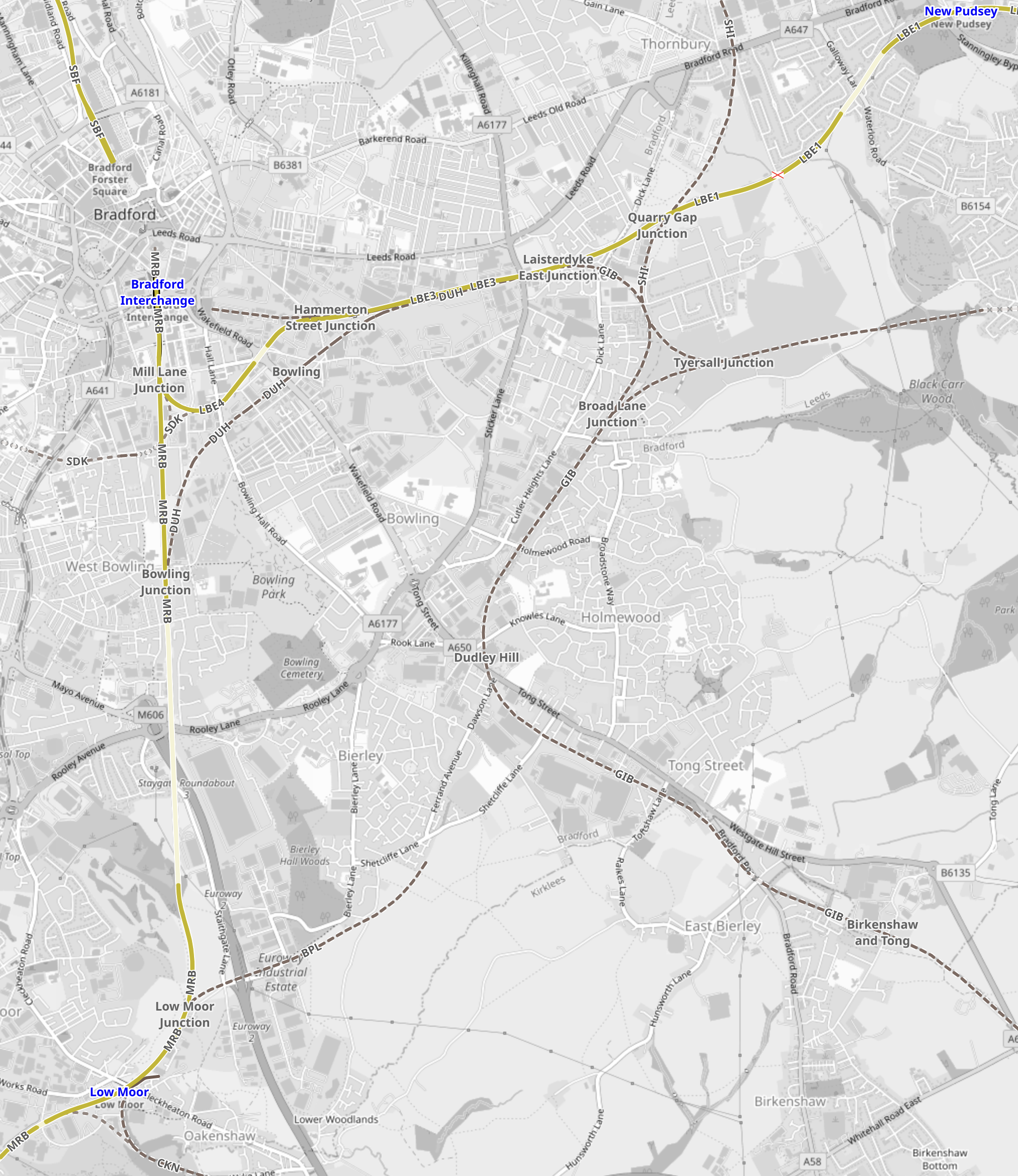
Note.
- New Pudsey station is in the North-East corner of the map.
- Bradford Foster Square and Bradford Interchange stations are in the North-West corner of the map.
- Low Moor station is in the South-West corner of the map.
This second OpenRailwayMap shows an enlargement of the lines across Bradford.
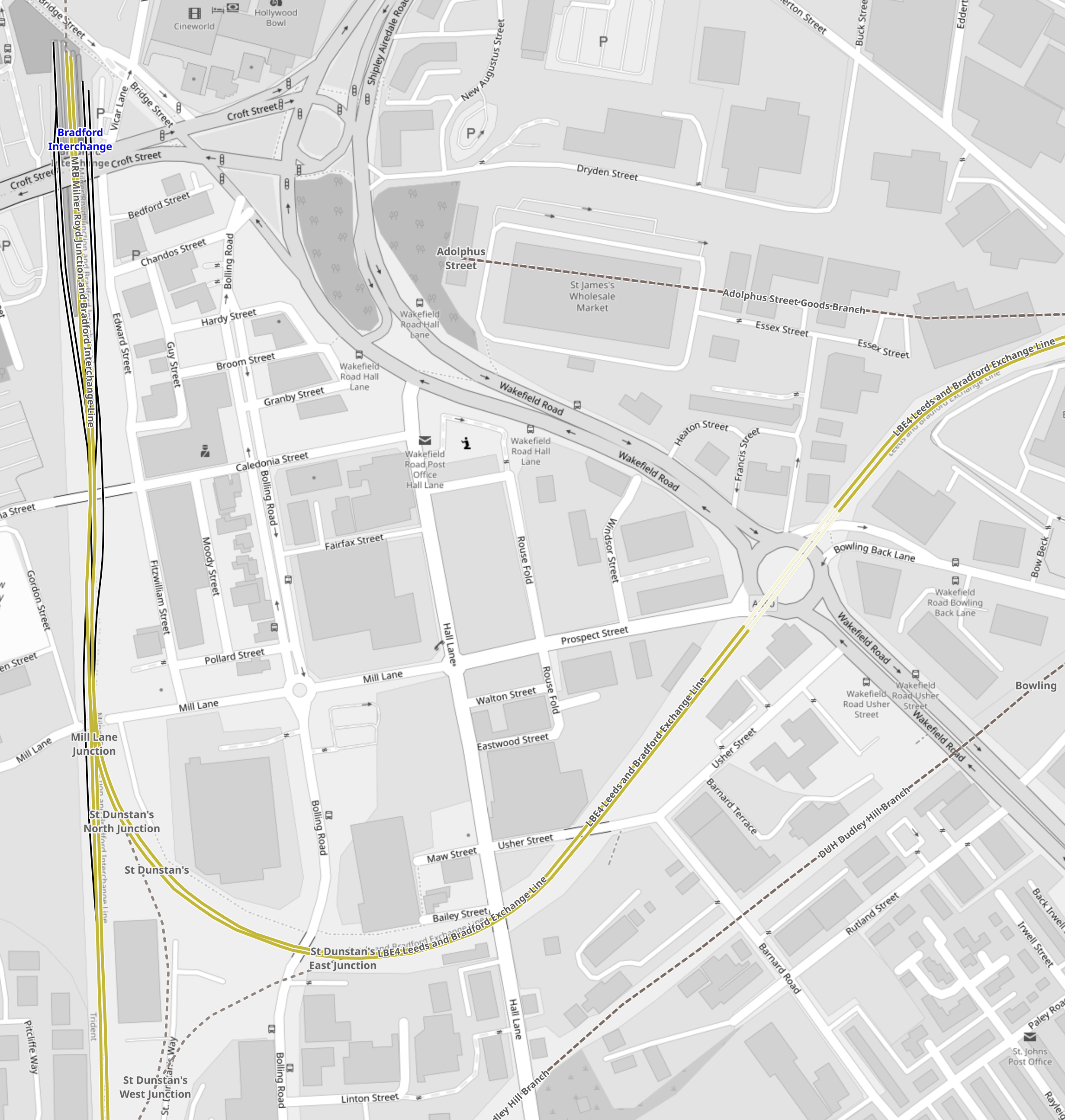
Note.
- Bradford Interchange station is in the North-West corner of the map.
- The railway lines are shown in yellow.
- New Pudsey station is off the map to the East and on the way to Leeds.
- Some trains between Leeds and Bradford are routed via New Pudsey station and the loop in this map.
- The railway between New Pudsey and Bradford Interchange stations goes under a roundabout on the Wakefield Road.
This Google Map shows St. James Wholesale Market and the railway to the North-East of the roundabout.
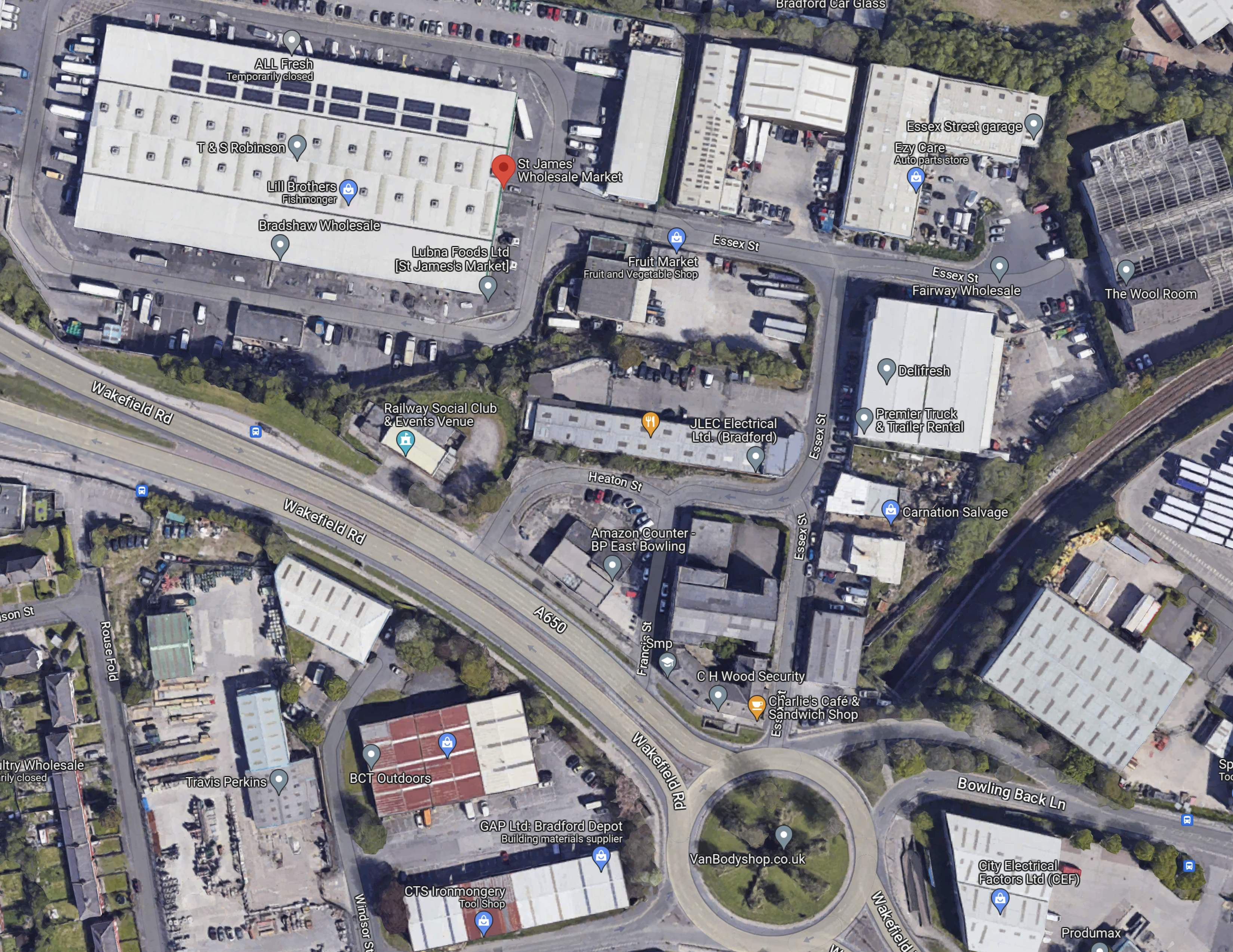
Note.
- St. James Wholesale Market is marked by the red arrow.
- The railway between New Pudsey and Bradford Interchange stations goes under the roundabout at the bottom of the map.
There’s certainly a lot of space to the East of the market. Could the new station be built with a lot of adjacent open space like King’s Cross and Liverpool Lime Street.
These are further thoughts.
Will There Be A New Chord South Of Bradford Interchange Station?
This section is an edited version of a section from Bradford Seeks Support On Rail Project Which Could Deliver £30bn Benefits.
This Google Map, shows Mill Lane Junction, where the lines from New Pudsey and Bradford Low Moor stations join South of Bradford Interchange station.
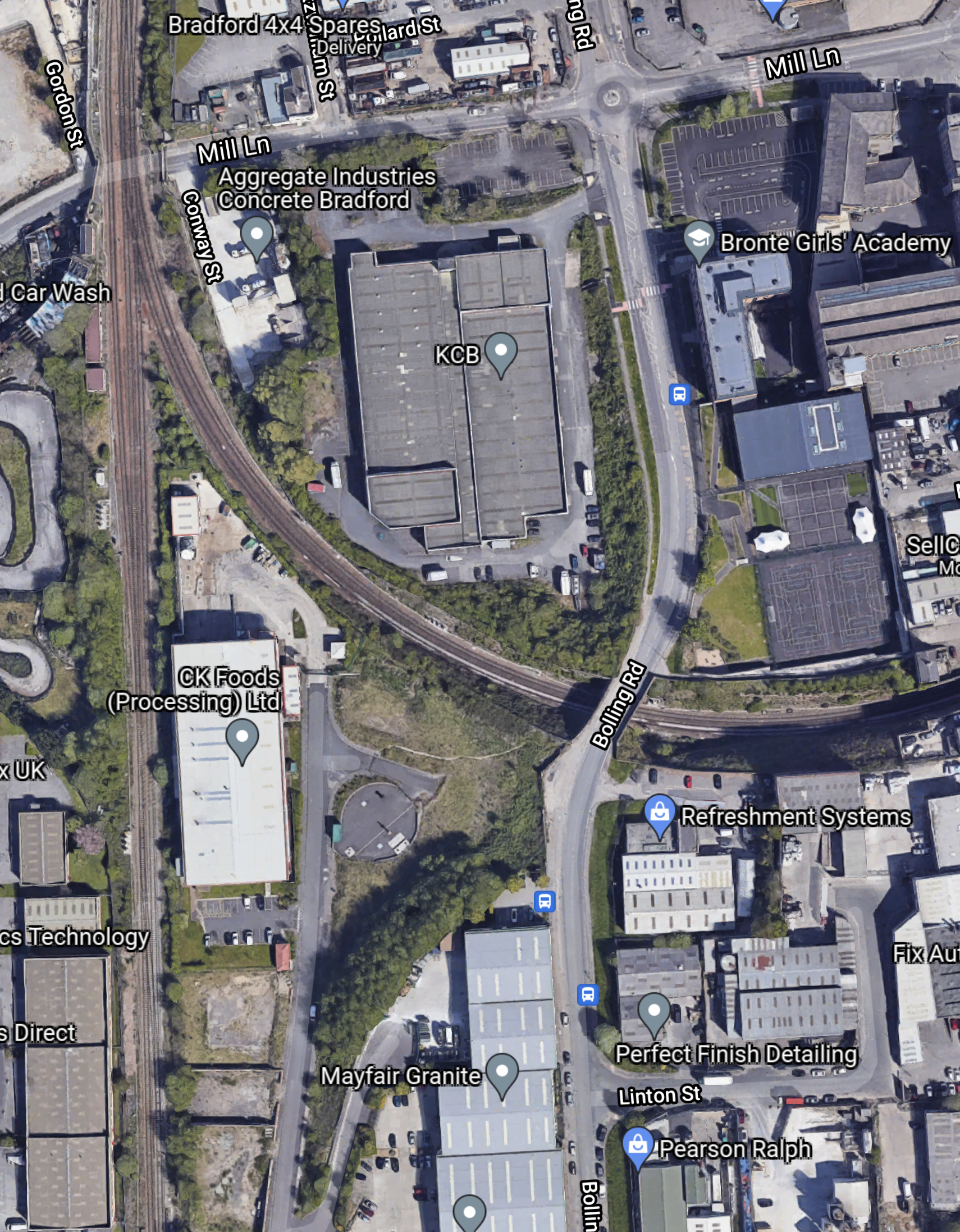
Note.
- Bradford Interchange station is on the rail line to the North.
- The proposed new Bradford station and the existing New Pudsey station are on the rail line to the East.
- Bradford Low Moor station is on the rail line to the South.
It would appear that an extra chord should be added to the junction to allow trains between Manchester Victoria and Leeds running via the Calder Valley Line to call at the new station in Bradford.
Current trains between Manchester Victoria and Leeds using this route have to reverse at Bradford Interchange. The new station and the extra chord would avoid this.
Will Bradford Interchange Station Be Closed?
That is a big question and depends on the overall plan.
I await the full plan with interest.
But building the new chord, closing Interchange station and avoiding the reverse will speed up services.
What Trains Will Call At The New Station?
Currently, only these trains from Northern, go through the station site.
- Hull and Halifax
- Leeds and Chester
- Leeds and Manchester Victoria
- York and Blackpool North
Note.
- All have a frequency of one train per hour (tph)
- All currently reverse at Bradford Interchange.
- All call at Leeds, New Pudsey and Halifax.
- Three tph call at Bramley and Hebden Bridge.
- Two tph call at Manchester Victoria, Rochdale and Todmorden.
- One tph calls at Low Moor.
I suspect these service could be augmented to perhaps give the following.
Four tph to Hebden Bridge, Rochdale and Manchester Victoria.
The only other trains passing though the area are Grand Central’s four trains per day (tpd) between London King’s Cross and Bradford Interchange via Low Moor.
- If these trains terminated in a bay platform at the new station, would this enable their frequency to be increased?
- Or could the services be extended to Leeds?
The new station certainly opens up possibilities.
Low Moor Station
I arrived at Low Moor station on a direct service from Kings Cross.


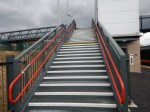


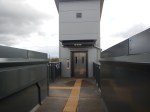

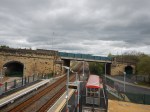

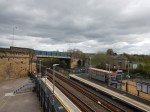


As with several other new stations, it has been fairly very well-constructed, but the design has a few failings.
There Are Not Enough Trains
I was at Low Moor station for an hour taking pictures. In that time several local services went throiugh, but then only one train per hour stops in each direction.
At least two and possibly four trains per hour, as at Halifax, should stop.
Passengers on a wet, cold day will soon get fed up with waiting an hour for another train.
Trains to and from Manchester Airport should also stop.
It Is A Very One-Sided Station
The car park and the main access to the station appear to be on the Bradford-bound side of the station.
Lea Bridge station, that I use regularly near where I live, was built like this and you have to leave extra time to catch a train, as you have to cross the tracks on the footbridge, to go in one direction.
However at Ilkeston station, which I wrote about in Ilkeston Station Opens, the station footbridge replaces one that existed before the station was built. Passengers arrive on top of the station and then descend to the appropriate platform. Or they can walk-in at ground level from the car-drop-off areas or car parking on either side of the tracks!
What makes it worse at Lea Bridge station, is that they could have designed the station to have walk-in access from the road bridge over the lines, as the station does not have ticket gates.
There Should Be Ticket Machines On Both Platforms
I didn’t see the ticket machine, when I arrived, but one is not enough.
Imagine, you are in a hurry and have booked on-line for the 07:01 Grand Central train to Kings Cross and need to retrieve a ticket.
Will you be able to park your car, retrieve the ticket and cross the line before the train comes, especially if there is a queue for the sole ticket machine?
Surely too, ticket machines on the platforms are less likely to be vandalised, as CCTV will be expected.
Why Is There No Direct Access Between The Car Park And The Bradford-Bound Platform?
Both Lea Bridge and Ilkeston stations allow walk-in access to the one or both platforms. Why isn’t there a short flight of steps between the car park and the Bradford-bound platform?
I hope it’s not different rules being applied by different councils? It has been allowed at Kirkstall Forge station.
There Should Be Drop-Off/Pick-Up Areas On Both Sides Of The Station
Obviously, this can’t be arranged at all platforms at all stations, but many stations manage it for at least one, with a step-free bridge across the tracks.
Low Moor station doesn’t score well in this.
Poor Access With Bicycles To The Platforms
Cyclists come in all shapes and sizes, but many will find the steps unacceptably steep and will not use this station.
Or put their muddy bikes in the lifts!
Conclusion
It is a well-built, but rather poorly designed station.
I don’t think, it will attract the number of passengers it should!
Across South Yorkshire On A Grand Central Train
If you take a Grand Central West Riding train between Kings Cross to Bradford Interchange stations, as I did, the route could be considered somewhat of a Cook’s Tour of the South of Yorkshire.
There are stops at Doncaster, Pontefract Monkhill, Wakefield Kirkgate, Mirfield, Brighouse, Halifax and Low Moor stations. I alighted at the last station, which only opened on the second of this month.
I took these pictures on the route between Doncaster and Low Moor


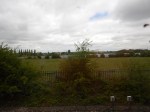


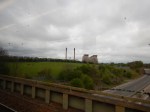


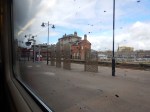


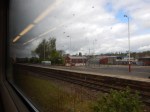




These are some notes on the journey.
Hambleton Junction
Hambleton Junction was created as part of the Selby Diversion, where the East Coast Main Line was diverted away from the possible subsidence, that could have been created by the giant Selby Coalfield.
This Google Map shows the layout of the junction.
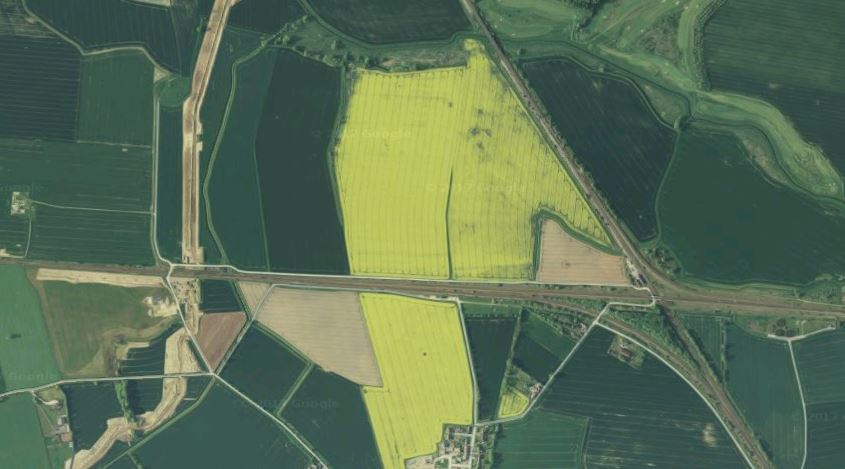
The Grand Central train turned West at Hambleton Junction to take a South-Westerly route to Pontefract Monkhill station.
It should be noted, that the mistake of the 1980s, when the Selby Diversion was created off not electrifying the Leeds to Selby Line may be rectified in the near future, according to this section in Wikipedia. This is said.
In 2009 the Network Rail route utilisation strategy electrification paper identified the North Cross-Pennine route including the Leeds-Selby-Hull Line as a high ranking option for future electrification, in terms of benefits to passenger services.[70] In 2011 funding for the electrification in CP5 (see Network Rail Control Periods) of the section from Leeds to Micklefield was announced. Funding for the section of the line from Micklefield to Selby was added to the electrification schedule in 2013.
As with all electrification in the UK, I’ll believe it, when I see it.
Ferrybridge Power Stations
The power stations at Ferrybridge, have been a landmark on the A1 since the 1960s.
This Google Map shows the large site, surrounded by major roads.
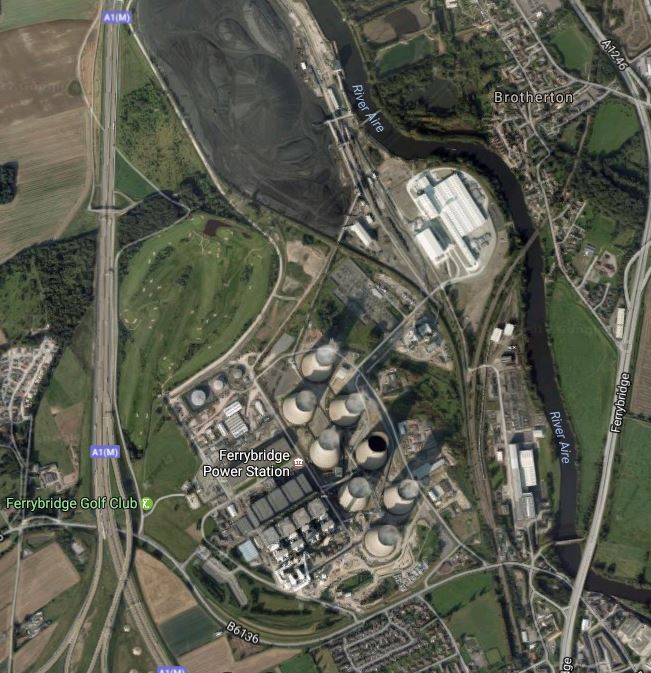
There is now a Ferrybridge Multifuel power station, but at 68 MW compared to the 2034 MW of the 1960s-built Ferrybridge C., it isn’t very large.
For comparison, according to these statistics in Wikipedia, the UK had installed 11,562 MW of solar power, which generated 10,292 GwH or 3.4% of our total electricity consumption in 2016, which was a thirty-six percent increase on 2015.
Perhaps it was a better summer!
Pontefract Monkhill Station
Pontefract Monkhill station is a simple affair, with just two platforms and no permanent buildings or ticket machine.
This Google Map shows the location of the station.
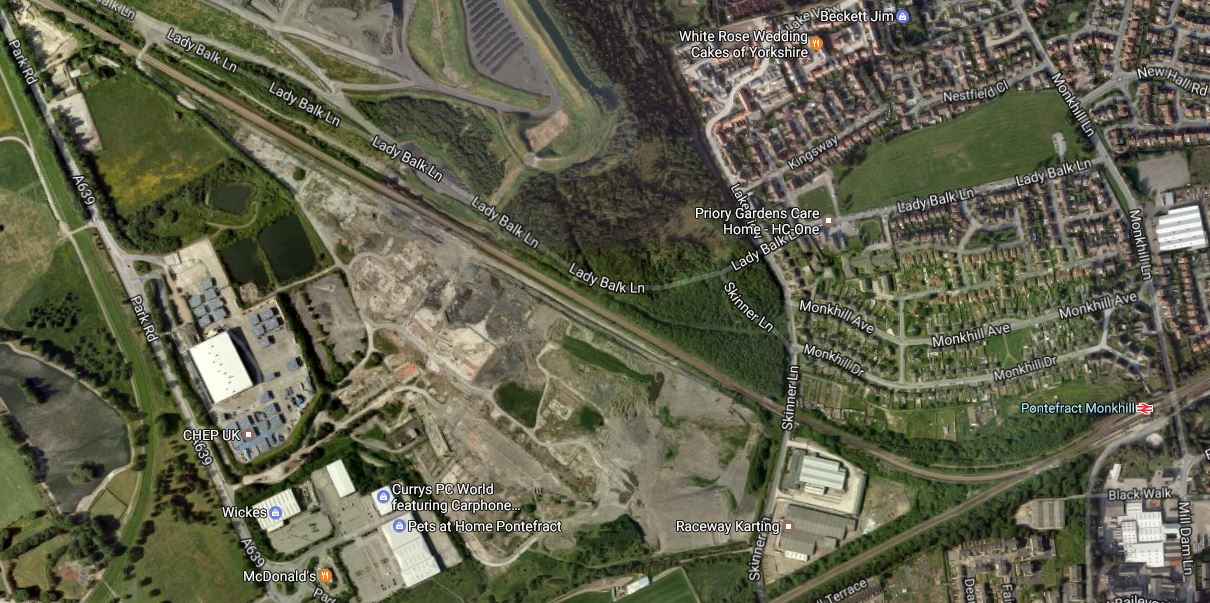
Note in the North West corner of the map is Pontefract racecourse, where C and I once had a winner.
I think it is true to say, that passenger use of Pontefract Monkhill station would improve with a few more facilities.
The train took the line past the racecourse on the way to Wakefield Kirkgate station.
Wakefield Kirkgate Station
Wakefield Kirkgate station, has been refurbished recently and whether it will see increased usage, is something on which I can’t or won’t speculate.
This Google Map shows the relationship between Kirkgate and Wakefield Westgate station, which is served by electric trains to Leeds and London.
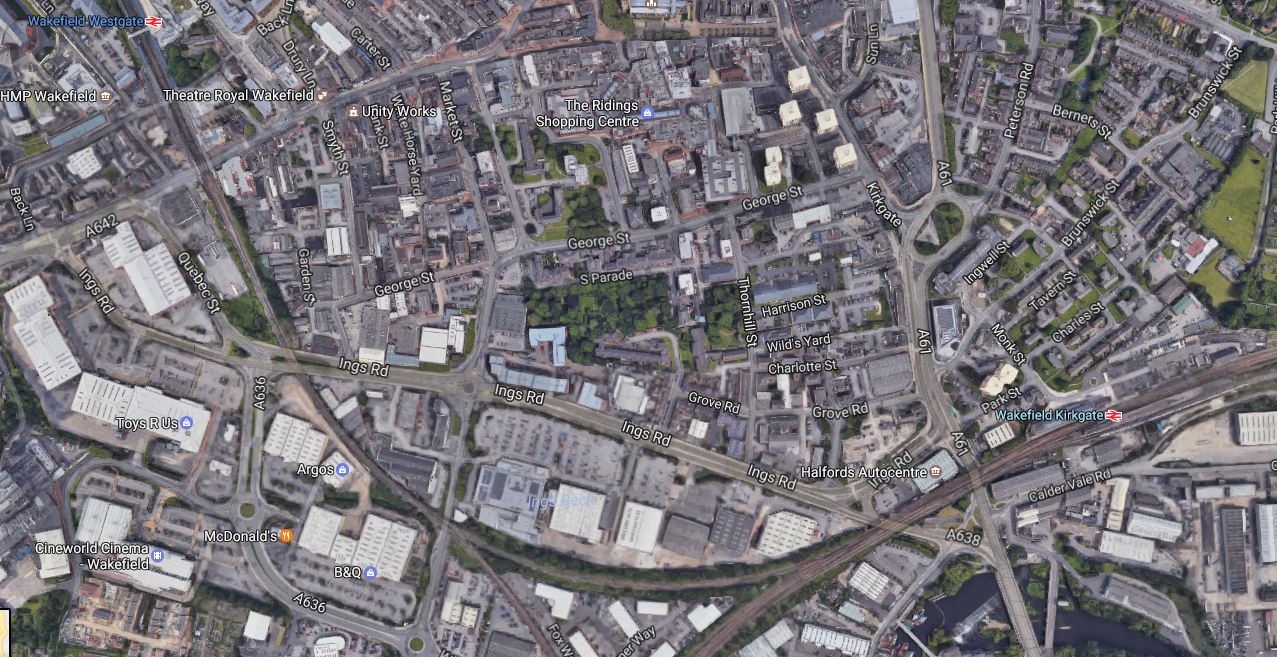
Grand Central probably have a marketing problem with Kirkgate station, as to tickets too and from London, as they have only four trains per day and they take around two and a quarter hours, as opposed to Virgin’s two trains per hour, which take around two hours.
Their major weapon must be price.
Mirfield Station
Mirfield station is another simple station, with minimal facilities.
Brighouse Station
Brighouse station is a station that closed in 1970 and reopened in 2000.
That explains, why when I had to go to Brighouse to see a client of mine in the early 1970s, in the town, I had to drive.
It was typical of the projects, I got involved in at the time, as I was helping Allied Mills to optimise what flours they used to make bread. I was using simple linear programming with an objective function.
I can’t leave Brighouse without a few stories.
- All the Senior Management I dealt with had been bakers and didn’t eat the company product, preferring to bake their own.
- Bread was sold on commission to the delivery van drivers. As you could get more square sliced loaves in a van, they ignored fancy loaves, as it dropped their income. Did this infuence the UK’s like of bad bread?
- Bread was sold on sale or return. The returned bread was put to use in animal and pet food.
- Harold Wilson thought this was waste and banned the practice, meaning the secondary uses dried up and a lot of products became more expensive.
- One particular recycled bread, was supposedly very suitable for grewyhounds.
- Dartmouth Naval College insisted that the bread they received was yesterday’s as it discouraged cadets fromj eating too much!
If I remember a few more, I’ll add them.
Halifax Station
Halifax station is probably one of the busiest on the route.
This Google Map shows the station and the nearby Nestle factory.
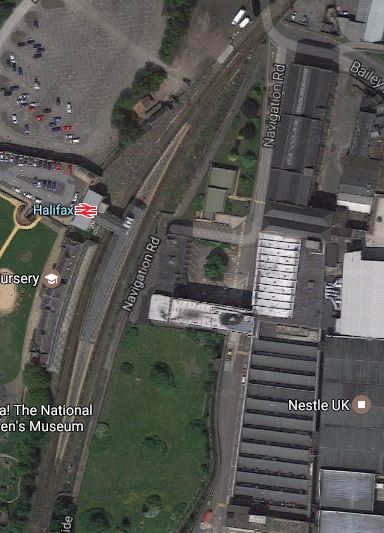
Halifax station has a four trains per hour service to Bradford Interchange and Leeds. This is also said in Wikipedia.
On Sundays there is an hourly service to Manchester Victoria and to Blackpool North and one train every two hours to Huddersfield. New Northern Rail franchisee Arriva Rail North plans to introduce additional services to Leeds & Manchester in 2017, many of which will run through to either Liverpool Lime Street or Chester.[16][17] Through services to Manchester Airport will also operate once the planned Ordsall Chord is built.
So it will be getting better and Halifax could be the station where you go to to the West.
These extra services and after a couple of visits to the station, suggest to me that the station needs a bay platform or even a third one, that can act as bay platforms looking both ways.
This is said in Wikipedia.
In October 2014 plans were submitted to bring an old platform back into use to create three platforms together with signalling improvements.
Perhaps my feelings are correct.
Conclusion
It is a well-thought out route, through some of the least developed parts of Yorkshire, where I suspect car ownership is not on the high side.
The route, which goes in a curve from Bradford to Doncaster, South of the cities of Bradford and Leeds, does a similar job to that of the Gospel Oak to Barking Line in London, as a compliment to the radial routes.
But four trains per day is not enough and the route has the sense of dereliction that Gospel Oak to Barking and North London Lines had in London.
Perhaps the solution, is to run one of the Class 319 Flex trains every hour between Bradford Interchange or Halifax and Doncaster in both directions to tie everything together.
Currently, Grand Central’s Class 180trains take the following times.
- Doncaster to Bradford Exchange – 90 minutes
- Doncaster to Halifax – 75 minutes
The Class 319 Flex trains could probably match these times if they ran on electric power between Doncaster and Hambleton Junction.
Even if they stopped more often, they might even be able to run between Halifax and Doncaster in under ninety minutes. This would mean that three trains could provide a stopping service between Halifax and Doncaster.
 The Anonymous Widower