Portway Park & Ride Station – 10th August 2023
Portway Park & Ride station, opened on the first of this month, so I went to visit today.

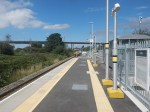
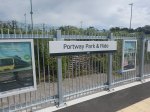
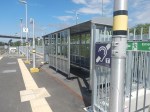
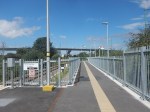
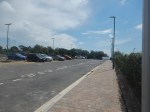
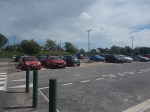
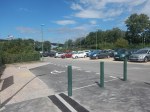
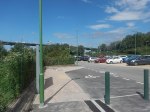
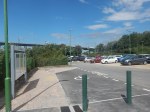
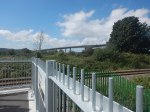
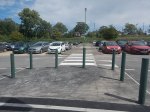
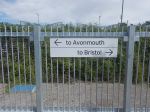
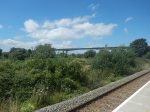
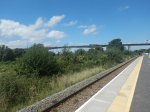
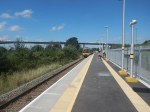
Note.
- The Portway Park & Ride is served by both buses and trains.
- Buses serve the City Centre and rugby and football at Ashton Gate stadium.
- Trains serve Avonmouth, Bristol Temple Meads, Severn Beach, Weston-super-Mare and a large number of other Bristol stations.
The M5 crosses over the railway to the West of the station.
This Google Map shows the M5 and the Portway Park & Ride.
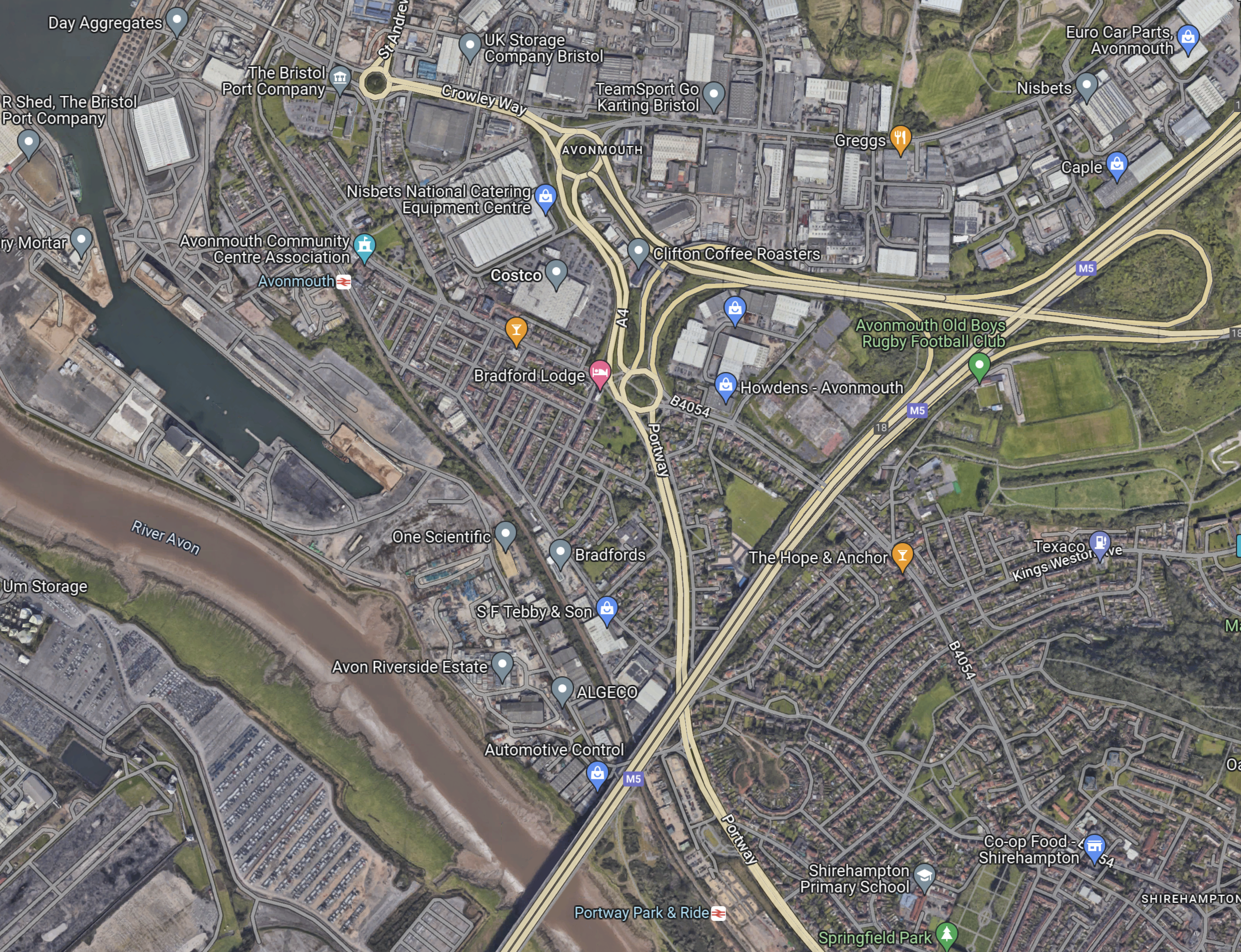
Note.
- The M5 goes diagonally SW-NE across the map.
- The wide river is the Avon.
- Portway Park & Ride with its station is in the middle of the bottom of the map.
- Avonmouth station is in the North-West corner of the map.
The Portway Park & Ride seems to be an extremely well-connected Park & Ride.
These are my thoughts.
Are There Any Other Park & Ride Sites, Where A Station Could Be Added?
Consider.
- I wrote about a possible new station at Leicester Forest East in A Station At Leicester Forest East.
- In A Look At New Station Projects, several possible Park & Ride stations are mentioned.
Has Portway Park & Ride been developed to see if sites served by buses and trains are a good idea?
Is Portway Park & Ride The Solution To Big Matches At Ashton Gate?
Consider.
- Ashton Gate Stadium has a capacity of 27,000.
- Wikipedia says that buses from Portway Park & Ride are used to bring supporters to games.
- The platform at Portway Park & Ride might be able to take a five-car Class 802 train for a big match.
I wouldn’t be surprised that Portway Park & Ride has been designed for large crowds at big matches at Ashton Gate.
Portishead Reopening Finally Approved
The title of this post, is the same as that of a small article in the January 2023 Edition of Modern Railways.
These are the first two paragraphs.
Secretary of State for Transport Mark Harper has approved a Development Consent Order to reopen the railway to Portishead as part of the West of England Combined Authority’s MetroWest Phase 1B project.
Under the £152 million scheme, the disused railway between Portishead and Pill will be rebuilt, with the Pill to Ashton Junction freight line upgraded. It joins the Bristol & Exeter route at Parson Street Junction.
Note.
- MetroWest is going to be Bristol’s Metro.
- Portishead station is going to be one of its termini.
- It appears that a new station is going to be built at Portishead.
- There used to be other stations on the branch.
I have these thoughts.
Portishead Station
In the Wikipedia entry for Portishead station, there is a section called Future, where this is said.
In April 2019 the Department for Transport committed £31.9m to cover the shortfall in finance for MetroWest Phase 1, meaning that funding for the new station and reopened line has now been secured. In November 2019 North Somerset Council submitted a Development Consent Order (DCO) application to the Planning Inspectorate, which seeks powers to build and operate the disused section of railway from Portishead to Pill, gain environmental consent to undertake works to the existing freight railway through the Avon Gorge and obtain powers for the compulsory acquisition of land. The Secretary of State for Transport is expected to make a decision within 18 months. Subject to final business case approval, construction work is expected to start on the line in December 2021 and then take around two years to complete.
The Secretary of State for Transport gave his decision in December 2022, but I would expect two year construction time to hold.
Stations On The Branch
The original branch had five stations; Ashton Gate, Clifton Bridge, Pill, Portbury and Portishead.
How many will be reopened?
In the Wikipedia entry for Ashton Gate station, there is a section called Future, where this is said.
The line through Ashton Gate would be increased to double track. Network Rail stated that it was not feasible to reopen Ashton Gate during the initial stage of the project, but that the scheme will be future-proofed to allow the construction of a station at a later date.
The section also mentions a reopened station at Pill.
The Wikipedia entry for Pill station, there is a section called Future, where this is said.
As part of the works, Pill station will be reopened. Trains both to and from Portishead will use the southern platform, which will be resurfaced and provided with a waiting shelter, lighting, passenger information displays and audible announcements. The northern platform, adjacent to the current single track line to Royal Portbury Dock, will not be reinstated, however the track will be retained for freight trains. The two tracks will have a junction east of the station.
It is expected that reopening the station will result in reduced car usage to and from Pill and the surrounding villages. Most station users will walk to the station, with the next largest share being car drivers and car passengers being dropped off, followed by cyclists and bus users. Some parking restrictions are proposed to prevent rail users parking on the local streets, which are narrow and not suitable for widening.
Note.
- The station design appears to not need a bridge.
- There would be disabled parking and a pick up/drop off point adjacent to the entrance.
I think this station design could be able to handle two trains per hour (tph).
What Will Be The Service?
This paragraph outlines the service.
An hourly service is proposed, with journey times from Portishead to the centre of Bristol expected to be around 22 minutes, which is said to be competitive with roads in the area.
Twenty-two minutes is an interesting time, as it will mean that it should be possible to do the following in an hour.
- Go from Bristol Temple Meads to Portishead.
- The driver changes ends and gets ready to return.
- Go from Portishead to Bristol Temple Meads
- The driver changes ends and gets ready to go to Portishead again.
If the train can do the full return journey in an hour, it will be able to run the service with a single train.
The Wikipedia entry for Pill station, there is a section called Future, where this is said.
Trains along the reopened line will operate between Portishead and Bristol Temple Meads, with two trains per hour in each direction. Services would call at Pill and Parson Street, with aspirations to also call at Bedminster and a reopened Ashton Gate. Trains could also be extended on to the Severn Beach Line. The trains used will be diesel multiple units, likely three carriages long.
Note.
- Wikipedia and Modern Railways are giving different frequencies.
- Two tph could probably be run by using two trains.
I suspect that the Modern Railways figure is correct, as it is the most recent.
Bristol And South Gloucestershire Set For Seven New Train Stations
The title of this post, is the same as that of this article on Rail Technology Magazine.
These are the first two paragraphs.
Multi-million-pound proposals to breathe new life into Bristol and South Gloucestershire’s defunct railways and reverse the Beeching cuts from the 1960’s, are set to go ahead.
With an investment strategy which proposes £350m for transport over the next 20 years. The West of England Combined Authority (WECA), comprising Bristol city, South Gloucestershire and Bath & North East Somerset councils, is expected to agree investments into a raft of projects at its committee meeting on Friday, June 14.
The improvements include.
- Improving the Severn Beach Line to provide direct services to Bath and Westbury.
- Reopening Henbury station.
- More frequent services to Yate.
- New train stations in Portishead, Henbury, Portway and Charfield.
Note.
- The reopening of Henbury station must mean the reopening of the freight-only Henbury Loop Line to passenger services.
- Portway Parkway station will be built adjacent to an existing Park-and-Ride.
- I wrote about Charfield station in Beeching Reversal – Charfield Station.
It certainly looks like MetroWest is finally getting underway.
Bristol Gets Serious About A Local Metro
A few days ago, a short article appeared in The Times, which was entitled Bristol Tube Plan To Beat Congestion.
This is the first two paragraphs.
Bristol could become the fifty city in Britain to get an underground rail system under plans to ease crippling congestion.
The council is investigating plans to build three lines, including one linking the city’s airport to the south, at a cost of about £4billion.
The article also notes that Cambridge is thinking along the same lines.
The problem is that tunnelling is expensive, as the Bristol estimate shows.
We also have the problem that some areas of the country are much easier to tunnel than others. The asymmetric nature of the London Underground is explained by London’s patchy geology, where tunnelling is easier, where there is London clay.
Bristol are also looking at improving their network of local rail lines, called MetroWest. Wikipedia says this about the network.
MetroWest, formerly known as the Greater Bristol Metro, is a proposal to improve the rail services in Bristol, England, and the surrounding region. It was first proposed at First Great Western’s Stakeholder Event in March 2008. The aim of the project is to develop half-hourly services through central Bristol which will also serve the surrounding West of England region. Transport campaigning group, Transport for Greater Bristol are actively supporting the proposal,[3] as are the four unitary authorities. Services are expected to start in 2019 for phase 1 and 2021 for phase 2.
Nothing much seems to be happening, although a new Portway Parkway station is going to built.
This article in the Bristol Post is entitled Bristol Could See Hydrogen-Powered Trains To Tackle Carriage Shortage.
This is said.
Bristol train lines could see new eco-friendly hydrogen trains introduced as the future of planned electrification remains uncertain.
The new regional trains are being tipped as an alternative to diesel powered trains and transport secretary Chris Grayling says he would like to see the technology introduced “within a short period of time.”
The article also includes Alstom’s promotional video.
If nothing else, the two articles show that Bristol is thinking seriously about some form of integrated rail system in the city.
Will Another Of Beeching’s Closures Be Reversed?
Lord Beeching wrote his infamous reports about Britain’s railways in the 1960s and died in 1985.
He gets a lot of blame for today’s rail problems, from various interest groups, but to be fair, the problems were severe at the time and some managers cut a lot harder than he recommended.
I think that for example in Scotland and other places, rail lines were closed in such a way they could be reopened, whereas in others, the land was sold and to reopen the line would be impossible without spending billions.
In the last thirty years two things have happened; there are a lot more of us and we’ve discovered that trains are an increasingly useful method of transport.
So sometimes the reason why the Victorians built a line, is even more valid today. The soon to be reopened Borders Railway is probably more needed now, than it was when it was built, because leisure and tourism is so much more important.
The Borders Railway was a victim of the Beeching Cuts and will join a long list of lines and stations that have since reopened.
That list will continue to grow.
The latest possible reopening is detailed in this article on Global Rail News entitled Milestone for Portishead-Bristol line restoration. The article describes how the Portishead to Bristol Line could be incorporated into the Greater Bristol Metro or MetroWest.
If all goes well, it could open in 2019.
 The Anonymous Widower