Cardiff Bridge Avoids £40m Demolition Thanks To Electric Resistant Paint
When I first saw this headline on this press release on the Network Rail web site, I felt it sounded too good to be true.
This is the introductory paragraph.
In a world first, electric resistant paint combined with voltage-controlled clearance (VCC) has helped make a Victorian railway bridge usable by new electric trains, avoiding weeks of passenger disruption and train delays in the process.
I think this is the bridge.
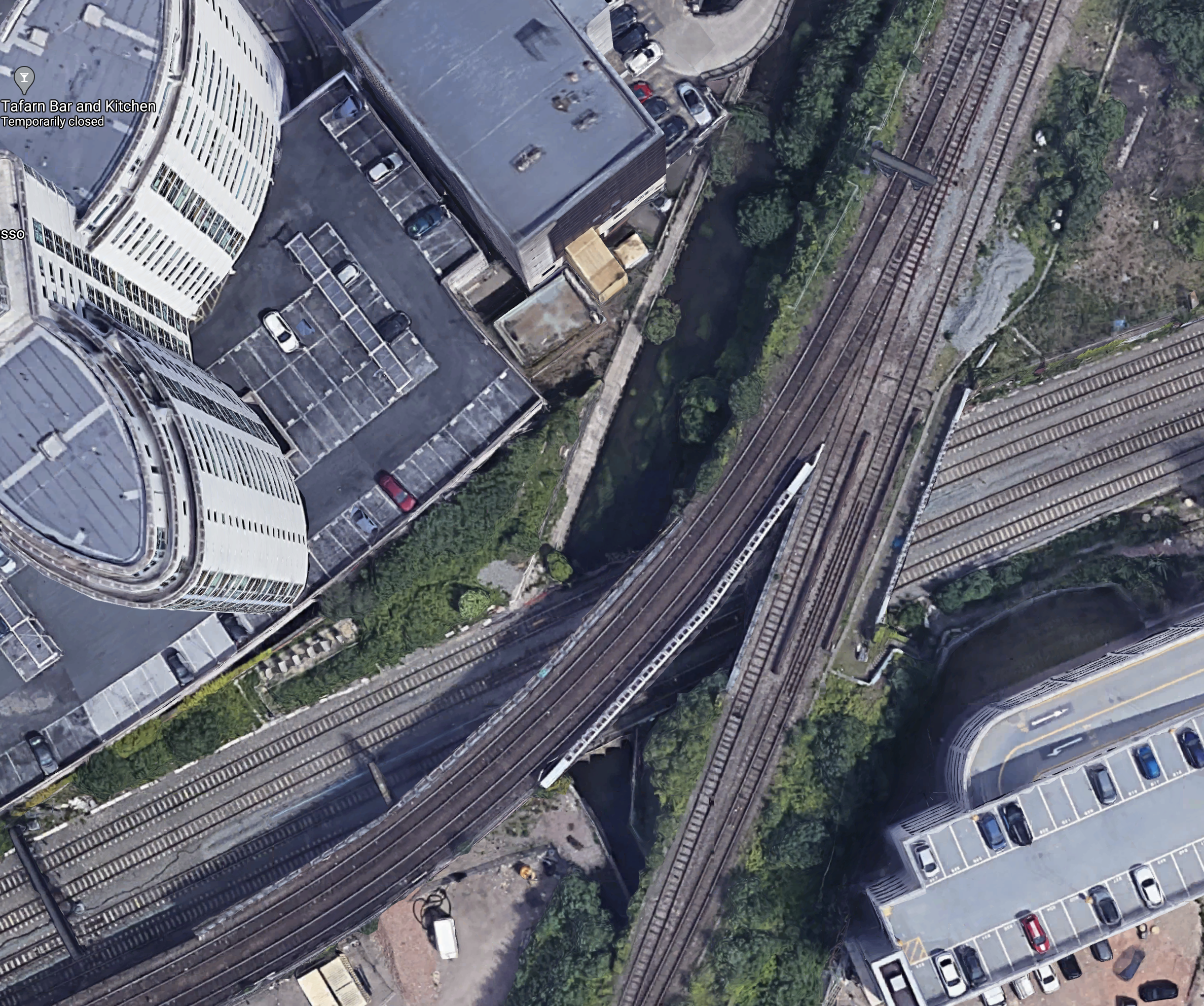
Note.
- The South Wales Main Line runs East-West, with Cardiff Central station to the West.
- The track between Cardiff Queen Street and Cardiff Bay stations runs North-South, with Cardiff Queen Street station to the North.
- The two rail lines cross over a canal.
- The site is surrounded by new high-rise buildings.
- The clearance been the bridge and the main line underneath appeared to be too tight for electrification to be fitted.
But by using the combination of technologies, as stated in the introductory paragraph, Network Rail were able to squeeze the wires through, which didn’t need the bridge to be demolished and rebuilt on a tricky site.
I can see that railways and other places, where high-voltage cables are close to metal structures, will be able to find lots of uses for Southampton University’s “Magic Paint”
Paintings by Father and Son
The picture shows two paintings by Arthur Perigal and his son.

Paintings by Arthur Perigal and his Son
The one by the father is on the left and is of the Alba Villa in Rome.
 The Anonymous Widower