Can Class 230 Trains Work On Third Rail Electrified Lines?
London Underground’s D78 Stock used to share tracks between Gunnerbury and Richmond stations with London Overground’s Class 378 trains.
So the answer to my question used to be yes and I suspect that the Class 230 trains could be configured, so that they could still run on third-rail electrified lines.
Running A Service Using Class 230 Trains
Now that West Midlands Trains have ordered three Class 230 trains for the Marston Vale Line, I think we can see how operators could use the trains.
- The operator has enough trains to run the service, even if one train is out of service for routine maintenance or repair.
- The trains are stored overnight in a convenient siding or terminal station.
- The trains will be supported by probably a well-designed service vehicle and if needed a fuel bowser.
- The trains will be refurbished to a high standard, with wi-fi, power sockets and universal access toilets.
- Vivarail have talked about on-board drinks machines.
- Drivers and support staff would probably come from the local area.
You could even envisage a train with an onboard ticket machine.
Would A Third-Rail Ability Be Any Use?
Consider the following lines.
Bromley North Branch Line
The Bromley North Branch Line is a short branch line between Grove Park and Bromley North stations.
- Service is three trains per hour from Mondays to Saturdays.
- There is no service on Sundays.
- Bromley North station is Grade II Listed and has a ticket office.
- The branch is double-track and fully electrified with one intermediate station.
- The service is run by a two-car Class 466 train, which travels to the line each morning.
- The Class 230 train has a higher passenger-focused specification than the twenty-year-old Class 466 train.
I believe that one Class 230 train could run the existing service, but as Bromley North station has two platforms, that two trains could run a four trains per hour service.
I also believe that the Grade II Listed station could be released for sympathetic development, by doing the following.
- Improving the automatic ticketing facilities and perhaps putting ticket machines on the trains.
- Closing the ticket office.
- Putting staff on the platform to assist passengers who need help.
The station could become a transport hub with cafes and stops catering for the needs of train travellers and those using the many buses serving the station.
The South Eastern franchise is up for renewal in the next couple of years, and I think that those bidding will have ideas about what to do the the Bromley North Branch Line.
Lymington Branch Line
The Lymington branch line runs between Brockenhurst and Lymington Pier.
- Service is normally two trains per hour between Brockenhurst and Lymington Pier
- The branch is single track and fully electrified.
- The service is run by a Class 158, Class 159 or Class 450 train.
- Brockenhurdst has a comprehensive four trains per hour service between London/Southampton and Bournemouth.
I believe that one Class 230 trains could run the existing service. With the addition of a passing loop, two trains may be able to run a four trains per hour service.
Sheerness Line
The Sheerness Line runs from Sittingbourne station to Sheerness station across the Isle of Sheppey.
- Service is normally two trains per hour between Sittingbourne and Sheerness.
- There are extra services between Victoriia and Sheeness in the Peak.
- The branch is partly double-track and fully electrified with four intermediate stations.
- Sheerness station has two platforms.
- The shuttle service is run by a two-car Class 466 train.
- Sittingbourne has a comprehensive six trains per hour service to and from London, with extra peak hour services.
As with the Bromley North Branch Line, the Class 230 train has a higher passenger-focused specification than the current Class 466 train.
I believe that two Class 230 trains could run the existing service, but as Sheerness station has two platforms and the route is partly double-track, that an extra train or two, could see the service upgraded to three or even four trains per hour.
Conclusion
I suspect that we’ll see Class 230 trains considered for lines with third-rail electrification.
Sittingbourne Station
Sittingbourne station is the next major station after Rainham station, as you go East on the Chatham Main line.
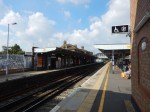
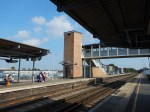
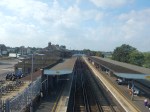
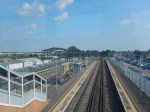
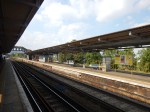
It doesn’t want for much more, as it has three long platforms, a step-free footbridge and most of the things a good station needs.
It is the station that connects the Sheerness Line to the Chatham Main Line.
So would it be a better idea to run the Thameslink service to Sittingbourne instead of Rainham?
The trains could even co-ordinate with the shuttle train to Sheerness.
It is a possibility, but Sittingbourne has five trains per hour (tph) going into London and they all pass over the bottleneck of the the level crossing at Rainham station.
I discuss this more in What Do You Do With A Problem Like Sheppey?
What Do You Do With A Problem Like Sheppey?
I enjoyed my trip yesterday to Sheerness, that I wrote about in A Trip To Sheppey.
It was a change to go to the island for a walk by the sea, as normally in the past, I’d gone for a funeral of some of my late wife’s relatives.
As someone, who partly grew up in Felixstowe, a lot of what I saw was all too familiar.
Sheerness station has some good points.
- It is a short walk from the sea front.
- It has two platforms, that can take eight-car trains.
- The service of two trains per hour (tph) to Sittingbourne station is adequate in terms of frequency, but possibly not capacity.
- The junction with the Chatham Main Line allows trains to go to Sittingbourne or the Medway Towns and London.
- There are a few direct trains to and from London in the Peak.
- The staff I met, were welcoming and competent.
But the station is pitifully short of facilities and if ever there was a station that needed an imaginative makeover it is Sheerness station.
Felixstowe station was a similar basket case and they converted it into a mini-shopping centre. At least Sheerness has a decent train service, which is twice the frequency and four times the capacity of the rail service between Ipswich and Felixstowe.
Sheerness itself has the air of a town that has seen better days, which I’ve seen in places like Blackpool, Felixstowe, Hastings, Redcar and Yasrmouth in the past and also in the last few years.
As a coeliac, I didn’t find anywhere that could sell me a gluten-free meal, so lunch was just a banana and the worst cup of tea, I’ve ever been served in the UK.
But is help at hand?
This article in Rail Magazine is entitled Maynard cites importance of rail links to coastal towns talks about how the new Rail Minister thinks good rail links to coastal towns are important.
When I was staying with my parents in Felixstowe in the early 1960s, because there were only a few trains a day, I felt trapped and usually stayed at our other house in London.
So I know how it feels to have poor rail links to coastal towns, which often lack the facilities people need.
Good rail links also attract visitors and visitors these days, often come with those two space-eaters on trains; buggies and bicycles.
But it’s not just coastal towns that have this problem, it’s also branch lines that go into scenic countryside too.
Improving The Train Service To The Coast And The Hills
Coastal and hill towns like Sheerness and others like Blackpool, Clitheroe, Colne, Cromer, Felixstowe, Harwich, Walton-on-the-Naze and Yarmouth, often have rail services with a variety of needs.
- Leisure traffic with lots of buggies and bicycles.
- Commuter traffic in the peaks.
- Daytime shoppers.
- Evening travellers going to and from the cinema, theatre and nightlife of the bigger towns.
As many coastal towns are in flat country, many travellers might be easily tempted to ride to the station.
I’ve not seen any figures, but I suspect that passenger numbers are strongly driven by the weather and events.
This leads me to the belief that coastal towns need a turn-up-and-go service to the local major town or city, using a train designed for the job.
The Leisure/Commuter Train
We need a properly-designed train, that caters for the needs of leisure and commuter traffic.
- Probably four-cars with the usual facilities.
- Lots of space for bicycles and buggies.
- Preferably with the capacity to travel perhaps fifty kilometres without electrification.
Something like most later Electrostars and the new Aventras could be suitably configured.
The current configuration of say a Class 375/377/379/397 Electrostar does not satisfy the need of the difficult mixed market, as it is geared to taking lots of commuters to and from work.
In the case of the Sheerness Line, which is electrified, a couple of Class 377 trains would be ideal for modification for the market. I suspect, that they may even be in Southeastern’s plans to run these trains on the line, when they receive a few more from GTR.
Designed properly, it would also be good for commuting to the nearer major towns.
Improving The Service To Sheerness
Although current figures probably show that two-car trains running with a frequency of 2 tph is sufficient and that if they were four-car trains, they certainly would be, I would think that if there were four tph serving Sheerness, that this would be a traffic magnet par excellence.
One of the problems is that I suspect many of the travellers from the Sheerness Line want to go to to Sittingbourne for work, leisure or family reasons.
As trains going direct to London or the Medway Towns from Sheerness can’t easily call at Sittingbourne, a train going from Sheerness to Rochester would have to reverse at Sittingbourne. This would not be ideal.
So perhaps the solution would be to keep the shuttle at 2 tph and add a second service from Sheerness that goes west on the Chatham Main Line.
The problem of going West is where do you turn the train.
The line from Sittingbourne to Gravesend carries about 8 tph and as none of the stations have an Eastward facing bay platform,, no-one is going to want a shuttle from Sheerness interrupting the long distance traffic.
In my view, there are two possibilities.
- Dartford serves as a terminus for trains from London and could probably accommodate some from the other direction.
- Ebbsfleet International could probably turn the required number of trains, in its current platforms 5 and 6.
Both have their advantages.
I would plump for Ebbsfleet International, as this would give 4 tph between the Medway Towns and Continental services.
I do wonder if direct services to London Victoria would continue if Sheerness had a connection to the Medway Towns.
Rochester will have the following connections to London.
- 3 tph to London Victoria.
- 2 tph to London Charing Cross and London Bridge, which will be 3 tph from 2018.
- 2 tph to London St. Pancras.
I think that someone with all the data and knowledge could create a very passenger-friendly service to Sheerness from all over London.
Related Posts
A Design Crime – Ebbsfleet International Station
Between Abbey Wood And Belvedere Stations
Connecting North Kent And The Medway Towns To Ebbsfleet International Station
Extending Crossrail To Gravesend
The Sheppey Crossing
The Sheppey Crossing is the bridge onto the island for road traffic.
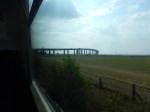
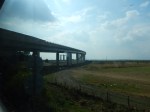
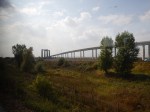
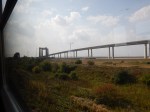
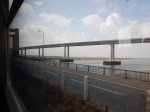
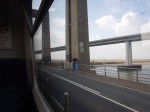
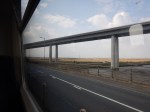
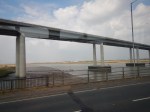
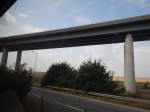
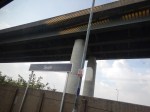
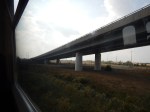
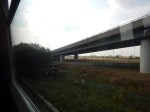
Note the towers of the older Kingsferry Bridge, which carries the railway across. It is a rare vertical-lift bridge that carries both road and railway.
One of the others of this type in the UK is the Newport Bridge on Teesside.
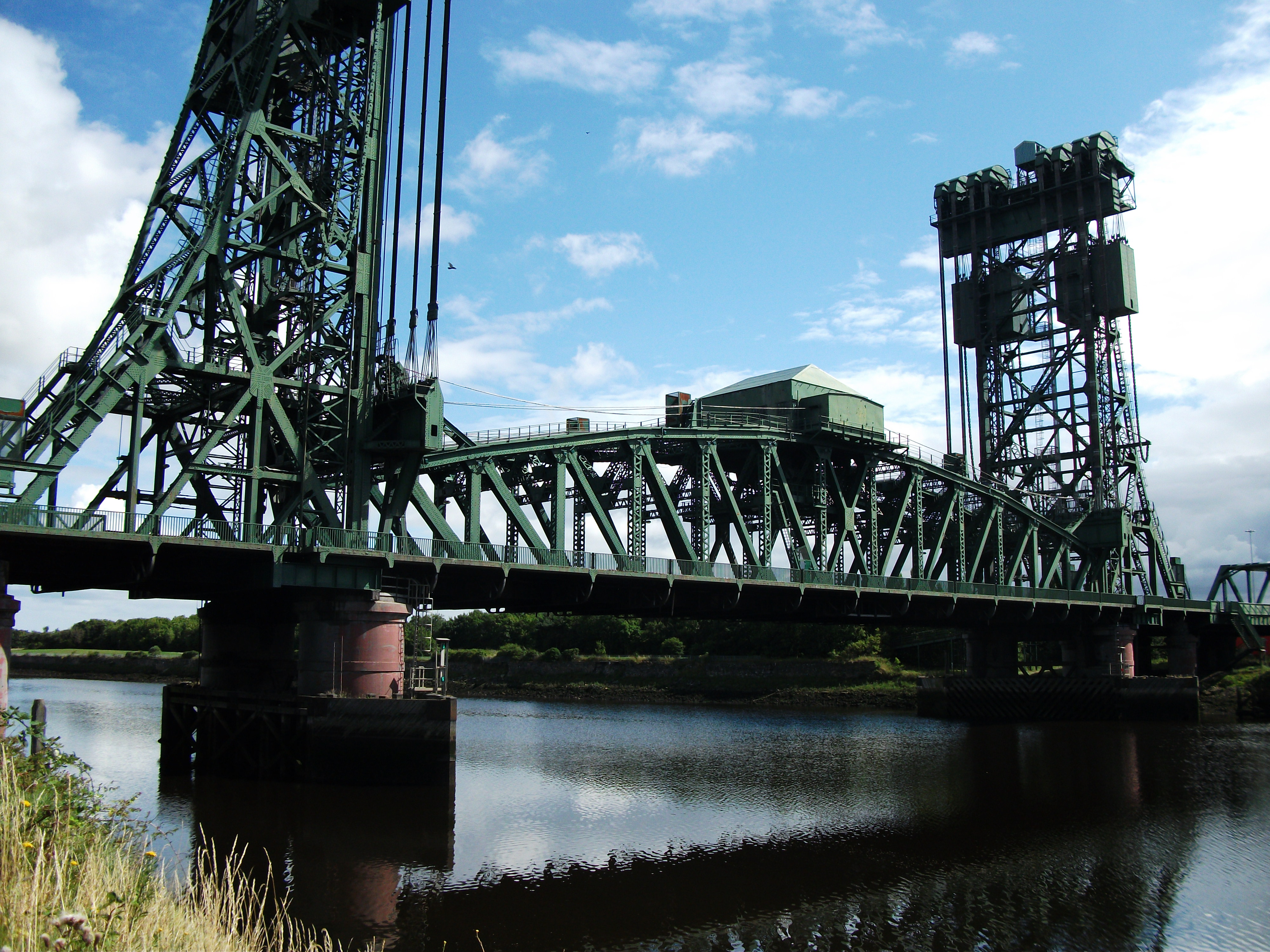
The Newport Lifting Bridge
I wrote about it in The Tees Bridges and Barrage in 2010.
 The Anonymous Widower