Period Details At Arnos Grove Tube Station
The Grade II* Listed Arnos Grove tube station is one of the architectural gems of the Northern Piccadilly Line. Today, as I journeyed to Cockfosters, I got off and looked around, taking these pictures.






In all the years I lived in North London, I don’t think, I ever used the station as a destination.
London’s transport authorities have certainly looked after it well.
Bennetts Associated Designs For The Western Crossrail Surface Stations
I’ve put this link to a downloadable project sheet on the Bennetts Associates web site on this blog, as it gives an insight into the upgrading of the thirteen surface stations west of the central core.
At Last, A Station For Crossrail With Style
With the exception of Canary Wharf and Custom House stations, a lot of the designs have been poorly-received by architectural critics.
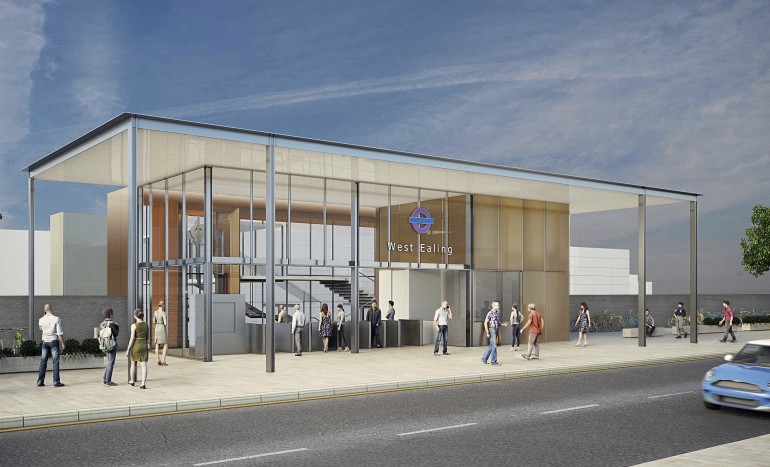
So I was surprised and pleased to see this piece on the Crossrail web site describing the new West Ealing station. This picture of the new station building is shown.
West Ealing Station
It has style and I also believe that it is designed to fit the purpose for which station buildings are now needed. All a station building needs to be today is a shelter for the barriers, ticket machines, staff and perhaps a retail kiosk or two. Get the people flow through them correct and they can be even smaller and more affordable.
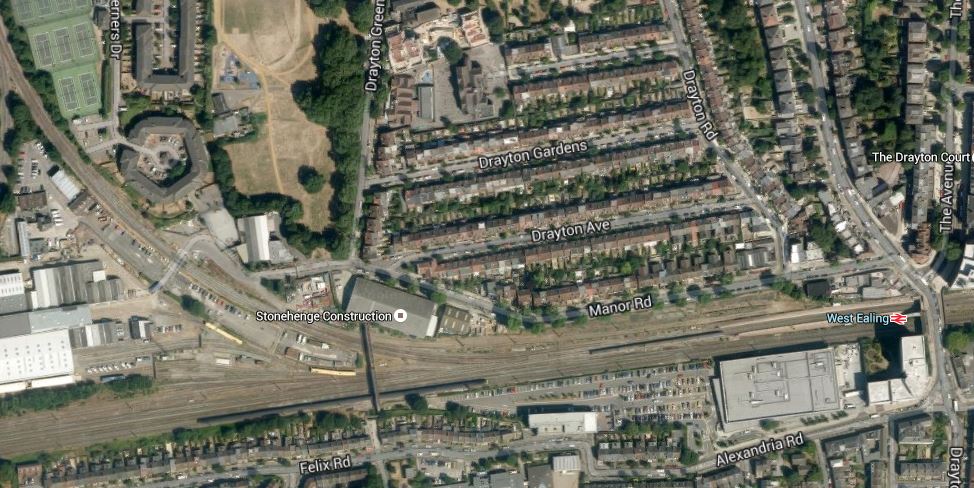
It is interesting to look at the layout of the lines. This Google Map shows the situation at present.
West Ealing Current Layout
Note the Greenford Branch curving away to the North. This branch is probably an operational headache for rail managers, as the trains currently have to join the line to get to their terminus at Paddington station. After West Ealing station has been rebuilt, there will be a bay platform for trains on the branch. It is shown in this drawing I found on the Internet.
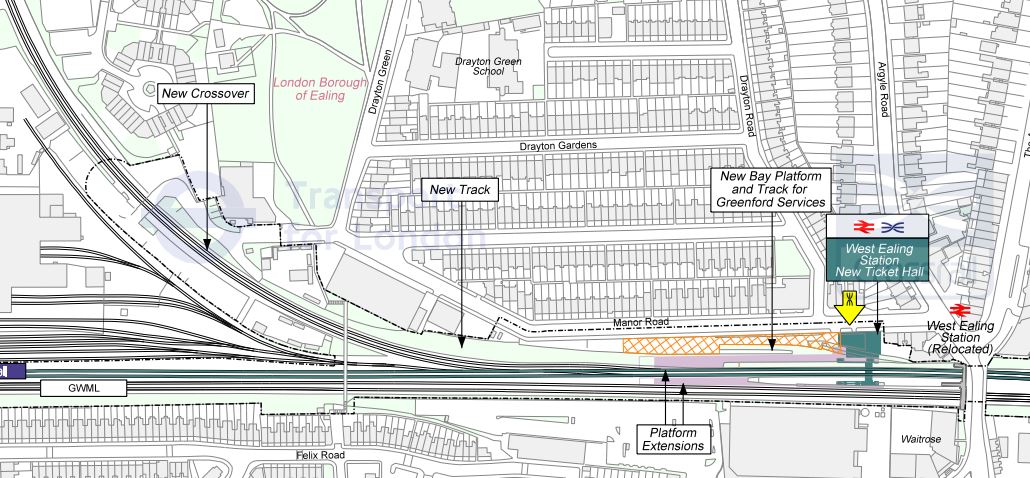
West Ealing New Layout
You have to wonder if the Greenford Branch will be developed and Wikipedia has a section on the branch’s future. Should it be electrified and should as Ealing Council have suggested the line be extended to Clapham Junction via the West London Line?
Undoubtedly, it should be electrified and the published plan of four trains per hour would certainly improve matters. But as with many things, we’re waiting for Crossrail and the plans for Old Oak Common to be vcompleted.
It does seem to me that the design for West Ealing station has set a new standard for Crossrail stations.
But as the first comment received has shown, there is a problem with access to the station from the South. This Google Map shows an enlarged view of the current station.
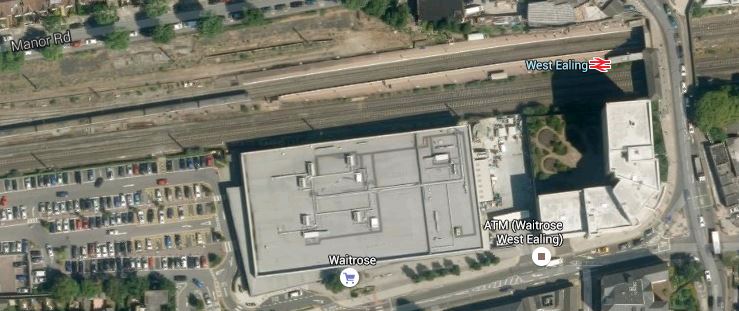
An Enlarged View Of West Ealing Station
Note how the supermarket and the car parks, backed by the two fast lines of the Great Western Main Line create a barrier that is impenetrable to any access to the station. Even if access were possible, it would be a long walk between Alexandria Road and the new station.
It strikes me that the only way better southern access to the station could have been enabled, would have been if the new station had been designed in conjunction with the supermarket, when that was developed.
It should be noted that at present West Ealing station has no car parking and do many of the locals feel that this should be provided in the new station?
To sum up, West Ealing station has problems in resolving some design issues, as it was not properly designed, when the supermarket and the land south of the railway was developed.
In my view, it illustrates one of the problems of the surface sections of Crossrail, They have been left to rot for years, when they should have been upgraded well before construction of the line started.
Liège-Guillemins Station
As I wandered my way back to Brussels for the Eurostar, I just had to stop of at Liège-Guillemins station and take some pictures.
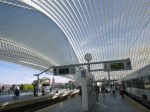
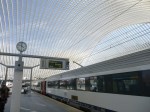
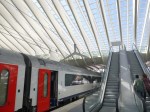
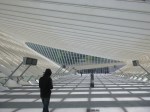

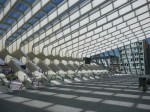



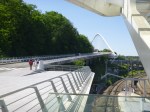
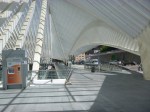

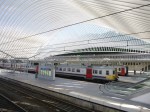
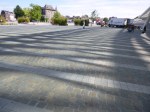

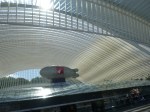



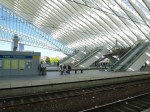
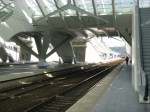
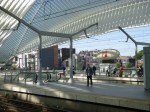
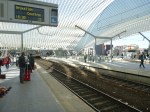
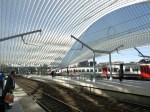
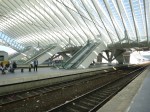
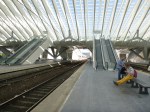
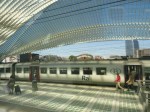
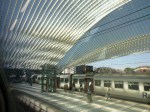
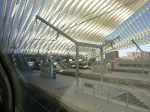
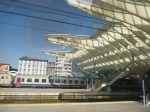
Is there another station like it in the world? This Google Map shows the layout.
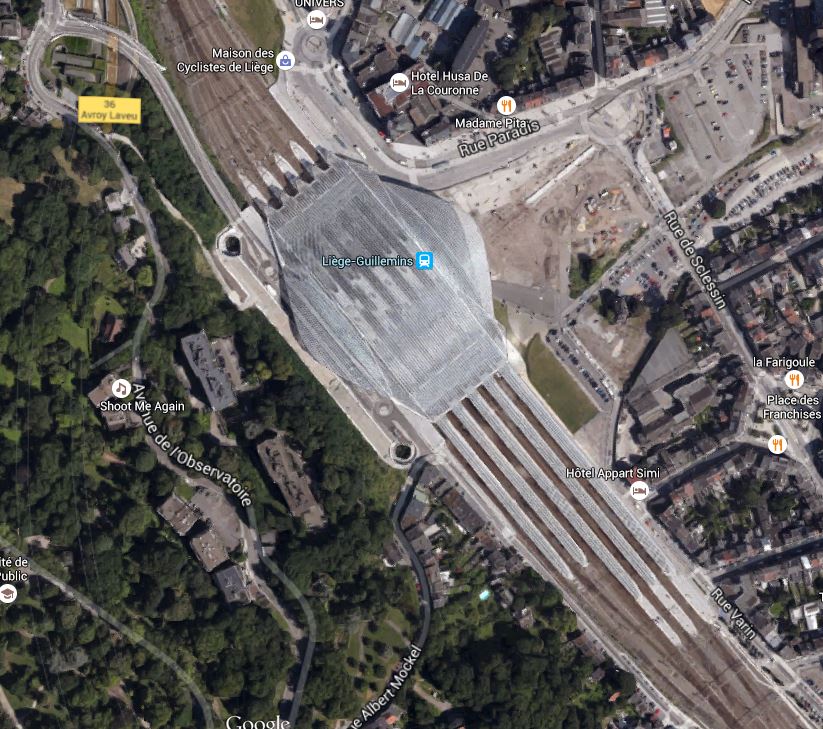
It is a design by Santiago Calatrava. Let’s hope that the Belgians did a good job on building this station. In 2007, I saw some of his buildings in Valencia and the concrete hadn’t worn well!
The totally new station cost €312million, which compares with £500million for the restoration and extension of Kings Cross station. Compare these figures with the reported £44million for the restoration of Manchester Victoria station, the complete reconstruction of Reading and Birmingham New Street stations.
Direct comparisons are difficult, but I cam’t help feeling, that in terms of cost, Manchester Victoria station is out of line with the others. It just shows that god design is often cheaper than bad.
One difference between the British projects and Liège-Guillemins station, is that the British ones are or were updating of existing stations, whereas the Belgian one was a new station built a short distance away.
Perhaps in some ways, to combine rebuilding with moving the station is a better plan, as both Reading and Birmingham New Street could be thought expensive compared to Liège-Guillemins.
So with all the problems there have been during the rebuilding of London Bridge station, would it have been better to have put the rail lines through in an optimal manner for operational purposes and perhaps created a new station further South.
London Bridge station was and still is a difficult problem, but hopefully it’ll be spot on when it opens.
A Station With An Attached Chapel And Hotel
Cologne station is one of those stations, which is an ideal place to break a journey.
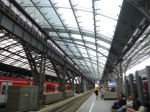
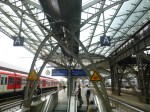
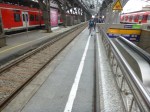

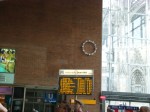



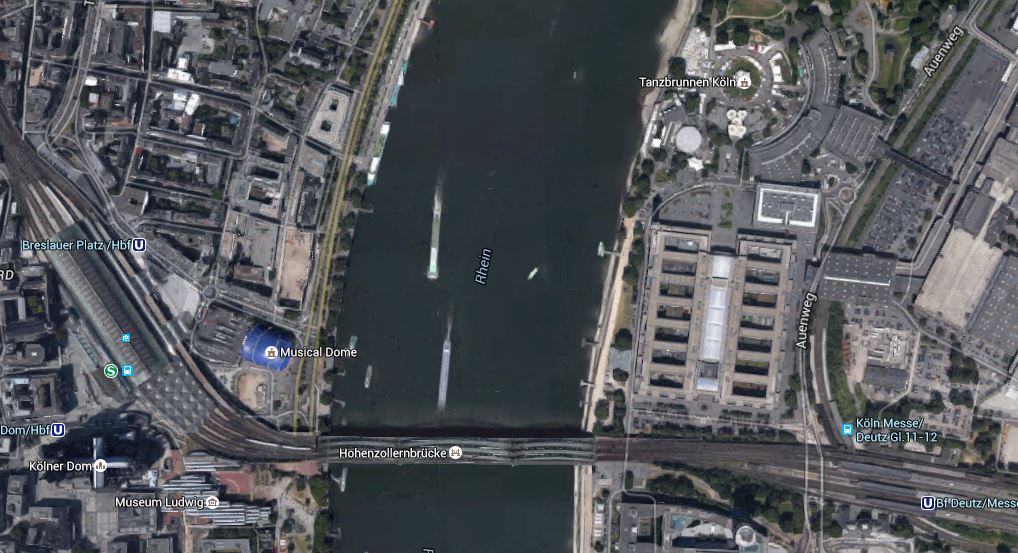
This Google Map image shows the closeness of the station, the cathedral and the river.
As Cologne from 2018 or so, a service will run direct from London, Cologne will become more important for those travelling to and from London.
A Railway Station In A Tent
Leipzig Airport station is unusual.
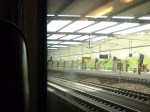
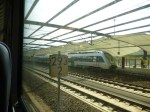
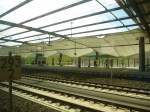
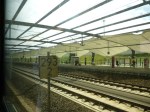
But why shouldn’t a railway station have a tented roof, if it’s good enough for Lords and Goodwood Racecourse?
The Largest Railway Station In The World
My journey took me to Leipzig Hauptbahnhof. Wikipedia says this about the station.
Leipzig Hauptbahnhof is the central railway terminus in Leipzig, Saxony. At 83,460 square metres, it is the world’s largest railway station measured by floor area. It has 19 overground platforms housed in six iron train sheds, a multi-level concourse with towering stone arches, and a 293-metre long facade. Two Leipzig City Tunnel underground platforms were inaugurated in December 2013. The station also functions as a large shopping centre.
Train services are operated by Deutsche Bahn, S-Bahn Mitteldeutschland, Erfurter Bahn and Mitteldeutsche Regiobahn. As of 2008, Leipzig Hauptbahnhof handled an average of 120,000 passengers per day.
The station is probably bigger physically than Kings Cross and St. Pancras International combined, although together they handled 153,000 passengers per day last year. This Google Map shows the station and the centre of Leipzig.

Leipzig
Note the size of the station and the number of platforms. And there are two more underneath on the Leipzig City Tunnel.
I found it an easy walk between the station and the centre.
These pictures show the station.
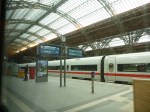
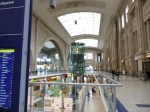



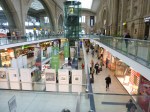
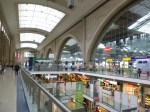

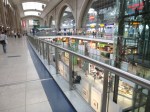


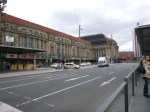
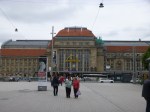
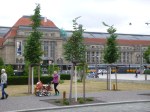

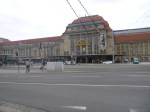


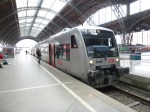
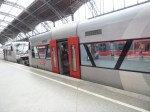
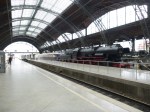
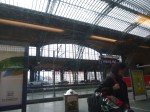

Note how like St. Pancras, there is a shopping mall underneath the platform level. I bought some excellent strawberries there. They were smaller and flavourful, unlike the tasteless, large Elsan variety we get offered in Supermarkets all the time.
The Toilets In Katowice Station
When I saw the toilets, I just had to take pictures and they deserve a section of their own.




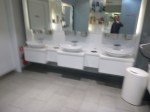
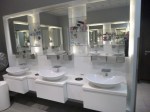


In some ways, these facilities are a great reason to choose Katowice as a station to change trains.
I think they cost me about twenty pence to enter.
They give the phrase going to the loo, a whole new meaning. Apparently 2theloo is a Dutch idea and company.
Moorgate Tube Station Gets A New Entrance
Moorgate tube station is being modified for Crossrail and hopefully improved. I use the station if I’m coming home from say Paddington if it isn’t in the rush hour, as I get a 141 or 21 bus from outside to take me home.
Today, I used it and the station has now got a new entrance and staircase.
It obviously isn’t finished yet, but it’s certainly better and felt safer, than the one I normally use
Walking The Proposed Route Of The Windsor Link Railway
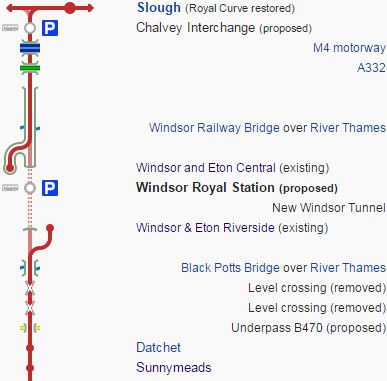
There is a proposal called the Windsor Link Railway to link the two railway lines running into Windsor end-to-end and put a new station in the Goswells area of the town. This is the schematic of the route through Windsor clipped from Wikipedia.
Windsor LinkRailway
Wikipedia also says this about Phase 1 of the project.
Phase 1 of the scheme would run from Slough to Staines, via Chalvey, Windsor, Datchet, Wraysbury and Sunnymeads.
A new all-in-one station in the Windsor Goswells (Windsor Royal) would replace the existing two nearby stations (Riverside and Central).
I took a train to Windsor & Eton Riverside station and then walked across the town vaguely following the route of the proposed cut-and-cover tunnel to Windsor & Eton Central station, where I got a train to Slough to change for London.
These pictures document the walk.

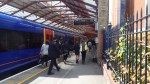


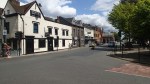




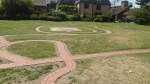

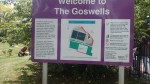
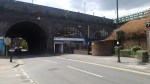


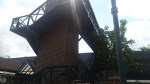


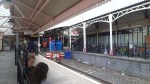

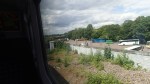
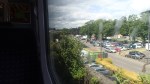
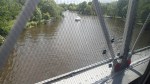

This is a Google Map of the area.
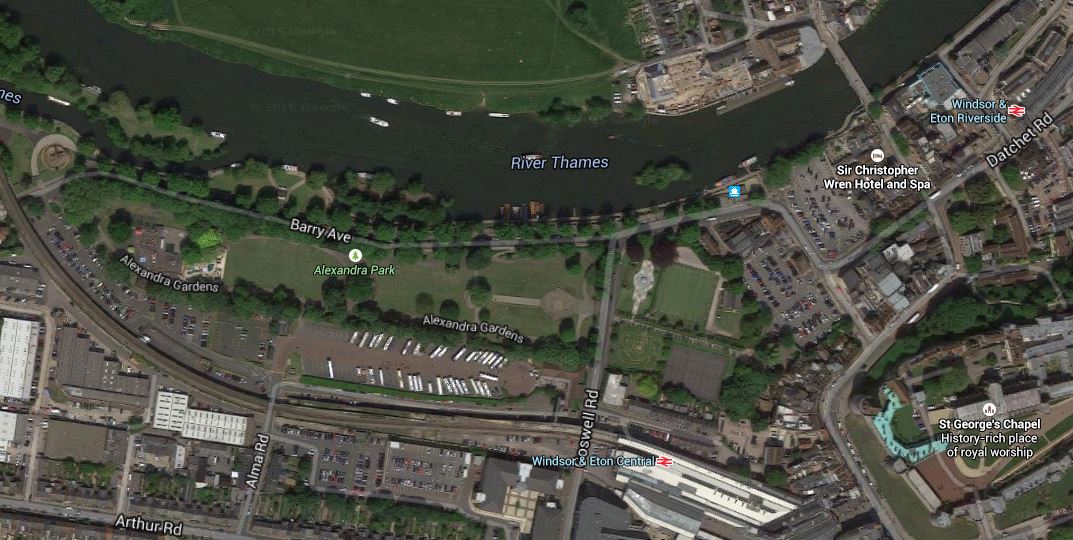
Windsor Stations
You can pick out the two stations, the coach and car parks and the tennis courts, with the Windsor and Slough Rail Line curving away to the North.
If you follow the proposed route from the Riverside station, it would be in a cut-and-cover tunnel passing in front of the Bel And The Dragon and probably through the car park and gardens to cross Goswell Road and then go through the coach and car park.
The building of the tunnel, looks like it would not require the demolition of any buildings, although it is likely that the gardens, the tennis courts and the bowling green would probably have to be relaid. The degree of difficulty of such a construction would probably be similar to that for the new tram/train tunnel being constructed in Karlsruhe, that I wrote about in this post. One of the important Crossrail projects, the Acton Dive Under would probably have used similar skills to those needed to construct the proposed tunnel under the streets of Windsor. Except that the Acton Dive Under is being built in a the middle of a busy four track railway and the Windsor Tunnel will be built in a busy town-centre road.
In everything written about the Windsor Link Railway, I can’t find any statement as whether the tunnel will be single or double track. When you bear in mind that the Windsor and Slough Rail Line is single track, I would not be surprised if the tunnel was also designed the same way, with perhaps a station with two platforms. The reason it’s not been stated, could be they’re keeping their options open.
I think that as the Windsor Tunnel will probably be not much more than five hundred metres in length and as it will only be used by electric trains, that it could be a simple design with a built in walkway like the Docklands Light Railway tunnels or the Canal Tunnels at Kings Cross. This would mean that large ventilation and evacuation shafts probably will not be needed. This would of course cut the cost of building the Windsor Tunnel.
Once at the viaduct, the track or tracks would have to climb onto the viaduct. The viaduct is surprisingly wide and is surrounded on both sides by car and coach parks, as is shown in this Google Map.
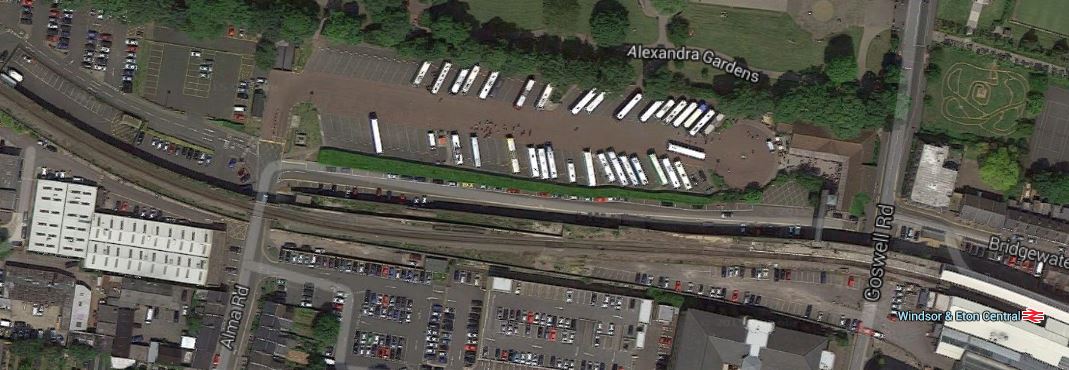
Windsor Viaduct And Car Parks
,I think that modifying the viaduct to connect the two lines would probably not be as difficult as the creation of the Bermondsey Dive Under, where space was at a premium and they wanted to thread a double up-and-down, between three other lines.
If you look at the schematic map of this line through Windsor, at the top of this page, you’ll see they have put a station called Windsor Royal in the middle of the Windsor Tunnel. And by it in the diagram is a big blue P, which probably signifies parking.
So will the proposed Windsor Royal station be either in on under the car and coach parks by the side of the viaduct?
As to its final design, that depends on the type and number of tracks and the skill of the architect and engineers.
One of the early things that must be decided, as it effects the design of Windsor Tunnel, Windsor Royal station and the line to Slough, is whether the line will be electrified to 25 kVAC overhead or 750VDC third rail, as Slough will soon be electrified to the former standard and Windsor and Eton Riverside is electrified to the latter. If the trains are going to go past Slough, perhaps to Reading or Oxford, and still run into Waterloo, the trains will have to be capable of handling both voltages, so something like the new Class 700 trains, that are being purchased for Thameslink, or something similar would fit the bill.
As the tunnel size required for a train using third-rail electrification is smaller, as you don’t have to accommodate the overhead wires, I would suspect that like on Thameslink, where the voltage changeover is at Farringdon station, that the pantograph will go up and down at Windsor Royal station.
As only one track is needed on the viaduct and it would obviously be easier and more affordable to only have one track leading to the viaduct, the line from Windsor Royal station to the viaduct will probably be single track, perhaps splitting just to the North of the station to allow a two platform station in between the tracks. After the Windsor Royal station, the tracks might combine again to allow a simple single-track tunnel to connect to the line for Datchet and beyond.
Wikipedia says that the two existing stations will be replaced by the new Windsor Royal, but the schematic at the top of this page, shows short spurs into the two existing stations. Is this a clue as to how the line will be built, whilst maintaining a train service that is essential to the lifeblood of Windsor and its residents, businesses and visitors?
I believe with good project management that virtually a full train service could be provided nearly all of the time, until a full connection is made through the Windsor Tunnel, at which point the existing stations can be closed.
I don’t know what those that are behind this project are thinking, but it has the air of a project that like all good projects has been designed in the garden or bar of a pub, whilst copious amounts of beer and other legal substances have been consumed.
 The Anonymous Widower