Poland Receives Its First Electricity from Offshore Wind As Baltic Power Starts Delivering
The title of this post, is the same as that of this article on offshoreWIND.biz.
This is the sub-heading.
Electricity generated by the Baltic Power offshore wind farm has entered Poland’s national power grid, marking the first time the electricity generated by offshore wind turbines is added to the country’s energy mix.
This first paragraph gives more details of the project.
54 of 76 turbines have already been installed at Poland’s first offshore wind farm, with the first now generating electricity. Construction is scheduled for completion this autumn, ORLEN and Northland Power, the owners of the project, said.
When complete, the Baltic Power wind farm will generate up to 1.2 GW.
How Much Offshore Wind Does Poland Have Planned?
I asked Google AI, the question in the title of this section and received this reply.
Poland has massive offshore wind plans in the Baltic Sea.
The country targets 5.9 GW by 2030 and 18 GW by 2040. To meet these goals, the government is pursuing two primary development phases to transition the national grid away from coal.
A breakdown of Poland’s offshore wind rollout includes:
Phase I (Advanced Projects): Includes 5.9 GW of capacity.
Baltic Power: Poland’s first offshore wind farm (1.2 GW), developed by Orlen and Northland Power, officially connected to the national grid in July 2026.
Bałtyk 2 & 3: Equinor and Polenergia have finalized financing for an additional 1.4 GW, slated for commercial operation around 2028.
Phase II (Auction-Backed): Poland recently allocated over 3.4 GW in new capacity through competitive offshore wind auctions, pushing development well into the next decade.
Long-Term Outlook: Industry groups estimate the total technical potential in Poland’s portion of the Baltic Sea could reach up to 33 GW.
Will Poland Be Welcoming Any Invading Germany Wind Farms?
In New Study Shows How North Sea Offshore Wind Can Yield More While Costing Less, I talked about how Germany doesn’t have enough sea in which to place the wind farms it needs to generate the green electricity and hydrogen it needs.
This map from Wikipedia shows Exclusive Economic Zones in the North Sea, but it also shows who has control of the sea in the Baltic.
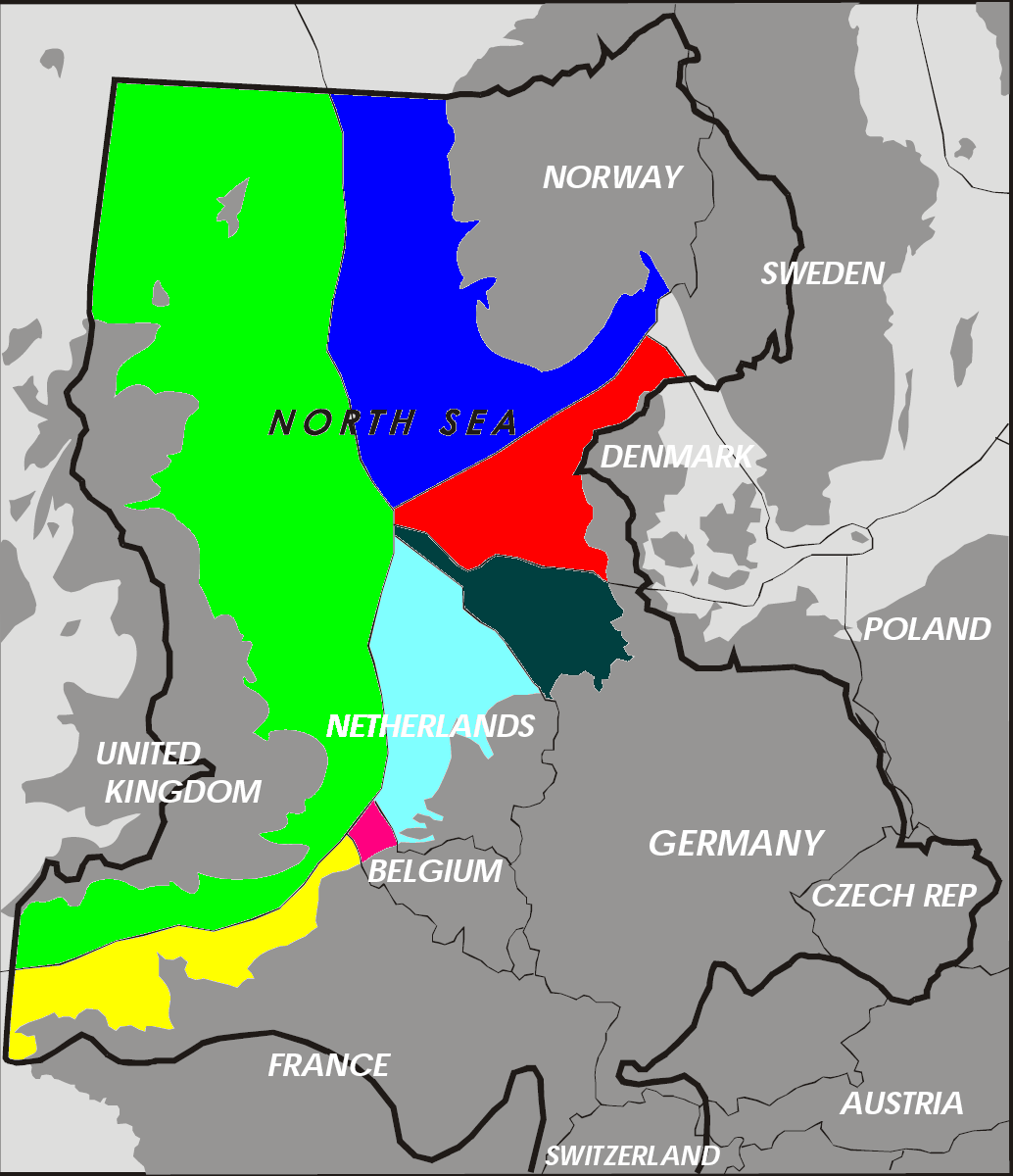
Note.
- Yellow is France.
- Mauve is Belgium, who drew the short straw.
- Light Blue is The Netherlands.
- Black is Germany, who despite their large land area, don’t have as much sea as the UK.
- Red is Denmark.
- Dark Blue is Norway.
- Green is The UK.
- Germany and Poland seen to share the Southern Baltic.
I wouldn’t be surprised to see Germany and Poland co-operating to maximize the wind power capacity of the Southern Baltic.
A Visit To Poland’s Coal Capital
On one of my trips to Poland, I went to Katowice, which is in Poland’s coal-mining region. I wrote about it in An Excursion In Katowice.
Google AI produced this snapshot of Katowice.
Katowice is historically known as the “Polish Coal Capital” and served as the absolute backbone of the region’s heavy industry. First transforming into an industrial powerhouse in the mid-19th century due to rich local coal and metal reserves, the city’s economy and rapid growth were entirely reliant on coal mining and steel.
While coal and heavy industry historically anchored its identity, the city of Katowice has aggressively transformed into a modern cultural, technological, and business hub. The wider Silesia region remains heavily tied to coal mining, but the municipality itself has shifted its focus to avoid reliance on it.
My visit to Katowice was an excellent pit-stop on a train ride between Krakow and Prague, when I did my Home Run From Krakow.
If you like your food and like me, you’re coeliac, I would certainly recommend Poland for a few days away.
Strangely, the language is not a problem, as if you get three Poles together, one will speak English better than what you do.
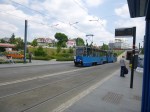
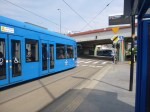
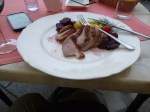
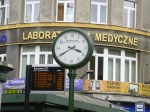
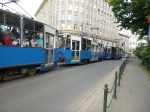
Krakow – A City Of Maps, Clocks, Trams And Gluten Free Food
Krakow is well-known for its buildings, but I found some other things equally fascinating in a delightful city.




-
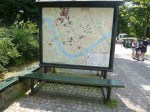
- A Large Map With Seats
All of the maps, clocks, trams and excellent gluten-free food, made the city a real joy to explore and I would recommend the city to anybody.
To see all the posts for my Home Run From Krakow click here.
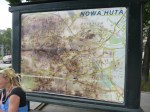
A Large Map With Seats
This double-sided map with seats was close to a busy intersection in Krakow.
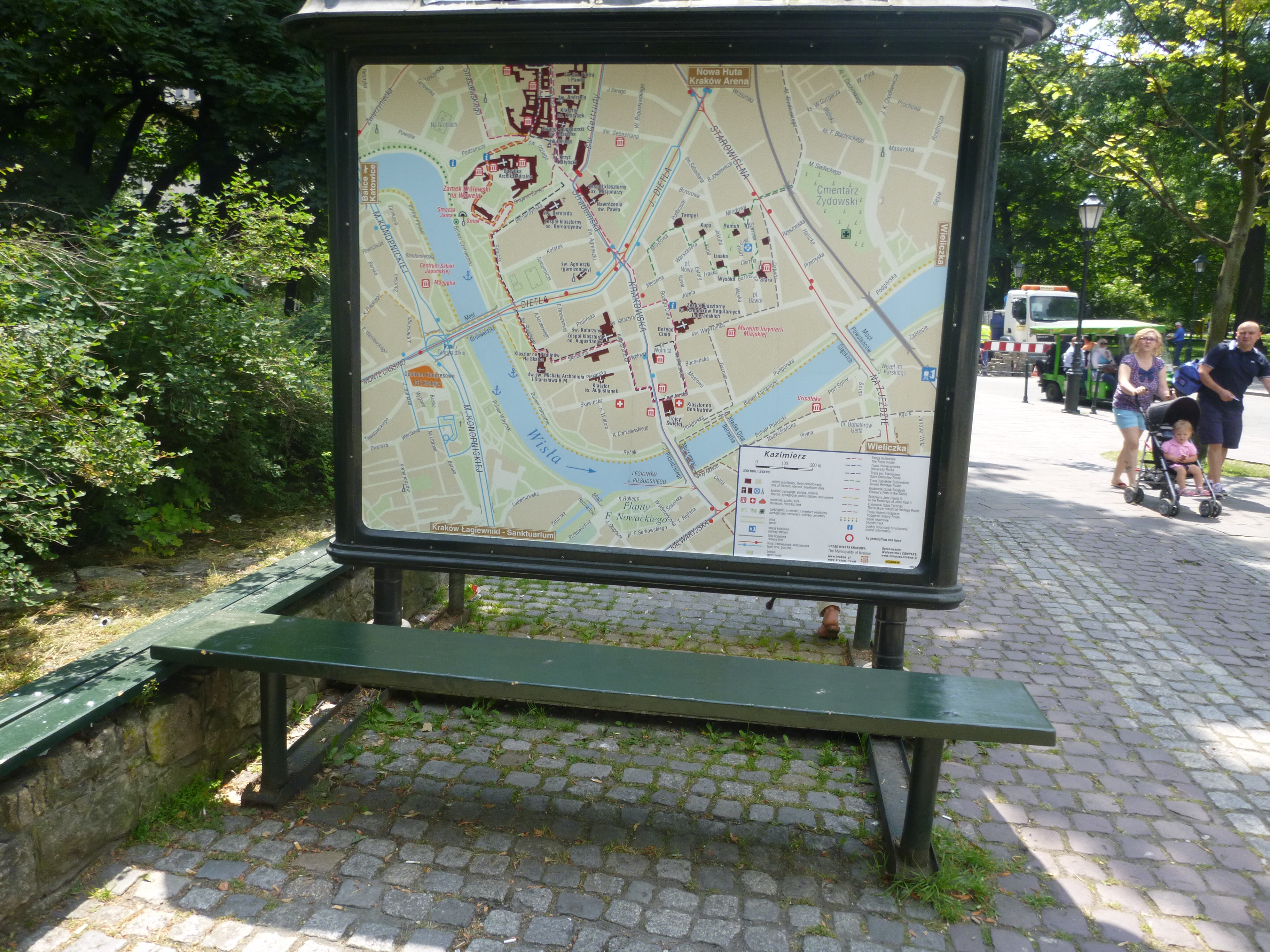
A Large Map With Seats
I don’t think it was the only one.
I like this and it helps to solve the problem of maps in a busy city centre. It looks like the map is also not necessarily permanent, so could be easily moved to a more important location or taken away to a workshop to be refurbished and fitted with a new map.
The map and seats doesn’t look particularly new, so it probably says that sometimes the old proven ideas are the best.
Incidentally, the map, as nearly all in Krakow, was very easy to understand.
Bins With Roofs On
These seemed to be unique to Krakow.
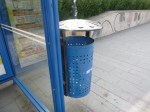
But surely to stop birds emptying bins they are a good idea.
Where Are The 33cL Water Bottles?
In the UK, I generally carry a small bottle of water. Usually, it’s a 33cL Evian or if I’ve been on a train a 33cL Harrogate.
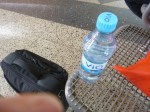


As the pictures show, these bottles are smaller than the 50cL ones that you have to use on the Continent. On my recent trip, I never managed to find a smaller bottle.
I prefer the smaller bottles, as there is less to carry. And they fit my jacket pocket!
I would have thought that there might be an economic advantage for both consumers and retailers in the smaller bottle. Not knowing the costs of production, I can’t do a full calculation.
Don’t Let’s Be Beastly to the Germans
The title of this post comes from Noel Coward’s wartime comic song – Don’t Let’s Be Beastly to the Germans.
Generally, the Germany has got more visitor-friendly and on this trip their restaurant menus have improved beyond recognition for coeliacs and other allergy sufferers.
But there is one thing, where the reality does not live up to the German reputation for good design, reliability and efficiency.
Deutsche Bann, their trains and some stations just doesn’t cut the mustard. Or whatever they say in Germany.
In a related area, the local trams, metros and buses I’ve used are much better, even if in some cities, the maps and information aren’t up to the standard of the better cities like Munich or Leipzig!
On the train from Brunswick to Osnabruck, I was talking with a commuter and he was saying his commute was often late.
Service Frequency
One thing you notice in Germany, as that on important main-line routes, trains are not as frequent, as you’d find in say France, Italy or the UK, which seems to have the most frequent trains in Europe.
Comparing Berlin-Hamburg with the London-Liverpool route I know well, shows that for direct trains, the cost is about the same and there is one train an hour on both routes. But Liverpool also has two extra trains each hour, which are only a few minutes slower with a change at Crewe.
But the journeys on this trip, where I was doing an hour or so journey on a main line, I usually had the choice of just one train every two hours.
So when planning a train trip in Germany, make sure you plan well and never rely on if you miss a train, they’ll be another one along soon!
I have found that it is often better to take the slower regional trains, as I did several times on this trip, as although they are slower, many are double-deck and you can hide yourself upstairs and watch the countryside go by.
But I think German regional trains are more under control of the individual state or area, rather than Deutsche Bahn.
If this is the case and coupled with the often excellent interchanges at stations to trams and buses, this must be a good argument for local control of train services. But then as a Londonder could I believe anything else?
Finger-Aching Ticketing
The German automatic ticketing machines work well, but be prepared to wear out your fingers.
I counted that to buy a simple ticket from Liepzig to Braunschweig took a dozen menu choices and that didn’t count typing in the names.
Train Design
Increasingly, in the UK, our trains are a level step from train to platform and vice-versa. Look at this wide easy-entry door on a Class 378 train.
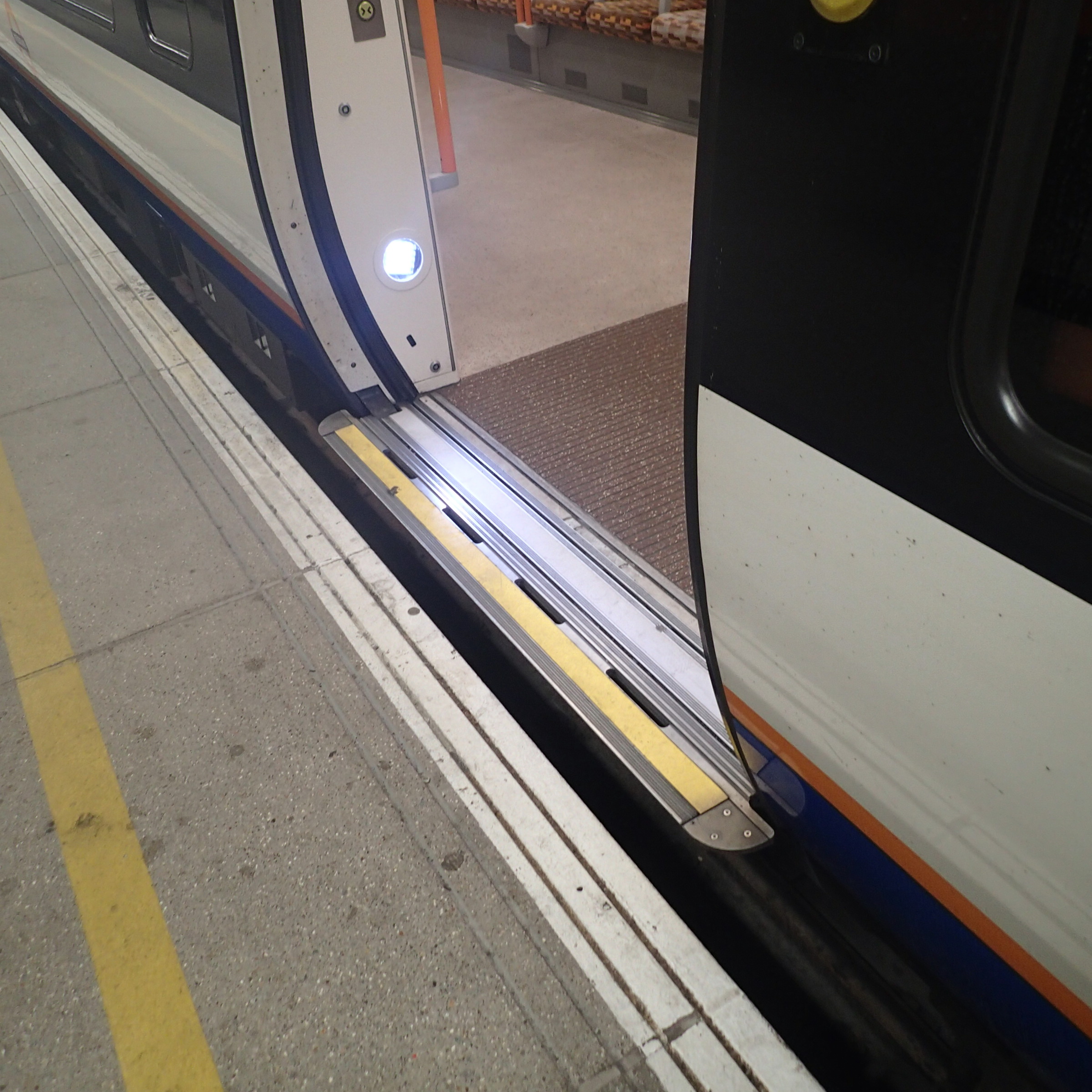
Regularly you see wheelchair-users push themselves across. This is a typical entrance to a Deutsche Bahn IC train.
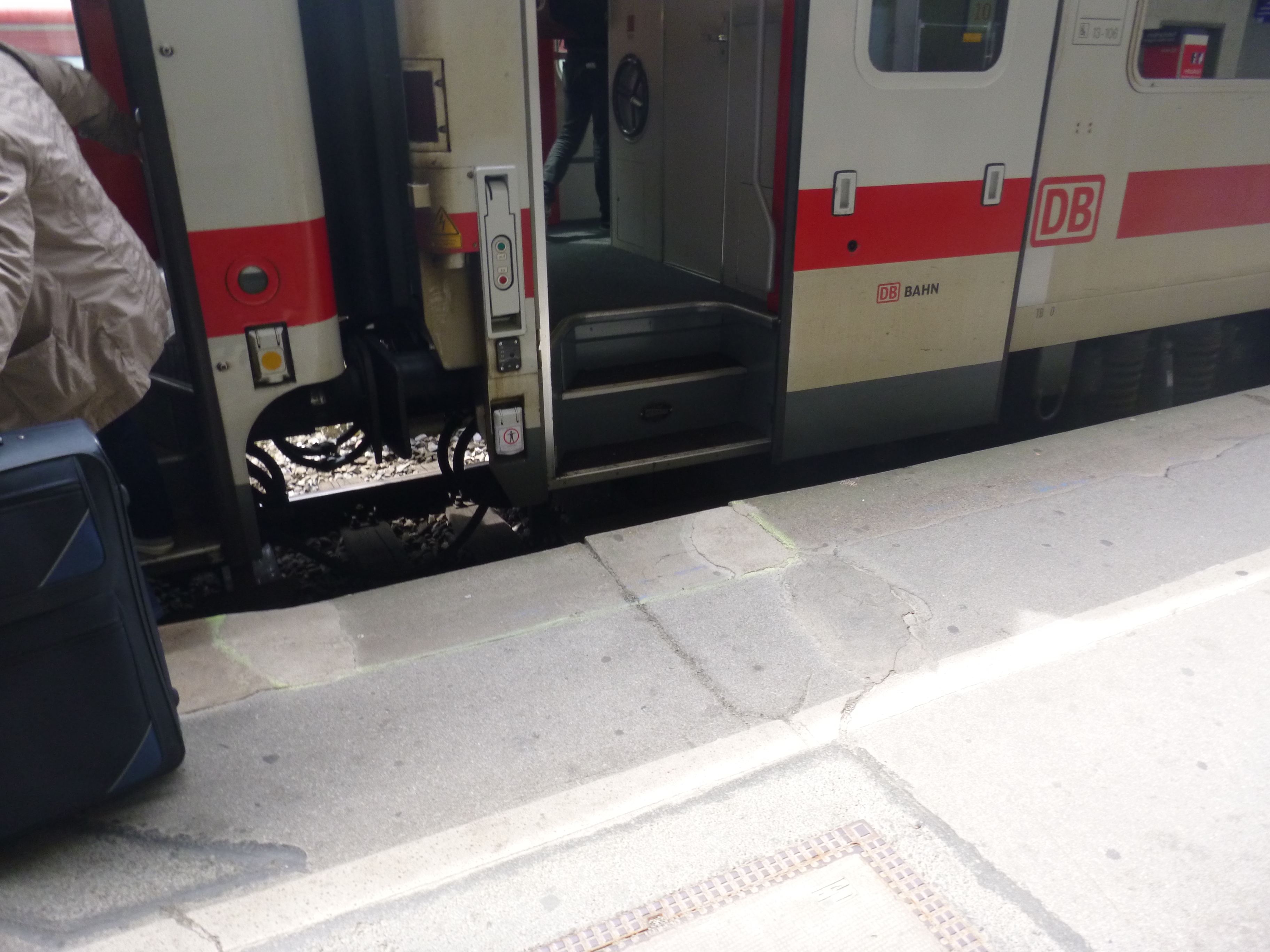
With my eye-sight, I sometimes miss my footing and in Germany, I worry about putting my foot in the often big gap between train and platform, which is never level.
As to wheelchair users in Germany they must despair. I thought that EU disability regulations meant trains had to be disabled-friendly.
On-Train Information
Nearly all the trains had displays for traffic announcement, but the information was a bit thin. As the Belgians were more comprehensive, I suspect it’s just the way they’ve programmed the system.
When you are a tourist in an area you don’t know well, you really do need adequate warning of your station. With Deutsche Bahn you don’t get it every time!
I shall finish this rant later!
Liège-Guillemins Station
As I wandered my way back to Brussels for the Eurostar, I just had to stop of at Liège-Guillemins station and take some pictures.
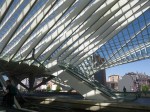
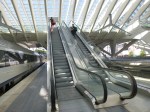
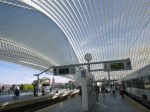
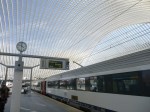
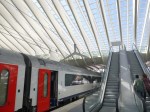
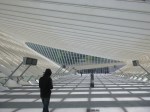

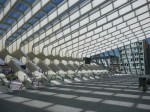
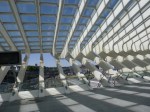


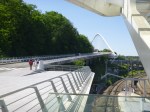
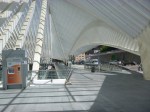
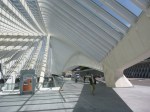
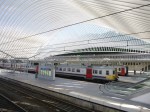
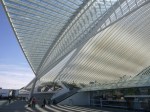
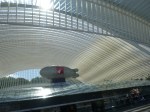
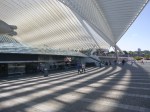
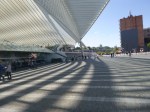
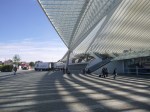
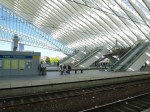
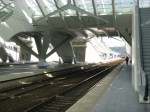
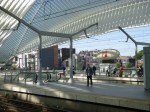
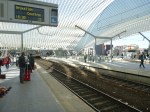
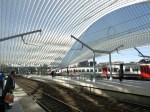
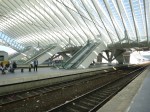
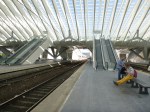
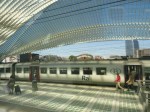
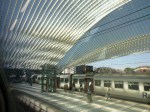
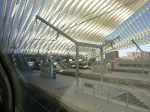
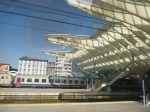
Is there another station like it in the world? This Google Map shows the layout.
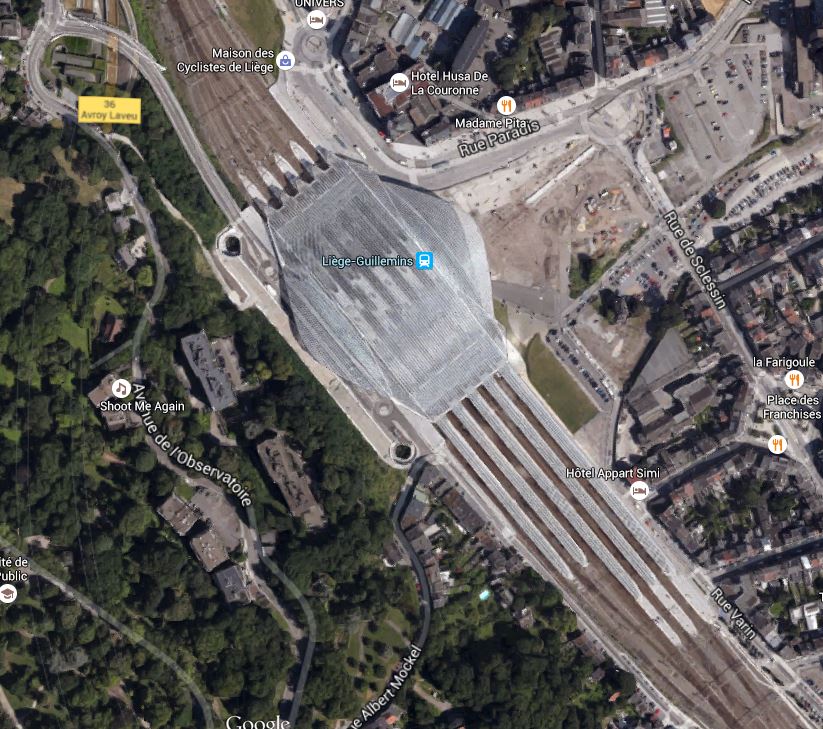
It is a design by Santiago Calatrava. Let’s hope that the Belgians did a good job on building this station. In 2007, I saw some of his buildings in Valencia and the concrete hadn’t worn well!
The totally new station cost €312million, which compares with £500million for the restoration and extension of Kings Cross station. Compare these figures with the reported £44million for the restoration of Manchester Victoria station, the complete reconstruction of Reading and Birmingham New Street stations.
Direct comparisons are difficult, but I cam’t help feeling, that in terms of cost, Manchester Victoria station is out of line with the others. It just shows that god design is often cheaper than bad.
One difference between the British projects and Liège-Guillemins station, is that the British ones are or were updating of existing stations, whereas the Belgian one was a new station built a short distance away.
Perhaps in some ways, to combine rebuilding with moving the station is a better plan, as both Reading and Birmingham New Street could be thought expensive compared to Liège-Guillemins.
So with all the problems there have been during the rebuilding of London Bridge station, would it have been better to have put the rail lines through in an optimal manner for operational purposes and perhaps created a new station further South.
London Bridge station was and still is a difficult problem, but hopefully it’ll be spot on when it opens.
Through The Ardennes
I hadn’t thought I’d see much, but the route through the Ardennes was rather pretty.
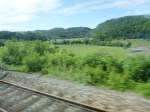
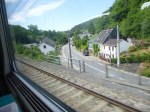
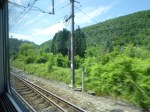
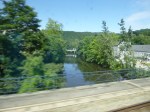
The train was a single-decker, as the pictures show.
A Station With An Attached Chapel And Hotel
Cologne station is one of those stations, which is an ideal place to break a journey.
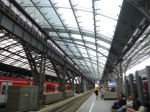
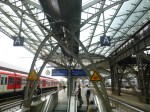
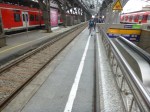
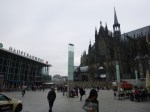
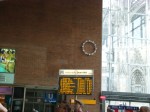
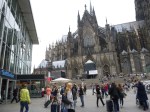
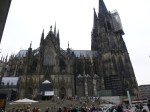
This Google Map image shows the closeness of the station, the cathedral and the river.
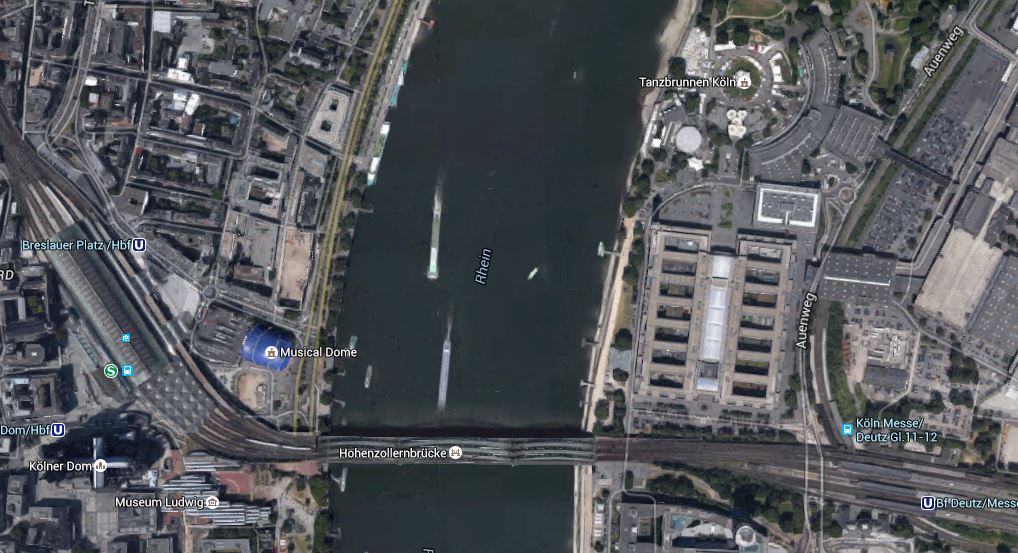
As Cologne from 2018 or so, a service will run direct from London, Cologne will become more important for those travelling to and from London.
The Slow Way From Wuppertal To Brussels
I had intended to get some food in Wuppertal after riding the Schwebebahn, but the town centre wasn’t very visitor friendly, due to the massive building works between the two railways. So after the Schwebebahn, I decided to get the first train to Cologne, which just happened to be an ICE.
At Cologne, I decidd it would be a good idea to take a series of slow regional trains to Brussels.
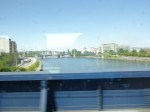
I went via Aachen and Liege, taking pictures along the way. Some like
A Station With An Attached Chapel And Hotel
The station at Liège-Guillemins
have their own posts, but others are in this gallery.
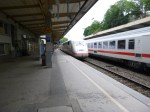
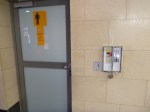
Note.
- For most of the journey, I was sitting in the top deck of the trains.
- There was nearly a serious incident in the ICE. The lobby has no grab handles and a guy about my age fell over as the train lurched. Even a much younger man didn’t like it. Health and Safety would have changed the design in the UK.
- I particularly liked the toilet lock at Aachen. You just put fifty cents in the slot and opened the door in the normal way. It wouldn’t have hindered anybody, who could walk through a normal door.
- Except for the Wuppertal to Cologne section on the ICE, it wasn’t crowded.It was a journey I’d recommend, if you have plenty of time to catch a Eurostar out of Brussels.
It was a journey I’d recommend, if you have plenty of time to catch a Eurostar out of Brussels, as Colgne, Aachen and Liege are all places to get a drink and a snack.

