Thoughts On A 140 mph East Coast Main Line Between London And Doncaster
The East Coast Main Line is being upgraded with digital signalling to allow Azumas and other high speed trains to run at 140 mph for most of the route, starting with the section between London and Doncaster.
There is also a string of projects all along the line to improve operating speed, cut out slow trains and improve junctions and crossings.
Finsbury Park And Stevenage
In The New Fifth Platform At Stevenage Station – 11th October 2019, I talked about the improvements at the Northern end of the Hertford Loop Line, which I believe could allow the fast lines between Stevenage and Finsbury Park stations to be exclusively used by digitally-signalled 140 mph trains.
Currently, these passenger services run between Stevenage and Finsbury Park in a typical hour.
- LNER – Edinburgh – 2 trains – #
- LNER – Leeds – 2 trains – #
- LNER – Newark or York – 1 train – #
- Great Northern – Cambridge and Ely expresses – 2 trains
- Thameslink – Cambridge stopping trains – 2 trains.
- Thameslink – Peterborough and Horsham – 2 trains
- Thameslink – Cambridge and Brighton – 1 train
- Hull Trains – 7 trains per day. – #
- Grand Central – 9 trains per day. – #
- East Coast Trains – 5 trains per day. – From 2021. – #
The services can be divided into four groups.
140 mph Non-Stop Expresses
Services marked with a hash (#) will probably be run by versions of Hitachi Class 80x trains or similar, which will be capable of 140 mph running under digital signalling, between Finsbury Park and Stevenage stations.
The twenty-one services run by Hull Trains, Grand Central and East Coast Trains, will probably add up to less than two trains per hour (tph).
This means that there is a need to run seven tph between Finsbury Park and Stevenage.
Kings Cross and Cambridge/Ely Expresses
Currently, these go non-stop between Kings Cross and Cambridge on the fast lines.
Surely, these should be 140 mph-capable trains, so they fit in with all the fast expresses.
After all, Oxford is served by 140 mph-capable trains, so why not Cambridge?
Cambridge Stopping Trains
The half-hourly Cambridge stopping trains have to stop in Welwyn North station,
- They will have to use the fast lines between Welwyn Garden City and Knebworth stations, as there are only two tracks.
- Currently, trains are timetabled to take nine minutes to pass through the double-track section.
- North and South of the double-track section, the services will use the slow lines, as they call at several stations
But these services still leave forty-five minutes in every hour, in which to fit the 140 mph services through the restricting double track section.
These services will be replaced by a two tph Thameslink service between Cambridge and Maidstone East stations.
Thameslink Cross-London Services
The two Thamelink Cross-London services between Peterborough and Horsham and Cambridge and Brighton, go non-stop between Finsbury Park and Stevenage stations.
So could these three services use the Hertford Loop Line?
- North of Stevenage, they use the slow lines.
- South of Finsbury Park, they use the slow lines to access the Canal Tunnels for the Thameslink platforms at St. Pancras.
- Would calls at perhaps Alexandra Palace, Enfield Chase and Hertford North be worthwhile.
The only disadvantage would be that the route would be a few minutes slower, than using the main line.
Trains Terminating At Kings Cross Station
In each hour, it appears that the following trains will terminate at Kings Cross station.
- Seven 140 mph expresses, that are going North of Hitchin.
- Two 140 mph expresses, that are going to Cambridge/Ely.
- Two stopping services, that are going to Cambridge.
The station has nine platforms in the main station and three in the suburban station at the side.
The Wikipedia entry for Kings Cross station, has a section entitled Future Remodelling, where this is said.
In January 2018, it was announced that half the station would close for 3 months from January to March 2020 for remodelling work to the station and its approach, expected to cost £237 million. This includes rationalisation of the tracks, reopening the third tunnel to the approach of the station and closure of platform 10.
The remodelling must allow an increase in numbers of trains terminating at Kings Cross, especially as the problems in the throat should be sorted.
These points should be noted about the High Speed Two platforms at Euston.
- There are eleven platforms.
- They can handle eighteen tph.
- The trains will be up to four hundred metres long.
Considering that a nine-car Class 801 train is less than 240 metres long, I wouldn’t be surprised to find that Kings Cross can handle eighteen tph.
Does that mean that Kings Cross station can accommodate another seven services?
Would The East Coast Main Line Be Able To Handle Eighteen 140 mph Expresses An Hour?
If Kings Cross station can handle eighteen tph, then the two fast lines of the East Coast Main Line must be able to handle this number of trains.
- The two fast lines of the East Coast Main Line between London and Doncaster could be considered a smaller and slower version of High Speed Two.
- High Speed Two has a capacity of eighteen tph.
- High Speed Two trains are almost twice as fast as those on the East Coast Main Line.
- Signalling on the East Coast Main Line will have to deal with slower trains, where there are less than four tracks, as over the Digswell viaduct and through Welwyn North station.
This is just the sort of challenge, for which digital signalling has been created.
Spare Capacity South Of Hitchin
Suppose in a couple of years the following has been done.
- Kings Cross station has been remodelled.
- The Hertford Loop Line has been updated for more and faster trains.
- Thameslink services can use the Hertford Loop Line.
- Thameslink is running the full 24 tph service.
- The Cambridge stopper has been changed into a Thameslink service between Cambridge and Maidstone East.
- Cambridge and Brighton has become a two tph service.
- Kings Cross and Cambridge/Ely expresses are run by 140 mph-capable trains.
This would mean the following frequencies, to the South of Hitchin.
- Seven tph – 140 mph-capable expresses between Kings Cross and the North, with some stopping at Stevenage.
- Two tph – 140 mph-capable expresses between Kings Cross and Cambridge/Ely.
- Two tph – 100 mph Thameslink services between Cambridge and Brighton routed via the Hertford Loop Line.
- Two tph – 100 mph Thameslink services between Peterborough and Horsham routed via the Hertford Loop Line.
- Two tph – 100 mph Thameslink services between Cambridge and Maidstone East routed via the East Coast Main Line. The slow line will be used except over the Digswell viaduct and through Welwyn North station.
Note.
- There will also be a two tph Thameslink service in the Peak between Welwyn Garden City and Sevenoaks. This can be discounted as it avoids the tricky bits of the East Coast Main Line.
- Thameslink services to Cambridge and Peterborough would be routed via the Hertford Loop ine, at a frequency of four tph.
- All Thameslink services would be routed via the Canal Tunnels and St. Pancras station.
- Kings Cross would only be handling 140 mph-capable trains, at a frequency of nine tph.
If the capacity of the 140 mph fast lines is the same as the similar High Speed Two, then eighteen tph should be possible.
Planned trains could be as follows.
- Seven tph – 140 mph-capable expresses between Kings Cross and the North, with some stopping at Stevenage.
- Two tph – 140 mph-capable expresses between Kings Cross and Cambridge/Ely.
- Two tph – Thameslink service between Cambridge and Maidstone East.
Does that mean another seven tph can be accommodated between Kings Cross and Hitchin?
As only nine tph would be going into Kings Cross, the station should have no difficulty handling that number of trains. It could possibly handle another nine tph.
Spare Capacity North Of Hitchin
At Hitchin, the following services wukk go to and from Cambridge.
- Two tph – 140 mph-capable expresses between Kings Cross and Cambridge/Ely.
- Two tph – Thameslink service between Cambridge and Maidstone East.
The other Thameslink services can be ignored, as they use the slow lines between Stevenage and Hitchin and the Hertford Loop Line, so they are out of the way of the 140 mph services.
Does that mean another ten tph can be accommodated between Hitchin and the North?
What Limits The Number Of Extra Trains?
My crude estimation appears to show the following.
- Kings Cross station may be able to handle another nine tph.
- Between Kings Cross and Hitchin may be able to handle another seven trains.
- North of Hitchin may be able to handle another ten trains.
It would appear that the double track section over the Digswell viaduct and through Welwyn North station, limits the capacity of the whole route.
Estimated Timings
In Changes Signalled For HS2 Route In North, I stated this.
Currently, the fastest non-stop trains between London and Doncaster take a few minutes over ninety minutes. With 140 mph trains, I think the following times are easily possible.
- London and Doncaster – 80 minutes
- London and Hull – A few minutes over two hours, running via Selby.
- London and Leeds – A few minutes less than two hours, running on the Classic route.
For comparison High Speed Two is quoting 88 minutes for London Euston and Leeds, via Birmingham and East Midlands Hub.
There could be a race to Leeds between High speed Two and Classic services on the East Coast Main Line.
Speculation On Extra Services
It would not be right, if I didn’t have a small speculation.
Cambridge Services
Consider.
- Oxford and Cambridge both have two main routes to and from London.
- Both have a fast service running at a frequency of two tph.
- Both have other quality, but slower services.
It could be argued that extra fast services are run to Cambridge, but this would use up two valuable paths over the Digswell viaduct.
Perhaps it would be better to copy Greater Anglia’s solution for London and Norwich services and order a high quality purpose-designed train for the route.
- 140 mph-capability
- Digitally-signalled
- 240 metres long
- High quality interior
There would need to be some platform lengthening between Cambridge and Kings Lynn.
Leeds Services
Leeds currently has two tph from Kings Cross and Manchester Piccadilly has three tph from Euston.
Leeds also has a daily direct service to Aberdeen.
I suspect that there could be a sorting out at Leeds, which would mean it gets a third service from London.
Conclusion
If something similar to what I have proposed is possible, it looks like as many as an extra seven tph can be accommodated between Kings Cross and the North.
The New Fifth Platform At Stevenage Station – 11th October 2019
Stevenage station is getting a fifth platform for the termination of Great Northern services to and from Moorgate station.
- This platform will be on the down side of the station.
- A single platform should be able to turnback at least four trains per hour (tph) and possibly as many as six tph, that have used the Hertford Loop Line to come North.
- Wikipedia says that this will increase the capacity and frequency on the East Coast Main Line and the Hertford Loop Line.
These are a few pictures of the works.
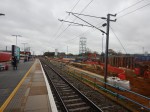
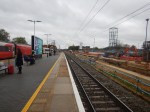
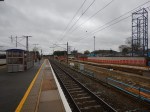
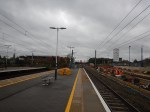
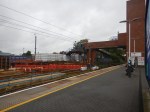
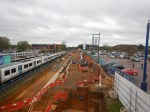
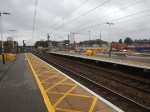
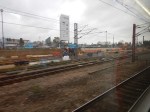
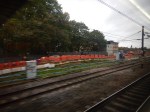
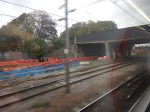
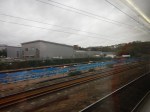
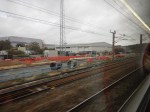


This page on the Network Rail we site is entitled Stevenage Turnback and it gives more details.
- improved resilience and reliability is claimed.
- Two kilometres of new track and a set of points will be added.
- The embankment on the West side of the track will be strengthened.
- The signalling will be improved.
- Two bridges will be modified.
Everything should be completed by Summer 2020, so that the four tph from Moorgate to Stevenage can be resumed.
These are my observations.
- The work on the West side of the East Coast Main Line seems to be to a very high standard.
- There seems to be enough space for a possible double-track or a passing loop between the new platform and the Hertford Loop Line in future.
- The embankment on the West side of the track is being strengthened.
- Will trains still be able to come from the Hertford Loop and continue North?
It certainly appears to me to be built to allow expansion in the future.
What Frequency Will The New Platform Be Able To Handle?
There are several platforms in the UK, where four tph are turned back.
It looks to me, that there is no reason, why this frequency couldn’t be handled in the new platform at Stevenage.
Especially, as there appears to be at least one crossover between Stevenage and Watton-at-Stone stations.
But could it handle more trains?
The Hertford Loop Line is scheduled to be updated with digital signalling. So in the future, this may be possible, if the need is there!
The Great Northern Metro
It should also be noted that in 2016, Govia Thameslink Railway published plans for a Great Northern Metro. They seemed to have dropped this idea, but I discussed the plan in The Great Northern Metro.
This is a brief summary of those proposals.
- Fourteen tph in the High Peak.
- In the Off Peak, there would be six tph to Hertford North, four tph to Welwyn Garden City and two tph to Stevenage.
- Sunday services are four tph to both branches and two tph to Stevenage.
I do wonder what is the capacity of the Hertford Loop Line.
- It has grade-separated junctions at both ends of the route.
- It is double-track throughout.
- It has 25 KVAC overhead electrification.
- It has a 75 mph operating speed.
- It has turnback platforms at Gordon Hill and Hertford North stations.
- It is planned to equip the route with digital signalling.
- It is planned to upgrade the power supply.
- It probably handles a maximum of about eight tph, which can include a couple of freight trains.
I suspect that this route can be improved to handle more and longer trains., at a higher speed than now!
Could Thameslink Use The Hertford Loop Line?
Could some Thameslink services to Cambridge and Peterborough use the Hertford Loop Line, rather than the East Coast Main Line?
Consider.
- The Hertford Loop Line will have an increased speed limit.
- Digital signalling is to be introduced on the route.
- Trains might only stop at Hertford North, Enfield Chase and Alexandra Palace.
- Some current Thameslink services between London and Cambridge and Peterborough, run non-stop between Finsbury Park and Stevenage.
Diverting some services to the Hertford Loop Line would have the following advantages.
- It would relrease capacity on the East Coast Main Line.
- It would reduce the number of trains using the two-track section over the Digswell viaduct.
- It could give Hertford a direct link to Cambridge and Peterborough.
The disadvantage would be that services would be a few minutes slower.
140 mph Running On The East Coast Main Line
Under Planned Or Proposed Developments the Wikipedia entry for the EastCoast Main Line says this.
Most of the length of the ECML is capable of 140 mph subject to certain infrastructure upgrades. Below is the foreword of the Greengauge 21 report:
“Upgrading the East Coast Main Line to 140 mph operation as a high priority alongside HS2 and to be delivered without delay. Newcastle London timings across a shorter route could closely match those achievable by HS2..
The section then goes on to describe a lot of improvements with the aim of running between London and Edinburgh in four hours.
The project has a code name of L2E4. There is more information at this page on the Network Rail web site.
South of Peterborough, there are infrastructure and rolling stock limitations, that will stop the Hitachi Class 800 trains running at 140 mph.
- Extra tracks are needed between Huntington and Woodwalton.
- There is a double-track section over the Digswell viaduct, through Welwyn North station and the Welwyn tunnels.
- Thameslink’s Class 700 trains that run services to Cambridge and Peterborough are only capable of 100 mph.
- Great Northern’s Class 387 trains, that run services to Cambridge and Kings Lynn are only capable of 110 mph.
- Hull Trains and Grand Central run services with trains that are only capable of 125 mph.
I will deal with these in order.
Extra Tracks Between Huntingdon and Woodwalton
The Wikipedia entry for the East Coast Main Line says this about this project.
Re-quadrupling of the route between Huntingdon and Woodwalton (HW4T) which was rationalised in the 1980s during electrification (part of the ECML Connectivity programme). This also involves the closure and diversion of a level crossing at Abbots Ripton which was approved in November 2017.
This improvement, which will mean continuous quadruple tracks between Stevenage and Peterborough will mean.
- A few minutes for all trains will be saved.
- Slower stopping services between London and Peterborough, will be kept out of the way of the 140 mph expresses.
What sort of stink would there be, if a motorway closed in the 1980s was now being rebuilt, to provide what existed forty years ago?
But British Rail closed or simplified infrastructure, without properly looking at the consequences, mainly to please or under the direction of the Treasury.
Double-Track Over Digwell Viaduct And Through Welwyn North Station
This is one of the worst rail bottlenecks in the UK.
To make matters worse, a service between Kings Cross and Cambridge with a frequency of two tph stops at the station.
It means a fast train would have to do a pit stop at speeds nor far off those of a racing car.
I think we can say, that adding extra tracks through the area would be extremely difficult, if not impossible.
But consider the trains that pass Welwyn North every hour.
- LNER – 5 trains
- Thameslink – 3 trains
- Cambridge and Ely expresses – 2 trains
- Cambridge stopping trains – 2 trains.
- Hull Trains – 7 trains per day.
- Grand Central – 9 trains per day.
If it is assumed that the Hull Trains and Grand Central add up to one train per hour, it looks like about thirteen tph go through the double track section.
If another couple of trains are added for luck, this means that the double track section will be handling a train every four minutes.
The double-track section is less than five miles long, so a 140 mph train will run between the quadruple track sections at Welwyn Garden City and Knebworth stations in jut over two minutes.
Currently, the trains that stop at Welwyn North station are timetabled to take nine minutes between stops at Welwyn Garden City and Knebworth stations.
Effectively, the stop at Welwyn North station blocks the double-track section for nine minutes..
This means that there are two twenty-one minute periods in an hour where the other trains can pass through.
So how can you maximise the use of these available periods?
- The trains must arrive precisely at the right time – Digital signalling with automatic train control is probably the best way to ensure this.
- All through trains must be running as near to 140 mph as possible.
- Diverting of slower trains to alternative routes should be examined.
- The stopping train should be able to execute a stop in the shortest possible time.
I believe that if the timetable is efficient, that as many as twenty tph could be handled.
Most would go through the double-track section at 140 mph!
I must add a point about safety.
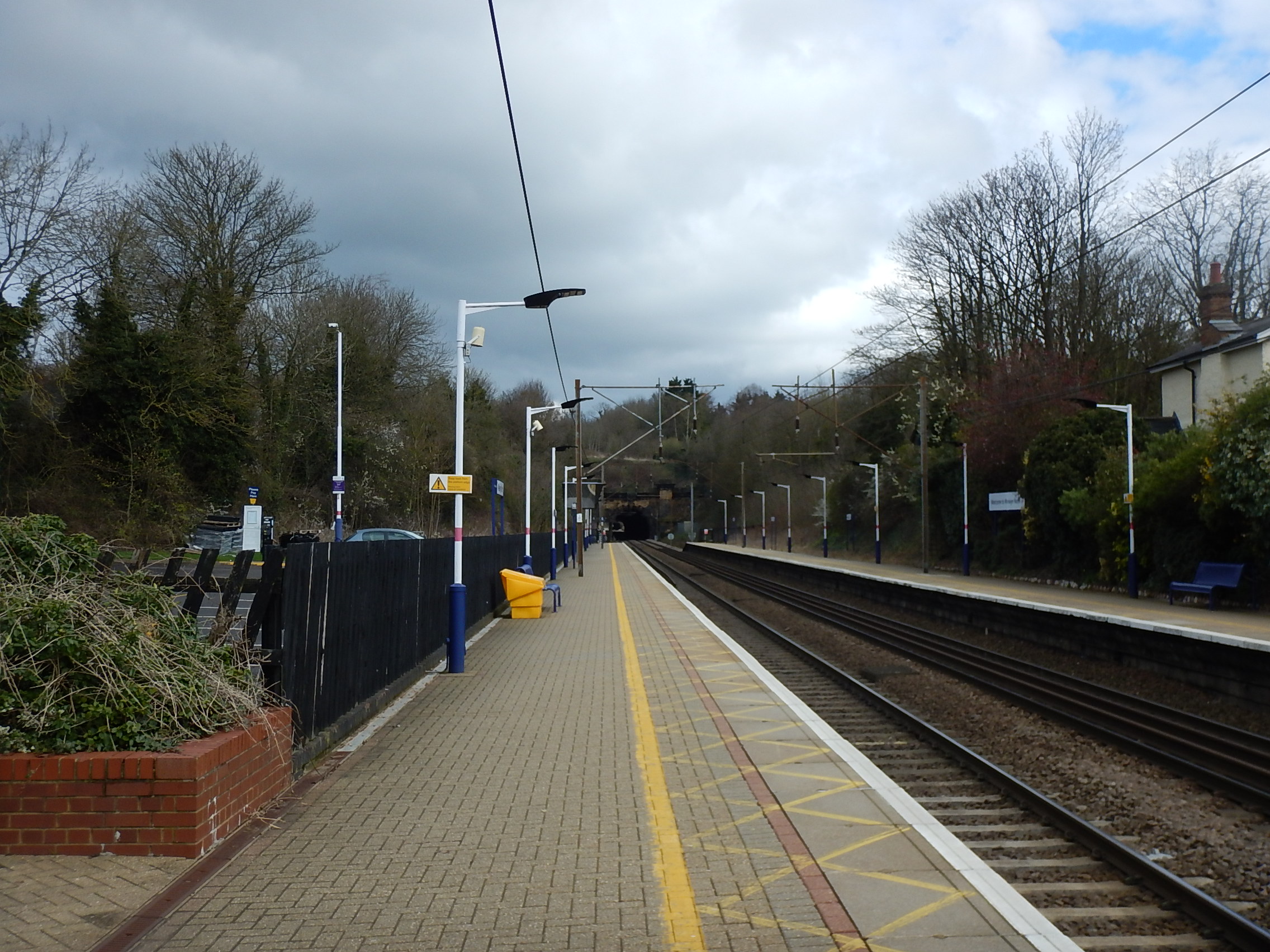
Trains currently go through these platforms at Welwyn North station at a maximum speed of 125 mph.
Will more trains going through at a faster speed, necessitate the addition of a passenger protection system at the station?
Thameslink’s Class 700 Trains
I have heard East Midlands drivers moan about Class 700 trains on the Midland Main Line, as they are too slow at 100 mph to mix it with the 125 mph expresses.
It looks like the Treasury got the specification wrong again! Surprise! Surprise! Even a 110 mph capability, as is often specified for outer suburban trains would be better.
But these trains run non-stop between Finsbury Park and Stevenage stations, so at 100-110 mph, they will be a bit of a hindrance to the trains running at 140 mph. It would be like granny and grandpa in a Morris Minor in the fast lane of a motorway!
If there is the capacity, then perhaps the Thameslink trains should run on an upgraded Hertfprd Loop Line along with the 100 mph Class 717 trains.
Once they rejoined the East Coast Main Line, they would take to the upgraded slow lines to go Cambridge and Peterborough.
Great Northern’s Class 387 Trains
Cambridge is one of the UK’s world-class cities and it deserves a top quality service from London.
The current Class 387 trains are only 110 mph trains, so wouldn’t fit well with the herds of 140 mph trains running to and from London.
It would probably be best in the long term to replace these trains with 140 mph trains designed for the route.
After all if Oxford can have a commuter service to London using Class 802 trains, then surely these are good enough for Cambridge?
In Call For ETCS On King’s Lynn Route, I discuss the possibility of digital signalling on the London and Kings Lynn route via Cambridge, based on reports in Rail Magazine.
If the Cambridge Line from Hitchin were to be upgraded for faster running, then London and Cambridge times might be reduced significantly.
Hull Trains And Grand Central
Hull Trains and Grand Central will want to participate in the 140 mph action between London and Doncaster.
Hull Trains have already made their move and have leased a fleet of Class 802 trains, which will shortly enter service.
Another Open Access operator; First East Coast Trains has already ordered five Hitachi 140 mph trains.
Will Grand Central replace their fleet of Class 180 trains?
They will either buy 140 mph trains, cease trading or give up!
The other operators won’t want slow trains on the fast lines.
How Many 140 mph Trains Will Be Able To Run Between London And Doncaster?
I finish this section with a question.
I answered this question and a few others in Thoughts On A 140 mph East Coast Main Line Between London And Doncaster.
This was my conclusion.
If something similar to what I have proposed is possible, it looks like as many as an extra seven tph can be accommodated between Kings Cross and the North.
That is certainly worth having.
Conclusion
The new platform at Stevenage station is a well-designed sub-project that enables the Hertford Loop Line to be used to its full capability.
- Up to four tph will be able to run between Moorgate and Stevenage stations.
- The redesigned junction at Stevenage will allow services like Thameslink to use the Hertford Loop Line rather than run at 100 mph on the East Coast Main Line.
It is an important sub-project in turning the East Coast Main Line into a high speed line with a high proportion of 140 mph running.
 The Anonymous Widower