7/10 For Day Zero For The New Overground Lines
You might ask how I can give the 7/10 for the new Overground lines, when the service hasn’t officially started.
But I didn’t see anything wrong and there was a lot of positivity from staff and passengers. Here’s a few things I noticed.
1. Freedom Passes
Transport for London obviously know their passenger model and the Freedom Pass holder I spoke to who said she would use the line from Enfield at all times of the day, must mean that TfL know they can accommodate the extra passengers, who will turn up early in the morning and in the rush hour to go home.
Perhaps, the small modal shift say from vehicular transport to trains, will actually free up the roads.
I’ll just let the data do the talking, when passenger numbers are published in a few months.
2. The Deep Clean At Enfield Town
It looks like they’ve deep cleaned Enfield Town station for the launch and if this is indicative of the standard we’ll see at the piles of bricks, that double as stations, they’ve inherited from Abellio Greater Anglia, then the good burghers of East London will be pleasantly surprised.
To be hard on London Overground, choosing Enfield Town station for the launch was a bit of a cheat, as the station is naturally step-free and it was built in 1957, as opposed to the 1840s for most of the stations.
It is certainly built and cleaned to a standard, that few if any, would complain about.
3. Staff
The staff seemed positive in a lot of ways, just as they do in a typical Overground or Underground station.
4. Trains
The trains, I travelled in today were clean and one lady thought that Abellio Greater Anglia could have done more to keep them clean.
If London Overground follow the cleaning procedures they use on the North and East London Lines, where litter is regularly collected throughout the day, the passengers will be pleased.
5.Future Overcrowding
From experiences with the current Overground, I can see a small problem. And that is overcrowding.
But whereas on the North and East London Lines providing more capacity is a problem, on the Lea Valley Lines, all platforms can take eight car trains, as they do in the rush hour and you can always couple two Class 315 trains or Class 317 trains together. And as Class 345 trains are delivered for Crossrail, more of these will come available.
6. Future Investment
London Overground have acquired these routes from Abellio Greater Anglia, with all the skill of an East End trader who sold car aerials in Ridley Road Market.
They have similar costs to Abellio Greater Anglia in terms of trains, track charges and stations, but they get more of the revenue, as they are a not-for-profit organisation and don’t have external owners.
So they get the benefit of all the investment they make, provided of course it is sound! But Transport for London have said they are going to put £25million into the Lea Valley Lines.
But it won’t be just Transport for London putting money into the Overground. The proposed new station at Hackney Wick has a variety of sources of funding and I think we’ll see other stations built by external developers, so that their houses, offices or industrial units are more desirable.
In this section in Wikipedia, it says that the current trains will be replaced by thirty-nine new trains in 2017. New trains always attract more passengers, but unlike the current Overground lines, adding more capacity will not involve any expensive platform lengthening.
7. Everybody Will Want Overground
The only serious long term problem, they have is that if the Lea Valley Line takeover is as successful as the current Overground, then there will be a clamour for other lines to be taken over, or at least run on the same lines.
I have a feeling that there are going to be some very unhappy train operating companies, who lose some quite lucrative routes in the next few years.
The Orange is Starting To Appear
Today, I took the Enfield branch of the Lea Valley Lines up to Enfield Town station, to see whether there was any signs of rebranding for the London Overground.
As you can see there were!


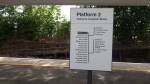


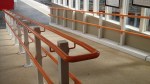
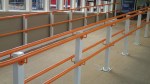
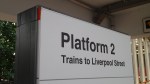
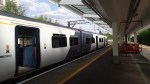
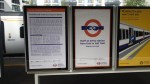
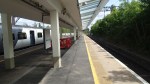

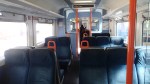
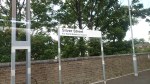
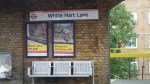

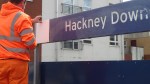
As one picture shows, they were changing what they could today for the start of service tomorrow.
Boris is coming to Enfield Town station on Monday, so they’ve obviously cleaned that station first. And very clean it was too, with lots of new shelters and seats.
The only problem was the new rubber floor had the smell of new rubber, but that will dissipate by Monday.
I chatted for a few minutes to a member of staff and to a couple of fellow travellers. All seemed very pleased and a fellow Freedom Pass holder was pleased that she could now use her pass before 09:30 in the morning.
Freight At Hackney Wick Station
When I took the pictures, for the article about the redesign of that Hackney Wick station, two freight trains came through.


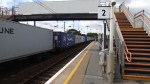
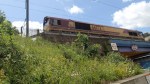
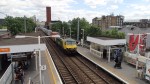
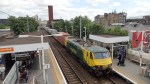
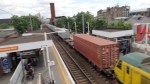
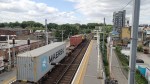
Is it just my feeling or are there more and longer freight trains on the North London Line?
The one that went west was particularly long. But at least it was electric hauled.
In all my searching for rail improvements in North and East London, I couldn’t find any plans for new freight routes to reduce the amount of freight traffic through the area.
The only positive thing is that the Gospel Oak to Barking Line is being electrified, which will mean that the trains will hopefully not be powered by noisy and smelly diesel locomotives.
So will we be seeing more freight trains going through in the middle of the night, as trains have to get past London on their way between. Felixstowe, Harwich, London Gateway and all the ports in the East to the West Coast Main Line and the Great Western?
The only partial solution is to electrify Felixstowe to Nuneaton via Peterborough and complete the East-West Rail Link to minimise traffic to and from Felixstowe going through London.
The only thing we can say about freight through North and East London, is that the problem will be get more and more difficult.
Imagine what would happen if the new Ultra Large Container Vessels started serving say Liverpool or Glasgow and then large numbers of containers were sent by rail through the Channel Tunnel to Europe. There have been plans to do this in the past as it saves time in getting goods from North America to Germany.
Transport for London Serves Up A Delicious Turkey
The local media is starting to pick up East London’s train revolution, if this article from This is Local London entitled Lower fares for overground stops that include Southbury and Turkey Street is anything to go by. I’m pleased to say that I spotted this one earlier.
It will be interesting to see if traffic goes up at stations like Southbury and Turkey Street.
I think the Overground takeover will define one of the battlefields for the next London Mayor in 2016. Who can prove they can offer most lines might come under TfL control, will gain an advantage at the ballot box.
Whither HS2 And HS3?
This morning there is an article in The Independent, which is entitled SNP fury as HS2 finds ‘no business case’ for taking fast train service to Scotland. Here’s the first paragraph.
The £50bn High Speed Two rail link will not be extended to Scotland, as the team behind the project has found there is “no business case” for the undertaking.
There may not be a conventional business case, as some of the reasons for developing a high speed railway up and down the country are emotional or for a country, where none of us will still be alive.
When HS2 is talked about in the media, freight is rarely mentioned outside of specialist magazines and web sites.
Although, HS2 will be built for the biggest freight trains, there are no plans for using it for this purpose at present. But, if the high speed line moves passengers away from the conventional East Coast, West Coast and Midland Main Lines, this will reduce the number of passenger trains and open up more paths for much needed freight trains to drive the economy.
The Electric Spine will take pressure off existing routes to the North and Scotland, but it does nothing to increase capacity north of Warrington and York, where both the East and West Coast Main Lines do not have the capacity of their southern ends. Some extra tracks and easier routes may be possible in places on these two Main Lines, but upgrading them will be difficult and politically sensitive.
The only other way to create more capacity between the North of England and Central Scotland is to electrify the Settle to Carlisle Line and complete and electrify the Waverley Route to Edinburgh.
I also mistrust all forecasts of passenger ridership on the railways. Two examples illustrate how bad they can be.
The estimate for traffic through the Channel Tunnel was very much on the high side and only now are the number of train passengers rising substantially towards that figure.
Locally, to me, the London Overground was started with three-car trains, which just five years later they are now converting to five cars. The original estimate ranks with some of the most spectacularly bad Treasury and Department of Transport predictions.
Add to this the usual mistakes, where they get the number of trains wrong and lumber places with unsuitable, inadequate or poorly designed trains, that are often unique one-offs to fit the budget. This means you can’t easily rustle up some more standard trains. At least with the Overground, Bombardier delivered the Class 378 trains, which can be cut and pasted into new formations and are still in production.
If you want to see an inadequate set of trains look at the Class 185 trains built for Trans Pennine services. Wikipedia has a whole section devoted to Overcrowding and Passenger Feedback. I have this feeling that some of the other trains ordered lately might be disasters, as the dead hand of the Treasury was too much on the decision.
So I can understand, why the SNP are angry that HS2 will not be extended to Scotland. More capacity is needed between England and Scotland for both freight and passengers, and if that is new capacity, it is likely that it would work well and in a reliable way, using standard trains that are just not UK-only specials, bought from the Treasury’s scraps and petty cash.
I do think though that our designs for HS2 are rather dated and don’t take things that are happening or have happened into account.
Crossrail in London has shown that putting a large twin rail tunnel under a major city, is not the problem it once was. Crossrail have also been very innovative in creating stations with the minimum disturbance to existing infrastructure. As an example, the new Whitechapel station for Crossrail has also used a technique called uphill excavation, where you create escalator and lift shafts upwards from the tunnels, rather than traditionally from the surface, which is much more disruptive.
These techniques can revolutionise the construction of HS2.
Take cities like Birmingham, Leeds, Manchester, Newcastle and Sheffield, which have developed and are continually developing extensive local rail, tram and bus networks. So why are we in Birmingham still talking about creating an HS2 station at Curzon Street? Surely, we just dig a very deep pair of HS2 tunnels under the city and then uphill excavate into not only New Street, but Moor Street and Snow Hill as well. The tunnels would be only made as long as necessary, although the underground station could be very large. But it probably wouldn’t be much bigger than the enormous double-ended Liverpool Street/Moorgate station being created for Crossrail.
The great advantage of this method of construction is that you can continue to develop your network of local trains, trams and other transport links, untroubled by the construction of the new station deep below. Anybody, who thinks this is not possible, should spend half-an-hour walking around Whitechapel station, where the Hammersmith and City, District and East London Lines are passing untroubled over the giant hole and through the building site for the new station.
I would have no idea as to the costs of this method of construction, but it surely must be more affordable, than creating a new station or modifying an old one, by traditional methods.
A station in Manchester could probably be created in a similar manner with a giant double-ended station linking into Manchester Piccadilly station at the Southern end and Manchester Victoria station at the Northern. This is a Google Earth image of Manchester city centre between the two main stations.
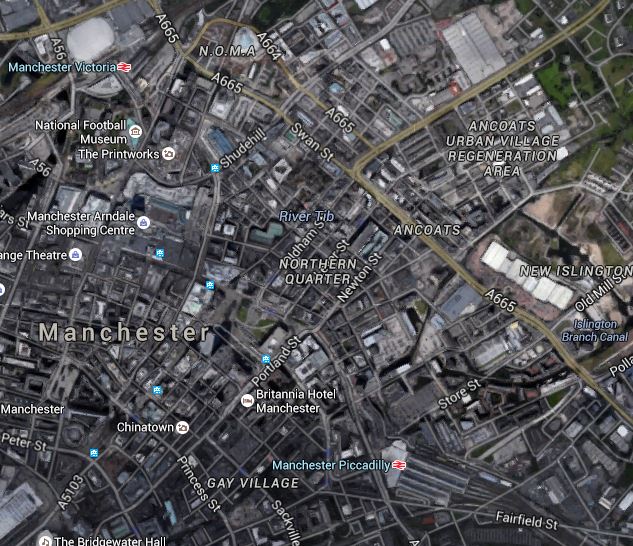
Manchester Piccadily And Victoria
Victoria is at the top and Piccadilly is at the bottom. The distance between the two stations is probably a couple of hundred metres more than between Moorgate and Liverpool Street, so designing a station deep beneath the city centre should be possible with a bit of help from long escalators and perhaps a travalator. If nothing else, it would be a wonderful way to transfer between the two stations in Manchester’s rain. It could also have entrances in places like Piccadilly Gardens
Leeds station could be a number of platforms for the high-speed lines under the current station.
Since HS2 has been proposed and still-born, the Northern Powerhouse and HS3 has arrived.
In my view we should plan HS2 and HS3 together and construct them together, as needs determine and budgets allow.
HS2 would start in London, possibly in an underground station which would be under one of the three stations on the Euston Road; Kings Cross, St. Pancras and Euston. It would probably be under Euston, but wherever it was it would be closely integrated into the Crossrail 2 station, which would be under Euston Road at right angles to the other lines and will serve the three current and the new HS2 stations.
I wouldn’t totally rebuild Euston station for HS2, as the station is so complicated and second-rate in its relationship with the Underground, that creating a decent connection between the current station would be so difficult to do without gumming up London’s transport system for umpteen years.
The approach used at Kings Cross to create the magnificent station we have today should be copied, where the main station was left virtually intact and new Underground entrances and subways were dug and tunnelled out to get the Underground connection working and then build a spacious station to give access to the platforms for the long-distance trains.
I also think that it would be better to build Crossrail 2 first and connect it to the three current stations on Euston Road, then tunnel HS2 accurately into the knitting.
The current Euston station would be kept fully operational throughout the construction of HS2 and only when that line is complete, would Euston station be given the sort of upgrade that has been so successfully done at Kings Cross, St. Pancras, Waterloo and Paddington.
HS2 would go North to a station at Old Oak Common, probably mostly in tunnel and it would then pass stations at Birmingham Interchange (Airport), Birmingham, Crewe, Manchester Interchange (Airport), Manchester and Leeds. I would put the stations in tunnels underneath the current transport hubs.
A branch off the main HS2, north of Birmingham, would go under Nottingham, Sheffield, finally rejoining the main HS2 at Leeds.
And why not balance the network, by having a branch off HS2 south of Birmingham going towards Bristol and Cardiff.
If the alignments were developed correctly, then loops under cities like Stoke might be possible.
HS3 could actually be integrated into HS2. Perhaps it would start under Liverpool Lime Street and then pass under Manchester Interchange, Manchester and Leeds.
From Leeds the HS2 and HS3 would split again, with one branch going North to Newcastle via York and the other going to Hull via Sheffield and Doncaster.
Obviously, this is only a back-of-an-envelop design and properly thought through it could be much better.
But I do feel that HS2 and HS3 will both benefit if they share a route between Manchester Interchange and Leeds, via perhaps Manchester and Huddersfield.
One of the aims of this design is to create a high-speed railway network, with as little demolition and disruption to the workings of our cities as possible.
What happens in Scotland is tricky, as in my view a lot of improvements are mainly Scottish solutions. For instance, as I said, the Waverley Route needs to be rebuilt to a high standard with electrification, Glasgow Crossrail needs to be created and Edinburgh to Glasgow needs to be fully electrified.
But when Newcastle gets a high speed connection to the south, the final piece in the jigsaw of high-speed lines would be to extend HS2 to Edinburgh and Glasgow. Hopefully, by the time that happens, we’ll have learned how to do it in a quick, affordable and non-disruptive way.
The one thing we mustn’t do is build HS2 as it is currently designed, as we can do much better than is proposed.
Death On The Line
This story on the BBC about a badly-handled death on the railway between Slough and Reading is tragic. These are the first few lines of the story.
A rail company has apologised after a staff member told passengers the train was delayed because someone “couldn’t be bothered to live any more”.
Passengers aboard a train to Plymouth were delayed after a fatality on the line.
But the staff on First Great Western could have handled it better.
On the other hand I sympathise very much with staff and passengers on this stretch of line out of Paddington, as this death was not a once in a decade happening.
Just after a previous incident, I was travelling back on an almost empty train to London from Oxford and I said something like “You must get a bit fed up with all these incidents.” to the conductor. He replied something like “More than just a bit!”
It is getting to the point, where something drastic needs to be done to stop people getting on the line. I think we really won’t see any improvement until all of the stations between Paddington and Reading become part of Crossrail and there is barrier access and more staff about on the platforms, if they follow a typical Transport for London policy.
Could Tram-Trains Be Used To Advantage North Of Manchester?
In A Plea For Help From Lancashire, I said this about creating a better service to Rossendale.
Perhaps one way to do create a service would be use Class 399 tram-trains to extend the Metrolink from Bury, if they are proven to work successfully between Sheffield and Rotherham in the next few years. After all, the first phase of the Manchester Metrolink to Bury was built by converting the old East Lancashire Railway,
I also said that I feel that the Germans and the French would use tram-trains in the area.
So how feasible would it be to extend the trams from Bury? This is a Google Earth image of the centre of Bury around the end of the Metrolink line from Manchester.
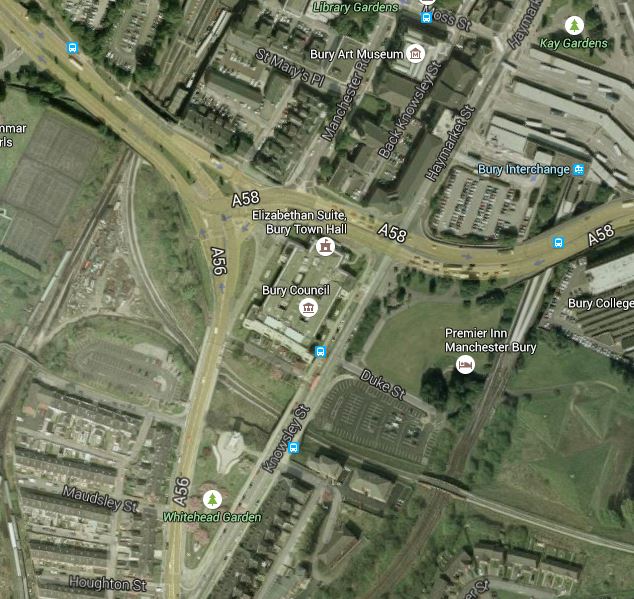
Bury Interchange
Note how the East Lancashire Railway from Bolton Street station passes under the A58 and turns east to continue to its next station at Heywood. The Metrolink stop is marked by the blue symbol labelled Bury Interchange and the tram line goes south passing under the A58 and the rail line.
I clipped this route diagram from the Wikipedia entry for the East Lancashire Line.
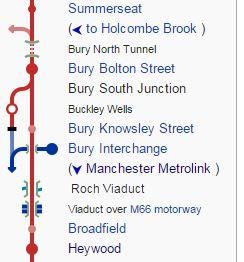
Bury Rail Lines
My untrained eye says that it wouldn’t be that difficult to have some tram-trains go via Bury South Junction and then up the East Lancashire Railway. A Buckley Wells Metrolink stop and Park and Ride has been proposed and the site is already owned by Transport for Greater Manchester. Although, I would suspect that the lines would run differently to those shown.
If Class 399 tram-trains or similar going up the East Lancashire Railway were to be proposed, it would certainly result in at least two additional stops in Bury at Buckley Wells and Bolton Street. The biggest problem would be to decide how far the trams would go. Originally the electric trains on the Bury Line as it then was, went to Rawtenstall station. Wikipedia says this.
The Association of Train Operating Companies have identified that the community of Rawtenstall on the East Lancashire Railway Heritage Railway could benefit from services connecting the station to the National Network.
So perhaps this could be a possibility.
One of the advantages of using tram-trains to add a commuter service to the East Lancashire Railway, is that it would reduce the need to find heavy rail platforms at Manchester Victoria. There may be a problem though in the capacity of the current Bury Line, which has a double tram every six minutes. But then a second crossing of the city centre is being built and there are proposals to add all sorts of extensions to the Metrolink network.
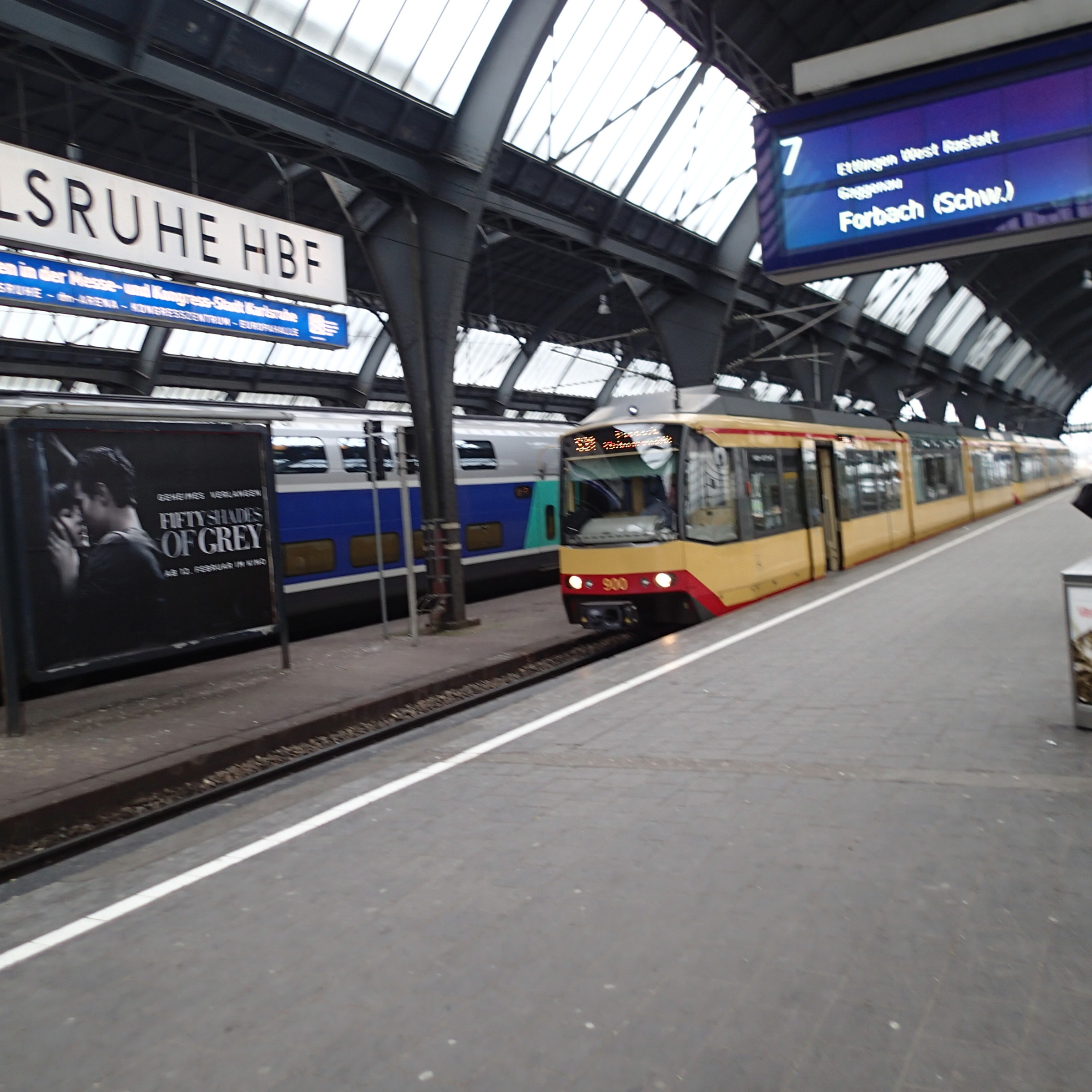
Tram-trains are remarkably flexible vehicles in that provided the loading gauge, platform height and track is correct, there is a power supply and signalling system they can use, they can go a vast number of places on the rail and tram network. As an example, here’s one of Karlsruhe’s tram-trains in a platform in the main station alongside a TGV.
So the only thing that limits their use is the correct certification for a route and the training of the staff. Tram-trains also have the advantage that they can run at slowish tram speeds in city centres and at much faster speeds on rail lines designed for such.
In my view all this means that to expand the Metrolink outside of its current network, you need to get a tram-train that can run on the central network in the city centre and then gradually equip and certify all of the branches out of the city for the chosen tram-train.
It would be nice to think in my view, that we could come up with one specification for a tram-train, that could be used everywhere in the country.
To show how tram-trains could be used, I’ll use the example of the new service around the Todmorden Curve from Manchester Victoria to Burnley and Blackburn.
The Caldervale Line through Blackburn, Accrington and Burnley is going to be electrified in the next few years, so it would only be necessary to additionally electrify the line from Rochdale to the Todmorden Curve.
Rochdale where the train and tram lines are close together as this Google Earth image shows, gives two possibilities.
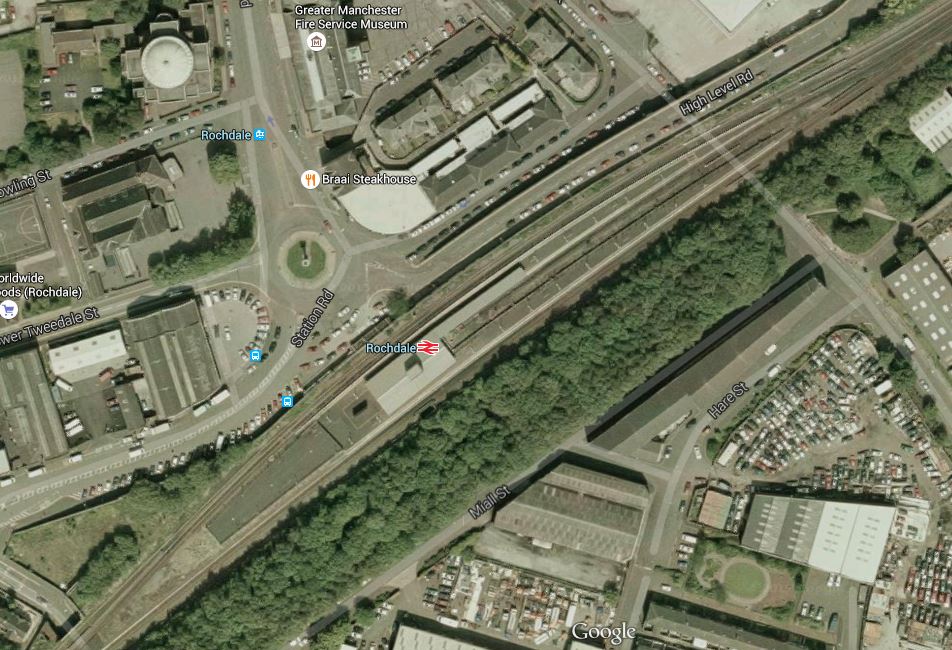
Rochdale Interchange
The tram-train could either go on the current route into Manchester Victoria, provided of course it was electrified or it could run to the city centre on the tram lines.
You pays your money and takes your choice depending on what optimises the network best for the passengers.
Burnley And Ebbw Vale
You may wonder why I’m writing a piece about two towns in the United Kingdom, which are hundreds of miles apart.
Both towns have not been in the best of health lately, although employment has risen in Burnley between 2009 and 2013 by 7.1%, as against 0.6% across the North-West and 2.0% nationally, according to this article.
They are also towns with similar geographic and transport problems being in the hills with not the best transport links.
But last Sunday, both towns got improved rail links to their nearest big city.
Ebbw Vale Town station opened and trains now run direct to Cardiff every hour.
At Burnley, five hundred metres of new single track called the Todmorden Curve has enabled trains to run direct to Manchester Victoria every hour.
I have been monitoring news stories about both new pieces of infrastructure and these reports from local media are noteworthy and generally positive.
Ebbw Vale
First train pulls into new Ebbw Vale Town Station
Burnley
TODMORDEN CURVE: 500 metres of track has opened up new world
TODMORDEN CURVE: £12m spin-off for Burnley’s economy
The only article with a negative tone is this piece entitled Rossendale Scribbler: Forget the bus station, we should look to rail to improve our transport links, which has a touch of jealousy that the Todmorden Curve doesn’t help his travels.
It will be interesting to go back to Burnley and Ebbw Vale in a few months to see if the early green shoots of optimism have grown or withered.
A Plea For Help From Lancashire
I have a Google Alert setup to look for stories about the Todmorden Curve. Normally, it picks up worthy stories about the Todmorden Curve and the new services from Blackburn and Burnley into Manchester.
However, today, I picked up this story from the Rissendale Express, which is entitled Rossendale Scribbler: Forget the bus station, we should look to rail to improve our transport links. This is the first couple of paragraphs.
Watching the TV news on Sunday night, I saw a report on the opening of the Todmorden Curve – a short stretch of railway which now makes it possible to travel directly from Burnley to Manchester by train.
As train fans know, this stretch of track is but a few hundred metres long, yet it’s taken an absolute age to get it opened.
So you’d think that if a rail link is good for Burnley and Blackburn, then one would be good for Rossendale, which lies to the north of Bury and south of Blackburn.
The Rossendale scribbler then goes on to explain how Lancashire County Council is giving £3.5million to create a bus station in Rawtenstall, whereas he and a lot of the locals would prefer a rail service. A couple of weeks ago I had to take a bus from Blackburn to Manchester and I know where my sympathies lie.
He then goes on to explain, that there is already a rail line, but it is a heritage railway called the East Lancashire Railway. He then says this.
After all, Rossendale has a head start over many areas wanting a rail link – the railway track is already down.
Of course, fans of the East Lancashire Railway speak of concerns that commuter services would damage the heritage railway which attracts so many visitors to the area.
That need not be so of course. The two could run side by side, and train services running on from the ELR to Manchester could bring more people to the heritage line.
Some suggestions put the cost of commuter services at £10.5m.
It strikes me that if it is best for all citizens of the area, then a solution must be found that allows commuters into Manchester to share the line with those that want to play with steam trains.
There is also this article on the Manchester Evening News, where rail enthusiast, Pete Waterman, talks a lot of sense about dual use of the line.
If the Todmorden Curve is a success, I think that there will be more pressure to bring a commuter service into Manchester via the East Lancashire Line.
And then you get a story like this in the Lancashire Telegraph, which is entitled TODMORDEN CURVE: £12m spin-off for Burnley’s economy
Enough said!
As someone, who lives in an area of London, that has been reinvigorated by the refurbishment of the North and East London Lines, I know the effect a good rail line can have on employment, leisure, business and housing opportunities. So if running services into Manchester, would give the area a significant uplift, the services should start.
Perhaps one way to do create a service would be use Class 399 tram-trains to extend the Metrolink from Bury, if they are proven to work successfully between Sheffield and Rotherham in the next few years. After all, the first phase of the Manchester Metrolink to Bury was built by converting the old East Lancashire Railway,
I’m certain, that if the Germans or the French were creating a system like the Manchester Metrolink now, they would look at tram-train technology based on the Karlsruhe model. But this type of tram-train operation only dates from 1992, so unfortunately Manchester didn’t have the option to look at it, when the Metrolink was first proposed in 1982.
By Train To Ebbw Vale
I don’t think I’d ever been to Ebbw Vale before. But I certainly hadn’t been by train.
So when I said that I was going to Cardiff today after getting in contact with an old acquaintance, who now lives in South Wales, he suggested that we meet up, when I was in the Welsh capital.
As a new station has just opened at Ebbw Vale Town, which was perhaps a dozen miles from his farm, he suggested that we meet there and find a convenient pub.
So I got on a Class 158 train direct from Cardiff Central and we quietly trundled up the hills to Ebbw Vale. These pictures detail the journey.

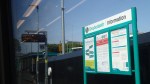
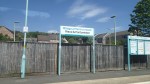
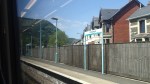
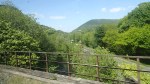
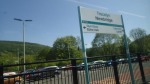
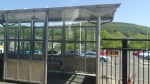
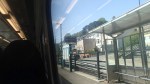
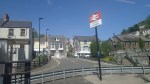
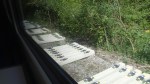
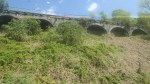

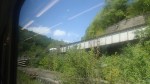
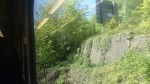
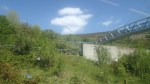

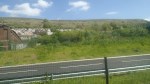
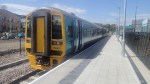
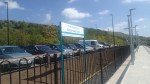
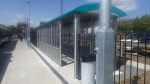
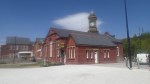
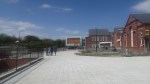

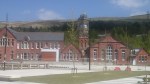
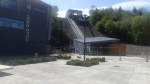
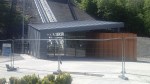

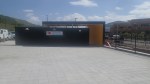
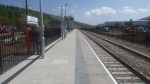
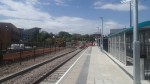
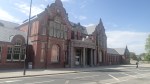
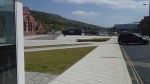
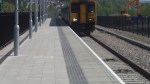
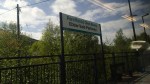

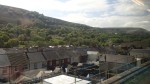
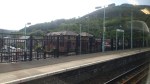
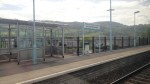
I didn’t really know what to expect, although the scenery on the way up was typical ofthe South Wales Valleys on a fine day. At the top, you arrive at a simple one-platform station in a landscaped bowl beneath the town, with various civic buildings and a funicular to the town centre.
Sadly, the funicular hadn’t started running yet!
Obviously, the project is not finished yet.
The first thing that must be done is get the funicular working reliably, so that visitors and regular travellers can get to the town centre.
Obviously, there is little information at present, about perhaps some walks or other things you might like to do. As I didn’t have much time, I didn’t have a real explore, but I would think that it might be a nice walk down the valley to Ebbw Vale Parkway station.
The other thing the station needs is a nice cafe and shop.
This Google Earth image shows the area round the station.
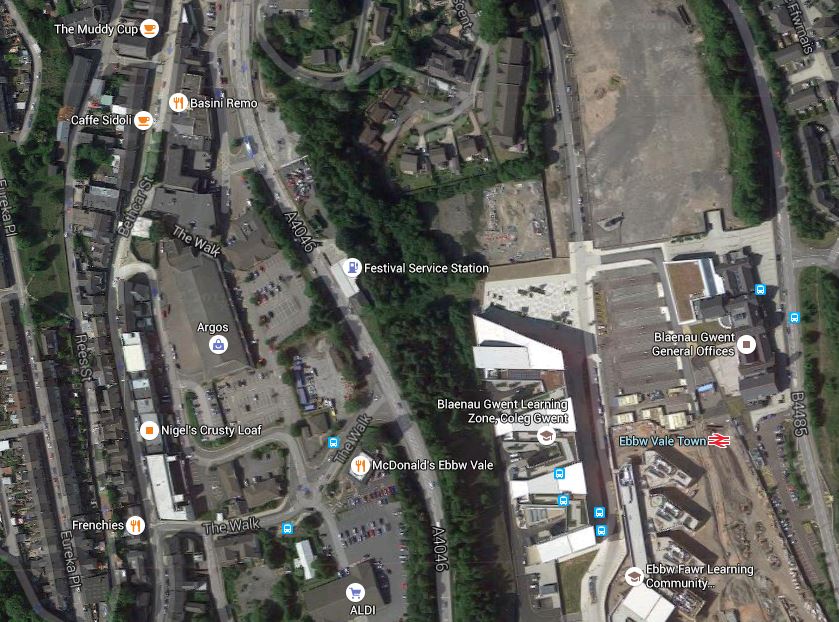
Ebbw Vale Town
It would appear that the town centre does have an elusive cafe.
Incidentally, the hospital isn’t far away down the hill. So that isn’t a difficult journey away!
Wikipedia says this in the article about Ebbw Vale Parkway.
Demand for travel to and from the station was seriously under-estimated by the promoters of the line’s reopening, even though the service provided was to Cardiff only and not to Newport as well, as originally assumed. For example, in 2008/09, usage at the station was forecast to be 50,000, for journeys on the lines to Cardiff and to Newport, but was actually about 250,000, for journeys on the line to Cardiff only. Part of the reason for the demand underforecast was the requirement that no demand from regeneration of the former steelworks area should be assumed.
If they’ve got the site for Ebbw Vale Town right, there could be another serious underestimate.
At least plans are in place for a second platform and I saw evidence of a second track being built, which will all allow a half-hourly service and a possible service to Newport.
Long term, the line like many of the lines in the South Wales Valleys, could be electrified, for which funding was announced in 2014 in this article in South Wales Online.
So in a few years time or so, when I travel between Cardiff and Ebbw Vale Town, will I use a much more frequent and faster service in something like a refurbished Class 315 electric train? In some ways it would be very fitting to do the journey in a steel-bodied train, even though they will be around forty years old. But then they are based on Mark 3 coaches and have the capacity to live more lives than the average cat.
As by 2022 or so, Newport and Cardiff will be on an electrified Great Western to London, if the connections are arranged correctly, places like Ebbw Vale will have a frequent electric service to London, Heathrow and all points East, which can only be good for the employment, leisure and other prospects for the South Wales Valleys.

