Lower Thames Crossing Tunnelling ‘To Begin In 2028’
The title of this post, is the same as that of this article on the BBC.
This is the sub-heading.
The tunnelling process for the Lower Thames Crossing is due to begin in 2028.
These three paragraphs add more detail to the story.
National Highways said negotiations to buy one of the world’s largest tunnelling machines were now under way.
It would be capable of digging 60 metres below the Thames, creating a new road link between Essex and Kent, and now enables the project to secure private sector investment to deliver the remainder of the construction.
Next summer, work on the northern tunnel entrance where the tunnel machine will begin its journey will get under way.
Hopefully, it’ll all be complete by the early 2030s.
The Elephant In The Garden Of England
This section shows the proposed route of the Lower Thames Crossing.
It as an extract of a previous post called Elizabeth Line To Ebbsfleet Extension Could Cost £3.2 Billion.
It is proposed that the new Lower Thames Crossing is built to the East of Gravesend.
This map from the Department of Transport, shows the route.
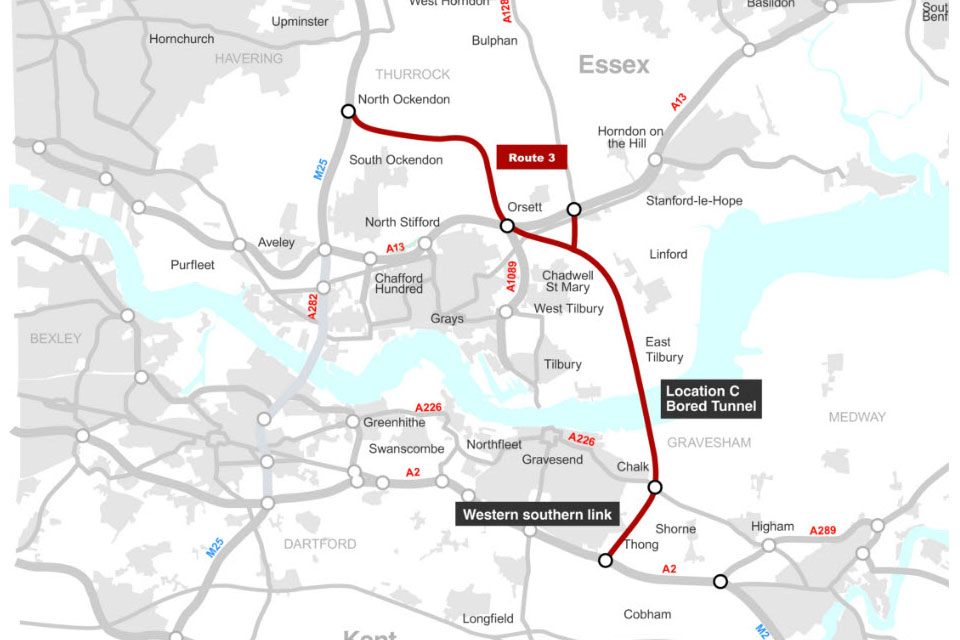
Note.
- The new crossing, which is shown in red, bypasses the Dartford Crossing on the M25.
- The A226 runs between Gravesend and Higham via a junction with the new crossing at Chalk.
- Northfleet is to the West of Gravesend.
This Google Map shows the area between Chalk and Higham.
Walking The Line
A friend asked, if I’d like to accompany her on a walk along the tunnels of the Post Office Railway.
I said yes, went along and took these pictures.

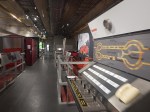
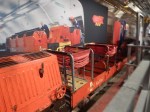
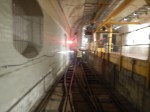
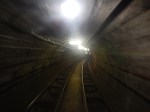
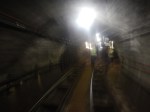
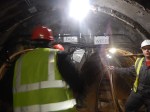

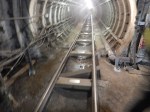
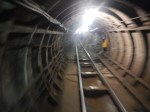
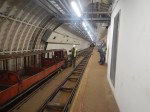
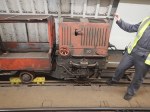
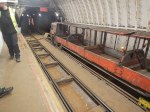
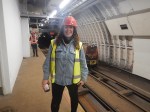
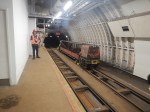
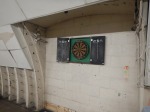
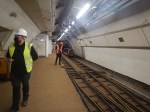
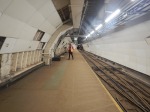
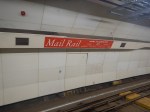

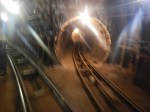
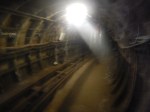
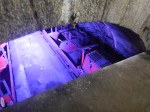

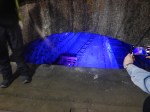
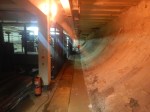
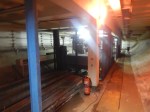
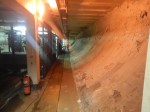
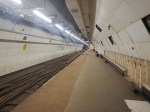
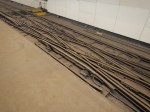
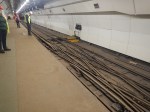
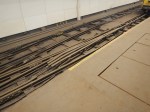
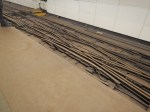
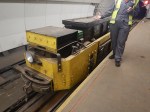
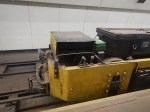
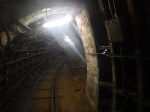
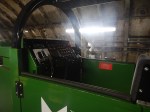
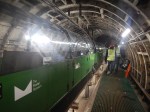
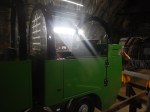
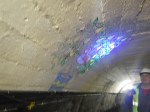

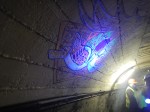


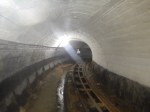
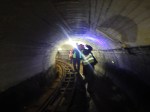
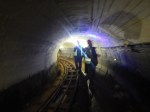

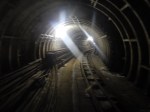
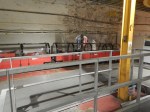
Note.
- The tracks are only two-foot gauge.
- The trains were driverless and electrically powered.
- The two modern trains with the plastic roofs; one of which is red and the other green, are used to take Postal Museum visitors along the tunnels.
- The yellow train was painted that colour for its part in the Bruce Willis film; Hudson Hawk.
- A large number of the sleepers had plaques on them, indicating their sponsors. The sleeps looked to be nearly all original.
- The paintings on the wall show the Twelve Days of Christmas and date from when Christmas parties for children were held in the tunnels.
- The tunnels were dug by hand using a Greathead Shield.
- There was no evidence of rodents.
It is a unique railway that is well worth a visit.
A few other facts and thoughts.
New Tunnels
Most modern tunnels like Crossrail, High Speed Two and the Thames Tideway are now dug by tunnel boring machines or TBMs. These pictures show Millicent and Ursula preparing to start boring the Thames Tideway.
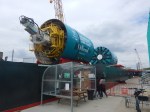
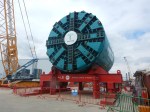
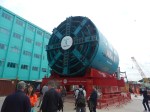
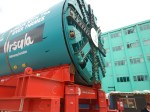
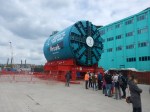
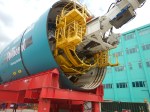

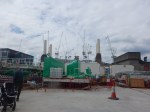
Not all tunnels though use a TBM. Recently, the new running tunnel at Bank and pedestrian tunnels at Paddington and possibly Moorgate have been dug in the traditional way, but probably with the aid of some of the likes of JCB’s finest.
There was also the innovative way, that Whitechapel station was built, that I described in Coal Mining in Whitechapel.
Tunnel Life Research
This is a paragraph from the Wikipedia entry for the Post Office Railway.
A team from the University of Cambridge has taken over a short, double track section of unused Post Office tunnel near Liverpool Street Station, where a newly built tunnel for Crossrail is situated some two metres beneath. The study is to establish how the original cast-iron lining sections, which are similar to those used for many miles of railway under London, resist possible deformation and soil movement caused by the new works. Digital cameras, fibre optic deformation sensors, laser scanners and other low-cost instruments, reporting in real time, have been installed in the vacated tunnel. As well as providing information about the behaviour of the old construction materials, the scheme can also provide an early warning if the new tunnel bores are creating dangerous soil movement
This is worthwhile research, as there have been some problems with London’s older tunnels.
Building The Paddington Bakerloo Line Link Project
This was done in and around the Paddington end of the Post Office Railway.
There is a link to a professional presentation about this complex project in Paddington Bakerloo Line Link Project, London.
Royal Mail Group assets at Paddington helped in the comstruction of the link.
Could We Bore A Double-Track Railway With A Tunnel Boring Machine?
There is one inevitability about construction projects.
As buildings get taller, foundations get deeper, structures get heavier, machines like cranes get bigger and more able to lift heavy loads.
I remember how in the 1970s, a project manager was eulogising about how the latest floating cranes that could lift 4,000 tonnes wee revolutionising the construction of oil platforms in the North Sea.
Crossrail may be a railway under London, where people think the tunnels are massive.
This page on the Crossrail web site describes the tunnels.
A network of new rail tunnels have been built by eight giant tunnel boring machines, to carry Crossrail’s trains eastbound and westbound. Each tunnel is 21 kilometres/13 miles long, 6.2 metres in diameter and up to 40 metres below ground.
But they are not the largest tunnels under London.
The Thames Tunnel, built by the Brunels, opened in 1843.
- It is eleven metres wide.
- It is six metres high.
- It carries the double track railway of the East London Line, which runs Class 378 trains, which are very much a typical British loading gauge.
There is also the Thames Tideway Tunnel, which is being dug to be a 7.2 wide circular tunnel.
And then there’s Bertha!
This description is from Wikipedia.
Bertha was a 57.5-foot-diameter (17.5 m) tunnel boring machine built specifically for the Washington State Department of Transportation’s (WSDOT) Alaskan Way Viaduct replacement tunnel project in Seattle.[1] It was made by Hitachi Zosen Sakai Works in Osaka, Japan, and the machine’s assembly was completed in Seattle in June 2013. Tunnel boring began on July 30, 2013, with the machine originally scheduled to complete the tunnel in December 2015.
It looks like London’s tunnels should be considered small.
Cross section areas of various tunnels are.
- Thames Tuideway Tunnel – 40.7 square metres.
- Thames Tunnel – 66 square metres
- Seattle Tunnel – 240 square metres.
- 8 metre circular tunnel – 50.3 square metres
- 10 metre circular tunnel – 78.6 square metres
- 12 metre circular tunnel – 113 square metres
The Seattle Tunnel shows what is possible today.
I am led to the obvious conclusion.
It would be possible to build a tunnel to take a full-size double-track UK railway using a tunnel boring machine.
Whether you would want to is another matter, as two single tunnels may be more affordable and better operationally.
 The Anonymous Widower