A Long Ride In An Electric Bus
In the last few weeks, I’ve started to use the 243 bus, a lot more, as I’ve been on a course at St. Leonards Hospital and bus serves Dalston Junction, St. Leonards Hospital, Old Street station and a couple of other places I visit regularly.
On Thursday, I used it from my GP’s surgery and the William Harvey Heart Centre, where I volunteer.
I noticed that the buses on the route were now brand-new Wrightbus Streetdeck Electroliner battery-electric buses.
This morning, I took a ride on a 243 bus from ~Old Street to Wood Green to make a better assessment of the bus.
These were the pictures I took.
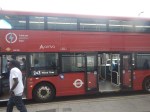
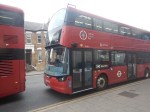
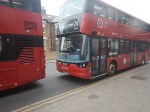
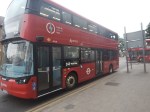
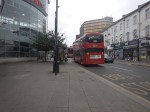
I can compare it with four other common London buses.
- In common with the 243 bus of a few weeks ago, the 141 bus, that I use regularly has a collection of Wrightbus hybrid buses of a certain age, which need to be replaced.There is no comparison between the two buses, as the Streetdeck Electroliner has better ride, seats and interior fittings and also comes with phone charging, with every passenger having their own USB port.
- In addition to being fully electric, the bus is a step-up from the New Routemaster, in that the Electroliner is much quieter.
- In British Buses For British Bottoms, I was impressed with the Electroliner’s single-deck sibling and as most would expect, the buses are of similar standard and quality.
- I regularly ride on 43 buses, which are based on a Chinese chassis. I would rate the ride on these buses to have inferior passenger ride, than both the Electroliner and the New Routemaster.
I have a few other thoughts.
Is The Range Sufficient?
The web page for the Wrightbus Streetdeck Electroliner, says this about range.
StreetDeck Electroliner is not a regular electric bus, its optimised power from a 454kW zero-emission battery electric power train is the ideal battery capacity for a UK Double Deck bus. It powers it to a range of up to 200 miles and a fast charge time of just 2.5 hours ensures daily scheduling aligning with driver breaks.
The buses are based at Tottenham Garage, which could mean they go back to there to charge, as it is on the route.
I asked Google AI, where the buses on route 243 were charged and got this answer.
London’s electric buses, including the route 243, primarily charge their batteries at bus garages using plug-in charging points. However, some routes, like the 358, utilize pantographs (overhead charging systems) at the ends of routes to provide rapid charging during the day, minimizing the need for lengthy garage charging. Arriva London, which operates route 243, has ordered new Volvo BZL electric buses for this route, and these buses will likely be charged using a combination of garage charging and opportunity charging via pantographs.
The answer is based on this article on this article on route-one.net which is entitled Arriva London orders 51 Volvo BZL Electric Double-deckers, where these are the first two paragraphs.
Arriva London has placed an order for 51 Volvo BZL battery-electric double-deckers. They represent the first order for the BZL from Arriva and will be deployed from Tottenham depot on Transport for London (TfL) routes 243 and 341.
Delivery is to commence in 2025 and the buses will be 10.9m long. High-backed seating will be fitted along with USB charging points and glazed skylights. Each will have 470kWh of energy storage with the 200kW driveline including a two-speed automated manual gearbox.
I have some questions.
- Has my camera lied about the buses it saw on the 243 route?
- Do the Wrightbus Streetdeck Electroliners use opportunity charging on the 243 route?
I shall investigate.
 The Anonymous Widower