Can East Midlands Railway Reach Nottingham Without More Electrification?
I went to Nottingham for the day yesterday.
- My Super Off-Peak Return ticket cost me £55.30 with a Senior Railcard.
- The Class 810 train is without doubt the best Hitachi Intercity Express Train of a good bunch.
- St. Pancras and Nottingham is 126.4 miles.
- There is no electrification between South Wigston Junction and Nottingham, which is 31.1 miles, although the change seems to be said to take place at Kilby Bridge junction.
- It would appear that, when the Class 810 trains are fitted with batteries, they will need a range of at least 62.2 miles, to do a return trip to Nottingham.
- In The Data Sheet For Hitachi Battery Electric Trains, I state that the maximum range of a three-battery five-car train is 117 miles. This figure has been seen by Hitachi and they didn’t say it was too high.
- I look forward to doing the same trip in a few months, using batteries to the North of the section between Kilby Bridge and South Wigston junctions.
It could be the first battery-electric 125 mph express train.
Now that is what I call affordable electrification.
I have some further thoughts.
Kilby Bridge And Wigston Junctions
This Google Map shows the Midland Main Line between Kilby Bridge and Wigston junctions.
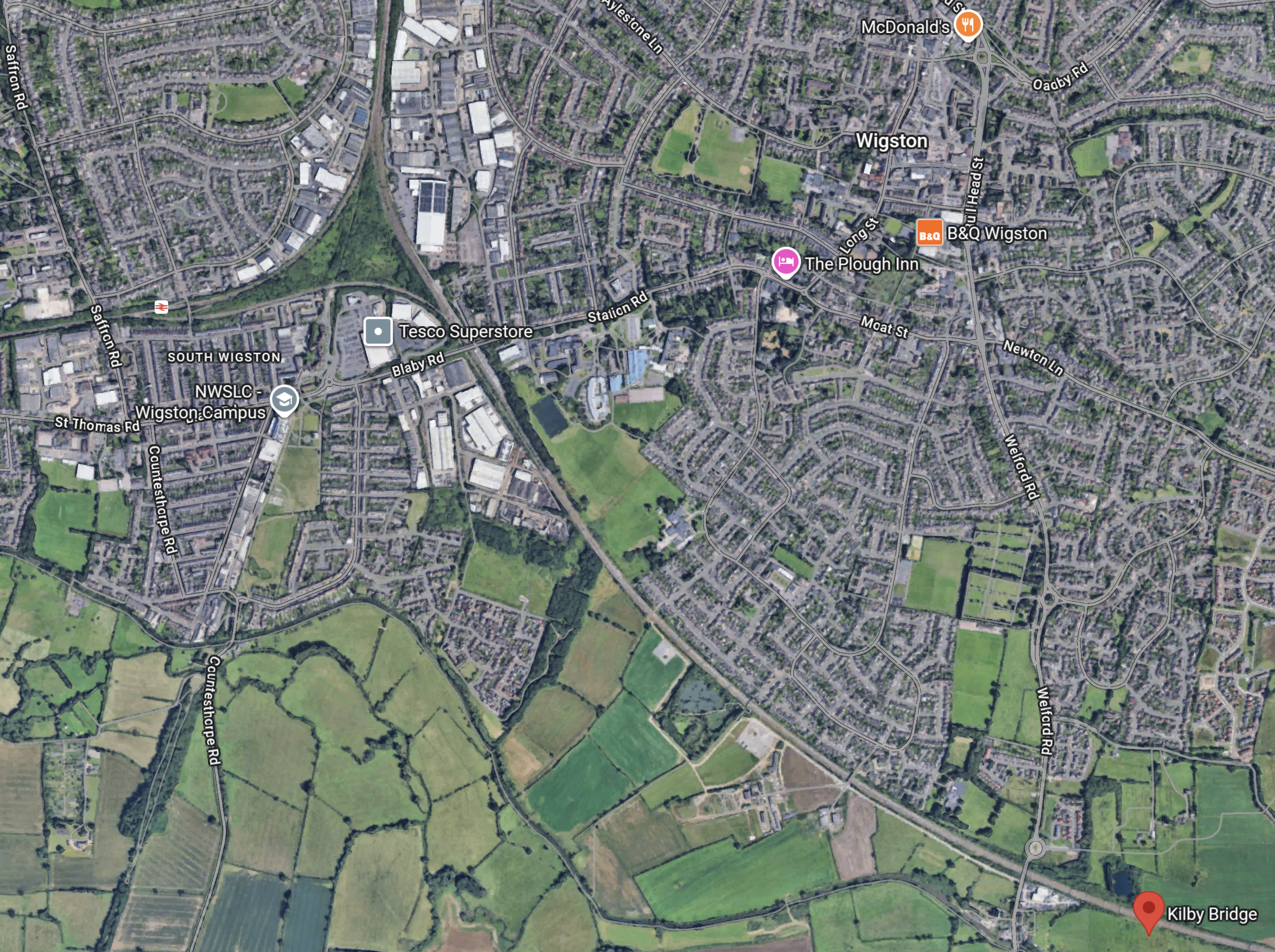
Note.
- Kilby Bridge junction is marked by the red arrow in the South-East corner.
- The Midland Main Line runs through Kilby Bridge junction.
- South-East it goes to London.
- North-West is leads to the large triangular Wigston junction, with South Wigston station at its Western point.
- The Northern point of Wigston junction leads to Leicester.
- There are three tracks between Wigston and Kilby Bridge junctions.
- All tracks to the South of South Wigston junction are electrified.
- The distance between Wigston and Kilby Bridge junctions is two miles.
- The maximum speed between Wigston and Kilby Bridge junctions appears to be at least 100 mph.
It looks to me, that this section of track has been designed, so that trains can reliably raise and lower pantographs at the highest speed possible.
The Electrification Problem At Leicester
Some years ago I came back to London from Leicester with a group of drivers. At one point, the conversation turned to electrification and they said that they had met a Network Rail engineer, who had told them, that the bridge over Leicester station was rather low for electrification and the track couldn’t be lowered because Leicester’s main sewer was underneath the railway.
In Leicester Station – 4th Jan 2022, I show a selection of pictures of Leicester station’s Grade II Listed frontage.
I doubt it would be possible to seriously alter Leicester station to electrify it, as the Heritage Taliban would have a field day.
But if I’m right that all services will be run North of Wigston on batteries, there will be no need to electrify through Leicester station.
Not only would using battery-electric trains probably be more affordable than electrification, but also because of the Leicester electrification problem, it would be less inconvenient for passengers.
Changing From Electric Going North
This OpenRailwayMap shows the electrification between Wigston Junction and Leicester station.
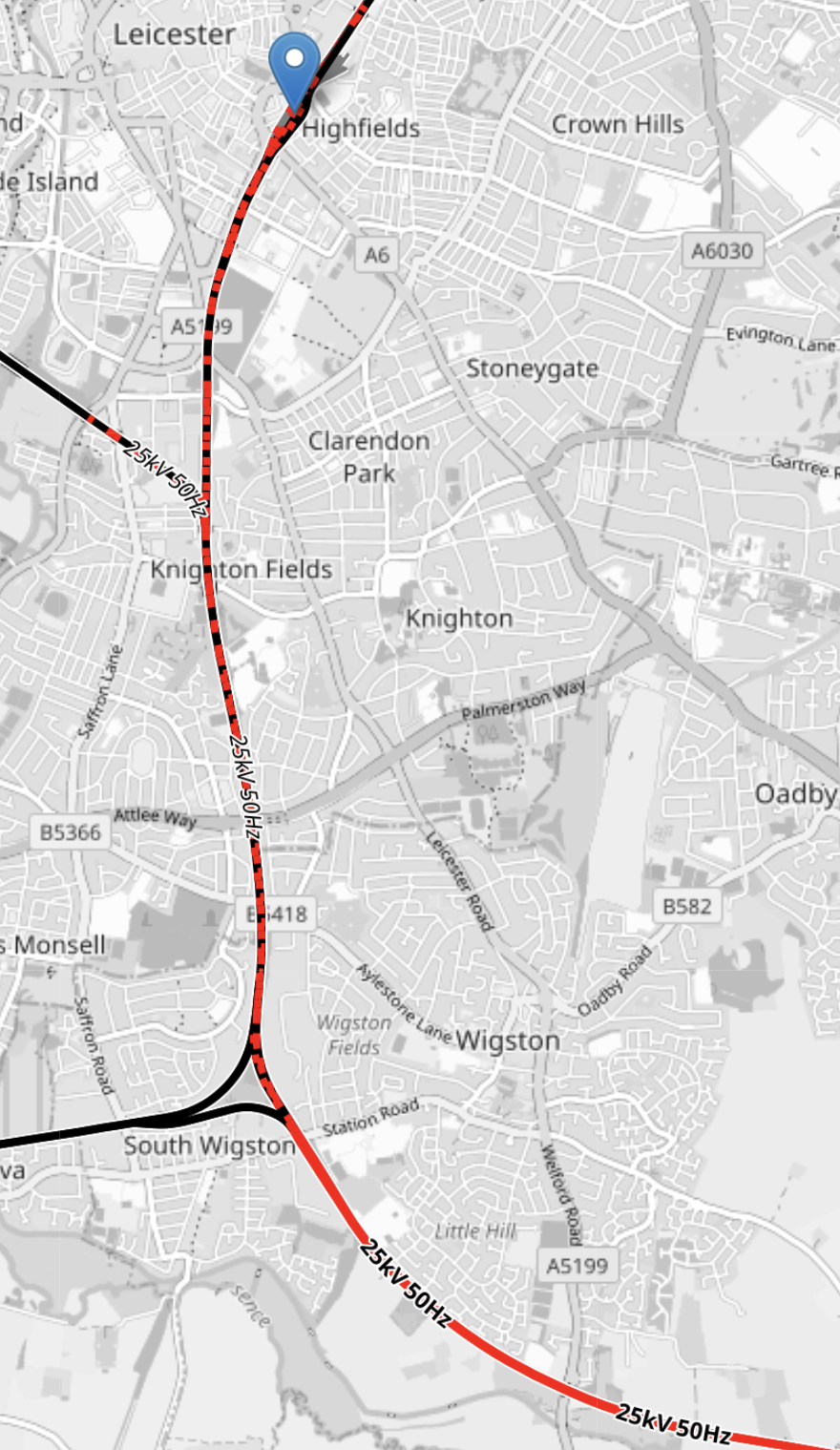
Note.
- Leicester station is marked by the blue arrow.
- The triangular Wigston junction is clearly visible.
- Kilby Bridge junction is South-East of Wigston junction.
- Leicester station and South Wigston junction is 3.6 miles and the tracks are shown as dashed black and red, which means future electrification.
I wonder, if in the future, if the battery-electric don’t have enough range, this is a simple section of electrification, that could be installed. Every extra mile of electrification between Leicester station and South Wigston junction would mean two miles could be chopped from the distance the trains had to travel on batteries.
But in the interim, going North, the driver would just make sure there was enough electricity in the batteries and momentum in the train, when passing South Wigston.
As trains arriving at South Wigston junction will typically have been running for over an hour, they should have full batteries to start theur explore of the North.
Changing To Electric Going South
The trains from the North, must have enough juice in the battery to reach South Wigston, so they can connect to the electrification for the run to London.
Could A Four-Battery Class 810 Train Reach Sheffield?
Consider.
- St. Pancras and Sheffield is 164.7 miles.
- There is no electrification between South Wigston Junction and Sheffield, which is 89.4 miles, although the change seems to be said to take place at Kilby Bridge junction.
- It would appear that, when the Class 810 trains are fitted with batteries, they will need a range of at least 178.8 miles to do a return trip to Sheffield.
- If a three-battery five-car Class 810 train has a battery range of 117 miles, on a pro-rata basis a four-battery five-car will only have a range of 156 miles.
That would be a big ask.
Could A Three-Battery Class 810 Train Reach Sheffield?
What would happen if one diesel engine was still installed?
These are my thoughts.
- As a Graduate Control Engineer, I wouldn’t be surprised that Hitachi have a strategy to do this with a tri-mode version of the Class 810 train.
- Hitachi have already announced the Class 820 train for Grand Central Trains and this is a tri-mode version of their InterCity Express, which is described in this Wikipedia entry.
- As Grand Central have said that the Class 820 trains, will be replacing the Class 180 trains, that run to Bradford Interchange and Sunderland, a tri-mode Class 810 would surely be able to run to Sheffield.
Could East Midlands Parkway Station Be Used For Opportunity Charging?
This Google Map shows East Midlands Parkway station with the massive derelict Radcliffe-on-Soar coal-powered power station alongside.
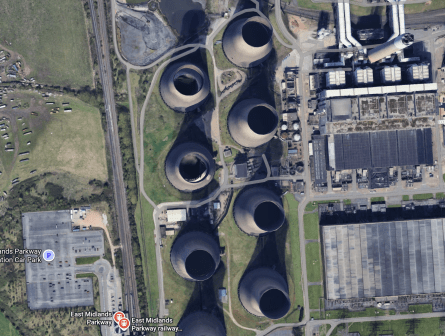
Note.
- The Midland Main Line running North-South across the map.
- East Midlands Parkway station on its Western side.
- The derelict Radcliffe-on-Soar coal-powered power station on its Eastern side.
A vast site like this must have uses.
I asked Google AI,”What Are The Plans For Radcliffe-on-Soar Power Station?” and received this reply.
The former Ratcliffe-on-Soar power station site is undergoing a multi-year decommissioning and demolition process, lasting until at least 2030 or 2031, to be transformed into a zero-carbon technology, energy, and advanced manufacturing hub.
Key details of the redevelopment include:
Site Vision: The 273-acre brownfield site has been earmarked to become a major business hub focused on advanced manufacturing (e.g., electric car batteries), low-carbon energy production, energy storage, and AI-driven data centres.
Economic Status: The site is a core component of the East Midlands Freeport, which offers significant financial incentives to attract business investment and create an estimated 7,000 to 8,000 jobs.
Demolition Timeline: The first demolition works are expected to begin in 2026, with the iconic cooling towers and main chimneys scheduled for controlled demolition between 2029 and 2030.
Planning Framework: A Local Development Order (LDO) granted by Rushcliffe Borough Council is in place to fast-track the planning process for these modern, green-focused industrial uses.
As the site will need to be supplied with a reliable energy supply for some of the proposed uses, I suspect power could be supplied to electrify the lines through East Midlands Parkway station, so that trains going to the North could take the opportunity to have a Formula One-style “Splash-and-Dash!”
Would Opportunity Charging At East Midlands Parkway Station Allow Extra Destinations?
Holders of the East Midlands Franchise have in the past, served other destinations in the past, either with regular services or engineering or seasonal diversions.
Possible destinations could be.
Cleethorpes
Distance to South Wigston – 112.4 miles
Doncaster
Distance to South Wigston – 108.1 miles – But could top up at Doncaster.
Rotherham Central
Distance to South Wigston – 102.2 miles
Scunthorpe
Distance to South Wigston – 112.4 miles
A Long Ride In An Electric Bus
In the last few weeks, I’ve started to use the 243 bus, a lot more, as I’ve been on a course at St. Leonards Hospital and bus serves Dalston Junction, St. Leonards Hospital, Old Street station and a couple of other places I visit regularly.
On Thursday, I used it from my GP’s surgery and the William Harvey Heart Centre, where I volunteer.
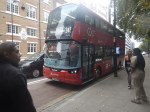
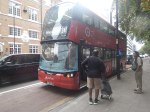
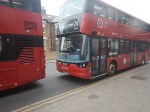
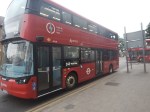
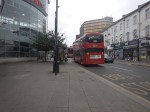
I noticed that the buses on the route were now brand-new Wrightbus Streetdeck Electroliner battery-electric buses.
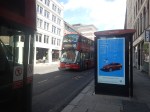
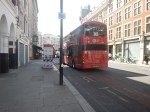
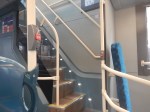
This morning, I took a ride on a 243 bus from ~Old Street to Wood Green to make a better assessment of the bus.
These were the pictures I took.
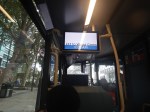
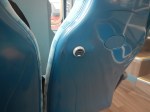
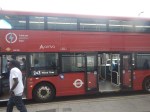
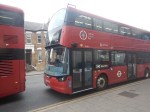
I can compare it with four other common London buses.
- In common with the 243 bus of a few weeks ago, the 141 bus, that I use regularly has a collection of Wrightbus hybrid buses of a certain age, which need to be replaced.There is no comparison between the two buses, as the Streetdeck Electroliner has better ride, seats and interior fittings and also comes with phone charging, with every passenger having their own USB port.
- In addition to being fully electric, the bus is a step-up from the New Routemaster, in that the Electroliner is much quieter.
- In British Buses For British Bottoms, I was impressed with the Electroliner’s single-deck sibling and as most would expect, the buses are of similar standard and quality.
- I regularly ride on 43 buses, which are based on a Chinese chassis. I would rate the ride on these buses to have inferior passenger ride, than both the Electroliner and the New Routemaster.
I have a few other thoughts.
Is The Range Sufficient?
The web page for the Wrightbus Streetdeck Electroliner, says this about range.
StreetDeck Electroliner is not a regular electric bus, its optimised power from a 454kW zero-emission battery electric power train is the ideal battery capacity for a UK Double Deck bus. It powers it to a range of up to 200 miles and a fast charge time of just 2.5 hours ensures daily scheduling aligning with driver breaks.
The buses are based at Tottenham Garage, which could mean they go back to there to charge, as it is on the route.
I asked Google AI, where the buses on route 243 were charged and got this answer.
London’s electric buses, including the route 243, primarily charge their batteries at bus garages using plug-in charging points. However, some routes, like the 358, utilize pantographs (overhead charging systems) at the ends of routes to provide rapid charging during the day, minimizing the need for lengthy garage charging. Arriva London, which operates route 243, has ordered new Volvo BZL electric buses for this route, and these buses will likely be charged using a combination of garage charging and opportunity charging via pantographs.
The answer is based on this article on this article on route-one.net which is entitled Arriva London orders 51 Volvo BZL Electric Double-deckers, where these are the first two paragraphs.
Arriva London has placed an order for 51 Volvo BZL battery-electric double-deckers. They represent the first order for the BZL from Arriva and will be deployed from Tottenham depot on Transport for London (TfL) routes 243 and 341.
Delivery is to commence in 2025 and the buses will be 10.9m long. High-backed seating will be fitted along with USB charging points and glazed skylights. Each will have 470kWh of energy storage with the 200kW driveline including a two-speed automated manual gearbox.
I have some questions.
- Has my camera lied about the buses it saw on the 243 route?
- Do the Wrightbus Streetdeck Electroliners use opportunity charging on the 243 route?
I shall investigate.
Has Aldgate Bus Station Been Fitted With Opportunity Charging?
In Hackney Downs Station To Aldgate By Volvo Electric Bus, I described my second ride in a Volvo BZL electric bus.
When I arrived at Aldgate bus station, I asked the driver, if he would be charging the bus. He answered in the affirmative.
I then took these pictures.
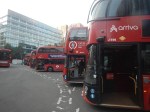
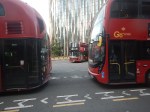
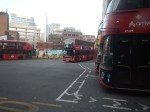
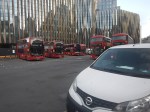
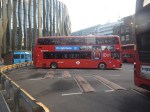
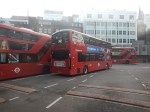
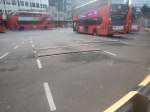
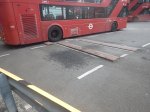
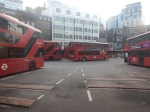
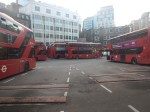
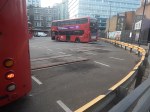
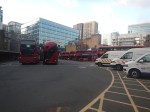
Note.
- Some of the buses were backed into parking spaces, with their back wheels up against one of two raised strips.
- The 242 bus I’d arrived on parked that way.
- A couple of New Routemasters were also parked each side of it.
- The 242 bus, I’d arrived on appeared to shut off all power for a few minutes. Was it charging at that time?
This Google Map shows the layout of the bus station.
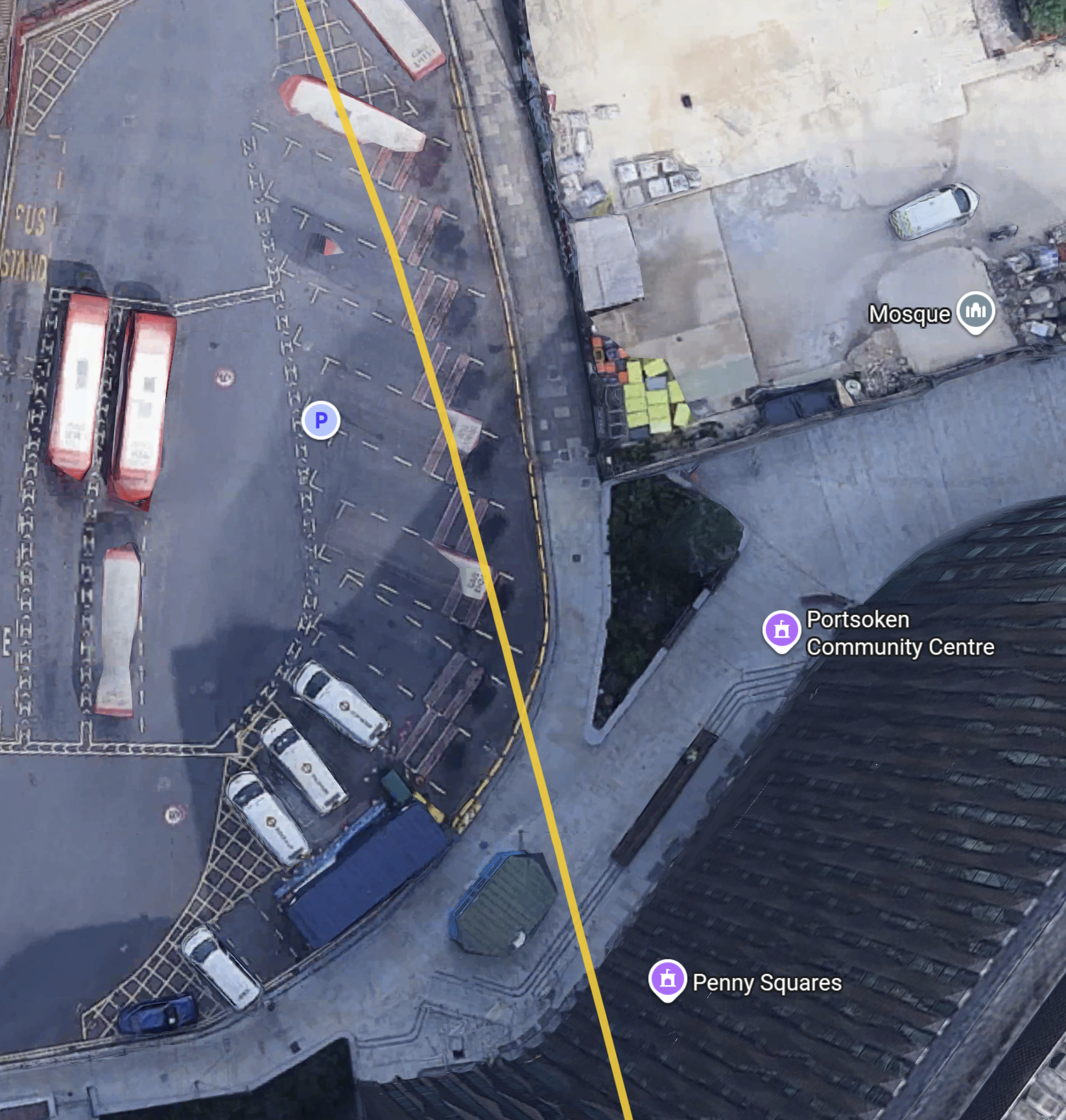
Note.
- Ignore the yellow line, as it just the route of the Circle Line, which runs underneath.
- The strips are clearly visible.
- It looks there are about ten of them.
- Click on the map to show it to a larger scale.
I suspect some form of contactless charging could be used, as some people do with their mobile phone.
Power for the charging could even be taken from the Circle Line.
Exploring London Bus Route 132
London Bus Route 132, is run by battery-electric buses and it the first in London to use opportunity charging.
These pictures show the route from North Greenwich to Bexleyheath Shopping Centre.




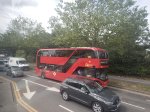
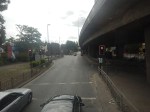



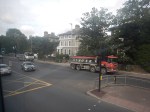
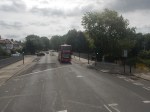
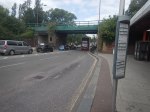
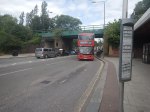
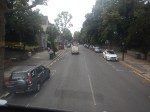
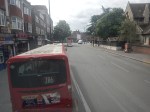

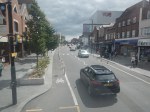
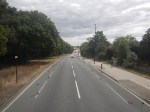
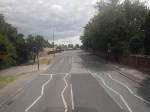
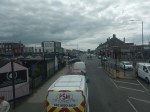
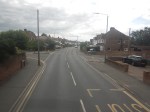
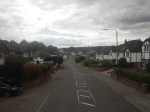
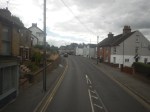
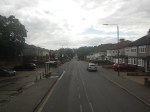
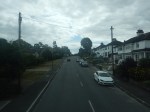
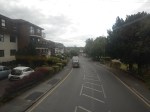
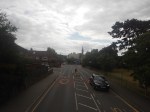
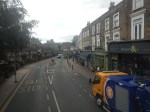
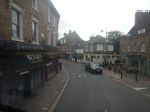
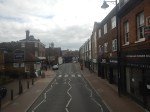
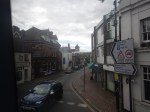

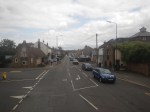


Note.
- These pictures were shot in two sections on the 3rd and the 6th of July 2023.
- The break was at Eltham station.
- Some sections of the route had a lot of cars.
- Some side roads were full of parked cars.
- There were large numbers of cars parked in front of houses.
There are my thoughts.
More will appear here over the next couple of days.
The Buses
The buses used on the route are Alexander Dennis Enviro400EV, which are built on a BYD Auto chassis.
They have a range of 160 miles.
The Route
The route has several inclines both ways and I estimate it is just under ten miles.
At North Woolwich, the bus didn’t appear to have a charge, but I can’t be sure.
But it disappear at Bexleyheath Shopping Centre and I was certain it went for a charge.
So is the operational philosophy to fill, the bus up overnight and then top the battery up every time, that it needs it at Bexleyheath.
A Comparison With A Similar Route In Birmingham That Has Hydrogen-Powered Buses
As the bus ran between North Woolwich and Bexleyheath Shopping Centre, I was comparing it, with the trip, I made across Birmingham, in hydrogen-powered buses, that I wrote about in Riding Birmingham’s New Hydrogen-Powered Buses.
Both were quality buses, but I felt the hydrogen bus had more power.
Opportunity Charging At Bexleyheath
If, buses need to be charged at the Bexleyheath Shopping Centre end of the route, where will they go?
This Google Map shows Bexleyheath Bus Garage in relation to the Shopping Centre.
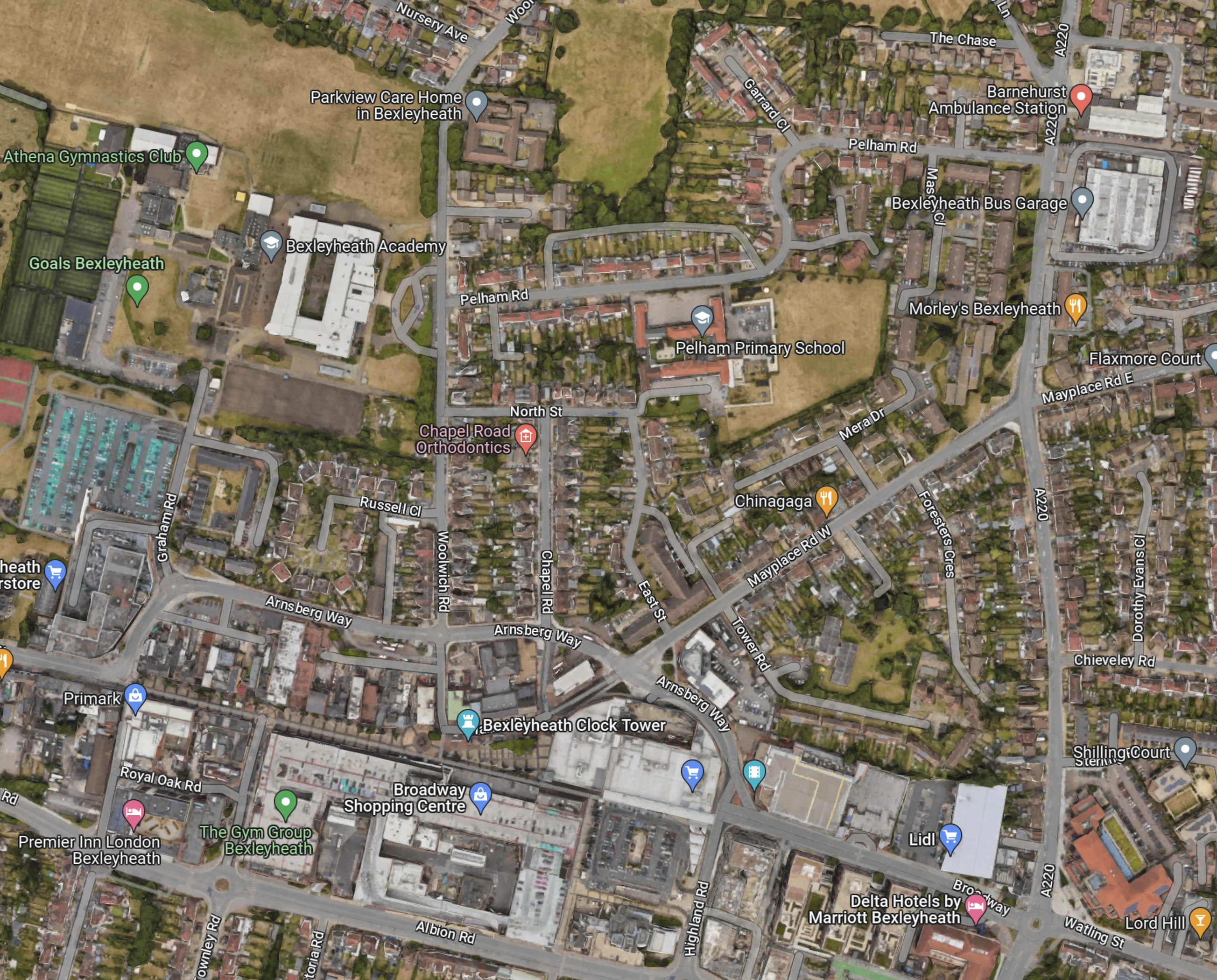
Note.
- Bexleyheath Bus Garage is in the North-East corner of the map.
- It looks like it shares a site with Bexley Fire Station and Barnehurst Ambulance station.
- So the garage is well located for any future lithium-ion battery fires.
- In the middle of the map at the bottom, is Bexleyheath Clock Tower, in the middle of the town centre.
- I estimate it’s less than two kilometres between Bexleyheath Bus Garage and the Shopping Centre.
This Google Map shows a close-up of the Western side of the Bexleyheath Bus Garage.
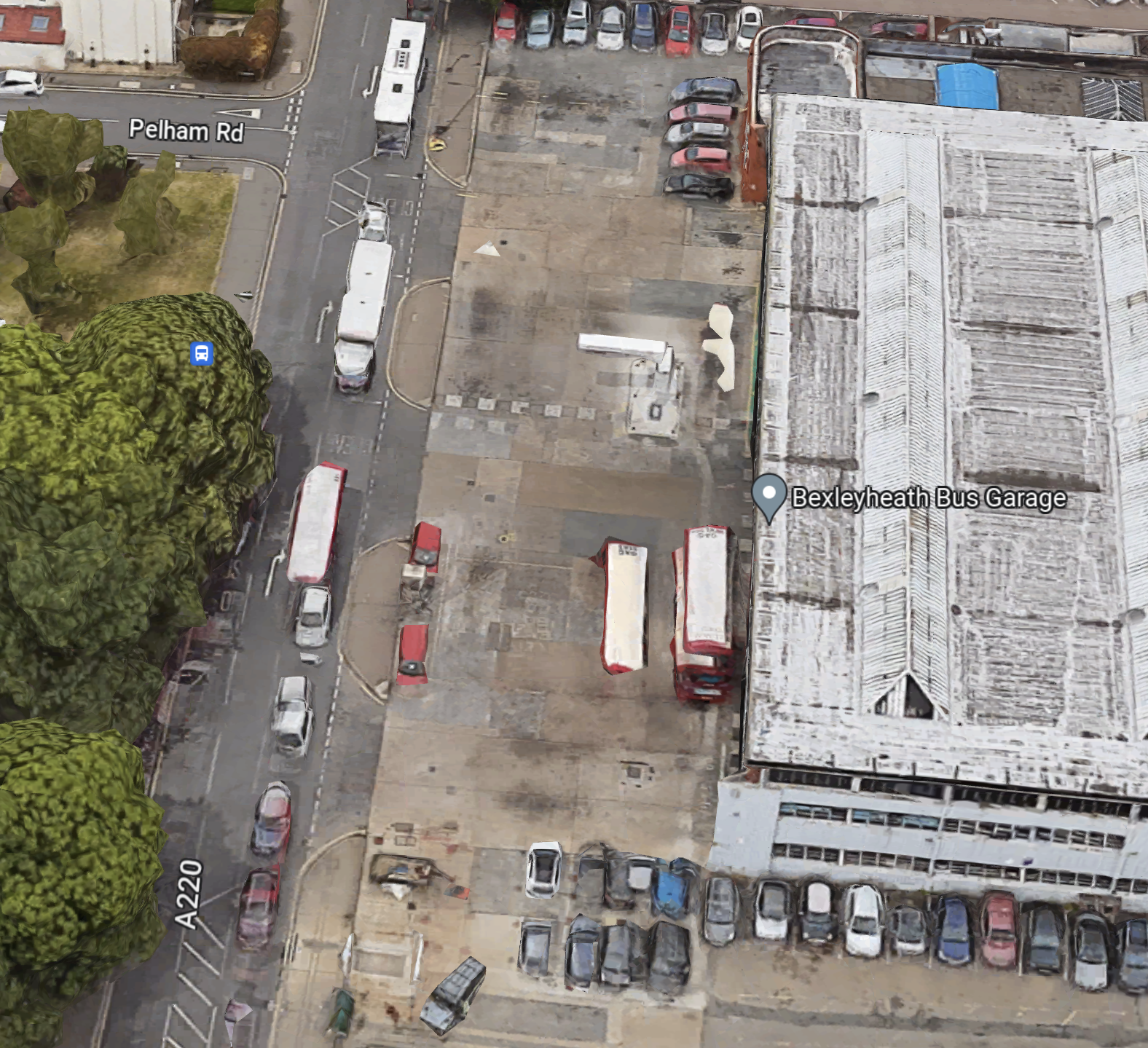
Note.
- The two buses parked by the side of the garage.
- Behind them a white arm reaches over towards the road.
- This is the charger and buses connect using a pantograph on the roof.
It could be an All-In-One Fast Charging Station AIO from Furrer+Frey.
The Electrical Connection At Bexleyheath Bus Garage
Consider.
- The bus garage shares a site with a fire station and an ambulance station, which surely must need a reliable power source.
- This is London’s first application of opportunity charging.
- There are improvements constantly happening to London’s struggling power network.
- It is a large site and I suspect there is space for a battery to boost power.
I would assume that Transport for London wouldn’t have chosen a bus garage with a dodgy power supply.
Could The Charger Be Solar-Powered?
This Google Map shows the roof of Bexleyheath Bus Garage.

Note.
- It appears to be a square with a length of about six buses.
- It looks rather dirty.
I suspect that the roof could be replaced with a modern solar roof.
Hydrogen Or Electric
This article on RouteOne is entitled Enviro400FCEV Hydrogen Bus Fleet For Liverpool Debuts.
This paragraph describes the performance.
Alexander Dennis has chosen the heavy-duty variant of VEDS. It is designed to deliver up to 410kW of power, but the vehicle OEM says that in the Enviro400FCEV, output is limited to 350kW. Such an approach will maximise fuel economy while still enabling a high road speed and good hill climbing ability. Expected range is up to 300 miles.
So the range on hydrogen is nearly doubled.
Wrightbus’s outwardly similar electric and hydrogen buses have ranges of 200 and 280 miles, but filling times of 2.5 hours and 8 minutes.
The problem with hydrogen in London, is that the Mayor and Transport for London, don’t appear to have a hydrogen policy.
But I think, that hydrogen will win out in cities and areas, where hydrogen can be supplied.
I also believe that hydrogen has other advantages.
- There is likely to be significant progress in improving hydrogen-powered heavy vehicles.
- Hydrogen internal combustion engines are coming and could promise more affordable hydrogen buses.
- Better and more affordable methods to create green hydrogen are being developed.
- Some existing diesel buses will be able to be converted to buses powered by hydrogen internal combustion engines.
- Lithium-ion batteries have a high environmental footprint.
Hydrogen is also likely to be the fuel of choice for heavy trucks.

