US Interior Secretary: ‘No Future For Offshore Wind Under This Administration’
The title of this post, is the same as that of this article on offshoreWIND.biz.
This is the sub-heading.
US Interior Secretary Doug Burgum said at a press conference on 10 September that offshore wind has no future in the US under the Trump administration and that the government was reviewing five offshore wind projects that are now under construction.
There is also this quote from Burgum.
Offshore wind was too expensive and not reliable enough.
Many of those projects weren’t really about electricity, they were about tax subsidies
I think the fact that the subsidies have been either cut back or limited means that it is likely that there will not be future offshore wind built in America.
He also added that there were concerns that wind turbines interfered with whales and radar systems.
I asked Google AI a few questions.
Is Offshore Wind Extremely Expensive?
Google AI replied.
No, offshore wind is not considered extremely expensive when compared to other energy sources, particularly gas-fired power stations, and its costs are projected to fall further. While initially more expensive to construct than onshore wind due to the marine environment, the higher and more consistent wind speeds offshore generate more power, leading to a competitive or lower overall levelised cost of energy (LCOE) in many regions. Recent economic challenges like inflation and supply chain disruptions have increased costs temporarily, but the sector’s financial position is recovering, and cost reductions are expected to continue.
That looks pretty fair to me.
Is Offshore Wind Reliable?
Google AI replied.
Yes, offshore wind is a reliable energy source because it generates power more consistently than onshore wind due to higher, more dependable wind speeds at sea, and can be integrated with other renewables and energy storage to provide continuous power. Offshore wind turbines operate almost all the time, and the power can be backed up by grid-level storage to ensure a steady electricity supply, even when the wind isn’t blowing.
That looks pretty fair to me.
Are Subsididies And Tax Breaks Important For Offshore Wind?
Google AI replied.
Yes, subsidies and tax breaks are important for the offshore wind industry, which faces high upfront costs and inflationary pressures, to make it more cost-competitive with fossil fuels and secure financing for projects. These incentives help reduce costs for developers, de-risk investments, and ensure the technology can meet climate targets by fostering investment and ensuring long-term viability.
That looks pretty fair to me, but if you were in the oil and gas industry you might think differently.
On the other hand some countries like Norway and the UK, are encouraging the linking of offshore wind farms to offshore oil and gas production to decarbonise offshore operations.
Does Offshore Wind Kill Whales?
This article on the BBC is entitled Fact-Checking Donald Trump’s Claim That Wind Turbines Kill Whales.
It goes into detail about Trump’s claims about wind turbines and marine life.
These are four paragraphs.
“We know what the main threats are to humpback whales: it’s very much the impact from things like fishing and ship strikes,” says Rob Deaville from the Zoological Society of London’s Cetacean Strandings Investigation Programme.
“To talk about wind farms being a problem takes away discussion around the very real threats that are a problem for those species.”
Many other areas with high numbers of wind farms have not seen an increase in whale mortality.
For example, the UK is home to the world’s four largest wind farms, but no humpback whale strandings there have been conclusively linked to the impact of those farms.
That looks pretty fair to me.
But because of our massive portfolio of offshore wind farms and top universities, who research the marine environment, the UK is in a unique position to expose fake science, that was made up on the back of a used envelope.
Does Offshore Interfere With Radar?
Google AI replied.
Yes, offshore wind farms can interfere with radar by reflecting radar signals, causing “radar clutter” or false echoes that can obscure real targets, like aircraft or ships, or create phantom images on a radar display. This interference, also known as a “blade flash,” can negatively impact air defense, air traffic control, and maritime navigation, leading to reduced accuracy and potential safety risks.
That looks pretty fair to me.
Have Wind Turbines Caused Any Air Accidents?
Google AI replied.
Yes, wind farms have caused air accidents, though they are rare. These incidents primarily involve light aircraft colliding with wind turbines or experiencing loss of control due to turbulence from turbine wakes. Examples include a pilot crashing near a wind farm due to turbulence and another fatal crash involving an aircraft hitting a turbine blade.
That looks pretty fair to me.
I learned to fly light aircraft in the 1970s and I remember being told about wake turbulence from airliners, which has been strong enough in some cases to flip an aircraft like a Cessna 150 upside down or into a spin.
What Are The CAA’s Rules For Flying Near Wind Turbines?
Google AI replied.
The primary CAA rule for flying near wind turbines is related to their visibility and safety, focusing on lighting requirements and potential hazards like turbulence. Structures 150 meters or higher require medium-intensity red lights. Pilots must avoid dazzling lights with their own, and wind turbine developers must assess and mitigate risks such as turbulence, radar interference, and impact on Instrument Flight Procedures (IFPs).
That looks like what I would have expected.
Conclusion
I have tried not to be selective with my evidence, but if you are there are reasons that could be used to ban wind turbines.
I am also happy to add any other questions.
Whale Watching
These pictures show a trip whale watching from Reykjavik.
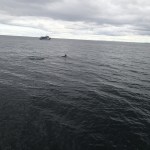
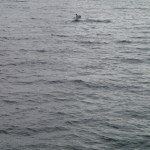
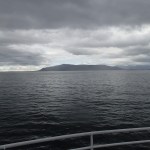
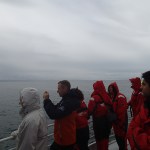

It was a good trip, where we saw several dolphins and minke whales. I will add a few words of warning about these trips. On the day before, they’d seen nothing.
I was also a bit disappointed with my photographs. I should have used the camera on video!
The tip reminded me of how we used to sit on Felixstowe beach watching the porpoises on the horizon.
 The Anonymous Widower