An Australian Boat
The Thames Clipper that brought me down the river was built in Australia. You may find this strange, but that country does have a reputation for building large and/or fast catamarans.

Thames Clipper
Here’s the maker’s plate.

Cyclone Clipper Nameplate
Note the builders were bscship.
Cleopatra’s Needle
On the Embankment, you’ll see Cleopatra’s Needle.
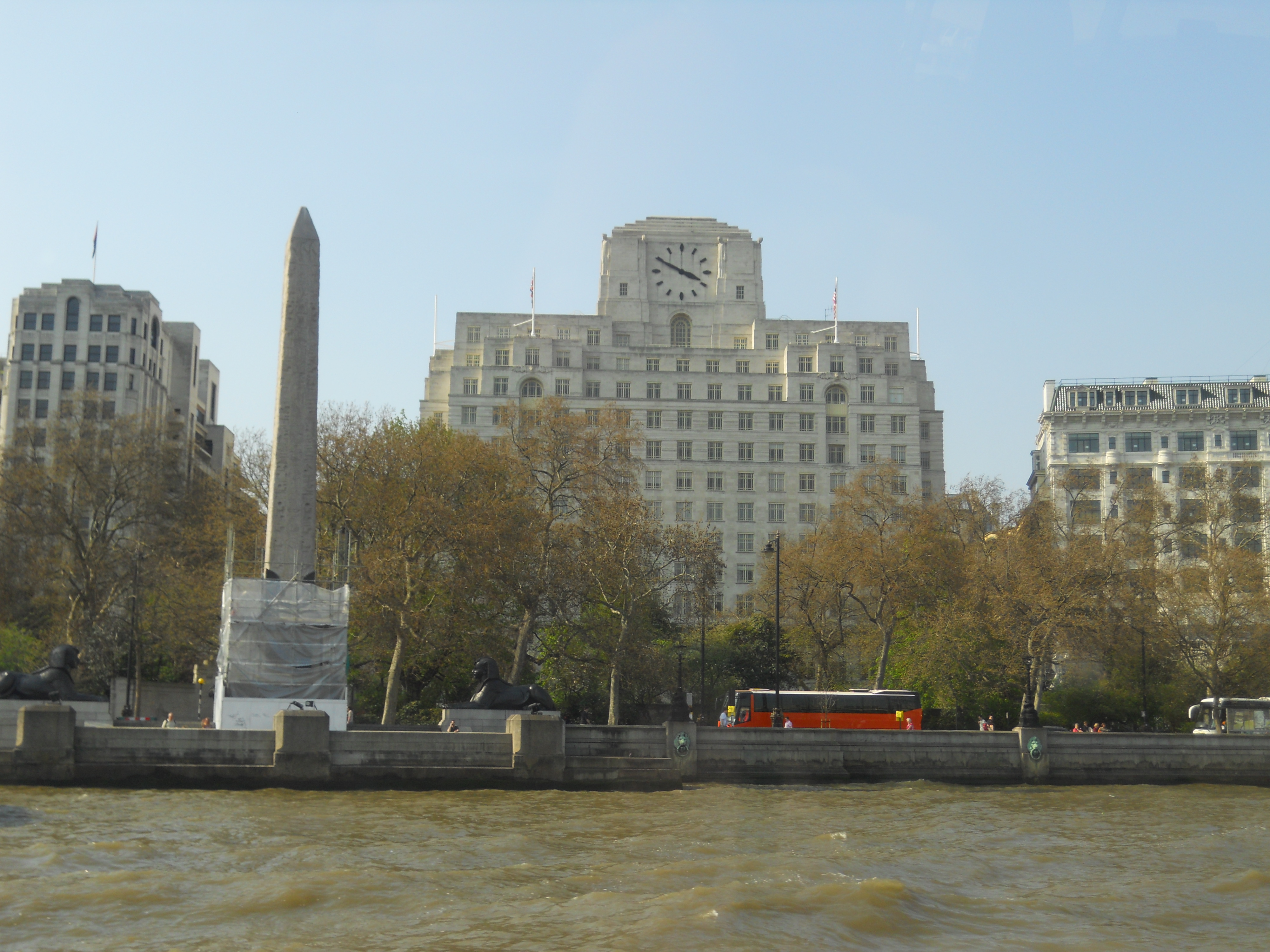
Cleopatra's Needle
The British example is not in such a prominent place as the one in Paris. But then it’s location doesn’t have such a bloody history.
Note the high flood protection walls on the Embankment. I can remember, when at Cleopatra’s Needle, they were perhaps almost a metre lower and you could walk down steps to the river.
Shell Mex House and the Savoy Hotel
Shell Mex House has sat on the River Thames since 1930 and is one of the most recognisable buildings with its large clock. It sits next to the Savoy Hotel, which looks very anonymous compared to its brash neighbour.
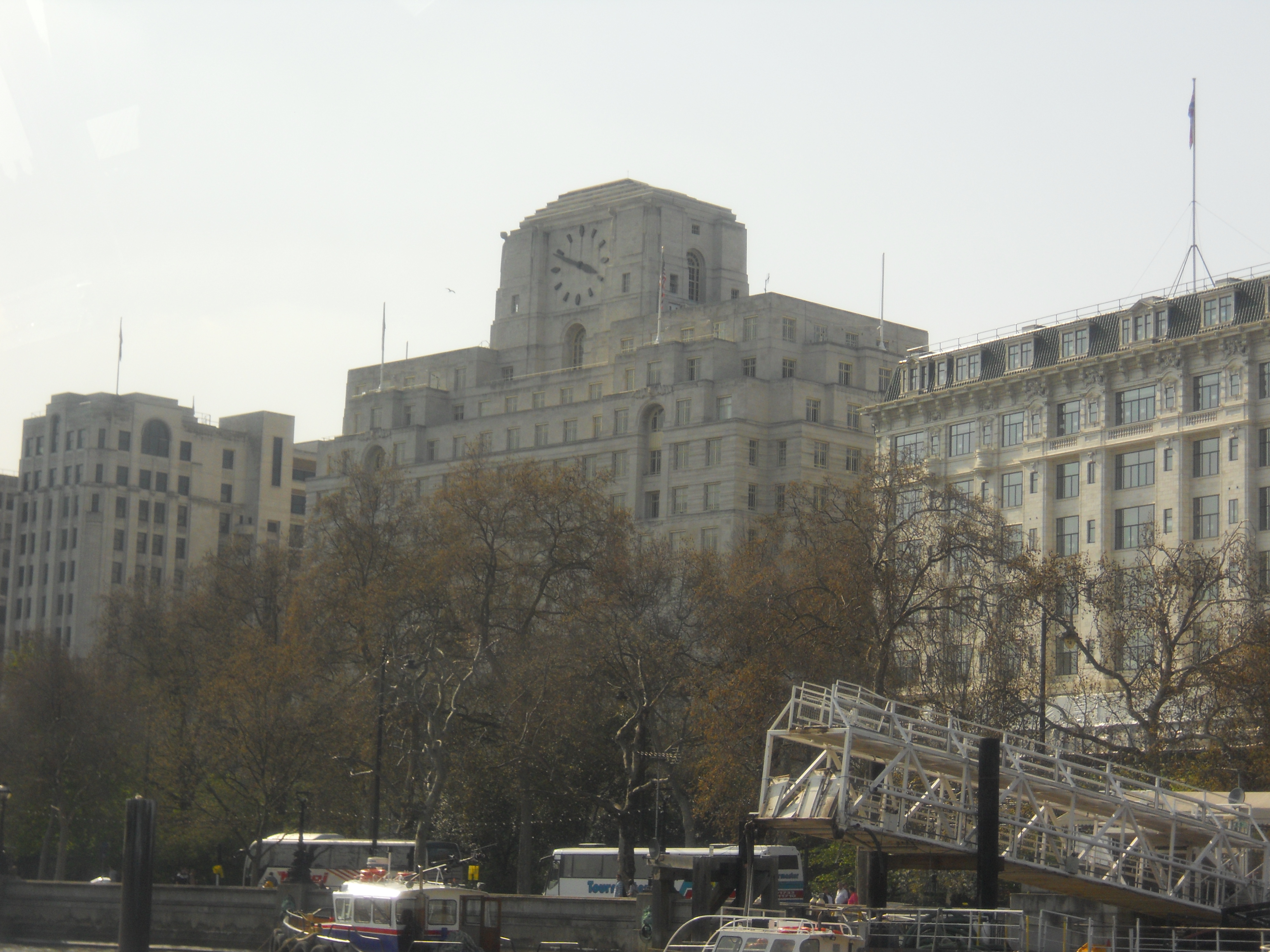
Shell Mex House and the Savoy Hotel
I only stayed in the hotel once and that was on my birthday in 1987.
As happened several times in big hotels in those days, I got woken the middle of the night by a phone call. It’s the trouble with having a common name and if the hotel has more than a hundred of so rooms, there’s a chance you have a namesake. It doesn’t happen anymore, as we all have mobile phones and no-one ever rings the hotel and asks for a guest.
And then to make it worse! I went for a walk in the morning and got hit in the eye by a stone thrown up by a passing vehicle. When I returned to the hotel, they didn’t think I was a guest and tried to throw me out!
So I won’t stay there again. But I suspect, if I did it would be a lot better, as that night was just bad luck!
Strangely, the only time I’ve been inside Shell Mex House was to meet a guy with the same name as me!
Lifeboats on the Thames
The Thames has several lifeboat stations operated by the RNLI.

Tower Lifeboat Station
This is the one at the Tower. Or should I say it used to be on Tower Pier, but it has now been moved to by Waterloo Bridge.
I’m sure this was where the River Police used to have their station. Wikipedia confirms that here.
Somerset House
The imposing building, that is Somerset House, has had many Government uses in recent years and I can remember going there to look up my birth certificate.
But to my wife it was her favourite court, as she appeared there many times in the Principal Registry of the Family Division. It’s now in High Holborn, but she always said that it didn’t have the class of the old courts in Somerset House.

Somerset House
The Inns of Court
There are some things that no matter how many times you are told them, you never remember them. For instance, I can never which Inn of Court my wife belonged to; Inner or Middle Temple.
She always moaned about the fact that provincial barristers got very little out of the Inns compared to those who lived and worked in London.

The Inns of Court
Behind the trees are some wonderful buildings and some of the most cramped offices you will find in London.
Thameslink Programme Construction
Thameslink Programme (or Thameslink 2000 as it was called!) is one of those rail construction projects that everybody says is very good and yet it has been delayed for years.
I can remember walking to a client around Borough High Street some years ago and there were lots of posters up saying that they didn’t want it. Did they delay it? Probably not, but the Treasury likes any reason for delay as that means they don’t have to spend the money.
But at least now you can see that construction has started.
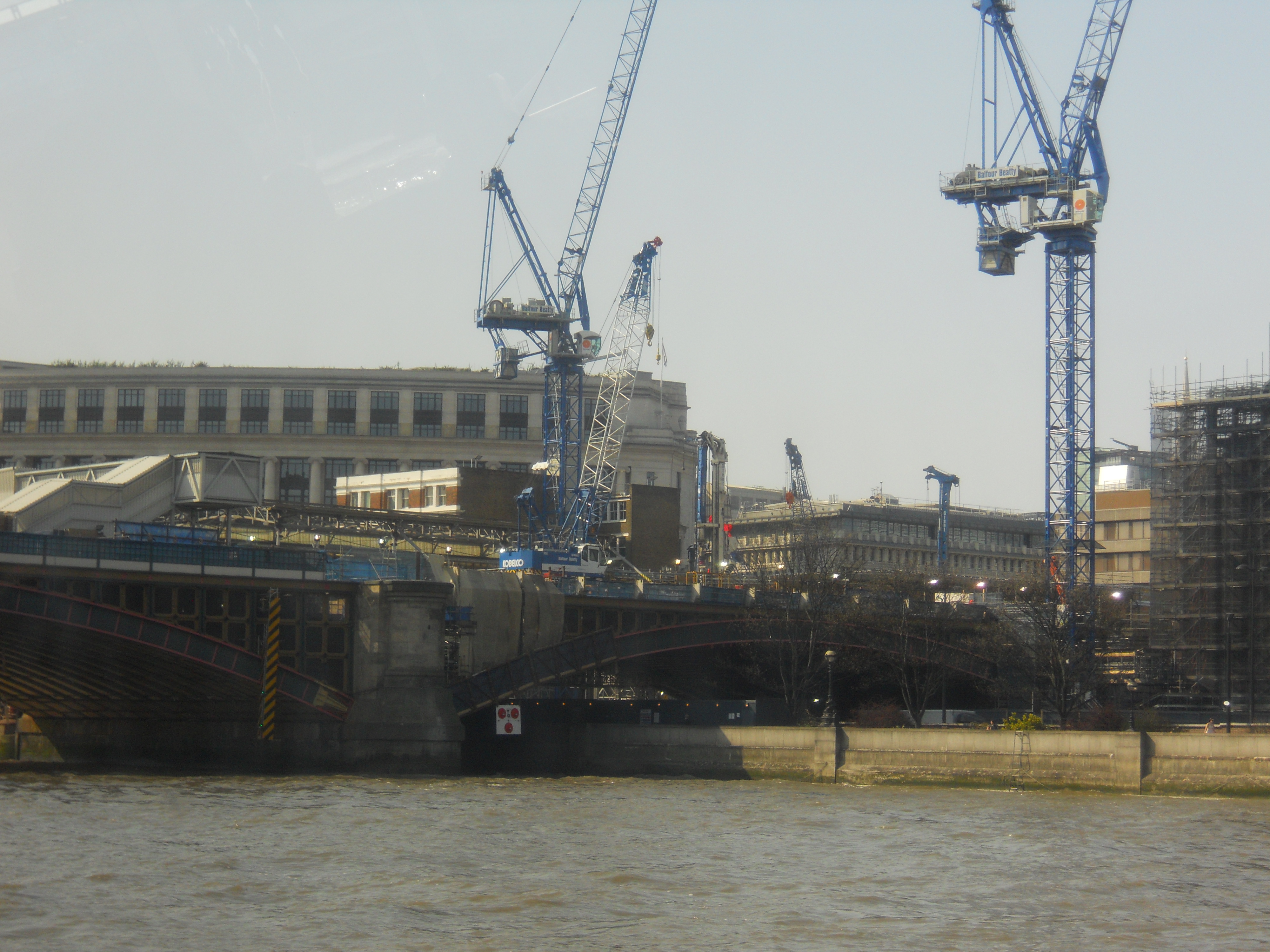
Blackfriars Station Under Construction
As we passed under the bridge, you can get a view of the remains of the second of the two railway bridges at Blackfriars. It is the older of the two bridges having been built in 1864 and there is still a lovely crest on the South Bank of the Thames.
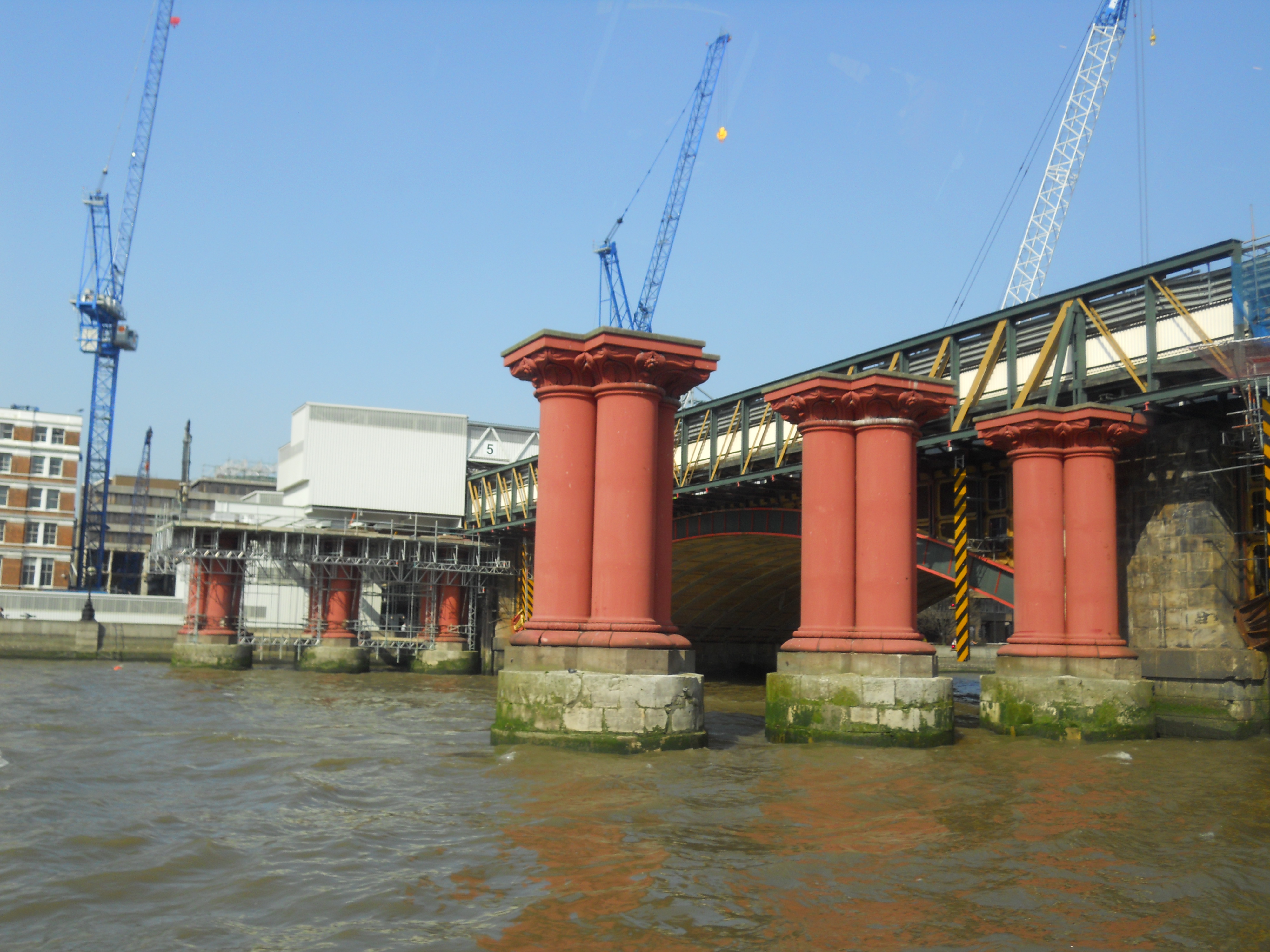
The Old Blackfriars Railway Bridge
The redundant pillars left when the bridge was demolished in 1985 are to be used to support part of the new Blackfriars station that will be over the river. There will also be a station entrance on the South Bank.
You can read more about the Thameslink Programme at the official site.
It looks like it will be worth all the money they are spending.
The Millennium Bridge
Commonly known as the Wobbly Bridge, the Millennium Bridge links St. Paul’s Cathedral to the Tate Modern.

The Millennium Bridge, London
I’ve used this bridge many times.
Note that as you get to St. Paul’s you’ll find the National Firefighters Memorial. This is fitting as it was originally a memorial to Second World War firemen and was later expanded for all firefighters.
I say fitting, as if ever there was a symbol of London in the Blitz, it is the amazing photograph of the cathedral surrounded in smoke, defiantly above the flames.
Cannon Street Station
When I was growing up, Cannon Street station was just a shell.
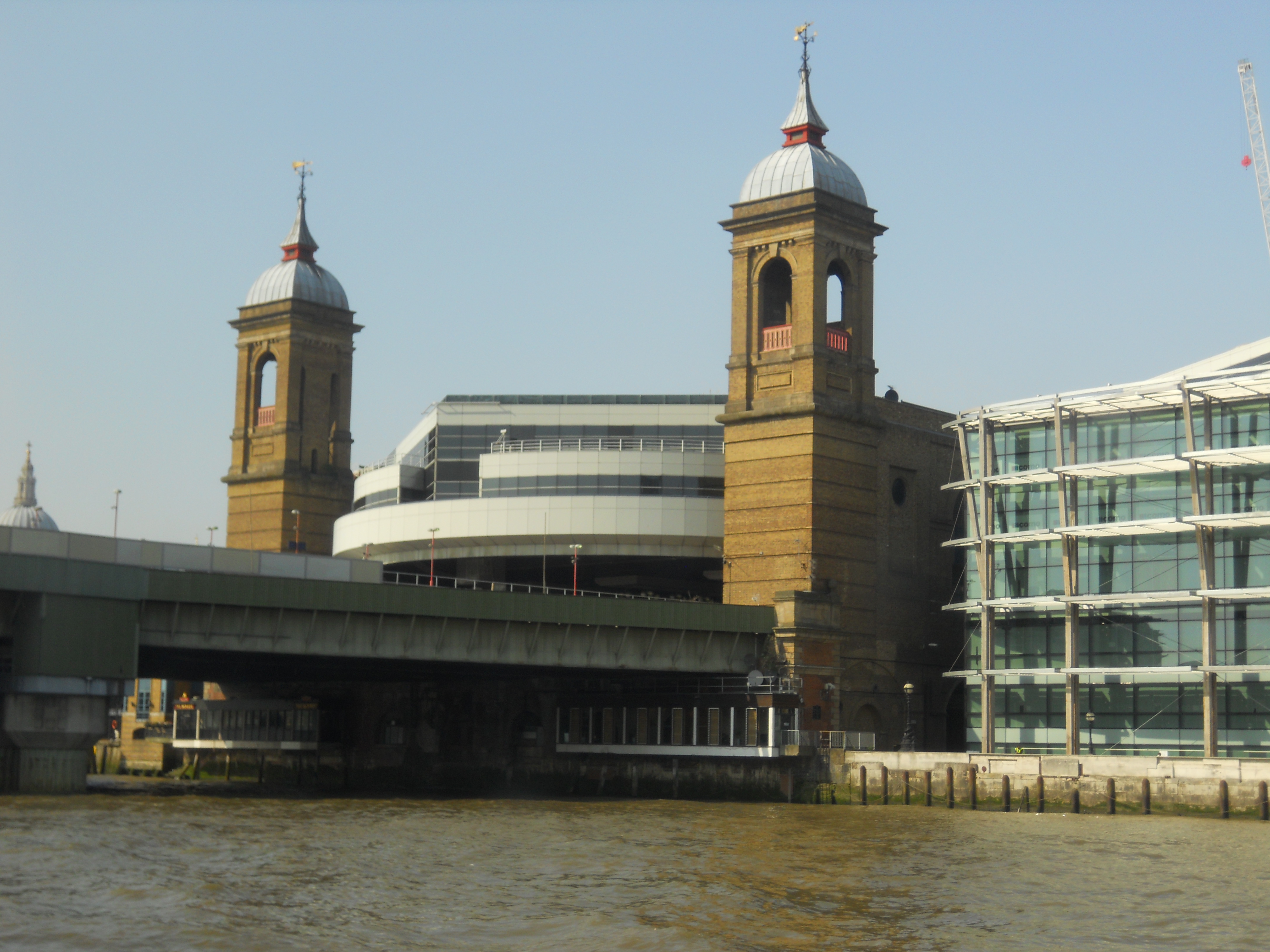
Cannon Street Station
Now it has an office block cradled in its arms.
I hadn’t realised until I read the Wikipedia entry for the station, that the development of the station was involved ion one of the worst corruption scandals of the 1960s; the Poulson affair.
The architect selected to design the new building was John Poulson who was good friends with Graham Tunbridge, a British Rail surveyor whom he had met during the war. Poulson took advantage of this friendship to win contracts for the redevelopment of various British Rail termini. He paid Tunbridge a weekly income of £25 and received in return building contracts, including the rebuilding of London Waterloo and East Croydon. At his trial in 1974 he admitted that shortly before receiving the Cannon Street building contract, he had given Tunbridge a cheque for £200 and a suit worth £80. Poulson was later found guilty of corruption charges and was given a seven-year concurrent sentence; Tunbridge received a 15-month suspended sentence and £4,000 fine for his role in the affair.
Those were the days!
 The Anonymous Widower
