Should The Valley Lines Be Electrified?
I travelled about thirty percent, if that, of the Valley Lines that fan out from Cardiff. But it gave me a feeling of the strengths and weaknesses of the lines.
Stations
A Strength
If I compare the stations I saw on the Valley Lines most would score better than the average of those on the Lea Valley Lines, being taken over by the London Overground. The platforms seemed in good condition and most stations had some form of shelter, which was often new. They certainly didn’t have the same sense of abandonment of some stations on the Lea Valley Lines.
Platforms in some stations might also be big enough for a small kiosk. Obviously, coffee outlets work in London and probably Cardiff, but would they work in the valleys?
On the subject of stations, I hadn’t expected to find a ten million pound project at Pontypridd.
Footbridges
A Possible Weakness
I didn’t see any truly dangerous footbridges, that are very much the norm on the Lea Valley Lines, so hopefully they are not as common.
But some footbridges like Taff’s Well may well have to raised for electrification.
Step Free Access
A Possible Weakness
According to a Network Rail document on the Internet, several stations will have improved access.
On point on step-free access and lifts, is that Network Rail are installing this across the network and I have a feeling that they’re getting better at doing it, as some of the schemes in London, seem to have gone in extremely fast. Perhaps, their project management is getting better.
Road Bridges
A Strength
Network Rail’s documents don’t seem to mention any bridges being reconstructed.
An aside here, is that they are putting in extra tracks in places and this is mentioned.
So perhaps there isn’t work to do with the bridges to accommodate the overhead wires.
Signalling
A Strength
This looks like a separate project to the electrification, as unlike in many places you can do the signalling first and then electrify.
It’s all described in this Network Rail web page.
In one way, the signalling will give more train paths and capacity, before the electrification is complete. But where do you get the required diesel trains?
Interchanges
A Strength
I only did a couple of simple journeys on the Valley Lines, but like the East London Line, you can do same or cross platform changes in a lot of places.
Current Trains
A Weakness
The Class 142 trains that work the lines are clapped and in a few years time, they’ll have to be withdrawn because of the disability regulations.
The Class 150 trains may be possible to be updated, as some Class 153 have been. But would that be throwing good money after bad?
New Trains
A Weakness Or A Strength
New trains are expensive and these Valley Lines could require quiet a few sets.
But there are Class 315 and Class 317 trains available for cascade, as new trains arrive on Thameslink. Crossrail and the Overground in London in the next few years.
The Class 315s are nearly forty years old, but were refurbished between 2204 and 2008. In a section on their future Wikipedia says this.
As most duties of the 315s will be taken over by new Class 345 Aventra trains once Crossrail is built, it has been suggested that the 315s could be cascaded to Wales to be used on Valley Lines services in the Cardiff area following electrification.
I travel regularly on Class 315s and they certainly are a better ride than a Class 142. Their problems are the awful pink décor, dirty windows and lack of a passenger information system. Some might find the lack of toilets a problem too!
Information systems are apparently being fitted, but obviously not on the ones I’ve used and the dirty windows doesn’t seem to be a problem that affects Welsh trains, like it does Greater Anglia. They are all four car sets, which can be paired to make 8 car trains with seats for over 600.
The Class 317s are the electric cousins of the Class 150s operating on the Valley Lines now, are not quite as old as the Class 315s and some of them were refurbished to a high-standard in the 1990s. I used to travel on the latter regularly into London from Suffolk, and they’re certainly better than the 315s. They could also be fitted with better electrical equipment. A demonstrator is currently running round East London and Essex. South West Trains have recently refurbished their Class 455s, which are their version of the 317.
You have to remember that underneath the awful paint jobs and bad interior design of Class 317 and Class 455 trains is a legendary 100 mph Mark 3 carriage, which is struggling to get out. South West Trains have shown what is possible.
I suspect as there are large numbers of both classes, some will end up on the Valley Lines. I’d put my money on Class 317s as their 100 mph capability gives them the ability to run longer-distance stopping services on main lines.
Power Supply
A Strength
One of the high cost parts of railway electrification is getting the electrical feed to the the overhead lines. And our piecemeal policy of the last few decades has made things worse, as you can’t do clever and sensible things to make things simpler and cheaper. For example, the Great Western Main Line electrification, will not have its own power supply at the London end, but will share one with Crossrail.
So as the South Wales Main Line will be electrified all the way to Swansea, it should be possible to feed the Valley Lines off the infrastructure installed on the main line.
Conclusion
As I travelled around the Valley Lines yesterday, several railway staff were sceptical that electrification will go ahead.
I may be wrong, but it seems to me that if after the Great Western Main Line is electrified in 2017, it would actually be more expensive to not do the Valley Lines electrification, as you’d still have the problem of the trains and you’d have a series of lines with good stations, ready to electrify.
It does seem to me, that Network Rail have done their project management superbly well on the updating of the Valley Lines.
I have this feeling, that the scheme when completed will be a big success, as the Valley Lines have so much going for them in terms of location.
The more I look at the Great Western and its branches in Wales and the West Country, I just can’t understand, why these schemes we are doing now, weren’t carried out decades ago.
There are an awful lot of politicians of all parties, who should hang their heads in shame.
The Welsh Count Up From Zero
Like Kings Cross station, Cardiff Central now has a Platform Zero.

The Welsh Count Up From Zero
In the same manner as Kings Cross they needed another platform, so as it was next to Platform 1, from where I took the picture, it was obvious numbering.
This aerial view from Google Earth shows the platform well.

Cardiff Station
Platform Zero is the topmost of the platforms in this view on the left. It would appear that a train is in the platform and it will probably be on its way to Ebbw Vale Parkway.
In the next platform, there would appear to be a London-bound InterCity 125.
The bottom two platforms are 6 and 7 and are used by the other Valley Lines. So unless you are going to Ebbw Vale, and you are needing to use the Valley Lines, you just go up to these two back-to-back platforms to catch your train.
Cardiff Central is in the process of a major upgrade by Network Rail, which looks to be exciting. I remember coming to Cardiff a few years ago to a football match at the Millenium Stadium and geting away was a total nightmare. Hopefully, soon that chaos will be a thing of the past.
On To Barry Island
I went straight through Cardiff Queen Street and Central stations and on to Barry Island.
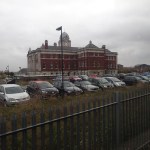




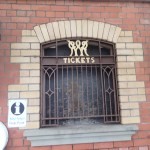
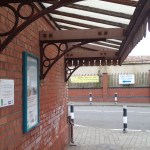
I then turned round fairly quickly, as I had to catch the 16:55 back to London.
The Helpful Welsh
I sometimes find translations rather amusing.

An Obvious Translation
In this case surely the English translation isn’t needed.
How Much Work Needs To Be Done On Footbridges?
I ask this question, as when we were waiting at Taff’s Well, a train went under the footbridge.

The Footbridge At Taff’s Well
If the line is to be electrified, then the bridge might need to be raised, as it looks that the clearance might be a bit small for the overhead wires.
And I suspect, some stations will need some form of step free means to cross the line.
Let Down By A Class 150
On my way down from Merthyr, the Class 150 broke down and we had to get out at Taff’s Well to get another train.
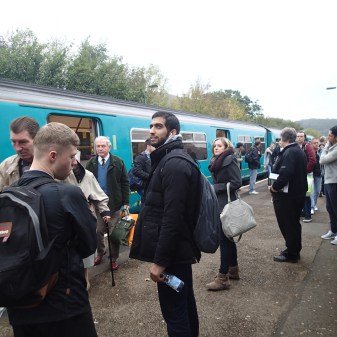
A Broken Down Class 150 At Taff’s Well
One of the conductors had put the mockers on it earlier, by saying he really that type of train.
But it didn’t really matter as the dead train was quickly moved on and after deliberately passing on the next train as it went to Bridgend, I caught the next one to Barry Island, where I had wanted to go anyway.
In some ways this illustrates one of the strengths of a rail line which has branches, which fan out at both ends and where trains funnel through a busy centre section. London’s Thameslink and East London Lines, Liverpool’s Northern Line all have this layout.
Up The Valley To Merthyr Tydfil
From Pontypridd I took a train up to Merthyr Tydfil. As the only thing of note at the station was a Tesco Extra, I decided to take the next train back to Cardiff, as I still wanted to get to Barry Island.
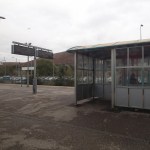
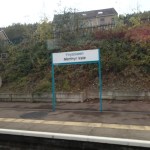
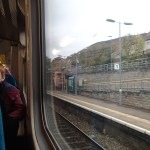

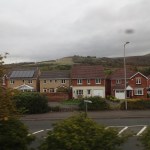
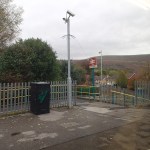
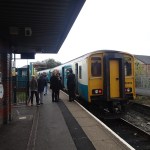
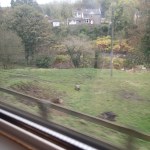
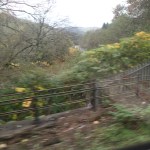
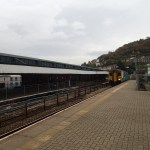
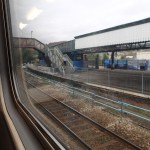
The pictures show that just like the Rhondda branch to Treherbert, the line is a succession of clean stations, trees, mountains and water.
Pontypridd And The Station
I came back down to Pontypridd to take the line back up to Merthyr Tydfil.
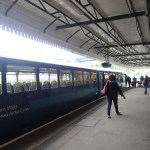


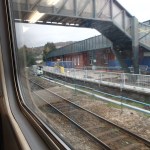
I had a pleasant lunch there in the very busy Cafe Royal. I’ve never had a chicken curry, which contained very recognisable strips cut from a couple of large slices of chicken.
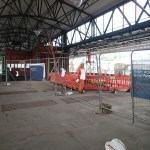
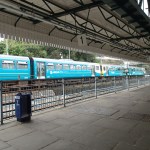
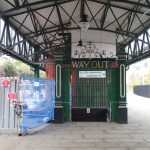
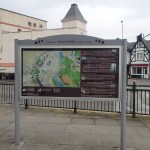
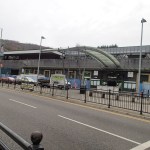
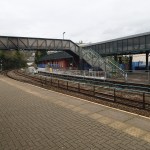
The station is at present having a ten million pound upgrade, which includes a new bay platform, so that extra trains can run to and from Cardiff.
Lifts and a new footbridge are also promised. There are full details here.
If Network Rail, their architects and buildings do their usual standard of work, then this could be a station of which the town can be very proud. Unlike many stations, it appeared to be right in the heart of the town.
Treherbert
Treherbert was my first destination and is probably best described as a small town that has seen better days.
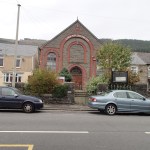

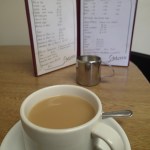
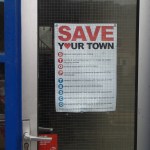

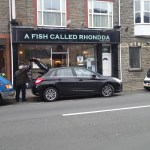
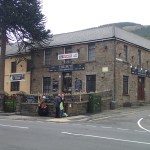

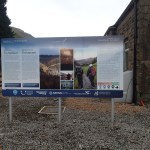
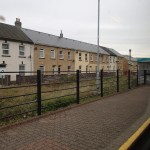
One of my reasons for choosing Treherbert was to take stock of the town before they electrify the line to Cardiff.
It is certainly a town, that needs something to stimulate business and employment.
I certainly hope that I am able to return to the town in a few years time in a smarter electric train.
The tea room has only recently opened and I hope it succeeeds, After all, if say you came up to Treherbert like I did out of curiosity or perhaps to have a walk on the hills, you might like to get some refreshment before returning down the valley.
From Cardiff To Treherbert
After the match, I could have come home directly in the morning, but I wanted explore the Valley Lines.
I started by going to Cardiff Central station, where I got a train to Cardiff Queen Street followed by one from there to Treherbert, as for no better reason, than it was the first that turned up.



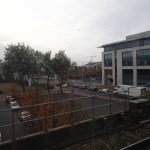


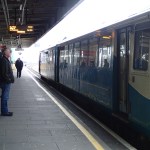
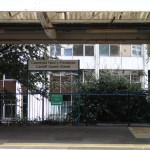

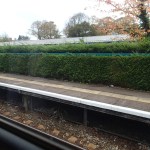


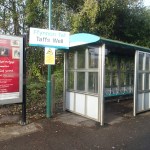




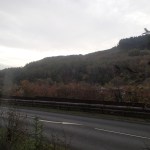
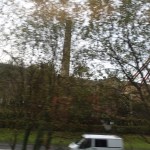
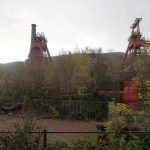

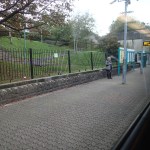
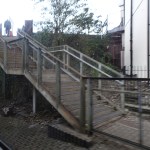
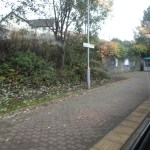


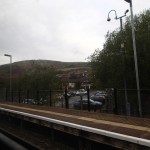
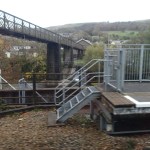

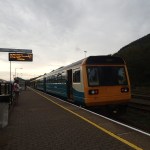
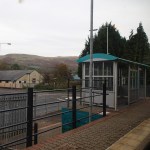

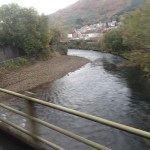
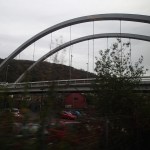

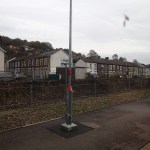
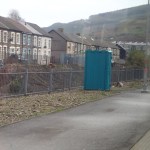
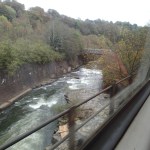
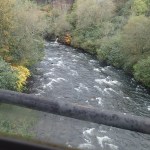
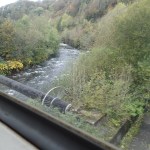
The pictures tell the story of the very scxenic journey up to Treherbert and down to Pontypridd.
As befits the UK’s stereotypical view of a wet Wales, the stations seem to be well sheltered and generally in good repair.
The Class 142 on which I travelled, was one of the better Pacers that I’ve ridden in and was reasonably clean and tidy.
 The Anonymous Widower