A Radical Idea For The Bakerloo Line Extension
I have spent forty years involved in project management, writing software for project managers and generally listening to some of the thoughts and experiences of some of the best engineers from all over the world.
One common thread, which is best illustrated by how the size of lift possible increased in the North Sea in the 1970s, is that as time has progressed machines have got bigger and more capable, and the techniques of using them has improved immeasurably.
The Crossrail tunnel boring machines (TBM) make those used on the Jubilee Line extension or the Channel Tunnel look like toys. But not only are the TBMs bigger and faster, they have all the precision and control to go through the eye of the smallest needle.
If we look at the proposals for the Bakerloo Line Extension, there have been several differing ideas. Some envisage going under Camberwell and in others the trains terminate on the Hayes line.
Transport for London (TfL), obviously know the traffic patterns, but do we really want to take the chance of say connecting the Hayes line to the Bakerloo and then finding that it’s not the best solution?
What we should do is augment the services in the area, by providing a good alternative transport mode, that links to some of the traditional rail lines to give even more flexibility. We certainly shouldn’t repeat the grave mistake that was made at Brixton in the 1960s by not connecting the Victoria line to the surface rail lines.
This is Transport for London’s indicative map of the extension.
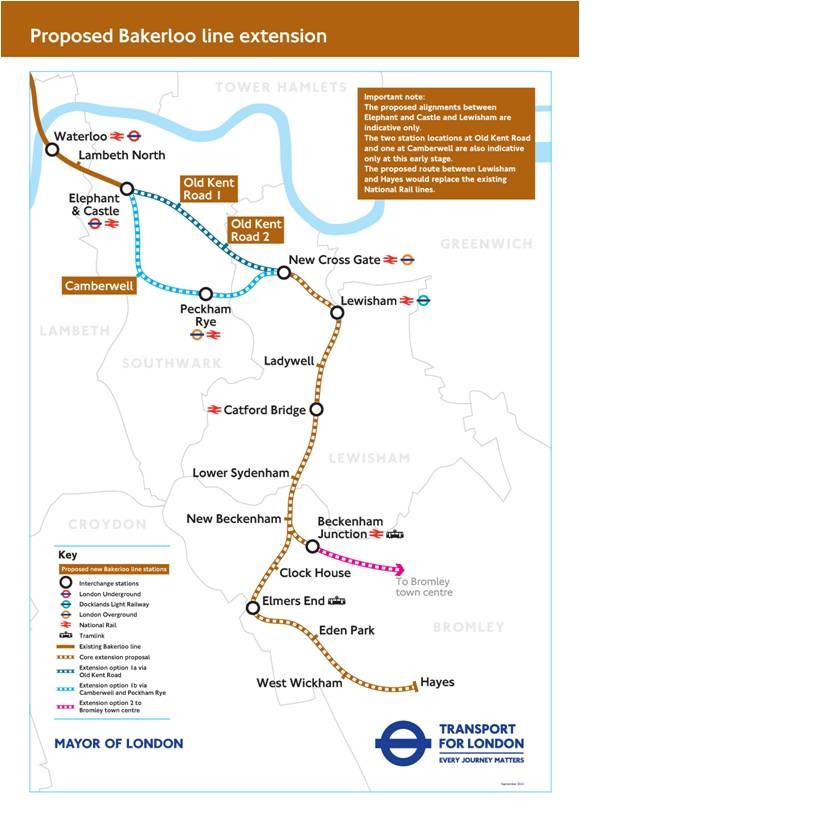
Bakerloo Line Extension Map
I have reason to believe that the Northern Line Extension may be being built as an extension to the Kennington Loop.
So could we design the Bakerloo Line Extension as a loop starting and finishing at Elephant and Castle calling at important stations?
A possible route could be.
- Elephant and Castle – Interchange with Northern Line and National Rail including Thameslink
- Old Kent Road 1 – Proposed on Map
- Old Kent Road 2 – Proposed on Map
- New Cross Gate – Interchange with London Overground and National Rail
- Lewisham – Interchange with Docklands Light Railway and National Rail including Hayes Line
- Catford Bridge – Interchange with Catford station and National Rail including Hayes Line and Thameslink
- Peckham Rye – Interchange with London Overground and National Rail
- Camberwell – Interchange with National Rail including Thameslink
- Elephant and Castle
The advantages of this simple design are.
- The tunnel would be excavated in one pass by a single TBM.
- The line could be deep under any existing infrastructure.
- Most stations would be simple one-platform affairs, with perhaps only large lifts and emergency stairs, to give unrivalled step-free access for all from the street to the train. Surely lifts exist, that are large and fast enough to dispense with escalators.
- For safety, passenger convenience and flows, and other reasons, the stations could have two entrances, at opposite ends of the platform.
- The simple station entrances would be much easier to position on the surface, as they wouldn’t need to be much bigger than the area demanded by the lifts.
- A single loop would only need half the number of platform edge doors.
- At stations like New Cross Gate, Lewisham, Catford and Peckham Rye the lifts would surface within the confines of the existing surface stations.
- The route has interchanges with the Brighton Main Line, East London Line, Hayes Link, Thameslink and other services, so this would give lots of travel possibilities.
- Trains do not need a terminal platform, as they just keep going on back to Elephant and Castle.
- The loop would be operationally very simple, with no points to go wrong. TfL have aspirations to run twenty-seven trains per hour on the Bakerloo and a simple reversing loop , which would mean the driver didn’t have to change ends, must certainly help this. It would probably be a lot more difficult to get this capacity at the northern end of the line,where Harrow and Wealdstone doesn’t have the required capacity and the only possibility for a reversing loop would be north of Stonebridge Park.
- Elephant and Castle would need little or no modification. Although it would be nice to have lifts to the Bakerloo Line.
- Somewhere over two billion pounds has been quoted for the extension. A single loop with simple stations must be more affordable.
The main disadvantage is that the loop is only one-way.
But making even part of the loop two-way would create all the operational difficulties of scheduling the trains. It would probably be better, less costly and easier to make the trains go round the loop faster and more frequently.
But if a passenger went round the loop the wrong way and changed direction at Elephant and Castle that would probably only take a dozen minutes or so.
Alternatively, I’m sure some New Routemasters would step up to the plate and provide service in the other direction between the stations.
Tottenham Hale Bus Station Opens
The new bus station at Tottenham Hale has opened.


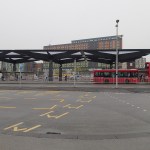
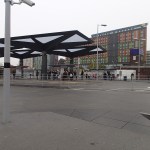

It will certainly be useful as an interchange to get the 192 bus to and from IKEA.
The 76 which passes close to my house, also ends up here.
Are There Any Other Places Where A Loop Extension With Stations Can Be Built?
I said this in my piece on the Northern Line Extension.
Reversing loops with stations are not unknown in the UK. Terminal 4 at Heathrow is served by the Piccadilly Line in this way and the Merseyrail Loop Line, is a larger example, that reverses and provides several stations for the Wirral Line. It could also be argued that Bank station on the Docklands Light Railway is two platforms on a reversing loop.
But are there any other places, where a loop extension with stations could be built to advantage?
The great advantage of the reversing loop layout for an extension, is in the construction phase.
1. Only one continuous tunnel needs to be built, which can be built with one tunnel boring machine (TBM).
2. Crossrail has shown that TBMs can be controlled to a high-degree of accuracy, which enables optimal loop tunnels to be created, going deeper than traditionally if necessary.
3. Simple stations can be built by connecting the out and return legs of the loop together and then adding lifts and escalators to the surface.
4. Simple one-platform stations could be built on the outer reaches of the loop.
5. It might be possible to reduce the number of shafts dug to the working tunnel. This would surely help in a crowded city.
6. There is only minimal disruption to existing infrastructure during the construction.
These are some places, where the loop extension with stations might be used.
Bakerloo Line Extension
There have been lots of proposals for the route of the Bakerloo Line Extension. Some are just simple ones taking the line to Camberwell and some envisage the line taking over the Hayes branch.
I have seen discussions about the latter and some have flagged up all sorts of problems, like how do you provide a service during the construction period.
So the design of this is going to be difficult. But I wouldn’t rule out an out and return loop going via Camberwell.
This links to my proposal.
Extending The Docklands Light Railway Westwards From Bank
There have been two proposals for this.
Would these best be served by extending the loop tunnel at Bank appropriately?
Possibly, but does the DLR have enough capacity for either of these services?
Extending The Docklands Light Railway Southwards From Lewisham
There have been two proposals for this.
Perhaps an underground loop could be used to turn trains at Lewisham, that served several stations, south of the current terminus.
Jubilee Line
Extending the Jubilee Line eastwards from its orignal terminus of Charing Cross could have used the reversing loop technique to take in stations in the eastern parts of the city in a wide loop. But in the end the Jubilee Line Extension was built to Stratford.
Extending The Jubilee Line To Thamesmead
In the design of North Greenwich station on the Jubilee line, provision was left for a branch to Thamesmead.
It is not in any plans at the moment, but a reversing loop could be built covering Charlton, Plumstead, Thamesmead and Abbey Wood.
Extending the Gospel Oak to Barking Line from Barking Riverside To Abbey Wood
This is an aspiration of Transport for London. But could it be dug in a single extended loop from Barking Riverside? The biggest advantage would that incorporating a single underground platform at Abbey Wood, would be a lot easier and affordable, than creating a full terminus there.
Extending The Victoria Line Southwards To Herne Hill
This is mentioned under Possible Future Projects on Wikipedia for the Victoria line. This is said.
For many years there have been proposals to extend the line one stop southwards from Brixton to Herne Hill. Herne Hill station would be on a large reversing loop with one platform. This would remove a critical capacity restriction by eliminating the need for trains to reverse at Brixton. However, it would be expensive and cannot currently be justified on cost-benefit grounds. Because the current line is heavily overcrowded this is considered to be the only extension proposal with any realistic prospect of coming to fruition; but to have any hope of being built, it would have to be seen to be effective in reducing overcrowding (by enabling trains to run more frequently) and not to increase it.
But it strikes me that if TfL’s engineers find better ways of building these loops and their stations, perhaps it could be built to increase capacity on the Victoria line.
Outside Of London
Outside of London, I don’t know the railway infrastructure, like I do in London, but I’m sure that the concept could be used elsewhere.
A Heritage Station With Four Clocks
After writing my piece about the Northern Line Extension, I went to have a look at Kennington station.
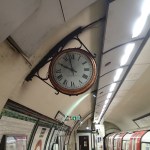
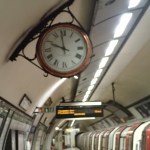
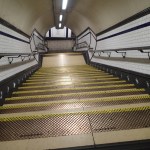

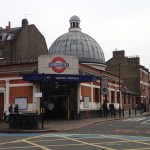
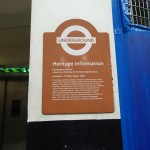
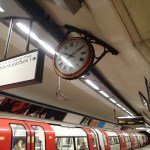
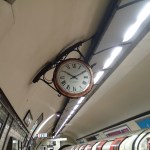
It is a Grade II Listed building, but to me one of its best features is the four clocks.
The layout is unusual in that the two Southbound platforms are underneath the two Northbound ones. But both pairs of platforms have level access between the platforms. So if you came up from Morden and wanted to go to say Tottenham Court Road, you’d just walk across to the Charing Cross branch, if you were on a train going via Bank.
When the Northern Line Extension opens, this will probably mean that there is cross-platform access from the extension to the Bank branch.
It would certainly seem that when the station was substantially rebuilt in 1926, that whoever redesigned the station had the foresight (luck?) to design a station that could be easily linked to a branch to Battersea and Clapham Junction.
 The Anonymous Widower