Innovative Engineering To Recycle Trains
I often refer to Pacers; Class 142 and Class 144 as scrapyard specials. They were built in the late 1980s and some units will be thirty years old next year. They have not worn well and they don’t meet the modern disability regulations.
The London Underground D78 Stock is a few years older and after a major refurbishment a few years ago, the trains are still running on the District Line. I travel on them regularly and although they are not as nice as the new S Stock, they still provide an adequate and reliable service across London.
It wouldn’t seem logical to replace the elderly Pacers with rebuilt D78 Stock that was even older.
On the other hand, a group of very experienced railway personnel who feel that these 75 third rail electric trains can with the addition of a couple of automotive diesel engines be converted into diesel multiple-units.
It sounds crazy, but the realisations on the Vivarail website of what they have called the D-train look good. They also don’t look like a D78 to those who don’t know them well. They will even have wi-fi!
To paraphrase one of my own sayings.
Politicians have a theory and try and prove it, engineers have a problem and solve it.
Roger Ford in Modern Railways for December is reporting that in six months time, there will be a demonstrator. He says this.
If anyone can make D78 stock conversion commercially viable, it is this battle-hardened bunch of veterans.
As Roger also reports they have spent a seven figure sum on buying the trains, I have a feeling that we’ll be seeing at least some of these trains for a long time.
In the article and the Vivarail web site, what I see as a big advantage of the trains is not mentioned.
Some estimates say that we need upwards of fifty replacement trains for the Pacers. And that is about the size of the fleet that could be created.
With George Osborne needing an affordable project that benefits many different areas of the country, it would appear that the D-train has arrived exactly on time.
The biggest problem could be getting the public to believe that re-manufactured nearly forty year old trains are up to the job. But at least, as with the Parry People Mover, it’s a train that can be put into service on a real railway to charm the public.
In the same magazine, there is also an article about rescuing some Class 56 locomotives and returning them to active service.
In the UK, we have a shortage of diesel locomotives for freight. We’ve even used a preserved Class 55 Deltic to haul commercial bauxite trains and you sometimes see pairs of Class 20 locomotives like this doing real work. The article explains how new locomotives get used on the premium high-value trains, but for pulling things like engineering and work trains, they are expensive.
A company called UK Rail Leasing has acquired fifteen and intend to return some to service. There is talk in the article about fitting modern engines. But then they did that with that other relic of the 1970s the InterCity125.
Both of these stories are in some ways a tribute to our rail engineering skills of thirty years and more ago.
How To Make The Most Of Trains From London
Many people come to London and I’ve met several who have thought about going to say Stratford upon Avon, Bristol or Cambridge, but have not known how to get the tickets in the most affordable manner.
So here’s a few rules.
1. Get Yourself An Oyster Card
Oyster Cards are preloaded with cash, which can then be used to pay for your journeys.
You can use Oyster over a wide area and on many modes of transport.
Most London attractions are within the scope of an Oyster.
Buying a card is easy.
- Use an automatic machine at any Underground station.
- If you come in to the UK on Eurostar you buy one on the train, which avoids the queues at St. Pancras
- You can also buy one on-line
You can also use a contactless bank card instead of Oyster. I watch the media for problems with this technology, which gives the same price as Oyster, and I’ve yet to read a negative story.
If you’re only in London for a few hours or a day or so, you can always buy a Travelcard, if you don’t want to use Oyster or a contactless bank card.
2. Learn To Use London’s Buses
Londoners and many of those who live in the city, use buses regularly, as they are often more convenient than the Underground. Often they are the quickest way to get from a budget hotel a few miles out to the centre.
Remember though that London’s buses do not take cash, so you’ll either have to use an Oyster card, a Travelcard or a contactless back card.
In London most bus shelters double as information kiosks, with bus spider maps and sometimes an electronic display detailing the next few buses. Each bus stop also has a five digit code, that can be texted to 87287 to get information on the next few buses.
3. Learn To Use National Rail Enquiries
I get it on my smart phone by typing National Rail into the browser.
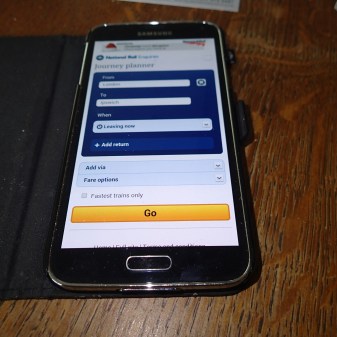
National Rail Enquiries
The picture shows the journey planner, where I am requesting trains from London to Ipswich. It is also available on the Internet.
When planning a train journey always use this tool.
Although as UK rail data is now being made freely available to developers, I suspect that some very good free apps will appear.
Call me cynical if you like, but I would never use any tool or app, that was provided by a company that was a ticket agent.
4. If You’re Entitled To One Get Yourself A Railcard
I am over sixty and am thus entitled to a Senior Railcard. It costs thirty pounds for a year and gives me a third off all UK rail travel, including trains like the Caledonian Sleeper.
If you are not a UK national, all you need to get one, is the charge and a valid passport, with your brth date on it.
A recently-introduced product is the Two Together Railcard, which gives one third off for two people over sixteen travelling together. It can be ordered on-line, but it must be delivered to a UK address.
Railcards are in need of sorting out, as there are quite a few. If you think you might be entitled to one and will be doing a lot of travelling on trains, go and talk to someone in a Ticket Office at a slack time.
5. Never Use An On-Line Ticket Agency
Type something like “Train Tickets From London to Ipswich” and you’ll probably get a ticket agent company. I never deal with these companies and they are a waste of space.
I also believe strongly, that someone who works for one of these companies sold my address and e-mail address details to someone, who was less than honest.
I may be tarring them all with the same brush, but they are leeches, who don’t provide any service you can’t get from the train companies themselves. You’ll also often pay a booking fee for the privilege.
Whether you buy your ticket on-line, from a ticket machine or personally at a booking office, try to buy it from the company who is providing the trains.
There is one exception to this, which I suspect will broaden with time.
I live close to Dalston Junction station on the London Overground. This sister company to London Underground has recently installed ticket machines that allow you to buy National Rail Tickets between any two National Rail stations at the best price. I suspect over the next few years these new ticket machines or similar ones will be rolled out all over London.
For visitors, who don’t have English as a first language, these machines also work in several common alternative languages.
This will make getting tickets so easy for visitors. Although, you’ll still need to find out your route!
6. Buy Tickets On-Line In Advance If You Can
There are effectively two forms of Advance ticket.
The first is just an ordinary ticket that you buy a couple of days or so before you need. If say, I was going to see Ipswich at Bolton and then perhaps having supper with a friend in Manchester, who is notoriously unreliable on punctuality, I would buy an ordinary Off Peak Manchester to London ticket to get me home.
On the other hand if I knew that I would be catching the 20:15 Virgin, I would book an Advance Ticket, that tied me to a particular train. Which can be a nuisance if you get delayed.
Incidentally, I’ve just bought a First Class Advance ticket from London to Manchester and a Standard Class Off Peak to get back on Saturday week. The first is tied to the 08:40 train cost £25.10 and the second is allowed on any train and cost £26.30. These prices are with a Railcard.
I buy quite a few Advance tickets on line and pick them up at any convenient station. As an example of the price savings, a Standard Class Off Peak Single from Manchester to London costs £78.70, but an Advance Ticket for a week from now costs £35.30. With a Railcard these tickets are a third less.
A few points to note.
1. Always use the same credit card for train tickets and make sure you make a note of the 8-character pick-up code.
2. I ask for the tickets to be collected at my local station, Dalston Junction. But in fact you can pick them up from any UK Rail and most London Overground stations, provided you have the right card and code. One day, I forgot the code and a friendly Ticket Office guy, located the ticket and gave it to me on production of the correct credit card.
I would like feedback, where someone from Switzerland say, bought a ticket on-line for say a trip from Gatwick to Nottingham, which they picked up at Gatwick.
7. Which Train Company And London Terminus Should You Use?
This is a list of UK postcodes with their major towns and cities and the train companies
AB – Aberdeen – East Coast
AL – St. Abans – Govia Thameslink Railway
B – Birmingham – Chiltern Railways, London Midland or Virgin Trains
BA – Bath – First Great Western
BB – Blackburn – Virgin Trains
BD – Bradford – East Coast or Grand Central
BH – Bournemouth – South West Trains
BL – Bolton – Virgin Trains
BN – Brighton – Govia Thameslink Railway or Southern
BR – Bromley – South Eastern or London Overground
BS – Bristol – First Great Western
CA – Carlisle – Virgin Trains
CB – Cambridge – Govia Thameslink Railway or Greater Anglia
CF – Cardiff – First Great Western
CH – Chester – Virgin Trains
CM – Chelmsford – Greater Anglia
CO – Colchester – Greater Anglia
CR – Croydon – Govia Thameslink Railway or London Overground
CT – Canterbury – South Eastern
CV – Coventry – Virgin Trains or London Midland
CW – Crewe – Virgin Trains or London Midland
DA – Dartford – South Eastern
DD – Dundee – East Coast
DE – Derby – East Midlands Trains
DG – Dumfries – Virgin Trains
DH – Durham – East Coast
DL – Darlington – East Coast
DN – Doncaster – East Coast or Grand Central
DT – Dorchester – South West Trains
DY – Dudley – Virgin Trains
EH – Edinburgh – East Coast or Virgin Trains
EN – Enfield – London Underground, London Overground, Greater Anglia or Govia Thameslink Railway
EX – Exeter – First Great Western or South West Trains
FK – Falkirk – East Coast or Virgin Trains
FY – Blackpool – Virgin Trains
G – Glasgow – Virgin Trains or East Coast
GL – Gloucester – First Great Western
GU – Guildford – South West Trains
HA – Harrow – London Underground, London Overground or London Midland
HD – Huddersfield – Virgin Trains or East Coast
HG – Harrogate – East Coast
HP – Hemel Hempstead – London Midland
HR – Hereford – First Great Western
HS – Outer Hebrides – Virgin Trains plus ferry
HU – Hull – Hull Trains or East Coast
HX – Halifax – East Coast
IG – Ilford – Greater Anglia
IP – Ipswich – Greater Anglia
IV – Inverness – East Coast
KA – Kilmarnock – Virgin Trains
KT – Kingston upon Thames – South West Trains
KW – Kirkwall – East Coast or Virgin Trains plus ferry
KY – Kirkcaldy – East Coast or Virgin Trains
L – Liverpool – Virgin Trains or London Midland
LA – Lancaster – Virgin Trains
LD – Landrindod Wells – First Great Western
LE – Leicester – East Midlands Trains
LL – Llandudno – Virgin Trains
LN – Lincoln – East Coast
LS – Leeds – East Coast
LU – Luton – Govia Thameslink Railway or East Midlands Trains
M – Manchester – Virgin Trains
ME – Rochester – South Eastern
MK – Milton Keynes – Virgin Trains or London Midland
ML – Motherwell – Virgin Trains
NE – Newcastle upon Tyne – East Coast
NG – Nottingham – East Midlands Trains
NN – Northampton – Virgin Trains or London Midland
NP – Newport – First Great Western
NR – Norwich – Greater Anglia
OL – Oldham – Virgin Trains
OX – Oxford – First Great Western
PA – Paisley – Virgin Trains
PE – Peterborough – Govia Thameslink Railway or East Coast
PH – Perth – East Coast
PL – Plymouth – First Great Western
PO – Portsmouth – South West Trains
PR – Preston – Virgin Trains
RG – Reading – First Great Western
RH – Redhill – Govia Thameslink Railway
RM – Romford – Greater Anglia
S – Sheffield – East Midlands Trains
SA – Swansea – First Great Western
SG – Stevenage – Govia Thameslink Railway or East Coast
SK – Stockport – Virgin Trains
SL – Slough – First Great Western
SM – Sutton – Govia Thameslink Railway
SN – Swindon – First Great Western
SO – Southampton – South West Trains
SP – Salisbury – South West Trains
SR – Sunderland – East Coast or Grand Central
SS – Southend-on-Sea – Greater Anglia or C2C
ST – Stoke-on-Trent – Virgin Trains
SY – Shrewsbury – Virgin Trains
TA – Taunton – First Great Western
TD – Galashiels – East Coast
TF -Telford – Virgin Trains or London Midland
TN- Tonbridge – South Eastern
TQ – Torquay – First Great Western
TR – Truro – First Great Western
TS – Cleveland – East Coast or Grand Central
TW – Twickenham – South West Trains
UB – Southall – First Great Western
WA – Warrington – Virgin Trains
WD – Watford – London Underground, London Overground or London Midland
WF – Wakefield – East Coast or Grand Central
WN – Wigan – Virgin Trains
WR – Worcester – First Great Western
WS – Walsall – Virgin Trains
WV – Wolverhampton – Virgin Trains
YO – York – East Coast
ZE – Lerwick – East Coast or Virgin Trains plus ferry
Notes
1. Where two or more train companies are listed, they are in my order of preference.
2. With some of the Scottish islands, you’ll need to take a ferry to complete the journey.
This is a list of the train companies with some of their strengths and pitfalls.
Terminus – Marylebone
Strengths – Some very comfortable trains, reliable, affordable and free wi-fi everywhere
Weakness – Marylebone isn’t the easiest terminus to get to.
Notes
1. Slower, but more comfortable and pleasant to Birmingham
Terminus -Fenchurch Street
Strengths – Reliable and affordable
Weakness – Fenchurch Street isn’t the easiest terminus to get to.
Terminus – Kings Cross
Strengths – Some comfortable trains and fast
Weakness – The overhead line is always failing.
Notes
1. Some places like Huddersfield, Burnley and Halifax can be served by East Coast from Leeds or Virgin from Manchester or Preston
2. There is a certain amount of overlap between East Coast and Grand Central
Terminus – St. Pancras
Strengths – Some comfortable trains
Weaknesses – The Meridian trains and lack of late services back to London.
Terminus – Paddington
Strengths – Comfortable trains, fast and the Pullman Dining.
Weakness – Nothing obvious
Through Stations – St.Pancras, Fsrringdon and London Bridge
Strengths – Competent
Weakness – The line is a building site because of Thameslink.
Terminus – Kings Cross
Strengths – Some comfortable trains and affordable
Weakness – The overhead line is always failing.
Notes
1. There is a certain amount of overlap between East Coast and Grand Central.
Terminus – Kings Cross
Strengths – Good service, affordable and not affected by overhead line problems
Weakness – Not the best trains!
Terminus – Liverpool Street
Strengths – Lots of services and some good trains.
Weakness – Inferior service
Terminus – London Bridge, Victoria and St. Pancras
South West Trains
Terminus – Euston
Going to – Birmingham, Blackpool, Chester, Crewe, Liverpool, Manchester, Preston, Woverhampton, Carlisle, North Wales, Glasgow and Western Scotland
Notes.
1. Some places like Birmingham, Crewe and Liverpool are also served by London Midland.
2. Birmingham and the West Midlands are also served by Chiltern Railways.
3. Some places like Huddersfield, Burnley and Halifax can be served by East Coast from Leeds or Virgin from Manchester or Preston
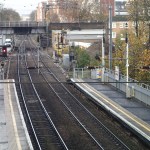
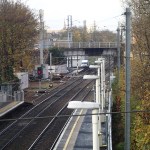
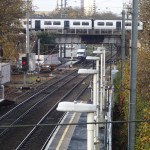
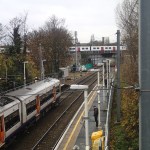
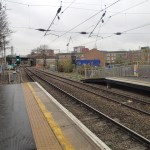
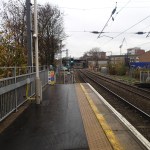
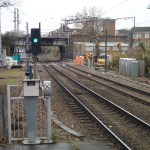
Progress On The Hackney Downs/Central Link
November 27 – There’s now a white van parked by where the link is to go.
December 2 – Orange army and materials everywhere

Searching For Gluten-Free Cocktail Sausages
I finally tracked down some of Marks and Spencers gluten-free cocktail sausages in their store at Eastfield.
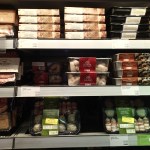

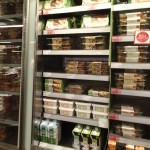

They have also opened up a new gluten-free section for chilled goods, like fish cakes.
Reflections On Rochester
Rochester and the walk I took, shows a bit of a patchy nature. The eastern end is a bit scruffy and it looked like it wasn’t my sort of High Street. But get past the excellent Visitor Centre and towards the free-to-enter cathedral and it all improves. And then across the bridge in Strood, it all gets scruffy again.
The big change to the area will come when the new station at Rochester opens in 2015 and refurbishment work at Strood station finishes. Judging by the early stage of the building at Rochester station, I do wonder if they’ll meet their target. I do wonder though, if this will make any difference to those in the area, who voted for Ukip in the recent by-election, as I suspect the average Ukip voter probably doesn’t put trains at the top of their priorities!
Rochester together with Chatham is also an easy day out from London, especially if you use the High Speed service. I do wonder if visitor numbers would be improved if Off Peak tickets from London on the High Speed service were more affordable. (At present an Off Peak Return on High Speed is £20.80 and by normal trains it’s £12.65!) My train out was virtually empty, so reducing fares for non-existent passengers wouldn’t cost much!
So Rochester has probably got a lot of things going for it, but whether the negative connotations of the kippers will put off visitors, can only be judged in a few years time.
 The Anonymous Widower