Whitechapel Station – 23rd January 2016
These pictures show the changes that have happened at Whitechapel station in the last week.

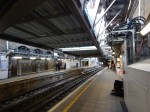
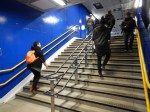

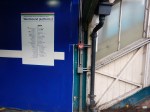
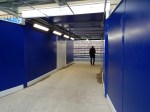

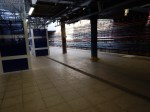

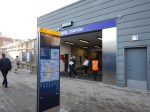
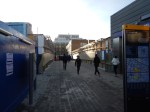


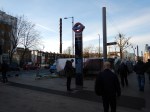


It is now possible to change direction on the wide platform between the Eastbound and Westbound lines of the District and Metropolitan Lines.
The escalators to the Crossrail lines will also be located in this wide platform. So changing between Crossrail and the \district and Metropolitan Lines will be very straightforward.
What surprised me was the quality of the temporary station. It’s actually a lot better and far more spscious than the one that was used previously, with several more gates.
A Trip To Barking
In A Story And A Rumour About The Gospel Oak To Barking Line, I reported on a rumour that an LO staffer had said that the electrification will be complete by June.
I think this is impossible, as according to this document on the TfL web site, the bridge at Upper Holloway station will only be completed before the end of 2017. I don’t think I’m alone in thinking that the bridge must be completed before the electrification.
Surely,if the electrification is to be completed by June, then there will be evidence of construction all along the line.
Today, I went to Barking station and had a look around.
- The GOBlin terminates in Platform 1 at Barking station and there is no evidence of any construction there.
- There was no evidence of piling between Barking station and the short length of electrification between Barking and Woodgrange Park station.
- There was also no evidence of any work tro create supports for the catenary on the elevated section of the line between Woodgrange Park and Leyton Midland Road stations.
On a quick look too, there didn’t appear to be any construction cabins, that would be normal for such an undertaking, as electrifyimg a dozen miles of railway..
I then had a think about the objectives of all the work on the Gospel Oak to Barking Line.
- Replace the two car Class 172 diesel multiple units with four-car Class 710 electric multiple units.
- Allow freight trains to be hauled by electric locomotives.
- Extend the line to Barking Riverside.
This map from carto.metro.free.fr shows the lines at Barking station.
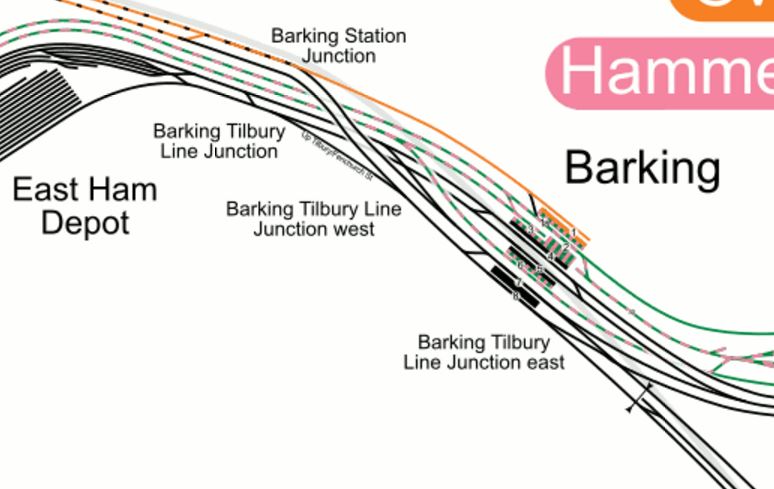
Lines At Barking Station
Note the following.
- The GOBlin (orange) terminates in the bay platform 1, on the North side of the station.
- Freight trains to and from London Gateway, Tilbury and the East, go through the two Barking Tilbury Line junctions and then access the GOBlin using a flyover and the Barking Station junction.
- Barking Riverside station is on a spur off the Tilbury Line to the South East.
So I asked myself, what electrification needs to be done to get electric-hauled freight trains off and on the GOBlin.
As c2c runs electric services in and out of Liverpool Street at certain times, I suspect that the wiring to get electric-hauled freight onto the GOBlin is already there.
So we’re left with the only electrification at Barking being platform 1 and the extension to Barking Riverside. The total length is probably under ten kilometres.
According to Bombardier, all Aventra trains like the Class 710 will have an energy storage capability.
So could we be seeing an extension to Barking Riverside like this?
- Between Barking Station junction and Barking Riverside station, the Class 710 trains run on their batteries.
- Eastbound and westbound services both use Platform 1, so the GOBlin has its own single-platform at Barking. Recently, Network Rail has built several single-platform stations.
- Platform 1 is not electrified.
- The line through Platform 1 is extended under the station to give a direct connection to Barking Riverside. This might need another flyover or some extra points and crossings.
- The branch line to Barking Riverside and the station are not electrified.
Effectively, using the IPEMU capability of the Class 710 trains, has simplified the project and reduced the length of electrification required by a large amount.
Whilst I was at Barking station, I took this picture.
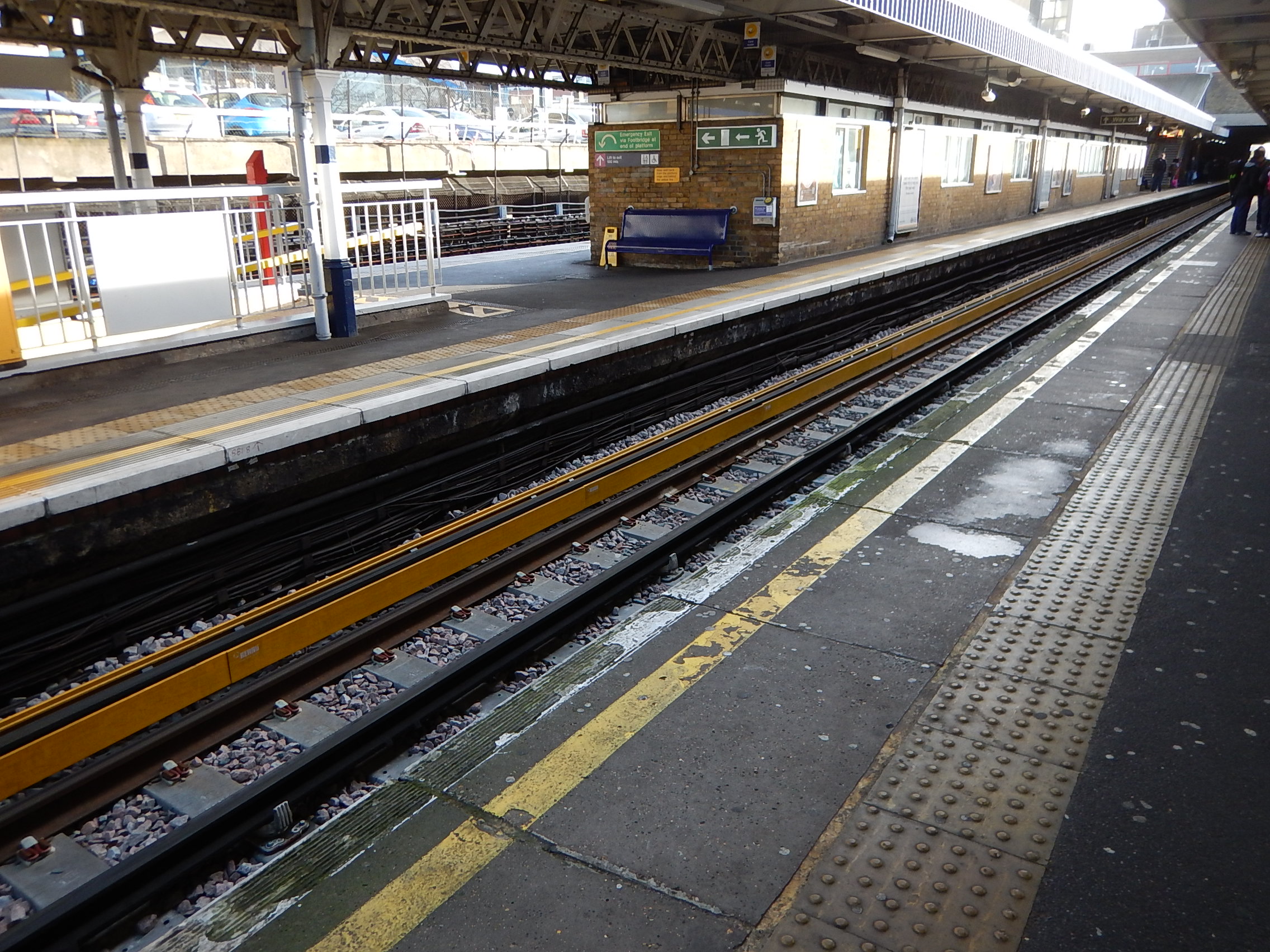
A Protected Conductor Rail At Barking Station
Note how the conductor rail is protected by a yellow wooden shield.
Why?
Is it to protect passengers or the work-force?
My Least Favourite Roundabout Gets Pedestrian Lights
When you go to Birmingham City to watch a match from Bordesley station, you take your life in your hands to cross the road. I reported the bad roundabout in A Pedestrian Crossing From Hell.
But look what’s happening!
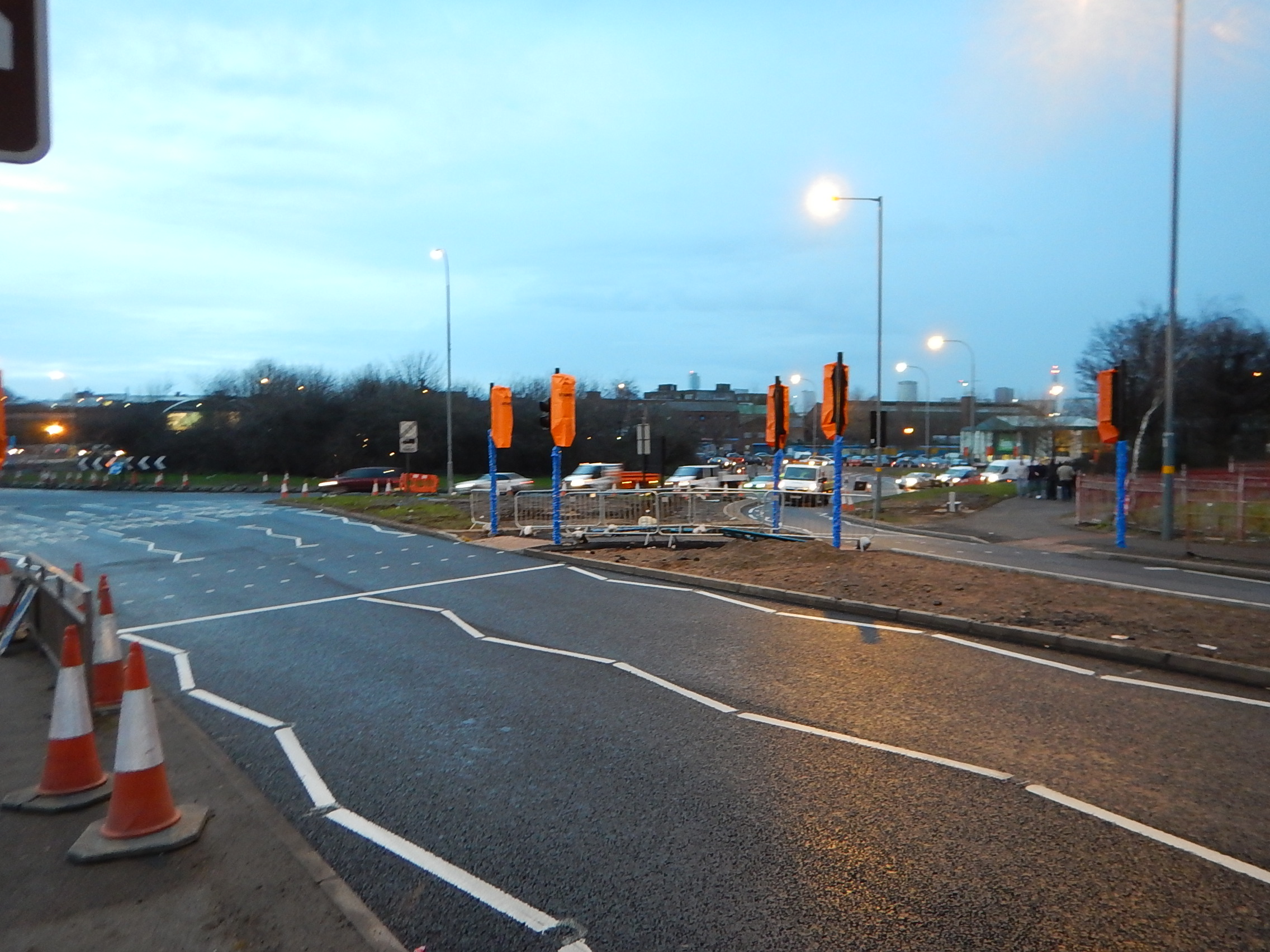
My Least Favourite Roundabout Gets Pedestrian Lights
Hopefully, the lights will be working before someone gets killed.
Crossrail Trains Will Have Auto-Reverse
I am a control engineer and I have worked in industrial automation on and off since I was sixteen, when I had a summer job in the electronics laboratory at Enfield Rolling Mills at Brimsdown.
One of the problems of running a railway to a high frequency, is that when you get to the terminus, the driver has to get off the train, walk to the other end and then step-up into the other cab. So a couple of minutes or so is wasted. On some lines, where drivers change over, there are delays and extra costs. It is one of the reasons, why train lines sometimes have reversing loops, like the Piccadilly Line at Heathrow and the Wirral Line underneath Liverpool.
It is also why, there has been talk of extending the Victoria Line in a large loop to a single platform at a new station under Herne Hill. I wouldn’t be surprised if when they extend the Northern Line Extension to Clapham Junction or the Bakerloo Line to Lewisham, that they use loops with single platform stations. The layout has the following advantages.
- The driver stays in his seat and drives the train normally.
- Stations are more affordable as they only have one platform.
- Passengers always go to the same platform and get the first train.
- It might be possible to dig the reversing loop with a single tunnel boring machine.
It is such a simple concept, I can’t understand why it isn’t used more.
Crossrail has a different problem in that all branches, except Heathrow, end on the surface and the Class 345 trains are two hundred metres long. So running a train every two minutes or so, means that drivers have a lot to do in the turn-round including a 200 metre walk.
The Class 345 trains are designed to incorporate auto-reverse. This extract from this article in Rail Engineer, which is entitled, Signalling Crossrail, explains the concept.
A new facility called ‘auto reverse’ is being provided at Westbourne Park (no station) for turning the 14 trains per hour in the reversing sidings. The driver selects ‘auto reverse’ on leaving Paddington station and walks back through the train, obviating the need for drivers to ‘step-up’. By the time the train gets back to Paddington (about a mile) the driver should be in the other cab ready to form the next eastbound departure.
The facility has the capability to turn round a full 30 tph service. There is just time for the driver to walk back through the train whilst in the reversing siding but doing so on departure at Paddington gives that extra time that will also help recover from perturbation.
Essentially, the driver does his walk whilst the train is travelling to the reversing siding. It must have other advantages.
- The driver can check the train as he walks.
- Cleaners can get on at the actual terminus and then get off again with the usual rubbish.
- Someone who goes to sleep, just gets an extra ride into the reversing siding and out again.
It’s a very simple piece of automation, which as the extract says, enables a full 30 tph service and makes recovery from delays easier.
The only problem, I can see is that the drivers’ unions could insist that a driver is in the cab at all times.
It would appear that the system will be used by Crossrail at Abbey Wood and Paddington.
I also suspect that the driver will have a rudimentary train controller to stop the train in an emergency.
 The Anonymous Widower