Is Cambridge University Being Pragmatic About The East West Rail Link?
I must admit, I was a bit surprised, when it was announced in this article in Global Rail News, that the East West Rail Link would go via Sandy between Bedford and Cambridge. This is said.
Network Rail has selected the Bedford-Sandy-Cambridge corridor as its preferred route for the Central Section of the East West Rail project.
The preferred route was chosen from 20 options and will now be developed further with a view to producing a ‘line on a map’ route in May.
They also show this map.
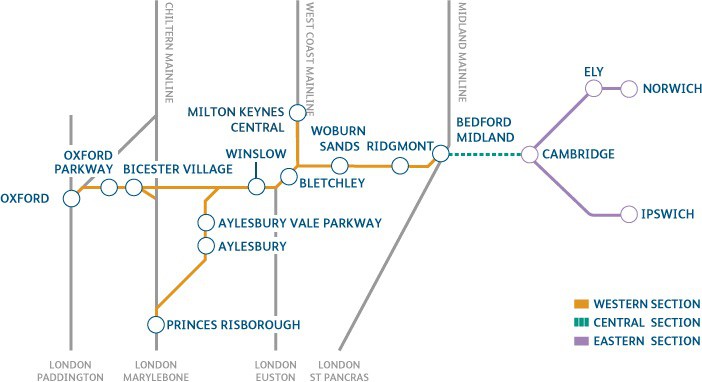
East West Rail Link
Various other articles suggest that the route will also be via Bourne Airfield and Addenbrooke’s Hospital.
I have traced the old route of the Varsity Line and very little seems to have been built on the route of the old line. Much too, seems to be on flat Cambridgeshire farmland and farmers are usually easily persuaded by alternative and profitable land uses.
The big problem is the old line is used as the track for the Mullard Radio Astronomy Observatory‘s Ryle Telescope. I’ve heard several times from astronomers in Cambridge was that it is very important and it was the major reason, why the railway line couldn’t be rebuilt on the old track-bed.
I do wonder, if Cambridge University values a direct link to Oxford highly and that as the Ryle Telescope is getting quite old, that it is better value to move it to allow the railway to be built.
A Quick Look At The Route
I’m starting at the Cambridge end and going East, as that is the area I know better.
The Varsity Line In Cambridge
This Google Map shows how the old Varsity Line connected to Cambridge station.
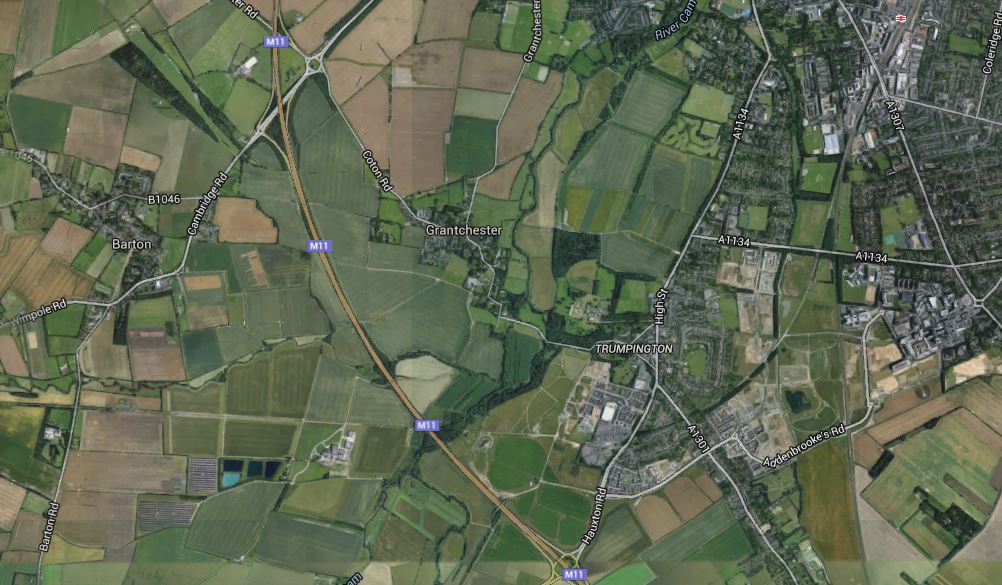
The Varsity Line In Cambridge
Note how the M11 curves to the West of Cambridge. You will notice, that there is a sandy coloured line going West from the motorway, which starts at the second blue market by the kite-shaped field, that identifies the road on the map. This is the disused trackbed of the Varsity Line and after passing under the motorway, through some housing in a cutting and under another road, it turns North to join the main Cambridge to London Rail Line.
Cambridge station is in the North-East corner of the map.
Cambridge Station
This Google Map shows Cambridge station and the rail lines going South from the station.
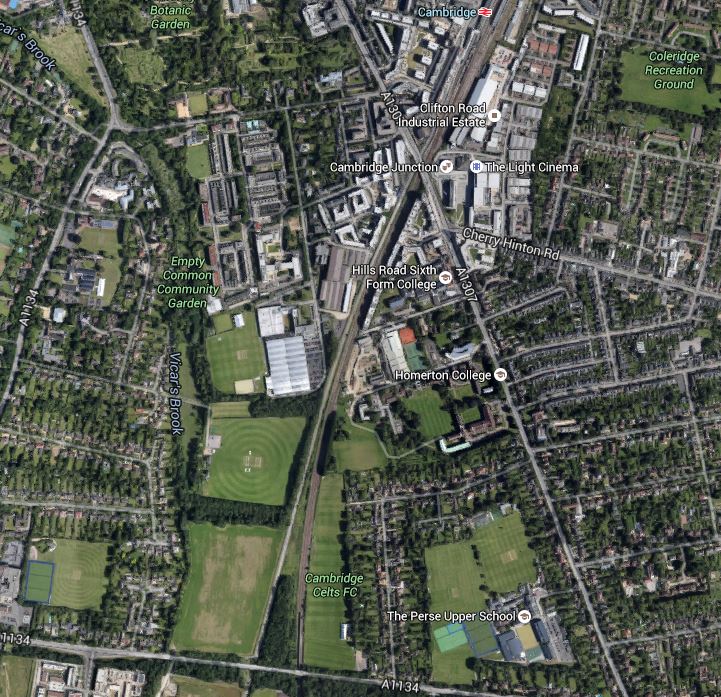
Note how after going under the bridge at the South End of Cambridge station, the main rail line goes off in a southerly direction pass the sports ground and then under the A1134.
Branching off from this rail line and going slightly to the West, there appears to be a second rail line. This is the trackbed of the Varsity Line, which has been converted into the Cambridge Guided Busway.
Cambridge station is a very busy station and has recently been upgraded with a long pair of island platforms and it is going to get even busier with Cambridge North station opening soon and Thameslink services due to call in a few years time.
The opening of Cambridge North station, may ease access to Cambridge station, as those living in or to the North of Cambridge, will be able to use the second station.
Addenbrooke’s Hospital
I have believed for many years, that there needs to be a Cambridge South station at Addenbrooke’s Hospital. This is the view of many in Cambridge and the surrounding areas.
This Google Map shows Addenbrooke’s Hospital and the land to the West.
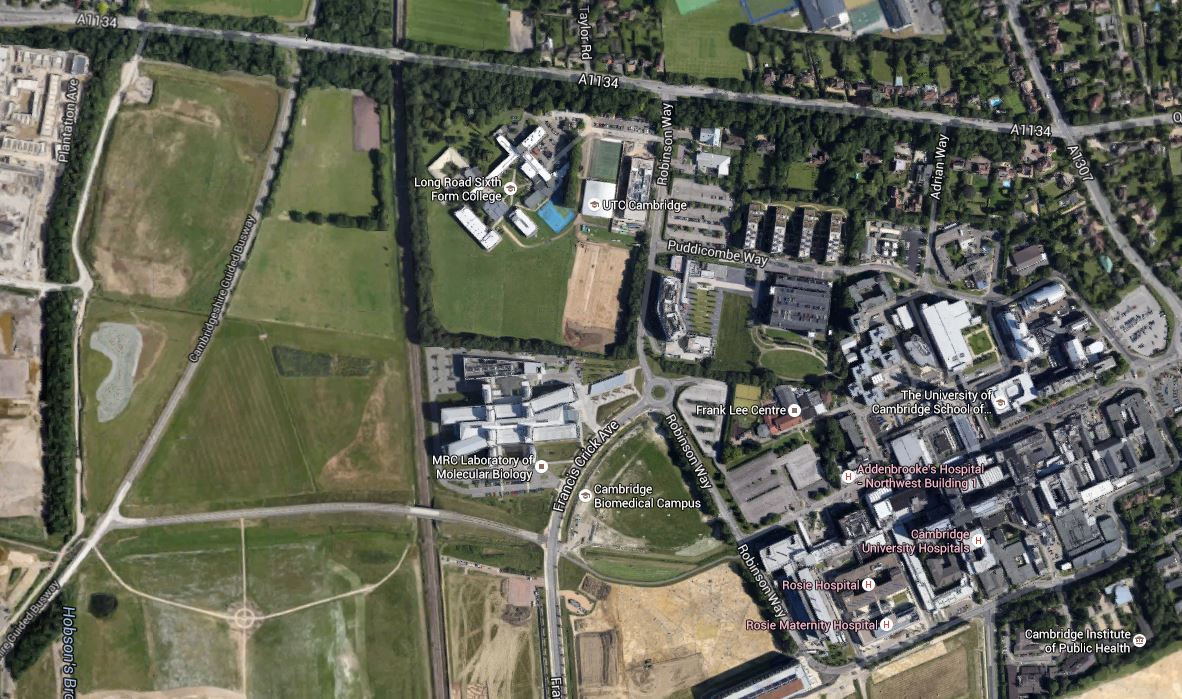
In addition to being a large general hospital, Addenbrooke’s is surrounded by major research institutions as the map shows.
It is generally sited to the East of the main railway line between Cambridge and London, which runs North-South down the map, with Cambridge station to the North and the junction where the Cambridge Line to Hitchin and the West Anglia Main Line divide just off the map to the South. The diagonal line to the South-West corner of the map, is the route of the Varsity Line, which has been partially reused for the Cambridge Guided Busway.
But there appears to be plenty of space to build a station for the hospital, which would be on both the main line and the East West Rail Link.
There is scope and space on this site to create a truly world-class station.
- It would serve the hospital.
- It would provide services on the West Anglia Main Line to London, Cambridge, Cambridge North, Ely, Kings Lynn and Stansted Airport.
- Thameslink would provide services to all parts of London and many places in the South like Gatwick Airport.
- The East West Rail Link would provide services to Bedford, Ipswich, Milton Keynes, Norwich, Oxford and Reading.
- Cross country services would call, but would passengers use the East West Rail Link and a change at Beford or Milton Keynes?
- Would the station be connected to Haverhill and Sudbury, by reopening the Stour Valley Railway? This would give Essex good access to the East West Rail Link.
I think that a truly bold station will take the pressure of the current Cambridge station, which is squeezed into the centre of the city.
The Mullard Observatory
The next section West of Cambridge and the M11 is currently the Mullard Observatory.
This Google Map shows the area.

Mullard Observatory
The telescopes seem to be clustered to the north of the track in a triangular grouping around the middle. They used to be strung out along the line. So perhaps, the astronomers don’t need it any more, as their research has moved in a different direction.
Bourne And Gamlingay
From the Observatory, the old line is more or less intact and it curves to the South of Bourne Golf Club and through the village of Gamlingay, which used to have a station. An industrial estate has been built on the trackbed.
A more northerly route could also be taken, if it was desired to have a station to serve Cambourne.
There is certainly a lot of open countryside and a couple of sizeable villages, that could benefit from a station.
Potton
The line then goes on to Potton, where this Google Map shows the village, which had a station.
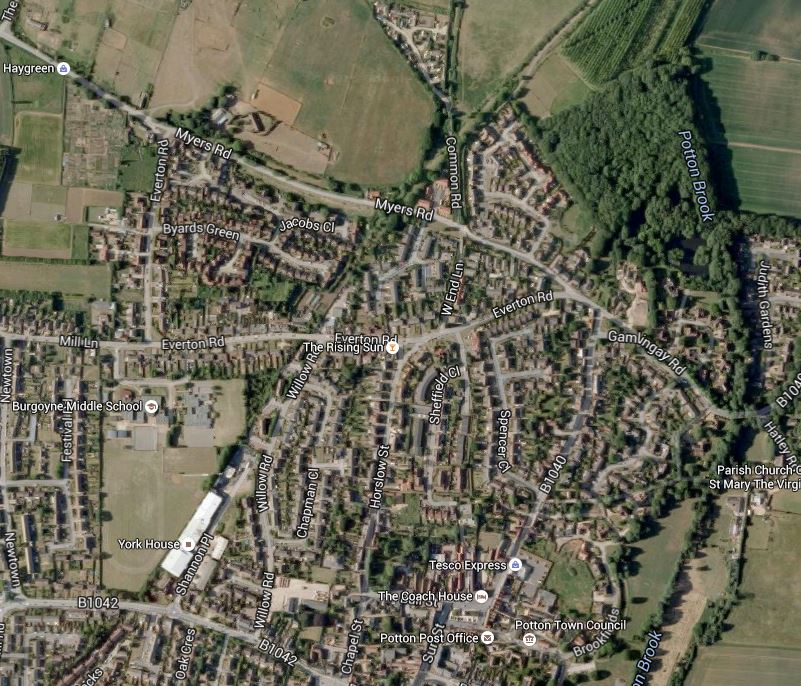
Potton
The green scar of the line can be seen, as it curves around the North-West of the village. I wonder if York House was the station.
Sandy
After Potton, the line goes through the countryside to Sandy, where the old Varsity Line came alongside the East Coast Main Line through Sandy station, before crossing the main line.
This Google Map shows the area.
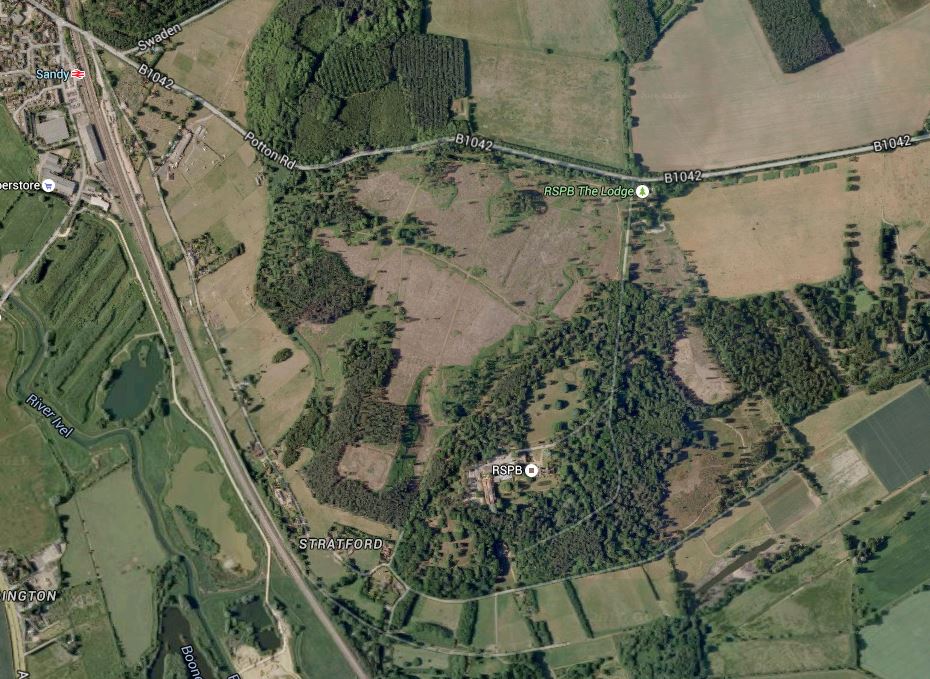
Sandy, The East Coast Main Line And The Varsity Line
Sandy station is towards the top of the map and you can just see how the old line curves around the headquarters of the RSPB.
One possibility in this area, is that there are proposals for a Sandy-Beeston by-pass on the A1, to remove a bottleneck. Surely, if the routes of the by-pass and the railway were considered together, planners might come up with a superior solution.
Bedford
The original route went via stations at Blunham, Willington and Bedford St. Johns and it still shows on the Google Map.
This Google Map shows the route as it joins the East West Rail Link at Bedford St. Johns station, which is on the Marston Vale Line, which is being incorporated into the East West Rail Link, to form the link between Bedford and Bletchley.
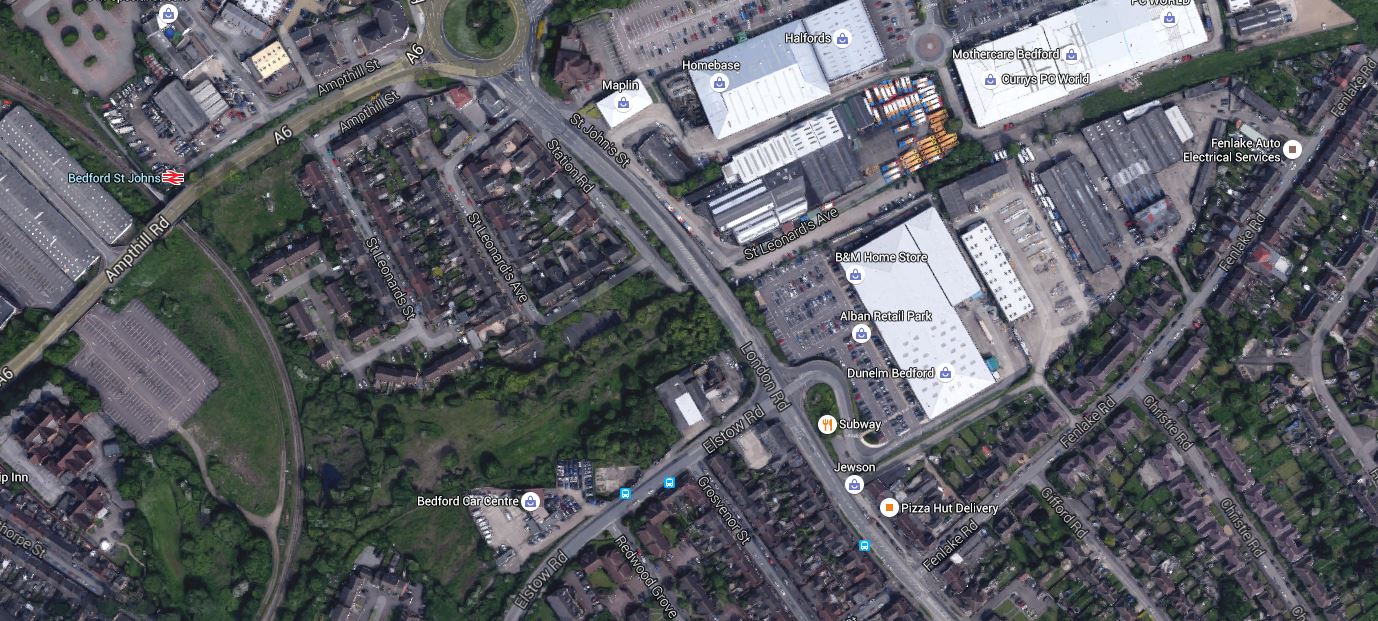
Bedford St Johns Station And The East West Rail Link
Note the green scar going between the bus garage (?) and the retail warehouses to the East. This was the old Varsity Line to Sandy.
If it were to be connected directly to the Marston Vale Line as it originally used to be, not all traffic would need to go to Bedford station.
Questions
I have some questions.
- How many of the old stations at Gamlingay, Potton, Blunham and Willington will be rebuilt?
- Will a more northerly alternative route from the Mullard Observatory to Sandy be better?
- Will there be a station at Sandy to link the East West Rail Link to the East Coast Main Line?
- Will a route be safeguarded to reopen the Stour Valley Line to Haverhill and Sudbury in the future?
Hopefully, these and other questions will be answered, when the definitive route is published.
Conclusions
After writing this, I’m surprised how much of the original line can be reinstated.
Certain factors have helped.
- The desire of Cambridge to have a station at Addenbrooke’s Hospital.
- A change in direction of the research at the Mullard Observatory or a pragmatic attitude on the part of the University.
- The need to build a bypass on the A1 at Sandy and Beeston.
- The ability to thread the railway through Bedford to link up with the Marston Vale Line.
I doubt there’ll be too much demolition of domestic properties or opposition to the route.
I also think, it will be pretty easy to build, as there don’t appear to be many bridges and viaducts.
The West-Facing Bay Platforms At Reading Station
Reading station has three west-facing bay platforms, numbered 1, 2 and 3.
They are used as follows.
- Platforms 1 and 2 for local services to Basingstoke, Newbury and Bedwyn.
- Platform 3 for Cross Country reversing trains.
Whilst I was at Reading yesterday, a Cross Country train reversed in a higher numbered platform.
These are some pictures of the bay platforms.
The View From Above
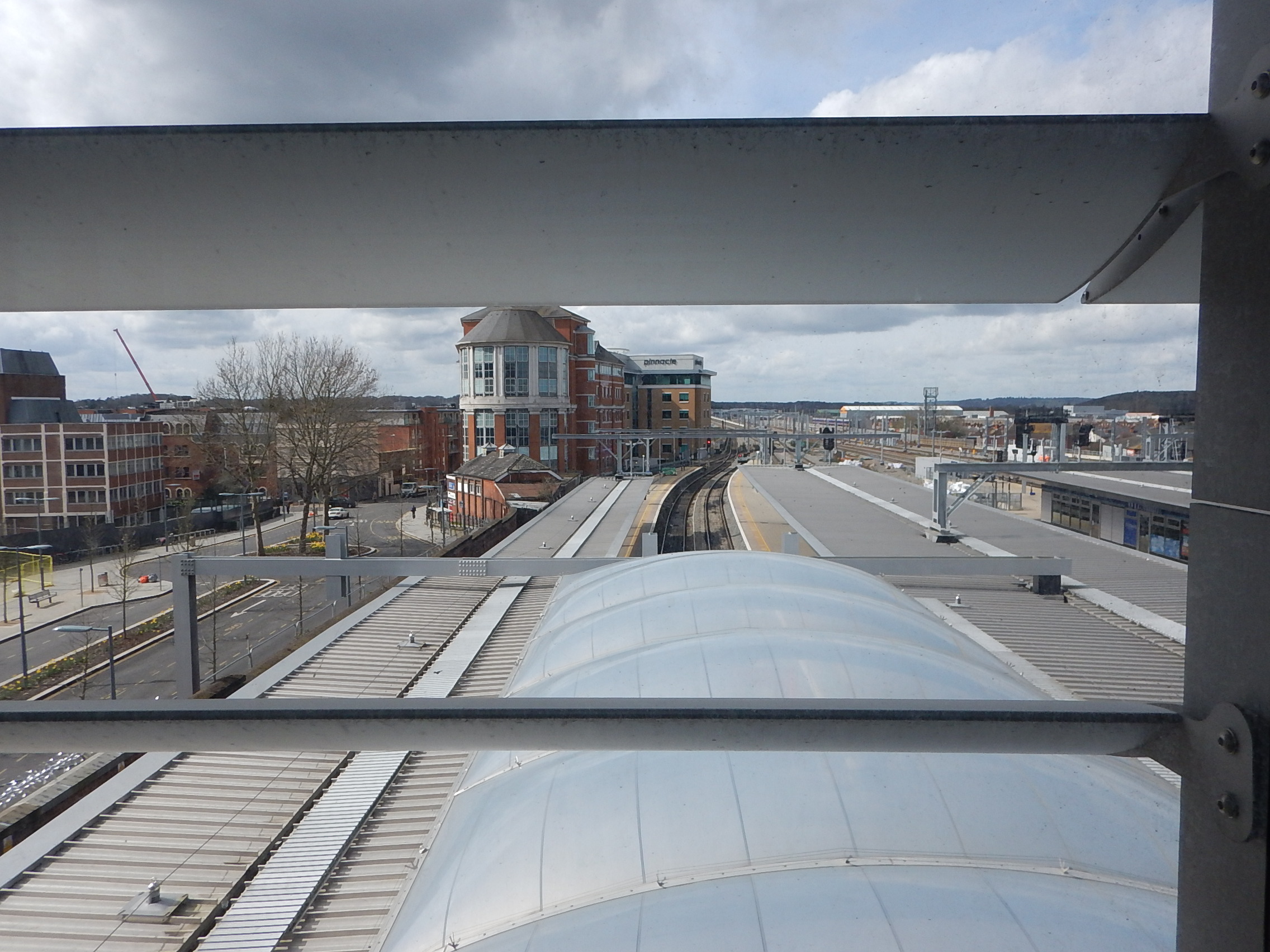
The Layout Of Bay Platforms 1, 2 and 3 At Reading Station
Note that the electrification gantries are in place across the three tracks.
The Platforms From Ground Level
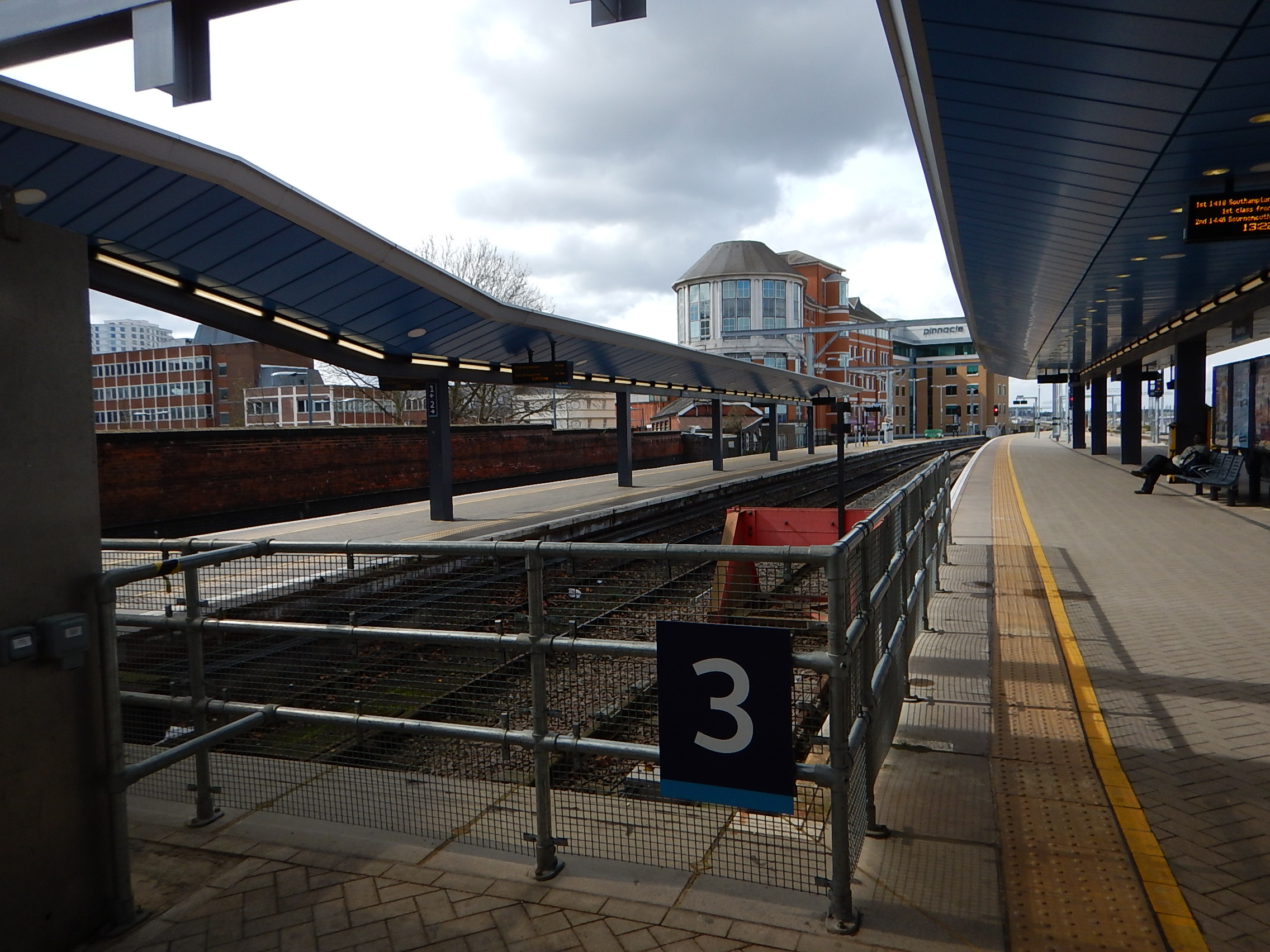
Platforms 1, 2 and 3 At Reading Station
Note how good the access is to the platforms. To the right of Platform 3, is platform 7, which is used for Down trains for the Berks and Hants route and for reversing Cross Country services.
So passengers arriving on a Cross Country train from say Manchester to Bournemouth or Newcastle to Southampton train on Platform 7 have these choices if they need to change trains.
- They could walk across from their train to a local service from platforms 1, 2 or 3.
- They could walk to the other end of the platform and get a local train from the east-facing platforms 4, 5 or 6.
- They could use lifts or escalators to cross the massive bridge to get a train on the Great Western Main Line to London or the West.
- They could also walk across to local services or in future, Crossrail to London.
And of course, they could walk out of the nearby station entrance and get a bus, taxi or their own transport.
Is there a station in the UK, where changing trains comes with so less hassle?
Ready For The Electrification
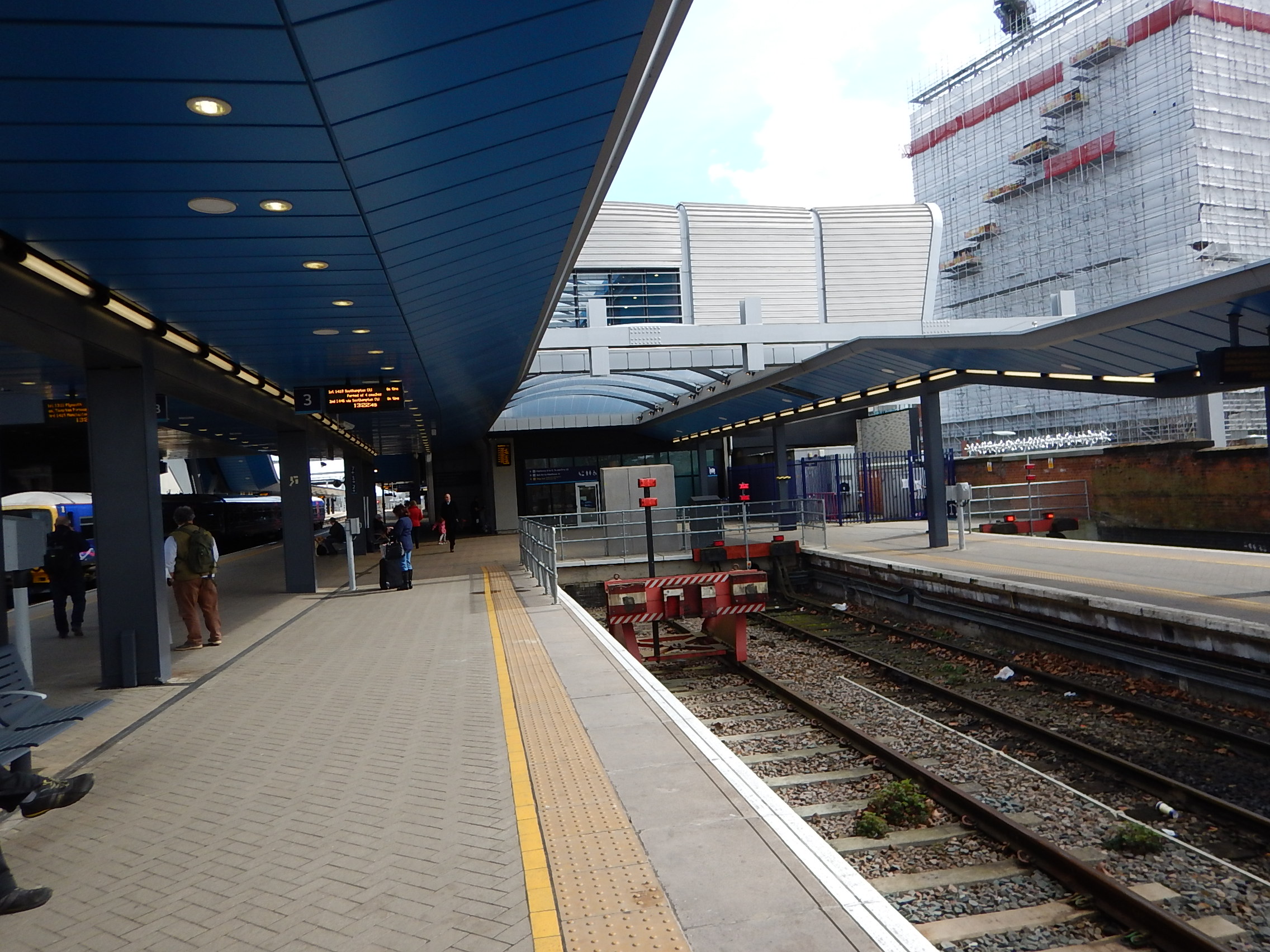
Looking Back At The Buffer End Of The Bay Platforms 1, 2 And 3 At Reading Station
Note that the gantries seem to have been designed into the station and are ready for the wires, with a nice secure steel plate to which to bolt them.
I can’t see the Heritage Taliban arguing about this design of catenery.
The Length Of The Platforms
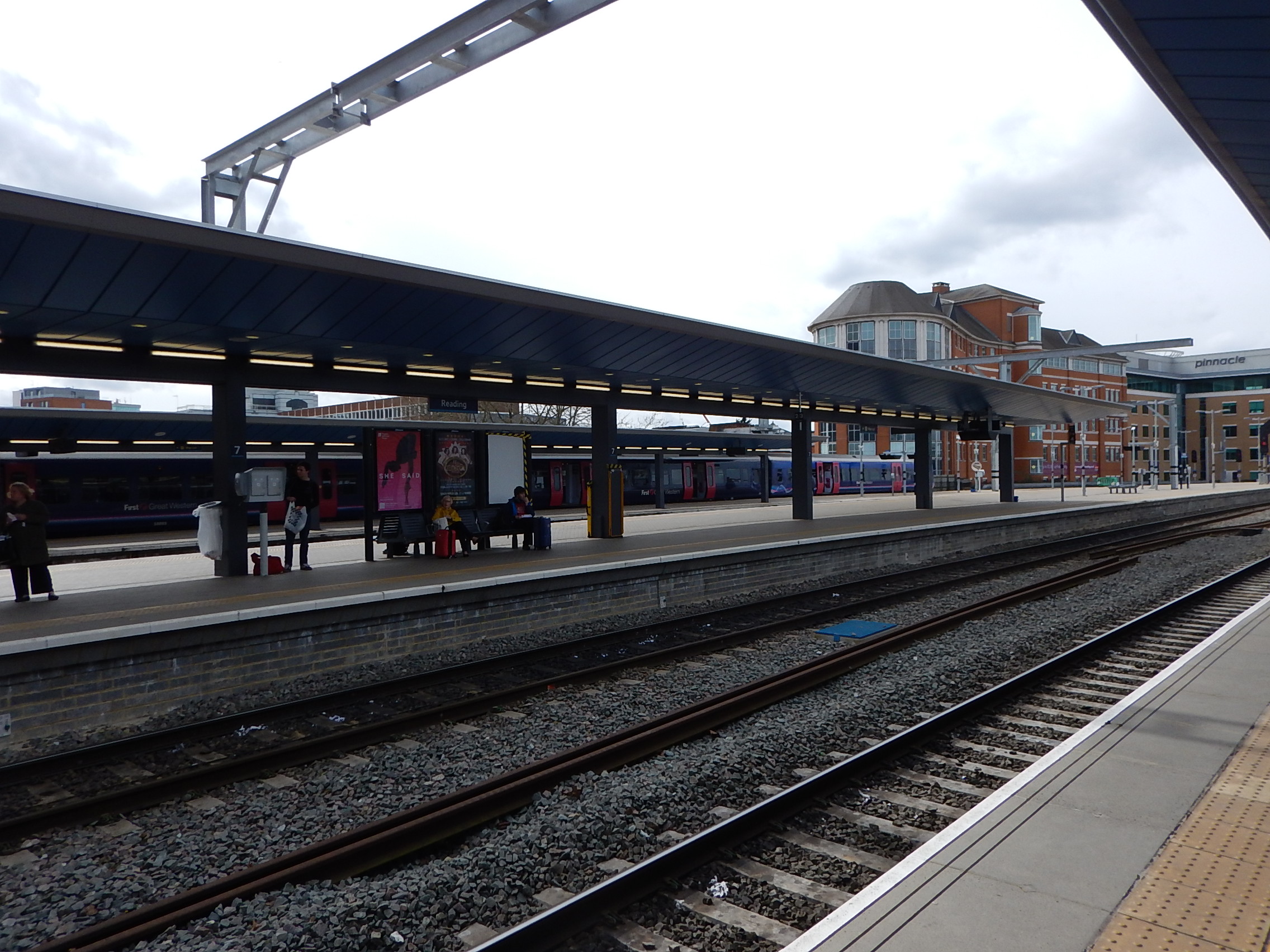
Platform Length Of The Bay Platforms 1, 2 And 3 At Reading Station
Note the three-car diesel multiple unit in the platform. I haven’t measured the platform, but I think they are long enough for a five car Class 800 train.
Future Use Of The Bay Platforms
At I said earlier the three platforms are used for local services to Basingstoke, Newbury and Bedwyn and reversing Cross Country trains., but there are two major purposes for which the bay platforms might be used.
The Test Track for Class 800 Trains
When the electric track between Didcot and Reading has been energised, it will be used as a test track for the new Class 800 trains. This article from the Witney Gazette gives more details.
The first three trains are due to be shipped to the UK early next year to begin an extensive test programme, which will include high-speed running on the line between Didcot and Reading once the installation of overhead electric power cables is completed later next year.
Roger Ford in the April 2016 Edition of Modern Railways said this.
Energisation for test running is now scheduled for September this year.
So will one of the bay platforms be used to reverse the train?
I’ve no idea! But the showman in me, would certainly do it, just for the publicity it would generate!
On a serious side, tests could also be performed on the train/platform/passenger interfaces.
Charging Platforms for IPEMUs
Great Western Railway would probably want to get their Class 387 trains into revenue service as soon as possible.
In the September 2015 edition of Modern Railways, there is an article entitled Class 387s Could Be Battery Powered. This is said.
Delivery as IPEMUs would allow EMUs to make use of as much wiring as is available (and batteries beyond) while electrification pushes ahead under the delayed scheme, and in the longer term would allow units to run on sections not yet authorised for electrification, such as Newbury to Bedwyn. The use of IPEMUs might also hasten the cascade of Class 16x units to the west of the franchise.
To run IPEMUs from Reading to Bedwyn or Basingstoke, would need them to be charged.
These bay platforms would be ideal for charging the trains and would mean that Basingstoke, Bedwyn and Newbury would get electric shuttles to Reading.
Conclusion
The team that designed Reading station, deserve a few gold stars.
Strings Of Class 171 Trains On Test
I took these photographs of four or possibly six of Southern Class 171 trains running in a long formation, just south of South Croydon station
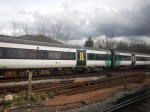
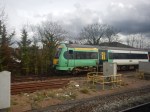
These were probably the units from Scotrail, which are going to be working Southern’s diesel-operated services.
- London Bridge to Uckfield on the Oxted Line
- Hastings to Ashford on the Marshlink Line.
To use these Class 171 trains was the original plan, but I do wonder if these routes will be run using Class 387 IPEMUs.
On the other hand, their may be more important uses for the Class 387 trains, as I wrote about in Are The TOCs Arguing Over The Class 387 Trains?
Or the IPEMUs might not be ready yet?
Who knows?
But whatever happens, someone is going to get a string of Class 171 trains in Southern livery.
The Uckfield Branch Is Almost Ready For Longer Trains
These are some of the pictures, that I took on the Uckfield Branch of the Oxted Line.









I can’t believe that they’ve spent all this money, just to run an eight, ten or twelve car train formed by formations of Class 171 trains.
Increased Services To Uckfield
On my trip, the line seemed exceedingly busy for one with just a single service an hour. When coming back North, I was passed by a Class 171 train going South, somewhere South of Ashurst station, which prompted me to take the picture of the passing loop.
So it would seem that my observations, ehich also included the sight of a long string of Class 171 trains at South Croydon, could point to Southern testing or training drivers on the line, to see if they can operate a more frequent service to Uckfield. After all, if the service were to be every half-hour to Uckfield, logic says, this would generate more business. They’ve certainly got the capacity at Uckfield with a new station with a long twelve-car platform and a large car park, which is now free to all users at weekends.
There is also an electrified two trains an hour service from East Grinstead to Victoria, which calls at Oxted station. There is probably scope, if you get the service pattern right, to get a two trains per hour service from both Oxted Line termini that serves London Bridge, Victoria and Farringdon for Crossrail, either direct or with one very easy change.
An Uckfield To Oxted Shuttle
Could Southern be planning to link a two train per hour service from Oxted to Uckfield, with the East Grinstead trains, to effectively give passengers on the Uckfield Branch, a two train per hour service to London? Perhaps, they will be using an Oxted to Uckfield shuttle to fill in the gaps between the London trains, as I suspect there aren’t the paths available for all Uckfield trains to go to a London terminus.
There would just be an easy interchange at Oxted or East Croydon.
Timings could be adjusted so that.
- A Southbound Victoria to East Grinstead service would allow cross platform interchange to the Oxted to Uckfield shuttle.
- The Northbound East Grinstead to Victoria service would call at Oxted a couple of minutes after the shuttle arrived.
As Southern know the traffic numbers and passenger behaviour, I’m sure they’ll get the timings right.
The Bay Platform Puzzle At Oxted Station
On Sundays, the service on the Uckfield Branch is just a diesel shuttle between Oxted and Uckfield, with a same platform interchange to the East Grinstead to Victoria service at Hurst Green station.
So why have Network Rail electrified the bay platform at Oxted Station?
There are three possible reasons.
- Network Rail are just future-proofing the Uckfield Branch, so that if it is electrified, they can still run the Sunday shuttle.
- The East Grinstead branch is very busy at times and an East Grinstead to Oxted shuttle could be used to give passengers access to the less busy Uckfield services.
- There is the possibility, that the Oxted branch will be served by an IPEMU in the future. This platform is being prepared, so it can charge the train’s on-board energy storage.
With respect to reason three, Oxted to Uckfield would also be a very good test track for IPEMUs and driver training, especially as there is only one passenger train an hour in both directions.
Hopefully, the reason will become clearer when the May 2016 timetable changes are announced. Although, nothing is known at present!
Trains To Work The Uckfield Branch
In my view there are only two trains that could work the line.
- Class 171 trains in an appropriate formation and as I wrote in Strings Of Class 171 Trains On Test, they certainly have acquired enough of these trains.
- Electrostar trains with an IPEMU capability.
I’d always assumed that Electrostar IPEMUs would be based on Class 387 trains, as Southern run them on Thameslink and Gatwick Express. Porterbrook have also ordered twenty from Bombardier.
But after writing Are The TOCs Arguing Over The Class 387 Trains?, and getting a tip-off (Thank you! John!) , I took a look at the closely related Class 377 trains and wrote Will Southern Fit On-board Energy Storage To Class 377 Trains?
The Class 377 train is an interesting possibility for conversion to an IPEMU for use by Southern.
- Bombardier has said that it could convert other recently-built Electrostars to IPEMUs
- The trains have regenerative braking, but it is not always used according to this article on railway-technical.com.
- Southern have over two hundred Class 377 trains in various sub-types with three, four and five car sets.
- Class 377 trains already work the East Grinstead Branch of the Oxted Line.
Because of the issue of the wasting of regenerative braking energy, there could be a financial case to convert some or all of Southern’s Class 377 trains to IPEMUs, whether they are used as such or not!
A mixture of the diesels and IPEMUs would also be an alternative.
I’ll now look in detail at the three alternatives. For this analysis, I’m assuming that Southern will want to improve the service with these objectives.
- At least two trains per hour from Uckfield to Oxted.
- Passengers can travel to and from both London Bridge and Victoria from both branches of the Oxted Line, with an easy change.
- Longer trains to Uckfield.
- Improved numbers of passengers using the trains between the Oxted Line and London.
I’m certain, that Southern could also have the long term objective of becoming an electric train only company, with all the positive operational and marketing benefits that that will give them.
They may also want to show that there is a demand for more capacity from the area to London, so that they can push for a reopening of the Wealden Line to Lewes.
Class 171 Trains To Uckfield
This solution works, as it has been running for years and given that Southern will soon have more trains, twelve car platforms, improved stations and car parking on the branch, it is an option they could implement for the May 2016 timetable change.
Electrostar IPEMUs To Uckfield
There are two ways this could be done.
Electrostar IPEMUs could work the whole line from London Bridge to Uckfield, charging their batteries on the London Bridge to Oxted section of the route. This would mean that the change to access Victoria would not always be a simple one at Oxted. It could involve a platform change at East Croydon.
I think a better alternative would be for Electrostar IPEMUs to work the current hourly London Bridge to Uckfield service and use another Electrostar IPEMU to work a shuttle between Oxted and Uckfield to fill in the half-hours and provide two trains per hour. It would charge the batteries in the bay platform at Oxted. This would not need another path between Oxted and London Bridge.
There are issues that must be settled before Electrostar IPEMUs can run to Uckfield.
- The technology has been shown to work on a four-car Electrostar, but will it work on a two or three train formation?
- How do you recover a failed Electrostar IPEMU from the Uckfield Branch? Southern wouldn’t want one incident to ruin everything!
- Will IPEMUs be created from Class 387 trains or Class 377 trains? The latter trains already work the East Grinstead Branch.
Because of the problems with the availability of Class 387 trains, I suspect Class 377 trains could be converted.
But whatever train is used, there would be tremendous kudos for the company that ran the first successful battery trains in the UK.
A Mixture Of Class 171 And Electrostar IPEMUs To Uckfield
One of the problems of running an intensive train service, is what do you do when a train fails? Sod’s Law also states, it will always fail at the worst time, in the most difficult place on the network.
In other words, an IPEMU will one day, fail with a flat battery or some other IPEMU fault at Uckfield station. Another train or a Thunderbird locomotive will have to go in and pull the train out.
To facilitate this, all trains run by Southern have the same Dellner couplings. Wikipedia says this about the couplings, when highlighting the difference between Class 170 and Class 171 trains.
The Class 171 Turbostar is a type of diesel multiple unit (DMU) train built by Bombardier Transportation (previously ADtranz) at its Litchurch Lane Works in Derby, England, which is identical to the Class 170, except for the replacement of the BSI (Bergische Stahl Industrie) coupler with a Dellner coupling. This provision was made to allow emergency joining with Class 377 DC third-rail electric units.
Remember that some of Southern’s Class 171 trains have been converted from Scotrail’s Class 170 trains.
As a Class 377 train is an Electrostar train, it would appear that a Class 171 train could easily rescue a stalled Electrostar IPEMU or vice-versa.
So could a conservative and safety-first approach, see an hourly London Bridge to Uckfield service worked by Class 171 trains, with a shuttle from Uckfield to Oxted run by a Electrostar IPEMU?
The East Grinstead Branch
The East Grinstead Branch of the Oxted Line has a two trains per hour service to Victoria worked by Class 377 trains.
Would there be any benefits on running Class 377 trains with an IPEMU capability on this line?
- If identical trains worked the Uckfield Branch, there must surely be operational advantages and benefits in the training of drivers and other staff.
- If the Oxted line is one of those with a poor power system, then there would be cost savings on electricity.
It would not appear that there are other connections, that can use the IPEMU capabilities of the trains, except fantasy ones, like running down the Bluebell Line to Sheffield Park.
Conclusion
I believe we could see an improved service to Uckfield with the May 2016 timetable change.
I think that the service will still be run initially by Class 171 diesel multiple units, but that when they are available, Electrostar IPEMUs could be tried out on the Uckfield Branch possibly as a shuttle between Oxted and Uckfield.
As passenger numbers increase and IPEMU reliability and acceptance is proven, I suspect that this line could be one of the first in the UK to be run solely by IPEMUs.
Electrification At Didcot Parkway – 29th March 2016
On the 25th of March, I wrote Electrifying Didcot Parkway, after I passed through Didcot Parkway station on the way to Oxford.
Yesterday, as I passed through on the way to Bath, I took this picture of the forest of masts at the station.

A Forest Of Masts At Didcot Parkway
It does appear to me, that more have gone up over Easter, but because WordPress doesn’t let me look at galleries, I can’t be sure.
I also took this picture looking towards Oxford.
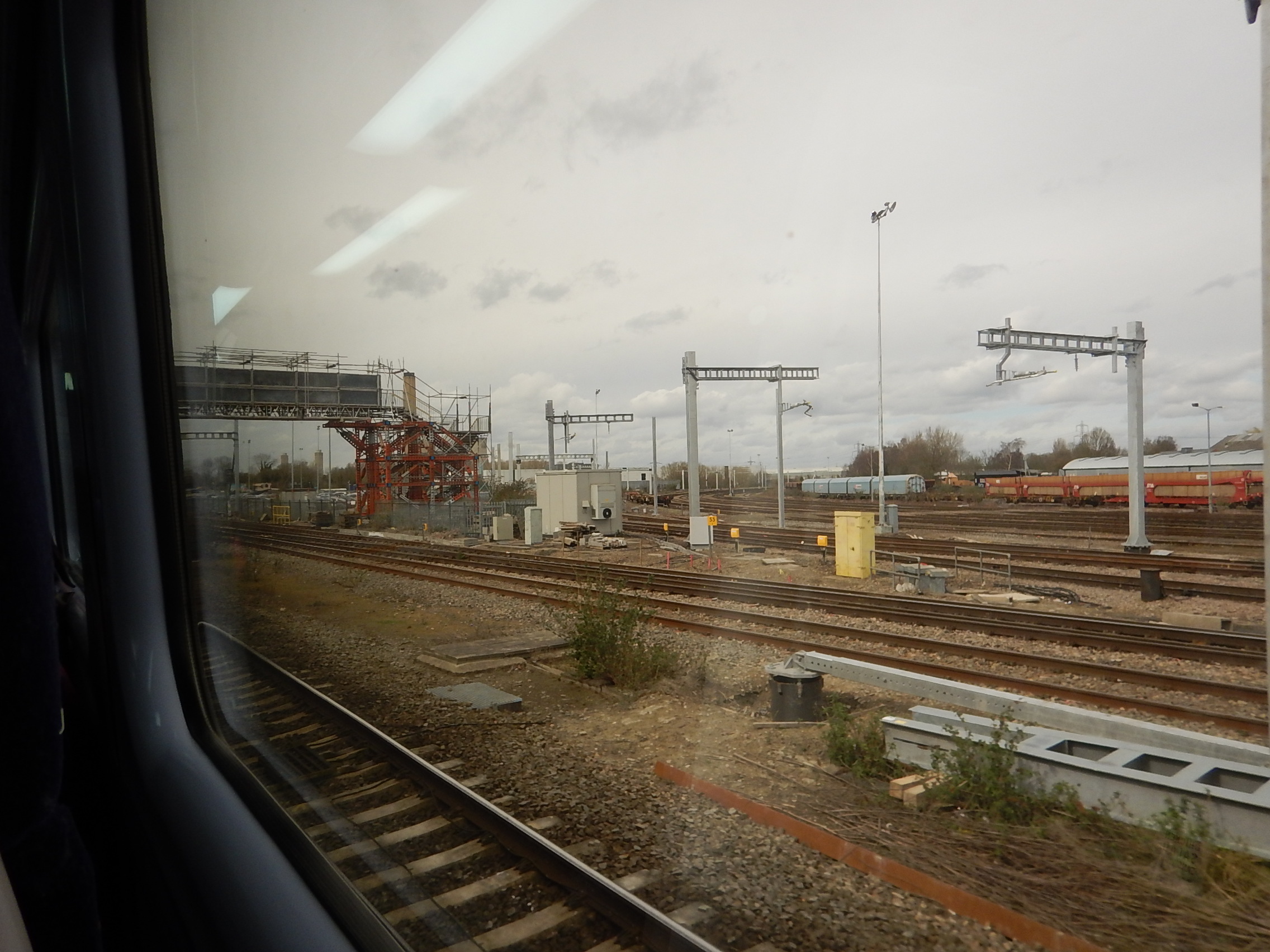
Masts Marching Towards Oxford
It would appear that the electrification is going to go at least as far as Didcot North Junction, where the West Curve from the direction of Swindon joins the Cherwell Valley Line. This schematic was clipped from Wikipedia.
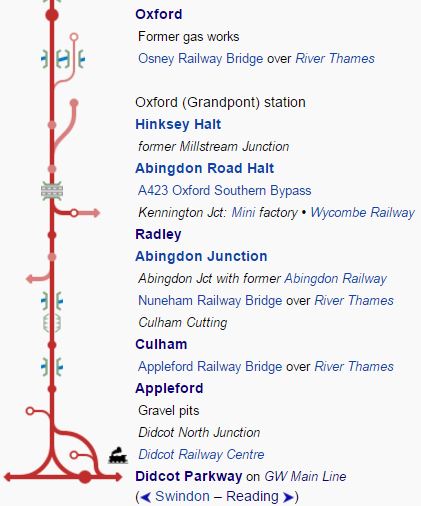
Didcot To Oxford On The Cherwell Valley Line
And this is a Google Map of the same area.
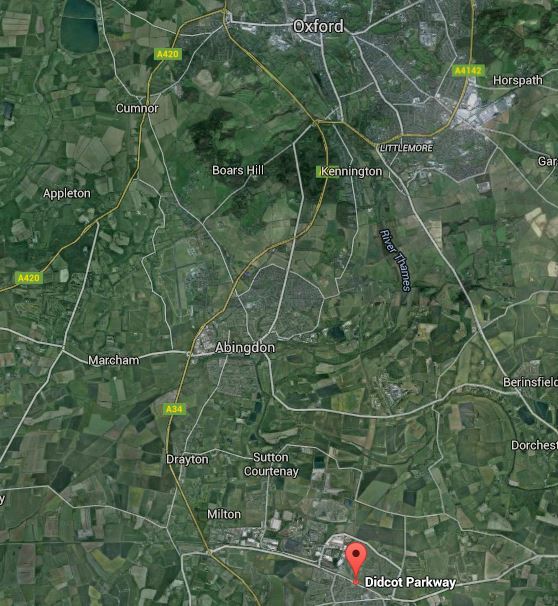
Didcot To Oxford
I estimate that from Didcot North Junction to Oxford station is about ten or twelve miles.
This would mean that if an IPEMU could reach Didcot Parkway station using overhead electrification, it could undoubtedly reach Oxford and then get back to Didcot.
Between Reading and Didcot, it would appear that the wires are going up.
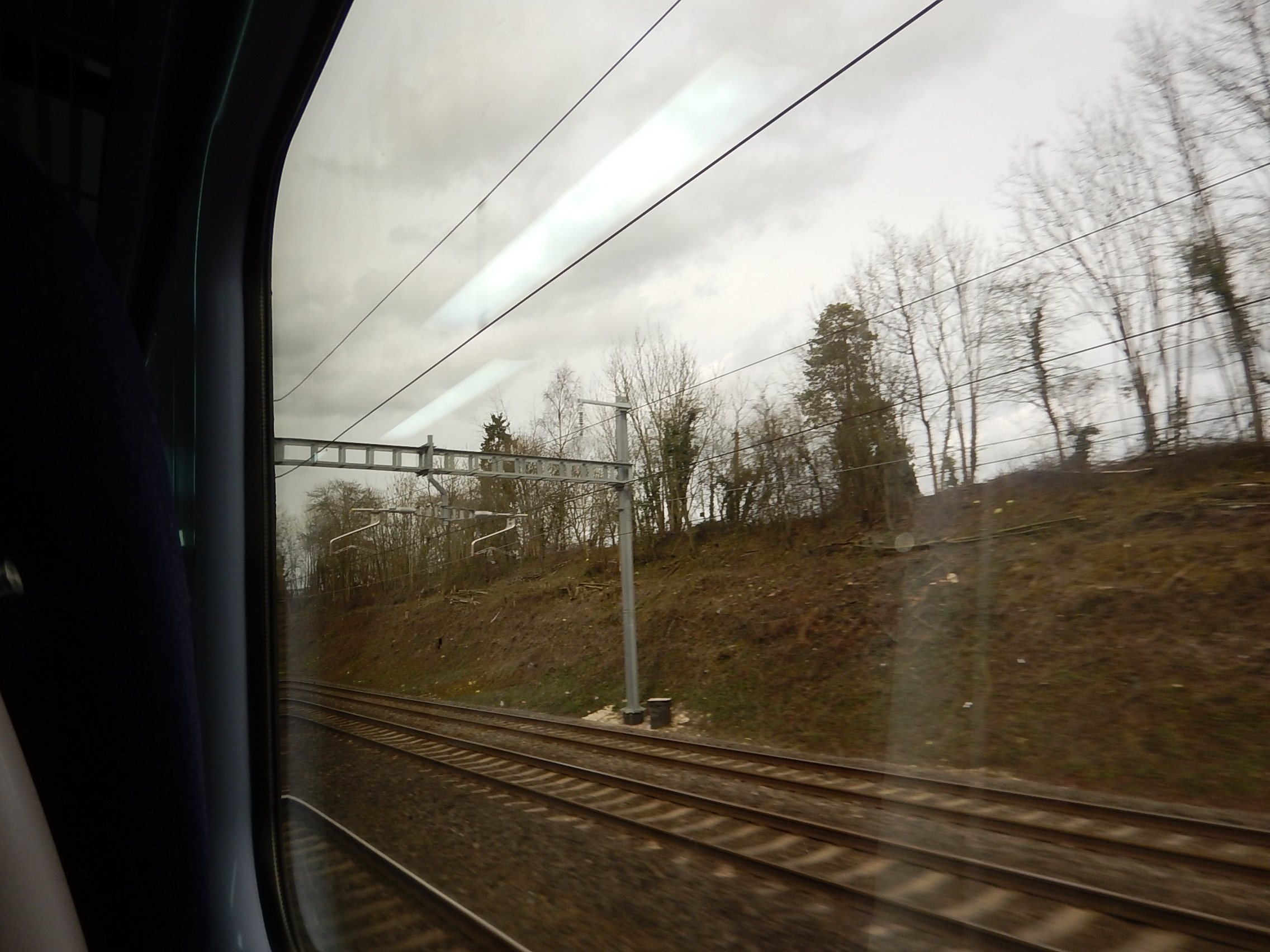
Wires Between Reading And Didcot
This picture shows the wires over the two slow or relief lines.
 The Anonymous Widower