Basingstoke To Exeter By Electric Train
In Where Are The Battery Trains? – Part 2, I suggested that short lengths of electrification could be used, so that trains with an IPEMU capability could work a longer route.
I suggested that the West of England Main Line might be handled this way between Basingstoke and Exeter.
The distances from London of the main stations in this part of the line are.
- Basingstoke – 47.76
- Salisbury – 83.48
- Yeovil Junction – 122.60
- Exeter St. Davids – 172.15
Each section would be capable of being run by an IPEMU with a more-or-less fully charged battery.
So if the train could be charged sufficiently at Salisbury, Yeovil Junction and Exeter St. Davids, the line could be worked by electric trains. Intriguingly, eight minutes is shown for the stop at Salisbury on the 07:10 train from Waterloo to Exeter.
It has been regularly said in the last few years, that there will be no new third-rail electrification, but as it looks like Network Rail have electrified some short sections and platforms like the bay platform at Oxted station. So I don’t think a few short lengths of third-rail electrification would be a problem.
To me, as an Electrical Engineer, creating a charging station is one of those problems, that should have an affordable and practical solution.
You have to remember that many of the stations on this line are simple ones with the two tracks, having a platform on either side. So to electrify a station to charge an IPEMUs batteries, there would just need to be two third-rail lines between the tracks at the station. Stations could probably be electrified very easily with little disruption.
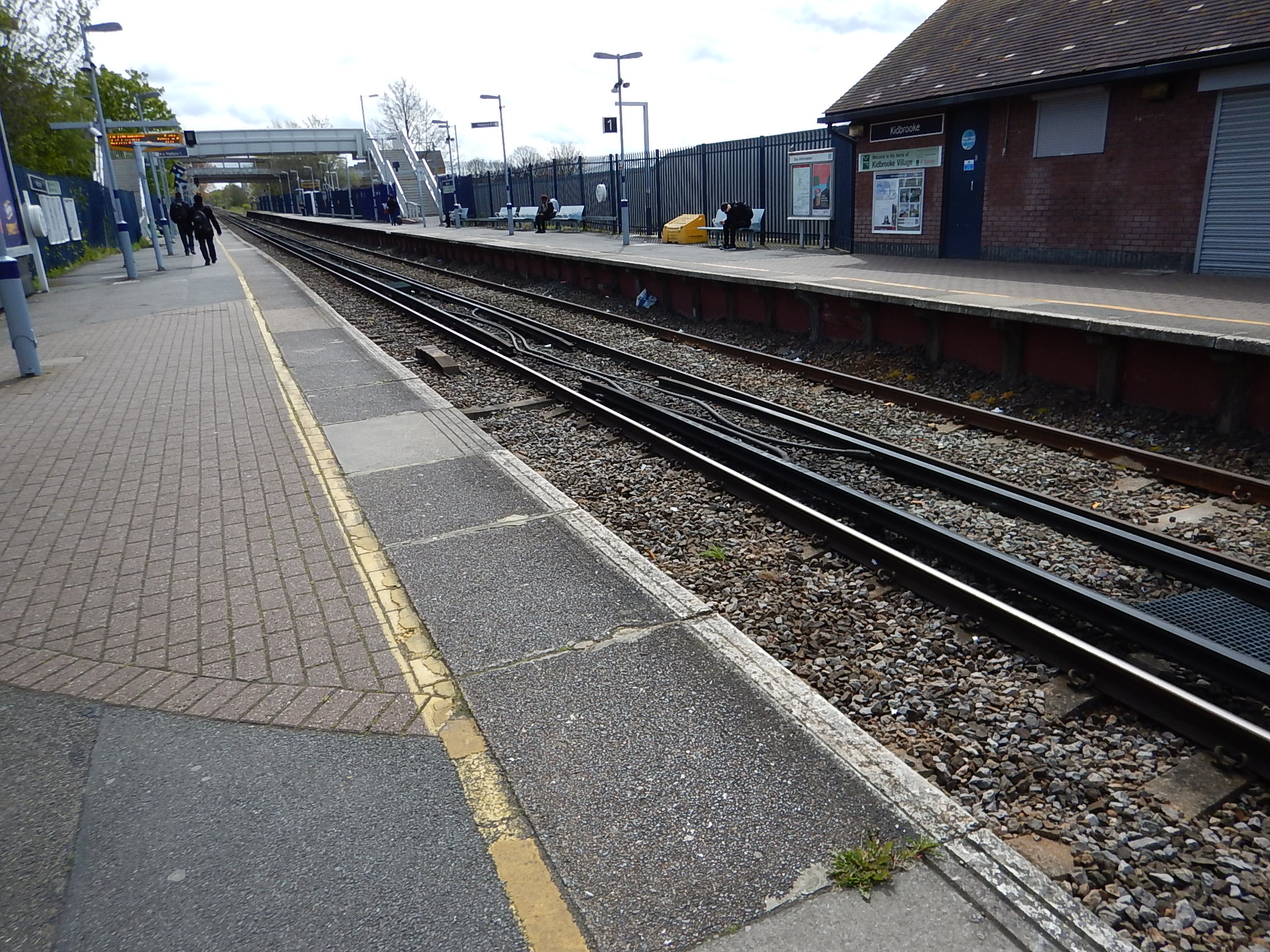
The picture shows some very typical third-rail electrification at Kidbrooke station. Note the gap in the third rail, which I assume is for staff or emergency services personnel to cross the track in emergencies. Third rail like this, could be put into all stopping stations.
The West of England Line has a 90 mph speed limit, so a train stopping at a station would charge the batteries with all the train’s kinetic energy as it stopped and the electrification would just be needed to top up the batteries and get the train moving again.
What would also help, is that later four-car Electrostars have eight contact shoes to give better electricity pick up when there are gaps in the third-rail, as you can see in the picture above. So the train would be able to draw electricity from the time the first shoe made contact to the time the last shoe lost contact.
The electrification would also be simple from the electrical point of view, as because the train would be handling the regenerative braking, all the rail would need to be able to do was supply sufficient 750 VDC, whilst the train required it.
If the West of England Line can be electrified, it has three further benefits.
- Salisbury is also on the Wessex Main Line, that I wrote about in Cardiff to Southampton By Electric Train. So if IPEMUs were to work the Cardiff to Southampton route, they could top-up at Salisbury.
- Yeovil Junction is on the Heart of Wessex Line and as the Weymouth end is electrified and the Bristol end will be in a few years, this line must be another that could be served by IPEMUs.
- If Exeter had the ability to fast-charge IPEMUs, then the various branch lines in the area could be given electric trains.
Just when new third-rail electrification has been declared a blind alley, has it found an important niche market?
If the only electrification in the area was third-rail, then there wouldn’t even be a need to build new trains, as a few of the extremely numerous 100 mph-capable Class 377 trains, built in the last few years, could be refurbished and given an IPEMU capability. These could also be converted to dual-voltage, so they could serve Bristol, when that area is electrified.
In my view the second and third routes are the more interesting, as these lines are sold to passengers as a picturesque journey through beautiful countryside. So imagine it with quiet new electric trains instead of noisy and smelly 1980s diesels.
I can’t believe that someone isn’t looking seriously at a plan like this to bring electric trains to Wessex.
West Of England To Weymouth
This is the headline on an article in the May 2016 Edition of Modern Railways about the May 15th timetable changes. This is said.
On summer Saturdays and bank holidays from 21 May to 3 September the 07:50 Waterloo to Salisbury service is to be extended to Weymouth via Yeovil Junction, with a corresponding return service leaving the resort at 16:56. On arrival at Weymouth the service will rerurn to Yeovil Junction before providing a shuttle service between Junction and Pen Mill stations and then returning to the resort in time to form the working back to London
This sounds like an innovative way to provide a service that used to run in the summer between 2008-2010 using Mark 2 coaches and diesel locomotives.
Incidentally, the train would be used in Yeovil to replace a bus service.
As this Yeovil Metro is not in the Oracle yet, I assume that South West Trains are still refining their ideas.
Cardiff To Southampton By Electric Train
When I was waiting on Bath Spa station to return to London, a Class 158 train from Cardiff stopped at the station, on its way to Brighton via Southampton.
The train travels the full length of the Wessex Main Line from Bristol Temple Meads to Southampton, using the soon-to-be-electrified South Wales Main Line and the electrified West Coastway Line to complete the full route.
I wondered how much of the route will be electrified, once Cardiff to Bristol is hopefully electrified in the next few years. The current date for wires to Cardiff is December 2018.
I would estimate the length of the non-electrified section between Southampton and Bath is about sixty to sixty-five miles.
So it would appear that, the line could be within range for a Class 387 train or a new Aventra, with an IPEMU capability.
Obviously, Great Western Railway could also run a five-car Class 800 train on the route, using the on-board diesels to bridge the gap.
One way or other by 2020, Cardiff to Southampton will be run by electric trains, with a much increased capacity.
The Engineers Have Been Busy
When I went to Bath about a month ago, I wrote Electrification At Didcot Parkway – 29th March 2016.
Today, as I went through the area on my way to Bristol, most of the masts appeared to have been erected, with about half the wires over the slow lines and even some going up over the fast lines.
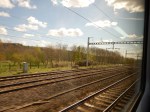
Past Didcot, there are now rows of piles on both sides of the railway, with some almost as far West as Chippenham.
There is still a lot to do, but I think it has been a good month for the engineers.
What A Lot Of Minis!
I photographed this train with the inevitable noisy Class 66 locomotive on the front at Didcot Parkway station.
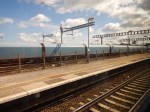
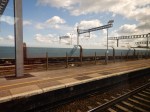
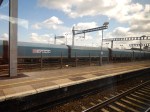

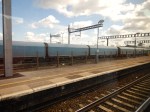
I assume it was taking Minis for export.
Hayes Shuttles To Start
This is the headline on an article in the May 2016 Edition of Modern Railways about the May 15th timetable changes. This is said.
Great Western Railway had planned a launch of electric services using Class 387/1 EMUs transferred from Govia Thameslink Railway with the start of the new timetable on 15 May. The operator was to use the ‘387s’ on a series of peak hour shuttles between Paddington and Hayes and Harlington, but delays to the introduction of Class 700s on Thameslink services mean the cascade of ‘387s ‘ has also been delayed.
I have searched the Oracle (National Rail’s Journey Planner) and can find just one extra train from Paddington, which is a new service at 07:15 going to Hayes and Harlington.
The Oracle also shows that the first two services of the day on the Greenford Branch only go as far as West Ealing after May the 15th.
How many people from the Greenford branch will be complaining about the loss of their early morning trains to Paddington?
The Modern Railways article also suggests, that as Bombardier have been making good progress on the building of the eight extra Class 387 trains, that these might be delivered in the summer, to enable GWR to run more services. As some of the Porterbrook trains have been promised to c2c before the end of the year, that means that GWR’s extra trains will be delivered before December 2016, as they are first in the queue.
The article says that a full service can’t be run until infrastructure works at the East of Hayes and Harlington station is completed.
I think we’ll see a gradual improvement of electric services between Paddington and Hates and Harlington over the rest of this year.
These questions will certainly be answered.
- When will the bay platform at West Ealing station for Greenford Branch Line trains be opened?
- Will the bay platform at West Ealing station be electrified?
- Will the eight extra Class 387 trains have an IPEMU-capability, as had been rumoured in Modern Railways?
- How much acrimony is being heaped on Siemens about the non-delivery of the Class 700 trains?
- Are the bosses of Great Western Railway and Govia Thameslink Railway still talking?
- Will Porterbrook add to their order of twenty extra Class 387 trains?
It does seem to me, that the big winners out of this mess, could well be Bombardier and Porterbrook.
I also feel that there will be some surprises between now and the end of the year.
I will keep most of my predictions to myself!
However, it would appear that if there was a plan to create an IPEMU variant of the Class 387 trains, the non-delivery of the Class 700 trains, has effectively made this plan difficult and late.
 The Anonymous Widower