A Visit To Heathrow Terminal 5
The Heathrow Pod I talked about in An Innovative Scheme For A Rail Link To Glasgow Airport, just had to be seen, so when I found myself at West Drayton station and a 350 bus arrived with Heathrow Terminal 5 on the front, I just had to take it.
I got on the top deck and took these pictures, followed by others when I arrived at the Terminal.
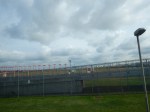



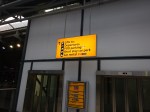
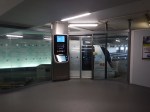
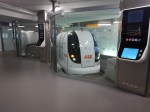



Many of these pictures of the system were taken from the Cafe Nero on the Departures Level of Terminal 5. This cafe is a good place to meet someone, as the views are good if you have to wait.
I got a good view of the Heathrow Pod, but because of all the steel-work in the way, getting a good photo was not easy.
A few points about the Heathrow Pod.
- It appears that both carriageways of the system are bi-directional.
- The developer’s web site is here.
- The official web site is here.
- The most interesting comment was from a member of British Airways ground staff, who said that her kids always want to use it.
- BAA has a stake in the company that makes them.
- What I saw is probably a restricted system designed to be as reliable as possible.
Here’s a video
Watching the video and reading about the pods, I suspect they are best described as self-driving cars, that run on a restricted network of roads, which are described as guideways.
But the most interesting snippet is this from the developer’s web site, about a proposal for a new PRT system at Heathrow.
In May 2013 Heathrow Airport Limited announced as part of its draft five year (2014-2019) master plan that it intended to use the PRT system to connect terminal 2 and terminal 3 to their respective business car parks. The proposal was not included in the final plan due to spending priority given to other capital projects and has been deferred.
There have been suggestions that they will extend the service throughout the airport and to nearby hotels using 400 pods.
I’ve read somewhere, that connecting to Kingston-on-Thames is in their sights.
This is perhaps not so fanciful as you think. Look at this Google Map of the Western end of Runway 09L at Heathrow Airport.
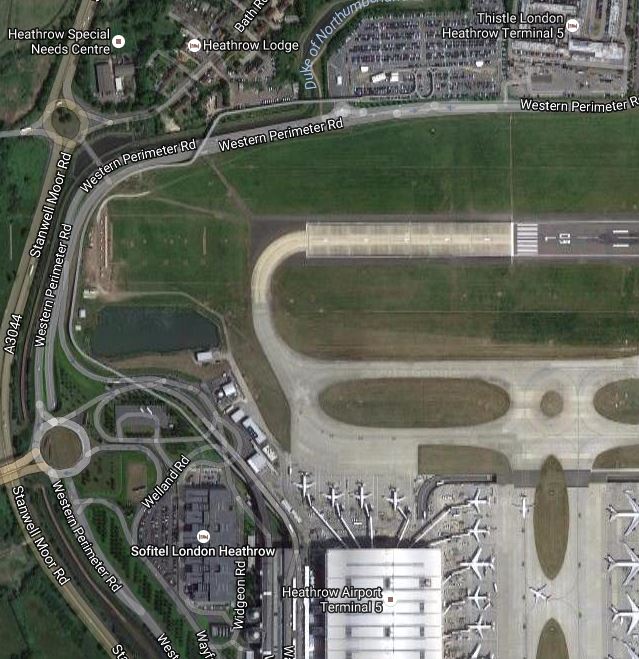
The Western End Of Runway 09L At Heathrow
If you can’t quite distinguish the Heathrow Pod, which is the narrow line snaking its way across in front of the runway, here’s an enlarged view of the Heathrow Pod on the Northern side of the runway.
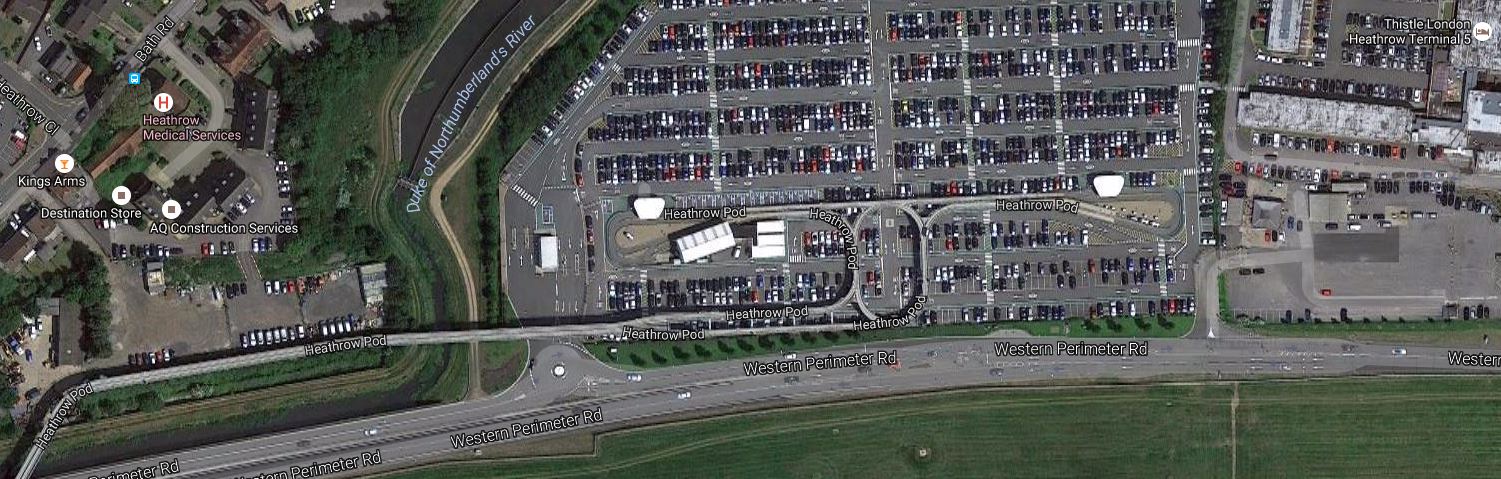
The Car Park End Of The Heathrow Pod
And here’s another on the Southern side.
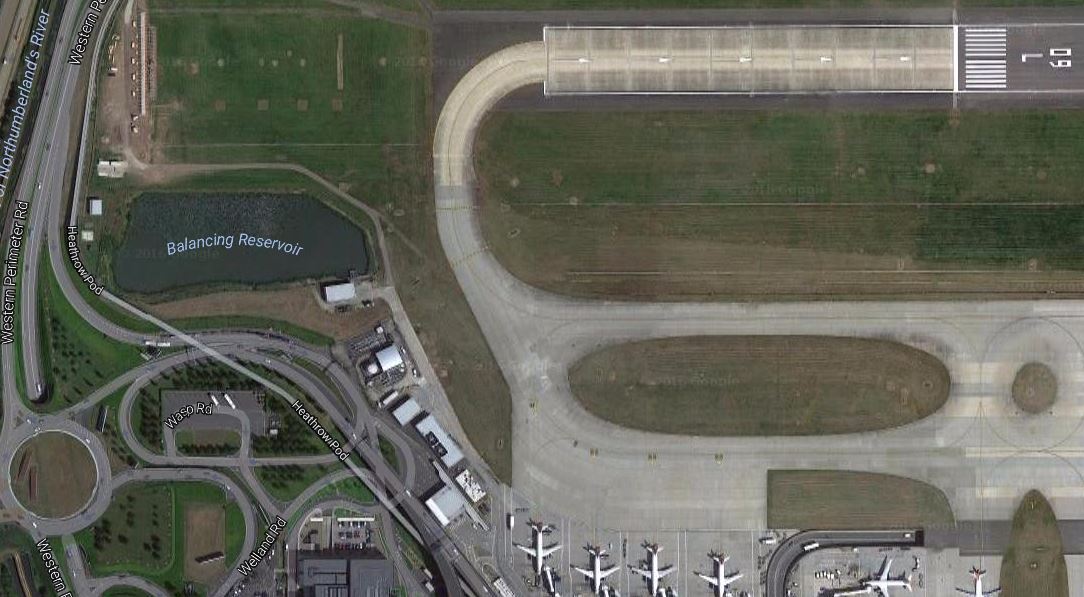
The Terminal 5 End Of The Heathrow Pod
The Expansion Of Heathrow Airport
Looking at these Google Maps and applying my devious mind to the Heathrow Pod, I am coming to some conclusions about the expansion of Heathrow Airport.
- Pollution caused by traffic is a big problem around Heathrow. By developing existing and future train services and an extensive Heathrow Pod system serving hotels and car parks, all cars, taxis and buses could be removed to a sensible distance from the Airport.
- In the Heathrow Hub proposal for expansion of the Airport, there is a 650 metre gap between the two portions of the Northern runway. This gap would allow the ILS for the Eastern runway to remain in place and so the approach to this runway would probably be identical to what it is now.
- I suspect the runway gap would also allow the Heathrow Pod to remain in its current place. But that would not be as tricky to move as the ILS. Or as safety-critical!
- The Heathrow Pod system has charisma in digger-buckets.
I feel that an expanded Heathrow Pod could just swing the government to back Heathrow Hub, rather than totally new runways at Heathrow or Gatwick.
The Ultimate Heathrow Pod System
After a drink, I’ve let my mind race ahead.
- Heathrow Pod stations could be placed in all hotels, car parks and train/bus stations ringing Heathrow, up to perhaps five or even ten miles away.
- Passengers who are flying out, could scan their boarding pass and passport in the pod.
- The pod would take you to the appropriate holding area for your flight.
- Or if you failed the checks to an appropriate area for further checking.
- Passengers who are flying in, would use the touch-screen terminal to tell their pod where to go.
- A quick scan of your parking ticket could take you to the station nearest to your car.
I’ve always been sceptical about driver-less cars, but these versions which are all identical running on a fixed and limited network of guide-ways could be another matter.
A Sad Footnote
The driving force behind the system would appear to be Martin Lowson.
Sadly he died in 2013.
ScotRail In Trouble
This article on Rail News is entitled Major improvement plan for struggling ScotRail. This is the first paragraph.
The ScotRail Alliance has unveiled a plan to improve performance, after managing director Phil Verster had described the task of upgrading the network while running trains day-to-day as like ‘performing open heart surgery while doing a marathon’.
After my troubles at the weekend on n Northern Rail with overcrowded trains around Blackburn, I wonder if a pattern is emerging.
Consider.
There is a lot of work going on in Scotland to electrify Glasgow to Edinburgh under the EGIP scheme.
There are delays to the electrification.
ScotRail will soon be receiving a a new fleet of Hitachi Class 385 trains.
There has been a union dispute.
Similar patterns are seen across the network, including in the following places.
- Manchester Area
- Northern England
- Southwards from London
- Thames Valley
- Valley Lines In Wales
I do wonder if the announcement of jam, milk and honey in a few years, prompts people to anticipate the new services and the passenger numbers grow, prior to the new services.
All this probably says, is that we should have a long term plan for the railways, which doesn’t get cut back, the next time government has a budget crisis.
Coal’s Economic Victims
Coal still claims victims, but these days, the biggest ones are economic and corporate.
In the United States, this article has been published on Bloomberg, with a title of Coal Slump Sends Mining Giant Peabody Energy Into Bankruptcy.
The article makes these points.
-
Biggest U.S. producer felled by cheap gas, China slowdown
-
Environmental costs could complicate miner’s reorganisation
How many US pensions have lost value because Peabody was considered a safe investment?
As fracked cheap gas is given as the reason for Peabody’s fall, don’t think that the US is swapping one dirty fuel for another!
- When you burn coal, which is virtually pure carbon with impurities, you create a lot of carbon dioxide and spread the impurities, which are sometimes quite noxious over a wide area.
- But natural gas is mainly methane, which is one carbon atom and four of hydrogen. So burning gas creates a lot of water, as well as less carbon.
I seem to remember that to get the same amount of heat energy from natural gas, as from a given quantity of coal, you only create about forty percent of the carbon dioxide.
This page on the US Energy Information Administration probably can lead you to the answer.
In the UK, there are two recent stories on Global Rail News.
Rail freight is going through a bit of a crisis in the UK, because we are burning much less coal in power stations.
As coal is moved to power stations by diesel-hauled trains in the UK, from open-cast sites and the ports, the burning of less coal in power stations is having a serious effect on rail freight companies.
At least, if any train drivers are made redundant, there are plenty of vacancies for drivers of passenger trains and I’ve yet to meet a freight train driver, you likes the dreaded Class 66 locomotives, with all their noise, vibration and smell, that generally pull coal trains.
But it’s not all bad news, as this article from the Railway Gazette, which is entitled Freightliner wagons use recycled coal hopper components, shows. This is said.
Freightliner has taken delivery of the first of 64 open wagons which are being built by Greenbrier Europe using bogies and brake components recovered from coal hoppers made redundant as a result of the decline in coal traffic.
Freightliner Heavy Haul needed a fleet of high capacity box wagons for a new contract to haul construction materials for Tarmac, and decided to investigate the possibility of using recycled parts from redundant Type HHA 102 tonne coal hoppers. With assistance from engineering consultancy SNC Lavalin, Freightliner and Greenbrier Europe identified that with some modifications the bogies and some of the braking equipment would be compatible with an existing design of Greenbrier box wagon.
To a small extent, the movement of aggregates around the country by rail instead of truck, is replacing the coal trains on the the railways.
Did Aberfan Change My Thinking About Coal?
I have just watched a moving piece by John Humphrys on the BBC, which describes Aberfan now and compares it to what he remembers from fifty years ago.
Growing up in London, I remember the awful smogs of the 1950s caused by domestic coal smoke, so that might have had an affect on my thinking.
But I have been strongly anti-coal for as long as I can remember and I suspect that the tragedy of Aberfan, finally sealed its fate in my mind.
Coal mining tragedies used to happen regularly at that time all over the world and I probably felt it was just too high a price to pay for energy.
I must be one of the few people, who felt, through all of this country’s coal mining troubles of the latter twentieth-century, that the mines should be shut immediately.
I always remember an article in the Guardian, that stated that miners should be retrained into teams, that went round and insulated our pathetic housing stock. If you’ve ever put insulation into a roof, in some cases, it’s very much akin to Victorian coal-mining in reverse.
After all the greenest form of energy, is not to have to generate it in the first place.
I have solar panels on the flat roof of my three-bedroomed house, and even in the Autumn, I only use 50 KwH of electricity and 20 units of gas every week.
 The Anonymous Widower