How To Return A Wallet Or Purse
There’s an interesting little tale in The Times today, which is entitled Penny Trail Leads To Missing Wallet.
A guy fpund a wallet. In it were some valuable cards, so the finder sent a penny to the account on the debit card he found.
He did this four times in total and used the reference field to say he’d got the wallet and give his mobile number.
The owner got in contact and all was sorted out.
What Will Happen To Great Western Railway’s Class 387 Trains?
I have been looking at the services that Great Western Railway run using Class 387 trains.
Current services run by these trains are.
London Paddington And Didcot Parkway
This service has the following characteristics.
- The frequency is two trains per hour (tph)
- Services are run by two trains working as a pair.
- Intermediate stops are Ealing Broadway, Southall, Hayes and Harlington, West Drayton, Iver, Langley, Slough, Maidenhead, Twyford, Reading, Tilehurst, Pangbourne, Goring and Streatley and Cholsey.
- Journey time is one hour twenty-three minutes, giving a three hour round trip.
I estimate that twelve trains are needed to run this service.
From the 15th December 2019, this service appears to run to a similar timetable.
London Paddington And Reading
This service has the following characteristics.
- The frequency is two tph.
- Services are run by two trains working as a pair.
- Intermediate stops are Ealing Broadway, Southall, Hayes and Harlington, West Drayton, Slough, Burnham, Maidenhead and Twyford
- Journey time is fifty-seven minutes, giving a two and a half hour round trip.
I estimate that ten trains are needed to run this service.
From the 15th December 2019, this service will be run by TfL Rail using Class 345 trains.
Reading And Newbury
This service has the following characteristics.
- The frequency is one tph.
- Services are run by two trains working as a pair.
- Intermediate stops are Reading West, Theale, Aldermaston, Midgham, Thatcham and Newbury Racecourse.
- Journey time is twenty-nine minutes, giving an hour round trip.
I estimate that two trains are needed to run this service.
From the 15th December 2019, this service appears to run to a similar timetable.
Current Trains Needed
Summarising the trains needed gives the following.
- London Paddington and Didcot Parkway – twelve trains
- London Paddington and Reading – ten trains
- Reading and Newbury – two trains.
This gives a total of twenty-four trains.
Trains Needed After 15th December 2019
Summarising the trains needed gives the following.
- London Paddington and Didcot Parkway – twelve trains
- London Paddington and Reading – no trains
- Reading and Newbury – two trains.
This gives a total of fourteen trains.
Heathrow Express
Heathrow Express will use twelve Class 387 trains in the near future.
Great Western Railway’s Future Need For Class 387 Trains
Summarising the trains needed gives the following.
- London Paddington and Didcot Parkway – twelve trains
- Reading and Newbury – two trains.
- Heathrow Express – twelve trains.
This gives a total of twenty-six trains.
Great Western Railway have a total of forty-five Class 387 trains. Wikipedia is a bit confusing on this point, but I’m fairly certain this is a correct figure.
This means that Great Western Railway have nineteen trains available for expansion of services.
Great Western Railway’s Class 769 Trains
Great Western Railway have also ordered nineteen dual-voltage bi-mode Class 769 trains.
These are for the following routes.
- Reading – Redhill or Gatwick Airport
- London Paddington – Reading and Oxford
As the spare number of Class 387 trains is the same as that of the bi-mode trains, was it originally intended, that these routes could be run by the Class 387 trains, after Network Rail had joined the electrification together.
But the extra electrification never happened.
So Great Western Railway ordered the bi-modes trains.
Great Western Railway’s Dilemma
The Class 769 trains appear to be running late, so Great Western Railway are running the Gatwick and Oxford services with diesel multiple units, that they’d like to send to the West Country.
Bombardier appear to have moved on with their battery technology, that was successfully trialled using a similar Class 379 train in 2015. I wrote about the possibility of battery Electrostars on the Uckfield Branch last month in Battery Electrostars And The Uckfield Branch.
I believe that both routes would be within range of a battery-electric Class 387 train.
Reading – Redhill or Gatwick Airport
The various sections of the route are as follows.
Reading and Wokingham – Electrified with 750 VDC third-rail.
Wokingham and Aldershot South Junction – Not electrified – 12 miles
Aldershot South Junction and Shalford Junction – Electrified with 750 VDC third-rail.
Shalford Junction and Reigate – Not electrified – 17 miles
Reigate and Redhill/Gatwick – Electrified with 750 VDC third-rail.
To my mind, this is a classic route for a battery-electric train, as it is mainly electrified and both gaps are less than twenty miles long.
Some or all of the Class 387 trains are dual-voltage.
London Paddington – Reading and Oxford
The distance between Didcot Parkway and Oxford is under twelve miles, so a return trip should be well within range of a battery-electric Class 387 train.
There are also plans at Oxford station to put a new bay platform on the London-bould side of the station. This could be fitted with a charging station to avoid any range anxiety.
A Gatwick And Oxford Service
Could the Oxford and Gatwick services be joined together to make a direct Oxford and Gatwick service via Reading?
- I estimate that the service would take around two hours.
- Assuming a fifteen minute turnround at both ends, a round trip would be four and a half hours.
Running a half-hourly service would need just nine trains.
Or eighteen, if they were to run as eight-car trains!
Could this explain the order for nineteen trains, as it’s always a good idea to have a spare?
Conclusion
Great Western Railway can dig themselves elegantly out of a hole of Network Rail’s making by converting the spare Class 387 trains to battery-electric trains.
I’m sure Bombardier have the design available and would be happy to oblige after they have finished conversion of the Heathrow Express units.
There might also be an argument for fitting all Class 387 trains with batteries.
- A more unified fleet.
- Train recovery in the event of electrification failure.
- Better safety in depots.
- Direct services between Paddington and Henley and Bourne End.
- Would it allow Class 387 trains to run between Paddington and Bedwyn?
- Reduced electricity consumption.
It’ll be a decision for the accountants.
One collateral benefit of a successful conversion program for the Great Western Railway, is that it would enable Great Northern’s twenty-eight trains and c2c’s six trains to be easily converted to battery-electric versions.
- Great Northern’s coulde be used by sister company; Southern on the Uckfield Branch and the Marshlink Line.
- c2c trains are soon to be replaced by new trains.
I’m sure that quality four-car battery-electric trains won’t wait long for an operator.
A Stray TransPennine Express Class 802 Train In London
I took these pictures of a TransPennine Express Class 802 train running around London.
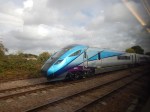
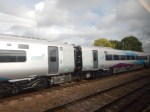
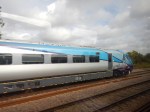
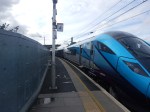

In the first three pictures, it was parked in the sidings to the East of Southall station.
The rest were taken at Willesden Junction station.
Looking at Real Time Trains it appeared to be going between the Hitachi depots at North Pole and Doncaster.
Is This The Longest Bus Stop Repair in London’s History?
This picture shows the bus stop outside Dalston Junction station.
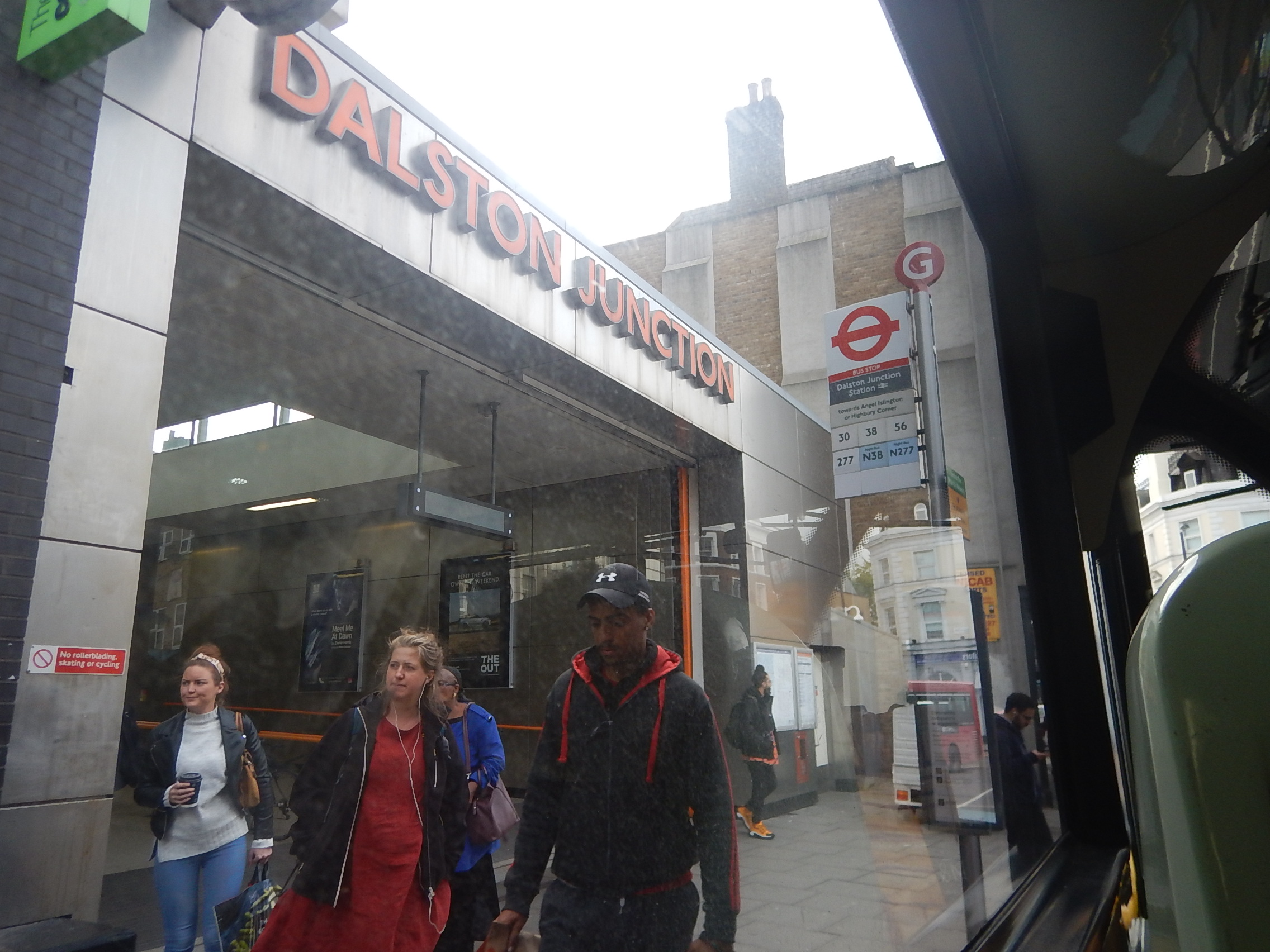
I use this bus stop regularly and since about 2012, the top bit above the information has been missing.
But not any more!
Crossrail’s Paddington Service Plans Revealed
The title of this post is the same as that of this article on Rail Magazine.
This is the first paragraph.
Trains from London Paddington Crossrail station to Shenfield will begin six months after trains start serving the low-level station from other destinations.
In Crossrail Ltd Outlines Plan To Complete The Elizabeth Line,, which I wrote in April 2019, I quoted these points from a statement on the Crossrail web site.
- Crossrail Ltd has identified a six-month delivery window with a midpoint at the end of 2020.
- Bond Street station will open later.
- Service will be initially twelve trains per hour (tph) between Paddington and Abbey Wood stations.
- Services between Paddington and Reading will commence in December 2019 with a frequency of 4 tph in the peak.
None of these promises from six months ago appear to have been changed.
So my comment at the time still stands.
Twelve trains per hour (tph) gives a capacity of 18,000 passengers per hour, which compares with the 36 tph and 31,500 passengers per hour of the Victoria Line.
Practically, this means that a twelve tph Crossrail could be carrying sixty percent of the number of passengers of the Victoria Line. It’s better than a kick in the teeth!
But then Dear Old Vicky is the Platinum Standard with lots of encrusted diamonds!
There is also other information in the Rail Magazine article.
- Paddington to Shenfield services will start six months after the start of Paddington to Abbey Wood services.
- Services will initially use the two-platform Crossrail station under Paddington as a terminus.
- Through services are expected to start a year later.
It looks like Crossraill should be fully open by the May 2022 timetable change.
This map from carto.metro.free.fr shows the layout of the lines at Paddington station.

Note that if you go pass the Crossrail tunnel portal on a train, there are generally several of Crossrail’s Class 345 trains to be seen, lined up in front of Westbourne Park bus garage.
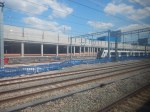
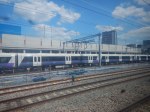
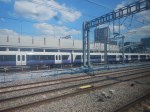

These pictures were taken in July 2019.
 The Anonymous Widower