Read This!
This article is a must read!
Are The Banks Serious?
When I log in to my bank, I get an advert saying I can get a wonderful rate of two percent, if I lock money away with them for two years.
At present I have a sum of money invested in Zopa and my current return to date this year is just around five percent. Admittedly, I pay tax on that so it’s effectively a rate of three percent. With Zopa’s Safeguarding promises, that money is guaranteed.
So I’m getting an effective rate that is half as good again, as I would with the best banks.
But the big advantage of Zopa has shown itself this month.
I have the last Tax bill to pay concerning the sale of my house in Suffolk and also the bill for the handrails for my staircase, which as they were custom-made weren’t cheap. Couple that with other expenses and I have a lot of bills to pay at the end of this month.
But due to the churn in Zopa, every month, I get access to about six percent of the money I have deposited in the system, as borrowers repay capital, pay interest and end their loans early. So instead of reinvesting this money as I do normally, I have withdrawn most of the money to my Current Account, so I can pay my bills.
I have a feeling that I have actually withdrawn a couple of thousand too much. But no matter, when all the bills are paid it’ll go back into Zopa. All I’ve lost is three percent gross on £2,000 for a month or a fiver.
So why do people put so much faith in the Banks, as they rip us off?
My Current Account at Nationwide is mainly just a means to transfer money to and from other accounts.
What other benefits do I get?
1. At the Angel, there is an inside ATM, that I use when it’s pouring with rain. There are also seats, so if I’m drawing out a larger amount of cash, I can sit down and put everything away properly.
2. I have a Credit Card, which is recommended by many, that if I use abroad, charges me nothing extra for the currency conversion.
3. I have an on-line bank account, that to access from anywhere in the world, only needs to have information stored in the brain, I was born with.
4. I get a basic travel insurance, which covers me for everything but medical expenses. So if easyJet or whoever, were to lose my baggage on the way to wherever I’m covered.
On the other hand, I get the following annoyances.
1. The dreaded Verified by Visa, when I use the debit or credit card on-line.
2. No contactless service on the Credit Card, which means I have to carry another credit card that does, in case I lose my Freedom Pass.
Nationwide should be pleased that I’m not thinking of leaving yet!
Using Zopa To Manage Cash Flow
Over the next couple of months, I have some moderate-sized bills to pay, like my Tax Bill and also some works to my house including the handrail. My pension will cover most of them, but I’m still a few grand short until the end of July, which is the last day, I can pay the Tax.
Normally, most people would liquidate an investment to make up the shortfall. And there’s always some extra charge from a middle-man, who presses the buttons, but does nothing.
But I have a sum of money invested in Zopa, which because of the nature of the site, generates a guaranteed amount of money each month, from repayments and interest from loans. Normally, these repayments peak around the first few days of the month, so until the end of July, I shall have two peaks, with a third due around the third or four of August.
Normally, I reinvest the repayments back in Zopa, but all money I receive until the end of July will be quietly moved out to my current account, so that I can pay my bills.
And then on the 31st of July, any surplus will be returned to Zopa.
The various transfers to and from Zopa will cost me a big fat zero.
Powered By Footsteps
These lights at Canary Wharf were on BBC yesterday morning.




The company is looking for funding on Crowdcube.
I think that this sort of technology could have its uses. But possibly more when it is integrated into a common unit!
London and other cities have thousands of entry gates for the rail systems. Think how you use these!
You walk up and as you go through the barrier you either enter your ticket in a slot and pick it up again or touch your contactless card on a reader. You may not come to a full stop, but you will check your walk and this will result in you feet pressing a bit harder on the space between the sides of the gate. Thus a pressure pad in every gate would generate a bit of electricity for the station.
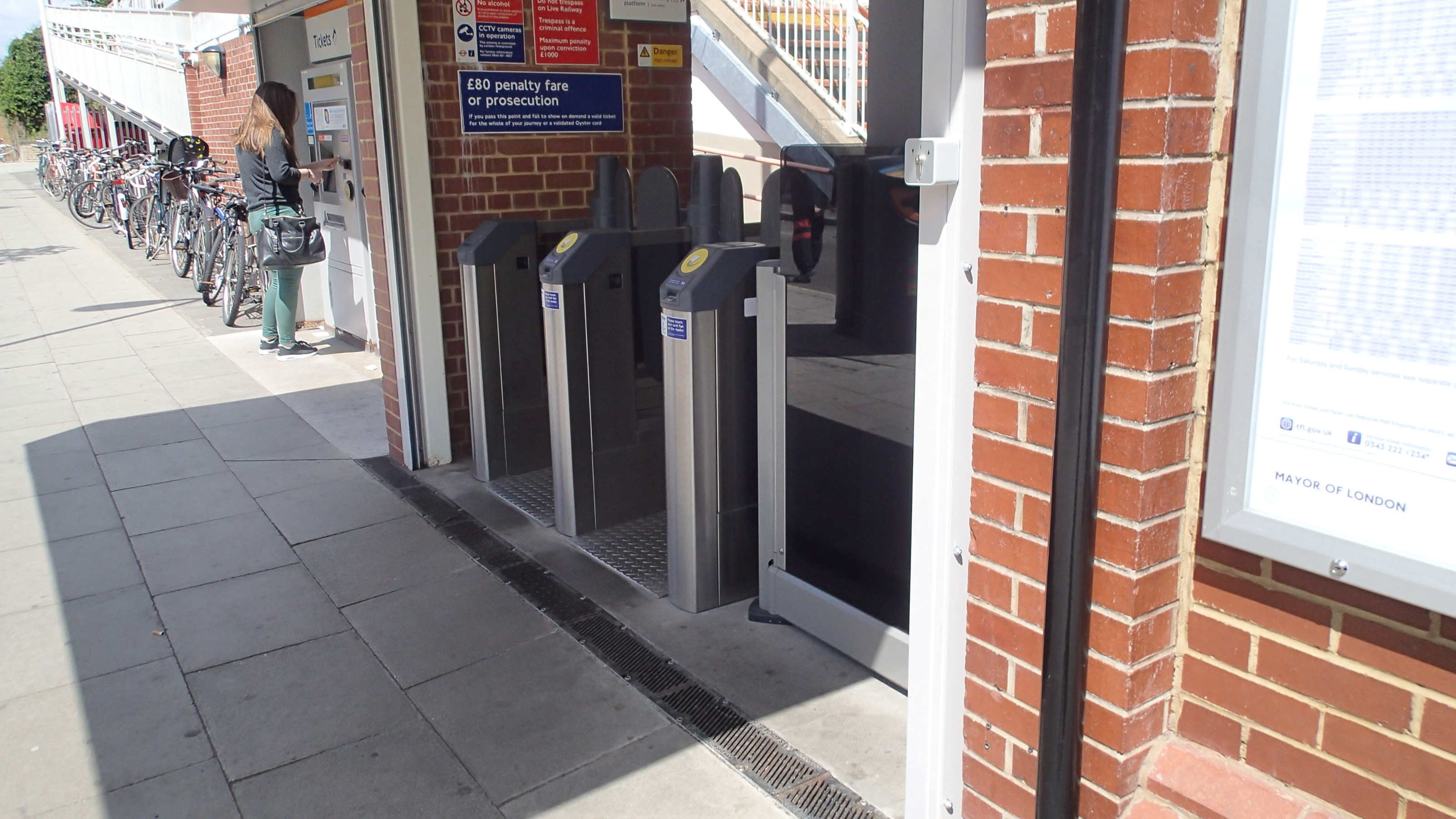
Ticket Gates At Homerton
Such an application could be part of a comprehensive energy system for a station, where the warmth from passengers, solar power from the roof and other power sources are collected to make the station less dependent on electricity from the mains. Network Rail have already used energy collection in stations like Blackfriars and the new London Bridge, so footfall collection could be another tool to help.
It could also be used in say a remote unmanned ticket gate on a station, such as where a platform is very long and some passengers need to entry and exit perhaps a hundred metres from the staff.
But although there is a large number of entry gates in the UK and worldwide, I would suspect that the gate manufacturers would develop their own systems.
I wish Pavegen well, but I don’t think I shall be investing.
Peer-To-Peer Lending Is Different In The US
I like peer-to-peer lending and have quite a large sum invested. But after reading this article in the Financial Times, I’m pretty certain that if I lived in the United States, I wouldn’t touch peer-to-peer lending with a bargepole.
The reason is that in the United States, institutional investors get first pick of the borrowers and are developing software, so that the retail investors gets what’s left.
In the UK, the Peer-To-Peer Finance Association has moved to ban this practice and make all investors equal.
The day they give preference to institutions, my money will be withdrawn gradually as it becomes available.
I think we all have to remember that one of the causes of the Financial Crash of a few years ago was greedy bankers, who felt they were a class above the vast majority of people, who have made their money by sheer dint of hard work.
Whatever you do, read the article in the FT. It’s a cracker!
And also look at the Peer-To-Peer Finance Association web site!
Will Osborne Abolish Tax On Savings Interest?
This is said in this article in The Independent.
Tax on income from savings will be abolished for millions of people in the Budget today as George Osborne woos pensioners and “hard-working taxpayers” ahead of the May general election,The Independent has learnt.
So is the paper right?
It would make a lot of sense.
1, It would certainly encourage saving.
2. Encouraging saving may mean that more money will go into peer-to-peer lending, which will help lower interest rates for borrowers and give the banks a bit of a kicking. So a by-product of abolishing tax on savings interest could be better availability of finance for individuals and businesses.
3. I can see those who provide homes for savings like banks, building societies and peer-to-peer lenders getting increasingly innovate in finding ways to create high-interest, instant-access accounts.
4. It could put a lot of financial advisers out of business, as if say you had a lump sum to invest, you could easily work out what would be the best savings account, to keep the money until you need it.
5. But surely, the biggest benefit will be that as savings will now be held in an account, that doesn’t carry any tax, it will simplify tax accounting and returns for banks, building societies and savers alike.
If he does do it, then just imagine how any party who put it back would fare in an election!
On a personal note, if it does happen, I’ll be putting more of my money into Zopa!
Peer-to-Peer Lending And Retirement
This article in the FT, entitled Zopa To Launch Product For Retirement Savers is a must-read for anybody who is retired or thinking about it. This the first paragraph.
The UK’s largest peer-to-peer lending service, Zopa, is developing a new investment product tailored to people beyond retirement age who will have much more flexible access to their pension savings from April.
It sounds that I’m using my Zopa funds in a similar way. There is one big difference though in that I’m doing it using the standard Zopa system, so I’m not paying anybody in the middle for commission or advice.
My use may have advantages, in that as funds comes available they can be stored away in Zopa.
My Zopa Summary For 2014
I’m publishing these figures, as in my view, they are very indicative of a mature Zopa account.
Remember that I started investing in 2008, so some of the money is possibly on its third loan.
I have added to the pot over the years, when I have spare money left over at the end of the month. I’ve also repatriated money at times, when because of circumstances, I have some large bills to pay.
At the start of the year I had £147,000 invested and at the year end that had risen to £156,000.
Over the year, I’ve actually taken out £16,700 and paid in £18,500, so I haven’t really paid anything into the pot.
Interest and repayments to my holding account in Zopa has been almost £96,000, which conveniently works out at £8,000 a month. So I could bring up to this sum into my bank account for paying bills every month. As these payments usually occur around the beginning of each month, it is very easy to juggle them with my approved overdraft limit to avoid paying the wunch, excess fees I don’t need to.
Over the last year, the amount of money I’ve earned works out as a return of five percent before tax.
Because most of my money has been lent out in the last couple of years or so, I suspect that a high proportion of my Zopa money is covered by their Safeguard scheme.
The downsides are that I could earn more with more risky peer-to-peer lenders and I have to pay tax on my earnings.
I never give financial investment advice, but I have found Zopa to be the ideal mattress to put my spare money in a place, where I can access it reasonably quickly. It certainly pays a better interest rate.
Peer-To-Peer Energy
This report from the UK Solar Power Portal makes some good points.
I can envisage a time, when the solar panels on my roof, feed into a system, that gets me the best price and this is delivered at a best price to those that need it.
As a control engineer, I know it’ll probably be totally automatic and the price will be a balance that is the best for micro-generators and consumers. Just as with peer-to-peer lending, the only losers will be the big companies. Except for banks, you will read energy companies.
An Open Letter To Police Commissioner Adrian Leppard
In the article in Friday’s Standard with the front page headline, Force Banks To Fight Web Fraud, you say that the banks must fight web fraud.
I agree that banks must be forced to report all frauds to the Police.
As someone, who has analysed a lot of databases in his time, I know from experience with some of the best consultants in the City, that properly analysed these reports will uncover valuable patterns that will help police locate the perpetrators. The findings should result in sensible advice that would help both the banks and customers.
My worry is that the banks will introduce levels of security, that mean you have to do things like access your bank account with a dongle or install special protection software on your computer. This approach just means that criminals use the new restrictions as new ways to fool clients.
In my view, banks need to think deeply about adding new features to their banking systems for the benefit and protection of customers.
So what would I do?
1. A friend was robbed at a cashpoint and someone took his card and got him to give up his pin at knife-point. I think we should all have an emergency pin, that if typed into a cashpoint, indicates something is wrong. The machine keeps the card and perhaps gives out a minimum amount of money, saying that the client has no funds available.
2. We should be able to set a limit on payments, above which the bank sends us a text message, to say that we’ve just paid £220 to Marks and Spencer. So if say your card details had been stolen, you would at least get an early warning.
3. We should also be able to lock bank accounts. Say you were going away for a month and during that time, you would not be accessing your bank account. You would enter an extra password, which only you would know, that stopped access to your account until it was re-entered.
If banks were to think what customers actually want and not waste their time selling them junk products, we might get a banking system that was fit for purpose and very secure.
Banks should do other things.
1. Some of the work I know was done with my software, allows banks to profile how customers access their accounts. Are they doing enough in this area to fight crime? I doubt it.
2. Banks should also only use systems and programmers based in the UK, as this would mean that those responsible for any serious breaches or problems can have their collar felt.
Personally, I also always access my banking from the same computer, which stays locked in my house and has never left. Those that use apps on their mobile for banking deserve all the trouble they get!
 The Anonymous Widower