Before Crossrail 2 – Motspur Park
Motspur Park station has an island layout, with all the facilities between the two lines and it is also close to a level crossing.

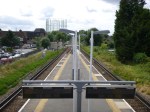
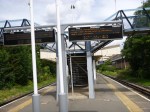
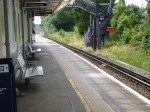
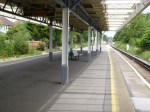
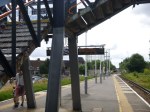
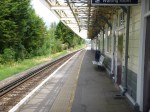
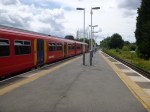
The station is also the last before the Chessington Branch splits from the line to Epsom and Guildford. So it is an easy interchange if you’re going up one branch and then down the other, as this Google Map shows.
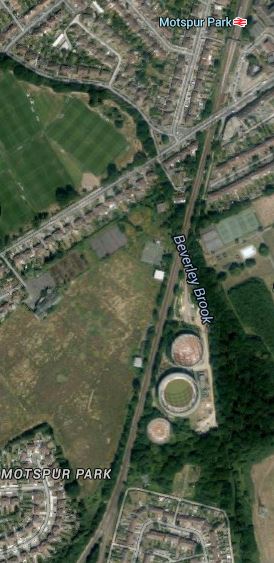
Motspur Park Station
Obviously, a new bridge with lifts could be added to this station, but I have a feeling that there might be a more imaginative design that might be better and more affordable.
Before Crossrail 2 – Worcester Park
Worcester Park station is on the proposed Epsom branch of Crossrail 2.

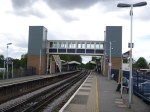
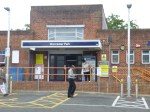


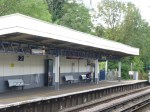
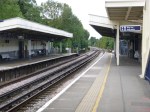
It is a station, that has recently been upgraded with a fully-accessible footbridge.
Before Crossrail 2 – Stoneleigh
Stoneleigh station is on the proposed Epsom branch of Crossrail 2.

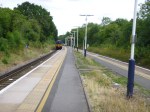
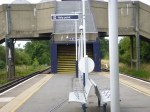

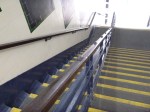
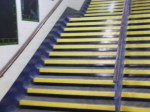


It is certainly an unusual design of station, with an absolutely hideous concrete bridge.
Before Crossrail 2 – Ewell West
Ewell West is the furthest south station on the Crossrail 2 branch to Epsom, that is still in the Freedom Pass area (Zone 6)
I took these pictures when I visited the station.

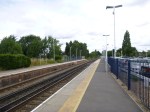


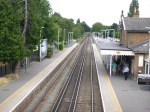

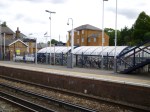
This Google Map doesn’t add much except show the car park.
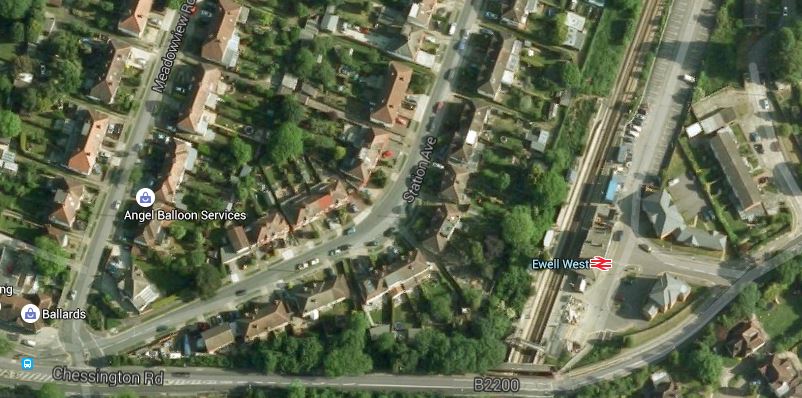
Ewell West Station
It is not a station, that needs much work for Crossrail 2 except for a modern enclosed footbridge with lifts and a refurbishment.
Tramlink Works At Wimbledon
I came back from Wimbledon by using the Tramlink to West Croydon station and then the East London Line. It’s a bit chaotic at Wimbledon as they’re updating the tram terminus with a second platform and you have to walk to Dundonald Road.
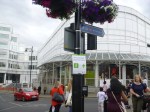


When the works are hopefully completed in October, this will allow four new trams to be introduced on the route to Wimbledon, which will result in an increase in service. Read about it here on the TfL web site.
The South London Workhorse
The 137 sets of Class 455 trains are the workhorses of the electric routes South of the Thames. These are some pictures of those run by South West Trains.

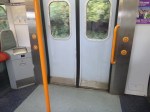

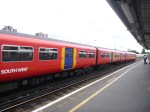


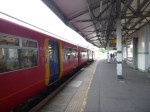
They may have been built in the 1980s, but they scrub up well. They are also built to withstand the heaviest accidents. Is there any other train in the world that can protect the occupants, if an idiot drops a twenty-four tonne cement mixer on top? The Class 455 and their sisters the Class 317 can, as this actually happened at Oxshott to a Class 455. No-one was killed and the train later returned to service a couple of years later.
Perhaps the greatest complement to these trains, is that South West Tains are fitting them with new traction motors, as is detailed in Wikipedia. Would you put a new engine in your 1980s-built car?
There’s an old phrase about horses – Handsome Is As Handsome Does
These Class 455 trains may not look the most beautiful and sexy trains from the outside, but they are the living proof of the phrase.
It is interesting to note, that South West Trains converted their Class 455 trains from 2+3 to 2+2 seating, as happened to many of the Class 317s in North London. However, Southern have kept the cramped 3+2 seating, as have Northern with their Class 319 trains.
Although, I’m only slim and don’t occupy much seat space, I do feel we should endeavour to make 2+2 seating the rule for Standard Class.
Whither Waterloo?
After looking at Waterloo International, I sat in a train before it left for Clapham Junction and it got me thinking about the future of Waterloo station.
It is busy as this extract from the Wikipedia entry shows.
With over 94 million passenger entries and exits between April 2011 and March 2012, Waterloo is Britain’s busiest railway station by passenger usage. The Waterloo complex is the 15th busiest passenger terminal in Europe, and the 91st busiest railway station in the world. It has more platforms and a greater floor area than any other station in the United Kingdom (though Clapham Junction, just under 4 miles (6 km) down the line, has the largest number of trains).
This Google Map shows how big and hemmed in on all sides, the station complex is.
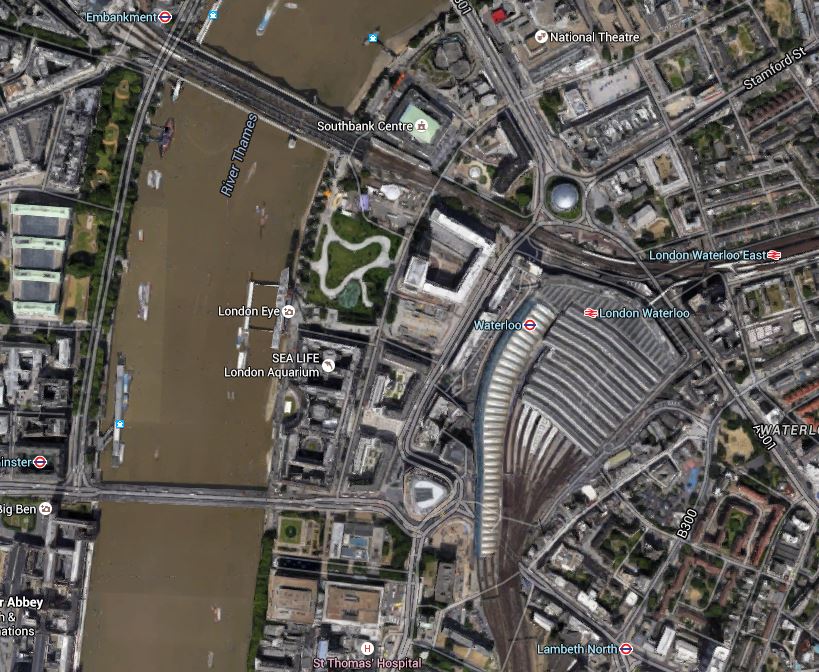
Waterloo Station
It certainly has its problems.
1. Waterloo Station Doesn’t Have Enough Capacity For Trains
South West Trains want to run ten-car trains and the platforms need to be lengthened. That project is in the pipeline, but little seems to be happening.
They also want to bring the other four Eurostar platforms into use. As these platforms were built for the very long Eurostar Class 373 ytrains, they are a complete mismatch for the typical trains that South West Trains typically run.
2. The Lines Into Waterloo Need Sorting
If you increase the trains using the station, you’ll need to increase the capacity on the lines leading into the station.
3. Waterloo Station Doesn’t Have Enough Passenger Facilities
$25million has been spent on creating a retail balcony with shops and restaurants.
But I think that even this is proving not to be sufficient at busy times!
4. The Underground And Waterloo And City Line Don’t Have Enough Capacity
Getting to Waterloo is not easy for people like me in East London and we’re not the only area of London, from where getting to Waterloo is difficult and often overcrowded.
There are two ways that Waterloo can go. Either you try and squeeze more and more trains and passengers into the existing sites or you reduce the number of both to fit the current facilities.
If Crossrail 2 is designed properly and built, it will have the following effects on Waterloo,
1. Reduce the number of trains needing to use Waterloo, by diverting trains and passengers into the tunnel at Wimbledon and then under Central London.
2. This will in turn, free up much-needed platform space and train paths.
3. As passengers will not be changing at Waterloo, but passing underneath on their way to Central London, the pressure will be taken off the station facilities.
If the Northern and Bakerloo Lines get some of proposed capacity increases, this will also take the pressure off Waterloo. But the one I’d improve would be the Waterloo and City Line and make it run 24/7.
There is also an unofficial proposal for Crossrail 3, which would link Waterloo and Euston via a tunnel.
Possibly! But let’s make full use of Thameslink, the East and West London Lines and Crossrail 2 first. I think that if we reorganise Old Oak Common and manage to get an extra track or two along the West London Line.
Before Crossrail 2 – Epsom
I knew that Epsom station had been given a new building, but this modern creation surprised me.
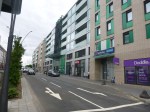
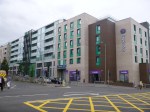
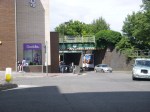
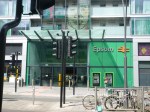
This Google Map from a couple of years ago, shows the layout of the tracks and platforms.

Epsom Station
The bridge over Waterloo Road certainly needs rebuilding for Crossrail 2 and the platforms will have to be lengthened. Will two terminal and two through platforms be enough for this busy station?
It may not be for everywhere and everybody’s taste, but plenty of stations could be improved by modern developments such as this, especially if in some places they use the space over the railway. Read this news item in the Epsom Guardian, which describes the opening celebration, which says the following about the development.
The £20m development, which has revamped the station’s ticket hall, facade, car park, waiting shelters, toilets and cycle storage, was carried out by Network Rail and developer Kier, in partnership with Solum Regeneration.
Its new shops, hotel and apartments, which include some affordable housing units, have funded the development.
So it looks like Epsom got functional modern station building, with an impressive list of facilities, at a very affordable cost.
The provision of a low-cost chain hotel in the development, is being seen increasingly often. Two London stations I use regularly; Dalston Junction and Walthamstow Central, have both had similar hotels to Epsom built in the last few years.
The developers, Solum Regeneration are a partnership between Network Rail and Kier. The latter is the fourth largest construction company in the UK.
The company seems to be associated with several station redevelopments.
If you read the news page on the Solum Regeneration web site, you’ll find developments at Christchurch, Guildford, Haywards Heath Redhill, Twickenham and Walthamstow Central.
If you read some of the comments in local papers on these developments, the locals are do object, often to the height of developments. But you have to ask, if they would prefer a run-down station with no facilities, which costs a fortune to run and just puts up the price of rail tickets.
I do wonder how many of the objectors, live comfortably in large houses and never use the train.
I wonder too what reaction some of Underground stations designed by Charles Holden, that we laud today as magnificent, got in the 1930s.
Some of his creations like Oakwood, Cockfosters and Turnpike Lane look incredibly stark even today and some can be rather draughty places. But these were practical buildings for a purpose and we are now generally proud of them.
We probably won’t give Listed status to stations like Dalston Junction, Epsom and Walthamstow Central, but as we use them, we’ll say that this is a lot better than it was and speeds me on my journey. We mustn’t forget that stations are functional buildings and they must be pleasant places to pass through and of course work.
Property development is one way to pay for a nice new station and if we don’t like it, we should make sure the Council looks after our interests.
Waterloo’s Blue Elephant
Waterloo International station was built for Eurostar services at a cost of £120million. I needed to get out of Waterloo to Clapham Junction and I noticed that the first train was in Platform 20 in the old Waterloo International.
So I went and had a look inside for the first time since C and myself went to Paris for the weekend.
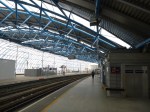
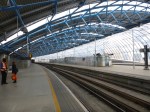
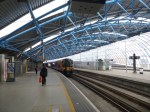
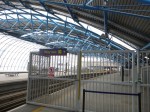
I could have thought of better ways to spent £120million on the railways.
Every Transport Minister in the UK, should have a photograph of this blue elephant subtitled Don’t Create Another Of These on his or her desk.
Architects might like the design, but I think that there are much better-designed stations in the UK. Manchester Victoria is my current favourite, which scores highly on design, quality of construction and affordability.
The biggest crime though for Waterloo International, is that it was designed and built and when it was found to be inadequate, a replacement station was started.
It definitely scored -2 out of 10 for overall planning.
It is interesting to note that the whole farce of the Channel Tunnel Rail Link was more politically-led, whereas Crossrail is much more led by what engineers and architects say is possible. From what I’ve found out about Crossrail 2, it would appear that it has gone further down that route.
Platform Action Has Finished At Willesden Junction
It looks like the low-level platforms at Willesden Junction station are now finished.
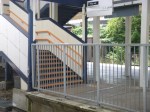
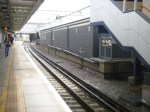
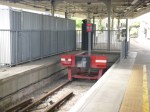
As you can see it’s just a simple bay platform between the two main platforms for the Watford DC and Bakerloo Lines.
 The Anonymous Widower