Thoughts On Double Deck Trains
On my Home Run from Krakow, I travelled on quite a few double-deck trains.
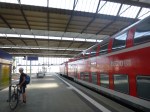
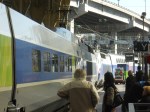

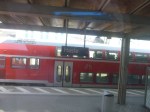
But you don’t travel on a train to look at the outside! When I travel on a double-deck train, I usually try and travel on the top deck, as it’s all about the view.

The quality of the view is very much the same as you get out of a Chiltern Railways Mark 3 coach, set up as the designer intended with four seats around a table by each window
Most uninformed comments about double-deck trains seem to come from politicians and journalists, whose only knowledge of engineering, is that it starts with an E. The comments are probably based on a trip on holiday on the top deck of a French, Dutch or German train and the view has told them, that this is the way to travel.
We also have masses of increasingly well-designed buses in this country, so people ask why if we can do it for buses we can’t do it for trains?
Double Deck Train Issues
But having travelled extensively on double-deck trains, I’m convinced they’re not a solution for everyone.
1. Getting On And Off
Speedy boarding is important with any train, but especially with commuter services and this is why increasingly our modern trains have wide doors and are walk-through like the Class 378 trains of the Overground.
But double-deck trains are slow to board for various reasons. Just sit near the stairs on say a German double-deck commuter train at a busy time and see the chaos, which ultimately delays the train.
2. Luggage
This is more of a problem on a long distance double-deck like a TGV Duplex. There may be plenty of space, but passengers want it near them, so it gets in the way of getting on and off in a reasonable time.
3. Cramped Seats Downstairs
One of the reasons, that I go upstairs is that often on a double-deck train, the lower deck seats are cramped and claustrophobic.
4. Disabled Issues
Perhaps on the Continent, they don’t have so many disabled as we do or perhaps they’re not as organised, but their trains are not as disabled-friendly as are our trains.
As a dimple example, many of our new trains are just step across and this helps everybody with a mobility difficulty. Few and none of the double-deck trains, I’ve seen feature this important design detail. Often it’s a couple of steps down or up to get on or off the train.
5. Tram-Trains
Tram-trains running under the Karlsruhe model and train-trams under the Chemnitz model are showing a lot of promise in Germany and France. I believe that more cities will embrace these methods of integrating urban transport, but I can’t see double deck trains running as trams through the main square at Kassel.
6. Design Issues
On one German train recently, I was on the upper deck and needed to go to the toilet. I had to go down the stairs and then fiight my way between the wheelchair passengers, babies in buggies and passengers with bicycles crammed into the lobby downstairs. Then after I’d done my business, I had to fight my way upstairs.
This illustrated to me, how difficult it is to design a usable double-deck train for all types of passenger.
UK Issues
In the UK, there are other issues, that affect double-deck trains.
1. Loading Gauge
The big problem is the UK loading gauge, which is smaller than that on the Continent. Double-deck trains in the UK, that will run on our classic lines, are really trying to fit a quart into a pint pot.
It is interesting to note, that the only attempt to introduce double deck trains in the UK was on the Southern Railway, where the loading guage doesn’t have to accommodate an overhead power supply.
2. Step Across Access
Increasingly, step across access will become the norm all over the UK, just as it is rapidly advancing in London. Any new trains coming into service, which do not have step across access will not be liked by passengers, who will have to lift their beloved wheeled cases in to and out of the train.
3. Go Anywhere Trains
We are innovative in this country and new services are always being examined with existing trains. I think it is true to say, that double-deck trains are often built for specific routes and the infrastructure is modified to suit them.
A Double Deck Train For A Double Deck Line
All of these facts and issues lead me to a conclusion – Any double-deck trains introduced on a network, must be designed for a specific route and the track and stations, must be designed to get the most out of the trains. They would have to have these features.
1. A Connected Train
Internet should go lot further than free wi-fi, which should be available to all passengers.
Some really wacky ideas will be successfully applied, providing the right connections are built into the tain.
2. Seating And Windows
This should be at least as good as Standard Class on the top deck of a German regional train or in a Chiltern Railways Mark 3 coach. Both feature four seats around a window. Some sets would have tables.
In Standard 2+2 seating would be a minimum with 2+1 in First.
3. Wide Aisle
The aisle between the seats must be wide and run the full length of the train.
4. Wide Entrance Doors And Step Across Access
Access into the trains must be through wide doors and there should be no steps up or down, whether passengers are going to the top or bottom deck.
5. Wheelchair Access To The Top Deck
Why not? It must be dreadful to be stuck in a wheelchair all the time, so why deny the disabled the pleasure of travelling on the top deck.
A Double Deck Train Design
It does all sound rather fanciful and expensive.
But if we can have double deck trains, why can’t we have double deck stations?
To build double deck stations for a commuter line would be difficult, but imagine how HS2 with its small number of stations could be designed so that passengers entered and left the train directly into the deck, where their seat was reserved.
Perhaps the only drawback is that all stations would need platform edge doors. But by the time HS2 is operational, train and platform design, coupled with sophisticated control systems could align the platform and train for a simple step across. I’ve never flown in an A380, but I think at some airports, you board directly into the deck, where you will be seated. Surely, what’s good enough for Heathrow and Dubai, is good enough for Euston, New Street and Piccadilly?
There Is No Product That Can’t Be Improved With LEDs
In this month’s Modern Railways, there is an article by Iam Walmsley, about the re-engineering of a Class 73 locomotive for Network Rail. This is a the extract which contains the title of this post.
The cab desk is best described as ‘functional’, a flat plate of stainless steel with everything on it, enlivened by cool teal-coloured LED backlighting, further evidence that there is no product that can’t be improved with LEDs.
This is so right.
A Large Map With Seats
This double-sided map with seats was close to a busy intersection in Krakow.
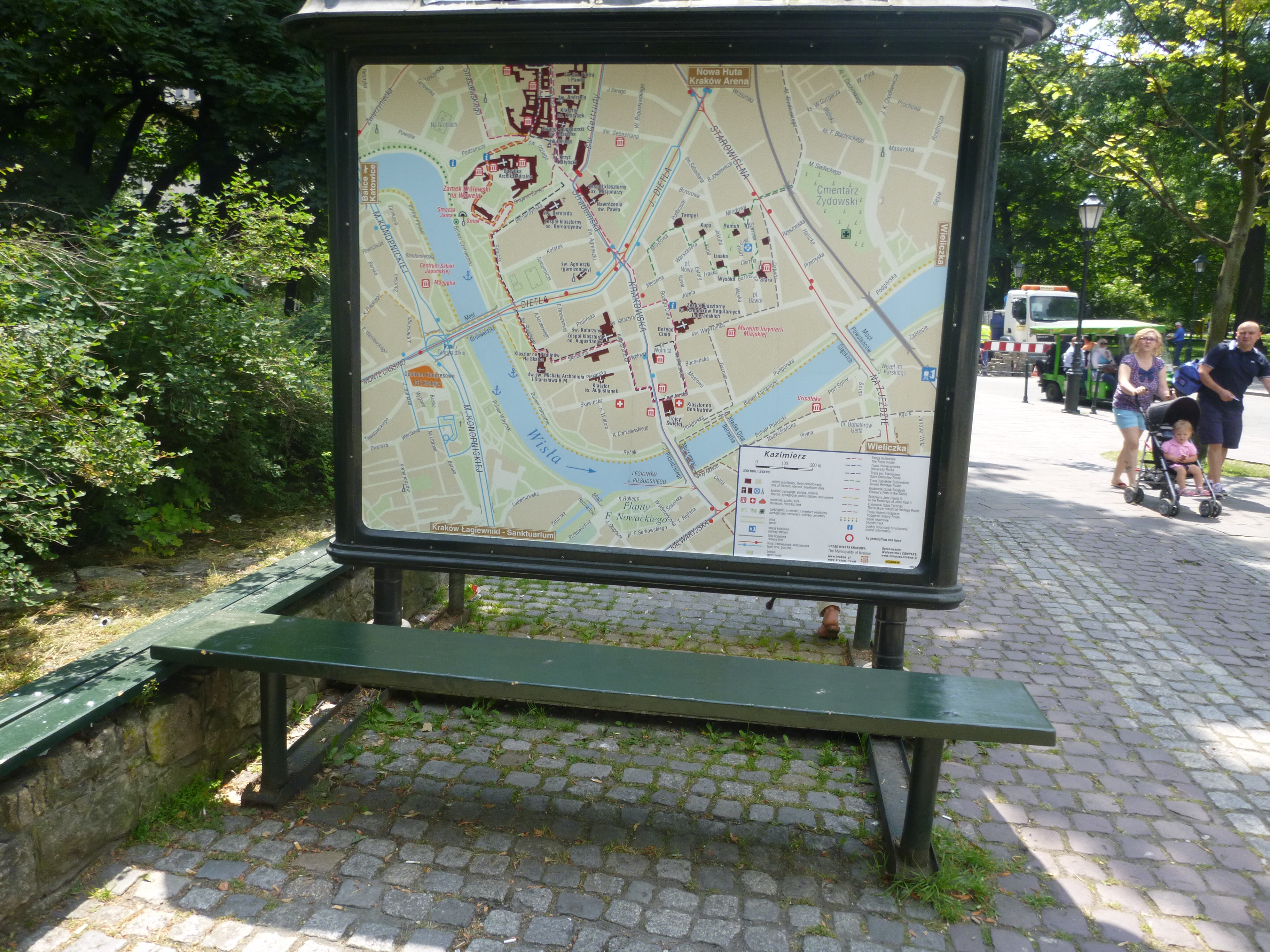
A Large Map With Seats
I don’t think it was the only one.
I like this and it helps to solve the problem of maps in a busy city centre. It looks like the map is also not necessarily permanent, so could be easily moved to a more important location or taken away to a workshop to be refurbished and fitted with a new map.
The map and seats doesn’t look particularly new, so it probably says that sometimes the old proven ideas are the best.
Incidentally, the map, as nearly all in Krakow, was very easy to understand.
Bins With Roofs On
These seemed to be unique to Krakow.
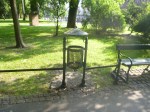
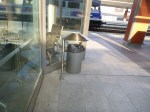
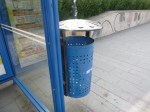
But surely to stop birds emptying bins they are a good idea.
What Is The New Mayor Of London Going To Do For Car Drivers?
Most of the London Mayor candidates for 2016 seem to ignore car drivers.
As a non-driver, I wouldn’t mind if the new Mayor decreed that no-one in London could own a car, but if he or she did, they wouldn’t get elected.
I do occasionally need to be transported by car and as I don’t have the expense of actually owning one, I can afford to take a black cab, which I do perhaps a dozen times a year, at a total cost of perhaps three hundred pounds.
The most difficult journeys are ones where say, a friend is picking me up and taking me somewhere, so they have to drive into Hackney and out the other side again. Which just adds to the congestion unneccesarily.
The other tricky thing for car-drivers, is those coming into London often have no convenient Park-and-Ride. I was lucky, when I lived near Newmarket, as I could park at Whittlesford Parkway and get a train into Liverpool Street.
But when years ago, when I lived near Ipswich, parking was very limited and I had to get a taxi to the station. I once had a letter from British Rail suggesting that I ask my wife to drive me to the train.
I also see problems with the new Night Tube. This will generate an amazing night life all over the centre of London and I think we’ll see large numbers of people using the Tube late into the night and early morning. Those living in London will be able to use the Tube, but as there is little adequate parking at or around stations just inside the M25, visitors and those working late in the evening, may well lead to a lot of parking congestion around the stations.
To add to that, as London becomes an increasingly twenty four hour/seven day a week city, there will be an increasing need for some form of parking for night workers.
I have checked the map and the only Tube and rail stations close to a junction of the M25 will parking, can be counted on the fingers of one hand.
I believe that London needs a ring of well-designed car/bus/train interchanges around the M25. I did propose one at Waltham Cross, but that idea was not put together properly.
The interchanges would be designed for the following services.
1. Park-And-Ride, particularly aimed at those not wanting to stay all day. So perhaps the parking charges would be sensible for say the first four hours and then draconian afterwards. Obviously, at weekends and in the evenings, they would be reduced and aimed at those perhaps going to a sporting event or seeing a show or concert.
2. Pick-Up and Drop-Off of passengers, perhaps linked to something like thirty minutes free parking.
3. Car Hire for those living in London.
4. Long Distance Coach Services
5. Motorway Services
Obviously, there would be a frequent service into Central London. The service would have to be step-free and wi-fi enabled. I also think that like Cambridge’s superb Park-and-Ride, it would be linked into the cycle network.
Get it right and it would cut vehicular traffic into London.
The Fences Are Up At Lea Bridge Station
Construction of the new Lea Bridge Station was supposed to start in Spring 2014, but it is only today that I have seen anything substantial on the site.
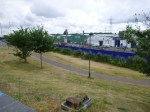

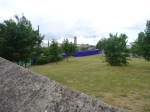
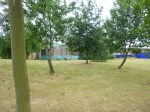

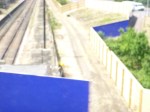
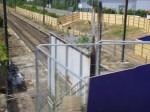
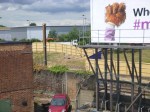
As the pictures show, they are just the fences to keep the unwanted out of the site.
But at least it’s a start!
How’s The Overground To Enfield Town Doing?
In Transport for London Do The Sensible Thing, I said this.
Various news items on the Overground like this story in the Enfield Independent, have been reporting that the Class 315 and Class 317 Trains on the Lea Valley Lines are not very reliable. I’ve read somewhere that they are spending up to two million pounds to get them running better.
So I thought I had better go and check to see how the lines to Enfield were doing, by taking the train to Enfield Town from Hackney Downs and then walking to Enfield Chase to get a Class 313 train back home.
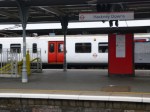
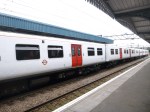
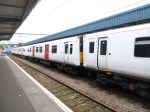
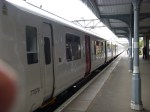
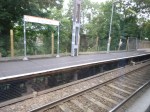
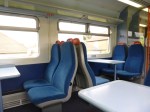
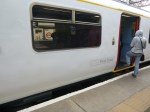
The pictures show the following.
1. An eight-car Class 315 train was working one of the last of the rush-hour services into Liverpool Street. So hopefully, London Overground have now got all services back up to their correct length.
2. Most trains I saw seemed to have a London Overground roundel on the side, even if they weren’t repainted.
3. I travelled out to Enfield Town in a very clean eight-car Class 317 train, that had been upgraded for the Stansted Express with tables, luggage racks and First Class. When was Enfield Town last served by a train so luxurious? In some ways it’s a waste, as surely there are other places, where as soon as the replacement Class 378 trains arrive, these old Stansted Expresses could be more gainfully employed.
Perhaps, they could serve Glasgow Airport? But then the Scots would complain, that they were getting London’s clapped-out second-hand trains. I noticed as I left that the train had had a full service in September last year. Old they may be, but they are far from scrapyard-ready! I suppose an old Mark 3-based train, is still a Mark 3-based train, with all the strength and ride quality that means.
4. In the meantime, this Class 317 train, is probably doing a good job in pacifying the natives of Enfield.
5. After my walk through Enfield Town centre, I got on a Class 313 train to get back to London. Now that is a clapped-out train and I wonder how many passengers for London from Enfield are thinking about changing their point of departure for London. If you commute and have a Freedom Pass, this is now unrestricted from Enfield Town, so this must have an effect on commuting pstterns.
6. I took the picture of the pantograph on the Class 313 train, as this is a special job, so that the trains can run in the restricted tunnels to Moorgate. It only needs to fold away very snuggly, as that section of line uses third rail for its electricity.
I will ask this question, about what I saw.
London Overground have put an option for 249 extra vehicles in the order for the Class 378 trains, as I reported in Have Transport for London Other Plans For The Overground?
So will some of these optional vehicles in the Class 378 order end up working the Great Northern lines into Moorgate and Kings Cross?
They have a lot going for them.
1. They are certified for working in tunnels, as on the East London Line, they run sixteen times each hour both ways through the Thames Tunnel.
2. There is a dual-voltage variant of the Class 378 train.
3. There would be the problem of designing a new pantograph well and certifying them for the Great Northern tunnel, but that is not as great a task as designing a whole new class of train.
It would probably be a special variant of the Class 378 train, but it hopefully, it would not be a difficult design to create.
We can do a little calculation on where the 249 extra vehicles might go.
Various documents show that by 2030, London Overground wants to be running six-car trains on the North and East London Lines. So if the existing fleet was all made six car, that would probably need 63 vehicles, as there are 57 trains on the system currently and another six are on order.
If we assume that Transport for London’s other target, the Dartford Lines, comes with some fairly new trains, this may or may not use up some of those options.
Taking the 63 off the 249 gives us 186 vehicles, which leaves 186, which can be 62 three-car trains or 46 four-car ones, with a few vehicles left over. Intriguingly, they could also be configured as 31 six-car trains.
So how many trains would be needed? At present the line is worked by 44 3-car trains. So if it was deemed that under London Overground, the service would be as now, there would be plenty of vehicles.
But as I pointed out, 186 vehicles gives us 31 six-car trains. Wikipedia states that the tunnels to Moorgate will accept trains of this length, so would it be a simple decision to make all the Great Northern trains six-car to turn the service into a higher-capacity, seven days a week, Metro service? As this would be a distinct variant, they might even be given a bit more performance to ease them along the East Coast Main Line to Hitchin. After all other members of the family to which a Class 378 belongs are 100 mph as opposed to 75 mph trains.
Running six-car walk-through trains into Morgate, rather than two three-car ones coupled together, gets rid of one of the restrictions of running in tunnels, which insists that passengers can walk through the train to get out in case of trouble.
So the more I look at this, the more I think, that Transport for London has an option on trains to work the Great Northern services.
As Transport for London have said, they might like to take over some of the inner Thameslink services, I suspect that the flies on the wall in meetings between Govia Thameslink Railway and Transport for London will have interesting tales to tell.
Have Transport for London Other Plans For The Overground?
It is now widely-publicised that Transport for London have started the process to get Class 378 trains delivered for the Lea Valley and Gospel Oak to Barking Lines. This article in Rail News gives full details.
But the History section in the Wikipedia entry for the Class 378 trains has this paragraph.
On 19 June 2015 it was announced that Bombardier had won a contract to supply a further 45 units, with an option for a possible 249 additional vehicles. The 45 units would comprise of 30 sets to replace class 315 and 317 units on the recently taken-over former Greater Anglia routes, one unit for use between Romford and Upminster, six to strengthen the existing London Overground fleet and eight units to replace the class 172 diesel units on Gospel Oak to Barking services.
So what are TfL proposing to do with the optional 249 vehicles, if it eventually is part of the order?
If they are four-car trains that would be over sixty sets, which as they need thirty sets for the current Lea Valley operation, would mean they could support two similar services of the same size.
It is an open secret,that Transport for London wants to be responsible for Dartford services from London, so that would probably require thirty to forty sets, which still leaves enough to takeover another service or perhaps add an extra car to all the five-car sets on the North and East London Lines.
Or could they be looking at the Great Northern services out of Moorgate and Kings Cross? These currently use forty-four rather clapped-out Class 313 trains, comprising 132 vehicles.
It just seems that we’re going to get a Big Orange!
At Last, A Station For Crossrail With Style
With the exception of Canary Wharf and Custom House stations, a lot of the designs have been poorly-received by architectural critics.
So I was surprised and pleased to see this piece on the Crossrail web site describing the new West Ealing station. This picture of the new station building is shown.
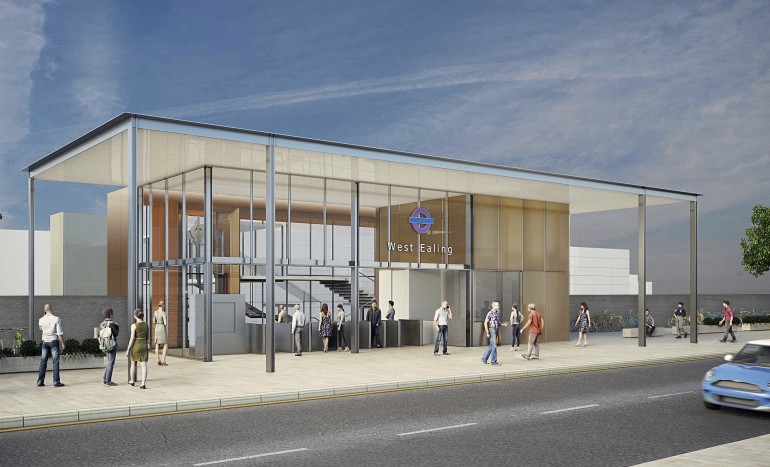
West Ealing Station
It has style and I also believe that it is designed to fit the purpose for which station buildings are now needed. All a station building needs to be today is a shelter for the barriers, ticket machines, staff and perhaps a retail kiosk or two. Get the people flow through them correct and they can be even smaller and more affordable.
It is interesting to look at the layout of the lines. This Google Map shows the situation at present.
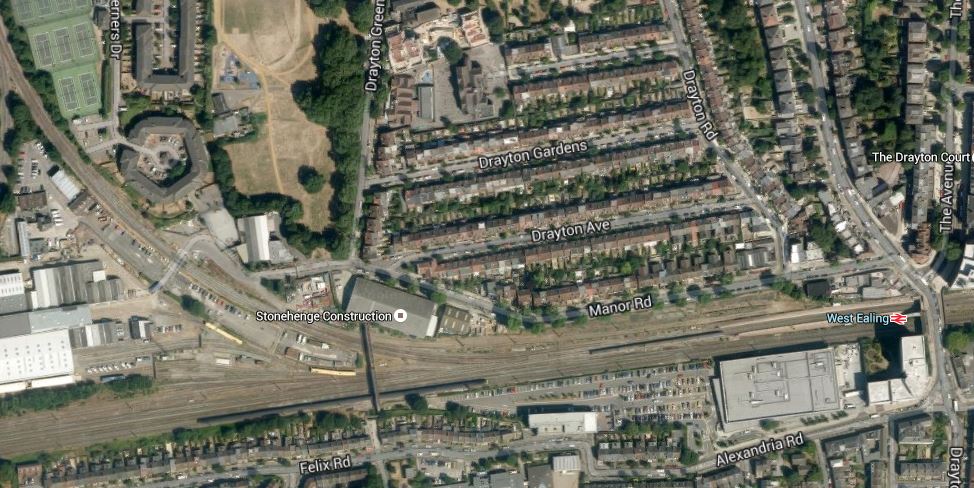
West Ealing Current Layout
Note the Greenford Branch curving away to the North. This branch is probably an operational headache for rail managers, as the trains currently have to join the line to get to their terminus at Paddington station. After West Ealing station has been rebuilt, there will be a bay platform for trains on the branch. It is shown in this drawing I found on the Internet.
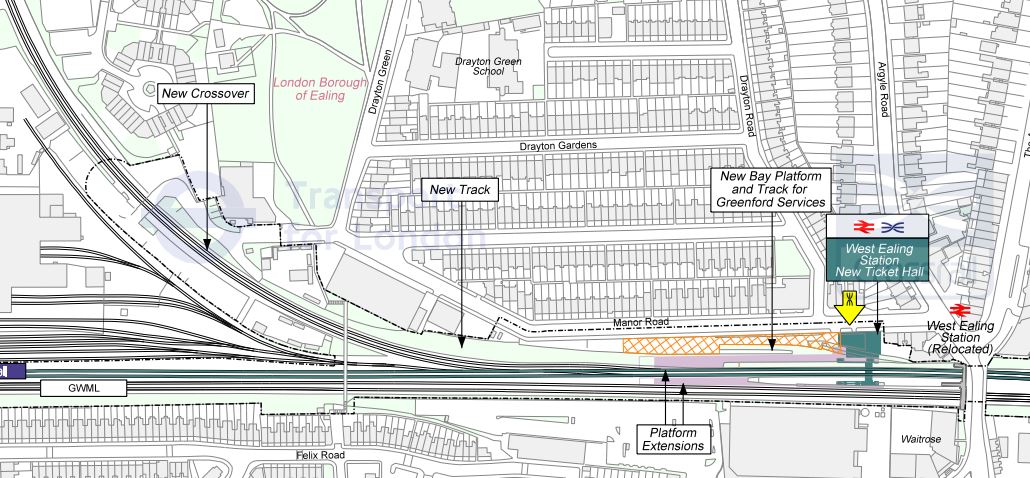
West Ealing New Layout
You have to wonder if the Greenford Branch will be developed and Wikipedia has a section on the branch’s future. Should it be electrified and should as Ealing Council have suggested the line be extended to Clapham Junction via the West London Line?
Undoubtedly, it should be electrified and the published plan of four trains per hour would certainly improve matters. But as with many things, we’re waiting for Crossrail and the plans for Old Oak Common to be vcompleted.
It does seem to me that the design for West Ealing station has set a new standard for Crossrail stations.
But as the first comment received has shown, there is a problem with access to the station from the South. This Google Map shows an enlarged view of the current station.
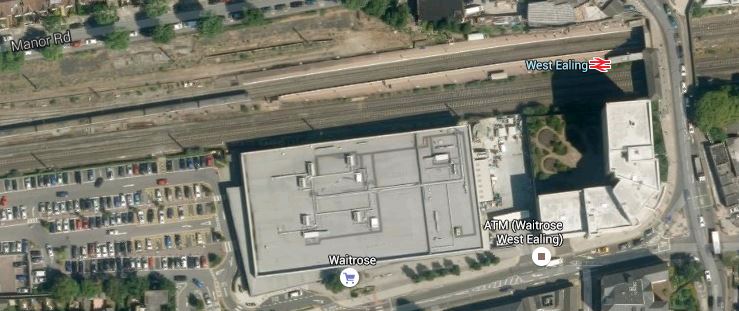
An Enlarged View Of West Ealing Station
Note how the supermarket and the car parks, backed by the two fast lines of the Great Western Main Line create a barrier that is impenetrable to any access to the station. Even if access were possible, it would be a long walk between Alexandria Road and the new station.
It strikes me that the only way better southern access to the station could have been enabled, would have been if the new station had been designed in conjunction with the supermarket, when that was developed.
It should be noted that at present West Ealing station has no car parking and do many of the locals feel that this should be provided in the new station?
To sum up, West Ealing station has problems in resolving some design issues, as it was not properly designed, when the supermarket and the land south of the railway was developed.
In my view, it illustrates one of the problems of the surface sections of Crossrail, They have been left to rot for years, when they should have been upgraded well before construction of the line started.
 The Anonymous Widower