Before Overground – Highams Park
A Station With A Garden – Rating 7/10
Highams Park station, is one of those that doesn’t need a great deal of work to make it one of the best stations on the Overground.
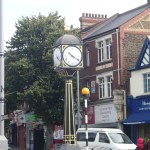


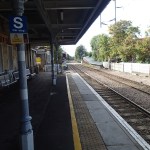
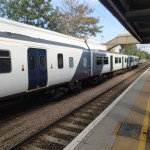

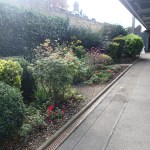
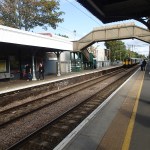
It is one of the few stations, where because there are three ways to cross the tracks, step free access isn’t the greatest of problems. Although, when the new trains come, it might not be a bad idea to make sure that the platform edge is matched to the train.
Run Miliband Run
This little snippet is on the BBC web page that follows the Scottish Referendum.
Ed Miliband will be speaking on The Andrew Marr Show from the Labour party conference in Manchester. However, the BBC’s political editor in the South of England, Peter Henley, is reporting that the Labour leader has cancelled other BBC interviews.
Peter Henley: Ed Miliband has pulled out of planned BBC interviews tomorrow. They’ve cancelled BBC English Regions, Scotland, NI & Wales.
It looks like he’s running scared. Perhaps, a detailed analysis of who voted Yes and No in the Referendum, has revealed that after next year’s General Election, Labour’s core vote in Scotland, that so annoys the English (I can’t comment about the Welsh and Northern Irish!), will be very much reduced!
Is Step-Free Access Good For Tradesmen?
Occasionally, on the buses or the trains in London, you’ll come across a plasterer, decorator or carpenter going to his job of the day on public transport. The plasterer just had a yellow bucket with his tools in it and his mobile phone number on the side and the decorator had a fold-up pasting table with his details on the outside.
London now has a severe parking problem, so as we see more step-free stations will we be seeing more tradesmen, with innovative ways of transporting their tools?
But we’re certainly seeing larger and larger packages and cases being carried on public transport.
Does London Need A ‘Grand Paris Express’?
The Grand Paris Express is a plan to create an automated Metro, that goes all the way round Paris. Wikipedia says this.
Grand Paris Express is a project of new rapid transit lines to be created in the île-de-France region, in France. The work could begin in 2014, with the first line opening between Pont de Sèvres métro station and Gare de Noisy – Champs (fr) RER A station around 2020. This line was first proposed in the project Orbival, then integrated into the Arc Express project.
The French also seem to be moving on the project as is reported here in Global Rail News.
So does London need something similar?
If we look at Berlin, that has a circular railway around the city centre called the Ringbahn. It’s about the same size as the Circle Line, but differs in one big way; it has a parallel freight ring.
London also has the Overground,which is a great way to get round the city without going through the centre. Like the Berlin Ringbahn it also carries freight.
The Overground is not a Metro, as in Berlin or as Paris is proposing, but a full-size railway, with not as high a frequency, as you’d get on a tube or metro line. However, the Overground does share a lot of objectives with the Grand Paris Express.
But those creative minds at Transport for London have proposed something similar to the Grand Paris Express in their Transport Infrastructure Plan for 2050. It’s a plan to extend the Gospel Oak to Barking Line under the Thames from Barking to Abbey Wood and then by means of existing lines take the trains around London via Sutton, Wimbledon, Hounslow, Old Oak Common to Gospel Oak. I documemted the route in full in these posts.
London’s plan differs from that of Paris in one big way, as it only requires one expensive piece of new infrastructure, which is the tunnel from Barking to Thamesmead. The main factor that will make London’s plan possible is that in a few years, all trains will have in-cab signalling, so slotting in the new Overground services on existing lines, will be a lot easier.
The title of the French proposal sums it up. It contains the word Grand and that is what it is.
London may take a much more mundane and affordable step-by-step approach, but it means that you don’t have to wait years to get the benefits you need now.
Before Overground – Clapton
Another Station For Those Not In The First Flush Of Youth – Rating 2/10
Clapton station is another with access problems for the disabled, buggy-pushers and the elderly.
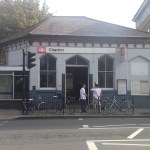


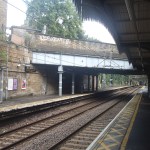
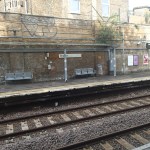
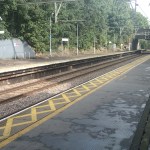

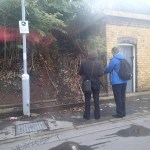
Unfortunately, the station also seems to have a touch of the Japanese Knotweed, although this could be one of the few stations in the Lea Valley Lines, where simple gardens could make the station much more pleasant.
I’ve been trying to imagine this station in a few months after a deep clean and a good painting, London Overground double orange handrails, some better standard seating and some tidy foliage at the far end of the platforms.
It will be much better than it is now.
Before Overground – Hackney Downs
Could Be A Great Station With Imagination – Rating 3/10
Hackney Downs station is rather a dump at present, as the pictures show.
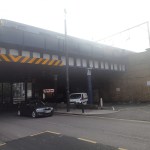
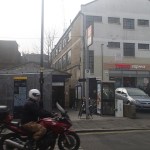

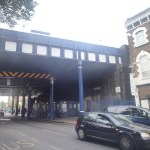
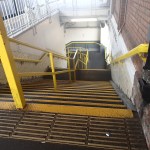
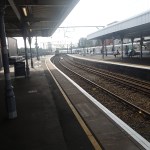
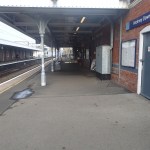
But because it is four platform station with rooms all over the place, it could with imagination be turned into the Crystal Palace station of the North.
The pictures show how the bridge over Dalston Lane has been restored, so at least a good start has been made. As the station has a lot of ironwork, I wonder if a Leadenhall Market solution could be applied. Instead of using expensive painters for all the ironwork, the City of London laid down the scheme and paid art students to do it. Hackney Downs obviously isn’t as grand, but if some of the ironwork in the station and others on the Lea Valley Line were to be properly painted, it might liven up a series of otherwise drab stations.
I also think that the large island platform, may be a suitable place to put a nice bronze sculpture that is deemed to be too valuable to display, as it might get nicked.
The station is a bit like one of those large rambling Victorian houses with umpteen rooms, that are advertised with tremendous potential.
We’re Back To The West Lothian Question
A good leader always picks the issue, place and time for their battles to ensure that he or she wins in the end. Planning should be meticulous and hopefully it all works out as they want it.
Compare Margaret Thatcher and her government and military’s response to the invasion of the Falklands by Argentina with other campaigns fought in Iraq and Afghanistan recently. The Falklands was a smaller conflict, but very little was left to chance, although it could be thought of as a close run thing.
Other British Prime Ministers and influential politicians have brought contentious legislation through to law, by making sure they plan and win every battle. Take Cameron’s law on same-sex marriage as a recent example. But then there are many others.
So when Alex Salmond proposed a vote on Scottish independence, I thought if he got it right, he could win.
His mistake was that he didn’t plan and get decent concessions on tax and spending, before he even called for the poll. That way, if Devo max had been successful and acceptable to all parties, after a few years, Scotland would probably have had an agreed separation, in much the same way Slovakia separated from the Czech Republic.
But he pig-headedly called the referendum as early as he could.
And he lost. So we’ve now been kicked back to the West Lothian Question, but with more variables than it ever had before. Tam Dalyell must be laughing from his grave.
It has been suggested this morning that large cities have more powers, something that I agree with.
But Scotland now has the Glasgow Problem, as surely what is good for London, Manchester, Birmingham and Newcastle must be good enough for the one of the largest cities outside London in the UK.
Alex Salmond, who in a overly-passionate campaign led us to this mess, should resign!
Does London Need Devo Max?
In the Standard today, Labour politician, Margaret Hodge is asking this question and says that London needs it.
She says this about housing.
The capital’s population will be twice Scotland’s by 2030. Yet we already desperately lack the homes and infrastructure we need to meet the needs of 8.5 million Londoners. Our housing crisis dwarfs that of other parts of the country. Some 800,000 new homes are needed by 2020. Yet in the year to May, only 16,800 were built. Despite London’s great successes, we are becoming ever more grotesquely unequal. Inner London is increasingly only accessible to the very rich.
I would agree with some of what she says and go further to say that all cities and conurbations should have more powers.
The trouble is that it would change the political map of the UK for ever and think of all those bench warmers in Westminster, who would be out of a job.
But I do think that competition between cities would create jobs and better places to live. Some provincial cities need a real kicking to bring them into the twentieth century.
It would also be very good for London, if when they wanted to build something like Crossrail 2, they didn’t have to go cap-in-hand to the Government and compete with other necessary projects elsewhere.
If say London financed Crossrail 2 from its own resources and population, would anybody outside the capital have a right to complain? I don’t think so!
Could London’s Passenger Counting Technology Look For Non-Payers?
I took another trip on a crowded 141 bus today and it had the passenger counting technology on board.
Passengers were fascinated and obviously some were using it to determine whether to go upstairs.
It struck me that as those entering the bus have to touch-in, by correlating this with spaces, it might be possible to determine how many passengers hadn’t touched-in.
It wouldn’t actually identify them individually, but by simple arithmetic it could probably identify routes with the highest levels of non-payers.
So if a particular area on route XX showed a high-level of non-payers, that is obviously where you send your inspectors.
Why Are Polling Stations Called Polling Places In Scotland?
As I watch the BBC News, I have noticed that polling stations, seem to be called polling places in Scotland.
It’s just like with what you call bus stands!
 The Anonymous Widower