A Clip of Video from the RAF
The RAF has just released this video taken from the Lancaster during the flypast to mark the Diamond Jubilee.
Note that the pilot and passengers in the Lancaster, are wearing very 1940s bone-domes. It would also appear, that there are quite a few free-loaders going along for the ride.
The RAF should make more videos like this.
A Big Spelling Mistake
I photographed this in a shop window in the Kingsland Road.
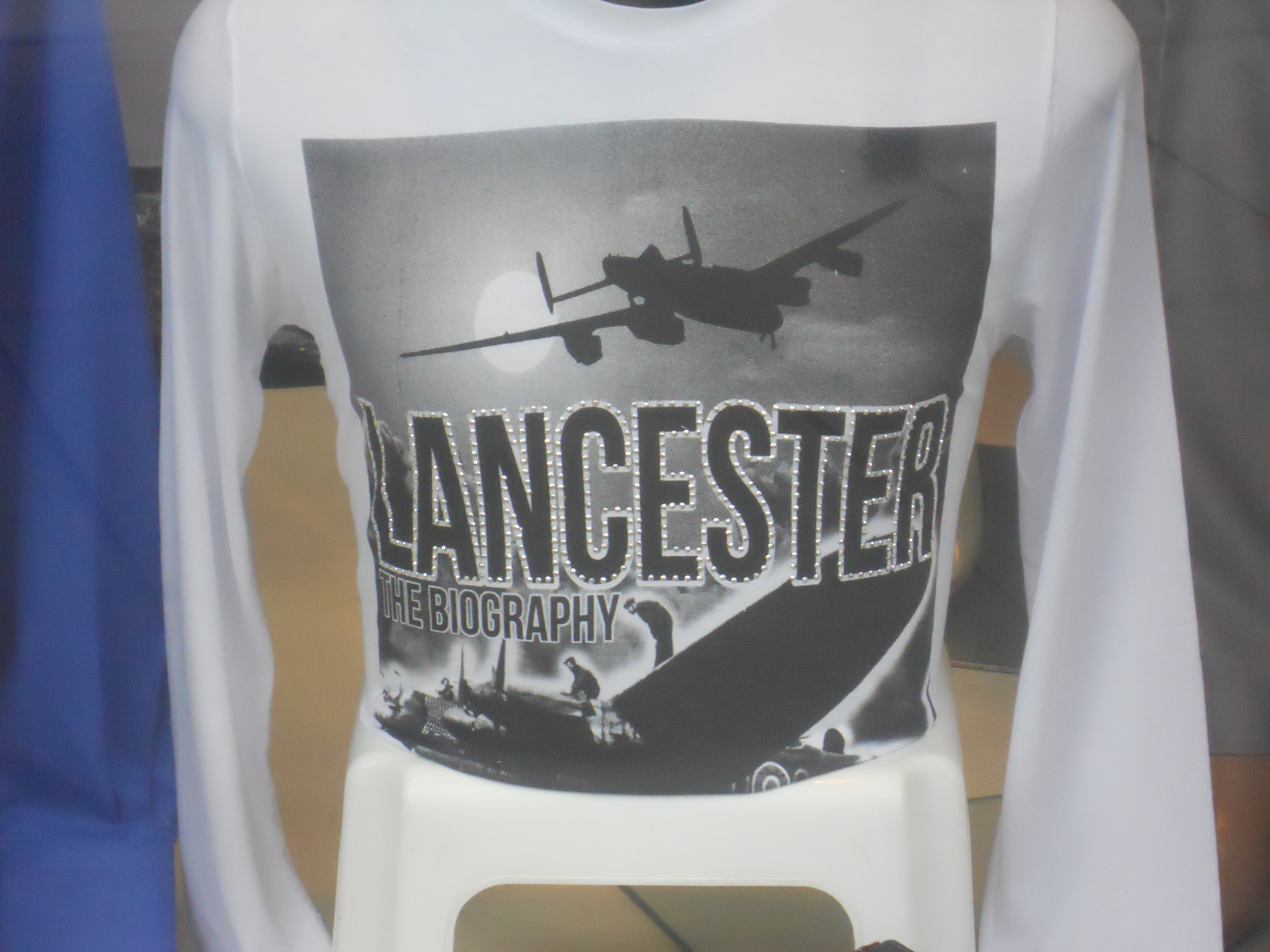
A Big Spelling Mistake
I thought spelling mistakes like this on products were a thing of the past.
The Edgley Optica
The airship photo and the associated comments with Paul, have got me thinking about aviation.
It lways seems, that any alternative approach to replace conventional fixed wing types or helicopters, ends in failure.
Sometimes, this is because the technology doesn’t work, sometimes because there are accidents, but I do feel that sometimes vested interests strangle the new ideas at birth.
I used to be a competent private pilot and I still have over a thousand hours in my log book, if I can find it. It is quite a lot of varied flying in both singles and twins, all around the United Kingdom, Europe, the United States and Australia. I used to follow the aviation press a lot too, so I’m not without knowledge and experience of what has been tried and what works in aviation. Artemis, the project management system, I designed, was also used on a lot of aviation projects.
One of the aviation projects that fascinated me was the Edgley Optica observation aircraft. It was designed as an alternative to a helicopter for low-level surveillance, for use by those such as the Police. In about 1986, the company was in trouble and looking for investors, so I checked them out and actually had a flight in the aircraft as a passenger. I did take control for a few minutes and it was an easy plane to fly.
The company’s troubles were probably in part caused by an unexplained crash of an Optica being flown by Wiltshire Police. It certainly wouldn’t have helped sales.
The pilot had his own theories about the crash but writing over twenty years later, I can’t give any credence to what he said.
However, this doesn’t mean that this unusual concept isn’t worth pursuing. Especially as now we have learned so much more about the lightweight structures that might just make designs like this possible and economic.
I have a personal regret about my trip in an Optica. I didn’t have my camera with me!
How Internet Rumours Start
I was looking down the list of flying exhibits at Duxford today and noticed that the Royal Netherlands Air Force were flying in their Spitfire. So I was curious as to how they acquired their plane and searched the Internet. I found the details on this page at the Spitfire Society.
But there is also this interesting bit on the page under a heading of Dissimilar Combat Exercises.
In 1963 it was thought that the English Electric Lightning might have to be used against P-51 Mustangs in Indonesia, and the Mk XIX PM631 of the BBMF was diverted to Central Fighter Establishment Binbrook to provide an opponent similar to the Mustangs in a dissimilar combat exercise. During this exercise it developed engine troubles, and PS853, which while being a Gate Guardian at CFE Binbrook had also been maintained in flying condition on the orders of the Station CO, took over the role.
Has anyone any information on the story that in the simulator, a Spitfire armed with Sidewinders has a fair chance against a Tornado?
The question has to be asked, as to why need all the expensive military hardware, politicians and those in the armed forces, say we need.
But how many people would take the last part of the extract and believe it to be the truth?
 The Anonymous Widower