Other Train, Tram And Tram-Train Manufacturers And IPEMUs
The Aventra IPEMU is a Bombardier product, but I can’t see anything about using batteries in a train being patentable.
In the future we will see a range of energy storage devices based on all sorts of technology for transport applications. Kinetic Energy Recovery Systems describes the technology in Wikipedia
To deliver energy saving in transport, they need to be installed with regenerative braking and some clever control systems.
They are best generally described as kinetic energy recovery systems or KERS.
Applications will include.
- Passenger Cars – A sexy image would sell top-of-the-range hybrid and electric cars.
- Buses – Hybrid and electric buses in cities are the way forward and they’ll need intelligent energy storage.
- Trucks, Vans and other Commercial Vehicles – Why not, if it makes them more attractive to operators and makes vehicles more environmentally friendly?
- Trams, Trains and Tram-Trains – The Aventra IPEMU is just the first.
Looking at KERS in motor sport and Formula One in particular, in Wikipedia, there are several ideas, some of which are based on batteries and others on mechanical systems like flywheels.
As buses, trams, trains and tram-trains tend to be large vehicles with plenty of available space, where quite a large KERS can be tucked away, it is probably not the demanding weight-sensitive application of say motor sport or passenger cars.
So I don’t see any reason why a train or bus manufacturer like Alstom, Hitachi, Siemens or Wrightbus will not fit KERS.
Wrightbus are mentioned in this press release from Torotrak entitled FUEL SAVING KINETIC RECOVERY SYSTEM PROJECT READY FOR NEXT PHASE. This is the first paragraph.
Wrightbus have confirmed that an innovative Kinetic Recovery System (KERS) project, developed in a collaborative partnership and partially funded by Innovate UK, the UK’s innovation agency, is in full service trials with project partner Arriva.
Overall, this project looks very like the partnership that created the IPEMU demonstrator to prove the technology for trains, as it involves a bus manufacturer, a couple of technology or engineering companies, a transport operator and funding from the Government.
Incidentally, Torotrak is a British company with links to BAe Systems.
According to the press release the prototype bus is in service in Gillingham in Kent.
I can’t believe that the other train manufacturers are not looking seriously at KERS.
It is interesting to look at this article from Bus and Coach, which describes the Wrightbus project.
It is complicated mechanical setup, compared to installing KERS in an all-electric tram, train or tram-train, where it is a matter of designing an intelligent control system to link.
- Overhead electric supply at 25 kVAC or 750 VDC
- Third rail supply at 750 VDC
- Traction motors
- KERS
- On-board electrical systems like air-con, lights and passenger displays
The control system would balance the sources and needs according to route and load.
I think that any train manufacturer that doesn’t offer KERS as standard on a train or tram will be an also-ran!
The Technology That Enables The Aventra IPEMU
It is worth stating why it looks like the Aventra IPEMU looks so promising.
Steel Wheel On Steel Rail
The dynamics of this are well known and mean the following.
- There is a very low rolling resistance.
- As more weight is applied, the rolling resistance goes down.
- A fully loaded train might use less energy than an empty one.
You can’t ignore the laws of physics.
Aerodynamics
The air resistance of something like a train rises with the square of the speed.
But by careful aerodynamic design, you can reduce this energy loss substantially.
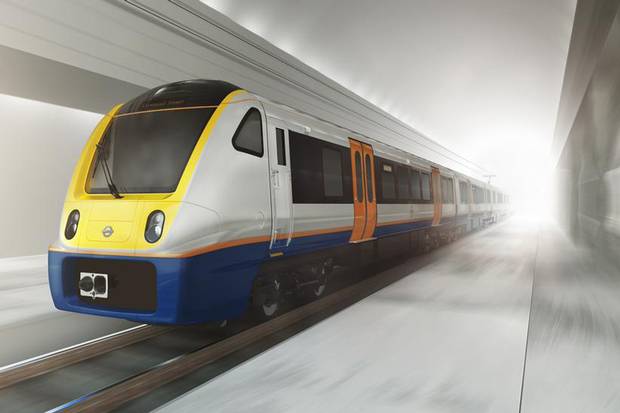
An Artist’s Impression Of A Proposed Aventra
The picture shows the clean lines of an Aventa
FLEXX-Eco Bogies
Boring but the design saves energy.
Low Energy Interiors
Air-conditioning and door and lighting systems have made great strides in recent years on reducing energy consumption.
Improved Energy Storage
The Class 379 Demonstrator used batteries, as nothing else was available. Better technology for this application like large capacitors and flywheels may be better suited to a train.
Because of the steel wheel on steel rail advantage weight is not a problem.
I think in a few years time, trains will use KERS. Like Formula 1, only bigger! It will be more affordable than batteries, as it’s purely electro-mechanical!
Regenerative Braking
Regenerative braking can save large amounts of energy, with Class 390 Pendolinos reportedly saving seventeen percent. But these trains give their generated energy to the overhead lines, whereas an Aventra IPEMU will keep the energy for itself in the storage device, if there is capacity.
From an electrical engineering point of view, I do wonder if energy storage is the best way to handle the electricity generated by regenerative braking, as otherwise it might have to be converted to transmit it back into the overhead wire or third rail.
I can see a time coming, when all electric trains have regenerative braking and energy storage!
Lightweight Construction
This only helps in the acceleration of the train, so it may not be as important as it would seem, because of the steel wheel on steel rail advantage.
Could it be that one of the reasons a High Speed Train rides so well, is that it is built out of steel and is strong and heavy?
Automated Systems
Things like pantograph deployment will be automatic, thus meaning when the train needs to add power and there is an overhead wire, this will be connected to power the train or top up the battery.
Automatic Train Control
But the biggest automation will be in the driving of the train. As on the Victoria Line the driver will tell the train to start and then it will go automatically to the next station. The train will collect information from the timetable, signals, GPS and sensors determining things like weather and passenger load and be driven accordingly.
Planes have been flown like this for many years.
Conclusion
The range of sixty miles quoted for the Demonstrator could be exceeded by a wide margin.
Thoughts On Midland Main Line Electrification
I have been thinking about how the method of electrifying the Midland Main Line might change if the Aventra IPEMU was available.
These are thoughts in no particular order.
The Battery High Speed Train
An Aventra uses a modern version of the same bogies that are used in the Class 222 trains, which are capable of 200 kph. As the Class 387 train, which is a version of the Electrostar, can travel at 110 mph, I wouldn’t rule out that the more modern Aventra could run at 200 kph or 125 mph.
Acceleration on batteries would be the problem, not maintaining a high speed. that had been built up whilst running under the wires.
Also, when the train comes to the end of its northward journey at say Corby, it has to brake. With regenerative braking on the Aventra IPEMU, all of this energy would go back into the batteries.
So does this mean that no charging would need to be provided at say Corby?
I’m not totally sure of the mathematics and physics, but I’m certain that a battery electric train with regenerative braking, would put a significant part of the electricity it would need to accelerate away from a station, into the batteries as it stopped.
This would mean that stops at Wellingborough and Kettering would not stop Corby services from reaching their destination.
St. Pancras to Corby
I estimate that the distance from the end of the electrification at Bedford and Corby station is about thirty five miles.
This would mean that this route out of St.Pancras could be covered by an Aventra IPEMU.
Would this release a Class 222 train for use elsewhere? Or would the Aventra IPEMUs enable East Midlands Trains to offer more capacity or an increased frequency on this service?
St. Pancras to Leicester
I estimate that the distance from the end of the electrification at Bedford and Leicester station is about fifty miles.
This would mean that this route out of St.Pancras to Leicester could be covered by an Aventra IPEMU, especially if it were possible to recharge the train at Leicester, using the sort of short electrification, I wrote about at Rugeley Trent Valley station in Up And Down The Chase Line.
Leicester has problems as a station, as this extract from Wikipedia says.
Train operators using the station include CrossCountry and East Midlands Trains. Due to a 15 mph maximum speed to the south of the station, all passenger trains stop at the station. Up until the winter 2008 timetable, the morning southbound The Master Cutler express from Leeds to London St Pancras was an exception although this now also calls.
Leicester is a bottleneck station as it has only four platforms. All platforms are well utilised, especially platforms two and three which receive freight as well as passenger trains. A freight loop goes to the east of the station alongside the carriage sidings which run adjacent to platform four.
This Google Map of the station shows the platforms and the freight loop.

Leicester Station
It does look that there would be space to expand the station and from this section in Wikipedia, I’m sure Network Rail are working on an upgrade to the area to address all the problems.
It would appear to be stating the obvious to say, that Leicester station must be sorted first before any electrification in the area.
An extra bay platform would probably allow Aventra IPEMUs to run an electrified service to St. Pancras, if East Midlands Trains felt this was needed. Because of the regenerating braking of the train, it might not be necessary to provide a means of charging the trains at Leicester.
Creating A High Speed Route To Chesterfield and Sheffield
A few years ago, much of the Erewash Valley Line was upgraded ready for electrification and high speed running. On the Future of this line, Wikipedia says this.
Network Rail as part of a £250 million investment in the regions railways has proposed improvements to the junctions at each end, resignalling throughout, and a new East Midlands Control Centre.
As well as renewing the signalling, three junctions at Trowell, Ironville and Codnor Park will be redesigned and rebuilt. Since the existing Midland Main Line from Derby through the Derwent Valley has a number of tunnels and cuttings which are listed buildings and it is a World Heritage Area, it seems that the Erewash line is ripe for expansion. As the new signalling is rolled out, train detection is moving away from the traditional Track circuit detection of trains to Axle counting.
So could we see all of the very fastest services from St. Pancras to Chesterfield and Sheffield using this route?
Is the route from Trent Junction in the South to Chesterfield and Sheffield in the North ready for electrification?
Network Rail must ensure that as much of the line is capable of 125 mph running and that all bridges and tunnels have sufficient clearance from London to Sheffield via Chesterfield.
Creeping The Electrification North
From Bedford the electrification would be crept north at a sensible pace, which would be designed to cause minimum disruption to services.
Every mile it went north would increase the reach of the new electric trains, but only after the bottleneck of Leicester was eased to allow high speed running through the station.
The Electric Spine
If the Electric Spine was to be implemented in full from Southampton to Sheffield and Doncaster, then the electrification must be completed North of Bedford.
But as there are a lot of places where the electrification will not be completed elsewhere, will we see a shift towards electro-diesel freight locomotives like the Class 88.
So although freight would take advantage of an electrified Midland Main Line, it may not be as important as many think.
Completing The Electrified Routes to Sheffield, Nottingham and Derby
These three important cities all have extensive local rail networks, that could benefit from an electrified hub, so that Aventra IPEMUs could be used to bring benefits to all the communities served by diesel multiple units and in Sheffield’s case, quite a few Pacers.
So as a minimum, this electrification must be completed.
- East Midlands Parkway to Derby
- East Midlands Parkway to Nottingham
- East Midlands Parkway to Chesterfield and Sheffield via the Erewash Valley Line.
Chesterfield to Derby would probably be filed in the Too Difficult box, but would be an easy run for an Aventra IPEMU.
Note that I would start the electrification from East Midlands Parkway, as this station and the Airport are talked about as destinations for tram-train services.
Obviously to complete the Electric Spine, the following electrification would also need to be done.
- Complete the electrification between Bedford and East Midlands Parkway.
- Sheffield to Doncaster.
But once Sheffield station is electrified none of the many local lines reaching out from the city would need to be electrified, as most services could be run using Aventra IPEMUs. Obviously, if there was a special reason like freight or tram-trains, this wiring would only help the Aventra IPEMUs.
New Elecric Services
Once electrification has been installed up the Erewash Valley Line to Sheffield, lots of important places become within range of Aventra IPEMUs running from St. Pancras.
- Barnsley
- Bradford
- Huddersfield
- Leeds
- Manchester
It would also mean that several existing cross-country services could be run using electric trains.
- Liverpool to Norwich
- Nottingham to Cardiff
- Bristol to Newcastle
Remarkable in some ways as a lot of electrification has been dropped.
The Cost Of Aventra Trains
In various posts, I’ve given a figure for the cost of new Aventra trains as ordered by the London Overground.
London Overground hacve ordered forty five, four-car sets or 180 carriages.
This press release from Bombardier about the order says that the cost of the contract to design, manufacture, commission and service the trains for thirty-five years will be approximately £358million or just under £8million a train.
The press release also says trains will be delivered between December 2017 and October 2018. This means a production rate of sixteen carriages or four trains a month.
A lot of this cost of these trains will be the servicing and maintenance, so we don’t get near the capital cost of the train.
But the figure which works out at £2million a carriage is in line with the cost of Crossrail trains at £2.22million a carriage.
Compare this cost with the purchase of the Class 378 trains by Transport for London in 2008 to run on the London Overground. Read the section on History, which says that 152 individual cars cost £223million or £1.4million each. Which is probably in line with the cost of the Aventra given the seven years that have elapsed.
The \wikipedia aricle also gives details on the sort of leasing arrangement that London has set up.
These costs will be for standard Aventra trains and so any estimate about the extra cost of the energy storage, that I make will be a stab in the dark. Especially, as I doubt all carriages would need batteries.
Thoughts On Electrification
This document is for your eyes only and is to brief you for Monday.
By chance, a few days ago, I happened to go to Manchester with two guys from one of the big insurance companies, who are in to financing infrastructure like housing, office complexes, ports and shopping centres.
Their thoughts led me to this way of thinking.
The Problems Of Electrification
We all know of the problems of electrification and the related one of too few independent powered multiple units.
A few things I have seen and thought.
- Northern Rail has cut back the service between Liverpool and Blackpool to Preston, except for a couple of services. Have they given up temporarily on Blackpool ever getting electrified?
- I feel that electrification is suffering from a lack of resources.
- Electrification in the North West is suffering terrible ground problems.
- The October edition of Modern Railways is saying that there is uncertainty over the start date for the Gospel Oak to Barking electrification.
- If I was looking for conspiracy theories, all references to Midland Main Line electrification has been removed from Wikipedia.
- When a few weeks ago I visited all work between Preston and Blackpool had ceased and they’d tidied it all up. But bridges and platforms looked like they were ready for new four-car electric trains. I wrote What’s Gone Wrong With The Blackpool To Preston Electrification?
- Then today, I went to look at the electrification on the Chase Line and wrote Up And Down The Chase Line.
In both the Blackpool and Chase Lines electrification, they would have appeared to have rebuilt the bridges and lengthened the platforms, but had then tidied up and gone away. There were no piles of uninstalled steelwork for the overhead lines, you see up and down the GWR.
Electrification is said to be paused. These looked very much like long ones to have a serious think about it.
But both lines would accept a four-car diesel multiple unit immediately.
The Aventra IPEMU
Help is at hand in the shape of the new Aventra IPEMU train. ( IPEMU stands for Independently Powered Electric Multiple Unit)
An Artist’s Impression Of The Proposed Aventra
These are facts about the Aventra and its IPEMU variant.
- The Aventra should be a modern train, to as high a standard as any train anywhere.
- Aventras will start to be delivered by the end of 2017.
- All the train and manufacturing technology has been proven for years or is running in the latest Electrostars.
- There has not been one adverse comment on the Class 379 IPEMU Demonstrator, that I can find.
- The Class 379 IPEMU Demonstrator was financed by Abellio Greater Anglia, Bombardier and Network Rail.
- I rode the test train and the on-board engineer told me the performance on battery was the same as an unmodified train and that it had a range of up to 60 miles without overhead power.
- Bombardier have sent me documents that say that all Aventra trains will have the capacity to run as IPEMUs by the addition of an appropriate energy storage device like a battery or supercapacitor.
- Aventras can be introduced on to any line that can handle a modern four car diesel multiple unit, where there is enough electrification at one or both ends.
- Aventras can be changed from standard to IPEMU variant to fit the numbers required for schedules.
- I do wonder if all Aventras would have an IPEMU capability, as this must make operation easier for train companies. If all trains had energy storage, would depots be wire-free for a start?
- There will certainly be 110 mph Aventras, but will they go even faster to say 125 mph?
- Aventras have regenerative braking and may be lighter than Electrostars.
- An engineer who worked on the InterCity 125 said to me, that aerodynamic drag on trains is one of the biggest problems. It also goes up with the square of the speed. An Aventra with its smooth front end will need less power than a corresponding Electrostar.
- There is also a paradox with rolling resistance of steel wheels on steel rails. The more heavily-loaded a train, the less the rolling resistance!
Various rumours are circulating that train operating companies are considering ordering IPEMUs.
- GWR were mentioned in the September Modern Railways.
- Merseyrail were mentioned in the October Modern Railways.
So the concept must have impressed people with cheque-books.
With my electrical engineering hat on, I would add.
- BAe Systems, GKN and others are experimenting with flywheels as energy storage devices for buses and other large road vehicles and specialist applications like KERS in Formula One. I suspect that the technology will end up in trains. Modern Railways is also talking this month about KERS for the Class 230.
- Retrofiting new and improved energy storage systems will be a very simple operation.
- Switching from overhead line or third rail power to battery could be totally automatic and controlled by GPS and ERTMS.
- Some routes like York-Scarborough, may be a bit long for the Aventra IPEMU, as although the train could easily do one-way on batteries, going out and back would not be possible. Some form of charging system, whilst in the terminal platform must be possible. A modern third-rail system in stations? Or a short length of overhead wiring as has been installed at Rugeley Trent Valley.
- Say an Aventra IPEMU was going at 100 mph towards a terminal station, as trains do on many unelectrified lines in the UK. How much energy would be put into the battery by regenerative braking as the train stopped in the station. So calculations of an out-and-back range are complicated and could be much longer than expeced.
- Smart driving systems linked to GPS, ERTMS and people counting and weight calculating software will improve range. As a control engineer, I would never underestimate how far the perfect automatic driver might take a train on a full charge on a predictable route.
Overall, I think that the range of an Aventra IPEMU on batteries will grow! At present all published range figures are based on a cobbled-together prototype, based on an Electrostar built using ten-year old technology. Bombardier have probably created a computer simulation of a definitive Aventra IPEMU, with fully integrated systems running over known routes, which would give true figures.
When the final figure is announced prepare to be surprised!
Where Could An Aventra IPEMU Be Used?
Basically anywhere, where one or both ends of the line are electrified. How about?
- Gospel Oak to Barking – There is enough electrification at the Barking end, especially if the extension to Barking Riverside was built first. It would immediately release eight Class 172s.
- Manchester to Leeds by all routes including Huddersfield and Caldervale. – It’s well under 60 miles and could give Liverpool to Newcastle in under two and a half hours without any more expensive electrification.
- Cardiff Valleys Lines – Electrification has been costed at £350million. At £8million or so for an Aventra IPEMU, it must be cheaper to cut back on the electrification and buy some new trains. No more London cast-offs!
- Hexham to Middlesbrough – It would need some electrification at Middlesbrough.
- Bristol and Teesside Metros and expansion and modernisation of local train services in Birmingham, Edinburgh, Glasgow, Liverpool, Leeds and Newcastle.
- Edinburgh to Tweedbank
- St. Pancras to Hastings and Eastbourne via Ashford.
- Salisbury to Exeter – Probably too long now, but once the technology is proven and a small amount of electrification was put in at Exeter and Salisbury, I think this line will go electric.
- St.Pancras to Corby and Leicester. – This is probably possible and could lead to an interesting philosophy for electrifying the Midland Main Line.
Many routes would need little or no modification, other than to allow four-car trains and adjustments to track and signalling, most of which could be done without too much inconvenience to passengers and train companies.
I am going to see what proportion of the country can be served by Aventra IPEMUs. I suspect, it’s upward of more than fifty percent.
The places that can’t be served are not very many.
- The South-West
- Chiltern
- North Wales
- North of Scotland
- Cumbria
- Lincolnshire
- Around Derby, Nottingham and Sheffield – Until Midland Main Line Electrification.
Some of these like the Devon lines, could be served by Class 230s. Unless it was decided to install a short stretch of third-rail electrification at Exeter, to charge the Aventra IPEMUs.
I think that until proven otherwise,Class 230s trains may join the pile of heroic failures. The Aventra IPEMU can do many of its routes and would be so much better.
Would you prefer a refurbished Ford to a new Jaguar?
Property Development
This may seem a long way from electric trains, but my travelling companions and their eyes like cash registers, got me thinking.
Let’s take an isolated town or city served by a tired branch line or crap trains. Lowestoft, Scarborough, Bury St. Edmunds, Weston Super Mare or Barrow-in-Furness for example. One of my companions suggested the latter!
In many cases, there is a package to be put together of new electric trains, rebuilding the area around the station with new commercial and residential development, that the local authority would find attractive. If the trains were sexy new electric ones, that could take you a lot further than the next large town, they would up the value of the package to the local authority considerably.
These packages would be very easily funded by say large insurance companies, as all the risks are well known and predictable. Once Aventra IPEMUs have proved themselves in service, they will have a risk profile on investment.
Political Considerations
Not my field!
But consider.
- Replacing Pacers in many places is just putting in new trains. In others, it’s using the better examples of the displaced diesel multiple units.
- There are arguments to perform electrification in a series of smaller projects, that minimise disruption to passengers, train companies and services.
- Will any politician object to new British-built trains appearing in large numbers? Especially in his or her patch!
- Some people object to all of money spent on the railways. Reducing the money spent can only give political advantage!
- New trains are visible, schemes like Great Northern Great Eastern Joint Line or ERTMS are not!
- In many parts of the UK, there is a perception that London gets all the investment . With Aventra IPEMUs the investment is spread around.
But surely the biggest political factor, is that elected representatives will get much greater control of the railways in their area.
Problems
Would politicians and people think that their train service couldn’t possibly be improved by a Mickey Mouse concept of large milk-floats with seats?
Bombardier have financial problems and probably not enough capacity in Derby.
Conclusion
I think the concept could be mind-blowing and could transform the UK.
I can’t believe that all this has not been put together before and this led me to the trial of the Class 379 BEMU, which I thought until I rode it and looked at the maths and physics would be a total disaster. There’s a BBC video.
What do the three partners get out of it?
- Bombardier are hoping the technology will sell more trains, other than the few trams, they’ve sold to Nanjing.
- Network Rail remove a lot of difficult lines from the need for electrification. No more dealing with Nimbys, bats, newts, terrible ground conditions and the militant wing of the heritage lobby.
- Abellio at present have three franchises with a lot of lines that could use trains able to run for sixty miles without an external power source. They must know the likely benefits of introducing a new electric service and how much new trains would return.
It does seem that using Aventra IPEMUs is one of these things that just seems too good to be true!
But then if you understand the physics of rolling resistance of steel wheels on steel rails, the improving capabilities of modern energy storage and what modern automatic control systems can perform, it all looks to be not magic but superb engineering from many different fields coming together.
It has all the aura of one of those brilliant concepts put together in a pub, whilst under the influence of copious amounts of alcohol and drawn and written down on the back of those special fag packets and envelopes that engineers use.
I must admit, that I can’t understand, why someone hasn’t done it before.
The only reason I can think of, is that countries like France, Germany, Italy and Japan have had electrified railways for years and so they don’t have the problems we have of unelectrified railways.
Up And Down The Chase Line
I went up the Chase Line to look at the progress of the electrification from Walsall to Rugeley Trent Valley.






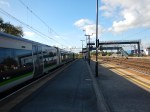
The train was an improvised three-car consisting of a two-car Class 170 train attached to a Class 153 train.
So I have to assume that most of the platforms are probably now long enough for four-car trains. It also looked to my untrained eye, that all the signalling had been renewed and the all the stations were up to a high standard, as they usually are around Birmingham.
The line is fully electrified between Birmingham and Walsall and Rugeley Trent Valley station has a fully electrified bay platform, from where the electrification stretches a couple of hundred metres down the Chase Line.
There was no sign of any electrification work and it was almost if they had tidied everything up and gone away, just leaving a few builders putting the finishing touches to the new and raised bridges on the route. There was no piles of steelwork for the overhead lines or yellow special-purpose vehicles anywhere! I didn’t see them on my last visit to Blackpool, which I wrote about in What’s Gone Wrong With The Blackpool To Preston Electrification?
As the target for introducing electric trains on the route between Rugeley Trent Valley and Birmingham New Street is December 2017, they would seem to be cutting it fine, to get the work done in time. Especially as so many of Network Rail’s projects like the Todmorden curve have been delayed.
A short time ago, I wrote Electrification May Be In Trouble Elsewhere, But The Brummies Keep Marching On, which was based on this article in Rail Engineer, which said it was going so well.
What’s happened?
I have come to the conclusion, that this line could almost have been specially prepared so that it could be run by Aventra IPEMUs.
The length of the section without electrification is only perhaps a dozen miles, so an Aventra IPEMU that charged up on the existing electrification between Birmingham and Walsall, could easily make Rugeley Trent Valley, where it could charge itself again on the new electrification at the station, if it was thought necessary.
I have found this article in the Wolverhampton Express and Star which is entitled Walsall railway bridge rebuild begins in £30m line electrification.
So how much of that cost is electrification of the dozen miles of double-track between Walsall and Rugeley? In this press release from the Green Party, they give the cost of railway electrification at £3million a mile. If that includes bridge and track modification, then that figure ties up well with the £30million for the whole project from the Express and Star, given that as there is electrified lines at both ends, the major cost of bringing power to the new section is probably not very large.
In The Cost Of Aventra Trains, I said that a standard four-car Aventra train will all the extras and servicing costs around £8million. So conservatively, I would suspect that a four-car Aventra IPEMU would come in at a little bit more.
So long as all platforms and the signalling could accept a four-car train, the extra costs of introducing an Aventra IPEMU, should not be much more than training drivers and other staff.
Would the savings on not completing the electrification, pay for the purchase of the probable two Aventra IPEMUs needed to provide a half-hourly service on the lines? As the trains would be faster over the route, two trains might be able to provide a three trains an hour service, which is what Redditch on the other side of Birmingham gets.
Are the clever engineers in Derby, going to give the good citizens of Walsall, a brand new, but very affordable electric train service to Birmingham and Rugeley?
An Alternative Approach To Provide A Local Metro Network
The UK rail industry is looking at the creation or upgrading of three local metro networks Bristol, Cardiff and Teesside. You could also argue, that they are seriously thinking about local networks out of Birmingham, Leeds, Manchester, Newcastle, Nottingham and Sheffield.
The Objectives Of A Metro Network
So what do passengers and train companies want to see in a metro?
I would say that the most successful metro lines we have created in the last few years have been the London Overground lines.
They operate under the following rules and principles.
- Quality electric trains – Quality diesels would be fine in some places
- Frequencies of four trains an hour. – Two or three trains per hour might suffice.
- Clean stations, many of which are step-free.
- A station improvement program.
- Reliable service.
- Visible staff on stations from first to last trains.
- Extensive and visible information and maps.
- Touch in and out ticketing with bank cards.
- Good links to local buses.
The major problem of the Overground is that the trains keep needing to be lengthened, as they get crowded. The Class 378 trains started at three-cars and are now five.
Birmingham, Glasgow, Leeds and Liverpool seem to be using similar principles.
So how do three proposed metro networks stack up?
Cardiff
Let’s look at the electrification of the Cardiff Valleys Lines. According to the Wikipedia, the cost of the electrification is £350million.
I just wonder, if the scheme could be made more affordable, if the project was redesigned to use Aventra IPEMUs. The trains would obviously need sufficient electrification at Cardiff and Newport, so that they would leave the coast for their trips up the valleys with a full charge. Coming down wouldn’t be a problem and as the trains have regenerative braking, they would even charge the batteries.
Extensive testing would be easy once the current is switched on at Cardiff in a couple of years time and the clincher would be if an Aventra IPEMU could take a full load of Welshmen up to Merthyr Tydfil or Ebbw Vale after an international rugby match at the Millennium Stadium.
The scope of work would be greatly reduced.
- Upgrading all stations to take a four car train.
- Upgrading of the track layout and signalling, so that four car-trains could use each branch in an efficient manner.
- There may be a need for some selective electrification, to ensure trains left fully charged, or for other operational reasons concerning diversions from the South Wales Main Line or for freight.
There are advantages to this approach.
- Passengers get shiny new four-car trains, instead of refurbished hand-me-downs.
- As money would be spent on trains, track and signalling rather than electrification, this could mean more trains and increased frequencies on the lines.
- The Aventra trains could also take over some longer distance services to Bristol, Cheltenham, Fishguard and Gloucester.
- Much of the network, probably only needs minimal upgrades to track and signalling.
- There would be little or no heavy construction work in difficult places.
- Much of the construction work on the stations has probably been completed.
- There would be few line closures during the construction phase.
- Bridges and tunnels that are not large enough to accept the overhead wires can be left as they are, unless the line is being opened up for freight traffic running to a larger gauge.
- A higher proportion of the work to do will be general construction, rather than specialist overhead line installation, where there is a chronic shortage of engineers.
- There is little scope for something to go seriously wrong.
- The major source of delay would be late delivery of the Aventra IPEMU trains, but this would only mean that the diesel trains that currently work the line, would continue to serve the line for longer.
It strikes me that this approach has only one loser – the construction companies, who have helped create the electrification fiasco we have in this country. Passengers, train companies and the Welsh economy would all benefit!
According to this article on Global Rail News, London Overground’s contract for 45 Aventra trains is worth £260million. This works out at around £5.8million for each train. If the Aventra trains could work the Cardiff Valley Lines, with a little bit extra for the batteries or other energy storage device, twenty trains would probably cost around £140million or £7million a train.
I don’t know how many four-car trains they’d need to work the Valley Lines, but surely there is a trade-off between electrification and Aventra IPEMUs.
I can’t believe that Network Rail are not looking at this alternative approach, where instead of spending money on expensive and difficult electrification, the money is spent on shiny new trains built in a nice warm factory.
Teesside
The Tees Valley Metro is rather stillborn. The only thing that happened was the creation of James Cook station.
But there are two small electrification projects that could happen in the area in the near future.
- Hitachi are building electric trains at Newton Aycliffe and this will probably mean that the Tees Valley Line will at least be electrified between the Hitachi factory and the East Coast Main Line at Darlington.
- Plans exist to electrify between Middlesbrough and the East Coast Main Line, so that the town could benefit from a much improved train service.
If say this electrification were to be sufficient so that Aventra IPEMUs could be fully charged as they travelled from say Saltburn to Bishop Auckland, Phase 1 of the proposed Tees Valley Metro would get the new trains it will need.
Improve the stations and add a few new ones and you’d have a local railway to rival any in the UK.
In some ways if Aventra IPEMUs were used to develop the Metro everything would be in the opposite order to the traditional way of rebuilding a local line.
Normally, you close a line at great inconvenience to everyone, do a lot of construction and then spend months testing the new trains or trams, before a grand opening.
Compare this to upgrading a new line to run Aventra IPEMUs,
- Any work on the line to perhaps lengthen platforms and passing loops, and update signalling would be done first.
- Provided there is enough electrification to charge the trains, Aventra IPEMUs can be introduced alongside the existing trains, as they arrive from the factory and drivers and other staff have been trained.
- Adding new stations, is just a series of small well-defined construction projects, programmed to be done at convenient times and according to the budget.
- Other existing lines can be added to the system, if they are within the capability of the train and the platforms, track and signalling can accept the new trains.
A local network can be built by stealth in a series of small steps.
In Teesside’s case, you would certainly add the Phase 2 of the proposed Teesside Metro between Nunthorpe and Hartlepool.
An interesting possibility would be the Esk Valley Line to Whitby, if the Aventra IPEMU could manage the distance. If it couldn’t a Vivarail D-train certainly could.
Looking at the map, I feel that an Aventra IPEMU could be used on the Northern Rail service from Hexham via Newcastle, Sunderland, Hartlepool and Middlesbrough to Nunthorpe. It would charge the batteries running through Middlesbrough and Newcastle, and I don’t think any of the unelectrified stretches of line are more than thirty miles.
Bristol
Bristol has plans for creating a Metro, based on the two stations at Bristol Temple Meads and Bristol Parkway, which will be electrified (hopefully!) in the near future.
There are lines going all over the place providing services from outlying suburbs and towns to the centre.
Bristol has an opportunity to create a metro in the area, by upgrading all of the lines so they can take four-car trains, with longer platforms and updated track, signalling and stations. But in common with the rest of the country, there isn’t really any sensible trains available, although services could be developed using a collection of Pacers, D-trains and dodgy diesel unit.
However, once the two main stations are electrified, when the budget allows, Aventra IPEMUs could be introduced to the network.
So instead of one massive and expensive project, the metro is created in a series of small steps that don’t inconvenience passengers or train companies.
Other Services
When I discussed Teesside, I said this.
Looking at the map, I feel that an Aventra IPEMU could be used on the Northern Rail service from Hexham via Newcastle, Sunderland, Hartlepool and Middlesbrough to Nunthorpe. It would charge the batteries running through Middlesbrough and Newcastle, and I don’t think any of the unelectrified stretches of line are more than thirty miles.
How many other lines and services fall into this category of lengths of electrified line joined by no more than a total of sixty miles of unelectrified line that can easily be bridged by an Aventra IPEMU running on batteries?
I think these lines could fit the profile.
- Blackpool South to Colne – When Blackpool electrification is finished
- Carlisle to Newcastle
- Hexham to Middlesbrough
- Liverpool and Manchester Victoria to Leeds, York and Newcastle – The gap is just 43 miles
- Liverpool Lime Street to Manchester Oxford Road via Warrington Central
Many are currently served by Pacers and others are served by diesel multiple units like Class 150 or Class 156 trains, that could in turn replace Pacers.
The most significant line is the TransPennine route from Liverpool to Newcastle, which could really transform travel by being run by four-car Aventra IPEMUs rather than inadequate three-car Class 185 diesel trains.
Someone at Bombardier has done a very good job in designing a train to circumvent the problems of electrification in the UK.
Project Costs And Cash Flows
I would be interested to see properly audited figures for the traditional electrification approach and one using Aventra IPEMUs.
There are surely various benefits that the Aventra IPEMU approach will bring to the costs.
- The costs of the trains will be just a matter of negotiation, whereas the cost of electrification is not so predictable.
- Enlarging bridges and tunnels to take the overhead wires, is an expensive process and often results in unexpected problems, that cost a fortune to solve. With the Aventra IPEMU, most infrastructure can be left untouched, unless it needs to be replaced anyway.
- Most construction to accept the new trains, will be small projects, that can be handled by any competent construction company, whereas overhead line installation is a specialist construction job.
- Electrification often seems to attract those who object to the overhead line equipment spoiling the view of an important rural landscape or cityscape. Aventra IPEMUs only need sufficient to charge the batteries.
- With the Aventra IPEMU approach some new trains could be working on the network much earlier than they would be under a traditional approach. In some projects, will this have a beneficial cash flow?
I also come to the conclusion, that the Aventra IPEMU approach is more likely to deliver an affordable project on budget to an agreed time-scale, as the risk profile of electrification is so much worse than building a train on a production line in a factory.
One of the benchmarks of good project management is being able to deliver what is agreed. I believe that an Aventra IPEMU approach is much more likely to hit targets, as there is much less to go wrong.
Railways in the UK need a succession of successful projects, that impress engineers, train companies and passengers alike.
What better way to restore their credibility than for Network Rail, to deliver a series of projects that give millions of passengers efficient new electric train services all over the country.
London Overground To Get New Aventra Trains
Several reports like this one on Global Rail News are showing that the new Overground trains will not be Class 378 trains, but Bombardier Aventras.
They will probably be very similar to the new Class 345 trains for Crossrail, which are also Aventras.
It probably doesn’t make much difference to London Overground, as there probably isn’t going to be any problems about running both trains on the same line, if they need to.
The bigger winners may well be Bombardier, who according to this article in the Derby Telegraph are investing in a new production, testing and office complex.
Bombardier might want to build a few of the trains for the Overground before those for Crossrail, so they can see how they perform in service
 The Anonymous Widower