Surprising Barnsley
Some of the places I’ve visited on my travels like Scunthorpe and Middlesbrough could not be described as places that make the most of what they’ve got.
What I would find, as I went north on my train from St. Pancras, I did not know.
I actually travelled north with three young Millwall supporters, who were supporting their team at Sheffield. When I said, that I’d had a stroke, one of them said his brother had too. At just 16 too! So we can’t all be too careful, can we?
But the Interchange station at Barnsley was a surprise.
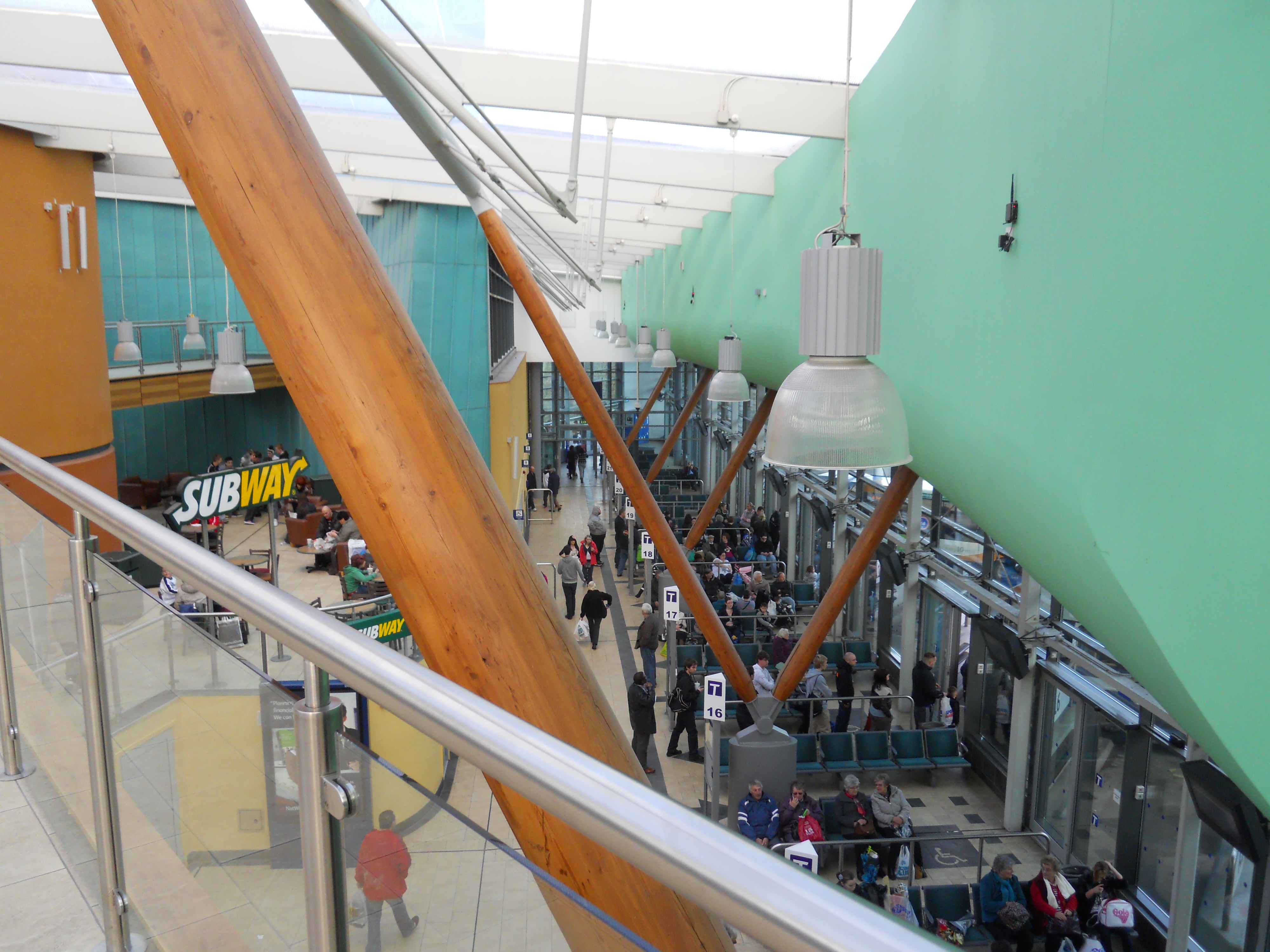
Barnsley Interchange
Very often, stations are badly designed and in the wrong place in the town, with poor interchanges to other modes of transport.
Cambridge is a classic example, in that it’s some way from the city centre, the buses to get aren’t obvious and also for the amount of trains that call at it, it isn’t big enough. I suspect too, that the ill-fated busway will have a terrible interchange, when surely one of the reasons for the busway, should have been to get passengers to the trains. But trains and buses operate under different budgets and compete with each other, when they should be complimentary.
There is no such problem in Barnsley in that the station lies alongside the town centre and contains not only the train station, but the bus station as well. The football ground, Oakwell, is a ten minute walk the other way.
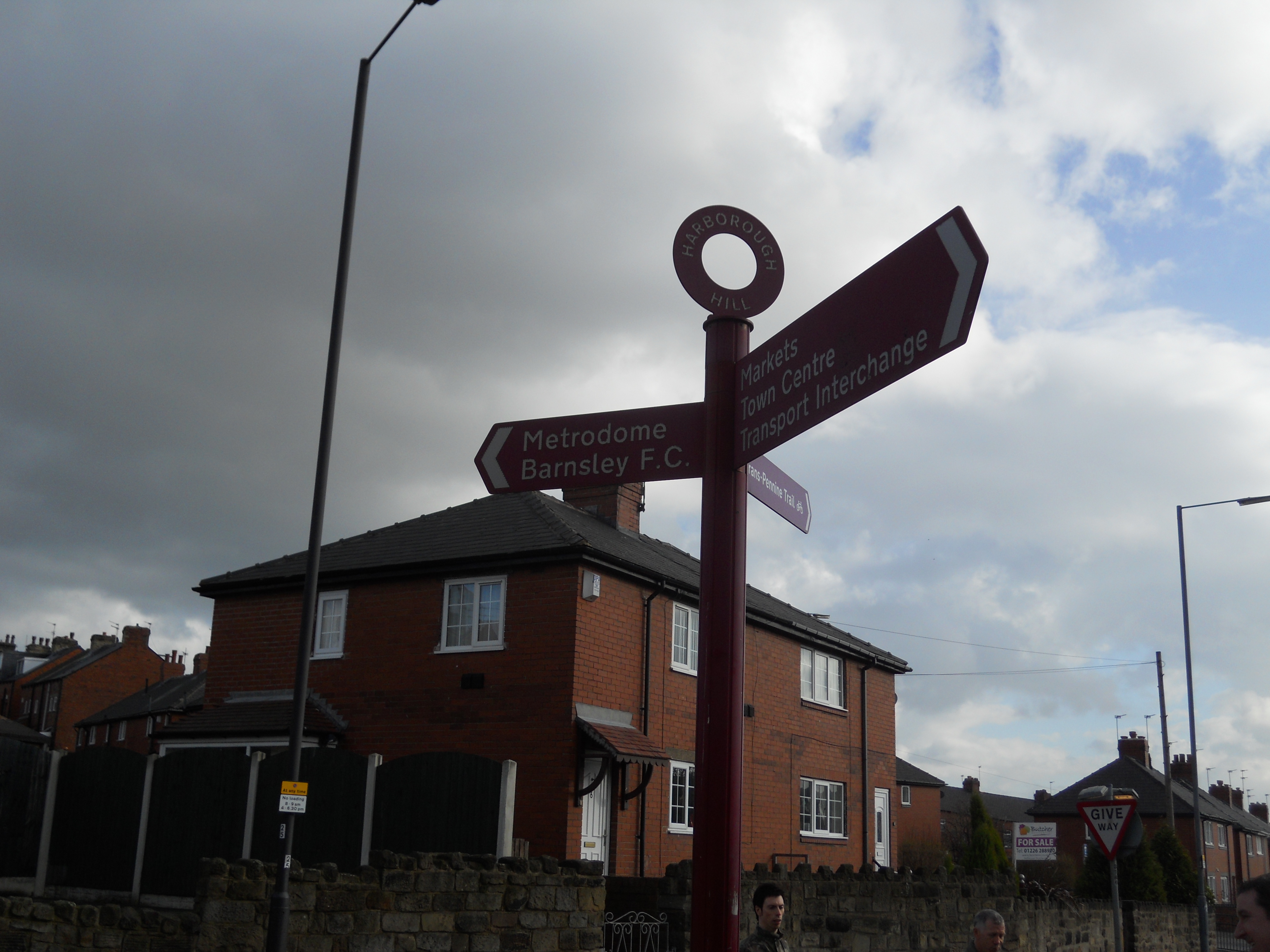
Barnsley Signs
Signage, as so often could be better and more numerous, but then it’s difficult to miss Oakwell. But at least in Barnsley the signage is there, which can’t be said for Edinburgh, which is supposed to be a tourist destination.
You actually walk up a hill to the ground and then approach it downhill, through what is a grassed car park.
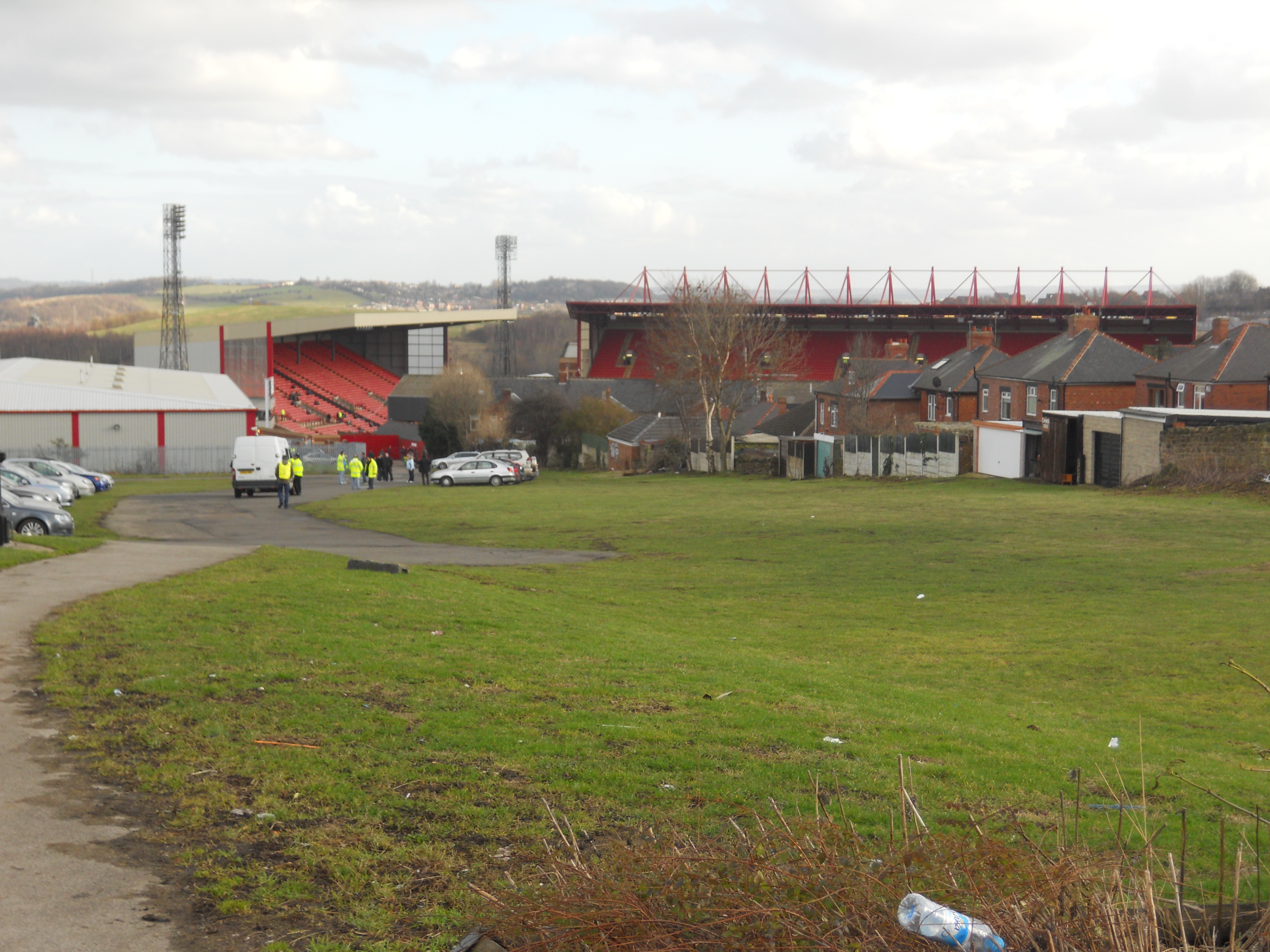
Walking Down to Oakwell
In some ways the approach is more like one you find at small non-league stadia, rather than one that incoprates 23,000 spectators.
The football was a bit disappointing in that Ipswich gave away a winning lead in the last minute.
But all-in-all, it was a good day out! I felt especially good as I walked up the hill towards the station without a hint of being out of breath. Perhaps it was the sun, that we’d enjoyed all day.
The Monster Loony Party’s Thoughts on the Cambridge Busway
This story is priceless and puts one of Britain’s worst transport projects in perspective.
Loony politician Lord Toby Jug has launched a campaign to have Cambridgeshire’s guided bus route rebuilt in rubber and stretched to the Channel Isles so St Ives can become a tax haven.
Lord Toby, leader of the Cambridge and Huntingdon branch of the Official Monster Loony Party, is also campaigning to have a witch-ducking stool built on the Quay at St Ives.
This would be used so that council officials who came up with the “crackpot” guided bus scheme can be dunked in the River Great Ouse every hour.
Lord Toby Jug is also raising money for Alzheimer’s Disease research.
Travels in the Snow
I had to go to London today, to see the man, who is decorating my new house and make sure everything was OK.
I was dropped at Whittlesford and the trains were running very much to time. As a fallback, I checked that the new Holiday Inn at the station was open, so if I needed to wait for my taxi, then I could do it with a coffee in the warm. It was, so that was probably an omen that I wouldn’t need it.
I didn’t take my normal route to Highbury and Islington from Tottenham Hale, but instead took a bus from Seven Sisters through Stamford Hill and Stoke Newington to the Essex Road. It worked and I had a much shorter walk than I normally do.
Everything was going well, so because of the weather I checked on a few things and walked to Carluccio’s in Upper Street for some lunch. After an excellent risotto, I walked to Highbury and Islington to get back to Totteham Hale.
I won’t say my troubles started there, as compared to many others, I didn’t suffer much. The Cambridge trains weren’t running, so it was suggested by staff that I go to King’s Cross and get a train from there.
Now the company that goes out of Kings Cross is First Capital Connect, which is a different one to that out of Liverpool Street. So I was worried that my ticket might not be valid!
By 16:30, I was in Cambridge, only to find that there were no trains to Newmarket, so I took the bus to the main Cambridge bus station, intending to get a bus to ether Newmarket or Haverhill. It actually doesn’t matter which as there are good taxis home from either, but the ones from Haverhill are slightly cheaper, as the town is closer. There was a large crowd waiting for the Newmarket buses, so as one was just leaving for Haverhill I took it. Unfortunately, it was a slow one, so I had an extensive tour of the many estates that surround the town before I got a taxi home.
If there is anything positive about today, it is that public transport must be flexible and that tickets must be interchangeable, if one service fails. Except for the taxi, which I would have had to pay for, wherever I returned home from, everything was covered by my day retiurn and Travelcard from Whittlesford or my bus pass.
Except for my walk too, everything was clean and warm and as I sat upstairs in the front of the bus from Cambridge to Haverhill, I was able to complete the Sudoku from the Times.
The one thing though that would have improved my journey would have been the unopened Cambridge busway, which surely will make getting from Cambridge station to the city centre aot easier. Or it might do in the future, if has been designed properly. And on that subject, shouldn’t the busway and the trains interface properly with buses that go to inaccessible towns like Haverhill?
Incidentally, it appears that the trains from Tottenham Hale are now running to time, so perhaps my diversion to King’s Cross was unnecessary.
It also seems that the overhead electric trains to the north of London are much more reliable than those to the south using a third rail for power. My engineering knowledge would suggest that overhead electric trains perform better in snowy weather, but I’m happy to be corrected. If this is true, it is rather strange that some railways south of the Thames were electrified using overhead cables, which were then changed for thrd rail. But the history of railway electrification in the UK is as complex as you can get, with innumerable systems, changes of policy and objectives. Read a simple history in Wikipedia.
The Cost of the Cambridge Busway Climbs Again!
It now looks that the cost of the infamous Cambridge guided busway is climbing again according to this article. Possibly to as much as £181million. That looks like a 56% overspend, by my simple accounting methods, but I know politicians use other methods, that spin things in a better light.
Is the Cambridge Busway Britain’s Worst Transport Project?
It may not be Britain’s as the Edinburgh Tram will take a lot of beating. But it is certainly England’s, especially if you read this report in the Hunts Post.
Here’s a flavour of the report.
Building the St Ives-Cambridge guided busway is now expected to cost nearly two-thirds more than the target price – an overrun of well over £50million.
Cambridgeshire County Council, which is promoting the scheme, expects construction to have cost £142m.
When the cost of land, the county council’s own costs and those of its engineering consultants Atkins are added, the total cost of the project looks set to reach £170m before the High Court decides who pays the final bills.
When originally proposed in the early 2000s, the scheme was costed at £56m. After a few modifications, a lengthy public inquiry and Government approval, the bill had risen to £116.7m. The Government promised to chip in £92.5m, with the balance coming from developers who would benefit from the project.
As with many of these fiascos, it’ll be the lawyers who make the real money.
Cambridge Bus Chaos
After lunch I had to virtually walk halfway to Addenbrooke’s as Cambridge city centre is all dug up and the buses have been diverted. I was nearly at the station before I found one going to the hospital.
Let’s hope it all gets better when and if the Busway opens!
Stagecoach’s View on the Cambridge Busway
I took this picture yesterday.
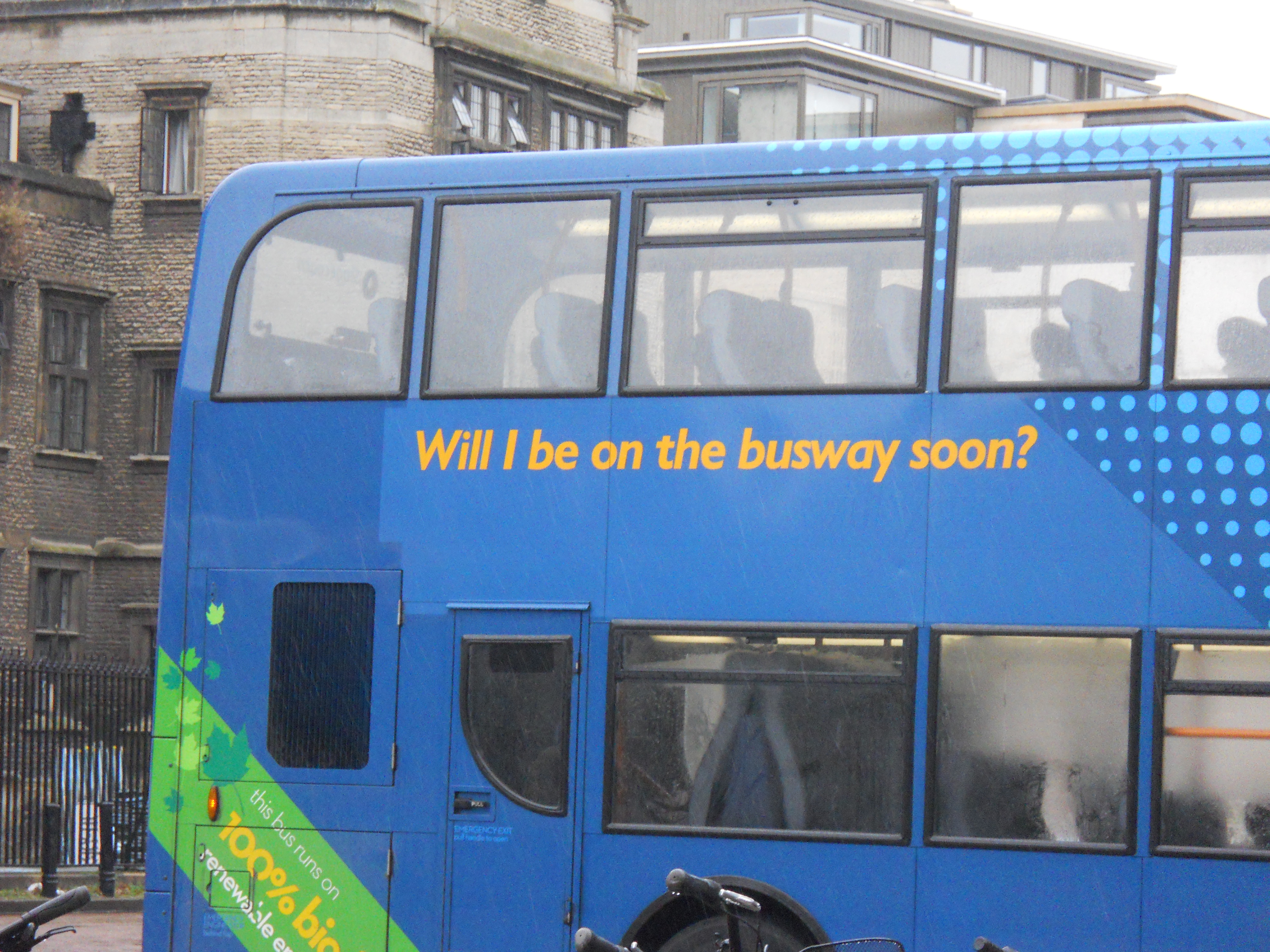
Will I be on the busway soon?
Airdrie to Bathgate
Modern Railways also has an article about the opening of a new electric railway between Airdrie and Bathgate, which effectively creates a fourth link across Scotland’s central belt between the two main cities of Edinburgh and Glasgow.
I’ve read the article in detail and it states that a new station is being built at Drumgelloch to serve just 3,700 local inhabitants. This really shows how different rules starve East Anglian stations of money. Bury St. Edmunds for example has a population of 35,000 and the best thing that could be said about the station is that it compliments the Abbey Ruins. Haverhill has a population of 22,000 and no train station at all.
I think East Anglia could take a leaf out of Scotland’s book and reinstate the line between Sudbury and Cambridge. But that will never get done in my lifetime, despite the fact it could probably be done for a lot less than Airdrie to Bathgate.
The only thing we get is other areas’ hand-me-downs and a virtual busway.
The Cambridge Busway Approaches the Station
As I retirned to the station on the top deck of the bus, I was able to get a good view of the busway as it approached the station from the south, alongside the railway lines to London.
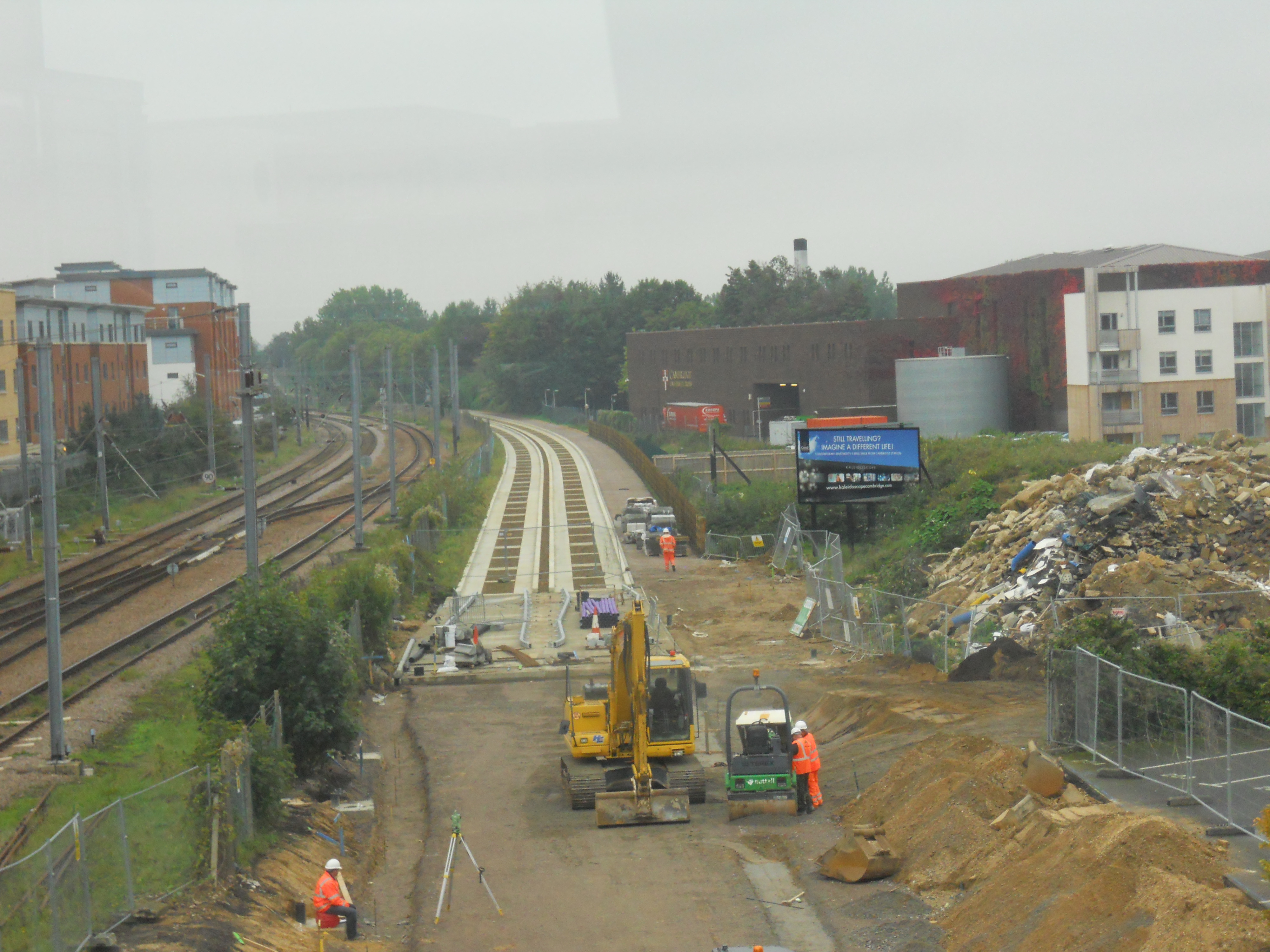
Cambridge Busway to the South of the Station
If it ever gets finished it will make getting to Addenbrooke’s from the station a lot easier.
But then they have to finish the bridge, which should have been completed months ago.
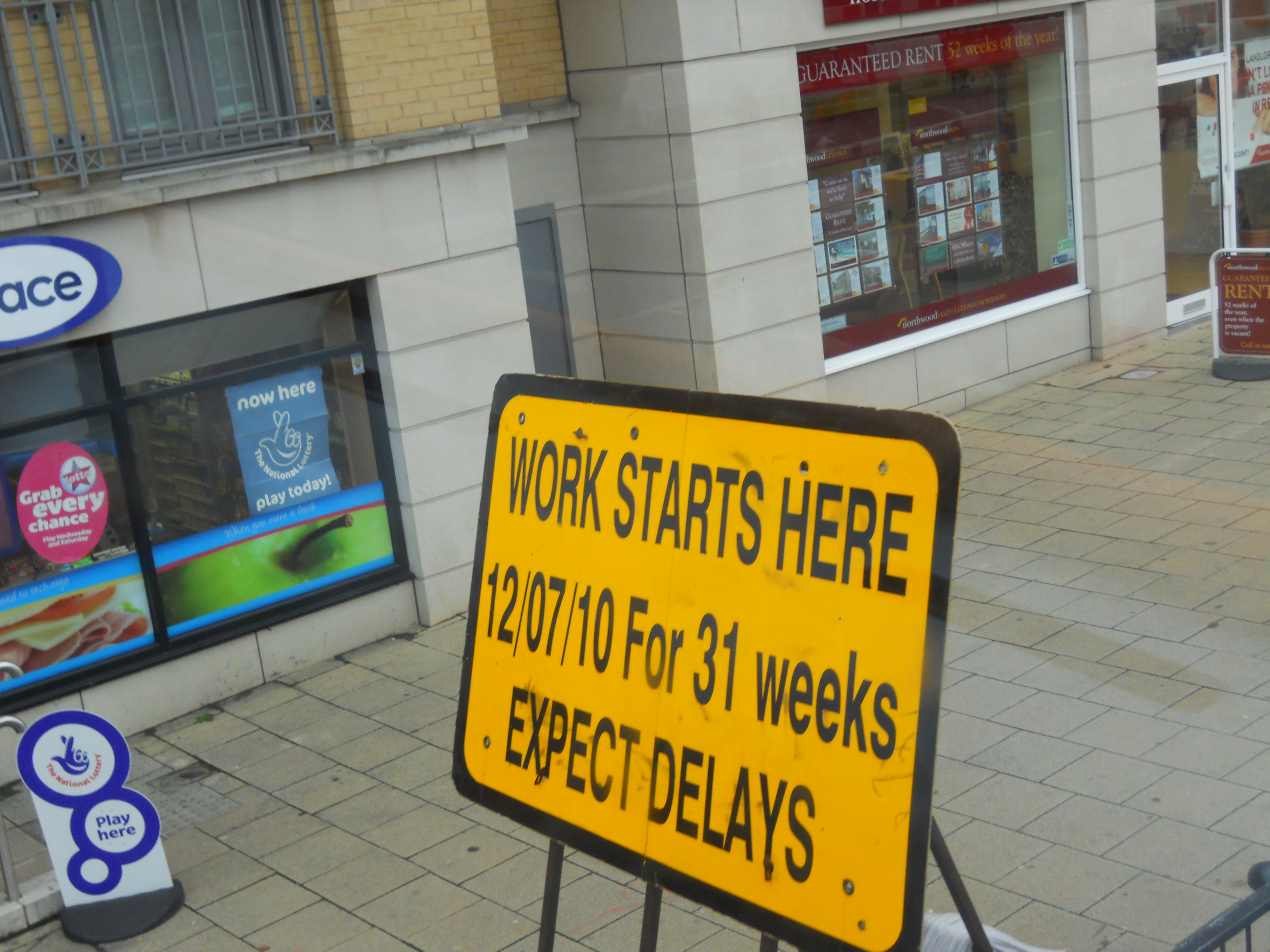
More Delays for the Busway
The sign says that there will be delays until well into the New Year!
It’s not just the quality of the planning on this important project that worries me, it’s the attention to detail in the design and the defects that seem to keep arising. As I said before this project was designed for the lawyers.
 The Anonymous Widower