How Would IPEMUs Fit With The East West Rail Link?
I feel very much, that IPEMUs or battery trains are very much going to be a part of the UK rail network in the next few years.
When I was writing Are The TOCs Arguing Over The Class 387 Trains?, I kept coming across the Oxford end of the East West Rail Link, so I got to thinking how IPEMUs would fit in with the line.
Will the Line Be Electrified?
The Government certainly thinks so, as Wikipedia reports.
The Secretary of State for Transport, the Rt. Hon Justine Greening MP, today announced that the Western section of East West Rail (EWR) will be part of the government’s strategy for rail transport, confirming not only funding for the project but also for electrification of the Oxford to Bedford part of the route. EWR will provide an electric link between the electrified Great Western, West Coast and Midland main lines. This further investment in the project upgrades it to form a key part of the new ‘Electric Spine’ passenger and freight route between the South Coast, the East Midlands and Yorkshire
But I’m not sure.
- Will freight operators pay out for new electric locomotives or will they stick with their old noisy and smelly Class 66 locomotives? I’m afraid most will stick with what they’ve got!
- The new Class 88 electro-diesel locomotive will be delivered this year and what effects will they have on locomotive procurement?
- One of the major intersecting lines is Chiltern, which is not electrified. Will the Chiltern Line be electrified to make things easier? It could be! But I doubt it!
- After the fuss about the aesthetics of the electrification on the Great Western Main Line, that I wrote about in Aesthetic Problems With Overhead Wires On The Great Western, I have a feeling the natives might object.
- When they see the total bill for the Great Western Electrification, will the Government have second thoughts about electrification?
I think the line will eventually be electrified, but it may not be built with electrification, just as the first section between Bicester Village and Oxford Parkway stations was.
It would be built however, so that it would be easy to electrify in future.
- All over-bridges would have sufficient clearance for overhead wires.
- Space would be left for overhead gantries and other essential electrification equipment.
- Piles for gantries might even be put in.
- Everything would be properly documented.
Too many railway lines in the past were just built and assumed no improvements would ever be made.
Connection To Existing Electification
One of the most expensive items in an electrification scheme can be connecting the new wires to a suitable electricity supply.
This is why Crossrail and the Great Western Electrification share a sub-station to the West of London.
The East West Rail Link crosses a succession of lines at its Western End from Oxford to Bedford. In order from the West they are.
Only the Chiltern Main Line will not be electrified, when the Oxford to Bedford part of the link opens.
The route from Bedford to Ipswich and Norwich is not fully defined yet, but it is likely it will cross these electrified lines.
So the link, isn’t short of connectivity to electrified lines, which will help with full electrification.
The Route
This map from the East West Rail Link web site shows the route.
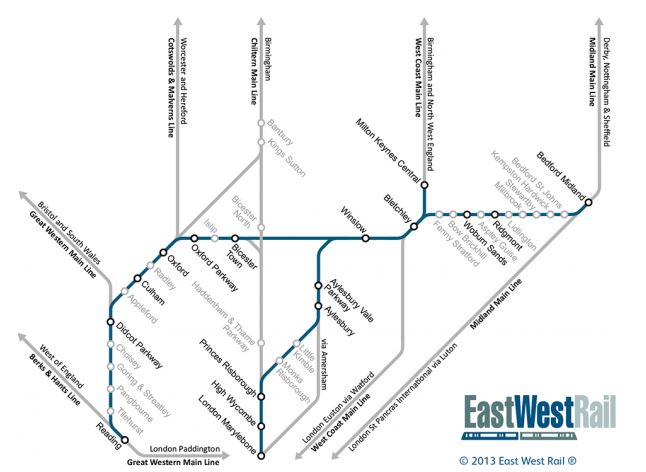
East West Rail Link
Starting from the West stations are.
- Reading on the Great Western
- Tilehurst on the Great Western
- Pangbourne on the Great Western
- Goring and Streatley on the Great Western
- Cholsey on the Great Western
- Didcot Parkway on the Great Western
- Appleford on the Cherwell Valley Line
- Culham on the Cherwell Valley Line
- Radley on the Cherwell Valley Line
- Oxford on the Cherwell Valley Line
- Oxford Parkway
- Islip
- Bicester Village
- Winslow
- Bletchley on the West Coast Main Line
- Milton Keynes Central on the West Coast Main Line
- Fenny Stratford on the Marston Vale Line
- Bow Brickhill on the Marston Vale Line
- Woburn Sands on the Marston Vale Line
- Apsley Guise on the Marston Vale Line
- Ridgmont on the Marston Vale Line
- Lidlington on the Marston Vale Line
- Millbrook on the Marston Vale Line
- Stewartby on the Marston Vale Line
- Kempston Hardwick on the Marston Vale Line
- Bedford St. Johns on the Marston Vale Line
- Bedford on the Midland Main Line
It’s quite a few stations, many of which are simple affairs in rural locations.
IPEMUs And The East West Rail Link
Proposed services when they start in 2019 will include.
- Bedford – Oxford – Reading
- Milton Keynes – Oxford – Reading
- Milton Keynes – Aylesbury – Marylebone
The first two services could be easily run by IPEMUs, but the third might need other arrangements.
According to the latest Great Western electrification schedule Oxford is not scheduled to be electrified until June 2019, so as I believe that Oxford will be reached by IPEMUs until that date, I suspect that we’ll see IPEMUs on the line, as they will be able to easily bridge the fifty mile electrification gap between Didcot on the Great Western and Bletchley on the West Coast Main Line, charging their batteries at both ends of the route.
The London to Aylesbury Line is thirty-nine miles of which sixteen miles are owned by the London Underground. Could it be if the line between Aylesbury and Winsford were to be electrified and some form of third-rail power was made available on the sixteen miles of the London Underground, that IPEMUs could work the services between Marylebone and Milton Keynes?
If they can’t, then it will be more diesels from Chiltern. But Chiltern’s ambitious nature, says they would prefer some form of electric train.
If the lines were eventually to be fully electrified, the IPEMUs would still have a valuable part to play as their self-contained regenerative braking would mean that the power supply wouldn’t have to be able to accept a return current, which lowers the cost of electrification.
Conclusions
IPEMUs will have to play some part in providing services on the East West Rail Link, because of the late running of the Great Western electrification.
Also with some selective electrification, Chiltern could use them for a service between Marylebone and Milton Keynes.
As these trains can provide a service on the whole line using existing electrification, the electrification of the East West Rail Link should be enabled but delayed to allow wires to be put up in more important places.
What Will Oxford Think Of This
Over the last couple of years, certain interest groups in Oxford have not been very pleased with the plans of Network Rail, Chiltern Rail and Great Western Railway to give the city an improved rail connection.
I wrote about this opposition in Network Rail’s Problem In Oxford.
So I was surprised to see this article on the BBC web site, which is entitled Oxford station design competition winners revealed. This is said.
Three competition ideas have been picked to help secure funding for a £125m revamp of Oxford railway station.
Six architects submitted designs to a contest launched in December by the city and county councils.
A proposal featuring a rooftop restaurant by firm AHR was chosen by a panel of judges and scored 70% in a public vote.
This is an image from the article of the winning design.

New Oxford Station Design
I agree with the panel and the general public.
But is it too good to be wasted on Oxford?
Capturing The Benefits Of HS2 On Existing Lines
This is the title of a report written in 2011 by Greengauge 21.
This is how the report starts.
When High Speed Two (HS2) is complete, the longer distance, non-stopping trains on the West Coast Main Line (WCML) will in the main transfer to the new, quicker, route, freeing up valuable capacity. However, until now plans for services on the WCML once HS2 is open have been broad brush assumptions made for the purposes of completeness in the economic appraisal. This report looks ahead in more detail to consider what services should operate on the existing rail network once HS2 is open. The aim is to help kick start the development of this wider strategy in which the benefits of HS2 are maximised, not just for those using the new line, but for travellers on the existing railway. The effective re-use of the capacity released by HS2 is a key project benefit. It will allow new local and regional passenger and new freight trains to operate: services that are and will continue to be prevented by network capacity constraints.
It is well worth reading the full document, even though it was written in 2011,, as I think it explains how HS2 could benefit those other than those, who want to get quickly between London and Birmingham.
Places With Better Services To And From London
The report singles out three areas, that could benefit from a freed-up West Coast Main Line between London and Birmingham.
It says that the following places.
- Walsall
- Shropshire
- Mid and North East Wales.
Could all gain new direct services to and from London.
Feeders To The West Coast Main Line
The report talks about how three new or improved lines and schemes will act as feeders to the services on a West Coast Main Line, that will have more capacity for semi-fast services, connecting London with Birmingham, Liverpool, Manchester and Scotland.
- The Croxley Rail Link will link Watford to a wide area of Hertfordshire and Buckinghamshire.
- The East-West Rail Link intersecting the WCML at Milton Keynes would improve services from a lot of the South Midlands and East Anglia.
- Improvements between Leamington and Nuneaton (Nuckle) would improve connections for Warwickshire.
These three schemes are now progressing and will be fully working by the time HS2 opens in 2026.
Chiltern Electrification
The three feeder schemes mentioned above all contain two ambitious words Chiltern Railways.
Consider the following.
- The Croxley Rail Link could and probably will be extended to Amersham via Rickmansworth.
- TheEast West Rail Link will deliver a Chiltern service from Marylebone to Milton Keynes via Aylesbury.
- The Greengauge 21 report talks of a Marylebone to Coventry service via Leamington and Kenilworth.
- Oxford to Milton Keynes will be electrified.
- Chiltern use some rather elderly but excellent diesel trains.
- Coventry, Milton Keynes and Watford are already electrified.
I can’t believe that there is not more talk about electrifying the Chiltern Railways network.
I don’t think that Chiltern Railways would need full electrification, if they were to use IPEMU technology in conjunction with some limited electrification.
- The Snow Hill Lines in Birmingham, perhaps as far south as Leamington.
- The southern section of the Chiltern Main Line, perhaps between Marylebone and High Wycombe.
Electrification is a future aspiration of Chiltern Railways and it could give a second 125 mph line between London and Birmingham.
This would mean that a much increased number of towns would have a high speed connection to both major cities and many places in between and North of Birmingham.
I think that enabling electric trains to use the Chiltern Main Line and the Snow Hill Lines, should be given a high priority.
Connecting To The Chiltern Main Line
I took these pictures as my train came back from Oxford Parkway station rejoined the Chiltern Main Line using the Bicester Chord.




I think that no-one could complain about the quality of all the work.
The New Service Between Oxford Parkway And Marylebone Starts Today
Chiltern are starting their new service to and from Oxford Parkway station today and this article in the Bucks Free Press entitled Commuters predict overcrowding when ‘major’ changes are made to train services has a distinct feel of gloom.
Here’s a flavour.
Some features of the new timetable include scrapping the 7.40 Gerrards Cross to Marylebone service, leaving passengers to catch the 7.49 to London, which will be formed of seven carriages instead of five.
But I liked this comment added to the article.
Is this the same part of South Bucks that has been campaigning vociferously against building new railways? That’s fine, but you can’t then complain when the existing ones run short of capacity which has to be redistributed occasionally.
My only worry about the service, is whether Marylebone is big enough to cope with all the new traffic.
Although, as someone who’s only ever commuted for perhaps a year in his life, I can’t understand why anybody would want to spend three hours or more of every working day on the train!
I do actually think, that when Crossrail has opened and Great Western Railway starts running electrified services to Paddington and effectively the West End, the City and Canary Wharf, there will be a swing back to the traditional route.
The Station With The Least Passengers In London
After my visit to the truly dreadful Angel Road station, which has the next-to-least number of passengers, I just had to go to the only station, which attracts even less.
I arrived at the station at 10:42 after a really tedious journey on the Victoria and Piccadilly Lines, which were both very crowded. To make matters worse, the train was held for several minutes at Acton Town station.
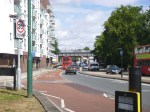
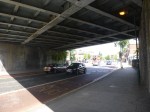


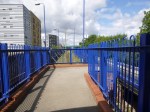
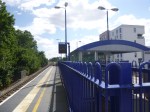
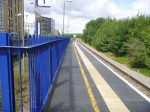
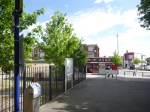
I think that the problems with Sudbury and Harrow Road station are not the normal ones of filth and squalor. In 2013-14 it had just 18,700 passengers.
Although I just missed the last morning train into London at 10:41, I don’t think you can blame neglect on the part of Chiltern Railways.
The main problem I could see was that there is no pedestrian crossing close to the station, as is normal for stations on a busy road. So those needing to get a bus to and from home might go to a station where the walking route is easier.
All the other problems were minor, like the fact that the station sign is not easily visible and there isn’t really a good drop off point for passengers.
Chiltern seem to have spent money here, but they haven’t drawn in the passengers. But then they haven’t done too well in the next station, Sudbury Hill Harrow.
West Hampstead Station: A Tangle Of Property Development And People To Solve
West Hampstead station is one of those North London Line stations, that has narrow platforms, which need lengthening and a cramped station building with no step-free access. The station also sits in the middle of a large property development. This Google Earth image shows the station.
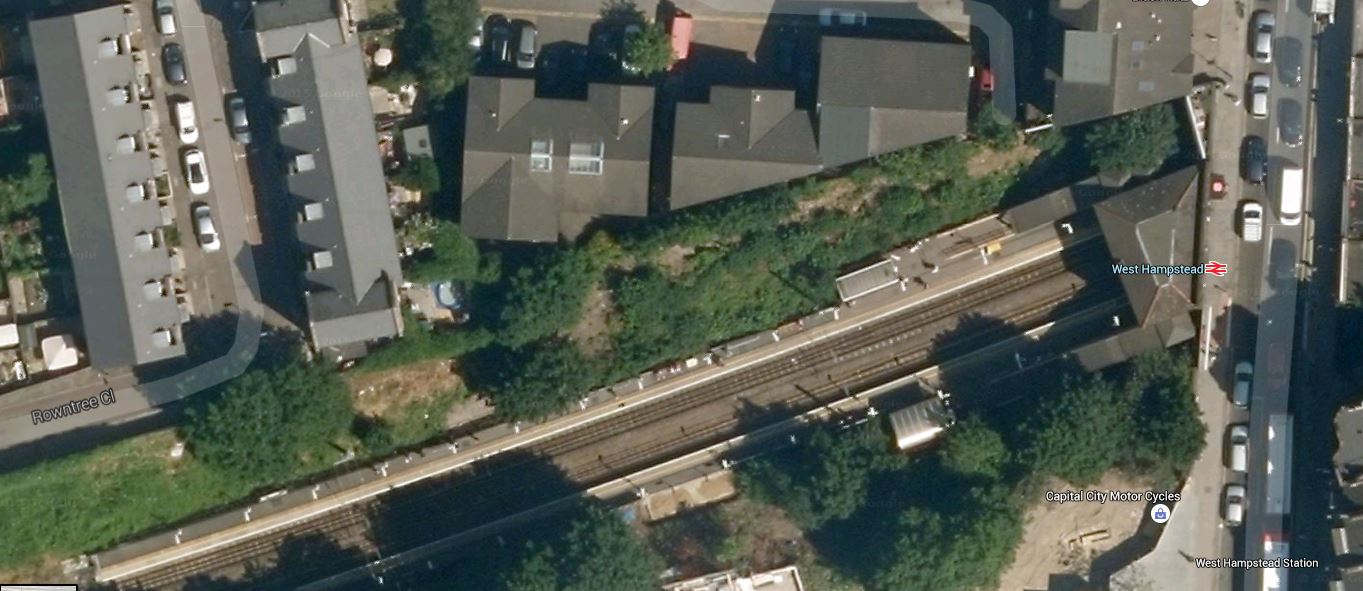
West Hampstead Station
This was obviously taken before the development started. There were plans for a grand West Hampstead Interchange, drawing the four rail line in the area; Underground, Overground, Thameslink and Chiltern together in modern stations linked by a boulevard.
This page on the London Borough of Camden web site, is a pointer to some documents. This Google Earth image shows the various rail lines.
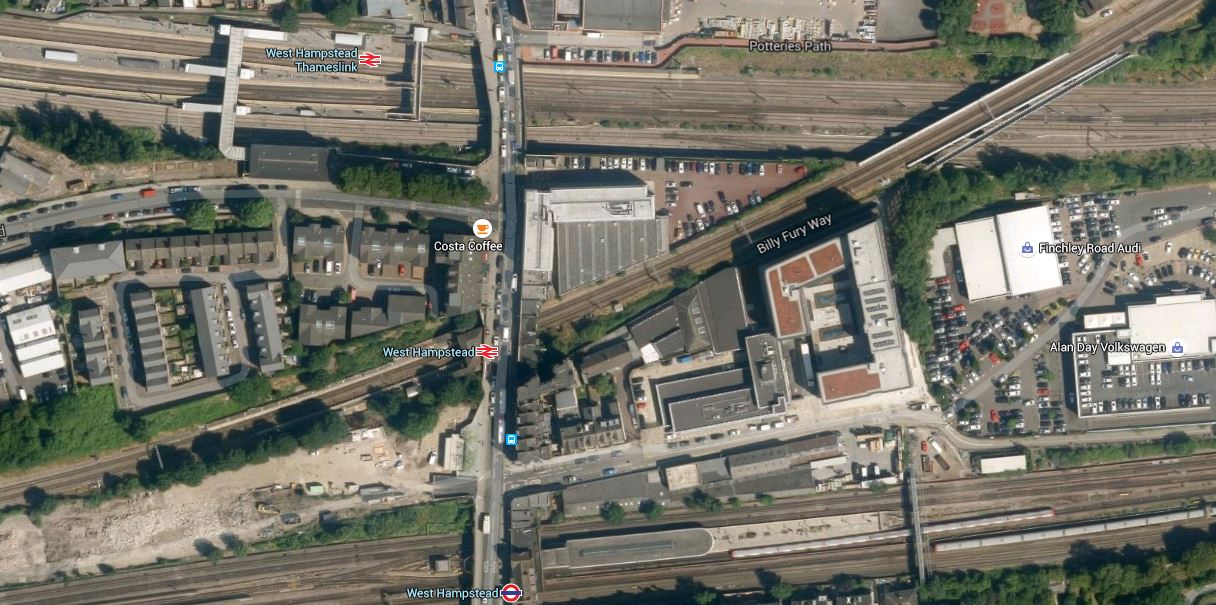
West Hampstead Lines
There is actually more lines than is obvious here. Starting from the top (north), the lines and stations are.
1. Thameslink passing through West Hampstead Thameslink station – From 2018 this will be a very much increased service.
2. Midland Main Line passing through West Hampstead Thameslink station – The number of services stopping here to places like Sheffield, Nottingham, Derby and Corby may well increase as the line to Sheffield is electrified.
3. North London Line passing through West Hampstead station – This is being upgraded to take five-car trains.
4. Jubilee Line passing through West Hampstead Tube station – A station not to the standard of the Jubilee Line Extension.
5. Metropolitan Line passing alongside West Hampstead Tube station, but without platforms.
6.Chiltern Main Line passing alongside West Hampstead Tube station, but without platforms.
This is Wikipedia’s schematic of the lines.
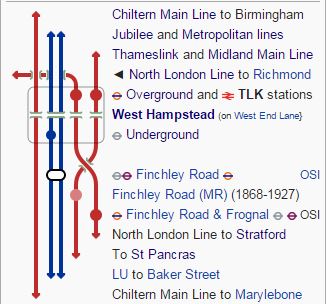
West Hampstead Lines
I would say that the best way to sum up the area is using that old estate agent’s phrase of development potential.
So how is West Hampstead station getting on?
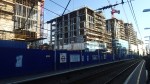
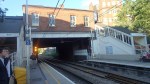
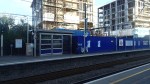


There certainly seems to be lots of flats growing up by the side of the railway and these seemed to have replaced the trees. There was a bit of fuss about the thirty-five trees being removed, which I can sympathise with, but surely a better plan would be to take away as much traffic as possible from West End Lane and make it a proper tree-lined boulevard. But any council that suggested that would be voted out by the 4×4 owners.
There’s a preview of the new West Hampstead station on West Hampstead Life.
I’m not impressed and it is rather a poor design compared to Hackney Wick.
Only time will tell, but rail developments will have a big effect on the number of people using the stations at West Hampstead.
1. The opening of the full Thameslink service in 2018.
2. More trains from West Hampstead Thameslink station to the North on full electrification to Sheffield.
3. The possible opening of Metropolitan and Chiltern Main Line platforms in a rebuilt Underground station.
4. Network Rail and Transport for London have stated that they will increase the capacity on the London Overground, by increasing the number of trains and running six-car trains. Certainly they will do this on the East London Line, which will get twenty-four trains an hour.
It is my view that all of this extra rail traffic, will necessitate the turning of West End Lane into a proper pedestrian boulevard with very much reduced traffic levels. The only alternative would be to create a pedestrian tunnel.
Oxford Station And Chiltern Trains
In a couple of years Chiltern Trains will go between London Marylebone and Oxford stations around the Bicester Chord. Wikipedia says this about how Oxford station will be expanded to accept the extra services.
The scheme also includes two new platforms at Oxford station, to be built on the site of the disused parcels depot. The new platforms would initially be five carriages in length, but provision will be made for them to be extended southwards to eight carriages.
These pictures show the Parcels Office.


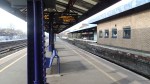

I would suspect that any southward extension would use the car park.The Parcels Office is clearly shown in this Google Earth image of the station.

Oxford Station
Note the two coach train in Platform 3, by the Parcels Office, with the white flat roof on the northern end of the station.
Oxford Station
Oxford station shares a lot of similarities and problems with the station at Cambridge.
Both were badly designed when they were built and although Cambridge now has new platforms and a lot of rebuilding, Oxford is still in need of expansion.
These pictures show the current station at Oxford.



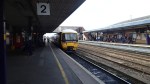
Oxford though has one problem that is nowhere near as bad at Cambridge; freight trains.
All of the issues at Oxford are set out in this document on the City of Oxford web site. It pays particular attention to the following.
1. East West Rail Link
2. Noise and Vibration in the area.
3. Freight Lengthening Project that will allow longer freight trains to go through the station, which has been completed.
4. Electrification
It doesn’t deal with new platforms at Oxford station for both Chiltern Railways and First Great Western.
The work for Chiltern Railways is shown in this post, whereas that for FGW is probabably more extensive and is described in this section in Wikipedia.
Oxford station will be a very different and busier station in the next few years.
3.
From Coventry To Nuneaton
The Coventry To Nuneaton Line is in the process of being upgraded, as this paragraph from Wikipedia details.
The line runs near to the Ricoh Arena football stadium on the northern edge of Coventry. Funding for two new stations, Coventry Arena and Bermuda Park, was approved in December 2011. New plans will also see the number of carriages increased from 1 to 3 and the service upgraded to half hourly, a new platform built at Coventry station and also future extensions of the line to Kenilworth and Leamington Spa.
After coffee with an old friend in Coventry, I decided to hop to Nuneaton using this line , from where I could get a train back to London.







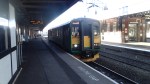
The pictures show the character of the route and some of the building work at the new Coventry Arena station. I caught a glimpse of work at Bermuda Park station, but was unable to get a picture.
There is a third station being built in the area and that is Kenilworth station on the related Coventry to Leamington Line.
I think that the ambitious team that run Chiltern Railways will be looking to at least get a feeder service running from Nuneaton to Leamington, via Coventry and Kenilworth.
If HS2 goes ahead and Euston station is rebuilt, this could be an invaluable route to take pressure off the West Coast Main Line
 The Anonymous Widower