Progress Through Walthamstow – 28th September 2016
These pictures show the Gospel Oak to Barking Line through Walthamstow.

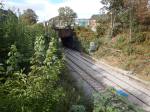
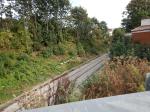
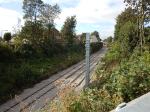
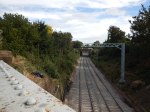
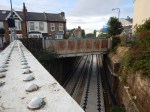


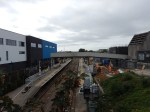
Note.
- It looks like both tracks have been mostly relaid.
- The slab track under Pretoria Avenue, where it was put in due to a sewer being beneath the bridge.
- There is also slab track at the other end of this section of line, but I suspect, it’s covered with ballast.
From what I could see at Blackhorse Road station, there doesn’t appear to be any foundations for lift towers or ramps to create step-free access to the Overground platforms. On Network Rail’s Access for All list of improvements. the improvements at Blackhorse Road station are listed as Future Planned for 2017/2018.
As the new Class 710 trains will start running in 2018, surely it would be good planning to at least do all the work needed on the Overground platforms now!
Or is there some rule, which says that when you make one line at a station step-free for all, you must do that for all lines?
It is interesting to look at this Google Map of the station.

The Victoria Line station is the square building to the North East of the obvious GOBlin station, with the space between the stations being just grass and some bushes.
In one of the pictures, there is a lot of work going on in this area.
Could it be, that there is a route to create a lift shaft from somewhere in this area, that goes both down to the Victoria Line and on the surface connects to the ticket hall and the bridge over the GOBlin?
It could also be work associated with a new chiller described in this article on the TfL web site., which is entitled Innovative new fan chiller to help customers beat the heat.
If you look inside the station, you’ll see that the escalators down to the Victoria Line platforms, start just to the West of the bridge over the Overground.
Without more information, it’s difficult to work out what is happening.
But it would surely be a good idea to do all the work at the same time and get the station step-free before the GOBlin starts running electric trains.
Could Reversing Sidings Be Used On The Chingford Branch Line?
In Improving The Chingford Branch Line, I showed how the new Class 710 trains and some adjustment to timetables could run eight trains per hour (tph) to Chingford, with 4 tph each going to Liverpool Street and Stratford, by getting the trains to cross at the level crossing at ighams Park station.
Several stations in London, including some on the Underground, have what is known as reversing sidings. In How Trains Reverse At West Croydon, I described the working of the reversing siding there, which London Overground trains use to swap tracks to get back to Dalston Junction station.
So could a strategically placed reversing siding be placed to turn back some services, before the Highams Park level crossing?
I don’t think a reversing siding would be needed until the Coppermill Curve was reinstated to allow trains to go to and from Tottenham Hale to Walthamstow, And even then, it would only be needed if more than eight tph were running to Walthamstow.
A reversing siding would allow the following.
- More than eight tph to go to Walthamstow.
- The creation of a triangular service from Tottenham Hale to Lea Bridge via Walthamstow.
- Services between Chingford/Walthamstow and Seven Sisters/South Tottenham for a future Crossrail 2.
- Services between Chingford/Walthamstow and Gospel Oak along the Gospel Oak to Barkjing Line.
This map from carto.metro.free.fr shows the railway lines around Seven Sisters station.
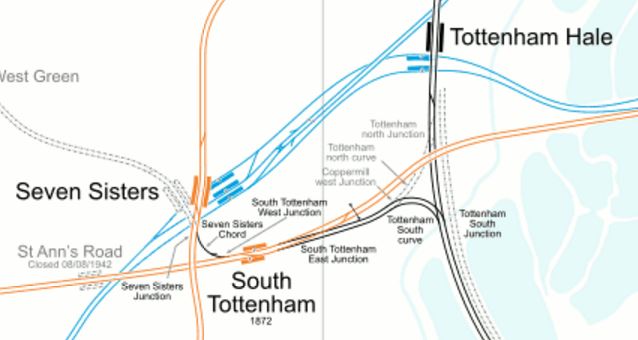
There are certainly a lot of possibilities.
- The Seven Sisters Chord gives access to Seven Sisters, Enfield Town and Cheshunt.
- The Gospel Oak to Barking Line gives access to Cricklewood, Gospel Oak, Richmond and West Hampstead.
- The Gospel Oak to Barking Line gives access via Cricklewood to the Dudding Hill Line for Acton..
- The Gospel Oak to Barking Line gives access via |Willesden Junction to the West London Line for Clapham Junction.
If another four tph service is created to Walthamstow, I suuspect it will be a third long East-West service, which will give eight tph on the busy part of the Gospel Oak to Barkling Line west of South Tottenham.
There are only three stations or four if you add in Forest Road, which I talked about in New Stations On The Chingford Branch Line.
- St. James Street
- Walthamstow Central
- Wood Street
- Forest Road.
I’ll look at each in detail.
St. James Street Station
This is probably too difficult and it’s the first station.
Walthamstow Central Station
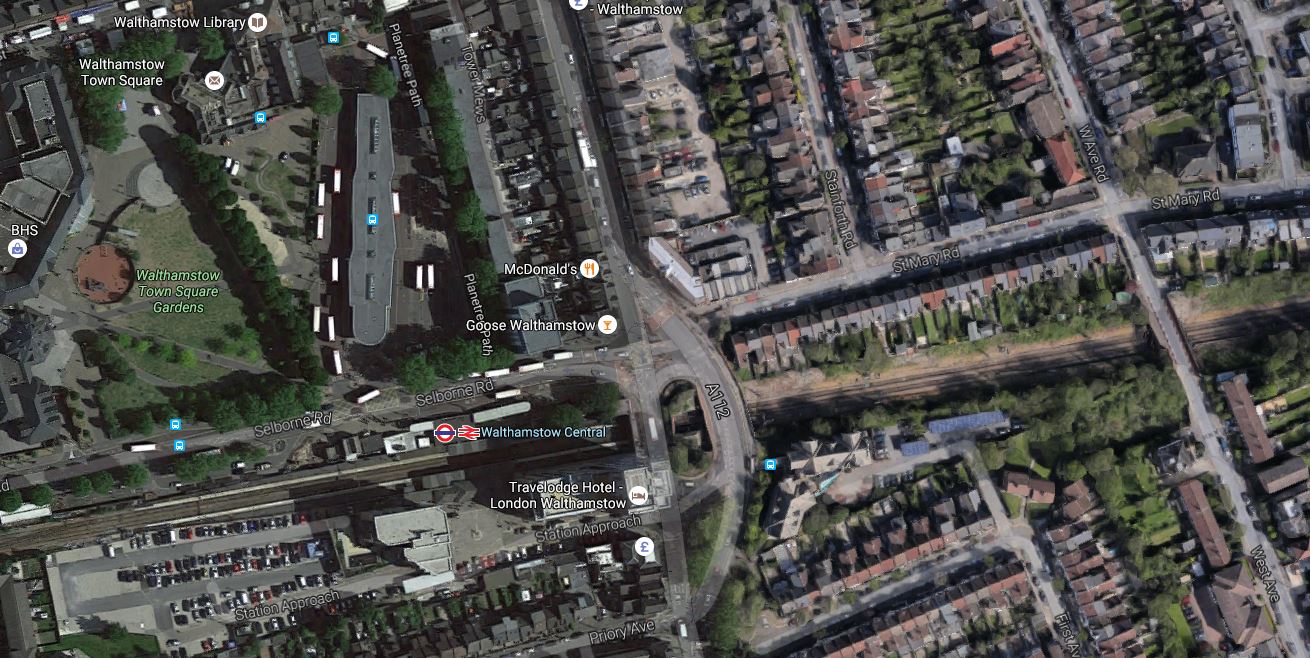
This Google Map shows the station.
Walthamstow Central Station
I think it could be a possibility.
I think that the platforms are certainly able to accept eight car trains and might even take twelve, so there should be space for a reversing siding between the two lines to the East of the station.
Wood Street Station
This Google Map shows the station.
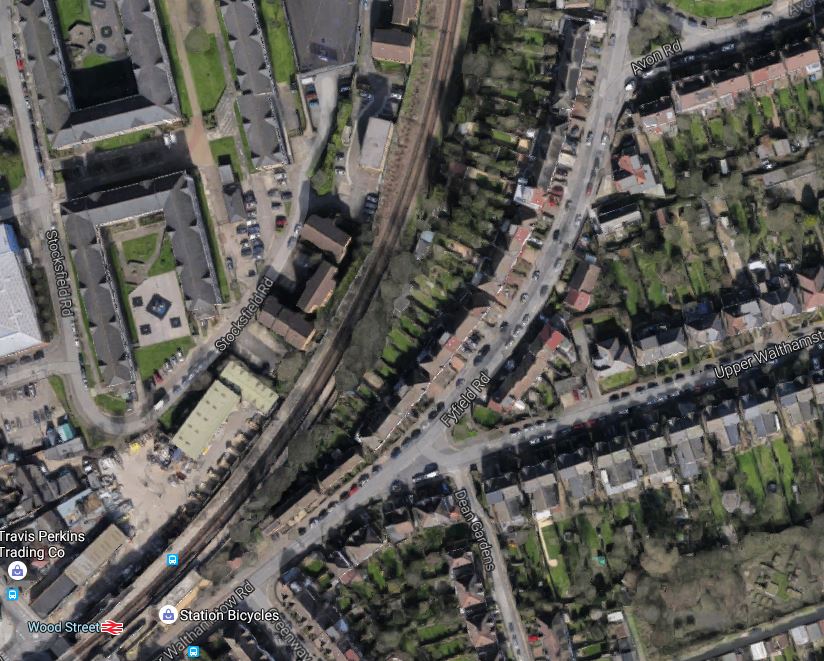
Wood Street Station
Again, I think this is a possibility.
Wood Street station will need a lot of rebuilding to make it step-free and there is space beyond the platforms towards Chingford to put in a reversing siding for a train.
These pictures show the station.



It is a station with potential.
Forest Road Station
This Google Map shows where Forest Road station will probably go.
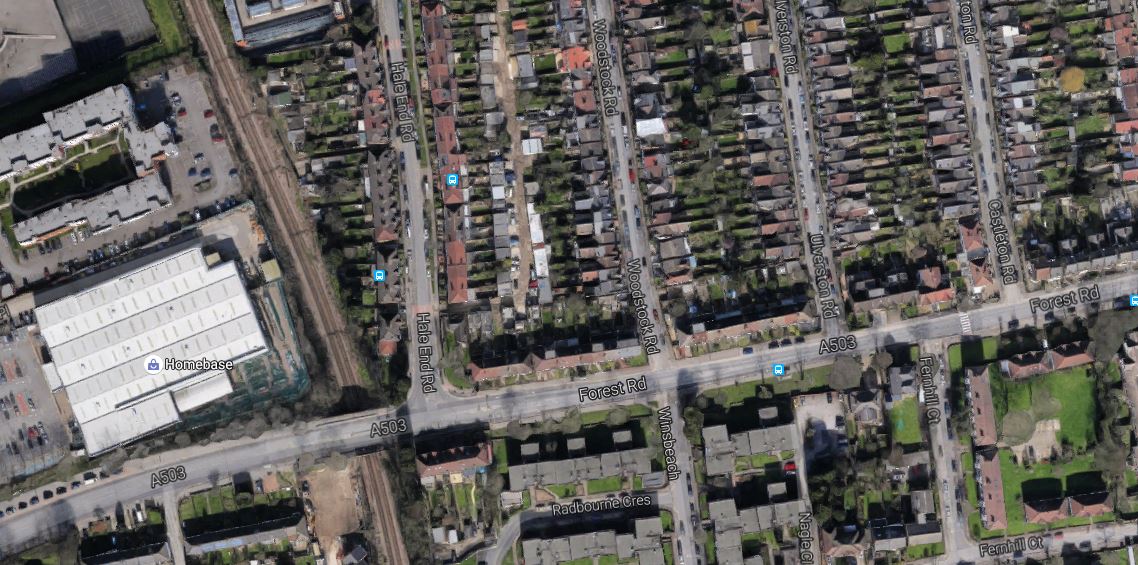
Forest Road Station
It could be just too restricted a site.
How Would The Trains Be Organised?
I think that Walthamstow Central or Wood Street will be the station with a reversing siding.
Say there are going to be three 4 tph services. They could be.
- Gospel Oak to Walthamstow Central or Wood Street
- Liverpool Street to Chingford
- Stratford to Chingford
The sequence at the reversing station would be.
- The train from Gospel Oak arrives in the down platform, discharges passengers and goes into the reversing siding.
- The two Chingford services arrive in the down platform, one after the other, pick up any passengers and go to Chingford.
- The two Chingford services arrive in the up platform, one after the other, pick up any passengers and go to Stratford and Liverpool Street.
- The train for Gospel Oak comes out of the reversing siding into the up platform, picks up passengers and goes on to Gospel Oak.
No passengers would have to change platforms to change trains.
Would It Be Sensible To Have A Reversing Siding Anyway?
I’m no expert, but I think the answer is Yes!
Crossrail have a reversing siding at Chadwell Heath station, that they say is for service recovery, in this page on their web site.
So perhaps, if say there was a problem on the highams Park level crossing, a train or two could be diverted to the reversing platform to await their slot on the return from Chingford.
Conclusion
A reversing siding at either Walthamstow Central or Wood Street would allow extra services to be developed around the Coppermill Curve and also be useful for service recovery.
Related Posts
Improving The Chingford Branch Line
Could Electrification Be Removed From The Chingford Branch Line?
Could The Hall Farm Curve Be Built Without Electrification?
Crossrail 2 And The Chingford Branch Line
New Stations On The Chingford Branch Line
Rumours Of Curves In Walthamstow
Will Walthamstow Central Station On The Victoria Line Be Expanded?
Wikipedia – Chingford Branch Line
Slow Progress On The Gospel Oak To Barking Line
I have observed the electrification of the Gospel Oak to Barking Line since December 2015 and to say it has been painfully slow would be an understatement.
In the September 2016 edition of Modern Railways, there is a long article called Wiring The Goblin.
It talks of a lot of problems, which are resulting in a lot of lowering and rebuilding of the track bed.
Reading between the lines, I suspect that some parts of the line weren’t designed and built very well in the first place and that decades of neglect haven’t helped.
The Victorian builders of lines like these were good at some things, but they were probably driven more by getting a line open to carry goods and passengers, than by creating infrastructure, that would last a couple of hundred years.
But it does seem that the engineers are doing their best to rebuild the line in an affordable manner. This extract gives an overview of the track lowering.
Early plans for the electrification envisaged 10 track lowering sites along the route, but value engineering has seen this reduced to four main sites.
The term value engineering is used more than once in the article.
The nature of some of the work is illustrated by this description.
But the most challengin section, and the one which drives the requirement for engineering access, is a 1,750-metre stretch between Blackhorse Road station and Yunus Khan Close (a short distance south of Walthamstow Queens Road station). In just over a mile there are 17 over-line structures, with track lowering reqired by as much as 500mm. at some locations.
The Bridges of Walthamstow describes a walk I took along the route a few months ago.
To some working on the project, it must feel like digging a tunnel close to or on the surface, through the foundations of Victorian houses.
Intriguingly, my Google Alerts on the line, don’t seem to have dug up any complaints in Walthamstow, unlike they did at the Gospel Oak end of the line.
Make what you want of that!
Slab track is used selectively, but not as much as originally envisaged. I do wonder, if slab track has improved in recent years as more difficult projects like the Borders Railway and the tunnels at Glasgow Queen Street station seem to use it.
I particularly like the care that has gone into the planning of the work, which has been deliberately organised so that one track is always open for engineering trains.
The system, also used 4D modelling to avoid conflicts and get everything right. Strangely, this is the first instance of using this relatively new technique on a heavy rail project in the UK.
Little is said about the electrification, except that it is the same as used on the Northern Hub project between Liverpool and Manchester.
I have been unable to find out, if the overhead electrification can accept the return currents for the regenerative braking on the Class 710 trains.
However, in Will London Overground Fit On-board Energy Storage To Class 378 Trains?, I asked the question of the title after finding an article, where Bombardier stated that Class 378 trains could be fitted with onboard energy storage Some of the third rail lines used by these trains can probably handle regenerative braking, so I have to assume that .lines with overhead wires like the North London Line can’t.
The following must be taken into account.
- As the North London Line and the GOBlin are linked at Gospel Oak, it makes me think there is a strong possibility, that the GOBlin will not be wired to accept the return currents from regenerative braking.
- Only be the Class 710 trains that could use regenerative braking on the GOBlin, as there are few electric locomotives in the UK with regenerative braking. Only the Class 88 and Class 92 locomotives have it fitted.
- The Class 710 trains for the GOBlin are dual-voltage trains. I suspect, so that services can be extended into third-rail territory if needed.
- The AC-only Class 710 trains will run on lines like Romford to Upminster and the Chingford Branch, where it is unlikely that the wiring can work with regenerative braking.
Whether the Class 710 trains have onboard energy storage actually fitted, will be one for the accountants.
In the last section of the article, the extension to Barking Riverside is discussed. The following is said.
- The extension will be slab track throughout.
- Construction could begin in late 2017.
- Services could start in 2021.
I discussed this extension in In The Land Of The Giants.
There is a very challenging viaduct, that will thread the line through the area, and the slab track would make accurate positioning to avoid the masses of high-voltage electricity cables and the other obstacles in the area a lot simpler. The viaduct with its slab track could also be built in pieces in a factory and assembled on site, to give a better finish and quality to the work.
Perhaps too, if the 2.2 km. length of new railway, were to be built on single track viaducts, without electrification, it would reduce complexity, visual impact, noise, construction time and cost.
But this would require the Class 710 trains to be fitted with onboard energy storage.
Intriguingly, TfL’s main online document about the Barking Riverside Extension appears to have been carefully written and only mention overhead wires once, talking consistently about four car electric trains and a fully-electrified line.
As contracts for the extension must be awarded soon for a late 2017 construction start, I think we’ll see a design for the extension, that could be with or without wires.
No mention is made in the article about extending the line four kilometres under the Thames to Thamesmead and Abbey Wood.
The Google Map shows the route from Barking Riverside to Abbey Wood.
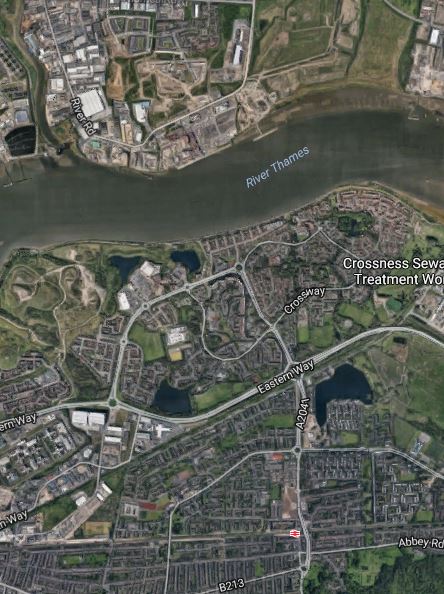
Barking Riverside To Abbey Wood
Barking Riverside station will be built in the South-West corner of the largest green space at the top of the map, above the word Thames.
Abbey Wood station is virtually due South from there towards the bottom of the map.
If this tunnel is ever built could it be in tunnels or even just a single tunnel without wires?
One problem with an extension to Abbey Wood could be somewhere suitable to put the station.
The traditional solution would be a blind tunnel or tunnels as on the Victoria Line, but could the line end in a loop extra stations at Thamesmead and the incomparable Crossness.
What better way is there to attract visitors to the area, than to put Bazalgette’s Cathedral of Sewage on the London rail map?
The GOBlin extension to Abbey Wood is certainly a rail route, where good engineering could be mixed with large doses of imagination.
Between Walthamstow Queen’s Road And Leyton Midland Road Stations
These pictures show the Gospel Oak and Barking Line (GOBlin) between Walthamstow Queen’s Road and Leyton Midland Road stations.
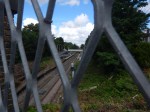
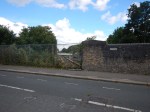


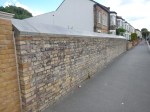
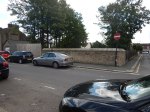
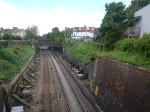
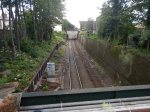
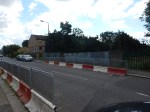

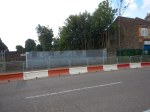
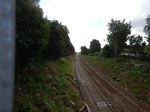
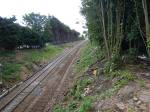

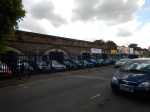
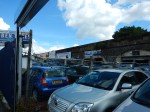

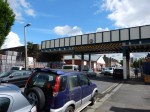

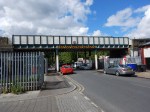
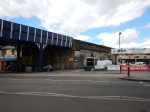

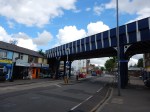

This part of the route isn’t as interesting as the section I covered in The Bridges Of Walthamstow.
Note.
- In my peek at Walthamstow Queen’s Road station, nothing much seemed to have happened at the station.
- The track in the Gospel Oak direction appears to have been removed and track replacement seemed to be happening in the region of the Baker’s Arms Bridge.
- The cutting is well-buttressed between the Shrubland Road Bridge and the relatively-new Alobert Road Bridge
- You can see pairs of piles for electrification gantries east of Queen’s Road Bridge.
- The embankment that carries the line through North East London appears to start around the Boundary Road Bridge.
- The railway arches don’t seem to be in the worst of conditions, even if they do have a touch of the Arthur Daley’s.
What I find strange about this line is the lack of a station at Bakers Arms. It’s not that there ever was one, but as the line crosses the major Lea Bridge Road and on this line, that is usually a good enough reason for a station, I’m surprised the Victorians didn’t build one.
The Barking Gospel Oak Rail User Group suggest one in this page on their web site.
There may be a lot of reasons to build a station at Bakers Arms.
- It is near to several new hotels and housing developments.
- It is better positioned than the two adjoining stations.
- It is well served by lots of buses.
- It is on a busy main road.
But contrary to that.
- The buses can take you to the better connected stations of Walthamstow Central and Lea Bridge, in under fifteen minutes.
- It might be a difficult site on which to build a station.
- Reopening the Hall Fsrm Curve may be a better option.
It should probably have been built, when one of the adjoining developments was constructed.
The Bridges Of Walthamstow
I have been meaning for some time to walk the route of the Gospel Oak to Barking Line (GOBlin) between Walthamstow Central station in Selborne Road to Blackhorse Road station.
But now the line is closed for electrification work, I thought it would be an appropriate time to do it, taking photographs as I walked.
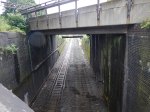
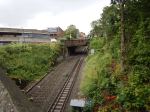

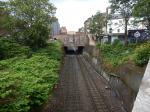
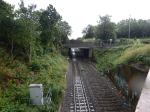
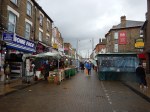
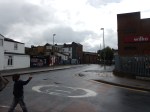
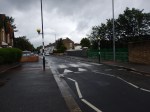
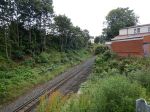
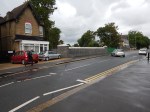


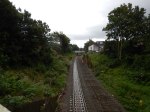


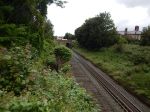


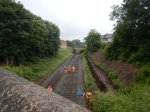


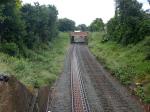
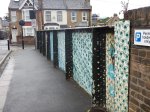
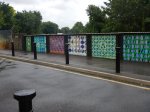


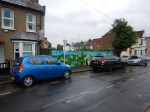

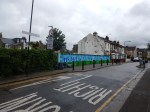
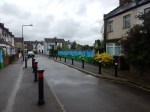
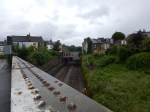
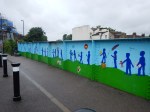


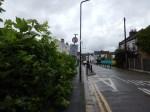
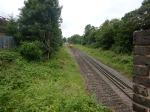


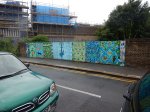

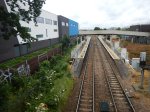
To cross all the bridges, I was constantly doubling back on myself, using a route of.
- West on Selborne Road.
- Right onto Vernon Road
- Left onto Walthamstow High Street
- Right onto Palmerston Road
- Left onto Northcote Road
- Right onto Pretoria Avenue
- Right onto Warner Road and back to Northcote Road
- Left onto Palmerston Road
- Left onto Walpole Road, Suffolk Park Road and The Links
- Right onto Pretoria Road
- Left onto Forest Road
After a short detour to look at the bridge on Blackhorse Road, I arrived at the station, where I took a bus alongside of the GOBlin to Tottenham Hale station.
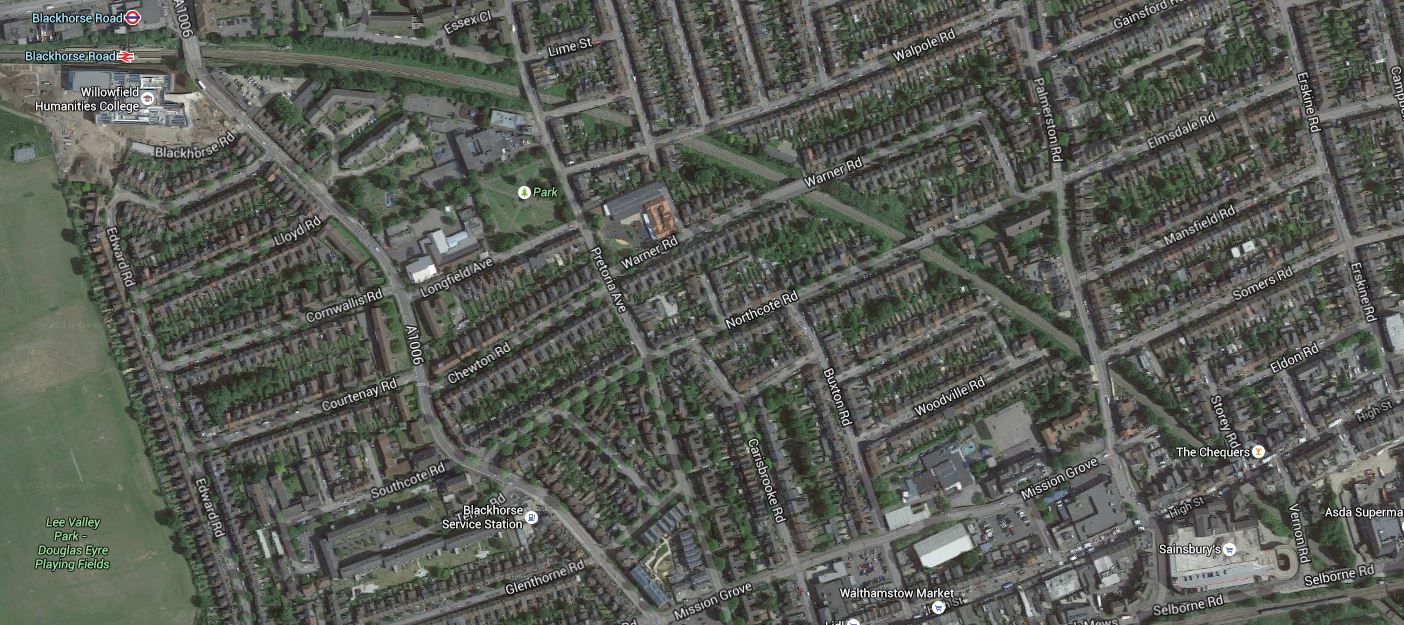
This Google Map shows Walthamstow Central and Blackhorse Road stations, and the portion of the GOBlin in the area.
The Bridges Of Walthamstow
Note in both the photographs and the map.
- There are eleven bridges including those at Blackhorse Road and Selborne Road.
- Most seem to be in good condition, with Palmerston Road having been recently replaced and others looking as if they have been thoroughly refurbished.
- Only Suffolk Park Road and Stoneydown Avenue Bridges have restrictions on access.
- It would appear that the track going towards Blackhorse Road has been lifted and laying of new track has started at that end.
- There does appear to be some new sheet piling to stabilise the cutting.
- There is ample space on both sides of this section of the line to erect the masts and gantries for the overhead wires.
- I wonder what William Morris would think of the bridge designs.
- I can’t find any information on whether more work needs to be done on the bridge at Suffolk Park Road, except a mention of new public art from 2015.
So in this section at least, it doesn’t appear that there’ll be much problem putting up the overhead wires for the electrification.
Alongside The GOBlin – June 14th 2016
I took these pictures of the Gospel Oak to Barking Line from the top of a 123 bus going between Blackhorse Road and Tottenham Hale stations.
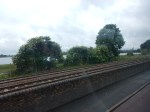
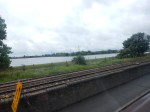
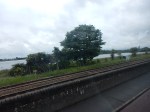
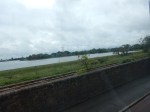
This bus ride will be an easy way to ascertain progress on the electrification.
Nothing much seems to be happening yet!
Wightman Road Bridge Is Falling Down
I went to IKEA this morning on a 341 bus (As one does?) and the area around Harringay Green Lanes station.was locked solid.
A quick check on the Internetfrom my phone, told me that Wightman Road is closed.
This Google Map shows the area between Harringay Green Lanes station and Harringay station.
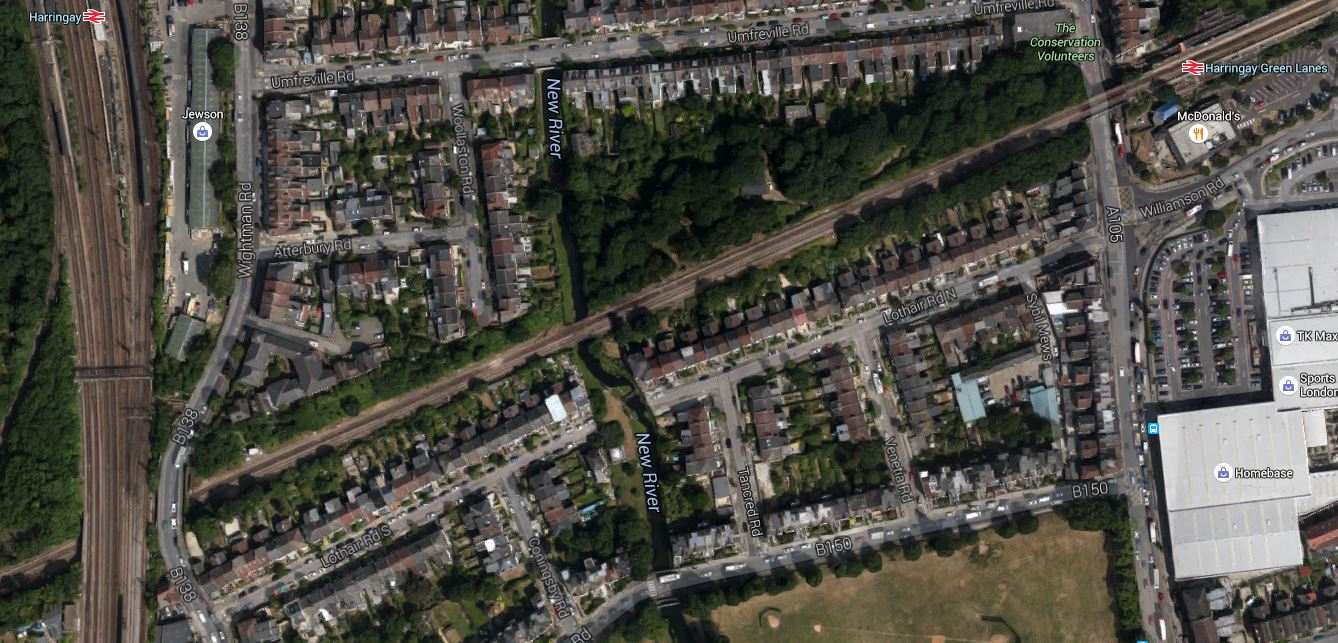
Wightman Road Bridge
If you follow the Gospel Oak to Barking Line (GOBlin) westward from Harringay Green Lanes station, you come to the important bridge where the East Coast Main Line goes over the GOBlin. To the East of this bridge is a road bridge that takes Wightman Road, which is a major route numbered B138 over the railway.
This would appear to be the bridge that is causing the trouble.
I can only find one authorative document on the web and that is this page on the Haringey Council web site, which is entitled Bridge Reconstruction Work in Wightman Road. This is said.
Work is under way to replace the defective bridge over the railway lines on Wightman Road. The bridge is showing signs of severe deterioration. Network Rail are carrying out the work to coincide with the closure of the Gospel Oak-Barking line, which is undergoing electrification. Both projects are being carried out at the same time to help minimise transport disruption.
The main construction work will run from March to September 2016. While every effort will be made to minimize disruption to traffic, there will be a period when complete road closure will be unavoidable. A temporary footbridge will be put in place to provide access for pedestrians and cyclists while the work is in progress.
Incidentally,. I’ve not heard anything on the news or seen anything in the papers. When I checked a few minutes ago, there was nothing I could find on the Transport for London or Network Rail web sites.
So is this another case of Network Rail not giving the truth about bad problems in the hope they’ll not be spotted?
Or do they think that informing the general public is not important?
These are some pictures, I took at a visit to the bridge on a quiet Sunday morning.
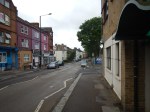
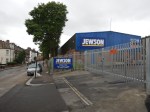
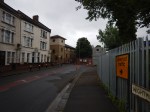


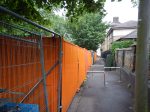


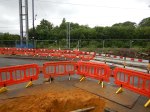


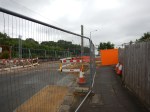
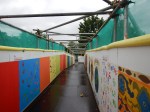
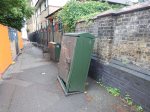
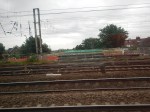
There’s certainly more useful infrormation at the bridge site, than on the web.
One notice labelled Wightman Road Overbridge says this.
- What: The existing Wightman Road Overbridge is to be demolished to bridge abutments to enable a complete bridge reconstruction.
- When: The construction phase is due to start in March 2016 and run until September 2016.
- Installation of scaffold walkway and access platform planned for March 2016.
- Diversion of services and removal of road surface are planned for April 2016 & May 2016.
- Removal of existing highway and bridge is planned for June & July 2016.
- Installation of new bridge deck planned for July 2016.
- Reinstatement of the highway, VRS and services is planned for July & August 2016.
- Why: The Wightman Road Overbridge is now at the end of its design life.In 2005 the structure was assessed and it was decided to renew the life-expired structure to modern-day standards.
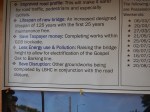
A second notice says this.
- Improved Road Profile: This will make it safer for road traffic, pedestrians and especially cyclists.
- Lifespan of New Bridge: An increased design lifespan of 125 years with the first 25 years maintenance free.
- Save Taxpayer Money: Completing works within GOB blockade.
- Less Energy Use And Pollution: Raising the bridge height to allow for electrification of the Gospel Oak to Barking Line.
- Save Disruption: Other groundworks being completed by LBHC in conjunction with the road closure.
The pictures show that good progress appears to be being made. It would appear that services are being diverted, but that the original road surface is still in place. There were also notices prominently displayed saying that on the weekends of the 25th June and 2nd July the pedestrian walkway would be closed, as a crane would be working. Could this be when the old bridge is lifted out and the new one is lifted in?
Let’s face it, 125 year old bridges do get tired! The bridges at Upper Holloway, South Tottenham and Highbury and Islington stations have all been or are being replaced!
I do wonder, if the urgent need to replace this bridge might explain the progress on the GOBlin electrification. Network Rail and Murphys seemed to have had a simple plan, which was proceeding in the early months of 2016. Then they found they needed a six month closure of the railway to replace the Wightman Road bridge and that blew a big hole right through everything.
But that doesn’t explain, why TfL and Network Rail haven’t disclosed the detailed truth to the people of North London!
At least when they’ve replaced the bridge, they’ll have a strong structure that they could use to support the overhead wires.
Farewell To The Old Gospel Oak To Barking Line
Today is the last day, that you can ride the Gospel Oak to Barking Line to the East of South Tottenham station, until after the wires are erected in a few months time.
So I took some pictures.
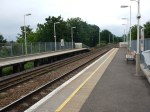
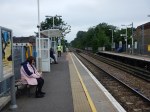
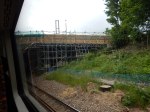
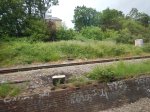


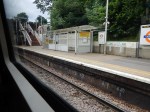

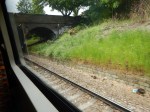
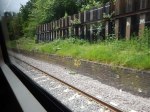


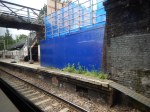

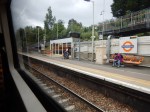
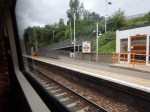

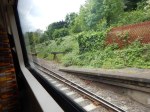
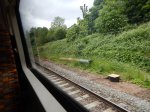
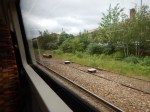
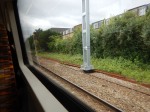
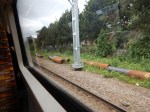
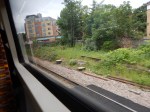

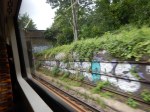


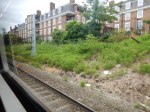

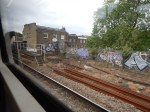

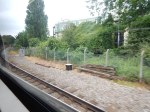

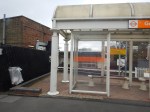
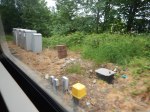
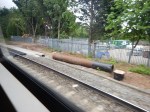
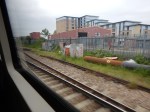
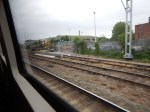
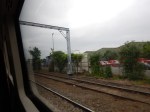
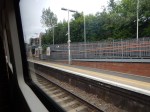


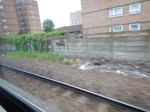
I must say I have not been impressed with progress so far.
- It looks like a large proportion of the piles are in the ground.
- If the piles are in the ground securely, why aren’t more masts erected?
- There would appear to be no start on clearing the platform extensions.
- Only in one place did I see a work-site.
- I didn’t see anyone actually working.
- There is masses of litter
- There’s no sign of how the stations will be electrified.
With my limited experience of looking at large projects that are in trouble, this project has the air of something not being up to scratch.
What has really puzzled me about this project, is that the information coming from Network Rail and especially TfL, has not been up to the usual standard.
The Improved South Tottenham Station
South Tottenham station wasn’t one of the best! But just look at it now!
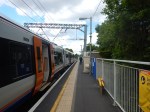
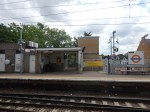


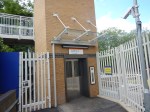
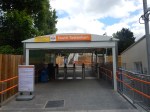
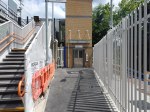
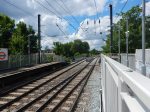
The lifts are now working and when the line to Barking closes in a week or so, it will make a passable terminus to turn trains back to Gospel Oak.
I was chatting to one of the station staff and they said that the platforms will be extended further to the west over the road.
As the bridge is new, if this is the case, it would have been built to accept the weight of the platforms.
 The Anonymous Widower