I Am Not Watching Crystal Palace And Aston Villa
I must be the only person in the UK, who can’t watch the FA Cup semi-final. on his main television.
- I can watch it on my computer using iPlayer.
- I can watch it on the TV in my bedroom on Freeview.
- I can watch it on the TV in my bathroom on Freeview.
As I want to use my computer, I am listening to the Radio 5 commentary on BBC Sounds.
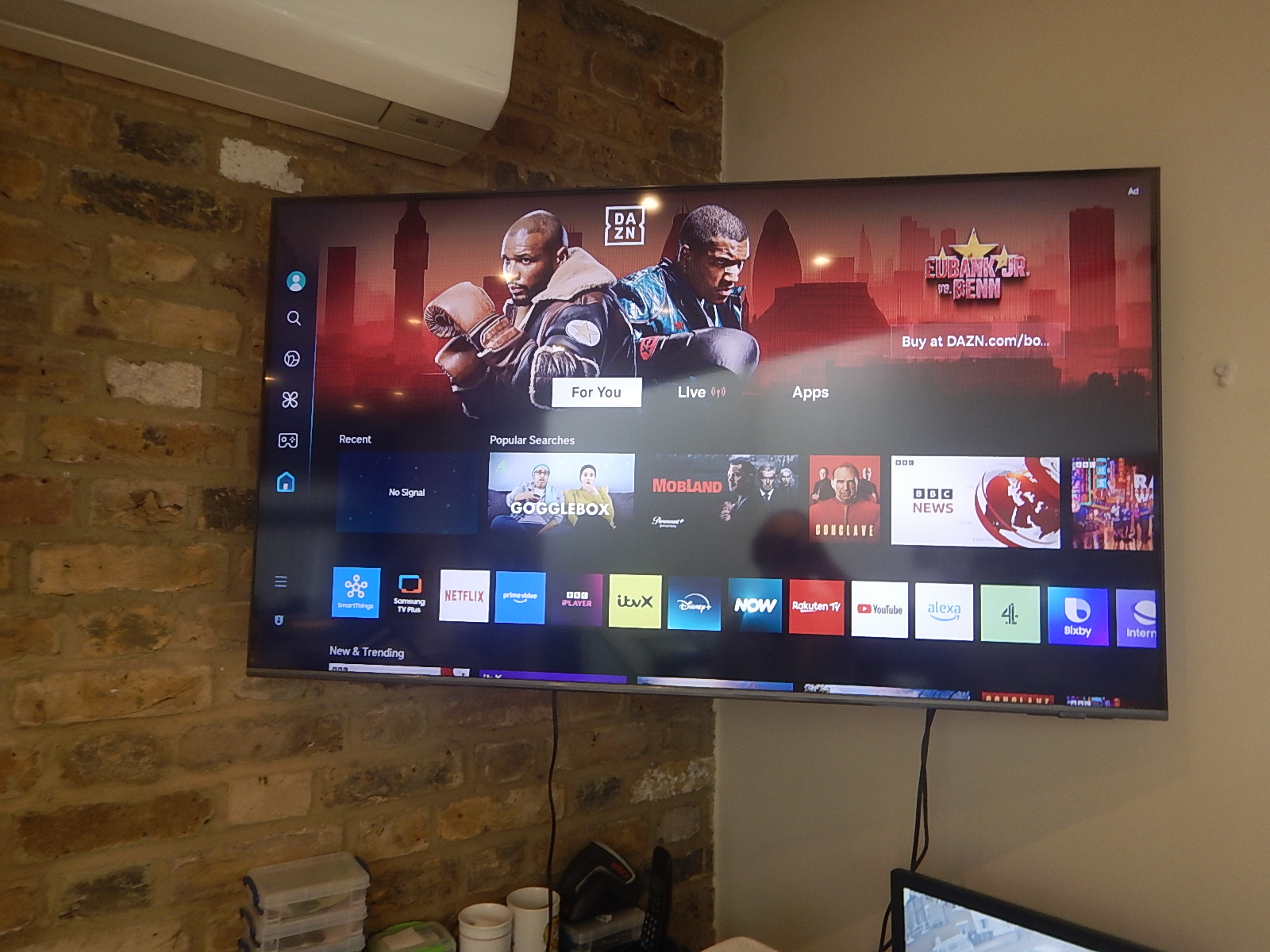
My main television is driven by a BT/EE system, that works on broadband and all it shows is this screen.
This is an enlarged view of the bottom-left section of the screen.
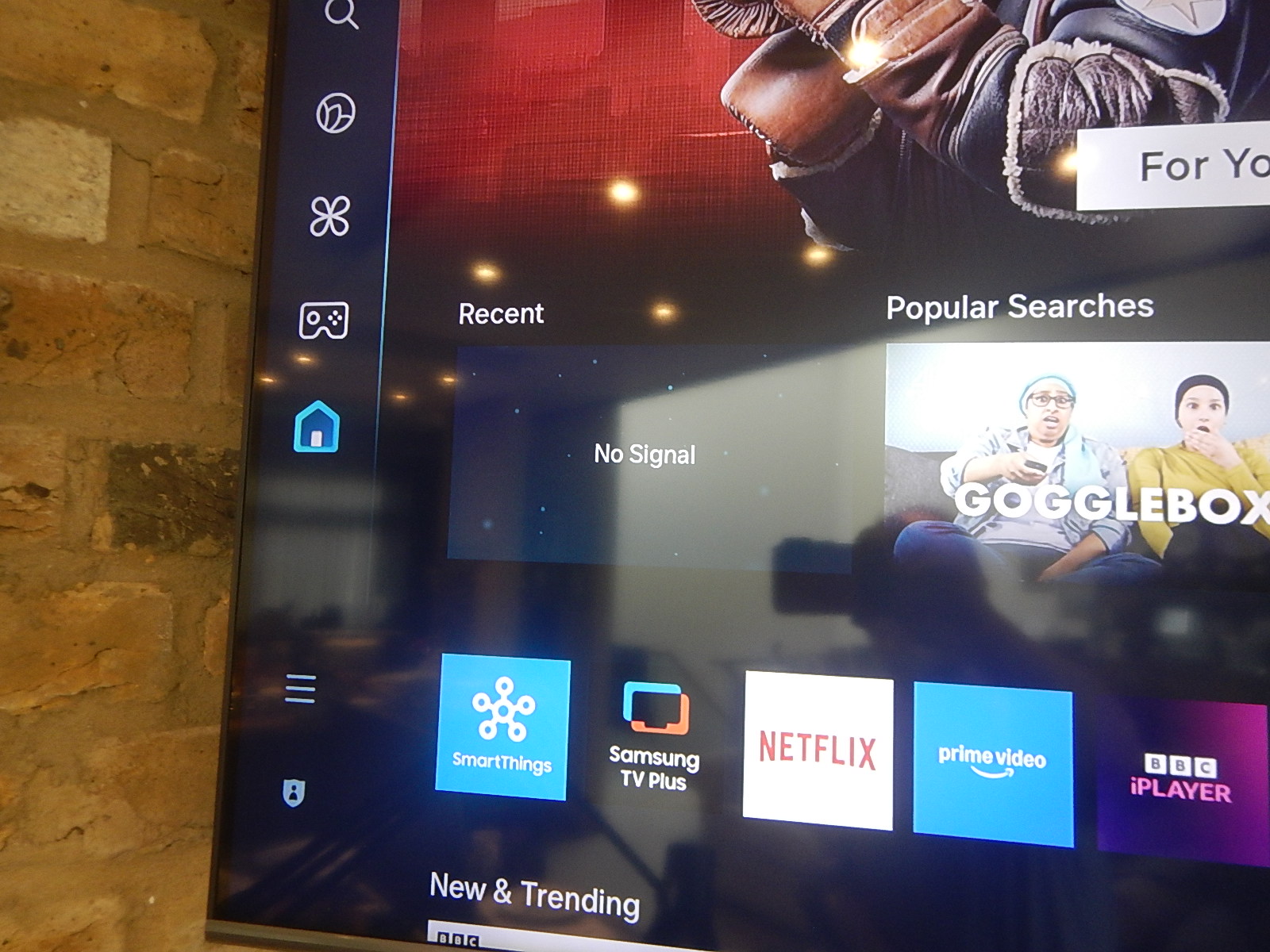
Can I please have a signal?
The signal is supposed to come through my broadband, but because everybody is watching the football, there’s nothing left for me.
But how come I can watch the football using iPlayer on my computer.
As an experienced programmer, it looks like a bug to me. Or it could be a broken cable.
This third picture shows the Freeview picture in my bedroom.
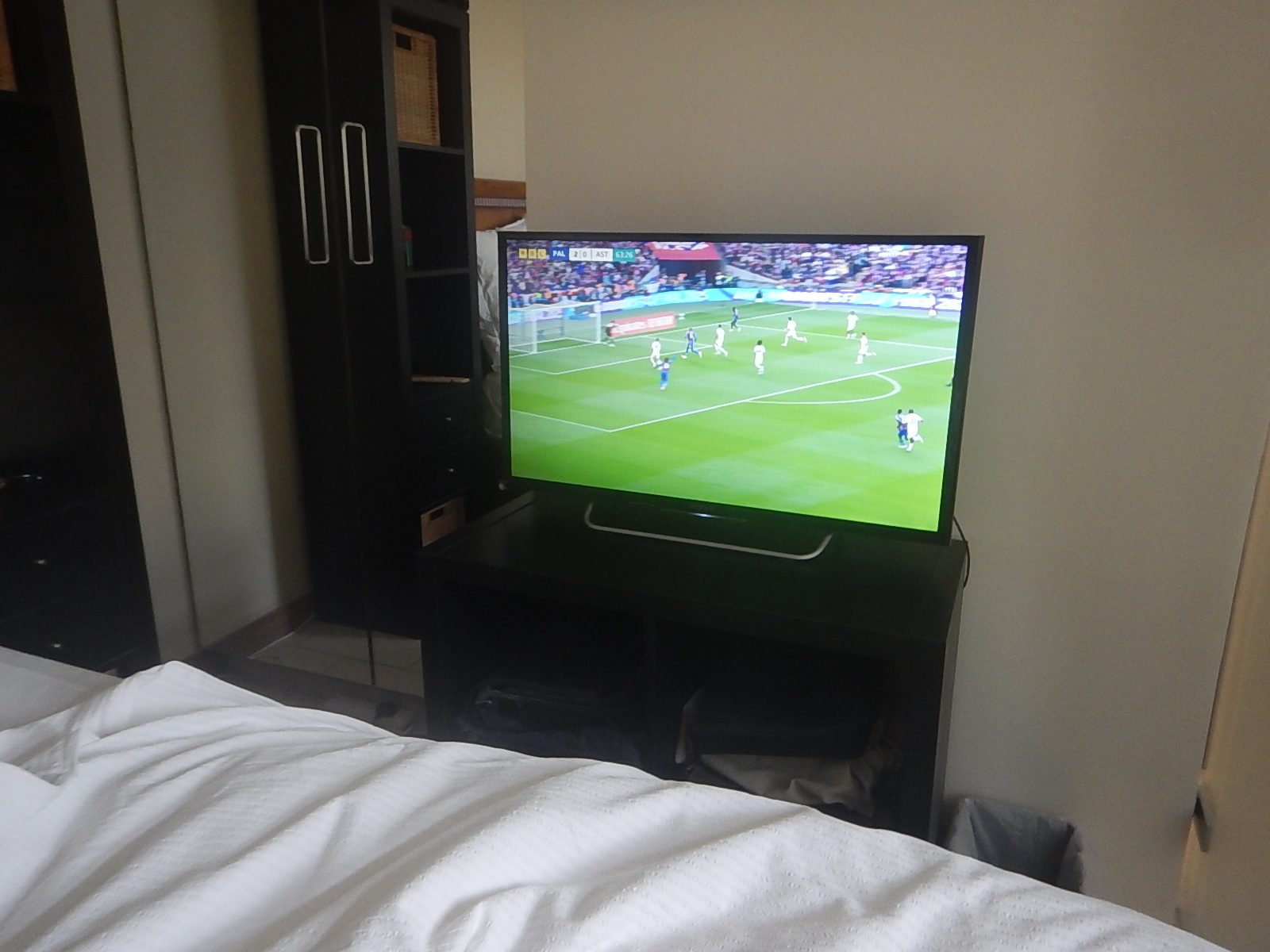
Nothing wrong with that!
But now at 82:30, I’ve got my signal back and I’m able to watch and listen to the match. But not in high-definition. Although, that is now back at 87:16.
I seem to have a demonic touch with hardware and if it fails with anyone, it will fail with me.
I Need Help To Get This Surface Pro Computer Working
I was always a software man and this computer is showing that up.
Any offers of help, paif for or free in the London N1 area gratefully accepted.
Are Google And ARM Holdings Forming An Alliance On Servers?
There has been a couple of reports on the Internet about a link-up between ARM Holdings and Google forming an alliance to create low energy use and high power servers. The Register bills it as Chipzilla versus The Chocolate Factory, in this article.
The last paragraph of the article, wich refers to the reports, is significant.
Such a scenario would be far worse news for Intel than merely losing a few million CPU sales each year.
So has Intel finally met its match in a small Cambridge company?
I think the answer is yes and we must make sure that this amazing UK company stays independent.
More ARM Processors Than People
A friend has told me that he was in a meeting and one of the founders of ARM pointed out, that there were probably more ARM processors in the room than people.
As I type this, I’m wondering how many ARM processors are in this room with me.
For a start, there’s my Samsung Galaxy S3 Mini, which has an ARM CPU and GPU. As the CPU is dual core, is that a total of three or two?
There’s also a modern Samsung television, two set-top boxes, four Nokia phones, including three 6310i, two digital cameras and a Samsung Tab, all of which might contain one or more ARM processors.
I think that I’m outnumbered! But take note that in 2012, they sold 8.7 billion units!
The Enormous Amount Of Energy Used By Computer Servers
In all the hot air talked about fracking, wind power and nuclear power, very rarely does the argument stray into energy usage. The only thing people seem to worry about is the cost of their household energy bills and filling up their car.
But accpording to this academic report from Stanford University in 2010, over ten percent of all US electricity was used to power computer and IT equipment. Here’s the relevant part.
In 2010, over 10% of electricity in the U.S. was due to computer and IT equipment usage. At the current rate we’re going, analysts and experts figure that 10% of the world’s power bill will be spent on running computers. To give a more concrete example of how much energy this is, Dixon shows that one 50,000 square feet data center uses about 5 megawatts, but continuously. This energy output would satisfy the needs of 5000 homes. In another staggering example, assorted US data centers use a collective 7000 megawatt data centers from seven different plants; this is more power than is used by the State of Mississippi. Even more surprising is that this astronomical power consumption is just by the plants themselves – cooling systems use as much energy as the plants.
Also in this article in the FT. it says that in 2010, Goggle used about 258 Megawatts continuously.
Since this refers to 2010, I wonder how much of the UK’s energy usage goes in that area now.
According to this article, in 2012 average demand for electricity was 35.8 Gigawatt. Just imagine having to pay that bill!
So let’s assume that only five percent of that energy is used for computer servers, so that is 1790 megawatt. Bear in mind that the UK’s largest power station, Drax, has a capability of generating 3960 megawatts or seven percent of the UK’s electricity. So nearly half of its output and the enormous amount of CO2, Drax emits could be used to power computer equipment.
I need better figures here, but it would seem that a substantial part of UK electricity is used in computing.
But help is at hand in this area. To make computers use less power, you can do many things; like write better software and install more efficient cooling systems.
The biggest fight though is in the area of making chips that consume less electricity and there’s a war going on there, between the dominant Intel and the upstart from Cambridge called ARM. Whether Intel can hold off ARM is a subject for debate, but in a year or so, the average server will consume a lot less power than it does now. Unfortunately, the search, social networking, data storing and other IT companies will be a lot bigger, so all we will be doing with better technology is eating into the growth in energy usage.
I think though, this will mean that many large server farms will relocate to countries, where energy costs are lowest.
A Cautionary Tale
I don’t mess about with hardware and although, I could probably do quite complicated work on PCs at one time, I couldn’t now, as my knowledge is way out of date.
But this tale from the BBCs web site, shows how you might fall into all sorts of security holes if you do.
Their technology correspondent changed the motherboard on his home PC and consequently, the various security systems thought he was committing credit card fraud, as the computer address had changed.
Now he, thought he knew what he was doing. He did hardware-wise, but he got caught out, by intelligent checking software on the Internet.
when I feel, one of machines is getting to the end of it’s life, I buy another machine and gradually swap everything over, still doing most of the work on the old machine.
So whhen it dies, I just move the last update over and put the old machine in the bin.
David Versus Goliath Or ARM Versus Intel
I have just read this article in the Motley Fool about David or ARM Holdings taking on Goliath or Intel.
The article has been given the title The Reason ARM Holdings Is Dominating Intel, but interestingly the web page is called Why ARM Holdings Destined Destroy Intel. This name is chosen by the blogging software, from the first title used for the article taking out the short connecting words, like is and to. Look at the title and web address of this post.
But I suppose someone in management at The Motley Fool felt it was a bit provocative.
I don’t, as I think Intel is doomed.
As we need to process and store more and more data, one of the biggest limitations will be the amount of power needed.
As an example look at the average smart phone. It may have lots of features and processing power, but this often comes at the price of a short period of operation before the phone needs recharging. Now virtually all smart phones are built around ARM chips, as the Intel chips use too much power. This power consumption of ARM chips is one of the main reasons they are dominant in portable devices like smart phones and tablets.
The vast server farms have a similar problem and I’ve read that about ten percent of the world’s electricity consumption could be used to power them in the future. So a low-power route would be to everybody’s advantage. And ARM is the low power processor, although Intel are starting to design processors that are more efficient. Intel might be able to put up a strong fight, but I believe there’s one big reason, why it won’t.
Intel is a conservative company, that sticks to a philosophy that has worked for years. And getting companies with a vast investment in a proven philosophy to change, when the writing appears on the wall is not easy! Especially, when you are selling product to equally conservative companies, who don’t want to change their philosophies.
Let’s say you are a server manufacturer like Hewlett-Packard. You know you have to go with lower powered processors to maintain your market share.
You have two choices; wait for Intel’s product to arrive or design your own low-power processors around the ARM technology and get them manufactured by any one of a number of companies.
The second approach is probably the one with the lowest risk, so you at least have to try it. If it fails, you can still go with Intel’s new low power chips.
If you don’t succeed, then it is absolutely certain that someone else will develop a low power server using ARM technology. So your traditional market will go bang anyway!
It also has the great advantage, that if you do it successfully, Intel will start to worry, that you’ll go down the same route with all the other chips you buy from them. so you may get better prices for the other chips.
If you don’t succeed, then it is absolutely certain that someone else will develop a low power server using ARM technology. So your traditional market will go bang anyway!
The main loser in either scenario is Intel.
You have to remember how dominant IBM was in the 1960s. They had a philosophy that worked well, but where are they now! They’re just a shadow of their former selves where hardware is concerned. Smaller and more innovative companies chipped away at their market.
I would also throw in a view on how hardware designers and programmers think. Basically, ninety percent are anarchists, who believe in destroy and rebuild much better, so they will always decry the architecture of companies like Intel and go for something that appeals to their dark side.
ARM was that forbidden fruit that only a few companies used. But now it is so mainstream, you can satisfy your own preferences and those of management as well.
In five or ten years time, they’ll be writing articles about how the new processor on the block is going to destroy ARM.
While The Big Cats Play The Rodents Strike
Whilst most people in the United States are preoccupied by an election, two British rodents and a few friends have struck.
ARM Holdings and Imagination Technologies are part of a consortium that has bought the rights to the majority of the patent portfolio of rival RISC chip business MIPS Technologies. It’s here on The Register.
This could be a very important deal for the British computer technology industry.
Smart Bank Managing
When David was Metier’s bank manager, he did not put us in the bank’s database as a software company, but as a computer leasing company, as we leased the hardware and software as a package. He once told me, this was because those that be in the bank considered computer software to be decidedly high risk, but computer leasing, which was generally huge mainframes to FTSE 500 companies was a low one. He didn’t point out to those-that-thought they-knew-better, that some of the bank’s biggest losses had been in computer leasing. But then David had trust in his customers and knew those that would deliver. We did!
When David once asked me what was the difference between hardware and software, I told him, that the former hurts when you drop it on your foot and the latter doesn’t.
 The Anonymous Widower