Heathrow Services Post Crossrail
To take some of the pictures for A Look At Stockley Junction, I took Heathrow Connect to the Airport..
My return ticket from Hayes and Harlington station, cost me £8.20 with a Senior Railcard, which must be one of the most expensive journeys per mile in the UK. Especially, as there are only two trains per hour (tph). Considering that I could have done the journey quicker yesterday, using a 140 bus, as the train was ten minutes late.
But it would be difficult to take the pictures I wanted from the bus.
Arriving at Heathrow, I thought that a hot chocolate would be in order, so I set off for Terminal 2.
Passenger friendly the journey is not, so as I wanted to get back, I returned to the station to catch the next train.
I did not see a single sign to Heathrow Connect, with this one being typical.
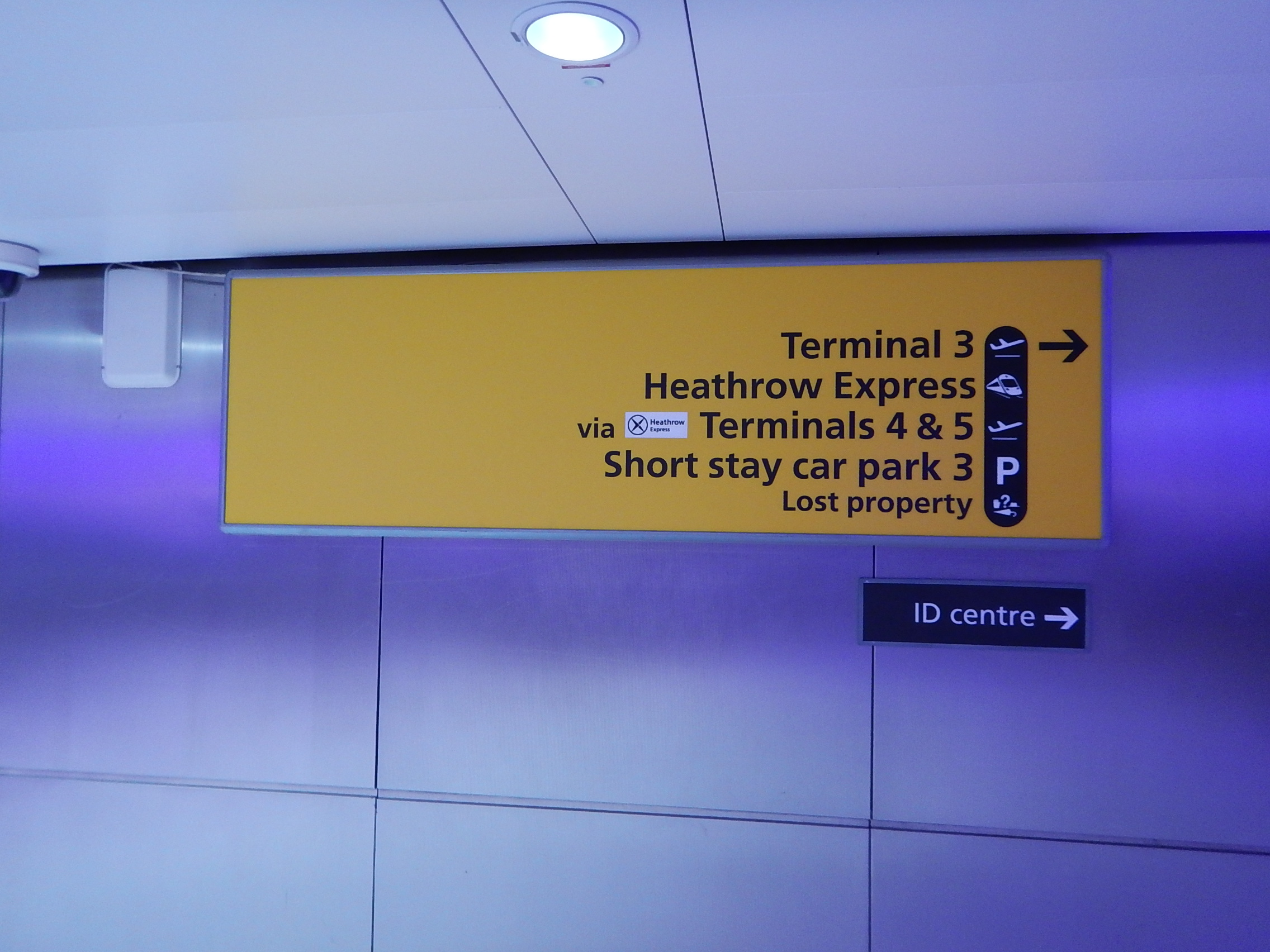
Where’s Heathrow Connect
I knew where to go, as I’d walked it.
Incidentally, it is easy enough to find the overpriced Heathrow Express, but how many passengers with a brain want to go to the disconnected Paddington?
Some like me might actually want to go to Hayes and Harlington or perhaps Maidenhead.
I didn’t ask, but I wonbder if the advice to go to Maidenhead, is to take Heathrow Express to Paddington and then get a train to Maidenhead. The Oracle (Nation Rail’s Journey Planner) recommends taking Heathrow Connect to Hayes and Harlington, but will all the staff.
Current Services To The Airport
There are four ways to get to Heathrow by public transport.
Heathrow Express – 4 tph to and from Paddington. – Overpriced
Heathrow Connect – 2 tph to and from a series of stations along the route to Paddington – Infrequent and overpriced.
Piccadilly Line – Slow, frequent, usually reliable and the most affordable.
Bus – For a lot of those living near the Airport, this is the preferred route.
This map from carto.metro.free.fr shows the layout of the rail and Underground lines.
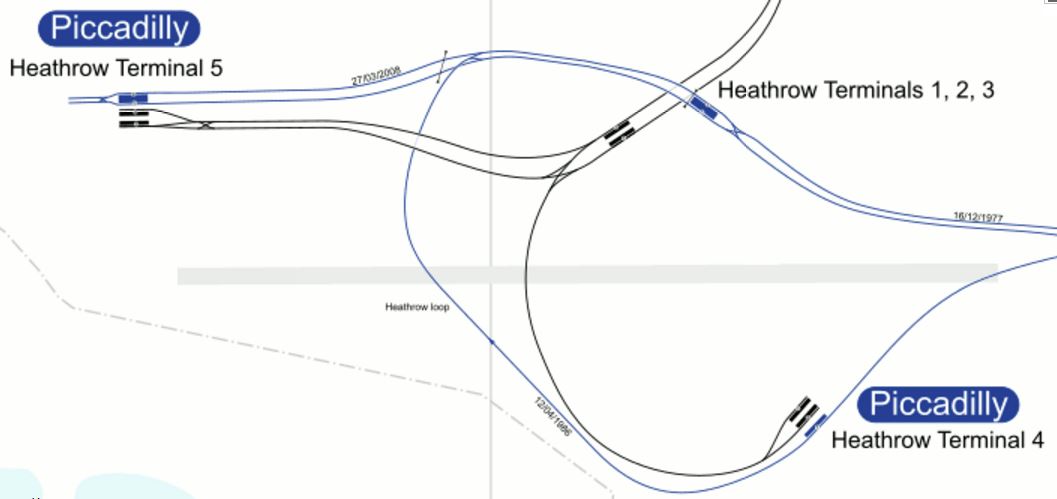
Rail And Underground Lines At Heathrow
Simple it isn’t!
But that is what you get if you dither over the next runway in the South-East for forty years.
Heathrow’s rail links are so very Topsy, unlike those at Birmingham, Edinburgh, Gatwick, London City, Luton, Manchester, Southend and Stansted.
Not all the others are perfect, but they’re getting better.
Crossrail
Crossrail will be the new wayto get to Heathrow and in some ways it is a replacement for Heathrow Connect. This is said under Future in the Wikipedia entry for Heathrow Connect.
From May 2018, Crossrail trains will replace all Heathrow Connect trains between London Paddington and Heathrow terminals 2, 3 and 4. Furthermore, as of December 2019 all services will run through the new tunnels at Paddington to central London destinations including Bond Street, Liverpool Street and Canary Wharf
So, it would appear that there will no substantial improvement until December 2019.
This is a detailed timetable, with particular reference to going between Heathrow and the City of London and Canary Wharf.
- May 2018 – Heathrow Connect will be taken over by Crossrail. We’ll certainly see better signage and service under Transport for London’s management.
- May 2018 – The Crossrail start schedule on Wikipedia, also shows that the shuttle between Heathrow Central (Terminals 1,2 and 3) and Terminal 4, will be transferred to Crossrail. Terminal 5 will be reached by using Heathrow Express from Heathrow Central.
- May 2018 – Heathrow Connect in the guise of Crossrail will be serving erminals 1,2, 3 and 4, but not Terminal 5. Will we be seeing new Class 345 trains and a higher frequency to Heathrow? I woulden’t be surprised if Heathrow Airport, try every trick to keep Crossrail out of the Airport, to protect the revenue on Heathrow Express.
- December 2018 – Crossrail services between Paddington and Abbey Wood will start, thus linking Paddington to the City of London and Canary Wharf. There will probably be a longish walk between the two parts of Crossrail at Pasddington, but the tunnel across London, will give Paddington the much need-connectivity, it’s needed since the Second World.
- May 2019 – Crossrail services between Paddington and Shenfield via Whitechapel will begin, thus meaning that many travellers East of Paddington, will use a single change there to get to and from Heathrow.
- December 2019 – The full Crossrail should open, meaning that there will be direct trains between Abbey Wood and Heathrow Terminal 4 calling at Canary Wharf, Liverpool St-Moorgate, Farringdon, Tottenham Court Road, Bond Street, Paddington, Heathrow Central and all the stations in between.
Trains into the Airport will be.
- 4 tph – Heathrow Express for Paddington, where many passengers will change to and from Crossrail.
- 4 tph – Crossrail to Abbey Wood.
One will be expensive and the other will be affordable and much more convenient, as it reaches the places passengers want to start or finish their journey.
It looks good, but there are a some questions to answer.
Is eight tph enough trains to and from the Airport?
If you compare Heathrow with Gatwick, Luton and Stansted, eight tph seems good.
However, I found this article in TravelWeekly, which is entitled Gatwick outlines plans for a train departure to London every three minutes.
It gives a very good summary of the train services that will run to Gatwick after Thameslink is completed.
- Four tph dedicated Gatwick Express trains to Victoria
- Six tph to Victoria – originating from East and West Coastway, Horsham/Littlehampton, and Three Bridges/Haywards Heath
- Four tph to Bedford via London Bridge – originating from Gatwick and Brighton
- Two tph to Cambridge via London Bridge – originating from Brighton
- Two tph to Peterborough via London Bridge – originating from Horsham
- Two tph to London Bridge – originating from Littlehampton/West Coastway, and Haywards Heath/Three Bridges.
That is a total of twenty trains to and from London and beyond and most of the South Coast from Southampton to Hastings.
How many better rail-connected airports are there anywhere in the world?
Luton and Stansted are also have aspirations to improve their rail links.
I think that passengers will press for increase in the frequency of services to the Airport and they’ll want more destinations.
After all Shenfield and Abbey Wood are planned to have 8 tph all day to and from Central London, with at least twice as many in the Peak.
How do passengers get to and from Iver, Langley, Maidenhead, Reading and all staions to the West of Hayes and Harlington?
A rail link into Terminal 5 from the West is planned, but something needs to be done before that is completed probably in the mid-2020s.
After December 2019, their will be four routes.
- Go to Paddington and use Heathrow Express – Expensive
- Go to Hayes and Harlington and take Crossrail into Heathrow Central – Requires two step-free changes of train.
- Take a coach from Reading.
- Go to Hayes and Harlington or West Drayton stations and use a local bus.
I can see something innovative being done at Hayes and Harlington station.
There is probably capacity between Heathrow Terminal 5 and Hayes and Harlington stations for a 4 tph shuttle in both directions, that would also solve the Terminal 5 connectivity problem.
Southall could even be an interesting alternative, as there is lots of space.
What Would Be My Solution?
I would use Hayes and Harlington station, as the interchange for Heathrow Airport.
In an ideal layout there would be three slow lines through Hayes and Harlington station, with two island platforms separating the lines. From the South, they would be.
- The Reading-bound (Up Slow) line.
- The Heathrow shuttle line, which would also be used by Crossrail trains going to and from Heathrow Terminal 4. This liine would be bi-directional.
- The London-bound (Down Slow) line.
Between the platforms would be two welcoming island platforms to give passengers a step-across interchange, between trains.
It would need a major rethink of the station.
But consider.
- Passengers from the West for Heathrow would just walk across the platform to get their train.
- Passengers for Heathrow Central could take any train.
- Passengers for Terminal 4 or Terminal 5 might need to wait a few minutes for an appropriate train.
- Crossrail passengers for Terminal 5, would change at Hayes and Harlington.
- Passengers from Heathrow for the West would just walk across the platform to get the train.
- No passenger would need to change platforms using the step-free bridge.
What is being provided at Hayes and Harlington station is very much a poor design.
Will the current Heathrow Connect service between Paddington and Heathrow Central and Terminal 4 be dropped?
I can’t see any point to it, after Crossrail has an all-stations service to the Airport from Paddington.
How do passengers get to and from Terminal 5?
I proposed the shuttle to do this, with passengers changing at either Hayes and Harlington or Heathrow Central stations, to a train going to either Terminal 4 or Terminal 5.
Will passengers be able to use contactless cards to the Airport?
I think if the decision was down to the Mayor, Transport for London or the people of London, Oyster and contactless bank cards would be a way of paying a fare to Heathrow, as it is to Gatwick.
Will passengers like me with Freedom Passes, be able to use Crossrail to Heathrow?
Boris said Yes and I suppose the current Mayor, Transport for London and card holders, will expect it to be possible, as it is on the Piccadilly Line.
Conclusion
The Heathrow spur of Crossrail has not been thought out too well!
A Look At Stockley Junction
Stockley Junction, is where trains leave and join the Great Western Main Line to go to and from Heathrow Airport.
This map from carto.metro.free.fr shows the lines at the junction and to the nearby Hayes and Harlington station.
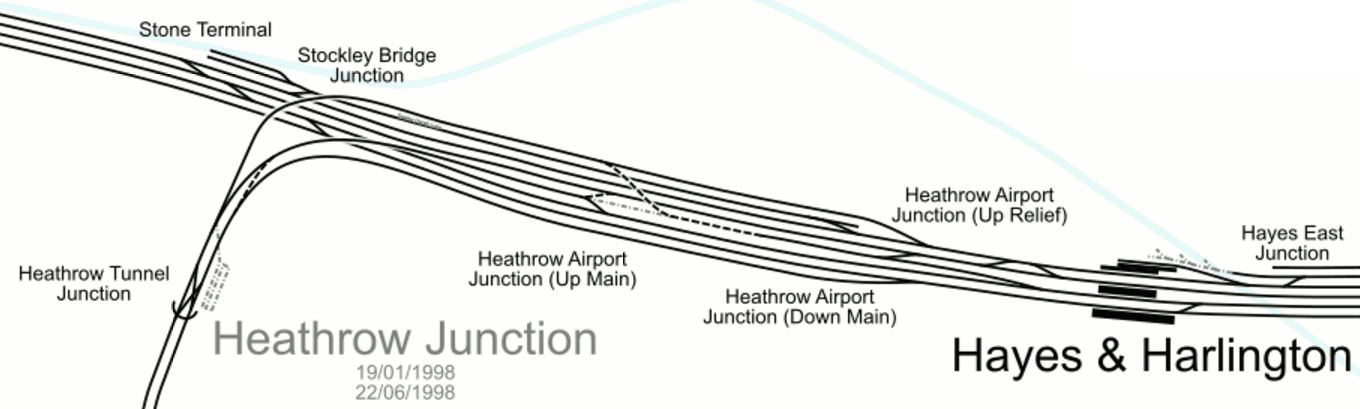
Stockley Junction And Hayes & Harlington Station
Note that in some places there are eight tracks across, with lots of crossings and points everywhere.
If you look at the lines through the station, starting from the South they are, with their platform numbers.
- Reading-bound Fast Line (Down Main) GWR – Heathrow Express
- London-bound Fast Line (Up Main) – GWR – Heathrow Express
- Reading-bound Slow Line (Down Relief) – Crossrail- GWR – Heathrow Connect
- London-bound Slow Line (Up Relief) – Crossrail – GWR – Heathrow Connect
- Bay Platform – Crossrail – GWR
Look at the map and note the following.
- The two Slow (Relief) lines go straight through the station and the junction.
- The two Fast (Main) lines go straight through the station and the junction.
- Trains on the Down Main like Heathrow Express to the Airport, take the Southernmost line and just turn left for the Airport.
- There are several new crossing and short lines, which in the map are shown dotted.
This set of pictures, were taken on a train going along the Down Slow line.








Note how as you get nearer to the junction, the number of tracks increases.
These pictures were taken from a Heathrow Connect train going through Stockley Junction towards the Airport.




From the path the train took, I suspect that the track layout shown in the map has been largely created.
Note the line shown in these pictures, is the one used by trains running from the Airport to Paddington.
The final set of pictures, were taken as I returned from Heathrow on another Heathrow Connect train.
















The train crossed over all the lines and descended into Hayes and Harlington station on the Northernmost line.
Crossrail’s Park-And-Ride Facilities
Crossrail is costing upwards of around fifteen billion pounds, but when it comes to providing Park-and-Ride facilities for passengers, it probably scores a massive zero-out-of-ten.
Consider.
- Parking at Shenfield station is no more than adequate for current customers.
- Abbey Wood station‘s restricted site, may well be getting a flagship station, but where will passengers park?
- Crossrail’s South-Eastern branch doesn’t serve Ebbsfleet International stastion, which has masses of parking.
- Of the three branches, only Reading station can probably increase its parking to cope.
- Where are the Park-and-Ride sites , where Crossrail and the M25 intersect?
It is certainly not good enough.
A Park-and-Ride At Brentwood
This Google Map shows where Crossrail crosses the M25, just South of the junction between the M25 and the A12.
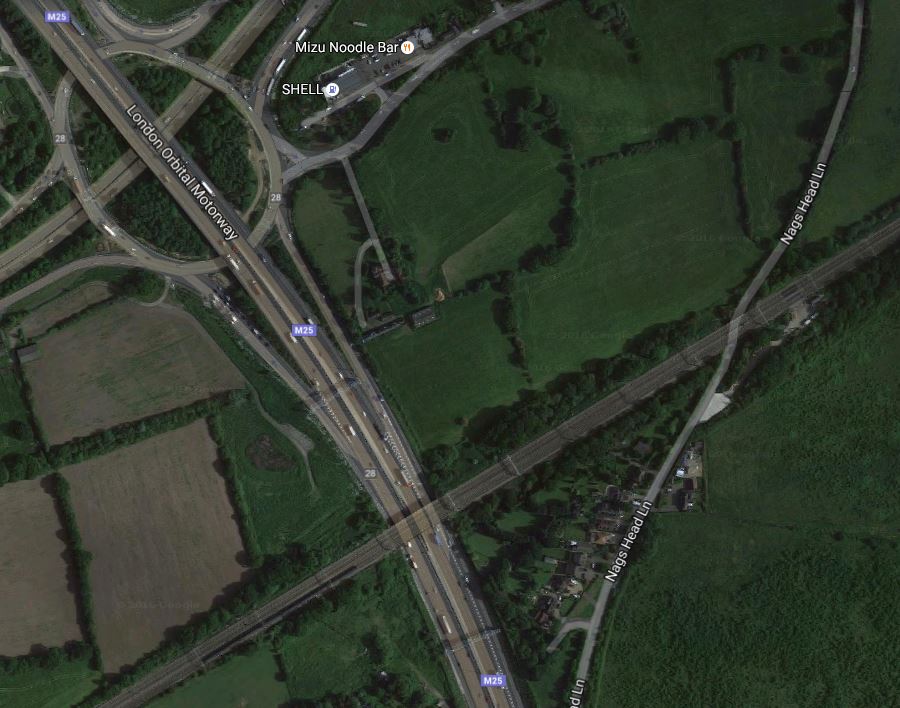
Crossrail And The M25 And A12 At Brentwood
I feel that this would be a logical site for a station with large and efficient Park-and-Ride facilities.
- It would be about thirty minutes from Liverpool Street station and seventy minutes from Heathrow.
- There would be over a dozen trains per hour (tph) to and from Central London.
- Long-distance trains to and from Chelmsford, Colchester, Ipswich, Norwich and Southend could call and have cross-platform interchange with Crossrail.
I suspect that there would be massive opposition to building the station.
A Park-and-Ride At Iver
This Google Map shows Iver station and the M25 as it goes South from the M40 to the M4.
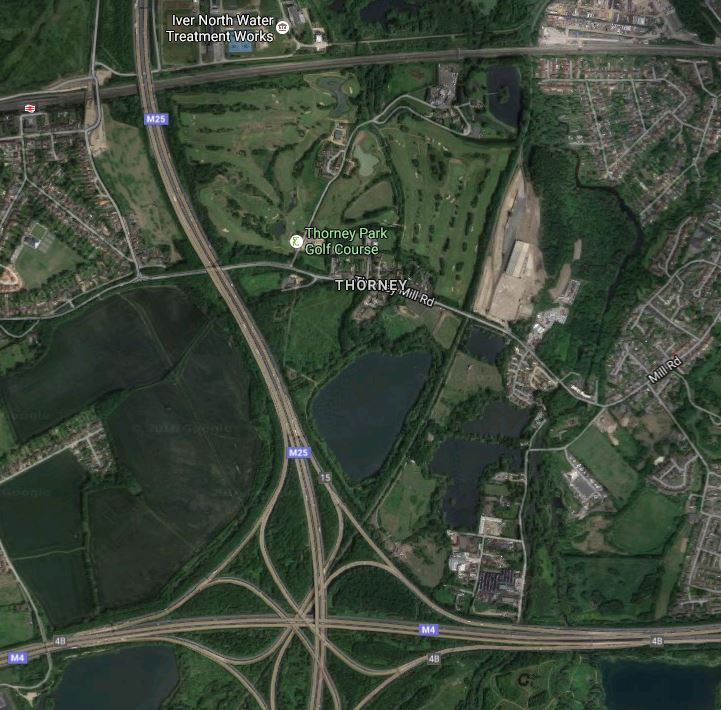
Crossrail And The M25 At Iver
I feel that this would be another logical site for a station with Park-and-Ride facilities.
In Network Rail Plans Another Tunnel Into Heathrow, I talked about plans to create a Western Rail Approach to Heathrow.
- The route starts between Langley and Iver stations, goes South roughly parallel with the M25 and then goes into Terminal 5 from the West.
- Much of the route is in tunnel.
Surely, if a Park-and-Ride site was to be built in the West of London, then these two projects should be combined.
Since I wrote about the PRT System in A Visit To Heathrow Terminal 5, I’ve met someone, who’s had a ride. Their view was totally positive on this new technology.
So I think there could be possibilities for a very futuristic transport system to Heathrow linked to Crossrail at Iver, in addition to the full rail option.
A Park-and-Ride At Abbey Wood
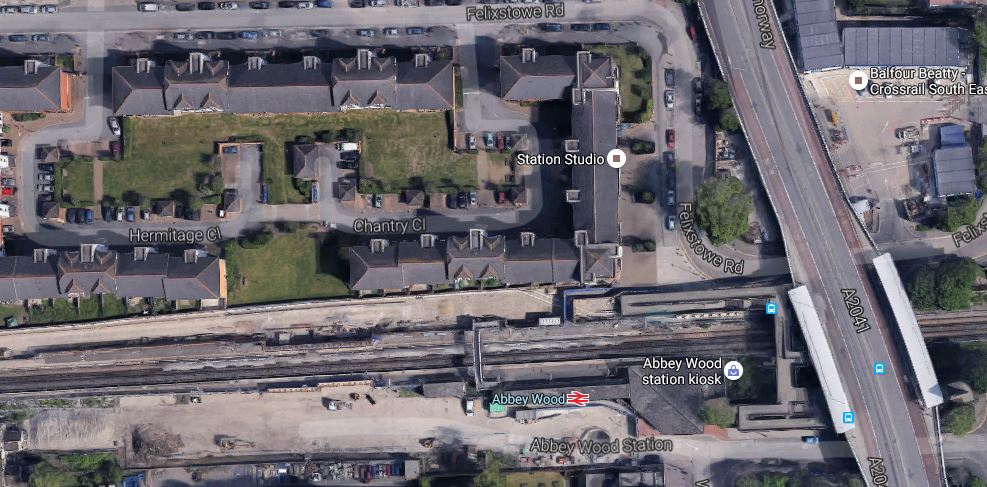
Abbey Wood Station
This Google Map shows the area of South East London around Crossrail’s terminus at Abbey Wood station..
There doesn’t appear to be much space around the station for a Park-and-Ride site.
This Google Map shows the roads in the area.
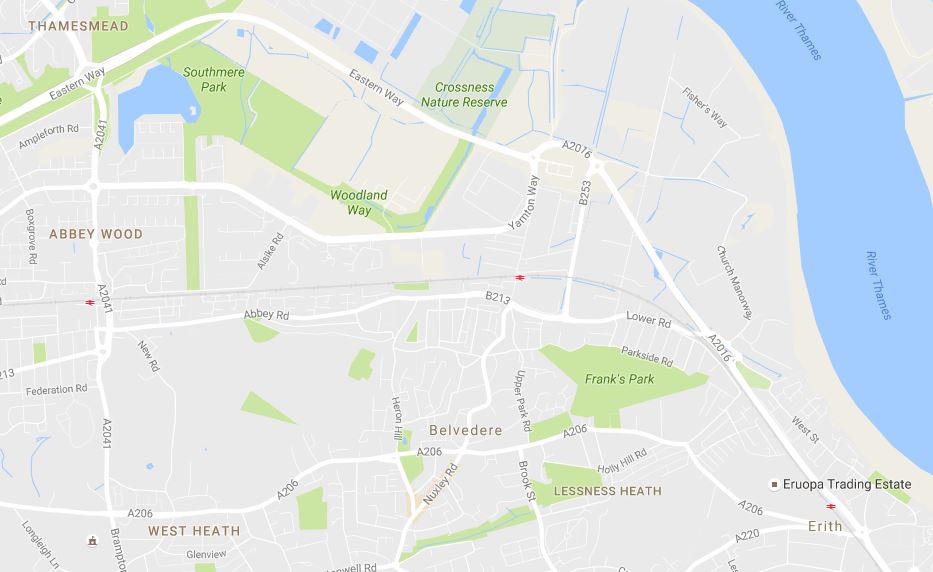
Roads Around Abbey Wood Station
Abbey Road station is on Harrow Manor Way, which links two East-West routes; the A2016 and the A206.
As Abbey Wood is the only surface station on the South-Eastern branch, I don’t think that there is a great probability, that a large Park-and-Ride site can be built on the South-astern branch of Crossrail.
A Park-and-Ride On An Extended South-Eastern Branch
Crossrail have safeguarded an extension Gravesend, which is described in this section in Wikipedia.
The route to Gravesend has been safeguarded by the Department for Transport, although it was made clear that as at February 2008 there was no plan to extend Crossrail beyond the then-current scheme. The following stations are on the protected route extension to Gravesend: Belvedere, Erith, Slade Green, Dartford, Stone Crossing, Greenhithe for Bluewater, Swanscombe, Northfleet, and Gravesend
So does this route give possibilities for a large Park-and-Ride?
This Google Map shows how the proposed extended route of Crossrail, runs under the Queen Elizabeth II Bridge.
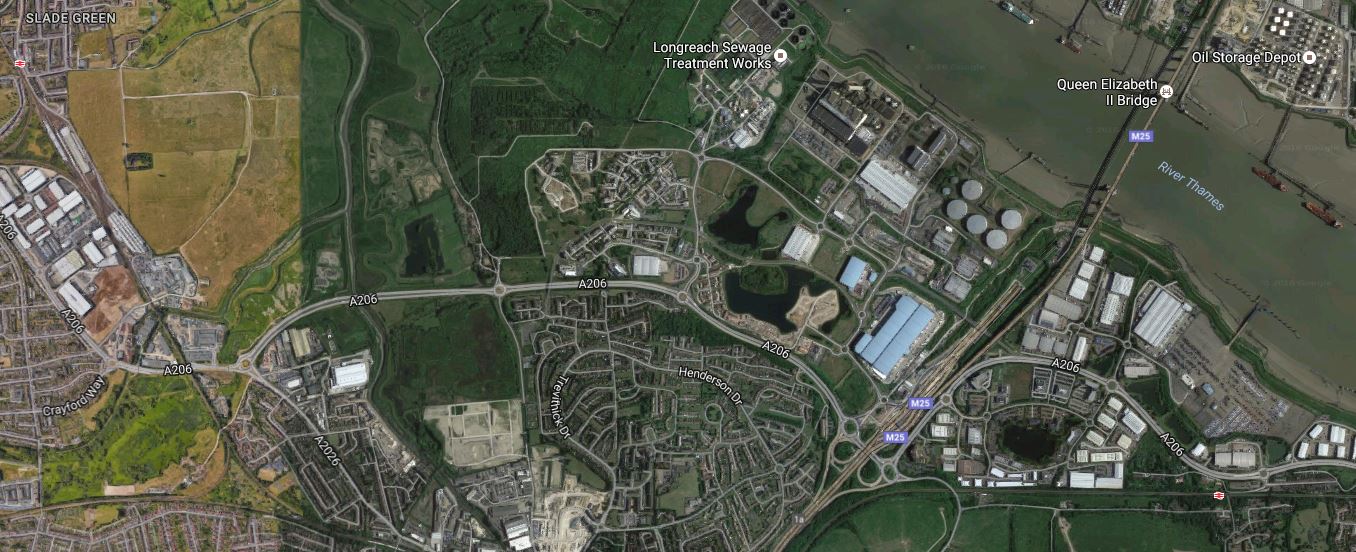
Crossrail, And The QE2 Bridge
Slade Green station is to the West of the bridge and the M25, in the top-left corner of the map, whilst Stone Crossing station is to the East, in the bottom right corner of the map.
This Google Map shows the route between Slade Green station and the Southern end of the bridge using the A206.
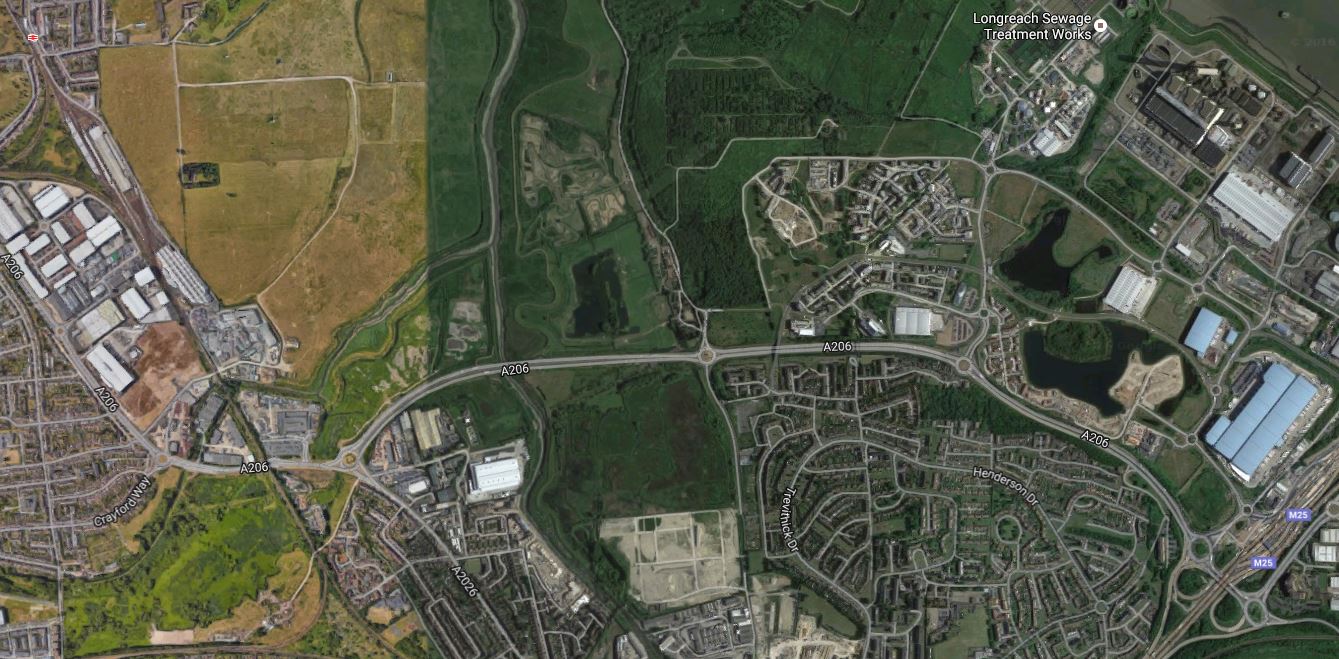
Slade Green Station To The QE2 Bridge
Slade Green station is in the top-left corner of the map and the Southern approach of the bridge in the bottom-right.
This Google Map shows between the bridge and Stone Crossing station.
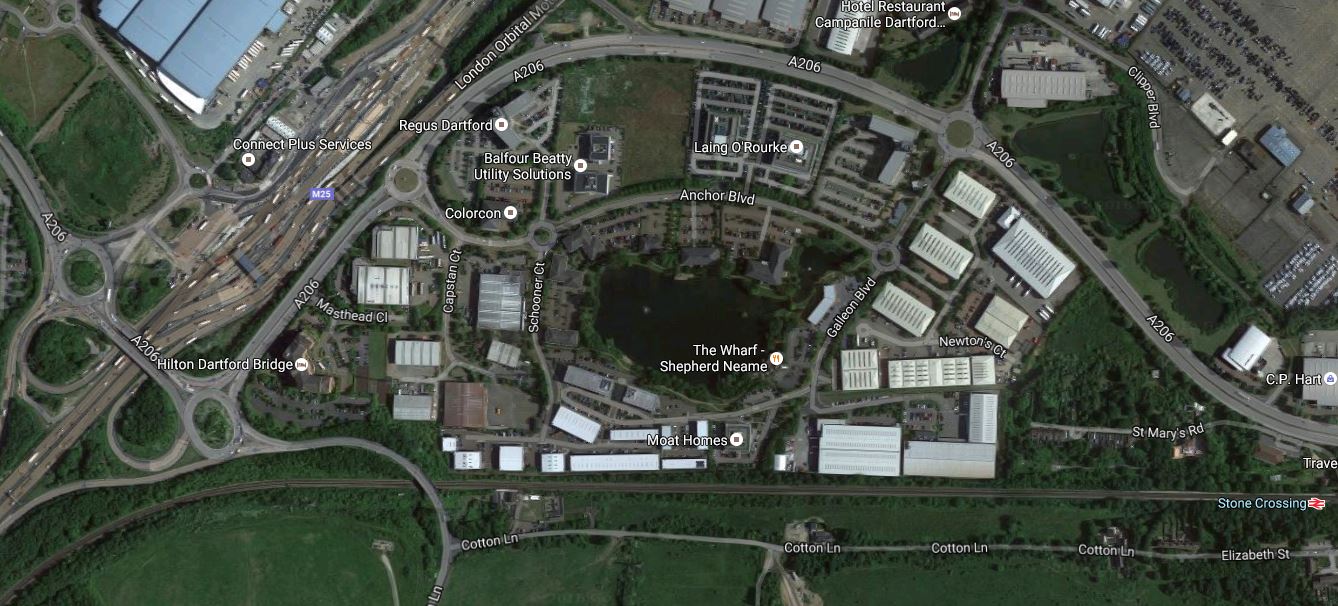
The QE2 Bridge To Stone Crossing Station
The Southern approach to the bridge is in the bottom-left with Stone Crossing station in the bottom-right.
After a brief look at both stations, using Wikipedia and Google Maps, the following can be said.
- Both stations are on the A206 road.
- The links to the M25 and M2 could probably be improved.
- There would appear to be space at both stations to build substantial parking.
- Both have at least two tph to and from Abbey Wood at the present time.
- From 2018, Thameslink will be running two tph will run from Rainham to Luton stopping at Stone Crossing, Slade Green and Abbey Wood stations.
- Nearly all the trains on the line will be 12-car trains.
Could the Park-and-Ride needs on the Abbey Wood branch be solved by increasing the parking at stations like Stone Crossing and Slade Green, with passengers using local trains and Thameslink to access Crossrail?
- There should be sufficient capacity in the 12-car trains to fit in a few short-distance travellers.
- The frequency between Abbey Wood and Rochester should be at least four tph.
- These trains will call at Slade Green, Dartford, Stone Crossing, Greenhithe, and Gravesend.
- The Crossrail frequency at Abbey Wood will be at least eight tph.
- Because of these frequencies, there shouldn’t be too much time wasted, waiting for a train at Abbey Wood.
I think that this shows that if the connecting trains to Abbey Wood have a medium to high frequency and there is plenty of parking along the line, then loyts of parking doesn’t need to be provided at Abbey Wood.
The more that I look at the lines and services in North Kent, it does appear that running Thameslink between Rainham and Luton via Greenwich, Abbey Wood and Dartford was a piece of very high-class thinking.
Will The Third Runway At Heathrow Be Actually Built In The Near Future?
If nothing else the 25th ofSeptember 2026 statement by the Government, stated that the UK is going to build another runway in the South-East.
But I have my doubts, that a third runway will be open at Heathrow in the near future.
Building The Third Runway
As I said in Building The Third Runway At Heathrow, I don’t believe that the actual construction of the Airport would present any problems for any large construction company or more likely consortium. This is illustrated today, by this article on the BBC, which is entitled New Heathrow runway may be built above the M25, which says to me that engineers are looking for easier and more affordable ways to build the new runway.
Rebuilding The Current Terminals
Heathrow are also disclosing a master-plan, for rebuilding a lot of the airport to make it more efficient and up with the best.
- There will be two main terminals; Heathrow West and Heathrow East with satellites in between handling the actual planes.
- These two terminals and the satellites will be between the two existing runways, with a passenger and baggage transport system beneath.
- Terminal Five will become Heathrow West.
- An extended Terminal Two will become Heathrow East.
- Crossrail, Heathrow Express and the Underground will serve both main terminals.
- A Terminal Six would be mainly for the third runway, would effectively be part of Heathrow West.
I believe that this rebuilding could start well before the third runway is even given the go-ahead, as many of the works will be within the current Airport boundary.
Rail Links To The Airport
Part of the master-plan is extensive rail links to the Airport.
- Crossrail, Heathrow Express and the Underground will serve London.
- There will be rail links to both the West and South.
- There will be a rail link to both HS1 and HS2.
- Could we even see a rail-based cargo transport system running under all the terminals, bringing in supplies for the terminals and the planes?
This map from carto.metro.free.fr shows the current rail links at Heathrow.
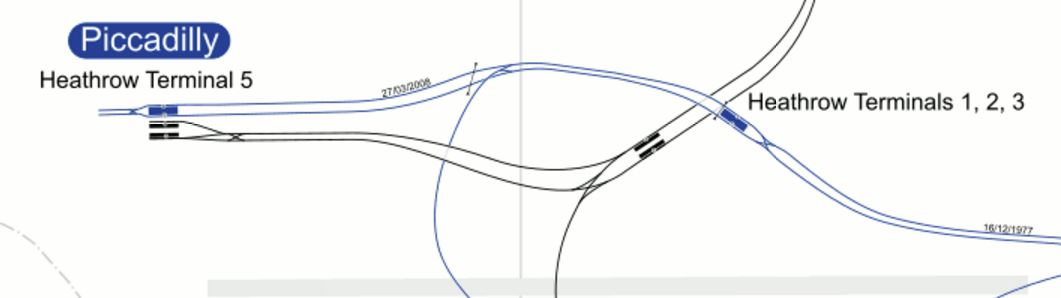
Rail Lines At Heathrow
Note.
- The Piccadilly Line is shown in blue.
- The lines going South lead to Terminal Four.
- Crossrail has Terminal Four as its terminus
- The Heathrow West and Heathrow East concept fits the rail lines well.
- Terminal Five station is ready for access from the West.
I think just as Gatwick are embracing rail with a vengeance, rail can be a major force in the development of Heathrow.
We could even be seeing the current rail line through Terminals Two and Five becoming a high-capacity rail line connecting all the terminals to the West, East and South.
A Greener Airport
If as many of the traffic movements in and around the airport could be moved from polluting road transport to electric trains, Heathrow’s pollution footprint could be reduced.
As an example, you could envisage a factory in a low cost area by a rail line to the West of Heathrow creating airline meals. These would be packaged by flight number and then taken by electric cargo train direct to the appropriate terminal or satellite, ready for loading onto the plane.
Could we even see an airport, where very few trucks and service vehicles, use the runways and aprons? You certainly see a lot less vehicles on an airport, than you did decades ago.
I found this page on the Heathrow web site, which is entitled Our Vehicle Fleet Is Making The Switch.
This is a paragraph.
850 vehicles in the airside fleet at Heathrow are electric, making it one of the largest fleets of electric airside vehicles in Europe. As well as electric tugs that move baggage around the airfield, we use electric cars and vans to transport our people. We are trialling electric specialist ground support vehicles such as belt loaders, cargo loaders and push back tractors.
I was surprised to see pushback tractors mentioned, as some weigh up to fifty tonnes. But according to the Wikipedia entry for pushback, there are interesting developments in this field. This is said about robotic push back tractors.
The Lahav Division of Israel Aerospace Industries has developed a semi-robotic towbarless tractor it calls Taxibot that can tow an aircraft from the terminal gate to the take-off point (taxi-out phase) and return it to the gate after landing (taxi-in phase). The Taxibot eliminates the use of airplane engines during taxi-in and until immediately prior to take-off during taxi-out potentially saving airlines billions of dollars in fuel that is used. The Taxibot is controlled by the pilot from the cockpit using the regular pilot controls.
Even as a trained Control Engineer and a private pilot with over a thousand hours in command, I can’t help but wonder at the concept.
As a final thought, surely if all unnecessary vehicles could be removed from air-side, this must improve safety and security.
What too, would low or even zero carbon operations, do for the image of the airport?
Travelling To The Airport
One consequence of the rebuilding of the terminals with rail links to both London and the West, will be a reduction in the number of travellers, who drive or are driven to to the airport.
In the London Olympics every event ticket came with a London Travelcard, so that you used public transport. Could we see public transport tickets bundled in with air tickets to cut the need for vehicles to drive to and from the airport?
I certainly think, that we’ll see rail-connected parking to the airport, just because land close to an airport is so expensive.
Local Transport To The Airport
I suspect that a lot of journeys to and from the airport are quite local, as they concern local residents, employees or travellers perhaps spending a night after or before a flight close to the airport.
These journeys have not been forgotten in the master-plan, as it talks of improving bus services.
But the most interesting development is the ULTra PRT system, I talked about in A Visit To Heathrow Terminal 5.
A Heathrow-wide system has been proposed. This is said in Wikipedia.
In May 2013 Heathrow Airport Limited announced as part of its draft five year (2014-2019) master plan that it intended to use the PRT system to connect terminal 2 and terminal 3 to their respective business carparks. The proposal was not included in the final plan due to spending priority given to other capital projects and has been deferred.
There have been suggestions that they will extend the service throughout the airport and to nearby hotels using 400 pods.
The system at Heathrow may not be built, but expect something like it at an airport near you.
Imagine turning up in a convenient car park or train station, with family and baggage, ready to travel on holiday. You scan your pre-printed boarding pass or click one on your phone and a pod arrives, which takes you to the satellite your flight will use.
As they travelled, passengers could scan passports and they would be given up-to-date flight information.
Flying is a total pain, best summed up by the old pilot’s moto.
Time to spare, go by air!
A decent system to bring people to the airport, could make flying more of a pleasure.
Integration With Thameslink
I believe that it would be possible to have a direct Thameslink connection into Heathrow using the |Dudding Hill Line to link to Crossrail.
In Could Thameslink Connect To Heathrow?, I show how it would be possible to create a four tph service between Heathrow and Thameslink.
This could create an easy link to and from Gatwick and Luton Airports and Kings Cross, St. Pancras and London Bridge stations.
Integration With HS2
I’m taking this first, as it’s probably easier than linking to HS1
When Phase 2 of HS2 opens, services Northward from Old Oak Common station are proposed to be.
- Birmingham – 3 tph
- Edinburgh – 2 tph
- Glasgow – 2 tph
- Leeds – 3 tph
- Liverpool – 2 tph
- Manchester – 3 tph
- Newcastle – 2 tph
- Preston – 1 tph
- Sheffield – 2 tph
- York – 1 tph
I estimate that Heathrow to Old Oak Common will be about 20 minutes by Crossrail and Heathrow Express.
As changing planes at Heathrow, according to the Airport takes between 75 and 90 minutes, using HS2 would be competitive.
,Especially if the interchange at Old oak Common was well-designed.
Leeds will be about ninety minutes from Old Oak Common. so if the interchange timings are right, a passenger could be in the centre of Leeds around two hours after coming through Arrivals at Heathrow. A chauffeur-driven Ferrari couldn’t do that legally.
Integration With HS1
This is more difficult, as neither Crossrail nor Heathrow Express serves St. Pancras.
There are a choice of routes.
- Crossrail to Farringdon and then Thameslink or the Metropolitan Line to Kings Cross St. Pancras.
- Heathrow Express to Paddington and then a taxi.
- Heathrow Express to Paddington and then the Metropolitan Line
- Piccadilly Line to Kings Cross St. Pancras.
Interchange could have been designed to be a lot better.
I seem to remember that original plans for the Heathrow Express envisaged St. Pancras as a second London terminal, using the Dudding Hill Line.
But this route is probably impossible owing to there not being enough platforms at St. Pancras, which is A Fur Coat And No Knickers Station.
As there are other operators, who need extra platform space at St. Pancras, perhaps a couple of extra platforms could be built.
But I doubt it!
If Heathrow were to be linked to Thameslink, as I indicated earlier, this would solve the problem.
Terminals And The Third Runway
Extra terminal capacity, will be able to handle more passengers, but will the runways be able to handle the extra planes?
I suspect there are various strategies, that will keep the number of flights within the capacity of a two-runway airport.
- Larger aircraft with more capacity, will make better use of slots. 737s and A320s are carrying more passengers.
- Quieter aircraft, linked to better air traffic control, might givenoise and capacity advantages. Thuis page on the Heathrow web site, is entitled Steeper approach trial report.
- Reorganisation of air cargo to release slots.
- Use of Crossrail and/or Heathrow Express to connect to HS1 and HS2.
The more Heathrow use their intelligence, the further into the future the date for the third runway will recede.
Looking At The Cash Flow
Obviously, I don’t have any figures, but sorting out the terminals early and creating extra passenger capacity, may give Heathrow better cash flow to generate the vast sums needed to build the completely new Terminal Six and the third runway.
I’d love to see their full cash flow, but I suspect that the third runway, will only be needed when to expand the traffic, they need m the slots it will deliver.
The early costs would and could be.
- Fighting the protestors and the politicians.
- Obtaining Planning Permission.
- Buying up the private .properties in the way.
- Rolling out an anti-pollution philosophy.
- Creating Heathrow West (Terminal Five) and Heathrow East (An Extended Terminal Two)
- Extending the rail network.
- Professional fees.
Perhaps by the early 2020s, they would have a strong cash flow and ownership of all the land they might need.
Then at an appropriate time, they would build the new runway and any terminals needed, in the space they had acquired.
As today’s article on the BBC indicated, they wouldn’t even have to build a tunnel for the M25.
It would hopefully be a large, but reasonable straightforward construction operation.
The Opposition Is Gathering
This article in the Independent is entitled Heathrow expansion: Airlines react to Government’s airport decision.
- Stewart Wingate of Gatwick of Gatwick is quoted as being disappointed and saying he’ll read the Government’s reasons in detail.
- Dame Carolyn McCall of easyJet, said their planned move to Heathrow is contingent on the right deal.
- Willie Walsh of BA’s parent said he was pleased a decision had been made.
- Craig Kreeger of Virgin Atlantic, said: “We support expansion, provided it delivers for our customers.”
- Nick Burton of Luton Airport said that we must now focus on demand before the new runway is built in 10-15 years time.
- Charlie Cornish, chief executive of Stansted’s owner, Manchester Airports Group, said that we should make the best use of the runways we’ve got.
That doesn’t sound like a vote of confidence to me.
And I haven’t included all those who will lose their homes, the environmental protesters and those like me who don’t like Heathrow’s attitude.
The statistics are also not on Heathrow’s side either, as traffic is growing fast and another runway is needed soon, with a second one perhaps ten years later, to satisfy rising demand for air travel.
So What Could Happen?
Much of this is speculation, but Nostradamus couldn’t predict this one.
- In The Planemakers’ View On The South East’s New Runway, I quoted from an article in The Times, which said that Heathrow’s hub model is superseded by the views of the planemakers, who think it’s all about point-to-point flights in appropriate aircraft.
- Gatwick could probably apply for permission for a second runway in 2019.
- Luton, Southend and Stansted Airports are ambitious and want to expand.
- Better rail services to Stansred Airport have been announced.
- Luton Airport wants a better rail service.
- Birmingham Airport gets a connection to HS2 in the mid-2020s.
- Eurostar and other companies will increasingly add rail services to Europe.
These and other factors will eat into Heathrow’s market share, thus delaying that crucial point, where the third runway needs to be built.
But that doesn’t really solve the short term problem The only way to satisfy that is to create a runway in the South-East as soon as possible.
And the only place that can be built is Gatwick.
The growth in air traffic will continue and a few years later, Heathrow will get its runway.
Building The Third Runway At Heathrow
This is not concerned about the politics and protests of building the third runway at Heathrow, but about how it could be built and the options for transport to the Airport.
The Current Heathrow Airport
This is a Google Map of Heathrow Airport and the surrounding area.
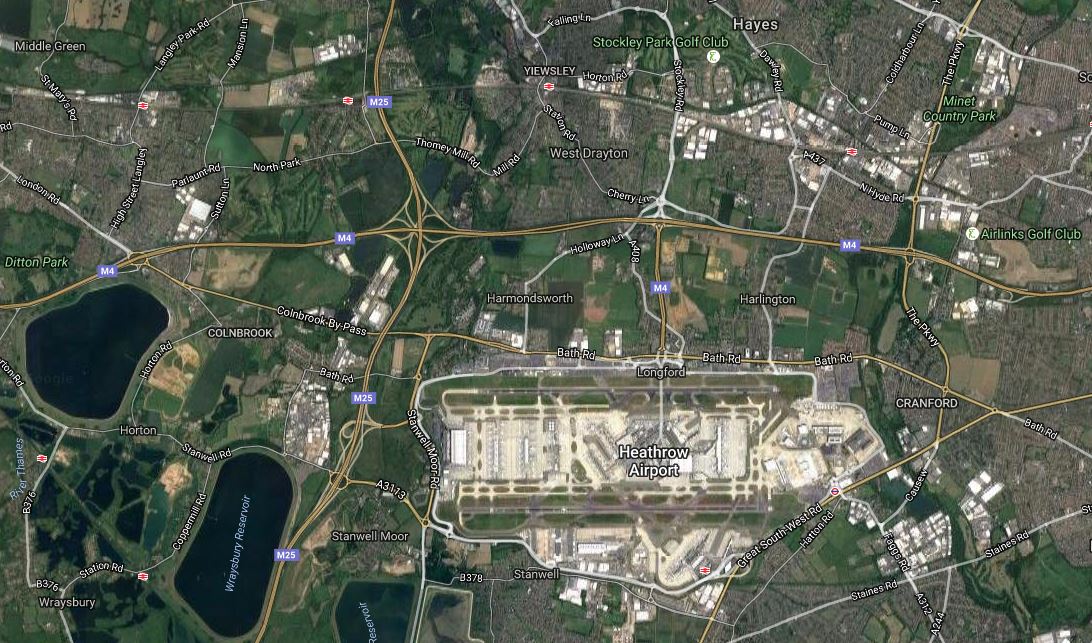
Heathrow Airport
The Proposed Heathrow Airport
This map from the Heathrow web site, shows the position of the new runway and the expanded airport.
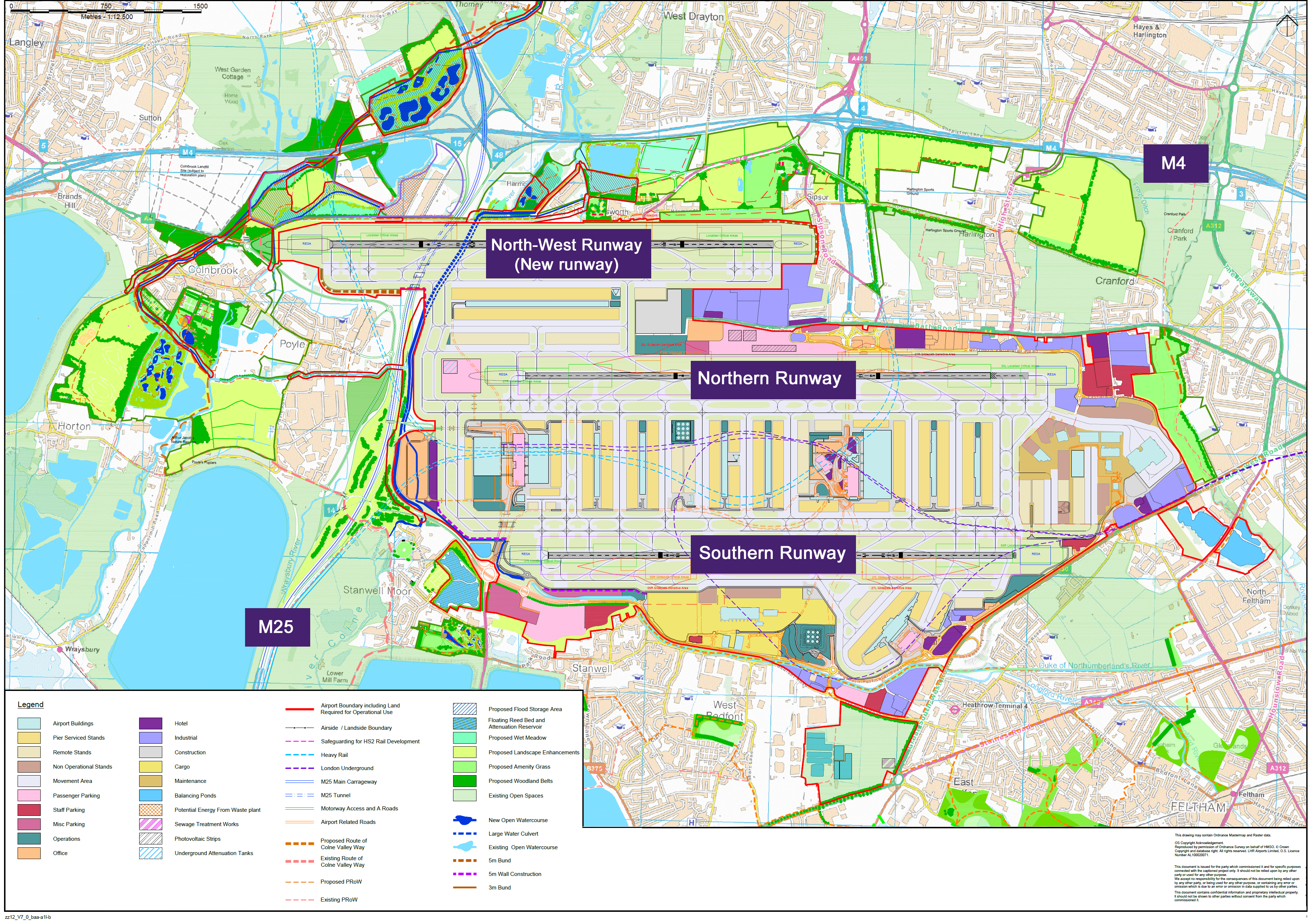
Heathrow Airport With Three Runways
Note.
- How the M25 is dropped into a tunnel.
- The village of Harmondsworth is no more.
- This page on the Heathrow we site gives a lot more details.
Construction
It looks to me, that the actual transformation of the Airport will be possible, as it looks like construction would just replace the housing with the new runway and associated works.
Diversion Of The M25
Cut and cover tunnels would carry the M25 under the new runway, but from the map, it looks like the motorway will only be in tunnel under the new part of the airport and for not that great a distance.
I think with careful planning, the M25 could be left functioning, whilst the tunnel and new runway are constructed, so it should be nothing like the problems of constructing Terminal 5.
Conclusion
The new runway and terminal shouldn’t be the world’s most difficult construction project.
The Heathrow Decision
Perhaps the best comment on the decision to go for the NW Runway at Heathrow, a this reasoned one from Construction News, which is headlined, Heathrow: Still ifs and buts.
That sums it all up.
This decision is still twenty years away from opening.
.But I suspect it won’t open, as there is too much opposition to the runway.
A Small Setback For Heathrow
Today, the Government will decide on their preferred option for another runway in the South-East.
So what happens on the M4 today? It has been blocked by a fuel-spillage.
Will all the cabinet members get to the meeting?
Heathrow Bid To Duck ‘£40m’ Crossrail Bill
This is the title of a small article in the Business section of today’s Sunday Times
Heathrow is annoyed that the Office of Rail and Road rejected their plan to charge every train that uses the line to the Airport, £597, with a maintenance charge of £138,
So they are going for a judicial review.
This is the last sentence of the article.
It (Heathrow) argues that it is unfair to make air passengers – who may never use Crossrail – subsidise the new line.
Consider.
- If passengers use Crossrail, this will mean they won’t have to pay the high prices on the expensive Heathrow Express, which only takes you to the inaccessible-for-many Paddington.
- Crossrail will be the route of choice of many passengers to and from Heathrow. As an example, three out of four of my closest stations will be a single change via Crossrail to Heathrow.
- When Crossrail opens, I suspect only unknowing and the rich will use Heathrow Express.
- Did Crossrail pay for the new Stockley Viaduct, which will increase capacity on the route to Heathrow?
- Many passengers, who have Freedom Passes (As I do!), won’t put Heathrow on their list of London Airports, unless they get free travel to the Airport on Crossrail. Boris promised it!
- Will passengers be able to use contactless ticketing to Heathrow Airport, as they can to Gatwick?
With the decision on the next South East runway to be made this week, Heathrow seems to be reinforcing the view that many hold of the Airport – It operates in a selfish culture, that is more about profits, than passengers, the Airport’s many neighbours and the environment.
 The Anonymous Widower