Tom Dixon’s Water Tower House
As I walked from Kensal Rise station to Ladbroke Grove, I couldn’t avoid seeing this building by the Grand Union Canal.



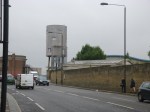
It is a house created by Tom Dixon from a water tower. This page on the inhabit web site gives more details.
This Google Map shows the area, where a bridge carries Ladbroke Grove over the Grand Union Canal.

Grand Union Canal At Ladbroke Grove
The house is the round structure on the South side of the canal, by the bridge, to the right of the long silver building.
On the canalside in front of the house and the silver building is another interesting structure.


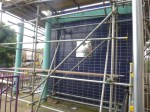

It is a Monitoring Station for the electricity cable networks that are run by National Grid. It appears to be in a state of refurbishment at the moment, which stopped me taking a picture of the plate which gave details of its function.
The Hauer-King House
I came across this house in Douglas Road, Islington this morning.
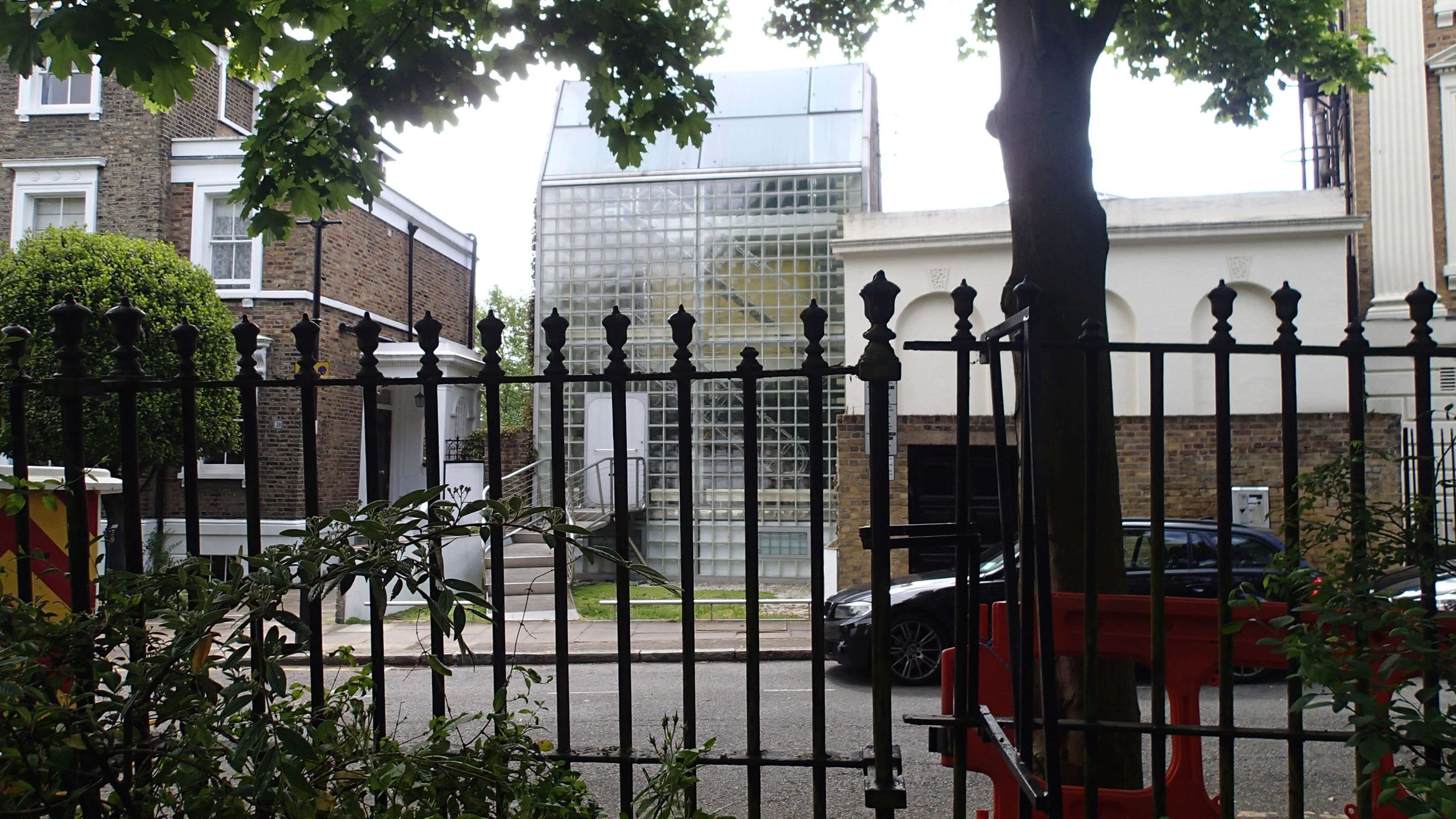
The Hauer-King House
There’s more about it here on the mimoa web site.
I bet it was a devil’s own job to get planning permission.
I’d love to have a look round.
Kerridge Court
My picture of Dalston, focuses on Kerridge Court, which was being built in 1949 by the London County Council, when the picture was being taken.
As I was going that way, I took a few pictures.




I obviously have no idea what it is like to live in the buildings, but they certainly didn’t look like some Jerry-built estate put up hastily after the Second Would War.
Will Modern Construction Techniques Create New Stations For The London Underground/Overground?
London is under tremendous pressure to provide more and more housing and in some ways it seems we’re using up the obvious sites like Stratford, Barking Riverside and Old Oak Common. So we’re going to start building on perhaps less obvious and more cramped sites.
The area round Shoreditch High Street station is being developed more and more with tower blocks. I have talked about linking the station to the Central Line and also about a new main line station in the area, so what happens here in the next few years is going to be an experience that will be worth watching.
I also feel that the area to the east of Gospel Oak station could be opened up for development, which might involve a link to the Northern Line.
Yesterday, I mused about reopening Maiden Lane station, which would involve a lot of properly development and a possible link to the Piccadilly Line.
So all three of these developments could involve a connection to a deep level underground line, something which five years ago would have been very difficult.
A few months ago, I talked about using an uphill excavator at Whitechapel station to connect the deep level Crossrail tunnels to the other lines. I have also found this article on the New Civil Engineer website, which gives more details of the amazing construction going on at Whitechapel.
My only comment is – You ain’t seen nothing yet!
If I take the three examples above, they would all mean connecting to a working twin-bore deep Underground line between two stations. I suspect that some clever construction engineers will develop a methodology to do this, with the minimum of disruption to the working line. If the first time, they do it, it is on time and on budget, the engineers will have a job for life in adding connections to deep underground lines not just in London, but all over the wider world.
To return to London, I think we’ll be surprised at some of the seemingly crazy schemes put forward for new or extended stations in the future, that have become possible with the improvement of tunneling and other construction techniques.
Junction Road And Tufnell Park Stations
When there is speculation about new stations on London’s railways, the possibility of a new Junction Road station on the Gospel Oak to Barking line, linked to Tufnell Park tube station by escalator sometimes crops up.
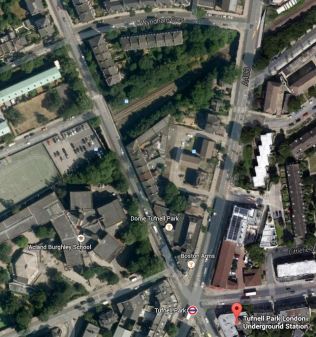
This map shows the area.
Tufnell Park
Tufnell Park tube station is indicated at the bottom and Junction Road leads up from that station to the top right. The Gospel Oak to Barking line runs across the image to the top right corner at a thirty degree angle to the horizontal. The old Junction Road station was where the road and railway cross. Only Station Road survives.
What is interesting is to follow the railway under Dartmouth Park Road towards the top left and you can see some cars parked. This is a school, that has been built over some of the tracks of the railway.
If Junction Road station was to be reinstated, it is not that close to Tufnell Park tube station, so some heroic engineering would probably have to be employed to connect them.
But a better idea for the area must be being considered by Transport for London and property developers! After all, just as the school was created on the west side of Dartmouth Park Road, surely a similar method could be used to build something else over the railway. This map shows the area to a bigger scale.
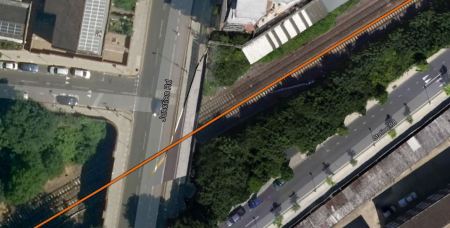
Junction Road Station
If this should lead to a rebuilt Junction Road station, then this will be a bonus for everybody in the area and a good selling point for the developers.
I have since taken a few pictures of the area.
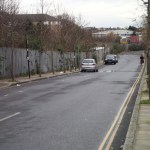


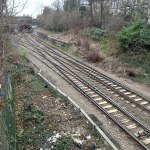
It’s quite a large area and it does seem to my engineering rather than property development brain, that it could be developed to either create housing or perhaps a school. A reinstated Junction Road station is probably not feasible as it is quite a walk to Tufnell Park tube station, which means crossing a busy road.
Note in the picture the actual junction, where the connection to the Midland Main Line, diverts from the Gospel Oak to Barking Line. This would be used if the line is extended to Hounslow.
The question has to be asked that if the line is extended, would the Gospel Oak to Barking Line still terminate at Gospel Oak station?
The Problem With The Mansion Tax
I’ve just been watching Ed Balls on The Andrew Marr Show talking about the Mansion Tax.
I don’t know Andrew Marr’s personal circumstances, but I wonder how many of the commentators like him live in houses that are worth a couple of millions. The Sunday Times today is reporting that Jeremy Paxman is being paid a million for his memoirs. Will he put that into property?
So many of these heavyweight commentators will be passionately against a Mansion Tax.
Incidentally, my view on property taxes is based heavily on the fact we have a housing shortage and it is a serious moral offence to leave a house empty for more than a few days a year.
Housing
I have very strong views on housing. Partly I suspect because C and myself and our three boys had such difficulty finding a house in London in the 1970s. That was how we ended up in the Barbican, as we had enough income to rent a flat, but not enough deposit to buy a £7,000 house. Those who reckon today’s housing market is crazy, should read about how difficult in was in the 1960s and 1970s.
We lived in a variety of places including two rented modern flats, two large country properties, which we extended to my designs, another damp fourth floor walk-up flat and a new build estate box.
I feel strongly that housing should be matched to those who live in it, so one person living in a multi-million pound house could be just as scandalous as an empty one.
As a Control Engineer, I believe very much in stable systems and we’ve had a stable housing market bouncing on the bottom for decades, where houses are not matched to needs and because too few are being created, houses are far too expensive.
The general public like this status quo, as they can boast that their house has gone up £50,000 or so, whilst they made you cup of tea.
All new developments like new housing, high speed rail and fracking are opposed by the selfish idiot in the Chelsea tractor, as it might drop their house price.
So what should we do?
1. Every empty dwelling, should be brought back into occupation. Have you ever noticed how many empty flats are above shops?
2. We should give the building industry a good kicking, so that many of these empty dwellings are got ready.
3. Any empty dwelling should be heavily taxed unless it is in the process of being prepared for occupation. Those, who buy-to-leave should be taxed heavily so that they find renting the flat or house to someone who needs it, a much better alternative.
4. A person or family, who has more than one home for solely their personal use, should pay a special tax.
5. There should be no Council Tax discount for those living alone in large dwellings. Why for instance should I get one?
6.Perhaps too, like many European countries, we should pay Capital Gains Tax in some way on our houses.
7.Inheritance Tax drives too much of the housing market. Not only does it create worries for everybody, but it often condemns single elderly people to live in large draughty, energy-inefficient houses, when the best thing to do with the house is demolish it and create several new homes of which the elderly person has the pick! So let’s abolish the tax on principle recidences. However, whatever we do is going to be complicated with tax, so we had better get it right. The politicians who have done good impressions of Nero fiddling while Rome burned since the war, don’t stand a chance as they are all too tied to their vested interests.
8. But above all we need more new dwellings and a lot of those should be affordable. We have some of the best architects in the world in the UK, but underneath the top level, they just produce boring crap and much of it is just Pete Seager’s little boxes, where you park the car outside and live boring lives. C and I had a house like that in the country in the 1960s and we escaped to the damp flat in London.
Above all we must be radical. I was brought up in the suburbs of London and it was boring and bland. So why not clear some of these areas and create housing fit for purpose, that is energy efficient and doesn’t rely on every resident having their own personal car? In many ways, too many cars is one of the biggest problems in this country, as it necessitates that all houses must have space for two.
I don’t want this to turn into the rant of a bitter old man, which I am not! In some ways, it’s a fact that I made my money by inventing disruptive technology, so let’s disrupt the cosy cartel of those with homes, councils of fat-cat Tories or champagne Socialists, who like the certainty of getting elected and a building industry not fit for purpose, that likes big repetitive expensive contracts.
So if we are going to build more dwellings, where should we build them?
Although, it was done in a rather boring way, the development of the new Dalston Junction station, where flats were built over the station was very good. I have heard that Transport for London are rebuilding Dalston Kingsland station. They should be bold and effectively put the North London Line in a tunnel and build gardens and a new square over the top, with tower blocks providing the accommodation. C and I lived in a tower block with three children in the Barbican and it worked. At the present time, we have the architects and design skills to create housing, but those who live near-by don’t want it on their doorstep.
But imagine being a couple with two young children, living high above the city in a modern almost zero-energy flat in the clean air with superb views. To go shopping, you just take the lift to the shops and market below and to travel the same lift takes you into the railway station.
It was almost ideal like that in the Barbican, except that there was no supermarket, as there is today. But we had the market in Whitecross Street.
Every rail station, should have meaningful development over the top. Imagine putting the local hospital on top of a station, so that it is the easiest place in the city to get to.
We need more innovative solutions to our housing crisis, but most of the population still prefer what we have.
I sometimes think that the whole of the economics of this country is driven by the houses we own. Somehow we must break that link and allow everybody to purchase the dwelling that they need.
Crossrail Is Even Now Having A Big Effect On London
Two stories I found today, show the sort of effect Crossrail is going to have on London.
This article from Ealing Today describes how Hanwell is going to get four trains per hour during peak hours of the day. Currently, it would appear it’s less than that. The report says this.
Dr Onkar Sahota, Labour Assembly Member for Ealing & Hillingdon said: “Whether it has been the re-opening of the South entrance to the station or the step-free access to platform level, the good news for Hanwell keeps coming.”
“I am pleased that after so much pressure from across the community, Crossrail have relented and will attempt to deliver four trains during peak hours.”
“I will continue to press the Mayor and Crossrail to ensure that we have a minimum of four trains per hour at all times, and will be watching closely to ensure that Crossrail come good on their pledge to deliver the long awaited Sunday service.”
There is also this report from Easier Property, which discusses how if your near a Crossrail station properties are doing better. It says this.
According to Hamptons International , transactions for properties within a mile of a Crossrail station grew by 21% in 2013, compared with the London average of 13%, and New Festival Quarter from Bellway Homes certainly echoes this London-wide trend.
And it is still four or five years before the new railway opens.
Is This The House Of The Future?
All over the world we have a problem of affordable, quality housing.
So when I saw this £30,000 house for one on the BBC web site, called a Y-Cube I had to investigate.
It has a good pedigree in being designed by Rogers Stirk Harbour and backed by the YMCA. There’s a lot more about the concept here.
This design may not succeed, but others will!
We are all too ambitious (or is it greedy?) about the type of property we want to live in.
And the tax system encourages well-off single people like myself to live by ourselves in larger houses. Why should I get a Council Tax rebate because I live alone?
Sometimes, I think I’d prefer a minimalist luxury two-bedroom flat high in a tower block with spectacular views of the river. One of the reasons, I don’t move, is that I’d probably be the only person, actually living in a flat they owned.
Perhaps, Councils should publish the occupancy statistics for every street and block in their area. Possible incomers would then see the areas with the right mix of population for their choice of dwelling.
 The Anonymous Widower