One For London Overground To Correct
I was at Walthamstow Central station last night and wanted to return home the quickest way, for which I have a choice of routes.
1. Take an Abellio Greater Anglia train to Hackney Downs and then get a 56 bus.
2. Take a Victoria Line train to Highbury and Islington and then cross the road and get a 277 or 30 bus.
3. Take a Victoria Line train to Seven Sisters and then get a bus to Dalston.
I prefer the first route, it has the least amount of walking and if it’s raining hard it’s mostly under cover. But the route has the disadvantage that you can wait fifteen minutes for a train. This is a bad picture of the information screen on the platform.
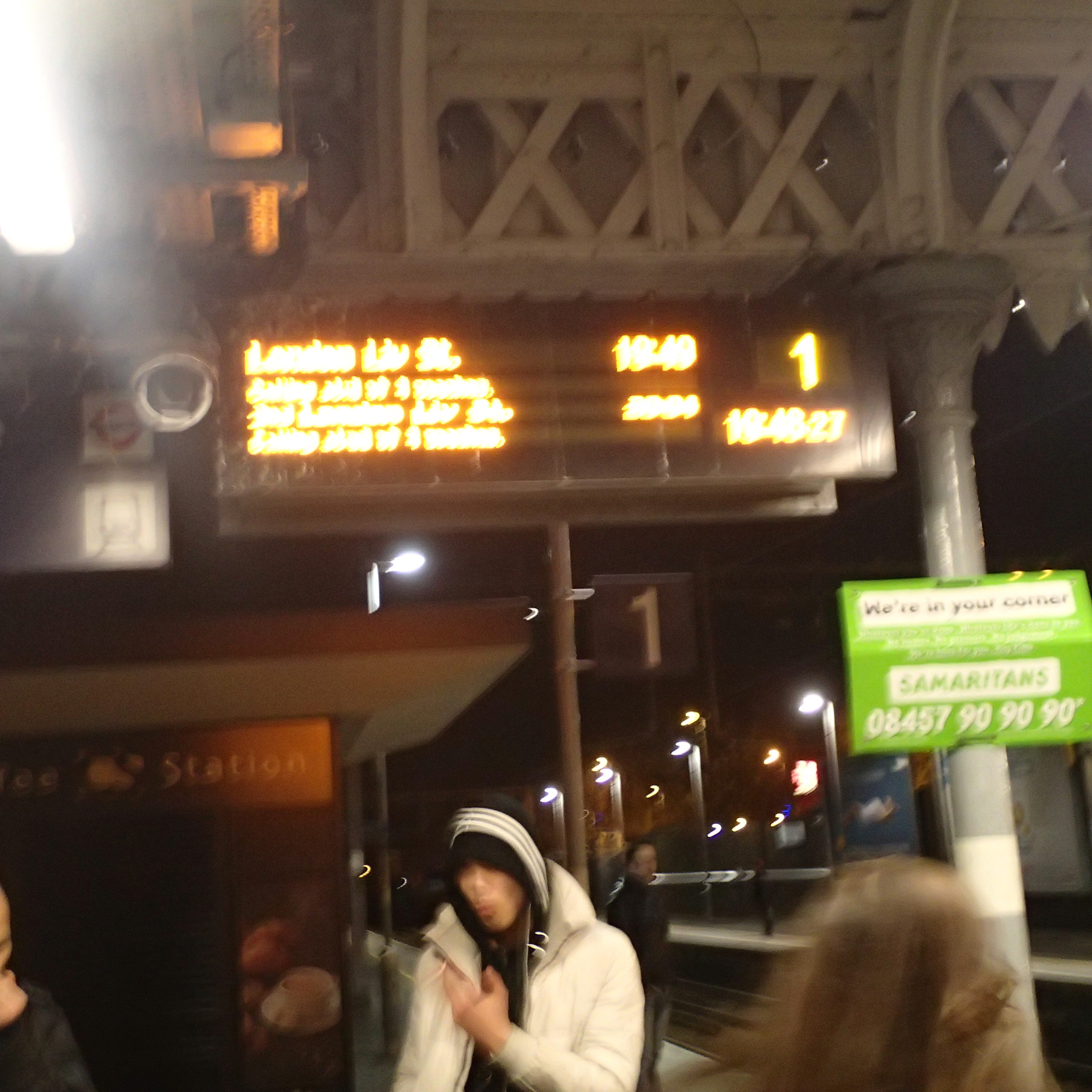
Information At Walthamstow Central
The trouble is that like all the other information screens at the station, it doesn’t give information for the Underground services in their station below.
Last night I waited about two minutes for a train, but if it had been six or so, I’d have probably dived into the Underground.
To make matters worse, if you arrive in the station using the underpass from the bus station, you do not pass any information screens at all and you have to climb the stairs to finds out the next train.
That’s not very customer friendly in my book.
Hopefully, when the Chingford services are taken over by London Overground in May, then as it will be an Overground/Underground station exclusively, then this lack-of-information problem will be resolved.
Could Maiden Lane Station On The North London Line Be Reopened?
According to an entry in Wikipedia, Camden Council have proposed that Maiden Lane station on the North London Line be reopened, as it is just to the north of the extensive developments at Kings Cross Central.
This Google Earth view shows the area.
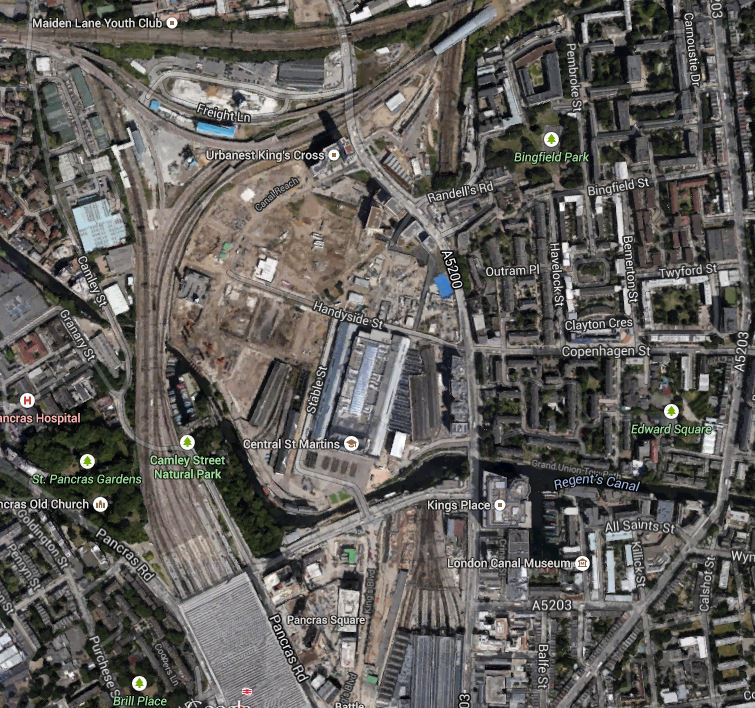
Kings Cross Central
The North London Line runs across the picture and the former station was just to the left of centre in this view, to the west of where the road crosses the railway line.
Some months ago, I walked to that area from Kings Cross station. I commented that it was not a short walk, so to build a station there to serve Kings Cross and St. Pancras stations may not be very worthwhile.
But take a look at this more detailed view of the area.
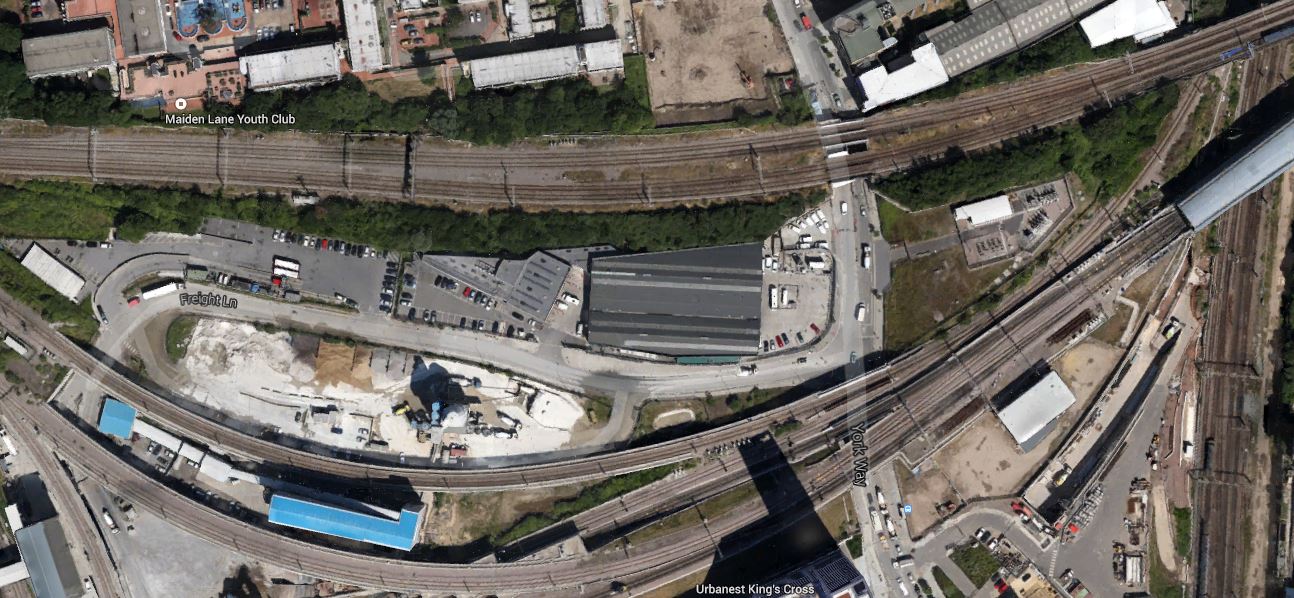
Railway Lines North Of Kings Cross
Note the distinctive acoustic cover over the Channel Tunnel Rail Link at the right, with the line sweeping across to turn towards St. Pancras.
But there does seem to be quite a bit of land in the area and it could fit that well-used cliché of development potential.
I’d also be intrigued to know if the Piccadilly Line could be reached from a station on the North London Line near here, by the use of modern construction techniques.
It probably won’t happen in the next few years, but I can’t help feeling that at some time, some very comprehensive property development in this area will incorporate a new station.
A Forest Of Orange Poles
I took this picture looking down a London Overground Class 378 train.
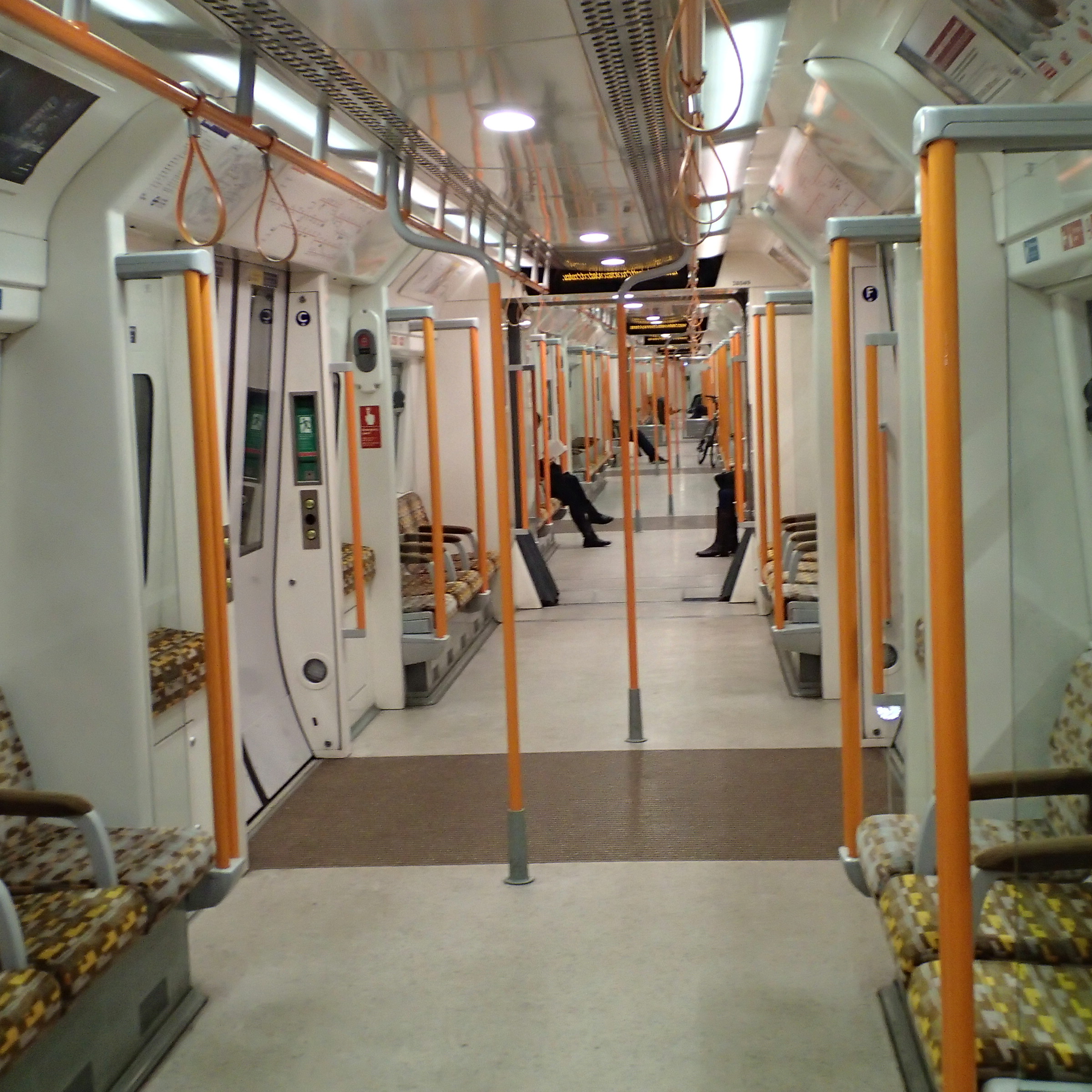
A Forest Of Orange Poles
This was a standard 4-car train and I’m still looking to get this view on an extended 5-car train.
It’s An Ill Wind
I always take opportunity of any situation that fate presents me.
Today, I woke to the news that due to overrunning engineering works, no trains would be running into Kings Cross station.
So I had a quick bath and before it was light, I was on my way to the station to see if there were any opportunities for some decent photos.

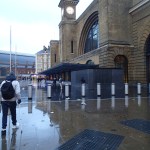


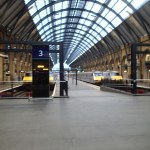
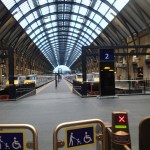
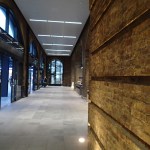
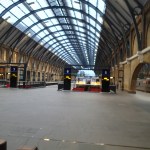
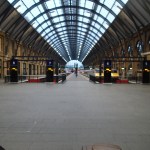
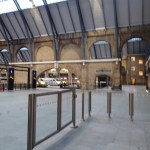
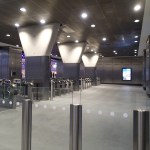

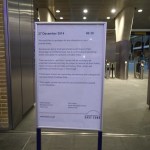
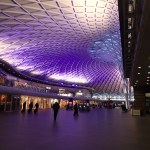
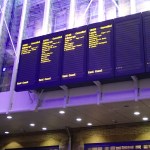
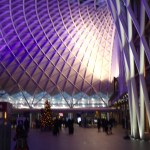
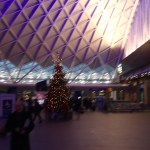






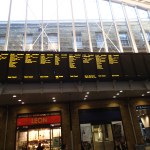


I took a few pictures of the deserted station, but as the shops and restaurants were open, I was able to do my food shopping in Marks and Spencer and have an excellent breakfast in Leon, without having to share the calm with too many other people.
It was all a bit surreal and summed up when a Japanese tourist asked me where the Harry Potter platform was. He even got to see that properly,almost by himself.
The Bridge Party Continues
There has been a lot of progress since I took the last pictures.
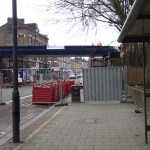


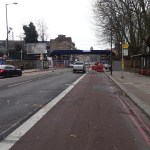
Rumour has it, that they’ve given the bridge to North Korea, in the hope it will help them realise that bridges are good things to build links between different views.
Brondesbury Station
Broundesbury station is one of the twenty-six to be given upgraded access.

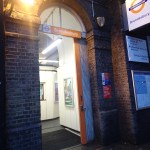
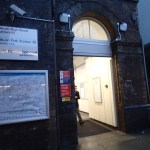
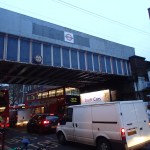
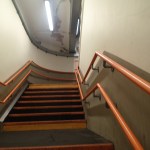
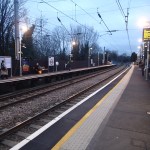
It’s a pretty clean and tidy station, but the staircases are not the best.
However it is certainly better than Silver Street.
White Vans On The Overground
When I was on the platform at West Hampstead station on the North London Line, a train load of cars and vans came through.
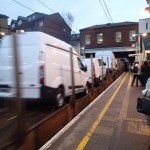

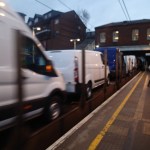


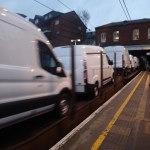
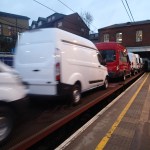
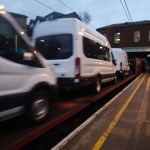
With DB Schenker’s new car import-export depot at Barking, I think we’ll see a lot more trains like this.
An Idea For A New Station At Shoreditch High Street
I read today in The Sunday Times, that Network Rail are looking to create some new terminal platforms for Liverpool Street.
One of the ideas was the obvious one to add some extra platforms at Liverpool Street. but I know the station well and can’t think where they would be fitted in, unless they were do away with the taxi ramp or put the platforms in tunnels underneath the current ones.
Another idea mentioned in the Sunday Times, is to build a station at Shoreditch High Street on a site owned by Network Rail, next to the current Overground station. The idea is described in the Architect’s Journal.
Terry Farrell’s contentious proposals for Bishopsgate Goodsyard could be sent back to the drawing board after plans emerged for a major new station on the east London site
A report by Network Rail outlining options for rail upgrades on the Anglian Route suggests the City fringe plot could house the first new rail terminus in the capital since the completion of Marylebone in 1899.
The currently uncosted option – part of a document prepared by Network Rail for its future railway investment period CP6 – explores the ‘creation of an additional terminus to the north of London Liverpool Street’ on Network Rail-owned land next to Shoreditch High Street station.
It strikes me that this could be a good idea. Although, it won’t be plain sailing, as there was so much aggravation, when they wanted to demolish the Braithwaite Arches to build the East London Line through the area. This article from Spitalfields Life gives some of the history of the area.
I think if a station gets built alongside or under Shoreditch High Street station, it will be nothing like any ideas, thatr might get talked about in the media now. One of the Foster/Farrell/Rogers fraternity could probably do something extraordinary here.
This map shows the site.
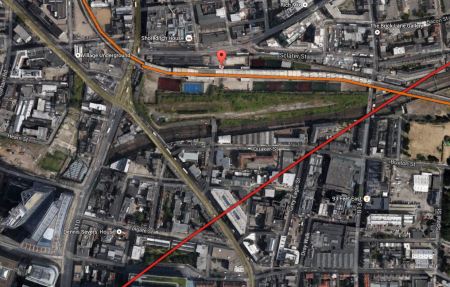
Shoreditch High Street Station
The orange line defines the route of the East London Line and the red line is where the Central line goes underneath. The site itself is the green area between these lines. It would appear that there is quite a bit of space to put in a decent sized station with perhaps four main line platforms, which would be linked to the East London and Central lines.
But it would be a lot of work and money for a station, that would only have limited connection to the Underground/Overground compared to Liverpool Street.
However, look at this wider map of the area.
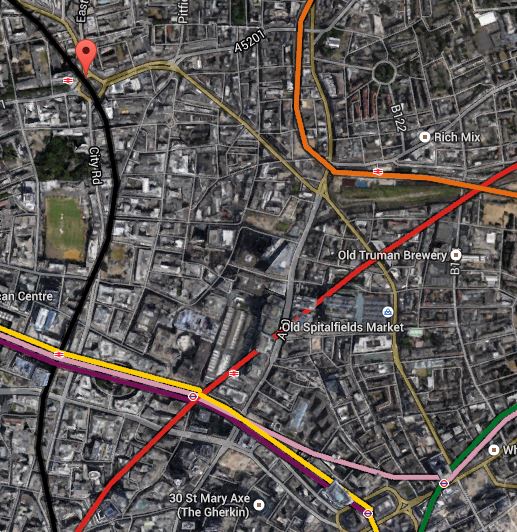
Old Street To Shoreditch
The first thing to notice is the size of the site, when compared to Liverpool Street station, which lies to the West of Spitalfields Market.
Also note the black line going North-South, which is the Northern line, fom Moorgate to Old Street. The latter is highlighted. Somewhere in the same direction from Moorgate northwards is that relic of previous expansion plans for the Underground; the Northern City line.
I think that if a main line station is built at Shoreditch High Street, it might also connect some of the lines into Liverpool Street to the Moorgate suburban services.
Consider.
1. Railways hate terminal platforms with all their restrictions and much prefer two lines linked end-to-end as Thameslink links Brighton and Bedford via St. Pancras.
2. So could say some of the Lea Valley services be diverted from Liverpool Street to the new station and then onto the Moorgate suburban lines? Not only would it link Silicon Fen with Silicon Roundabout, but also it could be used for the Stansted Express. At the new station, there could be cross-platform interchange between the through lines and the Central line.
3. Original plans showed Crossrail 2 stopping at Essex Road station, which is on Northern City line.
I have only listed three of any number of possibilities, but a new main line station at Shoreditch High Street providing extra capacity for Liverpool Street might be feasible.
On the other hand, it might annoy a lot of the passengers, by giving them inferior onward connections. Remember that many who commute into Liverppol Street, just walk to their place of work.
Something will happen, as Liverpool Street doesn’t have enough capacity, but in my view the first thing to do would be to see how Crossrail affects traffic.
To take one example in a frivolous manner, think of all those Essex boys going to their desks in Canary Wharf, How much will all the other routes possible after Crossrail opens, take the pressure off Liverpool Street?
I think the most likely scenario will be a mixture of all current ideas and proposals together with some no-one has thought of yet.
At a minimum, the addition of two platforms in the cab rank at Liverpool Street .will happen.
I also wouldn’t be surprised to see a couple of platforms on the Lea Valley lines at Shoreditch High Street giving an easy and quick interchange to the East London and Central lines. If nothing else it would link the curremt Overground to the Lea Valley lines and give it a much-needed connection to the Central line.
Finally I Find The Five Car Class 378 Train
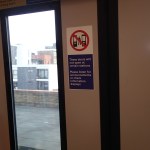
On my way out today I actually caught the elusive five-car Class 378 train at Haggerston. I only rode one stop and then attempted to get the classic Overground picture from the southbound platform at Hoxton, of a train in front of the buildings of the City of London, like the one in this post.
And then coming home, I saw it again at Whitechapel! These are the pictures I took.
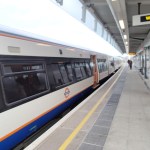
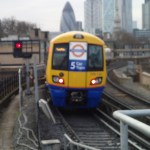
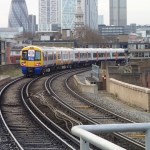
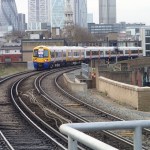

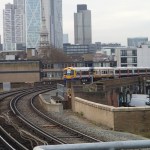
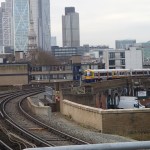

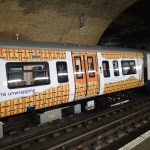
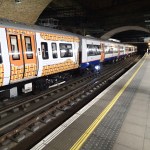
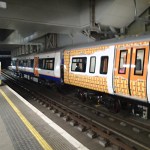
This is what I think is the best of the classic pose.
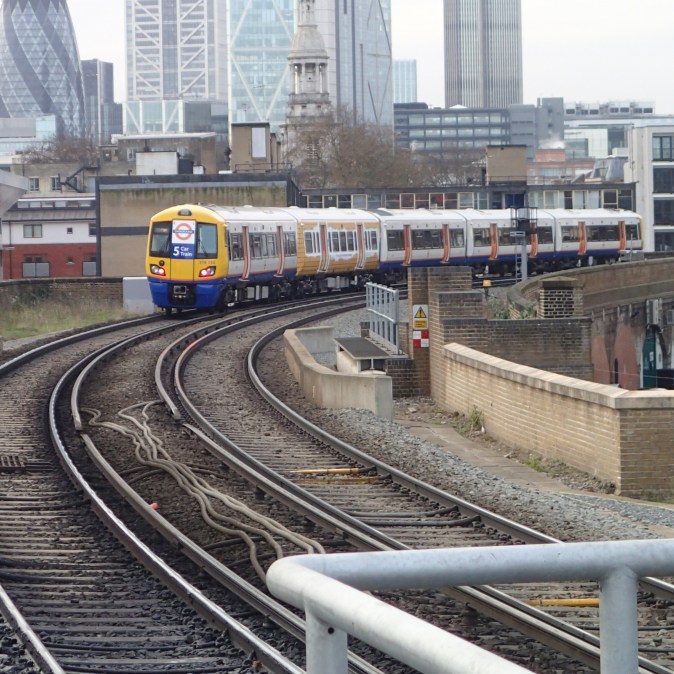
Five Car Class 378 South Of Hoxton
I shall be trying to take the perfect one.
Sorting The Under/Overground Around Gunnersbury
After I wrote this article about reversing loops instead of termini, I wondered if I could find any references to operating problems on the Piccadilly Line loop that serves Termial 4.
I didn’t find anything but I did find an article on London Reconnections called Upgrading The Piccadilly: Calling Time On Mind The Gap?
It is a well thought-out article that starts by talking about the new trains and the problems of platform-edge doors. It then goes on to suggest what it thinks appears to be the bad idea of transferring the Ealing Broadway branch of the District line to the Piccadilly line.
This is the map of the area.

Gunnersbury Triangle
The triangle of lines in the area is bordered at the West or left by the North London Line (orange), the District and Piccadilly lines from Acton Town to Turnham Green at the top right and the District line to Richmond at the bottom right. Chiswick Park station is marked with the red arrow.
The article then goes on to suggest reasons why it might not be a bad idea and that Chiswick Park station might be put on the Richmond Branch of the District line.
I think the Overground and Crossrail could be the key to what happens in this area.
1. Transport for London’s Infrastructure Plan for 2050, talks about linking the Gospel Oak to Barking Line to Hounslow through the area. It would branch off just south of South Acton station.
Acton To Houslow Link
The line is there and I suspect, it will be used to provide a link between West and North London.
2. Crossrail calls at Ealing Broadway station, so will it be better if it joins up with the Piccadilly or District lines?
There are probably advantages for both lines and I won’t choose what is better. But note that the District line has two interchange stations with Crossrail and the Piccadilly has just the one at Heathrow.
3. There are also proposals to create another rail route into Heathrow. One is Airtrack, which goes through Clapham Junction and Richmond.
4. There is also the problems of installing platform-edge doors on the western reaches of the Piccadilly Line, as outlined in the London Reconnections article.
I think the only certainty is that these and many other factors will result in major changes in this area.
And the solution will be very radical.
One thing though convinces me that something must be done. I was on Chiswick Park station today, and in about ten minutes, I met two young ladies; one French and one Italian, who had got seriously confused by the track layout in the area.
 The Anonymous Widower