Another Garden Station On The North London Line
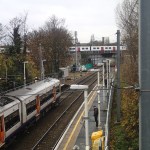
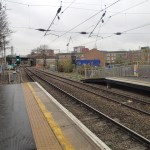
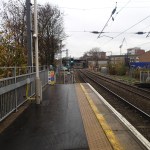
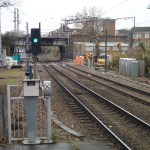
Hampstead Heath and Key Gardens are two stations, with obvious garden or park credentials on the North London Line. Today, I went to Brondesbury Park station and took these pictures.

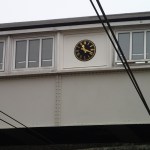
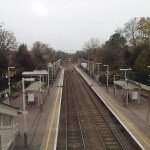
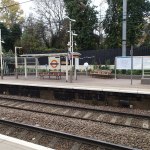
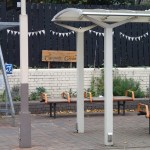
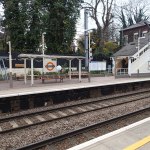
I think that London Overground have done a good job at this station, in refurbishing the buildings and the platforms, without destroying the original character.
I suspect that as there is a sign saying Community Garden, that a local group is responsible for the plants and flowers. On searching the Internet I found a site called the Edible Overground about the gardens at Brondesbury Park.
Progress On The Hackney Downs/Central Link
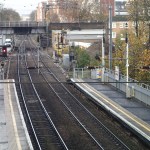
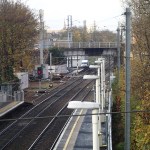
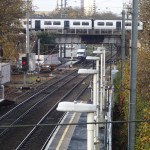
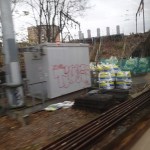
November 27 – There’s now a white van parked by where the link is to go.
December 2 – Orange army and materials everywhere
Squeezing A Bridge Between Working Railways
Crossrail has shown some impressive pieces of engineering to the media. But I’ve seen little about the work that is going on at Whitechapel station where Crossrail goes underneath the Overground, which contrary to what you might think, goes underneath the Underground. These pictures show how one of London’s most delapidated stations is being transformed.
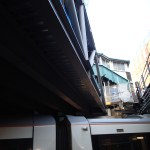
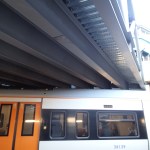
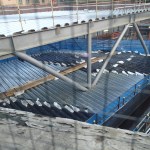
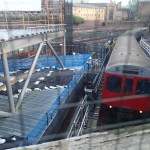

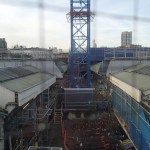
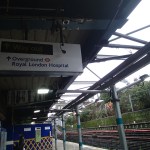
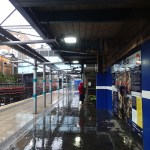
I’m not sure, if the impressive steel bridge is for the Underground lines or passengers. But inserting it isn’t camel-going-through-the-eye-of-a-needle stuff, but something a lot more challenging. Especially, if you’re doing it in the space between two busy rail lines. Luckily for Crossrail, when the East London Line was rebuilt a few years ago, the decision was made not to convert it to overhead electrification.
Look at this section on the Crossrail web site, which shows some images, which help you to make sense of what I photographed. Helpfully, the architect has drawn the trains in the right colours.
Waxing Lyrical About The Overground
My Internet trawler found this article on a web site called The Quietus. It’s an interview with veteran writer and filmmaker; Iain Sinclair.
He says this about the London Overgroiund, when asked about the effect of the lines on his life.
It’s changed mine enormously, in a sense. It’s so convenient that I tend to make journeys that reflect on the railway rather than journeys that I need to make. I wouldn’t have thought of going to Clapham Junction if I couldn’t just jump on this train and get to Clapham Junction. I wouldn’t have gone to Willesden Junction, which proved to be very useful, because I got a better sense of Leon Kossoff as a painter. He’d done some fantastic paintings of Willesden Junction but I didn’t really know Willesden Junction.
I think the Overground railway is a bit like the cinema project in that it curates. It curates a London of disparate elements. What relates Denmark Hill to Finchley and Frognal or Camden Town to Shadwell? They are now an organic identity. And sitting on this train is like sitting in a cinema. You’ve got this screen, and the landscape changes. Patrick Keiller writes that as being the view from the train; that is, really, a form of cinema. I really believe that walking is a form of cinema, and being on a train is a form of cinema, and having the excuse to stop and go to these venues and see some wonderful movie enhances that experience.
Read the full article.
I can see my own behaviour in what he says.
Every city deserves its own Overground network, designed and run to the same principles.
In the UK, Birmingham, Bristol, Cardiff, Glasgow, Leeds and Liverpool seem to be going or starting to go in this direction. Manchester is going a slightly different direction by integrating its trams and trains in the Northern Hub.
As somebody once said in the past – “The Future’s Bright – The Future’s Orange!”
A Radical Idea For The Bakerloo Line Extension
I have spent forty years involved in project management, writing software for project managers and generally listening to some of the thoughts and experiences of some of the best engineers from all over the world.
One common thread, which is best illustrated by how the size of lift possible increased in the North Sea in the 1970s, is that as time has progressed machines have got bigger and more capable, and the techniques of using them has improved immeasurably.
The Crossrail tunnel boring machines (TBM) make those used on the Jubilee Line extension or the Channel Tunnel look like toys. But not only are the TBMs bigger and faster, they have all the precision and control to go through the eye of the smallest needle.
If we look at the proposals for the Bakerloo Line Extension, there have been several differing ideas. Some envisage going under Camberwell and in others the trains terminate on the Hayes line.
Transport for London (TfL), obviously know the traffic patterns, but do we really want to take the chance of say connecting the Hayes line to the Bakerloo and then finding that it’s not the best solution?
What we should do is augment the services in the area, by providing a good alternative transport mode, that links to some of the traditional rail lines to give even more flexibility. We certainly shouldn’t repeat the grave mistake that was made at Brixton in the 1960s by not connecting the Victoria line to the surface rail lines.
This is Transport for London’s indicative map of the extension.
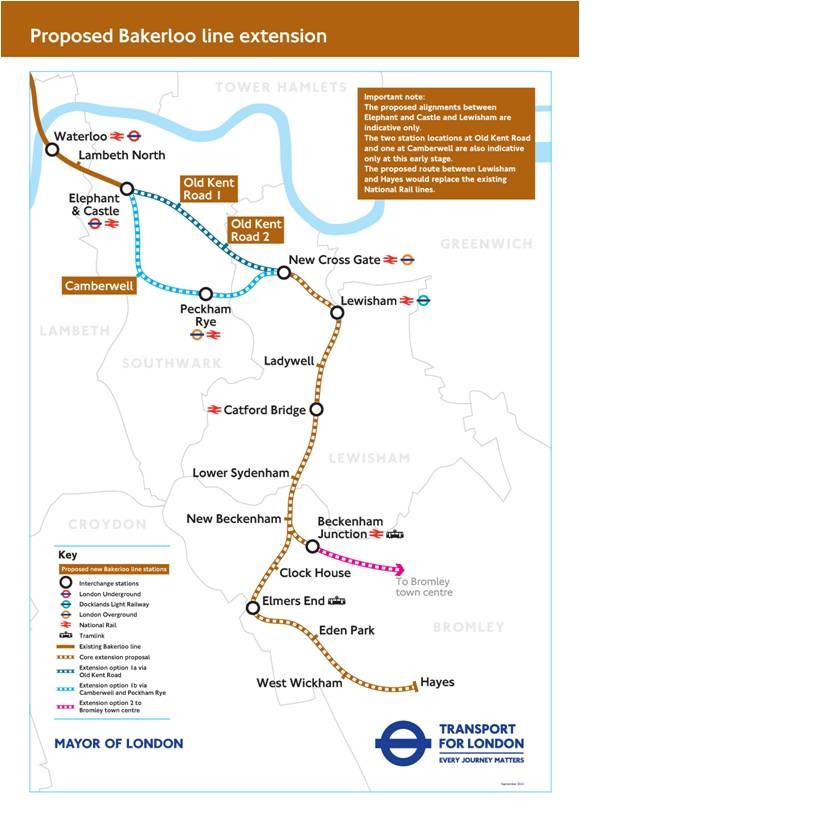
Bakerloo Line Extension Map
I have reason to believe that the Northern Line Extension may be being built as an extension to the Kennington Loop.
So could we design the Bakerloo Line Extension as a loop starting and finishing at Elephant and Castle calling at important stations?
A possible route could be.
- Elephant and Castle – Interchange with Northern Line and National Rail including Thameslink
- Old Kent Road 1 – Proposed on Map
- Old Kent Road 2 – Proposed on Map
- New Cross Gate – Interchange with London Overground and National Rail
- Lewisham – Interchange with Docklands Light Railway and National Rail including Hayes Line
- Catford Bridge – Interchange with Catford station and National Rail including Hayes Line and Thameslink
- Peckham Rye – Interchange with London Overground and National Rail
- Camberwell – Interchange with National Rail including Thameslink
- Elephant and Castle
The advantages of this simple design are.
- The tunnel would be excavated in one pass by a single TBM.
- The line could be deep under any existing infrastructure.
- Most stations would be simple one-platform affairs, with perhaps only large lifts and emergency stairs, to give unrivalled step-free access for all from the street to the train. Surely lifts exist, that are large and fast enough to dispense with escalators.
- For safety, passenger convenience and flows, and other reasons, the stations could have two entrances, at opposite ends of the platform.
- The simple station entrances would be much easier to position on the surface, as they wouldn’t need to be much bigger than the area demanded by the lifts.
- A single loop would only need half the number of platform edge doors.
- At stations like New Cross Gate, Lewisham, Catford and Peckham Rye the lifts would surface within the confines of the existing surface stations.
- The route has interchanges with the Brighton Main Line, East London Line, Hayes Link, Thameslink and other services, so this would give lots of travel possibilities.
- Trains do not need a terminal platform, as they just keep going on back to Elephant and Castle.
- The loop would be operationally very simple, with no points to go wrong. TfL have aspirations to run twenty-seven trains per hour on the Bakerloo and a simple reversing loop , which would mean the driver didn’t have to change ends, must certainly help this. It would probably be a lot more difficult to get this capacity at the northern end of the line,where Harrow and Wealdstone doesn’t have the required capacity and the only possibility for a reversing loop would be north of Stonebridge Park.
- Elephant and Castle would need little or no modification. Although it would be nice to have lifts to the Bakerloo Line.
- Somewhere over two billion pounds has been quoted for the extension. A single loop with simple stations must be more affordable.
The main disadvantage is that the loop is only one-way.
But making even part of the loop two-way would create all the operational difficulties of scheduling the trains. It would probably be better, less costly and easier to make the trains go round the loop faster and more frequently.
But if a passenger went round the loop the wrong way and changed direction at Elephant and Castle that would probably only take a dozen minutes or so.
Alternatively, I’m sure some New Routemasters would step up to the plate and provide service in the other direction between the stations.
Selective Door Opening On The East London Line
Selective door opening (SDO) is used in several stations on the London Underground like Baker Street, Camden Town and Moorgate. No-one seems to mind, especially as at stations where it is used, there is usually an automated announcement.
On Friday I saw this notice on the East London Line of the London Overground.
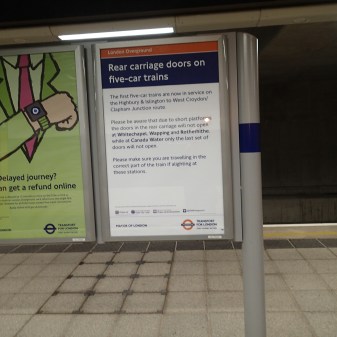
Selective Door Opening On The East London Line
Hopefully, SDO should work well on the Class 378 trains of the Overground. After all the continuous design of the trains will mean that unless the train is very busy, it should be much easier to get to an operational door.
According to Wikipedia, the SDO is controlled by GPS. So we have the door opening on a train running beneath London’s streets, being controlled by a satellite system.
As time goes on, more and more it seems that trains are becoming sentient beings with seats in them!
I wonder how long it will be before a version of the technology used on the 141 bus that counts the passengers, is giving TfL accurate loading information on some of their trains!
London’s Low-Key New Train Launch
To say that the launch of the new carriages for the London Overground on Thursday was low-key would be an understatement. I have only found one article on the web with a picture and that is in Rail Magazine. They say this.
The first five-car Class 378 for the London Overground network was unveiled at New Cross Gate depot yesterday (November 6).
All 57 EMUs in the fleet are receiving an extra carriage, as part of a £320 million investment boosting overall capacity by 25% – equivalent to an additional 170 passengers per train.
But where are the politicians in the photo?
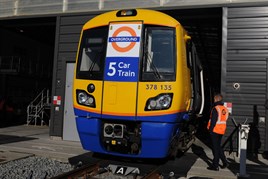
First Five-Car Class 378
It’s not like Boris to miss a photo-opportunity.
In some ways there is a very solid engineering principle behind these Class 378 trains. You should always make sure that anything you design can be adjusted to meet changing circumstances.
London Overground thought that three car trains would be enough for the limited number of passengers on the North and East London Lines. It quickly became obvious that these were inadequate. Either by good design or just plain luck, the trains had been originally built as two end cars with cabs and an unpowered trailer car in the middle. So to go from three to four they just built an extra trailer car and plugged it in, with a few small adjustments to the trains systems.
But even four cars have proved inadequate and now the process is being repeated to create five car trains. This is perhaps a little more complicated, as they have been unable to lengthen some platforms like Shadwell, so selective door opening has been implemented.
In the London Transport Infrastructure Plan for 2050, it states that these lines will have six cars at some point. So how long will it be before another car gets added?
The Standard Is Upbeat On The Overground
the Standard today has an upbeat article on the Overground and the lengthening of trains from four to five carriages.
The article ends with this from Mike Brown, who is TfL’s Director of Rail.
Mr Brown said he was upbeat about adding rail capacity as London’s population boomed.
He said: “I’m optimistic we’ll hear some positive comments about Crossrail 2 in the Autumn Statement which is a critical project to relieve congestion at London Waterloo, Victoria and Clapham junction mainline stations.
“I’m also convinced that when we as the Overground take over responsibility for West Anglia routes from May next year and when Crossrail opens people will see the great benefit of the model we operate compared to other (train companies’) franchising models when we focus on delivery, performance and having staff at stations.
“I want to keep up the pressure of more devolution to the mayor.”
In September and October London Overground achieved 95.7 percent punctuality compared to a national average of 90.1 percent.
I think it’s all a powerful argument to duplicate the Overground model all over the country.
I do think that local control of trains, trams and buses, like London has over the Underground and Overground, is a very good thing, as decisions get taken in the area, not miles away where the franchise has its head office.
If you look at Merseyrail, Manchester’s trams and the Newcastle Metro, which have substantial local control, do they work better than some others?
Is Everything A Short-Term Fix At Willesden Junction?
In posts yesterday, I highlighted the problems with platform/train gaps and the dreadful interchange at the North London Line platforms at Willesden Junction station.
But is all the work done to lengthen the platforms for five-car trains just a short-term measure, which doesn’t address these problems at all?
Obviously, work has to be done on the low-level platforms and as they don’t have too many problems, except for the step up and down into Bakerloo Line trains, it will make the low-level station a good one with step-free access, a cafe and toilets.
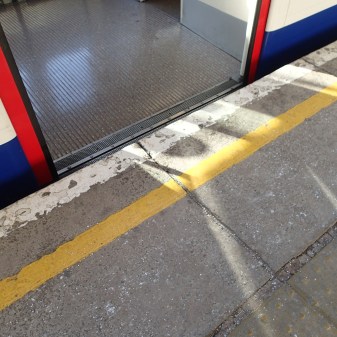
The Tube/Overground Mismatch
But upstairs, I can’t help feeling that solving the problems are virtually impossible, without a complete rebuild of the station. But look at this map of the proposed layout of the lines at Old Oak Common.
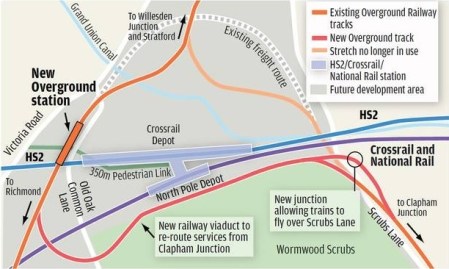
Rail Lines At Old Oak Common
This would link HS2 and Crossrail to the North and West London Lines at a new station at Old Oak Common.
So if the Old Oak Common area is developed with a new station, would this have a knock-on effect at Willesden Junction? This could ich mean that the station had to be changed substantially or possibly was no longer needed.
The big problem is what to do with the interchange between the North London Line and the Bakerloo and Watford DC Lines.
There have been plans for the Bakerloo Line to take over the Watford DC Line north of Harrow and Wealdstone. This would mean diverting the North London Line via Queen’s Park and Primrose Hill.
This would fit in well with the combined North/West London Line station at Old Oak Common. On the other hand, it would mean a few station closures and stations between Queen’s Park and South Hampstead would leave their links to Euston.
Old Oak Common station is still very much at the planning stage and if the ideas get firmed up to a mega-interchange, it should make it easier to sort out the North London Line and the Watford DC Line.
There is also the question of how the Croxley Rail Link will affect ridership on the Watford DC Line. The fastest jouneys to Euston Square from Watford Underground station, are now about 45 minutes, whereas the DC Line takes 52 minutes from Watford High Street. However by going one-stop the wrong way to Watford Junction station, you can do it in 35 minutes. As London Midland runs several trains an hour into Euston in about twenty minutes, this might be a preferred option.
If Crossrail goes up the West Coast Main Line, as is also being proposed, then the trains would surely stop at Harrow and Wealdstone and Watford Junction.
Transport for London have a lot of deep thinking to do.
More Platform Action At Willesden Junction
In a previous post, I talked about work on the Southbound platforms at Willesden Junction. Here’s some more pictures.
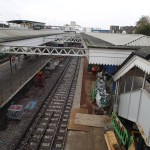
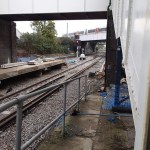
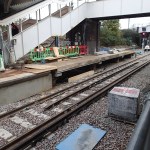
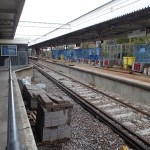
The low-level platforms to and from Watford are in better state than those on the North London Line.

