What’s The Opposite Of Mushroom Management?
Mushroom management is an old concept, that is a big joke in the dictionary of bad project management. It even has a Wikipedia article, which gives this short description.
keep them in the dark, feed them bullshit, watch them grow
I have on the whole not really suffered from this type of management, as I’ve been managed by some good people.
So it was with great interest that I found this document on the Transport for London web site.
It is a progress report on the various capacity improvements on the London Overground.
It certainly isn’t a document to keep everybody in the dark.
It even gives the phone number and e-mail address of the guy who is in charge of the projects.
We need more fully accessible documents like this one for public projects.
Is Whitechapel Station Going To Be A Jewel In The East?
When I wrote about Crossrail as a tourist attraction, I said nothing about the station at Whitechapel.
I probably didn’t as although I use the station regularly, you don’t see much as you pass through except for hoardings with lots of graphics, pictures and information. When I went through last time, I took these pictures.
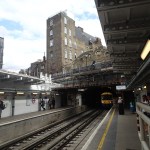

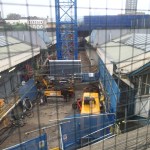

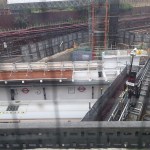

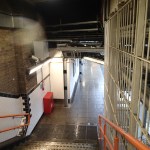

It shows the construction going on over the two north-south Overground platforms. Crossrail will run east-west about forty metres down. Note how the Underground is on top of the Overground.
I was told by a man in an orange suit, that there will be a bridge over the Overground platforms connecting it all together. Escalators to Crossrail will be going down from between the two Underground platforms, where the blue crane is now situated. The space between the Underground platforms will then be filled in to create a wide island platform with the two lines on either side. It will be an easy step-free interchange from Crossrail to the Underground.
There are some detailed architect’s impressions of the new station here. The page also says this.
The new Whitechapel Crossrail station will use the existing Whitechapel Road entrance to the Whitechapel London Underground and London Overground station.
The Crossrail platforms will be in deep tunnels to the north of the existing station but they will all share a concourse, ticket hall, gateline and station operations room, leading to a fully integrated station that provides an easy step-free interchange between the Crossrail, Hammersmith and City, District and Overground lines.
Transport for London’s, Transport Infrastructure Plan for 2050, states that at some point twenty-four trains per hour will run through this section of the Overground in both directions.
This matches the Crossrail and Thameslink frequencies, so once all these lines are complete, London will have gained a high-frequency H-shaped railway, where journeys like Luton, Brighton or Peterborough to Crystal Palace or Walthamstow might be accomplished using two easy step-free changes. In fact, the biggest problem after 2019 about travel in London, will be choosing which of two or three equally fast and convenient routes is best for you.
Travel is going to be fun!
I suspect Whitechapel might be my entry into Crossrail and Thameslink. I’ll just walk to Dalston Junction, take a four stop journey to Whitechapel and then fan out to the myriad destinations, that can be reached directly from there.
The Future Of Overground Travel
I found this article in Process and Control Today, which gives insight into the thinking of those behind the development of the London Overground and especially with respect to providing wi-fi for passengers.
I am very much in favour of free wi-fi without cumbersome logins on public transport, as I feel it might help those idiots, who commute by cars, to convert to a more efficient mode.
How many years will it be before all UK trains, buses and taxis have free wi-fi, with city centres providing it just as I found in Gdansk? To quote Cathy McGowan. “I’ll give it five!” But that’s probably only an at most!
I believe that if a city like London, made itself into a free wi-fi zone, that it would give a strong boost to the economy in terms of more tourism and visitors and it would encourage businesses to set up in the city.
But when did I hear a politician ever talk about the benefits of free wi-fi?
Can We Extend Overground Connectivity In North London?
The East London Line has four termini in South London; New Cross, West Croydon, Crystal Palace and Clapham Junction, but only two in the North; Dalston Junction and Highbury and Islington.
In the North the Lea Valley Lines are being added to the system and although these lines meet the North London Line at the Hackney Downs/Central station complex, they are not intimately connected to the core route of the East London Line, as this would need a change of train at Canonbury.
So how could we improve the extend the connectivity?
Hackney Central/Downs
I regularly take the Overground from Stratford to my home. On a wet day, I would take a train to Canonbury from Stratford, walk across the platform to a southbound train and then go one stop to Dalston Junction, from where I would get a bus two stops to my home. On a sunny day, I might change at Hackney Central to a 38 bus or walk from Dalston Kingsland.
But I usually take the Canonbury route, as it has the least amount of walking and if I’ve got a heavy parcel, there is a lift at Dalston Junction.
The two Hackney stations are being connected by a covered high level walk and this would help those changing between the North London Line and Lea Valley and Cambridge services.
But two other things could be done, if the run-down area around the stations is redeveloped.
If you want to get a bus or walk to the Town Hall area, after alighting on the westbound platform at Hackney Central, you have to cross the tracks on a footbridge. An entrance needs to be provided on the south side of the station.
The connection to the buses are better than they were a few years ago, but Downs/Central should have easy access to stops for the high-frequency bus routes that pass through the area.
I have a feeling that they may have spent a lot of money on making the footbridge step-free with lifts and in a few years time, it will be rarely used, as other better routes are developed. A southern entrance would help in this respect.
Crossrail 2 will be the driving force here, as the planners have stated a preference for only having one station in Hackney, to save a billion pounds. Whether this station is Dalston Junction or Hackney Downs/Central doesn’t matter, provided that these two stations are connected by other means. There are already two routes; the North London Line and the high-frequency buses.
For this reason, the access to buses from Hackney Downs/Central must be made as easy as possible. But that doesn’t need to wait for Crossrail 2!
There is a superb opportunity here for a developer to create a real town centre at Hackney Central/Downs, of which everybody can be proud. The original station building is not used, but it is a building worthy of saving as are few other historic buildings in the area.
An Extra Terminal In The North
If the frequency on the core section of the East London Line is increased from 16 tph to 24 tph as is stated in TfL’s plans, there could be a need for another Northern terminus to supplement Dalston Junction and Highbury and Islington, where these trains could turn back.
An extra terminus might ease the overcrowding that is prevalent at Highbury and Islington.
In the original plans for the Overground, there was talk about some East London Line trains going as far as Willesden Junction and terminating there.
With plans for a new super station at Old Oak Common, that could be a possibility. But even New Cross to Old Oak Common would be a journey of about an hour, and there will be faster ways via Crossrail at Whitechapel.
So a terminus for the East London Line at Willesden Junction or Old Oak Common, would be more about inceasing the frequency of trains on the North London Line, by using some of the eight extra trains an hour on the East London Line to provide the extra trains.
There are two other possibilities for extra Northern terminals.
If the Dalston Eastern Curve were to be reopened, then trains could move easily between Hackney Downs/Central and Stratford and the East London Line.
This would mean that Stratford could be an additional terminal and also that some East London Line trains could have an interchange with the Lea Valley Lines.
There is also a curve at Canonbury that connects the North London Line to the East Coast Main Line. It used to be double track, but is only single track now! So could this be used to get to a new Northern terminus?
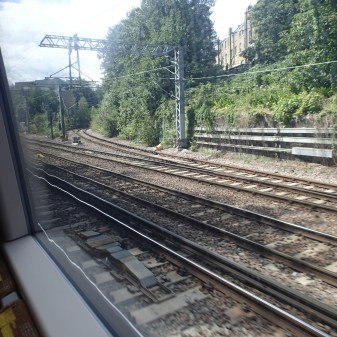
The Canonbury Curve To The East Coast Main Line
It all depends on the passenger flows, which of course TfL has at its fingertips.
We must also take note of passenger behaviour in using cross-city railways.
When Crossrail opens in 2019, all parameters will change, as many who want to use the East London Line to get on the Underground at Highbury and Islington, might get on Crossrail at Whitechapel instead. This passenger will probably go to Oxford Street, by walking to Dalston Junction, before taking the East London Line to Whitechapel for Crossrail. The alternative of taking a bus to Highbury and Islington and then getting the Victoria line, means I have to use a station I avoid as much as possible, due to the excessive walking involved to get to the trains.
The Eastern Curve At Dalston Junction
This seems an easy option to improve connectivity, as it would allow trains to pass easily between Stratford and Hackney Downs/Central and the East London Line. But there are two problems.
It might be a difficult sell to the Dalstonistas and the shopping centre at Dalston Kingsland is being redeveloped, although the Eastern Curve is safeguarded.
It would seem though, that in the next couple of years, there is a chance to make a good fist of sorting out the shops and stations at Dalston.
Tying In The Lea Valley Lines
There has been little or no speculation about how the London Overground will link the Lea Valley Lines to their current lines. London Overground has said that it will deep clean the trains and stations and that new trains are on the way.
They have also got at least three out of station interchanges between the new lines and the current system.
- Walthamstow Central to Walthamstow Queens Road.
- Hackney Downs to Hackney Central, although the way that is going, it will probably become a single station.
- Seven Sisters to South Tottenham
There are also a couple of junctions where useful connectivity already exists.
There is a rail line called the High Meads Loop that goes between the Lee Valley Lines and the North London Line, virtually straight under the old Olympic Village. This is the North London Line End just after Hackney Wick station.
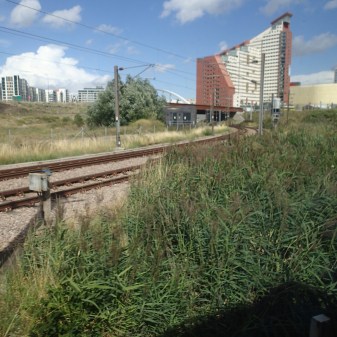
High Meads Loop At Stratford Joins North London Line
And this is the other end on the Lea Valley Line, between Stratford and Tottenham Hale
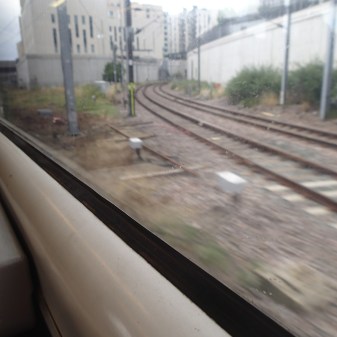
High Meads Loop At Stratford Joins Lea Valley Line
Incidentally, I don’t think there is a station under all those dwellings.
There is also another junction that links the Lea Valley Line to the Gospel Oak to Barking Line to the East of South Tottenham station.
Perhaps the most interesting proposal though, is to reinstate the Hall Farm Curve in conjunction with the reopening of Lea Bridge station. I travel to Walthamstow Central regularly and the curent timetable of the GreaterAnglia service is a bit threadbare to say the least. So if this curve is reopened, will we see trains linking Walthamstow to Stratford and even to and along the North London Line by way of the link I showed in the pictures to my local station at Dalston.
If the Eastern Curve at Dalston Junction was to be reinstated, then some of those extra trains through the core section of the East London Line could go to Walthamstow and Chingford.
Summing Up
The more I look at the East London Line, the basic concept of a high frequency line through Marc Brunel’s Thames Tunnel, fanning out to several destinations on both sides of the river, was a stroke of genius, which was probably dreamed up in the time-honoured manner of so many other good ideas on the back of serviettes, beer mats or fag packets in a real ale hostelry somewhere.
Who can predict with any certainty what the Overground will look like in 2020, let alone the 2050 target of Transport for London?
The only certainty is that Transport for London will have created another iconic brand to go with Underground and Routemaster.
It could also be argued that London’s three new cross-London lines;Thameslink, Crossrail and East London, are all following a similar design of a central tunnelled core, with a collection of branches at each end.
Certainly the current Thameslink and East London Line have shown that the concept works and if they perform in the next few years, this can only mean that further lines in London and further afield follow a similar pattern. Crossrail is adding more branches and termini and the basic design for the proposed Crossrail 2 appears to have been designed by the use of a photocopier.
Are There Any Sensible Places For New Stations On The Overground?
This is just a list of possible Overground stations that have been tslked about.
Maiden Lane on the North London Line
With so much money being spent in this area on property development to say Never about this station would not be a safe bet. I once researched and proposed a walking route that connected Kings Cross, St. Pancras and Euston. If this was operated by electric people movers and included a connection to Maiden Lane, it might just be made to work.
But it will be all those offices at Kings Cross Central between Kings Cross/St. Pancras and the North London Line, that will decide if Maiden Lane station is reopened.
North Acton on the North London Line
No one thinks this is that likely, but it does link the Central Line to the Overground, in an area where a lot of development is happening. If the Goblin Extension to Hounslow is scheduled, this station might become more likely.
Earls Court on the West London Line
Nothing is planned here yet, but read this post on London Reconnections. A large amount of residential and other development is to be built over the West London Line at Earls Court. The railway line will be enclosed in a concrete box. This sounds very similar to Crossrail at Woolwich, where a station is being built under a massive development.
There must be very good reasons for not doing the same thing at Earls Court!
Brixton on the South London Line
There has been a lot of pressure for a connection at Brixton to the Victoria Line. But if you look at this post, you’ll see why it will probably never happen.
East Brixton on the South London Line
East Brixton is probably a better option than Brixton and the proposal is discussed here.
Camberwell on the South London Line
I have assumed this to be at Loughborough Junction and I’ve discussed it here.But it could be at East Brixton. The developments around the station will probably decide what station gets built.
Surrey Canal Road on the South London Line
When the new South London Line was created and opened in 2012, provision was made for the building of this station. According to this article in Wikipedia, it now looks that a start could be made on the station in the near future with a possible opening date of 2015.
It would appear that Transport for London got their planning right with this station. When the money became available, the building of the station was able to proceed.
Gospel Oak to Barking
There are various plans listed here.
Summing Up
I think we might see some of these plans come to fruition.
Surrey Canal Road should be a model for the creation of new stations on the Overground.
Around Loughborough Junction Station
I took these pictures close to Loughborough Junction station.
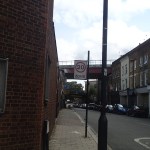
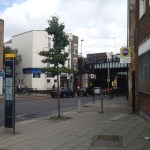
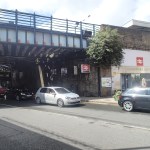
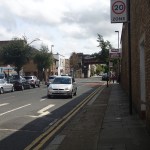
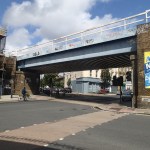
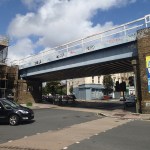
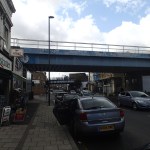
They show the triangle of lines that make up the junction and some of the buildings in the area. In An Overground Station For Camberwell, For pictures from the station see this post.
I quoted the 2050 Transport Plan as saying this.
e.g. at Camberwell, that can plug connectivity gaps and act as development nodes.
Surely there is a connectivity gap between the London Overground and Thameslink, but the Luftwaffe didn’t do anything creative to help with clearing the site for the development node, the area needs.
An Overground Station For Camberwell?
In Transport for London’s Transport Plan for 2050, there is this paragraph.
Some examples of the type of scheme to help address these issues are an upgrade to the London Overground network to provide 6 car trains and new stations on existing lines, e.g. at Camberwell, that can plug connectivity gaps and act as development nodes.
By Camberwell, I suspect they mean at Loughborough Junction, where the London Overground passes over Thameslink. A couple of years ago, I visited the site and created a post with some pictures.
I said this about creating a Camberwell Beauty out of Loughborough Junction.
It is one of these problems that needs imagination. A good architect might be able to produce an elegant connection between the two lines and then link it to the ground on the other side of Coldharbour Lane to the current station entrance. Looking at the local bus map, shows that the area is well served by bus routes, so perhaps we could make Loughborough Junction a true interchange in the east of Brixton.
I shall go again to see if a development node can be used to bridge a significant connectivity gap in London’s train system.
On a personal note, it would really improve the ease of my getting onto Thameslink routes to the South.
Improving The Overground
Transport for London’s Transport Plan for 2050 says this about improving the Overground, with particular reference to creating a circular railway by extending the Goblin.
An option for doing this, could be an extension of the Overground in stages, creating new links initially where most feasible.
It does also say that new stations might be added to existing lines, giving a particular mention for Camberwell.
As I found on my trips Tracing the Goblin Extension, most of the infrastructure is already there and in many places, all it needs is innovative timetabling of the extra trains.
Buried in the report are possible plans on improving my local Overground service on the East London Line.
- Better late night and overnight services on the Overground.
- Automatic Train Operation on the core of the line from Dalston Junction to Surrey Quays to increase service frequency from 16 tph to possibly as high as 24 tph.
- Six car trains on the Overground.
At the moment the East London Line has 16 four-car trains an hour in the core route, so 24 six-car trains will mean an increase of capacity of 2.25.
It will be needed, as who knows how many passengers will use the line to get to Crossrail at Whitechapel?
Once Crossrail opens, so many regular journeys I do, like to Ipswich, Oxford Street, Paddington and Heathrow could involve going to Whitechapel and then using the new line.
It should also be said as regards the East London Line, that the report says nothing about extending the line to Willesden in the west or Stratford in the east, by reopening the Eastern Curve at Dalston. This was talked about when the East London Line was created, but I think that passenger numbers might have increased more than they thought they would, so five and possibly six car trains have had a priority.
I shall be adding a bit of speculation about what might happen to the Overground in the next few days. I’ll put links here for ease of reading a post with more jumps than a whole bunch of frogs.
An Overground Station For Camberwell?
Are There Any Sensible Places For New Stations On The Overground?
But whatever happens, it looks like it’s all go on the Overground. In some ways, this disparate collection of lines in and around London, shows how the new breed of railway managers and engineers in the UK are very sensible and cost conscious , and have the needs of the passengers very much to the fore.
A Vision Of Old Oak Common In The Future
Transport for London’s Transport Plan for 2050 is particularly forceful about what will happen at Old Oak Common.
A key aim beyond this is to integrate Old Oak Common as a Canary Wharf of the future, with around 90,000 jobs and 19,000 homes
They also have a detailed map, showing lines reaching out in all directions, from the junction of Crossrail, HS2 and the Overground. In addition to the links through the Goblin Extension, I’ve traced earlier, there are a possible extension of the West London Line to Balham and a service northwards on the Midland Main Line to somewhere like St. Albans.
So London is getting another hub to complement Stratford and Canary Wharf in the East and Clapham Junction in the South.
It’s Amazing What You Can Do With Meccano, Lego And Sheets Of Glass
I happened to go through New Cross Gate station and just had to take some pictures.
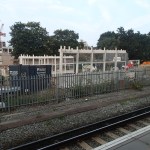
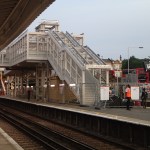
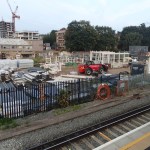
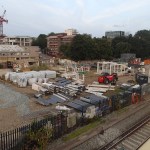
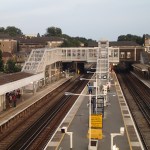
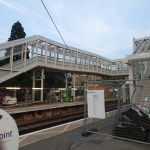

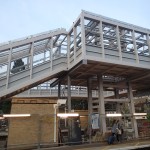
Let’s hope that Network Rail and Transport for London, are going to use the system to create a few more modern stations. There certainly seem to be decision makers in these organisations, who are not afraid to do the unconventional.
Let’s face it, London Underground in the 1930s created some of the finest stations of the era, anywhere in the world. When our descendants look at stations like this one at New Cross Gate in a hundred years time, they might just say that we got something right.
Just because it’s only a station, it doesn’t mean the architecture or construction must be second rate.

