Summary And Conclusions On The Goblin Extension
I’ve now traced all the new sections of the Goblin Extension from Upper Holloway, all the way round to Abbey Wood.
Tracing The Route
I’ll start by listing the sections of the line, where most of the infrastructure is already built.
Norwood Junction To Peckham Rye
Peckham Rye To Bexleyheath And Abbey Wood
The Alternative Route From Wimbledon To Peckham Rye
The Barking To Abbey Wood Tunnel
I’ve said very little about this, except muse about its use.
Infrastructure Needed
There is only one major piece of infrastructure that needs to be built and that is the Barking to Abbey Wood Tunnel.
One other thing that will to be done is to electrify the only part of the route that has not been so equipped; the main Gospel Oak to Barking section of the line.
There will I suspect be some track and signalling work, but probably nothing in addition to what will be done anyway.
Remember that signals will be under the remit of ERTMS and in the cabs, which might help in some places.
Trains Needed
Trains for the Gospel Oak to Barking Line will be ordered soon and will probably be Class 378 trains or something very similar.
The only modification needed will be that they must be dual voltage to work all of the line, which of course they are on the North London Line.
Reports say four trains will be needed to work the current Gospel Oak to Barking Line, so as the new line is probably four times as long, something like twenty trains would probably be needed.
How Many Trains Per Hour?
What surprised me on my trip round the Goblin Extension, was how few trains per hour run on some parts of the route.
In many places, there are just two trains an hour, which definitely isn’t good enough for a turn up and go service.
So it shouldn’t be too difficult to accommodate at least another two trains an hour, all the way round the route.
Did The Goblin Extension Start As A South London Project?
Across North London, the current Goblin probably needs bigger trains and electrification, more than it needs more stations and more trains per hour. Although the latter would be nice.
But having travelled across South London a lot during the day, there often seems to be gaps between services and even short journeys need a change of train. I don’t know what it is like in the peak periods, but then extra services are always welcomed.
Connectivity from East to West and all points in between would definitely be improved, especially as from 2018, this line has good links to Crossrail and Thameslink.
Remember too, that driving in South London is much more difficult than in the North and the Underground is not as extensive as it is in the North.
The old South London Circular route from London Bridge to Victoria used to partly fulfil this East-West need and when it was discontinued to allow the East London Line to reach Clapham Junction, there was a lot of complaints that passengers in South London had lost their link to Victoria.
The only people, who know the traffic on the trains are Transport for London, who probably have access to all the statistics of where people enter and leave the network.
So did Transport for London invent the Hounslow to Abbey Wood service in response to a perceived need shown by the traffic statistics. Especially, as they knew there were plenty of train paths across South London and only small infrastructure changes would be required.
But they hit a snag, in that Abbey Wood and Hounslow are not stations, where you can turn a train around. Trains would have to come into the station and then go out the way they came in. I know nothing of operating trains, but surely you don’t want one of your two platforms blocked several times an hour. Especially, where you have high-frequency services wanting to use your platforms.
So someone looked at the places where these services could terminate. At Hounslow, they came up with the plan to go up the North London Line and the Dudding Hill Line to the Gospel Oak to Barking Line. At Abbey Wood, they came up with a plan to build a tunnel to the other end of the line at Barking Riverside, thus completing the circle.
Circular lines are always good for politicians, as they can understand them and sell their perceived benefits to the public.
Tracing The Goblin Extension – Norwood Junction To Peckham Rye
As Brockley was an error on my part, I got the A to Z out and looked for another route to get on the Nunhead to Lewisham Link. The less direct route with a change of trains at Crystal Palace seemed to be a way to go.
This was another section, where I got two or more trains.
Norwood Junction to Crystal Palace
Crystal Palace to Peckham Rye
It was trouble free and passed through many stations that I’d never heard of before.
The only problem was that I had to wait twenty minutes for both trains. Is this a problem on this route, when perhaps you need to get from Gypsy Hill to North Dulwich, which might be solved by a four trains per hour Goblin Extension service?
I took these pictures along the route.

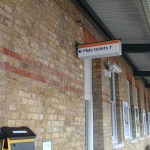
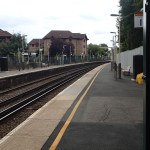
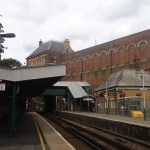
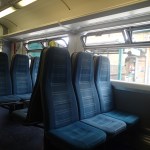
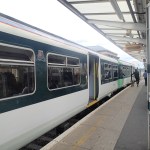
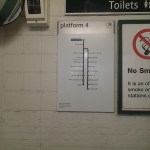
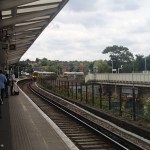
Note that you can also interchange with Thasmeslink at Tulse Hill and the East London Line at Crystal Palace and Peckham Rye. There are also good connections to Victoria and London Bridge at various stations in this section.
Tracing The Goblin Extension – A Detour To Brockley
When I first saw the route it in TfL’s Transport Plan for 2050, it looked like they had found some way to connect the Brighton Main Line to the Nunhead to Lewisham link at Brockley.
But as the pictures of the Nunhead to Lewisham Link going across at Brockley show it is an impossible connection.


Unless of course TfL are going to demolish half of the area or develop flying trains.
The only improvement needed here is to paint the bridge, as they have done at Hackney Downs.
Brockley incidentally, is a very good coffee stop.
Tracing The Goblin Extension – Wimbledon To Norwood Junction
This part of the route was fairly straightforward even though in this exercise it was three separate trains.
- Wimbledon to Sutton
- Sutton to West Croydon
- West Croydon to Norwood Junction
Obviously, the Goblin Extension will do it without changes, by a direct route.
As an exercise, I tried to see what National Rail Train Enquiries said about how you get from Wimbledon to Norwood Junction. Some routes it gives are of the if-you-want-to-go-there-I-wouldnt-start-from-here variety, with up to two changes in a forty minute journey.
So perhaps one of Transport for London’s objectives is to simplify the rail routes in South London.
Tracing The Goblin Extension – Hounslow To Wimbledon
I started this by taking a train direct to Hounslow from Waterloo, which is something I’ve never done before. This train runs on the Hounslow Loop Line, which is joined by the North London Line between Kew Bridge and Brentford stations. The trains running from Upper Holloway in the section of the line described previously join at this point.
After running through several stations, the trains will arrive at Hounslow.

Hounslow Station
This is a simple two platform station, that is on a fairly small site, so it would be unlikely to have any space for any terminal platforms.
But this doesn’t really matter as all trains at present just continue round the Hounslow Loop Line and that’s what I think trains on the Goblin Extension will do.
One interesting point is that the off peak typical frequency on this line is four trains per hour with perhaps a few extra in the peaks. So fitting in extra trains on the four trains per hour frequency of the Goblin might not be difficult.
Continuing round the loop, you come to Whitton and Twickenham stations, the latter of which is being refurbished for the 2015 Rugby World Cup.
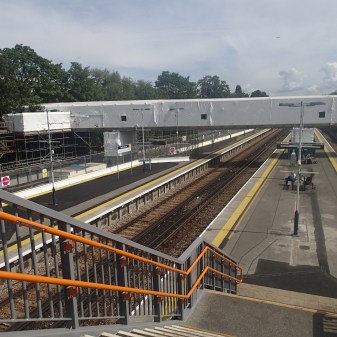
Refurbishing Twickenham Station
Note the orange rails! Is this a clue, just coincidence or are they using a Dutch contractor and they used what the Dutch always have handy?
At Twickenham the route turns south onto the Kingston Loop Line and I had wondered if there would be space to put a curve in so that trains could go direct.

No Space For A Connection At Twickenham
There is little space, so trains would go into Twickenham station, the driver would move to the other end of the train and then after unloading and loading passengers, get the train on its way again. There may be a small amount of track and platform work, but I suspect all the substantial work being done for the Rugby World Cup will probably be enough to accommodate the Goblin Extension.
I did think looking at the work being done, that Network Rail may have incorporated a bay platform, where trains could terminate or as in the Goblin Extension’s case reverse direction.
I had to change trains at Twickenham to get a train to continue my journey and this one was on its way to Wimbledon, by way of Kingston, New Malden and Raynes Park, which I think is the proposed route of the Goblin Extension. At Wimbledon it’s another turn south onto the Sutton Loop of Thasmeslink.
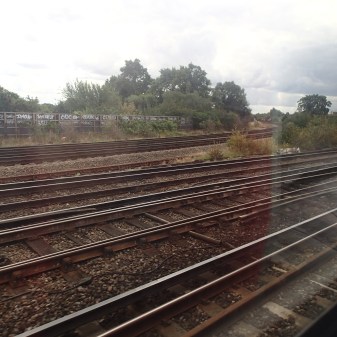
No Space For A Connection At Wimbledon
Again as the picture shows there is no space for a curve to turn direct onto the Sutton Loop, so it will have to be another reverse in Wimbledon station to continue the journey.
Wimbledon is a busy station, but there still seems to be plenty of space around the station, so that just as at Twickenham, the reversing of the train could probably be achieved without causing too much disruption to other services.
I did have one thought about the double reverse the trains will probably have to make at Twickenham and Wimbledon and that is will some clever methods of working, eliminate the need for the driver to move cabs twice and perhaps allow them to drive from the other end using some trusted modern technology.
Tracing The Goblin Extension – Upper Holloway To Hounslow
In May this year, I spent time searching for an old Railway line in London called the Dudding Hill Line, which curves its way around North West London, from Cricklewood to Acton via Harlesden, Neasden and Old Oak Common. This is an index to all my original posts on the line.
In my conclusion post, I said this.
The line gives the impression of being well-built and well-maintained and probably except for the bridge-cum-tunnel at Craven Park would not be in the difficult and expensive category to open up to a loading gauge suitable for containerised freight trains and electrify, especially if you judge it against this post, which discusses the problems of electrification.
So I stick with my conclusion that the line should be electrified.
The main reason would of course be for the freight, but it of course opens up the possibilities for passenger services.
I didn’t mention extending the Gospel Oak To Barking Line this way, as I didn’t realise how easy it was to get between the original Goblin and the Midland Main Line.
At the western end of the Dudding Hill Line, the route joins the North London Line and then turns onto the Hounslow Loop Line to complete the journey to Hounslow.
The latter two sections of the line are electrified using third rail,so once the Goblin and Dudding Hill Line are electrified, the current dual-voltage Class 378 trains could be used.
As the platforms on the Goblin will have to be lengthened to take even four coach trains and many stations on the Hounslow Loop Line already accept ten coach trains, it would probably be easier to increase capacity on the line, by running longer trains, than by increasing frequency from the current four trains per hour. As too, the Class 378 is effectively two half-trains, where you can slot extra coaches in the middle, I think it’s fairly likely that more than four coach trains will feature at some point, if the politicians back the engineers to create the Goblin Extension.
What Should We Call The Extended Gospel Oak And Barking Line?
I ask this question, because I need a tag to label my posts, as I follow the line and write about it.
I think to keep it simple I’ll label it with Goblin Extension.
Do goblins live underground or overground?
Would You Want To Live With A Transport for London Route Planning Specialist?
Or probably anybody who does a similar job in say Paris, Berlin, Moscow, Mumbai or any other city with a complicated suburban rail network?
You just have to read this to find out the amazingly tortuous sense of direction they have. They would certainly have unusual ways of getting from A to B.
The reason for this post is I’ve just traced the possible route for London Overground’s possible outer circle railway based on the Gospel Oak to Barking Line. Or is that now the Gospel Oak to Barking and Back Line.
I’ll repeat the quote from the Modern Railways report on the Mayor’s Transport Infrastructure Plan for 2050.
There may be a case for further orbital rail capacity, says the document – it shows an indicative, uncosted network to link Hounslow, Old Oak Common, Neasden, West Hampstead, Harringay, Walthamstow, Barking, Abbey Wood, Bexleyheath, Norwood Junction, Sutton and New Malden and back to Hounslow, with another route between Abbey Wood and New Malden via Lewisham, Peckham Rye and Wimbledon.
So just how does the line get across South London after it is assumed that it crosses from Barking to Abbey Wood probably in a tunnel? Or could it be a dramatic bridge, with a road as well as a railway track?
The Route
As I did with the Northern Route from Harringay Green Lanes to Hounslow, I’ll start by listing the route in order from Hounslow to Abbey Wood.
Hounslow – Starting from here, the route would continue along the Hounslow Loop Line.
Whitton – There may be a need for a new curve after here, as trains will need to get to and from the Kingston Loop Line.
Twickenham – The next station towards London is Twickenham, so it could be that there may be something innovative here. Wikipedia says this about the future of this station.
The RFU has petitioned the government to improve the station to be ready to handle the increased use during the 2015 Rugby World Cup. Network Rail has consented to a plan to improve the station and the rolling stock, but progress has stalled because of disagreement between the London Borough of Richmond upon Thames council and some local residents.
I have now visited the area and it looks like trains will have to reverse at Twickenham.
New Malden – How they get from here to Sutton, which is their next named station is open to speculation. The most likely route seems to be to go to Raynes Park and then turn south, but this gets all mixed up with Thameslink. Or is that deliberate, as there may be spare paths on the Sutton Loop and it gives a lot of interchange opportunities.
Wimbledon – Having now visited the area, I feel that trains will stop at Wimbledon and then reverse direction to get on the Sutton Loop.
Wimbledon Chase – In common with many stations in this part of the line, the northbound and southbound tracks are separated by an island platform, so transferring between the Goblin Extension and Thameslink here will be very easy. And you can also change direction from north to south and vice-versa. It’s just like Canonbury on the North London Line, where passengers have a step-free reverse of direction, as I detailed here.
Sutton – The route would then appear to go pretty straight to Norwood Junction.
West Croydon – This will interchange with the East London Line and Tramlink.
Norwood Junction – When Thameslink has arrived and settled in, this will be a major interchange station. After my visit to Brockley, I’m now pretty sure that the line goes via Crystal Palace to Peckham Rye for the Nunhead-Lewisham Link.
Crystal Palace – There is same platform interchange to and from Victoria and London Bridge, a step free interchange to the East London Line and a good cafe.
Tulse Hill – There are connections here to Thameslink and London Bridge.
Peckham Rye – Here the route would take the Nunhead-Lewisham Link, then it should be plain sailing all the way to Bexleyheath.
Barnehurst – After here, the route turns West onto the North Kent Line towards London
So that completes the circle.
The Alternative Route
A second route across South London is also indicated between New Malden and Lewisham via Wimbledon and Peckham Rye. The stations could be as follows.
New Malden – Before here, use the previous route from Hounslow
Wimbledon – This is a major interchange to main line train services, the District Line and Tramlink
Lewisham – After here, use the previous route to Abbey Wood
Points Raised
As with the Northern section of the route, listing the stations raises some important points.
1. Interchanges With Other Lines
This part of the line has interchanges to many other lines. You could put these on the list.
2. Twickenham
With a properly designed station, this could make getting to Twickenham much easier.
3. Freight
Although not as important as on the Northern section, Abbey Wood is on the North Kent Line, which is connected to HS1 and the Channel Tunnel. So could the enlarged Goblin be the key to getting freight between the North and the Continent?
Freight from the Continent would come through the Channel Tunnel, travel to Abbey Wood using HS1 and the North Kent Line and then cross the Thames to Barking, where they would take the Gospel Oak to Barking Line to the Midland Main Line, the West Coast Main Line or the Great Western Main Line.
High value cargo might even come all the way from the Far East by train across China, Russia and Europe, instead of by a slower ship.
Perishable freight like fruit from Spain and Southern Europe has also started to use the Channel Tunnel, so would we be seeing more of this, perhaps even taking this route to distribution centres like Daventry.
The possibilities for freight are endless and not just into the UK. For instance, according to this report, the UK exports 80% of the 1.5 million cars made. Travelling across Europe, you often see trainloads of new cars, but you don’t see to see them here.
And will containers arrive at the London Gateway from perhaps the Far East and America and then be transhipped into Europe via the new Thames Crossing and the Channel Tunnel?
The Thames Crossing had better be a big one with the capacity for a large number of trains!
4. Unlocking South London
What these new routings do, is add lots of stations to the Underground map. So those unfamiliar with South London will find it easy to get to stations like for instance, Nunhead. Many a time, I’ve found visitors to South London completely lost in the area, as they understand the Tube map and can’t follow where they are in parts of the train network.
You also often don’t go to the right terminus station to get to your destination in the south, as the routes were designed with some form of sadistic twisted logic. What sane man, would think that to get to Dartford in the East, you’d go to Victoria to the West of the centre?
So will these lines unlock the secrets of the maze that is South London? In the same way as the East London Line of the Overground allows me to get easily to my friends in Anerley!
You can’t throw the current network out and start again, but you can add new routings, which make the system much more user-friendly.
You could claim that one of the main benefits of a completed Overground, Crossrail and Thameslink is that they make London’s railways easier to use for those who don’t know their Cricklewood from their Nunhead!
Summing Up
I probably haven’t got all this right, as I’m only using one paragraph of the report, an A-Z atlas of London and Wikipedia.
So don’t be surprised if I change this substantially as more information becomes available.
Will The Gospel Oak To Barking Line Be Extended To Hounslow?
The Modern Railways report on the Mayor’s Transport Infrastructure Plan for 2050 says this.
There may be a case for further orbital rail capacity, says the document – it shows an indicative, uncosted network to link Hounslow, Old Oak Common, Neasden, West Hampstead, Harringay, Walthamstow, Barking, Abbey Wood, Bexleyheath, Norwood Junction, Sutton and New Malden and back to Hounslow, with another route between Abbey Wood and New Malden via Lewisham, Peckham Rye and Wimbledon.
I did a brief piece of research on the route yesterday between West Hampstead and Harringay, and it would appear that there is a link off the Gospel Oak to Barking Line (Goblin), that enables trains to move to and from the Midland Main Line. I got a picture of the link just before my train from Gospel Oak arrived at Upper Holloway station.
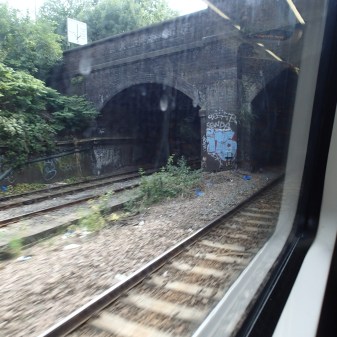
Goblin To MML Link
I suspect freight trains use it to get from the Goblin to the Dudding Hill Line, which branches off the Midland Main Line, just north of Cricklewood station.
So an Overground train could run the same way stopping at West Hampstead and Cricklewood stations, before taking the Dudding Hill Line, through new Neasden and Old Oak Common stations on the way to Hounslow.
The Route
Perhaps it is a good idea to list the stations on the extended line in order from Harringay Green Lanes to Hounslow.
Harringay Green Lanes – My only observation, is that I use this station to pick up the Goblin, as I can get a 141 bus direct to and fom the station from within a hundred metres from my house.
Junction Road – This doesn’t exist at present, but is constantly being talked about to link the Goblin to the Northern Line.
West Hampstead – In a few years this will have grown into a full blown interchange, between Thameslink, Chiltern Railways, Jubilee and North London Lines. Having the new extended Goblin call here would improve the transport opportunities for those who live and work all across North London.
Neasden – This will probably be a new station, somewhere near the current Neasden station on the Jubilee line. I visited the area, when I was researching the Dudding Hill Line. It might be a place where some clever architect and developer could create a very useful interchange combined with some much-needed residential properties.
Harlesden – As the Dudding Hill Line runs virtually over the top of the current Harlesden station on the Bakerloo and Watford Overground Lines, like Neasden this could be a development opportunity.
Old Oak Common – I have seen in some reports Old Oak Common has been described as the Canary Wharf of the West. Also, every time I read about the area, more rail lines and ideas get thrown into the mix.
North Acton – The route has now joined the southern end of the North London Line. An interchange at North Acton has been talked about for years. There’s a discussion here.
Brentford – In recent years, this station was on the London Crosslink between Norwich and Basingstoke.
Points Raised
Listing the stations shows several important points.
1. Interchanges With Other Lines
This part of the line has interchanges to many other lines. You could put these on the list.
2. Development Opportunities
Many of the stations seem to have development opportunities. Perhaps not on the scale of West Hampstead and Old Oak Common, but there would to be scope at many stations.
3. Important Areas Served
The line effectively links Tottenham, which is one of the most deprived areas of London, through most of North London through Old Oak Common to Hounslow in the West. The western end point is close to Twickenham Stadium, which is not the easiest place to get to from North and East London.
I have not seen any figures, but surely this line would open up a lot of employment and leisure opportunities.
4. Freight
An electrified line, as it obviously will be, would also speed freight along the line, perhaps allowing more freight trains to between ports like Felixstowe and London Gateway and the lines to the North and West.
4. No New Rail Lines, Bridges Or Tunnels
In this brief look, it would appear that most of the infrastructure, except for station and the catenary, is already in existence. I can’t see too many protest groups and Nimbys objecting to what is being proposed.
6. Possible Objectors
Perhaps the biggest objectors will be other train companies objecting to London Overground encroaching on their territory.
Summing Up
So to sum up, I think that this part of the proposed line, might be developed in the near future, as it provides an important link without costing the multi-billions of a Crossrail.
The Easy-Entry Spacious Class 378 Train
London Overground’s Class 378 set a high standard for commuter trains.
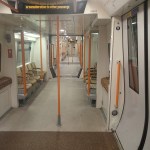

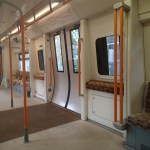
Note the step-free walk-across entry, the longitudinal seating with lots of space for standees and the articulated joint between carriages.

