Peaks And Dales Line Feasibility Study Identifies £2-£8 Billion Potential
The title of this post, is the same as that of this article on RailUK.
The first two paragraphs add some detail.
The full Feasibility Study for the proposed Peaks and Dales Line – a reinstated rail corridor linking the North West and East Midlands between Manchester and Derby, via Chinley, Buxton, Bakewell, and Matlock – has now been formally submitted to the Department for Transport for review through the Better Value Rail Working Group, comprising the DfT, Network Rail, and the Office of Rail and Road.
The submission marks a significant milestone for the project and confirms that no prohibitive technical, environmental, planning or delivery barriers have been identified at feasibility stage that would prevent the corridor progressing to the next phase of development, a Strategic Outline Business Case (SOBC).
But it is probably best to read the full report.
The full study identifies that reinstating the Peaks and Dales Line could:
- Generate £2-£8 billion in additional Gross Value Added (GVA) by 2040.
- Remove approximately 1.0-4.3 million car ‘trips’ per year from the road network (from visitor travel alone).
- Deliver carbon savings of around 15,000-60,000 tonnes of CO₂e per year.
- Provide a viable sustainable travel option for the 13-26 million people who visit the Peak District annually, around 85% of whom currently arrive by car.
- Improve access for the 3.16 million people across the connected regions who do not own or have access to a car.
- Support sustainable access to approximately 17,870 previously identified potential new homes, all located on brownfield land outside the National Park.
- Enable £447-£804 million in potential voluntary Land Value Capture contributions, reducing reliance on public funding.
These are large claims and yet more reasons to believe that Harold Wilson was one of our worst Prime Ministers, as Beeching’s most heinous crimes, were performed under his watch.
This paragraph sums up the work to be done.
The study also confirms that only around 11.5 miles of reinstated railway would be required to reconnect a corridor of nearly 50 route miles, representing a highly efficient reuse of historic rail infrastructure. Various upgrade options are being considered across the remainder of the route.
I wonder, if it might be best to go for a single-track railway, that could be upgraded to full double-track later.
This image from a Stadler press release shows their prototype RS ZERO.
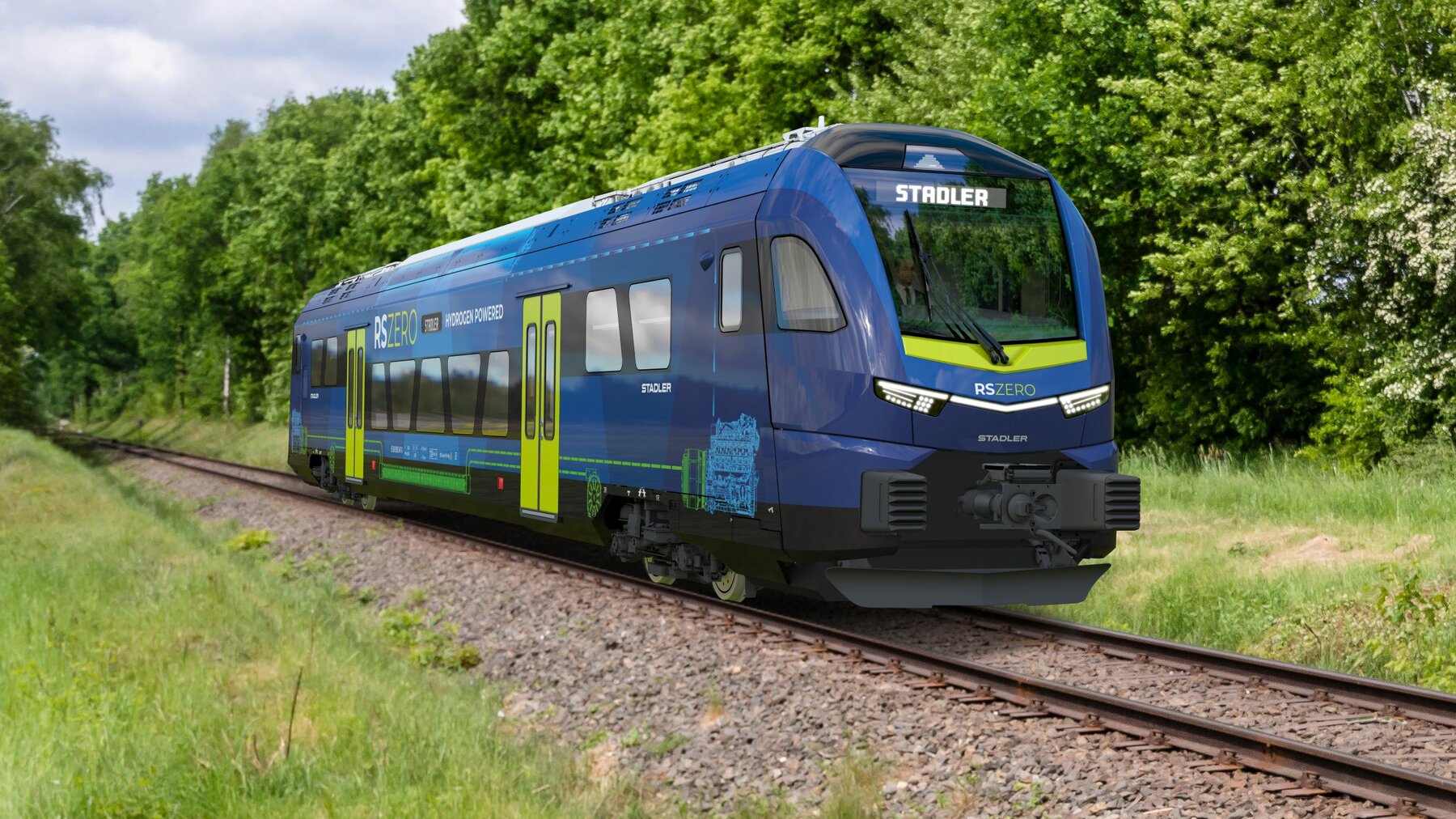
As these trains can run on hydrogen, this could create a zero-carbon railway through the Peaks and Dales.
Using this approach could see the railway running before the next election.


Those Stadler single car units are top quality for branch lines across Europe but we dont have low floor platforms in UK
Comment by Nicholas Lewis | April 22, 2026 |
But all Stadler trains in the UK are level boarding. They just build them to suit.
Comment by AnonW | April 23, 2026 |
For sure but those are good units for lightly used lines and come off a production line not one offs.
The DfT really need to put a stop to any operator going off on its own train procurement now and just have a standard design for UK for DMU, EMU and IC all with a batt solution if required. Get design approved them just build them to get cost down and easy to bring into use.
Comment by Nicholas Lewis | April 23, 2026