Contactless Cards For Travel In London Are Working
This article entitled Tube Record Smashed Again has just been published on Modern Railways. This is the last paragraph.
Numbers on both days were boosted by ‘MasterCard Fare Free Friday’, through which holders of contactless MasterCard debit or credit cards could use their card to travel for free within the capital, with over 270,000 journeys made on 28 November under this offer. Passengers have been able to use contactless bank cards to pay for Tube travel since September, with 18 million journeys made using contactless payment cards since that date and usage reported to be growing at a rate of 12% per week.
The most significant bit is that the use of contactless payment cards is growing at an unheard of rate for anything.
So if it is so popular in London, when will I be able to use my contactless credit card for travel on Nottingham, Edinburgh, Birmingham and Manchester trains, the Newcastle Metro and local trains outside London? If these cities in the North want to rival London, they must give the passengers the easy ticketing system, they obviously like to use!
If any did bring in a contactless system for payment, I think it would be a long odds-on bet, that at least one of Mastercard, Visa and Amex would run a promotion to get people on the buses, trams and trains.
Sorting The Under/Overground Around Gunnersbury
After I wrote this article about reversing loops instead of termini, I wondered if I could find any references to operating problems on the Piccadilly Line loop that serves Termial 4.
I didn’t find anything but I did find an article on London Reconnections called Upgrading The Piccadilly: Calling Time On Mind The Gap?
It is a well thought-out article that starts by talking about the new trains and the problems of platform-edge doors. It then goes on to suggest what it thinks appears to be the bad idea of transferring the Ealing Broadway branch of the District line to the Piccadilly line.
This is the map of the area.

Gunnersbury Triangle
The triangle of lines in the area is bordered at the West or left by the North London Line (orange), the District and Piccadilly lines from Acton Town to Turnham Green at the top right and the District line to Richmond at the bottom right. Chiswick Park station is marked with the red arrow.
The article then goes on to suggest reasons why it might not be a bad idea and that Chiswick Park station might be put on the Richmond Branch of the District line.
I think the Overground and Crossrail could be the key to what happens in this area.
1. Transport for London’s Infrastructure Plan for 2050, talks about linking the Gospel Oak to Barking Line to Hounslow through the area. It would branch off just south of South Acton station.
Acton To Houslow Link
The line is there and I suspect, it will be used to provide a link between West and North London.
2. Crossrail calls at Ealing Broadway station, so will it be better if it joins up with the Piccadilly or District lines?
There are probably advantages for both lines and I won’t choose what is better. But note that the District line has two interchange stations with Crossrail and the Piccadilly has just the one at Heathrow.
3. There are also proposals to create another rail route into Heathrow. One is Airtrack, which goes through Clapham Junction and Richmond.
4. There is also the problems of installing platform-edge doors on the western reaches of the Piccadilly Line, as outlined in the London Reconnections article.
I think the only certainty is that these and many other factors will result in major changes in this area.
And the solution will be very radical.
One thing though convinces me that something must be done. I was on Chiswick Park station today, and in about ten minutes, I met two young ladies; one French and one Italian, who had got seriously confused by the track layout in the area.
Dalston Junction To Marylebone In The Rush Hour
Yesterday, I needed to get to Marylebone to go to Birmingham. Some time ago, I wrote about the reverse journey and it wasn’t easy in the rush hour.
So just out of interest, I decided to go by getting the Overground to Whitechapel and then using the District line to get to Embankment for the Bakerloo line to Marylebone.
I left home at 08:44 and arrived at Dalston Junction at 08:52. I left the station five minutes later, after a bit of trouble with the machine buying my return ticket from Marylebone to Stourbridge Town.
I made Whitechapel at 09:10 and at 09:30, I was at Embankment, after a trip on a not-to-busy train.
I’ve avoided Embankment station for some time, as it has been in a state of chaos due to refurbishment, but now look at it.

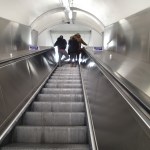

It was clean and bright and a virtually empty Bakerloo line train got me to Marylebone in a couple of minutes under the hour since I left Dalston Junction. This post on TfL’s web site explains what was done. It says this.
The decision to replace the escalators simultaneously rather than phasing the work meant that it took 43 weeks to complete as opposed to at least 75 weeks. While this work was taking place, LU also took the opportunity to refurbish other parts of the station including retiling corridors and platforms, installing new lighting and replacing station Help Points and CCTV systems.
It certainly looks to be a job well planned and executed.
I think this could become my preferred route to Marylebone and Paddington, until Crossrail goes to Paddington.
Unfortunately, there was a bit of a signalling problem on the Chiltern line and staff got confused about the 09:45 Birmingham train’s departure platform. So I caught the 10:15.
Latimer Road – A Gem Of A Station
The platforms at Latimer Road station had to be rebuilt for the new S Stock trains.
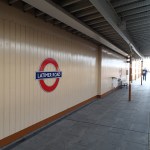
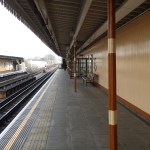
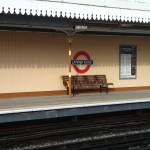
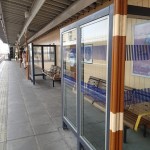
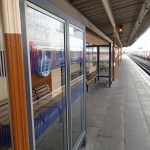
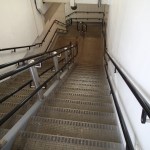
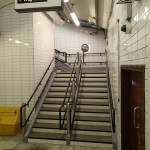
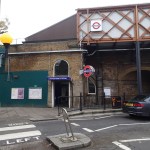
It would be wonderful if all stations had the look and feel of this one. Wikipedia gives a full history of the refurbishment, which contains this gem.
When the wall for the westbound platform was removed, contractors discovered an old bricked-up entrance to the station public house, currently known as The Garden. They also found underneath the platform a very old and possibly Mahogany staircase leading up to the pub entrance. Apart from all the years of dust and grime they also found, amongst other things, a bath, old gun parts and even a vat of acid.
How many other stations have secrets like that?
A Heritage Station With Four Clocks
After writing my piece about the Northern Line Extension, I went to have a look at Kennington station.
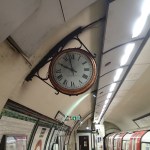
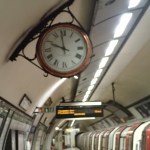
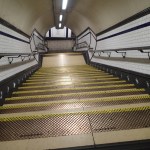

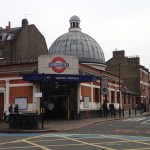
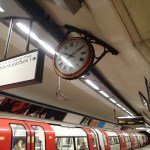
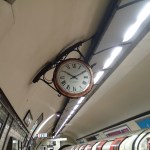
It is a Grade II Listed building, but to me one of its best features is the four clocks.
The layout is unusual in that the two Southbound platforms are underneath the two Northbound ones. But both pairs of platforms have level access between the platforms. So if you came up from Morden and wanted to go to say Tottenham Court Road, you’d just walk across to the Charing Cross branch, if you were on a train going via Bank.
When the Northern Line Extension opens, this will probably mean that there is cross-platform access from the extension to the Bank branch.
It would certainly seem that when the station was substantially rebuilt in 1926, that whoever redesigned the station had the foresight (luck?) to design a station that could be easily linked to a branch to Battersea and Clapham Junction.
Will The Northern Line Extension Go All The Way?
There has been masses of reports about the Northern Line Extension in the special rail media and on the BBC and in other publications, like Time Out and the Standard.
Despite the long term aim of taking the extension to Clapham Junction, mentioned in the Wikipedia entry for the project.
Provision will be made for a possible future extension to Clapham Junction railway station by notifying the London Borough of Wandsworth of a reserved course underBattersea Park and subsequent streets
There has been no discussion about the extra station.
There has also been no statements from the consortium building the line about how they will actually construct the line.
As it is not the longest of tunnels, I suspect to save money, at the expense of possibly some extra time, they will use just one tunnel boring machine (TBM). It won’t be one of the ten-million-pounds-a-time beasts used for Crossrail, as Underground tunnels are generally much smaller in diameter. Although, I wouldn’t be surprised to see the tunnels made slightly larger than normal for reasons of safety and perhaps to re-use a refurbished TBM from another project.
One thing that London Underground doesn’t like is lines that end deep in the ends of tunnels. For reasons of cost in the 1960s, the Victoria line is like this at both ends and according to Wikipedia, there have been proposals for creating a large reversing loop at Brixton to both reach Herne Hill and increase capacity.
Reversing loops also eliminate any possibility of a Moorgate disaster, which has still not been satisfacorily explained. But operationally they remove the need for trains to crawl into the end station for safety reasons, and reduce the time it takes to turn trains, thus increasing the frequency on the line.
Reversing loops with stations are not unknown in the UK. Terminal 4 at Heathrow is served by the Piccadilly Line in this way and the Merseyrail Loop Line, is a larger example, that reverses and provides several stations for the Wirral Line. It could also be argued that Bank station on the Docklands Light Railway is two platforms on a reversing loop.
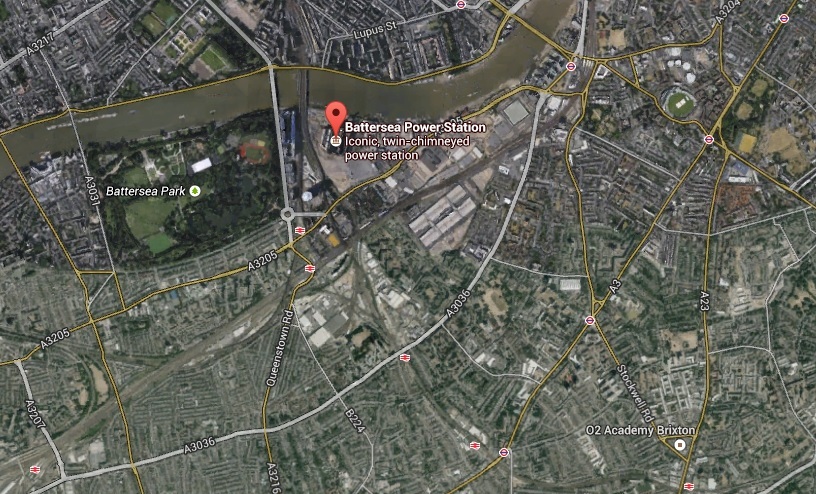
So could a similar solution be used at Battersea to turn the trains? Look at this map of the area.
Around Battersea
Battersea Power Station and Battersea Park are obvious, but notice the Underground roundel marking Kennington station in the top-right corner and the British Rail symbol marking Clapham Junction station in the bottom-left.
The extension joins the current Northern line at Kennington and the Battersea station is proposed to be somewhere near the power station.
At present, Charing Cross branch trains reversing at Kennington, can go round the Kennington Loop. Wikipedia says this about the loop.
A loop tunnel south of the station enables southbound Charing Cross branch trains to be terminated at Kennington, leave the station in a southward direction and, traversing the loop, enter the northbound Charing Cross branch platform.
So instead of building two tunnels from Kennington to Battersea, with all the cost of two TBMs or the hassle of turning a single one round, I do wonder, if a cheaper and easier way of building the tunnels, would be to start in the Kennington Loop with a single TBM, tunnel via Nine Elms to Battersea and then create a wide reversing loop before returning to Battersea to dig the second tunnel back to the other side of the Kennington Loop.
One of the consequences of good project management is often that what the engineers build in the end is quite different, but better, more affordable and earlier to what the politicians said they wanted. For this reason alone, I wouldn’t be surprised if the Northern Line Extension is just a single tunnel, dug by a single refurbished TBM.
The cost savings are probably small change in a one-billion pound project, but the time spent inserting and removing a second machine, probably comes off the overall project time.
It then doesn’t take a great leap of the imagination to see that this construction/reversing loop could be extended so that it passes under Clapham Junction station.
There are other advantages too.
Operations, Safety and Reliability
I’ve mentioned the operational advantages of the reversing loop in quicker turn back of the trains and possible safety advantages, but as the extension is going to be a continuation of the Charing Cross branch of the Northern line and an extension of the Kennington Loop, there could be no complicated track work at Kennington. This will mean that the branch used through Central London, will determine the ultimate destination of the train. But this would allow London Underground to split the two lines and probably arrange dedicated platforms for the two northern branches at the operational nightmare that is Camden Town.
The reliability of two continuous lines would probably be a lot higher, than one that was constantly splitting and joining back again.
But whatever happens to the rest of the line, if the extension was a continuous reversing loop with no points or sidings, it could be built faster and would probably cost less, have a higher capacity and probably be more reliable.
The only problem would be if a train were to break down in the loop. But what happens on the Heathrow loop on the Piccadilly line?
Battersea and Nine Elms Stations
Digging the extension as a loop, also means that the two stations at Battersea and Nine Elms, become classic below ground stations of the Underground, like say Southgate and Manor House of the 1930s, and the modern Canary Wharf, where escalators and lifts descend to a wide lobby between the two lines.
Costs could even mean that they were identical below the surface, although architects would probably exercise some flare on the surface.
I also wonder if stations could be built with no escalators, but large efficient lifts, that were scheduled, so they went up and down in time with the trains.
Lift-only stations would be best as double-ended, with the lifts even coming up into car parks of the over-site development.
There is tremendous scope here for a good architect to build passenger-friendly and lower cost stations.
I’ve always believed that urban stations should have development on top, just like my local one at Dalston Junction. But how many stations anywhere make efficient use of expensive land?
Ventilation
A big problem with London Underground’s deep level lines, like the Northern, is keeping everything cool. All over London, you see structures like I photographed here. A continuous reversing loop must have advantages as all three stations would double as ventilation shafts, so there would be no need for any extra holes in the ground. If modern regulations mean that the tunnels have to be built with a walkway for evacuation, like those on the Docklands Light Railway, these larger diameter tunnels would probably help ventilation.
A secondary advantage of a well-ventilated reversing loop, is that it would be cool, so any trains on the loop could cool themselves down, just like many deep-level trains, do by basking on the surface in the suburbs.
Clapham Junction Station
In the future when the station at Clapham Junction is added, little or no tunnelling will be needed, as construction will probably involve sinking a shaft to link it to the current Clapham Junction rail station and creating a new platform or platforms alongside the reversing loop.
I would go for the single platform. In some ways then, this station would be like the Piccadilly Line station at Heathrow Terminal 4, which has a single platform on a one-way loop from Hatton Cross to Heathrow Central.
No surface buildings would be required and space would only be needed to sink the shaft during the construction phase.
Opening Clapham Junction station could give a problem in that some passengers will transfer off the trains from Basingstoke, Portsmouth, Southampton and other places to complete their journeys. Will the Northern Line cope?
On the other hand the new Clapham Junction station will link to Crossrail at Tottenham Court Road, so Clapham Junction would get a hopefully step-free link to Crossrail and on to Heathrow.
Platform Edge Doors
Regulations will probably mean that all the stations would have to be constructed with platform edge doors. A loop extension would probably have the minimum number of platform faces, thus subtracting another saving from the cost.
If I was designing the stations, all platform faces would be identical to save costs.
But if you went for lift-only stations, this could mean that a better design evolved, where the safety functions of the platform edge doors were achieved in better ways.
Train Stabling
A loop extension, if built in its simplest form, would not have any sidings for storing trains overnight or perhaps holding them when there was a problem on the Northern line.
But as the loop would of necessity be rather long between Battersea and Clapham Junction, the trains could be stabled or held in the loop. If staff needed to leave or join the trains and if the tunnel had a walkway, they’d just walk along to the nearest station.
Ease Of Construction
There has been a report in Global Rail News that the Northern Line Extension might be completed before Crossrail.
A loop extension leading off the Kennington Loop has implications for building the extension in a quick and affordable manner, so this might explain the optimism.
Consider the following.
1. No terminal station, platforms, junctions or sidings would need to be built.
2. As the main construction at Kennington only takes place on the Kennington Loop, trains on the Bank branch running to Morden will be unaffected. Trains on the Charing Cross branch would probably be suspended, unless some other way of turning them back could be found.
3. One TBM digs the whole tunnel in a continuous operation.
4. The project length is determined by the time to dig the tunnel, fit it out with track and signalling, connect it to the existing network and then give it an extensive testing, as once the TBM has passed, the construction of the platforms can be started in parallel with the rest of the project.
5. It would probably be easier to adjust the route of a loop tunnel to avoid other infrastructure and the proposed route of Crossrail 2. Victorian engineers didn’t have machines of the accuracy of today’s modern TBMs.
6. Crossrail needed a lot of shafts to insert and extract the TBMs and other equipment and materials. I’m no expert, but surely material could be brought in by service trains on the Morden branch of the Northern line, to avoid digging too many shafts.
Conclusion
I strongly believe the first phase of the Northern Line Extension will be built as a loop off the Kennington Loop and include all the tunnelling for the extension to Clapham Junction.
Clapham Junction station would not look like a terminus, as it would only be a single platform on a reversing loop.
So the second phase would solely be the fitting out of the station and connecting it to the rail station.
Battersea Gets Its Tube
The extension of the Northern Line to Battersea has been given the go ahead.
Construction will begin in spring 2015 and it is hoped the line, which will be extended from Kennington to Battersea, will open by 2020.
Two new stations will open – Nine Elms to the east and one at the heart of the Battersea Power Station development.
The full cost is expected to be up to £1bn, which will be funded by developments in the area.
I think one of the most significant parts of the report is the last line of that extract.
According to Wikipedia, the original proposal was put together in May 2010, and I certainly saw an exhibition about the extension in December 2012,
I know it’s only a short extension, but to go from proposal to construction start in two years is some sort of record for London.
Surely, all big infrastructure projects should be started like this. And of course financed if possible in a local manner or by developers.
The one question about what is proposed, is when is it going to be extended to Clapham Junction.
I suspect that if they did this, it would be so successful, it would swamp the Northern Line and throw Battersea back to the 1960s, with respect to transport links.
This is the schematic of the route.

The Route
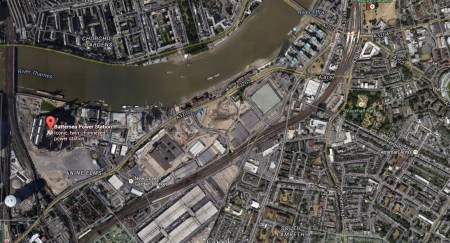
And this is what the area looks like in Google.
The Google View
I couldn’t quite align the two maps, but you can just see the Kia Oval at the right in the Google view.
Looking For The Croxley Rail Link
After my delays at Moor Park station, I eventually got a train and a bus to Croxley station, where I started my walk. The aim was to walk from there into Watford, have a snack lunch at Carluccio’s and then come home on the Overground from Watford High Street station. This Google map shows the general route.
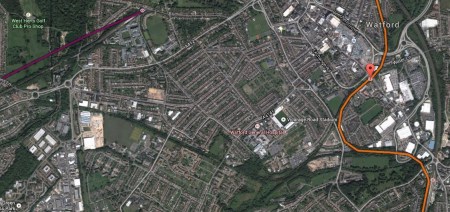
The Metropolitan Line to Watford, which will be closed when the Croxley Rail Link is built is shown in purple, with the Overground in orange and Watford High Street station indicated by the red arrow. Note that the Wikipedia entry for the Rail Link has good schematics and maps.
The Rail Link will leave the route of the current Metropolitan Line around the edge of this map.
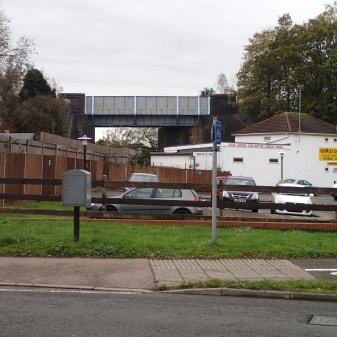
The Current Watford Branch
It crosses a bridge there, just behind the Harvester pub. It will then cross the dual carriageway on a viaduct.
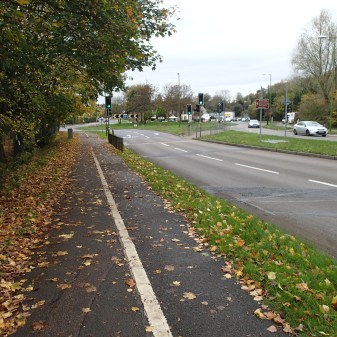
The Rail Link Will Cross Near Here
The line will go across somewhere here, where a new Cassiobridge station will be built on the West side of the road. There would appear to be a rail bridge over the Grand Junction Canal, which was used for the old Croxley Green Branch.
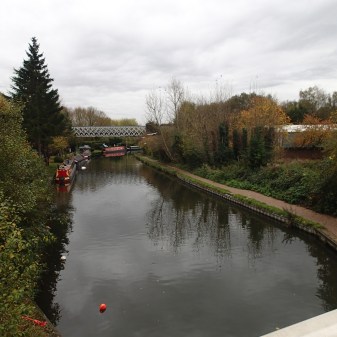
Over The Grand Junction Canal
Another Google map, shows the area in more detail.
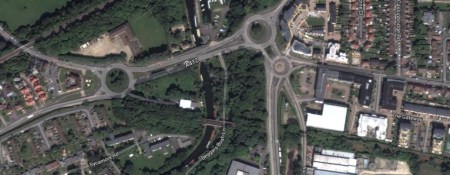
Note the canal and the bridge in the picture and how the line crosses two roads to continue towards Watford.
I then walked towards the Watford Hospital and the football ground and crossed the line on a bridge on Vicarage Road.
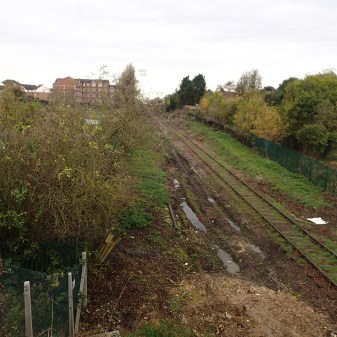
Over The Future Croxley Rail Link
It had been a walk of about an hour between Croxley and Watford High Street stations. Luckily I was on the warm dry train into Central London before the rain started in earnest,
A Wait At Moor Park Station
I was trying to get to Croxley station to look at the area of the new Croxley Rail Link.
Unfortunately, there were signalling problems on the line so I had to wait to get to Rickmansworth for a replacement bus. So I took these pictures.

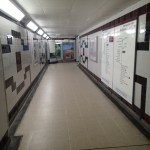
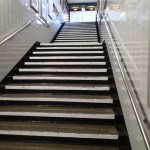
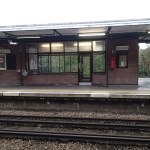
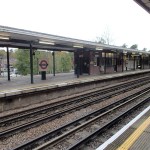

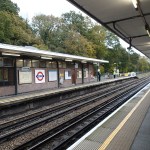
It is an attractive well-maintained station, but it doesn’t seem to have any regular bus links or step-free access.
The Night Tube
Transport for London have announced that the Tube will start to run overnight on Fridays and Saturdays from September 2015.
This won’t affect me much directly in Dalston, as my primary method of late night transport at night is either one of the all night buses; 38, 73, 141 and 277, or a taxi.
However, as some of the trains will be running to some of the deeper reaches of the Northern, Piccadilly, Central and Jubilee lines, it could prove useful in the future.
I suspect, it’ll all go pretty well, if my experience of the night bus to Victoria is anything to go by.
 The Anonymous Widower