Use Of A Bi-Mode Class 755 Train On The Sudbury Branch Line
I took these pictures today on a visit to the Sudbury Branch Line in Suffolk.
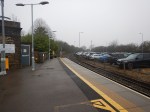
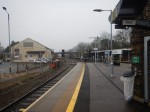
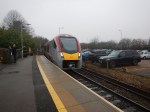
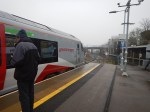
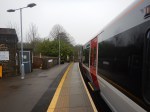
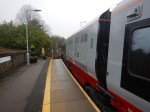
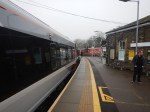
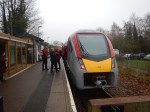

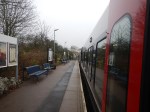
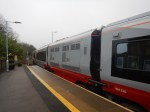
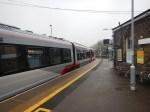
The two stations shown are Marks Tey, where the branch joins the Great Eastern Main Line and Sudbury, which is the Western terminus of the branch.
Both stations have short platforms.
To simplify this description, I will identify the four cars of the Class 755 train as follows.
- Driver East Car – Driver car with passengers on the Marks Tey end of the train.
- Passenger Car – The passenger car, which also has the bike space and the Universal Access Toilet.
- PowerPack – The smaller car that powers the train.
- Driver West Car – Driver car with passengers on the Sudbury end of the train.
This Google Map shows Marks Tey station.
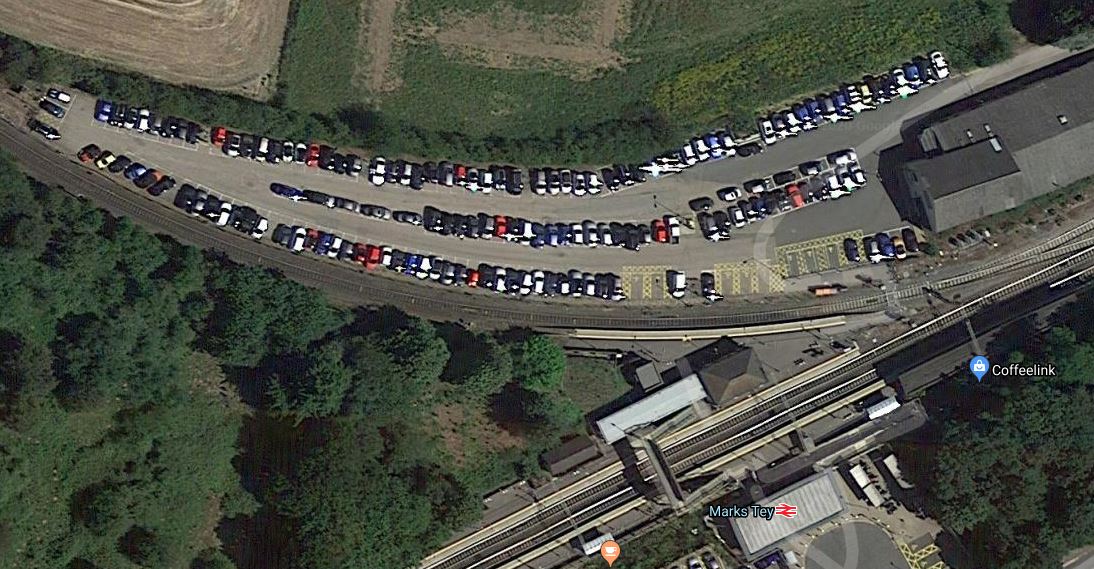
The short and gently curving, Sudbury Branch Line platform is on the North side of the station.
To make it easy for passengers to get in and out of the train, Greater Anglia seem to have devised a cunning plan.
- The Class 755 trains run with the end with the Driver East and Passenger Cars are towards Marks Tey and Colchester stations.
- The driver stops the train in the station, so that the two passenger cars, are in the same place as a two-car diesel multiple unit, like a Class 156 train, would be.
- The two pairs of wide double doors and the level step-free access, encourage passengers to enter the train.
- Interestingly, the PowerPack Car of the train is at the narrowest part of the platform and is this deliberate to encourage passengers to enter through the doors facing them on the platform.
- The Driver West Car doesn’t come into the platform.
- At busy times, when the Driver West Car will need to be used, passengers will walk through the PowerPack Car.
- Bicycles can be wheeled between the platform and the space in the Passenger Car.
The method of operation has avoided any expensive lengthening of the short and curvy platform.
This second Google Map shows Sudbury station.

At least the single platform is straight.
A similar procedure is used at Sudbury station to that at Marks Tey.
- The driver stops the train in the station, so that the Driver West and Passenger Cars either side of the PowerPack Car are in the station.
- Passengers have two sets of doors and level access to get into and out of the train.
- Bicycles can be wheeled between the platform and the space in the Passenger Car.
- There is no direct access to the Driver West Car at the Marks Tey end of the train, but passengers can walk through the train.
Lengthening of the platform is not necessary.
Important Routes With Few Passengers
Suppose you have a route that at certain times of the day needs a three-car train, but at other times two-cars or even only one car.
I can think of the case of a large industrial site like a nuclear facility or power station, that has lots of passengers, when people are going to and from work and students are going to and from school and college, but at other times of the day, passenger numbers are low.
The conductor indicated to me, that the design of the train allows the doors on the PowerPack to be locked, thus restricting movement.
This could save operating costs if thought out properly.
Wheelchair Passengers To And From Sudbury
The conductor indicated that this was a problem for some directions.
- London to Sudbury is just a walk or push between platforms.
- Sudbury to Ipswich and Norwich is just a walk or push between platforms.
- Sudbury to London is take a train to Colchester from Marks Tey and use the lifts to change direction for London.
- Ipswich and Norwich to Sudbury is take a train to Witham and use the lifts to change direction for Marks Tey.
The local MP is Pritti Patel and she has been pushing hard for a step-free bridge with lifts, which would solve the problem.
Sudbury And Colchester Town
Greater Anglia have proposed that the Sudbury service be extended to Colchester Town station.
There may be problems running on the busy Great Eastern Main Line between Marks Tey and Colchester, but at least there appears to be a freight loop just to the North of Marks Tey, on the London-bound track.
Some things would help.
- Redesign of the junction to allow a faster turnout.
- The extra power of the Class 755 trains.
- Electrification of Platform 3 at Marks Tey station.
- Full digital in-cab signalling on the Great Eastern Main Line.
It might even be worthwhile putting in a simple flyover for Sudbury-bound trains.
Could Battery Power Be Used On The Sudbury Branch Line?
Class 755 trains have been designed, so that diesel engines in the ~PowerPack Car can be replaced with batteries, which can be charged from electrification.
If and when a suitable battery module is developed, then it could just be slotted in.
Some form of charging would be needed and the proposal to change the service into s Sudbury and Colchester Town service, would allow the trains to be charged on the main line.
The German Solution
I can’t help feeling that the Germans or the Welsh would use a different solution.
In Could There Be A Tram-Train Between Ipswich And Felixstowe?, I discuss the East-West Rail Link’s idea of running tram-trains between Ipswich and Felixstowe.
- It would have a frequency of four trains per hour.
- It would probably start in the forecourt of Ipswich station.
- It could either go to Felixstowe station or perhaps through the High Street and down to the Sea Front.
- It would go via Portman Road, Ipswich Town Centre, Ipswich Hospital, before joining the Felixstowe Branch Line to the East of the town.
The reason for this proposal, is to get more freight trains into the Port of Felixstowe.
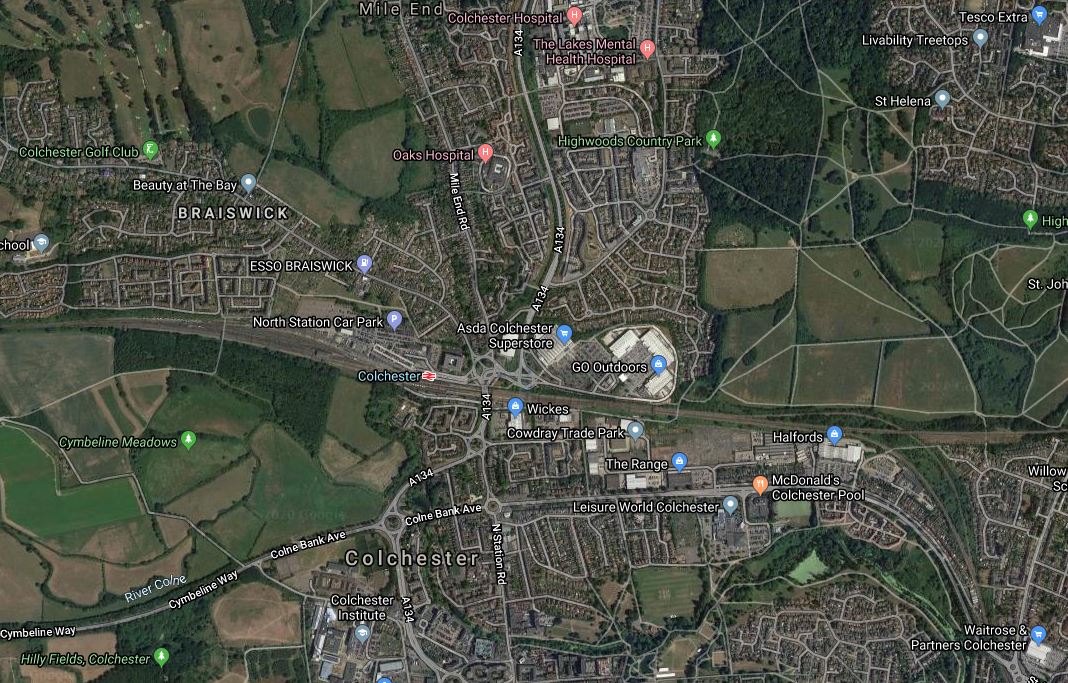
Now look at this Google Map of North Colchester.
Note.
- Colchester station in the middle of the map on the Great Eastern Main Line, which runs East-West.
- A junction to the East of the station, where the lines from Colchester Town, Clacton and Walton join the Great Eastern Main Line.
- Colchester Hospital at the top of the map.
Without doubt,, the Germans would create a tram-train network based on Colchester station.
- Sudbury and Marks Tey could be served in the West, by perhaps building a third track alongside the Great Eastern Main Line
- Marks Tey and Sudbury would be on battery power.
- Colchester Hospital and perhaps the football ground and a Park-and-Ride could be served in the North, by adding tracks to the junction East of Colchester.
- Colchester Town could be served in the South, using the existing tracks.
The network would certainly connect a lot of important places to the main station.
- It would improve access to Colchester Hospital.
- It would solve the step-free problem at Marks Tey.
- It could open up much needed new housing developments.
With 100 mph tram-trains or trains able to work as trams, it could reach places using the various routes in the area, like Clacton, Harwich and Walton.
Stadler have already designed 100 mph diesel trains, that work in Zwickau in Germany, alongside and share tracks with the city’s trams.
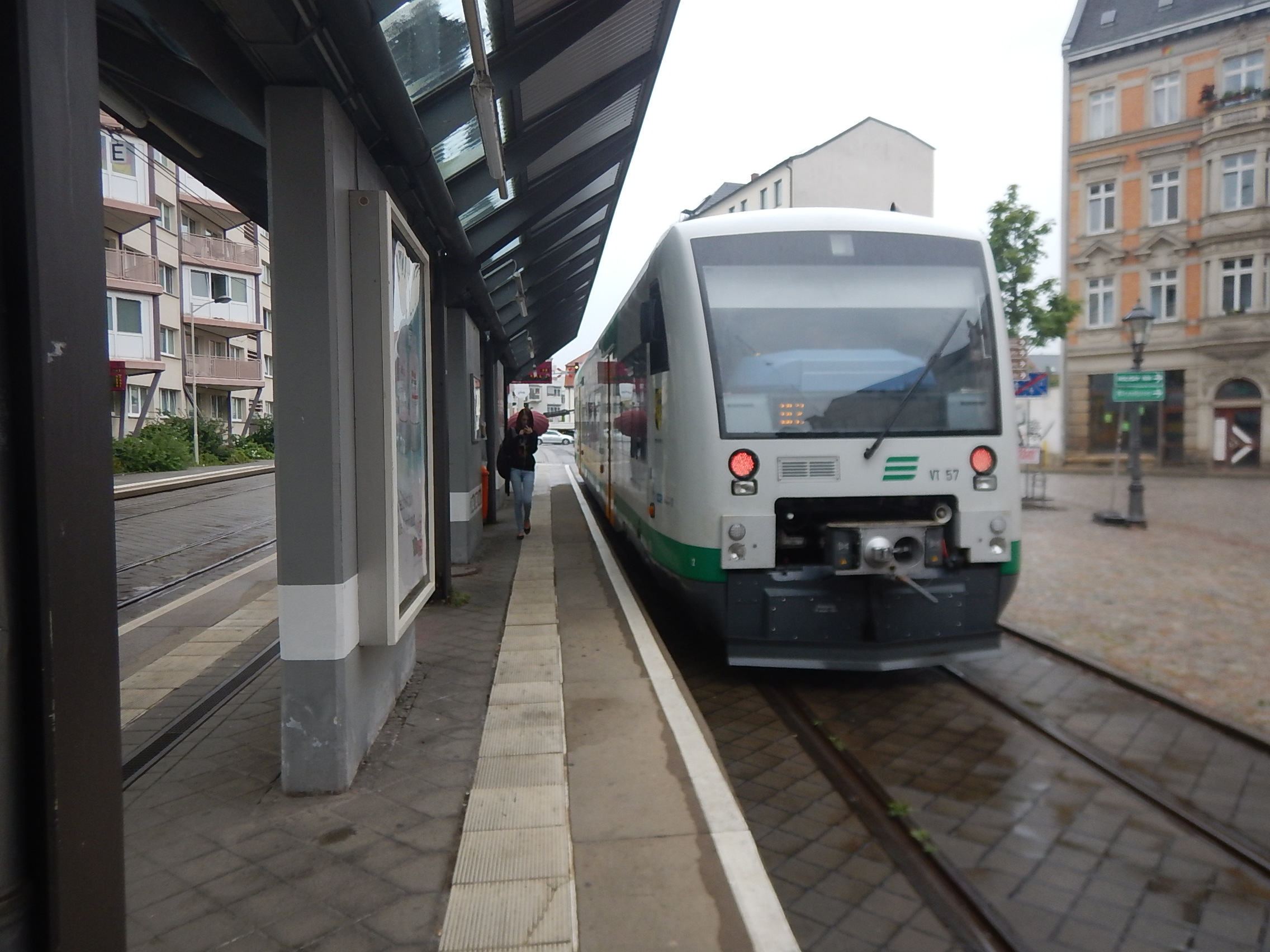
It seems that if you have a specification, Stadler will make it.
Conclusion
Greater Anglia are going to have fun with these trains.
Their level access is liked by passengers.
The short car length, allows the trains to call in curvy platforms.
A Trip To Kingham Station
I visited Kingham station on a trip to have lunch with friends nearby.
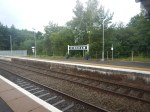


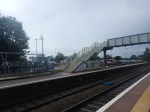

The station is not step-free, by any means.
Commuters or shoppers going to London, Reading or Oxford must use the bridge without lifts on the Outward journey, but at least when returning, it’s a level walk to the car park.
All services are run by Class 800/801/802 trains, which as the first picture shows don’t have step-free access between train and platform.
But there are many stations that are worse and more difficult to make step-free.
This Google Map shows Kingham station, with London to the South and Worcester to the North.
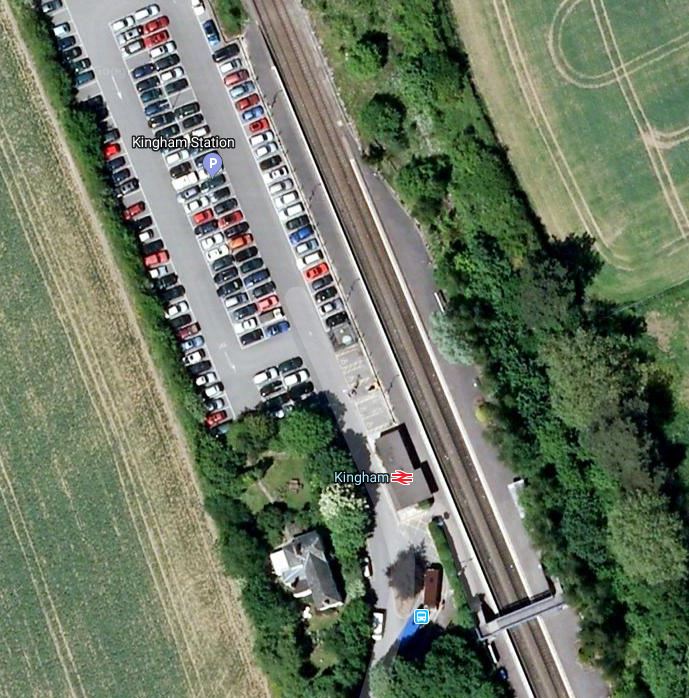
If you look at my pictures taken in 2019 and the Google Map, you’ll notice that the stairs on the bridge point the other way and that the bridge is the other side of the station building, which is indicated by the red logo.
This sentence in the Wikipedia entry for the station, indicates what is happening.
In 2015, a car park extension has been added with 100 car spaces, and a new footbridge is being added, with provision for passenger lifts.
This probably means the Google Map was created before 2015 and that lifts can be added on the Worcester side of the new footbridge.
It also gives Network Rail an unusual dilemma.
In Winner Announced In The Network Rail Footbridge Design Ideas Competition, I wrote how the competition was won by this bridge.
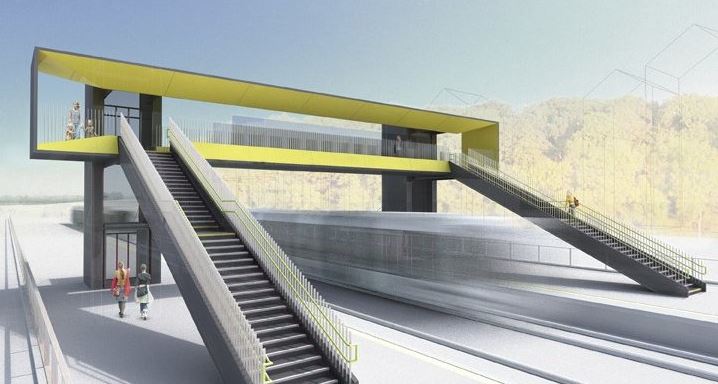
A factory-built bridge would be ideal for Kingham station and it could have easily been fitted in the space taken by the new bridge.
But in 2015, when the current bridge was installed, the new style of step-free bridge hadn’t even been designed.
Network Rail have two choices.
- Add traditional lifts to the current bridge.
- Swap the current bridge for one of the new design with lifts.
There may even be a third choice.
Could two lift towers designed for the winning design be erected and linked to the 2015 bridge?
- The lift towers appear to have been designed to be free-standing and be able support the weight of the bridge deck, perhaps with the stairs acting as a structural support.
- The 2015 bridge been designed to accept traditional lifts in brick or steel towers, so why can’t it accept modern steel and glass lifts?
I think it would be possible and at Kingham station, I suspect the lifts could be installed without disrupting the trains or passengers, during a short closure of the line or the station.
I suspect the cost would salso be more affordable.
Other Stations
There are probably several stations with a very serviceable footbridge, that are suitable for lifts to be added.
This picture shows the footbridge at Marks Tey station.

This could be an ideal candidate.
- The bridge appears sound.
- The bridge appears to meet all the regulations concerning electrification.
- The handrails on the stairs could be updated to a modern standard.
- It looks like there is sufficient space for the towers.
I doubt installation of lifts would be a difficult and expensive project.
There are probably several other stations with a similar design of bridge.
Conclusion
Could Network Rail’s new design of step-free bridge be applied to existing bridges in other stations?
How Removing Level Crossings Can Get Complicated And Expensive
This article in the East Anglian Daily Times is entitled Multi-Million Pound Lift Could Boost Rail Link From Sudbury To Colchester.
Greater Anglia intend to improve the service on the Gainsborough Line by running direct services between Sudbury and Colchester Town stations.
One of the reasons for doing this, is that the increasing number of passengers travelling between Sudbury and Colchester will avoid changing trains at Marks Tey station.
This Google Map shows Marks Tey station.
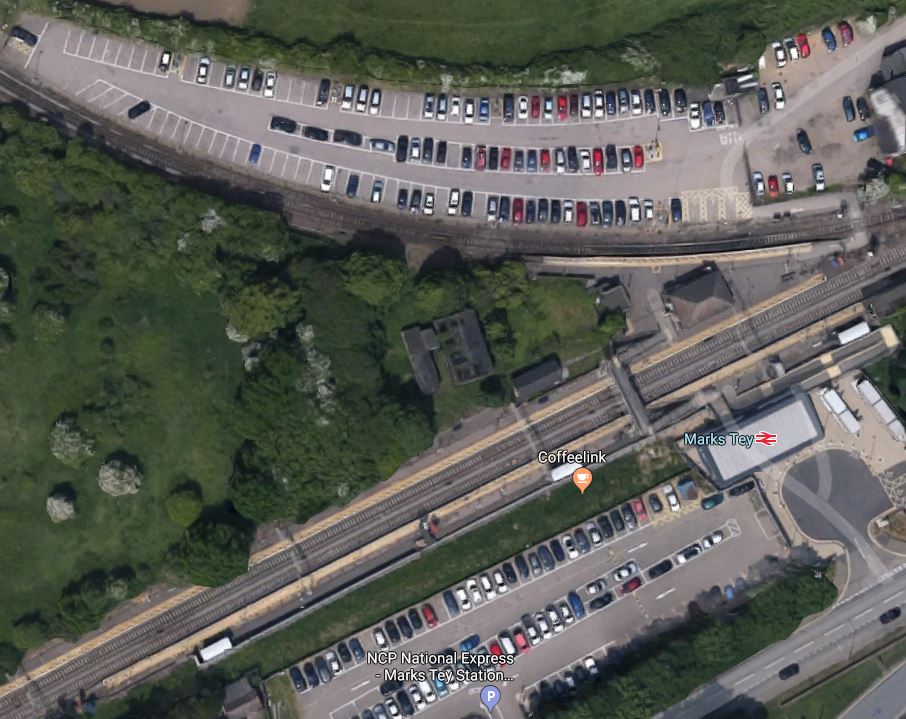
Note.
- The two platforms on the Great Eastern Main Line.
- The single platform for the Gainsborough Line.
- The footbridge over the main line.
As can be seen, the only step-free interchange with the Gainsborough Line is to and from trains going North to Colchester and Ipswich.
These pictures show the frootbridge and the Gainsborough Line platform.
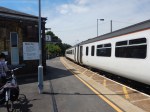
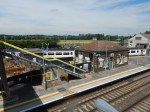
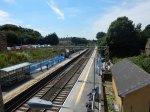
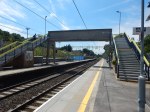
It is not an ideal interchange for passengers other than the unencumbered, fit and healthy.
I suspect some passengers from Sudbury to London might even take a train to Colchester first and then use the lifts to change to a London train.
And then there’s the Car Parking!
Note in the Google Map, that the station has two car parks, one on each side of the line. So most using the car parks will have to cross the line on the footbridge.
Also note, that the car park on the Northern side of the station, is connected to the station using a pedestrian crossing over the single track rail line, that connects the Gainsborough Line to the Great Eastern Main Line.
According to the East Anglian article, this rail line is used twice a day. But when the Sudbury to Colchester Town service starts, it will be used twice an hour. Anf if this service is successful, I can see Greater Anglia wanting to run the service with a frequency of two trains per hour (tph), which would mean four tph going over the pedestrian crossing.
Understandably, Network Rail want to remove the pedestrian crossing.
This is a paragraph from the East Anglian article.
The national fund has £300m available – and Mr Burles said he estimated that the cost of the work at Marks Tey would be between £4m and £5m. It is at the top of Greater Anglia’s “wish list,” but political support would be necessary if the money was to be released.
As to the political support, the Gainsborough Line and Marks Tey are in a total of five constituencies; all of which are Conservative.
I suspect, Chris Grayling could be under severe pressure from this one.
Although you have to remember that to many civil servants in the Department of Transport, Suffolk is just an area, you pass through on the way to your weekend cottage in Norfolk.
 The Anonymous Widower