First Commercial-Scale Seaweed Farm Between Wind Turbines Fully Operational In Netherlands
The title of this post, is the same as that of this article on offshoreWIND.biz.
This is the sub-heading.
The world’s first commercial-scale seaweed farm within the Hollandse Kust Zuid offshore wind farm in the Netherlands is fully operational.
These initial three paragraphs fill out the details.
According to the non-profit organisation North Sea Farmers (NSF), the final deployment step was completed one week ago by deploying the seeded substrate.
North Sea Farm 1, initiated by NSF with funding from Amazon’s Right Now Climate Fund, is a floating farm located in the open space between wind turbines where seaweed production can be tested and improved.
The seaweed farm is located within the Hollandse Kust Zuid wind farm, nearly 22 kilometres off the coast of Scheveningen. The 1.5 GW project is owned by Vattenfall, BASF, and Allianz.
I find this an interesting concept.
I can remember reading in the Meccano Magazine in the 1950s, about the production of alginates from seaweed in Scotland.
Surprisingly, Wikipedia has very little on alginates, except for this illuminating Wikipedia entry for alginic acid.
This is the opening paragraph.
Alginic acid, also called algin, is a naturally occurring, edible polysaccharide found in brown algae. It is hydrophilic and forms a viscous gum when hydrated. When the alginic acid binds with sodium and calcium ions, the resulting salts are known as alginates. Its colour ranges from white to yellowish-brown. It is sold in filamentous, granular, or powdered forms.
But it does appear that the Scottish production of alginates is very much of the past. Unless someone else can enlighten me!
Perhaps Scottish seaweed farming can be revived to produce alginates, which appear to have a surprising number of uses, as this section of the Wikipedia entry shows.
Alginates do appear to be remarkably useful.
These are a few uses.
- As of 2022 alginate had become one of the most preferred materials as an abundant natural biopolymer.
- Sodium alginate is mixed with soybean protein to make meat analogue.
- They are an ingredient of Gaviscon and other pharmaceuticals.
- Sodium alginate is used as an impression-making material in dentistry, prosthetics, lifecasting, and for creating positives for small-scale casting.
- Sodium alginate is used in reactive dye printing and as a thickener for reactive dyes in textile screen-printing.
- Calcium alginate is used in different types of medical products, including skin wound dressings to promote healing,
Alginates seem to have some rather useful properties.
Four years ago, I tripped over in my bedroom, which I wrote about in An Accident In My Bedroom. I wonder if the Royal London Hospital used calcium alginate skin dressings to restore my hand to its current condition.
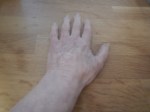

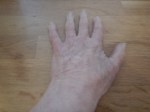
Paul Daniels would have said, “It’s magic!”
In the future these dressings may be produced from UK-produced seaweed.
Hail The Hercules
The title of this post was used on the front page to indicate an article in the Meccano Magazine about the arrival of the Lockheed Hercules in the mid-1950s.
The Wikipedia entry for the Hercules, starts with this sentence.
The Lockheed C-130 Hercules is an American four-engine turboprop military transport aircraft designed and built by Lockheed (now Lockheed Martin). Capable of using unprepared runways for takeoffs and landings, the C-130 was originally designed as a troop, medevac, and cargo transport aircraft.
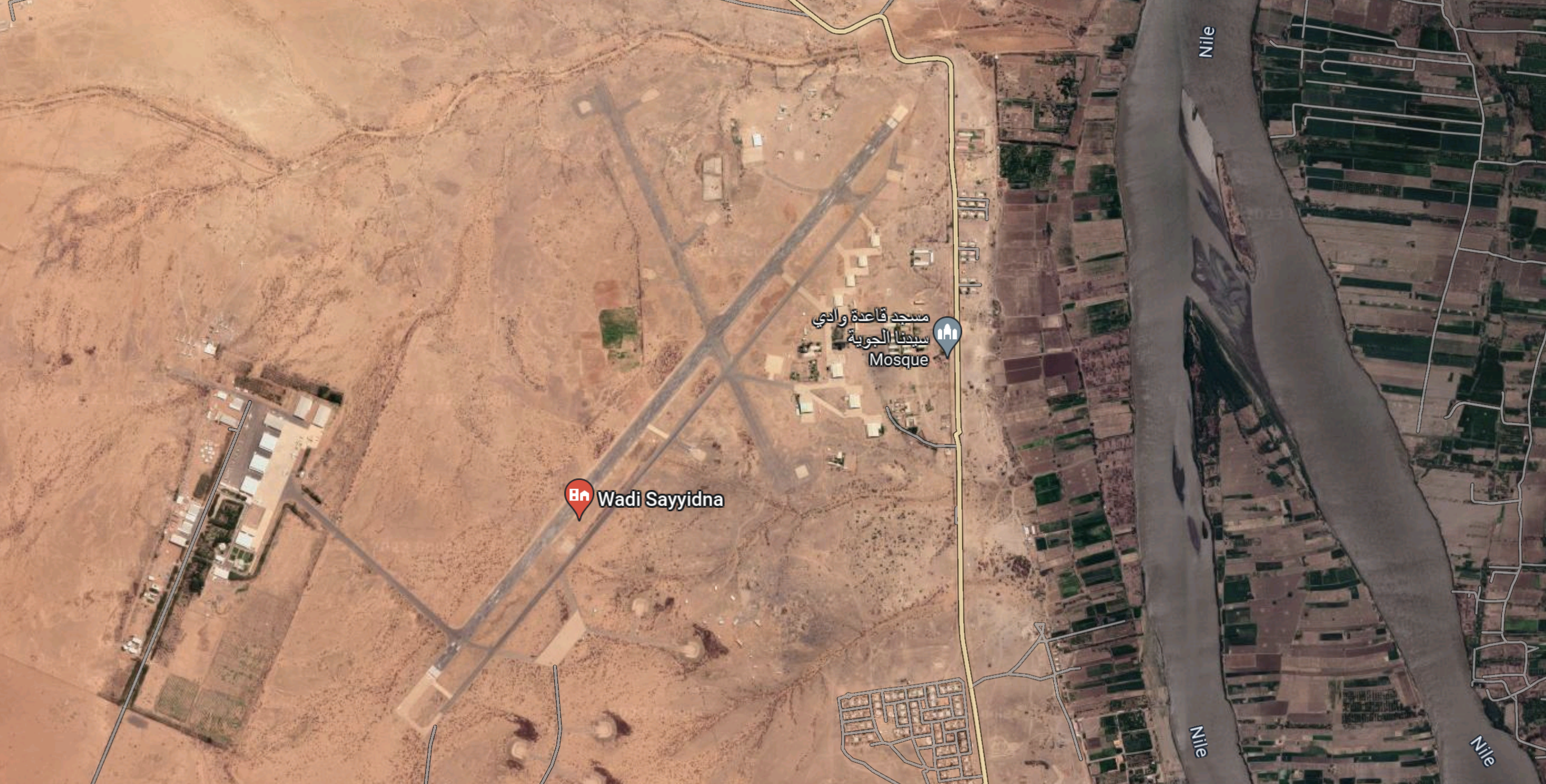
The aircraft first flew in 1954 and nearly seventy years later they are still doing the same operations, they were designed for, with various reports of Hercules flying to the remote Wadi Seidna airstrip in Sudan.
This Google Map shows the airstrip.
Note.
- There appears to be two runways and some form of operational building or terminal.
- The River Nile is at the East of the map.
It looks like an airfield, where Hercules are intended to be used, even in circumstances, where severe damage has been inflicted to the runway.
When Metier Management Systems and Artemis were sold to Lockheed, I had several conversations with senior people and the company was and probably still is rightly proud of its long-lived design.
The Plans For Giant Seaweed Farms In European Waters
The title of this post, is the same as that of this article on the BBC.
The article describes how the Dutch are developing the growing and harvesting of seaweed.
This is all fascinating stuff and reminds me of reading of a company called Alginate Industries in the Meccano Magazine in the 1950s.
I can’t find much about the company, except that they were taken over by Merck & Co in 1979.
The Wikipedia entry for alginic acid, gives this information on alginates.
Alginates are refined from brown seaweeds. Throughout the world, many of the Phaeophyceae class brown seaweeds are harvested to be processed and converted into sodium alginate. Sodium alginate is used in many industries including food, animal food, fertilisers, textile printing, and pharmaceuticals. Dental impression material uses alginate as its means of gelling. Food grade alginate is an approved ingredient in processed and manufactured foods.
I remember the Meccano Magazine saying that alginates were an important food additive and UK production came from the North of Scotland.
This page on the Secret Scotland wiki gives details of current alginate production in Scotland.
Has Wikipedia replaced the Meccano Magazine, as a source of information for scientifically-inquisitive children?
 The Anonymous Widower