Heads Of The Valleys Road Upgrade Officially Opens
The title of this post, is the same as that of this article on BusinessNewsWales.
This is the sub-heading.
The final phase of the £2 billion Heads of the Valleys Road upgrade programme has officially opened.
These first two paragraphs add detail to the project.
The Welsh Government said it marked the completion of “one of the UK’s largest and most technically challenging road projects”.
The £1.4 billion Section 5&6 Dowlais to Hirwaun final phase links the Valleys, South and West Wales to the English Midlands and beyond, together with ports serving Irish and other European destinations. As well as improving the resilience of the South Wales trunk road network, the road provides a vital link across the top of the South Wales valleys for the Metro project improving links to the Cardiff and Swansea Bay City Regions, the Welsh Government said.
From the statistics of work done and the money involved, it would appear that a comprehensive upgrade has fixed a big gap in the UK’s motorway network in South Wales.
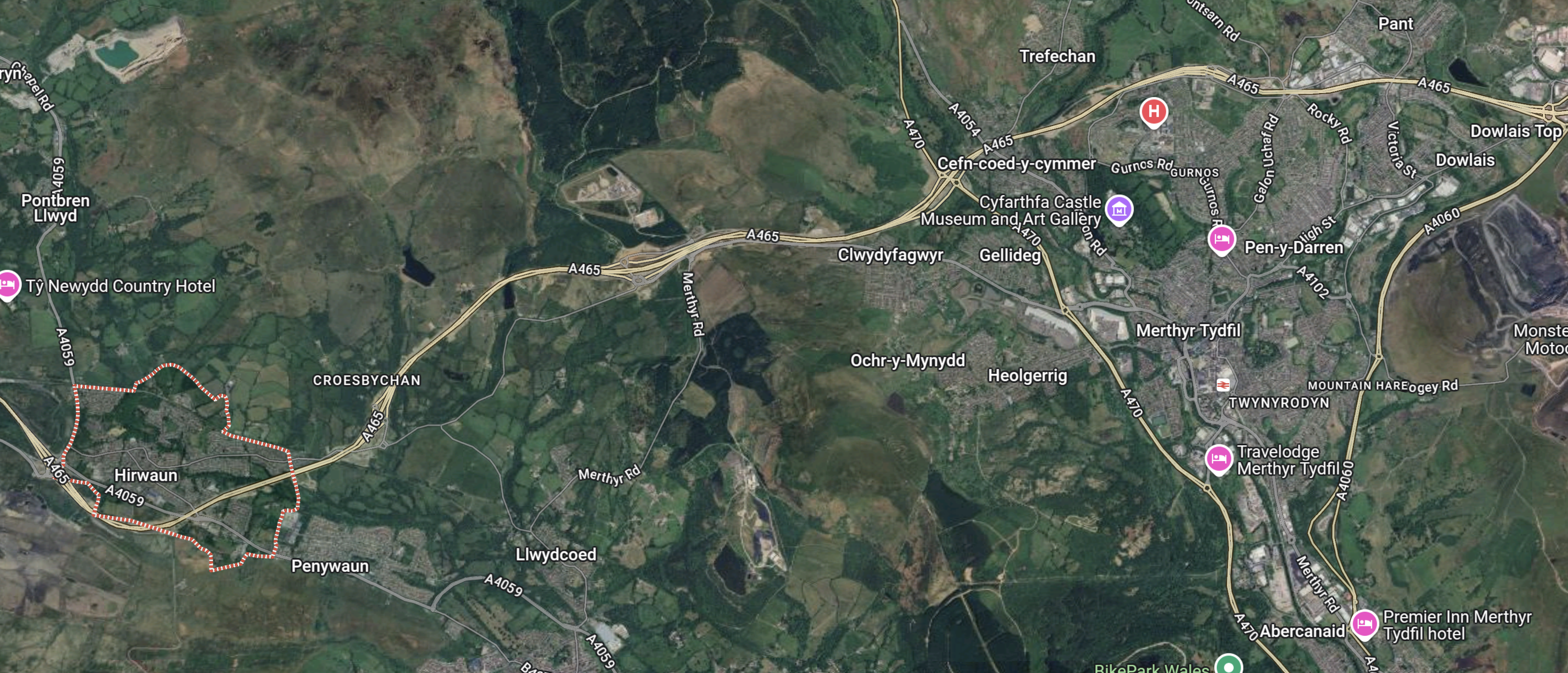
This Google Map shows the locations of Dowlais and Hirwaun.
Note.
- Dowlais is in the North-East corner of the map.
- Hirwaun is in the South-West corner of the map and is outlined in red.
- The Heads of the Valleys Road links Dowlais and Hirwaun.
- Going East from Dowlais leads to Abergavenny, Monmouth, Raglan and the English Midlands.
- Abergavenny has a station, but Monmouth and Raglan don’t!
- Abergavenny station has comprehensive services to stations as far apart as Cardiff, Crewe, Holyhead, Manchester Piccadilly, Swansea and Wrexham General.
Abergavenny station could eventually turn out to be a parkway station for the South Wales Valleys.
I can certainly understand, why Lumo wants to run a service to Hereford.
I also feel that the Welsh government and Transport for Wales would be in favour of the service.
- Three towns in Wales; Cwmbran, Pontypool and Abergavenny get a direct service to Bristol Parkway and London Paddington stations.
- Hereford already has an hourly connection to Birmingham New Street via Worcester and University.
- If a coach were to be provided between Bristol Parkway and Bristol Airport, this could make getting to Bristol Airport easier.
I can see further improvements to services, that terminate at Abergavenny.
Merthyr Tydfil Station – 28th November 2023
Yesterday, I went to South Wales to look at the progress of the South Wales Metro.
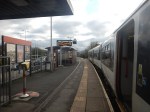
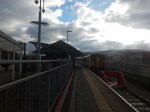
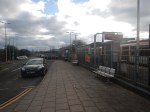
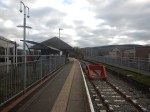
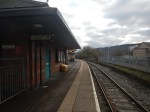
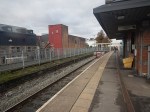
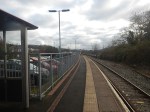
I took these pictures at the station and in the town.
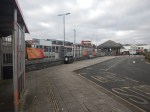
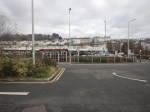
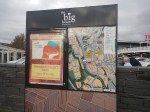
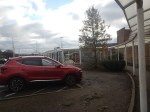

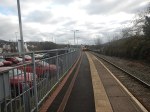
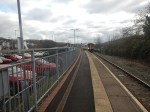
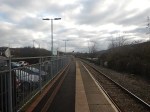
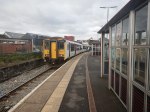
Note.
- It is only a single-platform station.
- The platform and track appear to be reasonably flat.
- Several bay terminal platforms in the UK like four of those at Dalston Junction and Highbury & Islington stations near me are able to handle four trains per hour (tph).
- The Class 150/2 trains in the are 19.74 metres long and have a maximum capacity of 149.
- The new electric Class 398 tram-trains are 40.07 metres long and have a capacity of 252.
The platform appears to be long enough for the new trains.
These are my thoughts.
Capacity To And From Merthyr Tydfil
Consider.
- Currently, there are two Class 150/2 tph.
- This means current capacity is 298 passengers per hour.
- After electrification, there will be four Class 398 tph.
- This means future capacity is 1008 passengers per hour.
That is an increase of 238 % in the capacity.
Where Is The Electrification?
This OpenRailwayMap shows the proposed electrification at Merthyr Tydfil station.
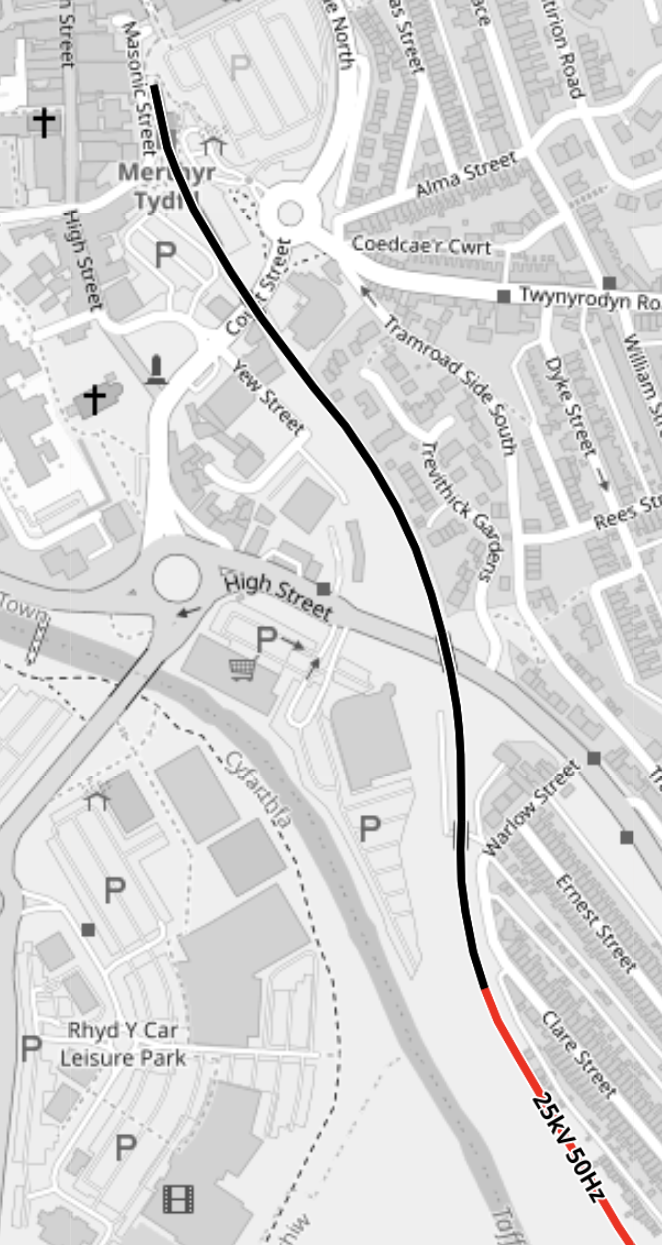
Note.
- Electrified lines are shown in red.
- Unelectrified lines are shown in black.
- The railway is single-track until past Troed-y-Rhiw, after which it is double track to Merthyr Vale station.
- Between Merthyr Vale and Abercynon is single-track, with a short length of unelectrified double-track at Quaker’s Yard station.
It appears that the section of the Merthyr Line at Merthyr Tydfil station will not be electrified.
- The tram-trains’ batteries must be large enough to climb the unelectrified section .
- There must also be enough power to nudge the tram-train back down the hill, after the climb has been completed.
- At least the pictures show, that the track in Merthyr Tydfil station, is reasonably flat.
It looks to be a neat piece of cost-saving design.
Why Did I Feel Better In Merthyr Tydfil?
I have been feeling under the weather lately, but I felt a lot better in Merthyr!
Was it the altitude of 180 metres?
My cardiologist friend, says most people feel worse at altitude. But I seem to be the other way round.
My wife was certainly feeling rough, when I drove a car up to 13,000 feet in the Andes of Ecuador, whereas I was fine.
Incidentally, the car was coughing and wheezing like a good ‘un.
The South Wales Mountain Railway
South Wales might not have the reputation of beautiful mountains, of say Snowdonian, the Cairngorms or Switzerland, but some of the Valley Lines that go up to places like Merthyr Tydfil and Ebbw Vale Town stations have spectacular views.
I was looking for a possible station at a village called Nelson and found a single-track railway passing to the North of the village.
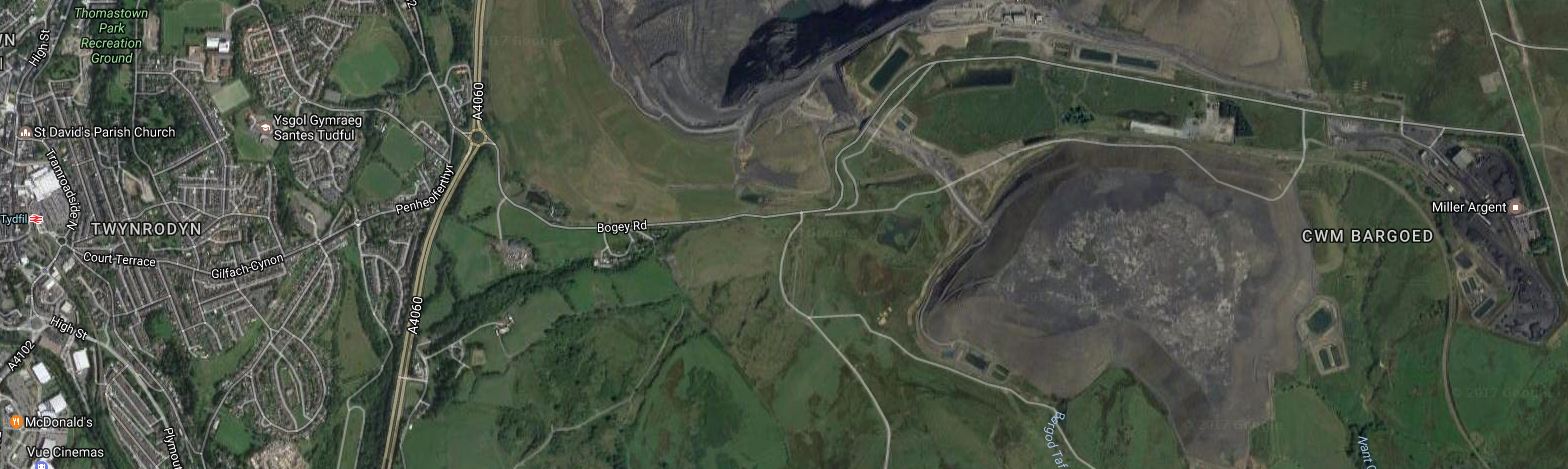
I followed the track with my helicopter up the mountain and this is a Google Map of what I found.
Merthyr Tydfil And The Ffos-y-fran Land Reclamation Scheme
The station on the left is Merthyr Tydfil and on the right is the massive Ffos-y-fran Land Reclamation Scheme. This is opening paragraph in the Wikipedia entry.
The Ffos-y-fran Land Reclamation Scheme is a major opencast coaling operation to the north-east of Merthyr Tydfil in South Wales. Miller Argent is owned by Gwent Investments Limited, which is based in South Wales and is a privately owned family business. The scheme development is the last part of the East Merthyr Reclamation scheme, and will extract 10 million tonnes of coal over 15 years, the revenues from which will redevelop the current former industrial workings into residential and recreational use.
It is a controversial scheme and I am usually against using coal for combustion purposes, but some of these Welsh landscapes are dotted with dangerous mine workings and slag heaps, so they certainly need cleaning up.
There is a Transport section in the Wikipedia entry for the scheme. This is said.
Under agreed planning rules, the site is not allowed to transport coal from the site via road. All extract is therefore moved to the rear (East) of the site where the coal is separated and washed at the Cwmbargoed Washery. Built in 1959 on land to the north and east of the railway connection to Fochriw Colliery, the coal washery was refurbished by Celtic Energy in 1992. DB Schenker trains then move the washed coal from site to Aberthaw Power Station, along the former route of the Rhymney Railway. Joining the modern Rhymney Line just south of Ystrad Mynach railway station, the trains then travel onwards via Cardiff and the Vale of Glamorgan Line to Aberthaw, enabling Ffos-y-fran to supply 40% of the coal to Aberthaw power station.
It must be challenging driving a Class 66 locomotive with a train of full coal wagons down the mountain.
It was this railway I had followed up the mountain.
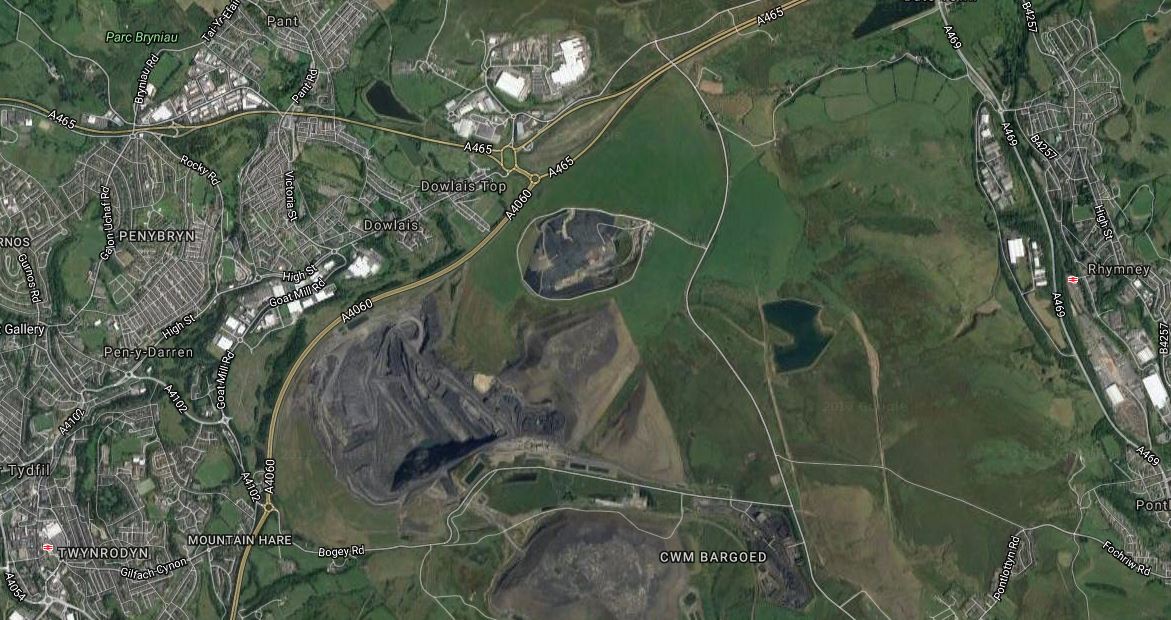
Before I leave Merthyr Tydfil, look at this Google Map of the town.
Merthyr Tydfil And Rhymney
The East Merthyr Reclamation Scheme is in the middle, flanked by Merthyr Tydfil in the West and Rhymney in the East.
So if the Authorities in South Wales are thinking of building a station on this line at Nelson, are they thinking of reopening this line after the scheme has finished extracting coal, as a second rail route to Merthyr Tydfil?
Coming back down the mountain from Merthyr, the first possible station from my list of possible stations is Bedlinog.
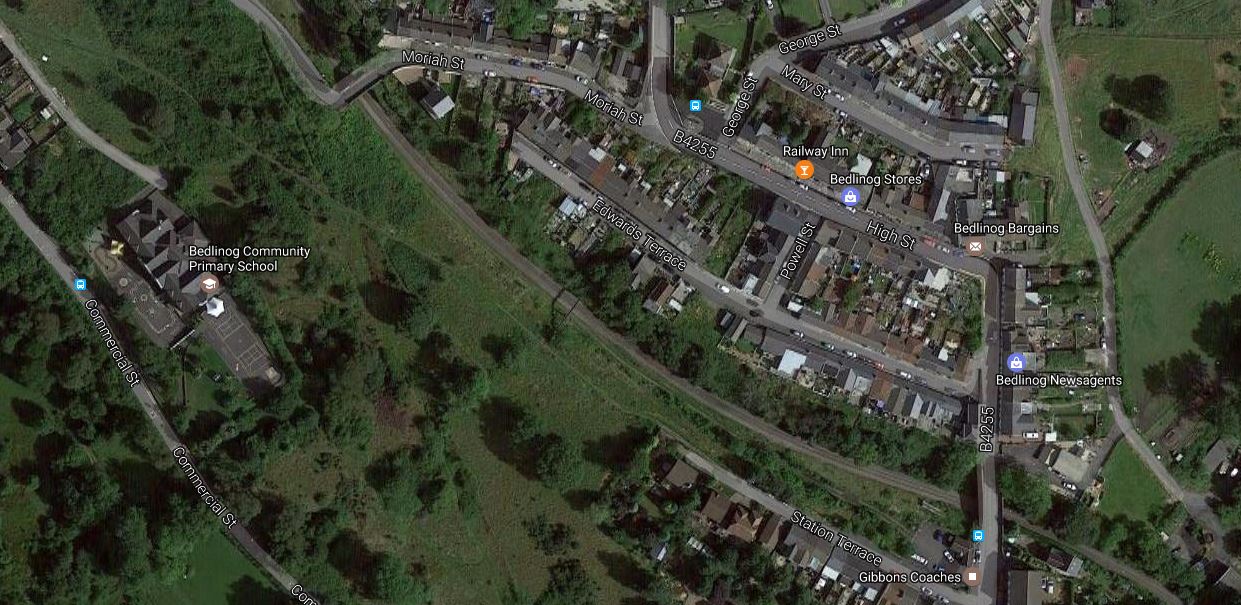
This Google Map shows the rail line going through the village.
Bedlinog And The Railway
Note that Bedlinog already has a Railway Inn.
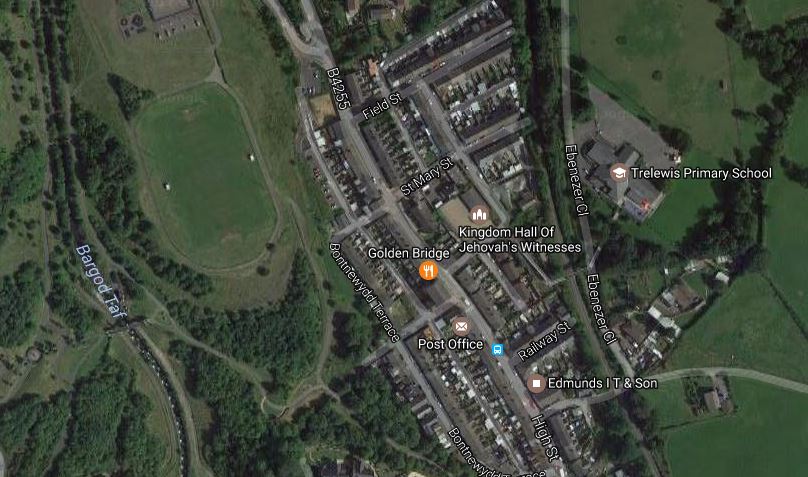
After Bedlinog, the next one on the list is Trelewis. This is the Google Map
Trelewis And The Railway
The railway goes between the Primary School and the Kigdom Hall.
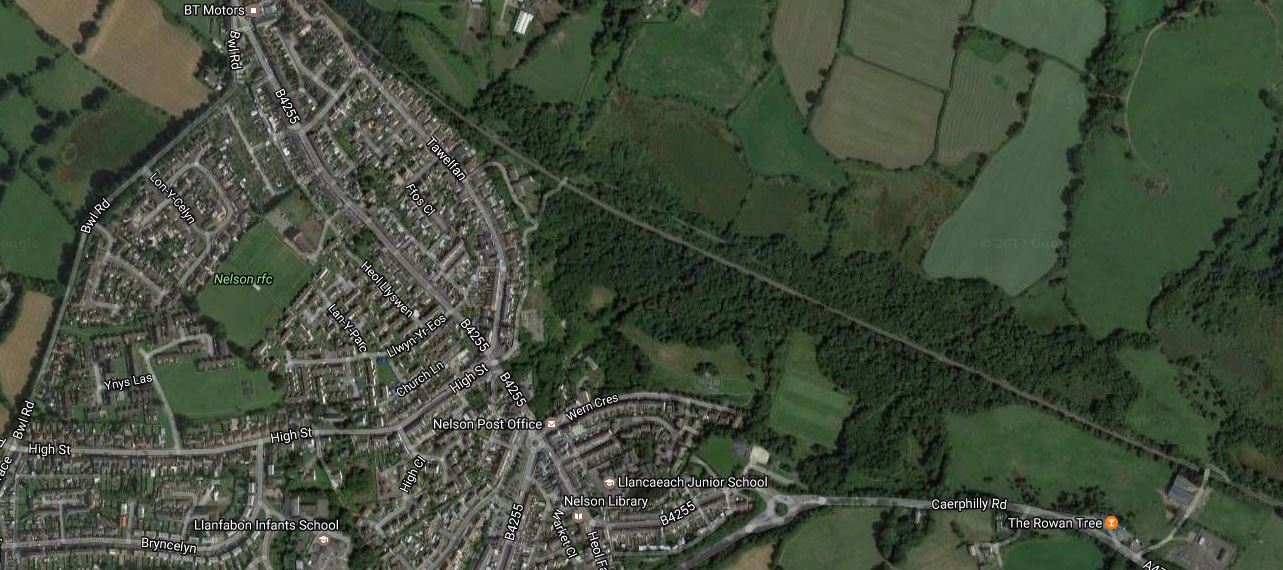
And then it’s back to where I started this quest at Nelson, of which this is the Google Map.
Nelson And The Railway
The railway then goes South-East to join the Rymney Line at Ystrad Mynach station.
Trains For The Route
The task of hauling empty wagons up the mountain is not to much for a Class 66 locomotive, so I suspect that a multiple unit could be designed to handle a route like this, of which there are several in the Cardiff Valley Lines.
Either electric or diesel multiple units could probably manage the climbs, if they were designed for it, but would electreifying these routes be a feasible undertaking, given the difficulties of working on these busy lines.
But train technology is moving on and with the Class 319 Flex, we are getting close to having a true tri-mode train, with diesel, electric and battery power.
The Welsh Government have said they want new trains for these routes and I suspect engineers are working on a product tailored to run these routes efficiently.
So could we see a quad-mode train for the Valleys?
- Four-car electrical multiple unit.
- Onboard energy storage.
- Perhaps even a small diesel generator for the difficult bits.
- Gravity power, which the lines have in abundance, to use with regenerative braking to charge the batteries on the descent.
- As modern trains can deploy pantographs automatically, some selective electrification could be added as the project develops.
I would also commit the ultimate heresy and use third-rail electrification on the steep parts at the heads of the valleys.
Consider.
- Bombardier, Siemens and others make reliable dual-voltage trains.
- Both electrification systems have their good and bad points.
- It must be less intrusive and disruptive to install third-rail electrification.
- Is overhead electrification more prone to weather damage?
- Network Rail seem to be terribly accident-prone when it comes to overhead electrification.
In the end costs and overall reliability will decide.
But I do think sometimes, that Network Rail always chooses overhead electrification, even if third rail will be more reliable, less intrusive and more affordable.
But I’m sure that all the technology has now been proven to create a very efficient modern electric train to work the Valley Lines, which have been electrified using a great deal of innovation and common sense.
 The Anonymous Widower